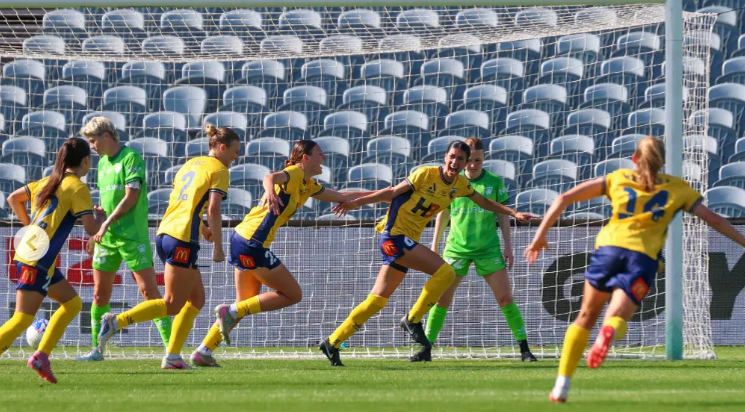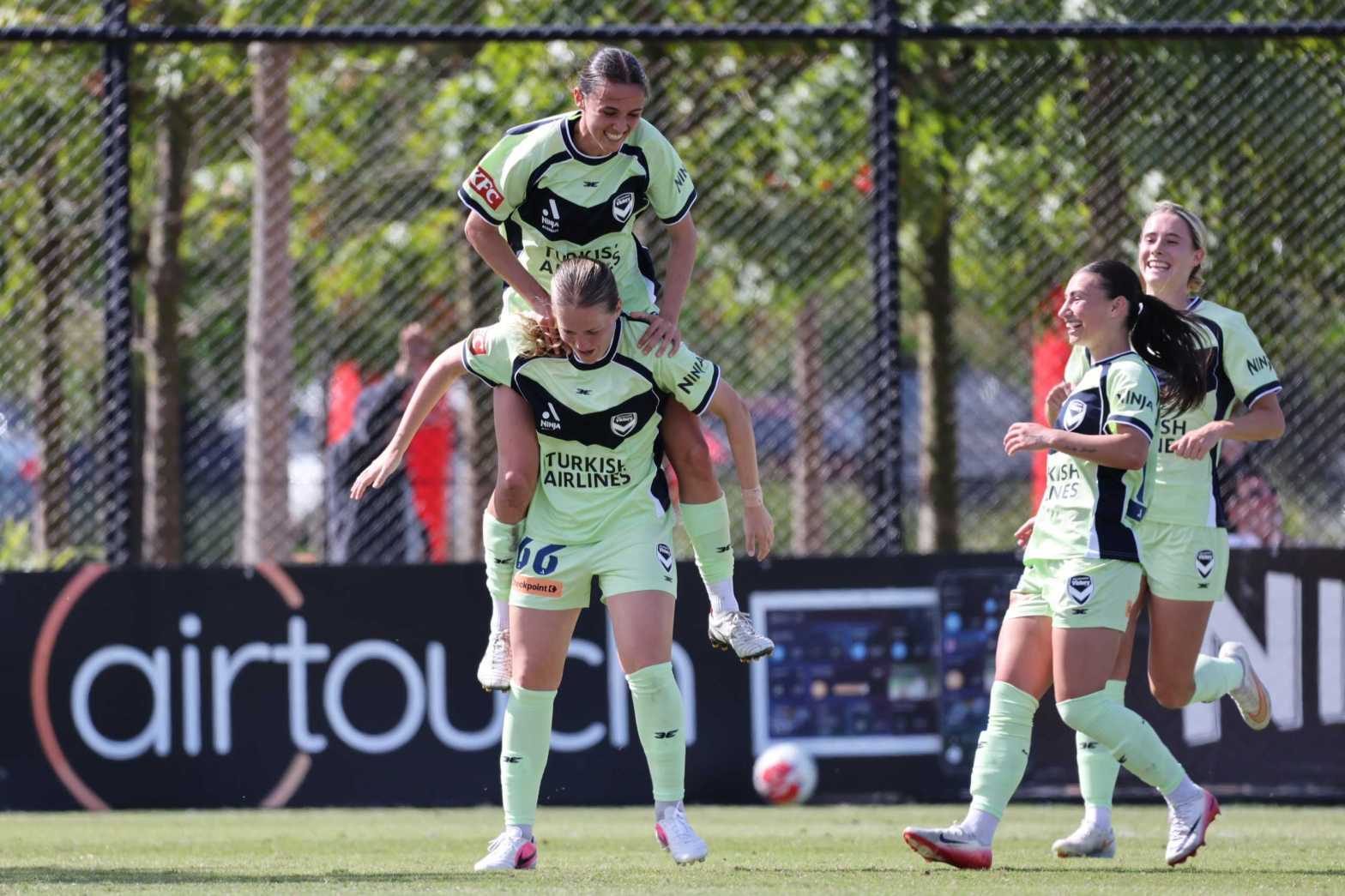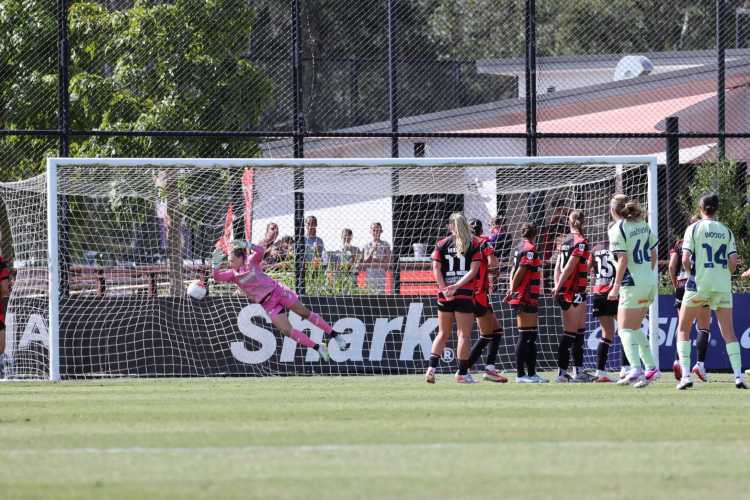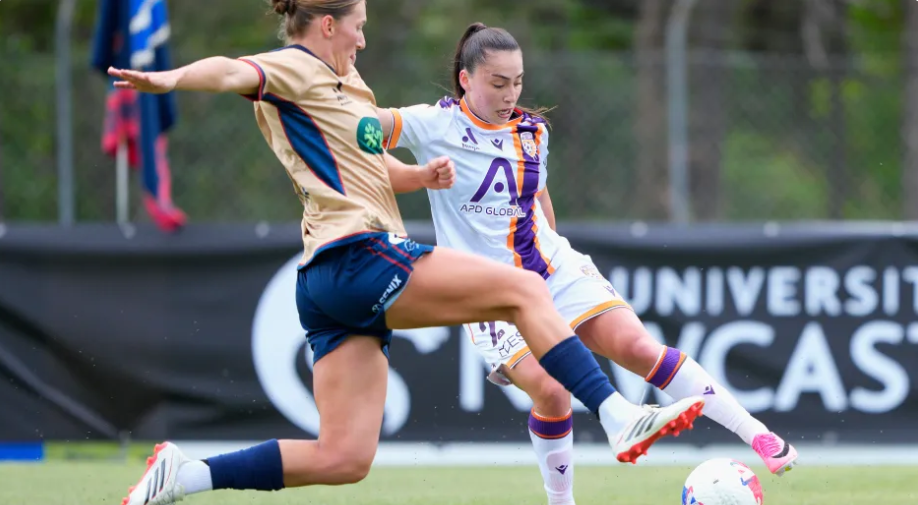
Ante Juric departs Sydney FC as most successful coach ever

Above: Ante Juric lifts the championship. Image: Sydney FC.

By Genevieve Henry (4/2/26).

Three premierships. Three championships. Seven consecutive grand finals. Ante Juric achieved all of this as the longest serving head coach in eight and a half seasons with Sydney FC.

Now at the bottom of the table and suffering their first Sydney Derby defeat in 6 years, the Sky Blues have lost all hope of recreating this glory. Western Sydney Wanderers were the only team below Sydney on the A-League Women ladder. This 3-2 defeat was the last straw for the club, who announced Juric’s departure yesterday. Academy Technical Lead and NPL Assistant coach James Slaveski will step up as interim head coach.

Many fans of Sydney and the A-Leagues would have assumed the lacklustre 2024-25 season was an outlier for Sydney — although they nearly managed to climb back up — but no one expected Juric’s side to be on the bottom again this season.

Juric built a legacy of winning at Sydney. In the rare years Juric was in charge where the Sky Blues didn’t come away with a trophy, they were still competing at the top. Now, they’re in a battle to crawl up from the bottom. The only thing Sydney can currently be grateful for is the lack of relegation in the A-Leagues.

Perhaps it’s a plague of injuries that has done the Sky Blues in; perhaps it’s waves of departing players — but these losses are commonplace in the world of football. More than likely, Juric has been doing the same thing for a long time and whether the rest of the league is catching up to him or he’s stuck in a rut, something had to change for Sydney to maintain their status as a top club.

Above: Juric watches the Sky Blues from the sideline. Image: A-Leagues.

Although fans, players, and the club will be sad to see Juric go, it’s not with shame that he departs.

“Ante will forever be remembered as one of the most important figures in Sydney FC’s history,” Sydney FC Executive Vice Chairman Sebastian Gray said. “On behalf of the board, we want to sincerely thank him for everything he has given to this club over eight and a half seasons, including an incredible run of success that delivered six major trophies and seven straight Grand Finals.”

The impact of Juric goes beyond his titles — he has had a hand in developing many of the most prominent players in Australian football. Cailtin Foord, Alanna Kennedy, Amy Sayer, Cortnee Vine, Remy Siemsen, Charlize Rule, Clare Wheeler, Kahli Johnson, and Jada Whyman are regulars in current Matildas squads, and that’s barely scratching the surface of the big names Juric has worked with.

Juric is famous for his success in developing young players into superstars. He and Sydney have often had an eye for who the next big name is — his 2025-26 squad is stacked with young talents with Indiana Dos Santos (18), Willa Pearson (15), Maddie Caspers (18), Rubi Sullivan (17), Claire Corbett (15), and Skye Halmarick (17) to name a few. When Juric believes in a player, the footballing world often does, too.

Now, the cycle of development and departure that Juric mastered for so long seems to have come to an end at Sydney FC, stuck firmly in the development phase. Without big international signings or cohesion among their other big name players, the heavy lifting is falling on the shoulders of players with little experience. While in a few years, the current Sydney squad could achieve great things, they’re not there yet.

It was time for a change. But it certainly doesn’t erase all the success Juric had with the Sky Blues.

Follow Impetus on social media:

@ImpetusFootball on Threads, Instagram and TikTok.

Vrouwen Eredivisie Week 13: HERA stun Ajax, ADO still without win

By Jan-Kees Joosse (3/2/26)

Above: HERA United celebrate an unlikely win over Ajax. Photo: Vrouwen Eredivisie website.

The thirteenth round of the women’s Eredivisie saw title contenders slip up, unlikely wins and the bottom of the table getting tighter.

Ajax 1-2 HERA United

A city derby has emerged following Hera United’s win over Ajax. While everyone had expected an easy victory for Ajax, they were left disappointed when the final whistle blew. HERA widened the relegation gap with NAC Breda, and Ajax lost their top spot.

The Ajax women started strongly on Sunday afternoon, creating numerous chances in the first half-hour. It seemed only a matter of time before they took the lead, which came in the 39th minute when striker Danique Tolhoek headed Ajax ahead 1-0.

Just before halftime, HERA equalized after a cross from Lieke Vis was deflected off Jonna van de Velde. An own goal dealt Ajax a blow going into the break. Despite Ajax pressing after the interval, they were mainly unlucky against the efficiency of the visitors. In the 58th minute, goalkeeper Kelly Steen launched a counter with a brilliant kick, allowing substitute Ina Booms to calmly score the 1-2.

HERA’s win is impressive, especially because the city derby, according to Ajax coach Anouk Bruijl, had not yet fully resonated with the Ajax players. It was likely very different for HERA. They are becoming an increasingly strong team in the Eredivisie, not easily beaten – a positive sign for women’s football fans. The level is rising, and Ajax’s talents may have underestimated this. This could be a crucial moment in the title race, setting the stage for future rivalries in Amsterdam.

Ajax simply had no luck in this match. There is little to criticize about their play; the only area for improvement is finishing games with scrappy goals. Forcing outcomes is not yet familiar to the Amsterdam squad, a consequence of Ajax’s policy of developing youth in the Eredivisie. Whether this approach remains sustainable will largely become clear next season, when Ajax faces top teams more regularly.

Feyenoord 2-2 PSV

Undoubtedly favourites for this game, PSV took a 0-2 lead after twenty minutes, but Feyenoord fought back and scored the equalizer in the 98th minute. That there was even time for a comeback was remarkable.

PSV struck early in Rotterdam. Liz Rijsbergen showcased her pace, scoring after a quick counter, reminiscent of Kerolin’s 3-0 goal against Chelsea. PSV werethe more confident team in the first half. Lore Jacobs quickly finished a strong PSV attack, converting a precise cross from Liz Rijsbergen with class! With an early lead, it seemed like a walk in the park.

Feyenoord proved resilient and reduced the deficit before halftime through Esmee de Graaf, giving them hope for the rest of the match. This hope was largely thanks to the referee, who allowed six minutes of added time and continued play after short injury treatments. In the extra two minutes, Obispo finished a foul to make it 2-2.

Feyenoord celebrated the goal like a victory, though their weaknesses against top teams remain apparent. PSV was visibly frustrated in added time by the referee’s decisions and a dangerous cross from Itamura, handing away the three points. Captain Fleur Strik was furious and criticized the referee for letting the match get out of hand, allowing too many fouls and extending added time unnecessarily.

Twente 3-0 Excelsior

FC Twente beat Excelsior 3-0, having already defeated them earlier in the week in the cup. This victory moved Twente to the top of the table, overtaking Ajax with a game in hand. Excelsior, now in the relegation zone, is showing increasing uncertainty with each game.

From the first whistle, FC Twente took control. Excelsior were immediately put under pressure, struggling to play out from the Twente press. Early turnovers led to dangerous chances for the home side. In the 11th minute, the opener came from a well-taken corner by Charlotte Hulst, with Alieke Tuin reacting sharply to score 1-0.

The goal did not change the game’s dynamics. Excelsior remained insecure on the ball, continually allowing Twente to press quickly. This led to the second goal in the 19th minute, when Jaimy Ravensbergen capitalized on sloppy defending and calmly finished. Twente continued to dominate, and in first-half injury time, Lynn Groenewegen made it 3-0, giving the home side a comfortable lead at halftime.

Twente saw out the match professionally, securing the win without problems. Combined with other results, Corina Dekker’s side climbs to the top of the Eurojackpot Women’s Eredivisie. Excelsior, meanwhile, are left worrying about their troubling form and recurring uncertainty reminiscent of old patterns.

PEC Zwolle 2-0 AZ

This season, PEC Zwolle Women have shown how much a strong coach can influence results. Last year, the team underperformed, but under Gert Peter de Gunst, they have become one of the positive surprises of the Eurojackpot Women’s Eredivisie. With clear principles, confidence, and organization, PEC consistently win, even against teams around them in the standings.

PEC Zwolle deservedly beat AZ 2-0. After a balanced opening, the home side took the initiative. Britt Udink opened the scoring after 25 minutes with a fine goal. AZ had a late chance before halftime, but Sabrine Ellouzi’s goal was ruled offside. After the break, PEC scored again via Ragnheiður Jónsdóttir, effectively deciding the match.

With 27 points from 13 matches, PEC remains competitive in the upper mid-table, exceeding expectations. AZ, however, face serious challenges, sitting eighth with 12 points while HERA lurk with 11. The relegation battle is becoming increasingly prominent.

Heerenveen 4-1 ADO Den Haag

SC Heerenveen Women continue to impress in the Eurojackpot Women’s Eredivisie. Their 4-1 win over ADO Den Haag confirms the team is in excellent form. Where they previously conceded goals easily, luck is now consistently on their side. Their growing confidence is evident in their attacking play: decisive, brave, and self-assured, making their outlook notably positive.

Heerenveen started strong, taking the lead after just 12 minutes. A cross from the right was poorly handled by goalkeeper Barbara Lorsheyd, allowing Evi Maatman to tap in. Two minutes later, ADO equalized due to sloppy buildup, with Anne van Egmond scoring a beautiful lob. Heerenveen, however, stayed composed, pressing and going into halftime 2-1 ahead after a rebound finished by Lisanne Venema.

After the break, ADO sought an equalizer, but Jet van Mierlo’s goal was ruled offside. Heerenveen immediately countered; following a saved shot by Elfi Maass, Aymee Altena was alert to score on the rebound for 3-1. In the final stages, Heerenveen kept pressing, hitting the frame twice, and Romaissa Boukakar sealed the 4-1 victory in injury time.

ADO Den Haag’s problems are structural. The team performs like a relegation side, but the off-field situation is even more concerning. The women’s team seems low-priority within the club, which focuses on promoting the men’s team. Coaches without proper licenses, departing players, and lack of vision paint a worrying picture for a club that was once a founding pillar of the Women’s Eredivisie.

Utrecht 1-0 NAC Breda

FC Utrecht Women secured a professional 1-0 win over NAC Breda, but the victory barely masked the unrest within the team. Play looked strained, with defense and buildup poorly coordinated. The team lacked cohesion, visible in body language, and Lobke Loonen left the field frustrated – a symbol of a squad struggling with itself. The question arises: is it a lack of quality and experience, or poor preparation and coordination? Mistakes continue to repeat, worrying Utrecht fans.

After NAC’s painful loss to PEC Zwolle last week, FC Utrecht started strong. The home team pressed early, won many second balls, and kept NAC pinned in their own half. Yet this dominance yielded little real control. Loonen had the biggest chance, shooting with the outside of her foot after 25 minutes, only to be denied by goalkeeper Nikki de Haan.

Midway through the first half, NAC improved. Brigitte Franken had a big chance, and Stephanie Coelho Aurélio set up Emely van der Vliet before halftime, but without success. NAC continued pressing after the break, creating several good chances, including a set-piece straight at the goalkeeper. They lacked decisiveness.

In the 76th minute, the match was decided at the other end. After a sharp moment by Snellenberg, Nikita Tromp displayed her class, volleying a cross from the left into the net. A goal from nowhere, against the run of play. NAC continued to press but came away empty-handed again. The fight for survival continues, with Ajax the next obstacle.

Follow Jan for news about Dutch women’s football at  www.fcleeuwinnen.nl

Follow Impetus on social media –

Twitter (X): @impetusfootball TikTok: @impetusfootball

Instagram: @impetusfootball

10 of the most exciting transfers of the NPLW Vic

By Kieran Yap 3/2/26

Above: New South Melbourne signing Bella Wallhead. Photo: Kou Media

The new Victorian NPLW season is only weeks away, and as usual there has been plenty of player movement. Impetus looks at some of the most exciting club-to club transfers of the 2026 pre-season.

Anais Josefski: Bulleen Lions to Alamein FC.

The rapid wide forward arrives after a season at Bulleen Lions. The talented former Melbourne Victory train-on player has pace to burn and is a good finisher, but found game time limited while sharing a position with Danella Butrus and Alana Cortellino at The Lions but still managed a solid return of three goals in 13 appearances.

Josefski’s best form in the NPLW Vic has come at Boroondara Eagles FC, where she started 21 out of a possible 22 games and scored an impressive 10 goals for the club, this followed her 2023 season at Box Hill where she enjoyed a similar ratio with six goals from 12 appearances.

Josefski should be a good fit for Alamein. Her pace makes her a threat and prevents defences from sitting too high when in possession. If she gets loose on a counter attack or in space on the wing, all the opposition can do is hope.

Asuka Miyata: Heidelberg Utd to Avondale FC.

You could kick a ball at a team photo of Avondale’s squad and any player you hit would qualify as a major player in this league. The newly promoted side clearly means business and have recruited strongly to support the big names already there like former Gold Medal winner Kurea Okino and Elise Kellond-Knight.

Avondale have coaxed Beattie Goad and World Cup goalscorer Hannah Wilkinson back onto the pitch, but have also added Isabel Accardo and Sidney Allen to the squad, along with Heidelberg’s set piece genius Cameron Barriero. This is essentially and all-star team on paper.

Included in that glittering roster is one of the most deadly midfielders of 2025. Japanese playmaker Asuka Miyata. After lifting two trophies at Heidelberg, Miyata has been snared by the ambitious newcomers.

After two highly impactful season’s Miyata should hit the ground running and  can be the chief creative force to supply Avondale’s enviable attack.

She is a crafty, tricky midfielder who can move from box to box and drive the play forward. Miyata is the type of midfielder who is brilliantly skilled as an individual but also improves those around her. Expect her to play another key role in 2026.

Alyssa Dall ‘Oste: Perth Glory to Bulleen Lions.

One of the states finest goalkeepers has arrived at the Veneto Club as Bulleen look to go at least one step further this season.

Bulleen have made strong signings around the park. Olivia Bomford has joined from South Melbourne and Maja Markovski has returned to the club where she won a Gold Medal and earned an A-League Women move, Dall Oste brings top level experience between the sticks and gives Bulleen some serious depth in the goalkeeping department.

Bulleen now have Emily Shields, Erin Hudson and Dalle ‘Oste to choose from and the injury crisis that challenged them last season should be avoided. Dall ‘Oste joins after a short spell at Perth Glory and two seasons with Western United in the A-League Women. She has lifted NPLW trophies with Calder United and has the talent and experience to lift another at Bulleen.

Bella Sewards: South Melbourne to Essendon Royals

Unlike some clubs, Essendon have not had to deal with huge upheaval in their playing ranks. Key players like Sasha Coorey and Alessia Bresciano have remained, and fans will hope that Ava Groba is fully fit and back to her best.

The Royals have come close to success in the last two seasons with consecutive semi final appearances, and in signing Bella Sewards they clearly aim to maintain that run or improve on it.

Sewards arrives from South Melbourne and will effectively replace Grace Maher in the lineup. A long time star of this competition, Sewards provides an experienced presence in the middle of the park, who can also spark her team in the attacking third.

A creative and technical midfielder with the ability to score spectacular goals, Bella Sewards can improve this Essendon team. She is a quality signing for a club that is becoming accustomed to competing for honours.

Hayley Geurts: Boroondara Eagles to Heidelberg United.

The 2025 premiers have lost some players this season, but in Hayley Geurts thy have signed a versatile, experienced match winner. The former Boroondara star will likely be one of the most impactful arrivals at the Olympic Village, in a year that looks transitional on first appearance.

Geurts is an ambidextrous full back or midfielder who can take set pieces with either foot. Her ability to score from free kicks should offset the departure of Barreiro and she can provide the Warriors with valuable leadership following the retirement of icon Steph Galea.

It sounds like a lot to ask of a new arrival, but Geurts has the ability and on field temperament to do it. On top of that, she is a terrifically consistent and entertaining player. A genuine star of this league and one that will add to Heidelberg’s NPLW highlight reel.

Georgia Karaparidis: Box Hill United Melbourne City

Melbourne City’s first NPLW side is stacked with talent. Former South Melbourne goalkeeper and Junior Matilda Dali Gorr-Burchmore, Heidelberg premiership winner Caitlin Karic and Bulleen prodigy Mary Brown have all been snared by the potential new powerhouse.

They can also boast the likes of Kaya Jugovic, Danella Butrus and Bryleeh Henry, although the A-League season may impact their availability in the NPLW.

They have also signed one of the stars in Box Hill’s grand final winning campaign. Georgia Karaparidis is a tricky, entertaining and dynamic forward who can twist defenders into knots and finish off chances. While the eventual surge to silverware was largely propelled by their experienced players, Karaparidis was one of those keeping the club in contention before the big names arrived mid season in 2025 and she firmly established herself as a star.

A player good enough to change games, and one with the maturity to handle that responsibility, Karaparidis is still very much at the beginning of her career and has plenty of improvement left in her game, but was one to watch last season and is likely to star again in 2026.

Yuka Sato: Bulleen Lions to Bentleigh Greens

Bentleigh Greens have a strong squad coming into this season. Julia Budiongo will provde a target and goal threat and Candela Ferreyra-Bas can be a creative spark. In recruiting Yuka Sato from Bulleen Lions, they have player who can control a game.

The Japanese midfielder is fast, technical and can move the ball between the lines. She is capable of chipping in with a goal, but her real strengths are in creating chances for her teammates.

There are players who can score at Bentleigh, Sato is the perfect signing to provide them with chances.

Emily Rutkowski: FV Academy to Melbourne Victory.

Rutkowski was one of the standout players in the second half of the 2025 season, the versatile fullback arrived back at FV Academy after a time with Victory as a train-on player and it was a surprise to some that she did not return to the A-League setup immediately for the current season.

She’s back now, and one of the stand out signings for the club’s inaugural Under 23 program.

Rutkowski can play on either flank at either fullback or on the wing and can score spectacular goals. Victory have a side stacked with the competition’s best young talent and will likely be one of the leagues most entertaining teams, Rutkowski is likely to play a big part in that style. Reunited with her FV Acamedy coach Santi Escudero, she is likely to enjoy the same trust and freedom to play her natural game.

Looking at Victory as a development squad, Rutkowski’s season should be followed keenly by fans of the A-League. The senior team has struggled to consistently fill the right back position, and Rutkowski could be a long term solution.

For now though, just enjoy the show.  

Dragana Kljajic: South Melbourne to Preston Lions

Dragana Kljajic has swapped Lakside for B.T Connor Reserve in a huge coup for The Lions.

The former South Melbourne winger is a crucial addition to a side still boasting Ellie La Monte in attack and help create or convert chances at her new home

Kljajic is an entertaining and direct forward, who started last season strongly at South. She is an excellent cross of the ball, but Preston might want to get her into the box more and use her movement and ability to get on the end of the chances La Monte routinely creates.

This is a smart piece of business by a club looking to return to trophy contention, Kljajic is a proven player in the NPLW, should adjust quickly to her new team and is sure to make an impact.

Isabella Wallhead: South Melbourne

South Melbourne secured on of the biggest moves of this off season when they signed Western Australian talent Bella Wallhead from rivals Heidelberg United.

Wallhead is one of the league’s finest central defenders, was a standout performer for Heidelberg last season and most observers were in shock that she was not signed to an A-League Women club in 2026.

This is all to South Melbourne’s gain. Wallhead will make South much harder to score against, and can help them build from the back. She will also be reunited with former Bergers teammates Danielle Micalleff, although the two play at opposite ends of the pitch.

This is a huge signing. Wallhead is a highly consistent, prodigiously talented, modern defender who dominates games from the back.

South have simply signed one of the best players in the NPLW.

Follow Impetus on social media:

@ImpetusFootball on Threads, Instagram and TikTok.

Pia Vlok: Phoenix’s teen sensation makes history (again)

by Maddison Hagger (2/2/26)

Above: Pia Vlok (yellow and black kit) in action for Wellington Phoenix. Photo: Ryan Imray for Impetus.

Wellington Phoenix’s teen sensation Pia Vlok played a stunning game against the Newcastle Jets on Sunday, becoming the second youngest player to score a hat-trick in the A-League.

The Nix dismantled the Jets in the first 25 minutes, going on to win 5-1 and maintaining their second place spot on the ladder. 

Vlok’s first goal came just 10 minutes into the match after working with Makala Woods to sustain pressure on the Jets’ debutant keeper Georgia Ritchie. Newcastle attempted to play out from the back, but the Phoenix turned the ball over and Grace Jale found Vlok unopposed at the top of the box. With incredible composure under pressure from the Jets’ defenders bearing down, Vlok intelligently took a touch to the right and found space to take the shot into the bottom left corner. 

That strike set the tone for the game, with Vlok’s second goal coming just five minutes later. Woods found her on the right and the 17-year-old drove forward to the top of the box taking a low shot across goal into the back of the net. 

It’s clear the Phoenix have a rising star in their midst. The teenager joined the Wellington club in September following success with domestic league side Auckland United. Prior to that, Vlok was named the best player at the 2024 OFC U-16 Women’s Championship before going on to represent New Zealand at the FIFA U-17 Women’s World Cup in the Dominican Republic. 

Vlok made her debut for the Phoenix as a substitute against Canberra United in their season opening game. She impressed head coach Bev Priestman so much that she earned a starting spot against the Newcastle Jets just a week later. 

The midfielder also provided a bright spark in the club’s previous outing against the Jets, registering her first assist just four minutes into the clash. Her link up with forward Brooke Nunn produced results when Vlok slipped the ball in behind the Jets’ defence for Nunn to squeeze a shot past the keeper. She continued to combine well with Nunn in the second-half, sending a second defence-splitting ball through to the forward. 

Vlok plays with the confidence of a young talent, bringing drive and determination. She doesn’t hesitate to take shots, registering one in just the third minute moments before providing the assist against the Jets in their first outing this season. Again, in the second half, it took less than 60 seconds for the attacker to register the first shot. 

With the Phoenix facing multiple injuries to experienced players, younger members have been given the opportunity to step up to the mantle. Vlok has taken that chance head on, making history as the Phoenix’s youngest ever goal scorer. That same goal was the winner in the club’s first ever success against Melbourne Victory.

In Round 13 against Canberra United, Priestman turned to her bench for energy and vigour, bringing on Vlok and Daisy Brazendale. Vlok sealed the win with confidence in the sixth minute of added time by launching an adventurous shot 25-yards out from goal to best keeper Sally James who was back-tracking to her line. 

Priestman says she is encouraging this confidence in Vlok and the Phoenix players to go for goal:

“I think we’ve stopped looking for the perfect goal or the perfect pass and I’ve challenged the group now for this back-end of the season about being brave.”

Above: Pia Vlok (facing camera, embraced by Brooke Nunn) celebrates her hat-trick against Newcastle Jets on Sunday. Photo: A-Leagues.

With her ability to link the midfield to strikers and her talented passes in behind defensive lines, Vlok looks like a natural 10. She combines well with forwards like Nunn, and against the Jets, played multiple slicing passes straight through the midfield. But this season she has been flexible in position, playing as a 10, a wingback, and sometimes a nine. Priestman says this fluidity is a key part of the team’s style of play:

“When you recruit good footballers with good football IQ, you can move them around […] having players that can play in different positions makes a massive difference […] It’s a big part of what we do.”

However, Vlok’s ground control outweighs her aerial duels. With a success rate around 37.5%, her heading and aerial positioning are areas for development, despite her height. And with the Jets’ defenders strong in the air, the Phoenix looked to play the ball to her feet rather than competing for headers. 

Against the Jets on Sunday, the young talent sealed the Phoenix’s three game win streak in the 64th minute and made history as the club’s first ever player to score a hat-trick. A ball through midfield from Woods at the halfway line found Vlok who got behind the defensive line and drove forward to the top of the box. Jets’ keeper Ritchie came forward to cut down the angle but Vlok intelligently chopped onto her left foot and made no mistake, slamming the ball past the keeper to find her third goal. 

Ultimately the Jets’ defensive line were unable to handle a relentless Phoenix who put immense pressure on the young keeper and were given space and opportunity in dangerous areas. They were also unable to handle Vlok’s aggression, urgency, and footballing smarts. 

With history made, the talented teenager was substituted off in the 72nd minute. She now stands as the Phoenix’s top goal scorer this season and sixth in the league’s golden boot race. 

As the season continues into the back-end, Vlok must continue to prove herself as a core player in the squad by showing her intelligence and confidence. Under a coach like Priestman who is known for and passionate about developing young players, the teen is in the right place. 

 “This club is big on promoting young players and if they’re good enough they’re old enough and I’m delighted for them to go and deliver.”

There is a very high likelihood, as the Phoenix’s most in-form young player, that we could see Vlok stepping up into the Football Ferns, following the likes of Milly Clegg and other young Phoenix talents. 

“She’s great technically and she’s athletic. I think New Zealand have a great player on their hands for the future. I think she’s Football Ferns material.”

Could this call-up come as soon as the Ferns’ FIFA Women’s World Cup 2027 Oceania qualifiers at the end of February? And how long until she starts piquing interest from leagues overseas? Watch this space.

Follow Impetus on social media:

@ImpetusFootball on Threads, Instagram and TikTok.

Grace Clinton: explained

By Hope Robinson (2/2/26)

Above: Grace Clinton vs Sweden in the quarter-final of England’s Euro 2025 triumph. Photo: goal.com

Since making her Women’s Super League debut in 2020, Grace Clinton has been turning heads as one of England’s standout young talents. Her performances at such a young age caught the attention of many, including Lionesses manager Serena Wiegman. This summer, she made a headline move across Manchester, swapping red for blue in a deal involving fellow England international Jess Park. The 2024 PFA Young Player of the Year, is a midfielder for both the present and the future, already among the best young footballers to come out of England in recent years. Manchester City was the perfect next step, and here is why they were right to sign her.

Background and Early Career

Grace Clinton, 22, is already a European champion, but her development has been carefully layered rather than accelerated. Born in Liverpool, she came through Everton’s academy and was introduced to first-team football early. At 16, she trained regularly with the senior side and made her competitive debut in October 2020 during a 6–0 victory over Aston Villa, offering an early glimpse of her composure at senior level.

Manchester United moved to sign Clinton in July 2022, viewing her as a long-term creative presence in midfield. However, limited immediate opportunities led to consecutive loan spells that would prove decisive. A brief period at Bristol City provided senior minutes, but it was her season at Tottenham Hotspur during 2023–24 that redefined her trajectory.

At Spurs, Clinton’s role expanded significantly. She was no longer a developing talent but a tactical focal point, trusted to dictate tempo, press intelligently, and arrive late into the box. That responsibility translated into consistency and maturity, earning her first Lionesses senior call-up in October 2023. Her performances across that season established her as one of the most influential young players in the league.

Recognition followed quickly. Clinton was named the 2024 PFA Women’s Young Player of the Year and became a regular figure in England squads. After making her Manchester United debut in September 2024, a one-year contract extension option was triggered, but her long-term pathway lay elsewhere. A high-profile swap deal with Jess Park took Clinton to Manchester City, where she scored on her debut against Tottenham Hotspur in a 5–1 win, underlining both confidence and readiness.

Above: Grace Clinton on the pitch during her loan at Tottenham Hotspur. Photo: tottenhamhotspur.com

Playing Style and Role

Clinton operates primarily as a number eight but is equally effective higher up the pitch as a number ten. Her game is built on physical intensity, intelligent movement and an ability to influence both attacking and defensive phases. She combines ball-winning aggression with timing and restraint, allowing her to disrupt opposition build-up without compromising structure.

In possession, Clinton thrives when receiving on the half-turn, using her strength and awareness to protect the ball before driving forward. She consistently finds space between lines and attacks the penalty area late, making her a reliable goal threat from midfield. Her output at international level reflects this, with three goals in five appearances during England’s final games of 2024.

Defensively, she offers huge presence. Clinton tracks runners, recovers quickly in transition and is willing to contribute deep, including goal-line interventions. That dual contribution places her in a similar mould to Georgia Stanway, a midfielder trusted to balance risk and control.

Technical Strengths

Clinton’s technical quality has been most evident in high-tempo environments, particularly with England, where space is limited and speed of play is non-negotiable. In her early international appearances, she integrated seamlessly into midfield rotations, maintaining tempo rather than forcing play.

Introduced frequently from the bench, Clinton showed confidence receiving centrally, often taking her first touch forward to preserve momentum. Her short-range passing is crisp and purposeful, while her ball security under pressure allows her teams to sustain possession rather than reset. These traits have enabled her to adapt quickly to elite tactical systems without disrupting balance.

What separates Clinton technically is not flair alone but efficiency. She rarely overplays situations, instead choosing actions that benefit collective structure. That reliability has earned trust at both club and international level.

Above: Grace Clinton winning PFA Young Player of the Year. Photo: thepfa.com

Tactical Intelligence

Clinton’s tactical understanding is a defining feature of her profile. In England matches where control and discipline are prioritised, she has demonstrated an ability to interpret game states with maturity. This was particularly evident against Spain in the 1–0 Nations League victory at Wembley, where she started and executed a disciplined midfield role.

Rather than pressing aggressively at all times, Clinton adjusted her positioning to block passing lanes and delay progression. This restraint allowed England to maintain compactness and manage transitions. Off the ball, her awareness of spacing ensures midfield balance, especially when protecting narrow leads.

For England, Clinton operates with slightly more positional restraint than at club level, prioritising structure over penetration. At club level, she is encouraged to carry the ball and arrive higher in attacking phases. That adaptability highlights a midfielder capable of adjusting her game to tactical demands.

Mentality and Development Curve

Confidence has been central to Clinton’s development. From an early age, she has shown a willingness to demand the ball and attempt high-difficulty actions regardless of pressure. That mentality has accelerated her rise but has also required refinement.

Earlier in her career, Clinton could at times press too aggressively, leaving space behind her. Over time, particularly during her spell at Tottenham Hotspur, she developed greater discipline, learning when to hold position rather than chase. Improving tempo control in possession remains an area for further growth, especially against deep blocks.

Her move to Manchester City offers the ideal environment to refine these aspects. Already an elite-level performer, Clinton’s development curve remains steep, with technical and tactical ceiling still to be reached.

Why She Fits Manchester City

Manchester City were not just smart to sign Grace Clinton, they were extremely fortunate to secure her when they did. English, young and already proven at the highest level, Clinton sits in a small group of midfielders with genuine long-term elite potential.

City’s possession-based structure aligns naturally with her strengths. Training alongside players such as Yui Hasegawa, Sam Coffey and Vivianne Miedema exposes Clinton to decision-making at the highest level, accelerating her development within a stable system. That clarity of role contrasts with Manchester United’s more transitional environment, where long-term development has often lacked continuity.

Within the wider England context, Clinton remains a benchmark. While emerging talents such as Lucia Kendall are beginning to mirror Clinton’s rise from previous seasons, her blend of readiness and ceiling remains rare. City’s move reflects foresight rather than fortune.

Above: Grace Clinton vs Switzerland after scoring the match winner. Photo: bbc.co.uk

Future of the Lionesses

Grace Clinton’s progression is closely linked to the next evolution of the Lionesses. As England continue to refresh their midfield options, she offers a balance of intelligence, physicality and composure suited to tournament football. Already trusted in high-pressure fixtures, she appears built for sustained international responsibility.

Manchester City provides the platform to consolidate that role. The demands of their system mirror those of elite international football, encouraging control, discipline and adaptability. As England’s next generation continues to emerge, Clinton is positioned not simply to be part of the future, but to shape it.

Follow Impetus on social media:

@ImpetusFootball on Threads, Instagram and TikTok.

The hidden cost of reducing the Vrouwen Eredivisie

By Astrid Karsten (2/2/26)

Above: Representatives from the Eredivisie teams in 2022. Photo: Azerion Vrouwen Eredivisie website.

In 2025, the Royal Dutch Football Association (KNVB) announced that the top tier of women’s football in the Netherlands, the Vrouwen Eredivisie, will be reduced from 12 teams to 10 after the 2025–26 season. For some, the decision could be existential. In a guest feature for Impetus Football, Dutch football writer Astrid Karsten examines the collateral damage this move could cause.

In early November, the WerkTalent Stadium is little more than a cold concrete silo at the Prins Clauslaan junction, where cars speed by and the bright stadium lights are drowned out by streetlights. Yet, football happens here, with stands and a field that function despite everything.

On November 2, 2025, a “match of the founders” was played here: ADO Den Haag against FC Twente. These are the only two clubs that have remained continuously involved in the competition since the signing of the Eredivisie Women’s Agreement in 2007.

The match itself isn’t a match. It’s torture. ADO can’t get a grip, can’t settle down, can’t hold on. Barbara Lorsheyd, with the club since the beginning, scores an own goal – a telling sign. The final score is 0-5, but it could easily have been 0-8. No one would have been surprised.

Music blares through the stadium. GirlPowerRadio is a sponsor. In the business area, people are laughing, drinking, and chatting. Losing to Twente is no disgrace. It feels like a perfectly normal competition day. And yet, three more points have been lost here unnoticed.

ADO Den Haag is simply in relegation territory this season. That’s not a moral judgment, it’s a sporting observation. But in a season with aggravated relegation, that doesn’t just mean being at the bottom. It means disappearing: out of sight, out of contracts, out of development opportunities.

The KNVB (Royal Dutch Football Association) has decided this season that at least two clubs will be relegated. Possibly three. The Women’s Eredivisie will go from twelve to ten teams. The goal: strengthen the competition and reduce the gap between the top and bottom teams.

That sounds logical. But nowhere is it explained how. And worse: whether reducing that gap will actually lead to a stronger competition.

Because downsizing isn’t a strategy. Fewer clubs means fewer playing fields, fewer contracts, less room for development. Above all, it means that mistakes are forgiven less. That regions disappear faster. That talent is dropped sooner.

And then, halfway through the season, doubts arise. The KNVB will, once again, “talk” with fourteen clubs. Because there would be ambiguity about the rules. But if there’s one thing that’s clear, it’s the rules.

“Having discussions” while the season is underway isn’t openness. It’s administrative dallying. Clubs, players, and staff don’t have that luxury; they have to deliver every week within the parameters imposed on them.

Halfway through the season, doubting themselves is reserved for the association. The question is whether it’s more than a charm offensive.

After ADO-Twente, stewards clear away cups. The stands are empty. Laughter continues in the cafeteria. Head coach Marten Glotzbach walks by, his jaw clenched. Sixteen days later, he’ll be fired.

Outside, young players thank the handful of spectators. Tears are swallowed. Shirts are exchanged. Iris Remmers. Floortje Bol. Anne van Egmond. Talented, but without prospects. Not because they’re not good enough, but because the system leaves no room for improvement.

If ADO is relegated, Jong ADO will disappear. That’s not a detail; it’s a policy decision. A development line will be severed. This doesn’t just apply to ADO. It also applies to Utrecht, Heereveen, and PEC. Clubs known for their talent development. If relegated, their development teams will also disappear.

Most women’s clubs don’t rely on structural club funding, but on exposure. Airtime. Media. That’s not a luxury; it’s their sole raison d’être. Fewer Eredivisie matches means less money. For clubs, but also for the entire surrounding chain.

Clubs that rely on men’s performances, minimal budgets, and therefore survive on media revenue, almost certainly face a silent end if they are relegated. Financial survival in the Eerste Divisie is virtually impossible.

Making a league more “equal” sounds appealing, but for some, it is not. It’s precisely the stark disparities that make the Eredivisie so interesting. Inequality creates moments of surprise: underdogs making life difficult for Twente, players rising from relegation clubs to the Champions League in a year and a half. These are the stories you lose when you downsize the league.

Perhaps the stories are shifting downwards. To the Eerste Divisie. To clubs with a fighting spirit, local roots, and a sense of urgency. Groningen – Jong ADO Den Haag (!) recently drew nearly 10,000 spectators in the Tweede Divisie.

More than most Eredivisie teams have ever managed, not counting a Champions League match. But even in European matches, attendances exceeding 4,000 are rare. Driven by a loyal fan base, local involvement, and the will to make something of themselves, Groningen succeeded.

So it’s possible. But only if you invest in it. It can’t rest on the shoulders of a few pioneers. And on this matter the KNVB remains eerily silent.

What will the Eerste Divisie become? A training league or a dumping ground? Will it receive structural funding? Media attention? Will there be any protection for relegated clubs? Or will relegation simply disappear?

Shrinkage without a plan isn’t a vision. It’s a gamble. The KNVB’s hesitation reveals this above all: no one has considered what should exist beneath the Eredivisie. The question isn’t whether going back to ten clubs is necessarily wrong. The question is why we’re acting as if that’s a solution in itself.

By shrinking, you might make the center more compact, but you also cut away frayed edges. And that’s where tension, friction, and emotion often arise.

If we really want to go back to ten clubs, fine. But then also say what we’re giving up. And importantly: say what we’re getting in return. What does the First Division look like? Who funds it? Will there be structural investments, or are we simply shelving the problem? What does this mean for career progression, talent development, and the stories we’ll be able to tell in the future?

As long as these questions remain unanswered, downsizing doesn’t feel like policy, but rather treating the symptoms. As if we’re saying: this is too complicated, let’s make it smaller. While women’s football has shown that growth is never neat, never linear, and never comfortable.

Perhaps that’s the real pain in this discussion. Not that we’re going back to ten teams, but that we’re doing so without a vision. Without a plan. Without the courage to say where we want to go, even if that means we sometimes struggle along the way.

The stands in the WerkTalent Stadium are empty, the cups are being cleared away, and laughter is still flowing in the business lounge. But perhaps the league has lost most of all today the stories that make it so unique.

Follow Astrid through her profile Sporting Femme on Instagram, or on Substack.

Follow Impetus on social media:

@ImpetusFootball on Threads, Instagram and TikTok.

Impetus A-League Women Awards: January 2026

2/2/26

Above: Annalise Rasmussen (left) has had a superb January for the Central Coast Mariners. Photo: A-Leagues

Impetus’ team of writers and photographers covering the A-League Women this season have joined together to select their Player, Young Player (aged 21 and under), and Head Coach of the Month for January Here are our choices in each category.

Player of the Month:
Annalise Rasmussen (Central Coast Mariners)

by Kieran Yap

Rasmussen goals feel inevitable right now. In January, the Mariners forward scored four goals to bring her season tally to 11 and keep her in the Golden Boot race.

This is a player who leads the line for Central Coast, defends from the front with an aggressive and relentless pressing energy and uses her hold-up ability to create space for the Mariners’ other attackers.

But the most impressive improvement in Rasmussen’s game this season has been her finishing. She’s always been a worker, and a presence, now she’s deadly.

Rasmussen’s pace and timing of her runs usually means she has made time for herself, and that means she can pick her spot and use her powerful strike to leave goalkeeper’s with little to save them.

Pure number nine’s are rare in this game. One who excel with their back to goal and when running at it are even more so. Long term Australian fans have compared her to Kate Gill and she is in the sort of form that should really see her in Matildas contention if any places in the squad’s attack open up.

Rasmussen’s last month was her best in her career so far. It was the best in the league.  

Young Player of the Month:
Ilona Melegh (Adelaide United)

by Alyce Collett

Above: Superb saves and an air of a keeper with far more experience under her belt – Adelaide United’s Ilona Melegh. Photo: Adelaide United


January was a big month for Adelaide United, but in particular for its young goal keeper Illona Melegh.

Merely 17 years old, January was the month where Melegh – who had taken the first choice keeper spot from Claudia Jenkins in the last game of December – really cemented her ownership of the role and proved why she is so deserving of it.

The swap in goal keepers has had a telling affect on the results that the Reds have produced.

Before Melegh became the starting goal keeper, they only won one game, drew one and lost four. After Melegh assumed the starting keeper role, they have only lost once and won five games, really rejuvenating their lagging season.

On an individual level Melegh is already in the top 10 in the entire league this season for saved shots and clean sheets, and has conceded less goals than Claudia Jenkins despite playing fewer games than her.

Anyone watching Adelaide games would be forgiven for thinking Melegh is far more experienced than the eight starts to her name or her age would suggest.

She plays with a level of assertiveness far beyond her age or experience would suggest, and that confidence rubs off on the rest of the team. She can confidently crash packs and has strong agility to get down to or across to just about any shot that comes her way.

Head Coach of the Month:
Bev Priestman (Wellington Phoenix)

by Ben Gilby

Above: Bev Priestman guided her Wellington Phoenix side to second on the ladder in January. Photo: Wellington Phoenix.

Bev Priestman moved to the A-League Women in a bid to launch redemption for a coaching career that had become mired in controversy after her ignominious exit from the Canadian national team job. She’s certainly well on the way to that.

Priestman’s Wellington Phoenix side is a combination of experienced players who have represented the club since they came into the competition in 2021, a pack of exceptionally talented local youngsters and astute signings.

Wellington’s Achilles heel in previous seasons has been an inability to make territorial pressure count on the scoreboard, and inconsistent results on the road.

This is now a thing of the past. Priestman has her side playing with real belief, and has given them the confidence to try things. Their outrageous collection of teen talent are able to assert themselves on matches and give it a go without fear of making an error. That can only come with the support and empathy of the head coach.

A playing style which on the front foot sees rapier passing and surging runs with the ball, all because so many of Priestman’s squad have the ability to deliver pinpoint accuracy, mixes with a strong defensive line.

This has led to a stunning January which built on the firm foundations of their end to December. During the opening month of 2026, the Nix won two, drew one and lost one. Those wins came at Canberra United – a notoriously tricky ground to get anything from, and at home to an Adelaide United side who went into the match at Porirua Park unbeaten in five matches.

Priestman is close to not only securing Wellington Phoenix their first finals berth, but potentially a top two spot as well.

Impetus A-League Women Monthly Award Winners 2025/26:

PLAYER:

November: Michelle Heyman (Canberra United)

December: Holly McNamara (Melbourne City)

January: Annalise Rasmussen (Central Coast Mariners)

YOUNG PLAYER:

November: Pia Vlok (Wellington Phoenix)

December: Sasha Grove (Canberra United)

January: Ilona Melegh (Adelaide United)

HEAD COACH:

November: Stephen Hoyle (Newcastle Jets)

December: Antoni Jagarinec (Canberra United)

January: Bev Priestman (Wellington Phoenix)

Follow Impetus on social media:

@ImpetusFootball on Threads, Instagram and TikTok.

City move closer to WSL title with Chelsea demolition

Manchester City 5-1 Chelsea

By Hope Robinson for Impetus at the Etihad (1/2/26)

Above: City celebrate their fifth and final goal of the game. Photo: Man City FC

A hatrick from Kerolin helped Manchester City to a huge 5-1 victory over Chelsea at the Etihad, which saw the gap at the head of the table rise to 11 points over rivals Manchester United, who jumped Chelsea with a win earlier.

Context and Stakes

Manchester City hosted Chelsea at the Etihad in a fixture that had developed into the defining match of the title race. Prior to kick off, the two sides sat first and second in the table, separated by nine points. Chelsea, six-time consecutive champions and last season’s domestic treble winners, had been pushed more consistently by Manchester City this season, echoing the competitiveness of the 2023/24 campaign.

The second to last match played by both teams came in this exact fixture, meeting in the Subway League Cup semi-final. That contest proved tight and evenly matched, with Chelsea progressing to the final following a narrow 1- 0 victory at the Joie Stadium. Manchester City were yet to record a win over Chelsea this season, with the reverse league fixture on the opening weekend ending in a 2- 1 victory for Chelsea.

City arrived in excellent league form, having won every league match since that opening defeat, while Chelsea had struggled to maintain the same consistency. For Chelsea, victory was required to keep realistic hopes of a seventh consecutive league title alive, while a City win would have significantly intensified the title race and placed the trophy firmly within reach.

Team News and Shape

It was widely expected to see a first start for Sam Coffey, as she appears to have adapted well to becoming an anchor of the Women’s Super League teams’ midfield. Fans were rightly full of excitement to see the American international contribute on the pitch. Already being given the attributes of a leader and statue of vitality, Manager Andree Jerglertz stated she is “more vocal” than other players, providing a heightened strength of direction, communication, and leadership within the side. 

The Manchester side also sees the return of Mary Fowler amongst the substitutes for the first time since suffering an ACL injury in April 2025.

First Half Overview

City began the match in a compact defensive shape, quickly transitioning into attack with higher technical quality than their opponents. Within the opening minutes, Lauren Hemp caused immediate problems down the flank, delivering two early crosses that signalled City’s intent. Chelsea’s back line, particularly Naomi Girma and Millie Bright, looked vulnerable under pressure, with loose touches nearly punished as Vivianne Miedema and Khadija Shaw combined in the fifth minute.

The opening 15 minutes were evenly contested, though City’s pace out wide proved increasingly effective. Chelsea committed full backs high during their attacks, often leaving only two defenders behind. City capitalised in the 13th minute when Kerolin Nicoli finished from close range following a scrappy sequence in the box, with the goal taking a slight deflection on its way in. Chelsea players showed visible frustration at the lack of concentration.

As the half progressed, City’s one touch passing regularly cut through Chelsea’s shape, while Chelsea resorted to hopeful crosses that lacked a consistent target. Erin Cuthbert and Keira Walsh both tested Ayaka Yamashita from distance, but City’s goalkeeper produced several excellent saves. Chelsea’s most dangerous moments came from the edge of the box, highlighting the absence of a true number nine.

City doubled their lead in the 36th minute when Shaw muscled past Girma and finished after Chelsea players had briefly stopped, believing a foul had been committed. The referee allowed play to continue, and the decision was correct, with Shaw’s strength proving decisive. City went close to a third shortly after, as Kerolin dragged an effort just wide following sustained pressure. At half time, 2-0, City were firmly in control.

Second Half Overview

Chelsea began the second half aggressively, pressing high and committing numbers forward. However, the approach quickly dissolved. In the 49th minute, City broke at speed after Chelsea failed to secure possession from a corner, with Kerolin racing through on goal and exposing Chelsea’s lack of recovery pace, scoring her second goal of the game, and City’s third.

Chelsea responded by introducing Sam Kerr and Sjoeke Nüsken, and Kerr’s presence immediately gave their attack greater structure. Despite this, City continued to dominate central areas, winning the ball high and attacking directly. In the 54th minute, Miedema won possession and released Hemp, who unselfishly squared for Kerolin to complete her hat trick.

Chelsea briefly found hope in the 68th minute when Lauren James cut inside to score following a blocked effort, but any momentum was short lived. City restored their three-goal advantage in the 73rd minute when Miedema headed home from a corner, timing her jump perfectly to rise above the defence.

City managed the remainder of the match with authority, introducing players returning from injury while continuing to create chances. Chelsea struggled to cope with City’s movement between the lines and the constant threat in wide areas, conceding further opportunities before the final whistle.

Key Player Analysis: Vivianne Miedema

Vivianne Miedema operated as a perfect attacking midfielder, frequently dropping deep to link play while covering ground defensively. Her movement created overloads centrally, and her passing consistently released Shaw and the wide players. Miedema targeted spaces around Walsh effectively, while also engaging in physical duels with Bright, forcing Chelsea’s captain into repeated high-intensity challenges. Her intelligent positioning, pressing and hold up play culminated in a well taken header in the 73rd minute, capping a complete performance.

Standout Performances

Moreover, Yui Hasegawa controlled midfield possession and dictated tempo, while Lauren Hemp’s pace and decision making caused constant problems. Ayaka Yamashita produced several crucial saves to deny Chelsea any route back into the game. For Chelsea, Keira Walsh and Sandy Baltimore provided moments of quality, but were ultimately overrun.

In Game Management

City’s structure allowed Hasegawa greater freedom to advance, while Blindkilde Brown, and later Sam Coffey, held deeper responsibility. Chelsea’s attacking substitutions increased urgency but came at the cost of defensive stability, exposing an already fragile back line.

Why City Took the Points

City’s superiority stemmed from greater technical quality and a far more settled tactical structure, particularly in midfield. The double pivot of  Hasegawa and Blindkilde Brown consistently won possession and allowed City to attack with numbers. Chelsea’s wing-backs were unable to cope defensively with Hemp and Kerolin, while Shaw deliberately targeted Girma rather than Millie Bright, recognising the mismatch in physicality.

Chelsea’s high pressing left large spaces in behind, which City exploited relentlessly in transition. Chelsea’s attacks, by contrast, lacked variety and finality, relying heavily on long range efforts rather than consistent box presence. For a team of Chelsea’s quality, this proved insufficient.

Outcome, Decisive Moments, and Implications.

The match was played at a consistently high intensity and flowed well throughout, exceeding expectations. City’s efficiency in transition, control of wide areas and Chelsea’s lack of a recognised central striker proved decisive. The victory moved City 11 points clear at the top of the table, placing the title firmly within their control and leaving Chelsea with an increasingly improbable task. It was an emphatic performance that highlighted the growing gap between the two sides this season, with tactical clarity, physical dominance and attacking precision underpinning a result that has likely defined the title race.

Teams: CHELSEA (3-5-2): Hampton, Carpenter, Bright (c), Buurman, Girma, Baltimore, Cuthbert, Walsh, Kaptein, James, Thompson. Substitutes: Nusken 50’ (for Burrman), Kerr 50’  (for Cuthbert), Kaneryd 64’ (for James), Beever-Jones 73’ (for Walsh)

Scorer: Thompson 68’

MANCHESTER CITY (4-2-3-1): Yamashita, Rose, Knaak, Greenwood (c), Casparij, Blindkilde Brown, Hasegawa, Hemp, Kerolin, Miedema, Shaw. Substitutes: Aoba 63’ (for Kerolin), Coffey 64’ (for Blindkilde Brown), Fowler 76’ (for Shaw ), Clinton 76’ (for Miedema), Coombs 90’ (for Fujino), Ouahabi 90’ (for Greenwood)

Scorer: Kerolin 13’, 49’, 54. Shaw 36’, Miedema 73’

Referee: Melissa Burgin

Fourth Official: Benjamin Speedie

Assistant Referees: Emily Carney, Leoni Harland

Follow Impetus on social media:

@ImpetusFootball on Threads, Instagram and TikTok.

”It’s something that we will be able to treasure forever”: Wheeler eyes Asian Cup success with 30 days to go

By Alice de Koster-Kitto 2/2/2026

Above: Clare Wheeler. Photo: Kris Goman for Impetus

With the 2026 AFC Women’s Asian Cup just around the corner, pressure is rising for the Matildas for their second home tournament in just three years.

Australia and Everton midfielder Clare Wheeler spoke to the media about just what it would mean to lift a trophy for her country at home. 

“We’re extremely lucky to be able to have two home tournaments,” Wheeler told the media.

“Especially in our playing career to have two is extraordinary

“I feel very thankful, and the prospect of having family and friends being able to watch me potentially play in the AFC. I think the thing going into it is, we’re excited because we really want to do well.

“You know, we want to win in front of our family and friends. So there’s definitely that excitement there.”

The tournament will mark Wheeler’s second Asian Cup with the Matildas, and this time she feels not only more prepared, but more determined than ever to bring her all to the pitch.

“I think coming into this tournament, we’re better prepared in terms of exposure, playing Asian teams. And I think that will help us be able to, you know, get results when we need them.”

“I was most excited by a group looking at those teams and being like, we’ve played all of these teams before. And, you know, being able to get, you know, results and, you know, that’s confidence building.”

Since the 2023 World Cup, the Matildas have had ample opportunity to play their prospective Asian Cup opponents, having played both friendlies and qualifiers against China, Chinese Taipei, Iran, and South Korea, over the past 3 years, which Wheeler says can only help them in their preparations.

“Leading into this tournament, we’ve been having the opportunity to play basically, everyone in our group over the last couple of years, you know, Iran, the Philippines, and South Korea, and I think leading into that tournament in 2022, we didn’t really have that opportunity to have that kind of lead in. So I think that’s better placed us in terms of our confidence, our understanding of the style of play that we’re going to come up against. Previously, we didn’t really have that.”

“I think for me as a person, I don’t really like to change who I am depending on what role I’m doing. I just try to bring that into the role.”

Recently, Wheeler has undergone immense professional growth, wearing the captain’s armband at Everton for the first time in April 2025. While she’s looking to take her experience into this upcoming camp, she’s not letting it change her outlook on her game.

“We have a really good leadership group, and we all bring different things here at Everton, and the attributes I bring at Everton, I definitely try to bring those in the Matildas.”

“It’s just about curving that excitement until we get to that point, and also, you know, obviously, in the back of your mind, it’s obviously about staying fit, staying ready. Because obviously you’re best able to be available and prepared to play a tournament, that’s no easy thing on the body.”

At the forefront of the Asian Cup conversation is the tournament being the first under the still somewhat newly appointed head coach Joe Montemurro. While Montemurro is still in his early days of leading the team, undergoing his first camp in June 2025, his new and exciting playing style has had proven results, with a thrashing of New Zealand during the last international window, instilling a sense of confidence among the squad.

“In terms of Joe’s football philosophy and how, as the Matildas, we show that, I think that’s gonna evolve the longer that he’s in this environment.”

 “It’s something that he demands us to improve and be better, but he’s also brought in a lot of fluidity in how we move to keep the ball. And I think you definitely saw that against, you know, the New Zealand game. I think you definitely saw the fluidity in how people moved around the park.”

The Matildas will be looking for redemption after a disappointing 4th place finish following a 3-1 semi-final loss against England, which saw the end of their World Cup journey in 2023.  The weight of a home crowd and the determination to make amends are what are driving Wheeler and her teammates to success.

“With the last tournament, you know, it didn’t fall our way, and we didn’t get the job done there. But I think it’s kind of poetic in a way to hopefully see them in the group stage and make amends.”

“Support during the World Cup was, you know, incredible in Or. It was something I’ve never actually experienced at that scale. So, we’re hoping, obviously, to have that support for this tournament.”

While the Matildas’ last home tournament may not have ended the way they had hoped results-wise, it brought in an unprecedented amount of support across the country, and the momentum has continued to build over the past 3 years. Wheeler is confident that the energy and support across the country will help carry the Matildas to success this time around.

“Just the feeling that atmosphere helps so much and, you know, we really hope that we, you know, garner that support for this AFC (Asian Cup) and, we can make  everyone proud that comes out there and supports us.”

Australia last won the AFC Women’s Asian Cup in 2010. The previous victory in the tournament has given the current Matilda’s squad the belief in themselves as a national side, to bring it home once again, and this time, lift the trophy on home soil.

“We haven’t won this tournament in a really long time. So I think for us, we’ve experienced, obviously, going deep into a tournament, a place we haven’t been before, and we’ve experienced falling short. So we’ve both reached the end of the scale.”

It is now just under a month to go until the Matildas head to Perth to take on the Philippines in the opening match of the Asian Cup, and international success feels closer than ever. A crowd ready to welcome their national team home, a wealth of experience, and a determination to do it for their country, family, and themselves, the Matildas could have everything it takes to lift the trophy on home soil, for the first time in history.

 “It’s something that we will be able to treasure forever.”

Follow Impetus on social media:

@ImpetusFootball on Threads, Instagram and TikTok.

Canberra return to winning ways as Victory’s Finals hopes wane

Canberra United 3-1 Melbourne Victory

by Emma Burke (1/2/26)

Above: Canberra United’s Tegan Bertolissio (28) celebrates her goal that sealed her team’s 3-1 win over Melbourne Victory today. Photo: A-Leagues.

Canberra United have ended their run of three games without a win by defeating Melbourne Victory 3-1 at McKellar Park today.

Victory had gone down a player during the first half, losing defender Claudia Bunge after her challenge on Michelle Heyman was deemed to be a red card worthy offence, with referee Bec Mackie sending Bunge off for denial of an obvious goal-scoring opportunity. 

Despite losing a player, Melbourne Victory’s Kennedy White still managed to break the deadlock not long after the second half began with a powerful shot from the left side of the box after muscling her way free of her defender, but there was nothing Victory could do to stop the onslaught from the home team.

Canberra found their equaliser through Sasha Grove, who made the most of Josie Aulicino’s initial shot that ricocheted off the post right into her path. Grove had more than enough time to compose herself over the ball before firing it back into the net, out of keeper Courtney Newbon’s reach.

Immediately after the goal was scored, United’s head coach Antoni Jagarinec turned to his bench for the first time, substituting Mary Stanic-Floody into the game for Nano Sasaki.

A better decision could not have been made as Stanic-Floody took all of two minutes to write her name on the scoresheet.

Captain Heyman held up the play at the top of the box before passing to Stanic-Floody who shot first time from outside the box to hit the top right corner.

Leading now 2-1, United continued their dominance over Melbourne Victory, finding a third and final goal and building a lead that was just too tall an ask for the visitors to respond to.

It was Tegan Bertolissio on return to the side after missing last weeks’ game due to a red card whose head connected with Emma Robers’ corner delivery. Bertolissio rose out of a pack of bodies at the far post to score her first ever A-League Women’s goal. 

Canberra are third on the ladder, just two points behind leaders Melbourne City, having played a game more. Victory are now outside the top six, two points adrift of Central Coast Mariners.

Teams: CANBERRA UNITED (4-4-2):  James, Grove, Taylor-Young, Robers, Sasaki, Gordon, Anton, Hawkins, Bertolissio, Aulicino, Heyman. Substitutes: Majstrovic, Wardlow, De Domizio, Stanic-Floody, Christopherson, Malone

Scorers: Grove 62’, Stanic-Floody 64’, Bertolissio 75’.

MELBOURNE VICTORY (3-4-3): Newbon, Curtis, Bunge, Morrison, Sakalis, Ray, Saveska, Jancevski, White, Lowe, Furphy Substitutes: Woodward, Blissett, O’Grady, Pollicina, Techera, Maher.

Scorers: White 49’.

Referee: Bec Mackie.

Attendance: TBC.

Follow Impetus on social media:

@ImpetusFootball on Threads, Instagram and TikTok.