

by David P. Astill (29/7/23)
Above: Japan’s Fūka Nagano. Photo: Planet Radio.
Some teams at the World Cup have been stuttering through wins; others have had their exits already confirmed. However, a select few have been flying and putting on a display worthy of champions, and one who have really established their title credentials and who fall into that final category is Japan.
The 2011 world champions have been a joy to watch and have attracted a lot of praise for their style and creativity on the pitch during their opening two fixtures, with them getting the balance right between playing attractive football and securing the results that they have needed to progress to the knockout stages.
Their success has come down to each player knowing their roles and understanding what they can bring to the overall package, but whilst attention has tended to gravitate towards the likes of Mina Tanaka, Yui Hasegawa, and Risa Shimizu when looking at standout members of the squad so far, there is one who has gone a little under the radar.
Fūka Nagano didn’t feature against Costa Rica, with head coach Futoshi Ikeda opting to rest her, but there was little doubt that she played a vital role in their opening-round win against Zambia and was a key reason for them being so productive in front of goal.
Her footballing background
A former Asian Young Footballer of the Year, Nagano’s footballing journey began at Urawa Reds, where she won the Nadeshiko League (the then-Japanese top flight) in 2014 and the League Cup three years later. It was obvious even at that early stage of her career that she had something about her and that she would be a star of the future, and Urawa knew that it would be difficult to keep hold of her for too long.
Sure enough, her strong performances did indeed lead to external interest and a move to South Korea beckoned in 2018, with Nagano joining Incheon Hyundai Steel Red Angels. Whilst she helped the team to the WK League title that year, she had only been handed a one-year contract, so her time in South Korea was brief and she returned home to join Chifure AS Elfen Saitama the following year, before then moving on to MyNavi Sendai in 2021.
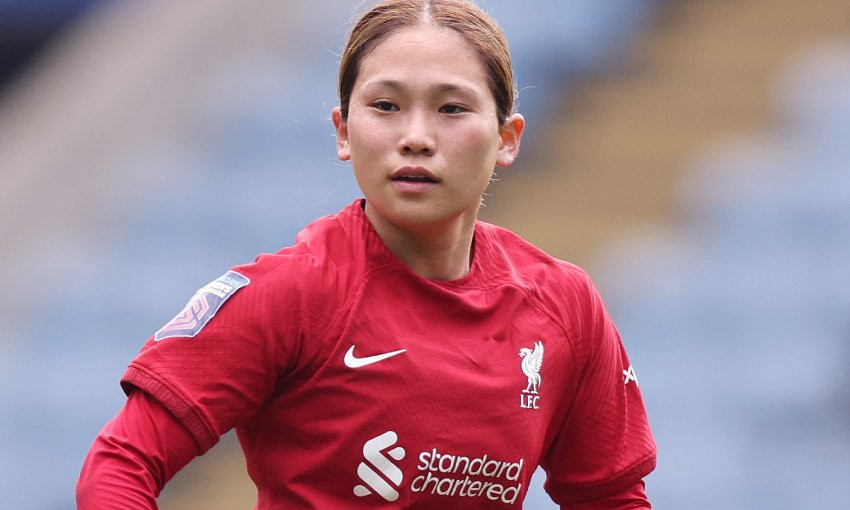
However, in 2022, arguably her biggest move was made, with North Carolina Courage calling and the NWSL the destination for her next foray abroad. It was a move that paid off for her personal progression, with her putting on some really good displays in one of the toughest and most competitive leagues in the global women’s game, and her performances quickly attracted envious glances from other clubs and coaches, including Liverpool’s Matt Beard, who brought her to Merseyside in January of this year.
Internationally, Nagano has enjoyed just as much success, with her achieving honours at most age levels. Just some of those include being part of the U16 and U17 Japan teams that won continental and world titles, whilst she captained the U17 Japan side that finished as runners-up in the 2016 World Cup in Jordan, picking up the Golden Ball award for the highest tournament scorer in the process.
She received her first senior call-up in June 2018 but had to wait until November of the same year to make her debut, during a meeting with Norway. The 2019 Women’s World Cup came just too soon for her, but 2023 was very much in her sights and she has really made a name for herself during her time down under so far.
Her role with Liverpool
When looking at Nagano’s playing style, it is not hard to see why she has had such a successful career so far. Her usual role is a deep-lying distributor, and she has spoken publicly about her love for passing and starting attacks from inside her own half.
The system that best suits her qualities is a 4-3-3, as it gives her support on either side and three forwards who can split and stretch defenders ahead of her, all of which equates to a range of spaces being created for her to target with her pinpoint passes.
When she moved to Liverpool though, she found that they favoured a 5-3-2 shape, with Beard preferring to have wing-backs and just two players at the top of the field. Therefore, Nagano has needed to adapt to a different setup on Merseyside, with there not being the wide attacking threats that she has had at other clubs and instead there being a greater reliance on playing through the thirds in transition when building attacks.

This is not something that has fazed her though, and she has instead used these experiences to her advantage, by her adding new elements to her game and continually working hard to develop what she can offer. Once she had got a few games under her belt, she quickly established herself as a key cog in the Liverpool machine, both in and out of possession, and it was her presence that allowed the likes of Missy Bo Kearns and Ceri Holland to play in more advanced areas and to demonstrate a greater goalscoring threat during the latter stages of the WSL campaign.
Fitting into the Japanese system
Under Ikeda’s stewardship, Japan have always used players in areas that suit their capabilities, and this rigid structure helps them to shift the ball through the thirds and to have a solid defensive shape to fall back on whenever they lose the ball.
Nagano has been a key part of that, with her ability to sit back ensuring that Japan have a lynchpin in front of their back three that gives them the freedom to push others higher up the pitch. Certainly, her presence is one of the reasons that Hasegawa has been able to revert to her creative playmaking abilities around the final third, rather than the deeper protective role that she has taken up since moving to Manchester City.
However, Japan are also very adaptable and will find different ways to win games if their original plans are limited by what their opponents do against them. This has been increasingly evident in the World Cup so far, with Zambia playing very openly and allowing the former world champions to pass through them, whilst Costa Rica sat back more and didn’t allow the same spaces to open up.
This means that there have been games when some players would not have fitted into the necessary style, and that was one of the reasons that Nagano was not used against the Central Americans. Against Zambia, the high back line gave her chances to make long passes and to distribute in her usual fashion, but the greater focus on wing play against Costa Rica meant that there wasn’t as much of a need for her creative passes.
Whilst that might indicate a few limitations to her game, what is clear is that she is a key player for her country when they are allowed to play their expansive, exciting brand of football, and, whilst there are perhaps bigger names in the squad, she is a vital cog that they do miss when she is not on the field.
David P. Astill is a freelance journalist who is guest-writing for Impetus throughout the World Cup.
Follow Impetus on social media – we’re @ImpetusFootball on Threads, Instagram, Twitter, and Facebook. DON’T MISS our brand new TikTok platform @ImpetusFootball too!
 impetusfootball.org