

by Beth McCowen (30/10/23)
Above: The Philippines team pictured prior to training at Optus Stadium on Saturday. Photo: Kris Goman for Impetus.
They may have suffered a drastic 8-0 loss to Australia yesterday, but the Philippines are a rapidly rising force in Asian Football.
After making their mark at the 2022 AFC Asian Cup and the 2023 World Cup, where they recorded their first-ever World Cup win against co-hosts New Zealand thanks to the excellent Sarina Bolden, the Philippines are looking to continue their upward trajectory under new head coach Mark Torcaso, who is in charge for the first time t his international window.
First Half
In the first five minutes, despite several chances arising for the Matildas, the defensive nature of the Philippines’ playing style stood firm. Despite the dominance of Australia when it came to possession, the Filipinas were full of energy at the back, and on high alert knowing they were up against some of the best in the world.
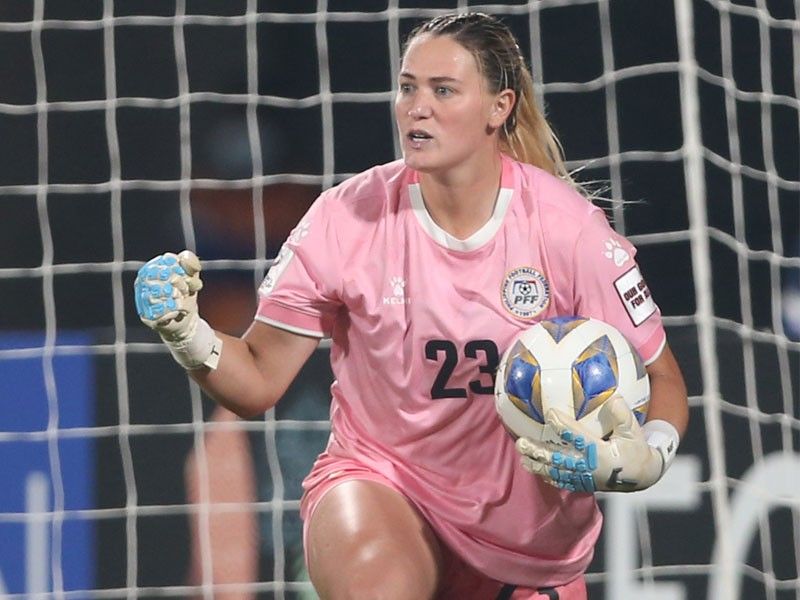
Olivia McDaniel then made her first save in the sixth minute, an important one. However, as the match progressed, there was a sense of total attacking destruction by the Matildas, and complete domination in the midfield helped by the outstanding pairing between Kyra Cooney-Cross and Katrina Gorry. Cooney-Cross’s creativity on the ball created opportunities for those upfront, and Gorry’s fearless playing style meant that on the rare occasion where the Philippines did win the ball, it was quickly reclaimed by the Matildas.
Whilst they were certainly being challenged by Australia, the Philippines fought on. Their defensive positioning saw the Matildas called up for being offside twice in just a few minutes. Despite a heavy presence in their defensive area, though, Australia managed to secure their first of many goals through fan-favourite Mary Fowler.
The Filipinas kept their composure, though, and quickly blocked another chance at goal. Whilst trying to lay some quality tackles, they drastically lacked strength when it came to keeping possession of the ball. This was due to the absence of a strong presence in the right back, as well as the Matildas’ incredibly strong pressing game and exploitation of any open space.
Australia continued to win the ball and create opportunities for Sam Kerr and Caitlin Foord, but it must also be noted that whilst she didn’t get a goal, Quinley Quezada’s performance reminded everyone that regardless of the score line, she is not a player to be messed with. The forward was one of few Filipina players who remained able to show remarkable control when on the ball, despite the mounting pressure and constant threat from the Matildas.
Following the 25-minute mark, the Filipinas were able to generate a bit more time in the attacking half, but then there was a goal for Australia from Foord. The Philippines’ defence was not as present as it was at the start of the game. They continued applying pressure to their opposition, with a shot at goal missed in the 36th minute, as the defensive side doubled down.
A free kick was granted to the Philippines after a tackle by Aussie star Ellie Carpenter, but the visiting side were yet to create a real chance at goal. The Filipinas, though, as respected as they are, were up against a clinical Australian team, and Tony Gustavsson’s team were relentless in their tactical execution today.
As the first half progressed, some composed defending by the Philippines saw Hayley Raso also called up for being offside. McDaniel, impressively, made another save as her defence started to look worryingly less alert. This lack of focus seemed to be a result of fatigue as the hard-pressing Matildas gave their opponents little time to recover from each blow they faced before attacking once again.
The Philippines showed up to this match with a clear plan to always keep several players behind the ball, knowing that it would be tough to prevent the Matildas from attacking. McDaniel made another great save to stop a header from Foord reaching the back of the net, proving that her spot on this senior team is well-deserved. Focus appeared to drop off after this as the Philippines seemed to be getting tired, and a mistake saw Kerr left open, resulting in an astonishing sixth goal for the Tillies.
Second Half
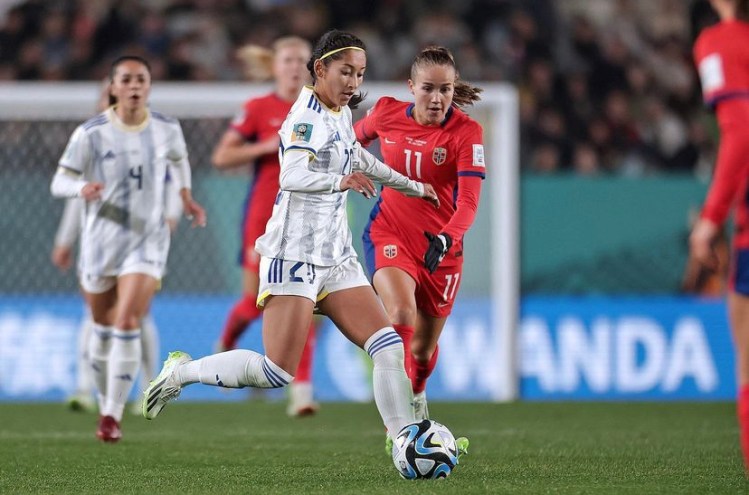
With a tough-to-take result of Australia being six goals up at the break, Mark Torcaso’s Philippines made two changes for the start of the second half by bringing on Alicia Barker and Eva Madarang in place of Reina Bonta and Dominique Randle. Australia swiftly secured another goal, and in the 46th minute the Filipinas finally had their first shot of the game.
There was a lack of communication at this point in the Philippines’ defence, which may have been exacerbated by the substitutions, but they also appeared to invigorate their team and bring about a sense of urgency following this early second-half goal, which allowed them to make an attempt at a counter-attack.
The Matildas quickly regained control, though, and the Philippines began to look less cohesive as frustration built up. Kerr was brought down by Barker, who was already having a big impact on the Philippines’ game, and Hali Long’s contribution prevented the often-unstoppable Kerr from adding another goal to her collection.
Barker looked to be leading her team’s defensive line, and whilst they lacked the meticulousness of the Aussie side in their execution, she played a vital role in applying pressure to the Matildas around the goal, a difficult task in an area where Gustavsson’s Australia were so clinical. It became clear, though, that the frustration at being unable to stop players like Foord from making it to goal in the first place, was weighing on Barker and her teammates. In light of this, their stance in defence looked slightly messy and lacked pace in both decision-making and getting in the way of threatening players before it was too late.
After an immense solo effort from Caitlin Foord leading to a further goal for Australia, the Philippines looked understandably disheartened. They had, at this point, had just one attempt at goal, meanwhile Australia had had 17. Following a brief stint in the attacking half and a rare touch of the ball for Mackenzie Arnold, the Philippines’ defence was once again tested. Madarang made an especially good block on Fowler, serving as a reminder of her value within the squad. Quickly following this, Amy Sayer had a chance headed away from goal.
This time, the chaos seemed to have disrupted the play of the Philippines’ back line, and Clare Wheeler took the opportunity to add another goal to the score sheet. Having contributed plenty to her team’s performance, without fruition though it may have been, Sarina Bolden made way for Meryll Serrano, as the Filipinas fought to prevent further damage to the scoreline.
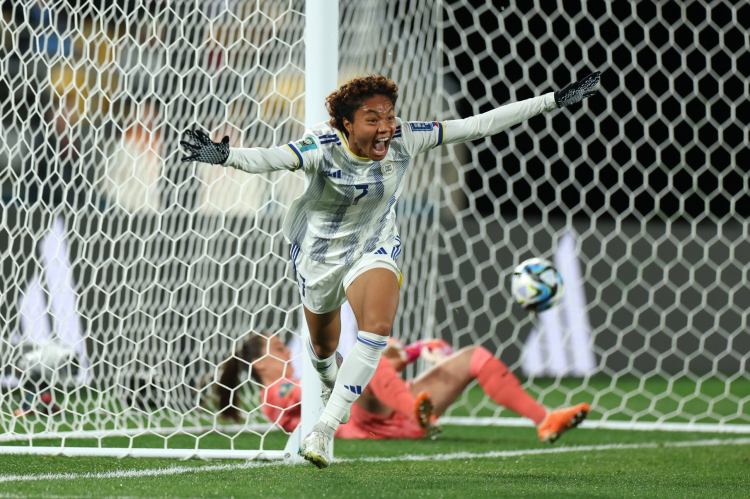
In the 77th minute, the Philippines were eventually able to get some numbers forward, but to no avail. Another shot from the Australian side was then claimed by McDaniel, following an intense battle between attack and defence. The Filipinas had found their rhythm, albeit a little too late in the game, but it did mean they were able to force the Matildas back out of the box. By this point, they were no longer being broken down as severely by their opposing side. It was refreshing to see the Filipinas get into the swing of things, but it was ultimately too late, and not enough to stop the power of the Aussies.
Analysis
Overall, we saw very little of the Philippines upfront, which is a shame since they can certainly pose a threat there, as we saw earlier this year in the World Cup. They were unable to make the most of the little possession they did have, and against such a ruthless team like Australia, that is something you pay the ultimate price for. Right up until the final whistle, the Philippines maintained a heavy presence in their defence, but it was not enough.
Barker has become renowned for her role as a right back, but, presumably with the goal of enhancing their defence, for this game, Torcaso and the Philippines maintained more of a focus on the centre-back role in this game. It is not difficult to understand why this was implemented, although it did not have the desired effect.
Perhaps the team would have been more successful using a faster fullback approach from kick-off, as this new defensive plan was capitalised on by the WSL’s Fowler and Foord. The formation used by Torcaso (4-1-4-1) underestimated the sheer strength of the Australian ability to attack consistently throughout the game and left the Philippines vulnerable in the midfield.
It is important to acknowledge the steps the Philippines has taken, despite their challenges, to improve their game, their national campaign, and their domestic league. This would have been a painful result for them to take, especially in a process where goal difference means a lot. Lapses in the defensive half cost them.
This defeat is another chapter in the Philippines’ journey. Though they have not picked up a win, their growth more generally is admirable, and this is something the Australian side are all-too-familiar with.
Follow Impetus on social media – we’re @ImpetusFootball on Threads, Instagram, X (Twitter), and Facebook. DON’T MISS our brand new TikTok platform @ImpetusFootball too!
 impetusfootball.org