

Ahead of next week’s first leg of the Olympic Games Final Qualifying Round tie between Australia and Uzbekistan in Tashkent, Ben Gilby takes a look at what The Matildas can expect (15/2/24).
Above: Umida Zoirova (15) celebrates a goal for Uzbekistan with Aziza Norboyeva (18). Photo: AFC.
Next Saturday, Australia venture to Tashkent to take on Uzbekistan with a place in the Paris Olympic Games the reward for the winner of the two-legged tie. For the Central Asian hosts of the first match, it’s the biggest opportunity in the history of their national women’s side.
Whilst Uzbekistan are yet to qualify for any major international tournament outside of the Asian confederation, they can point to two successive Central Asian Football Association (CAFA) Cup Final victories, five qualifications for the Asian Women’s Cup, and an impressive run of results in the Olympic Games qualification competition so far.
How they’ve got this far
Round One
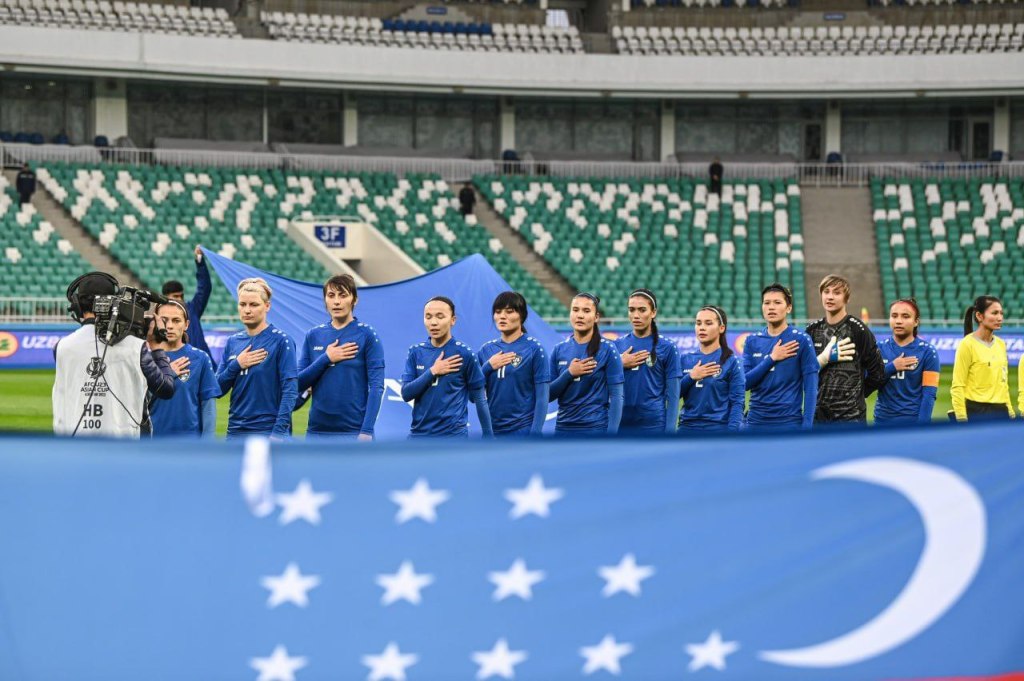
Whilst Australia received a bye through to the second round of the qualification competition for Paris 2024, Uzbekistan began their task almost 14 months ago in Tashkent. The fourth highest-ranked team in this stage of the tournament, Uzbekistan made short work of their opponents scoring 19 goals in the three games, with none conceded in their successes over Bhutan (9-0), Timor-Leste (3-0), and Jordan (7-0). Diyora Khabibullaeva hit seven goals in the process.
Round Two
For the second stage in a row, Tashkent hosted all of the matches in the group stage involving Uzbekistan. They went into the round-robin ranked as the third highest of the four nations competing alongside Japan, Vietnam, and India.
Ranked 50th in the world, Uzbekistan started their second stage group games against World Cup qualifiers Vietnam. Knowing that this opening game could be the key encounter in pushing for a place in the next round, Head Coach Midori Honda selected an attack-minded 4-3-3 formation. Despite Vietnam conjuring the best opportunities of the opening period, it was the hosts who scored the only goal of the game as Umida Zoirova played a one-touch pass to Nozimaxon Ergasheva who won a corner. As the set piece came across, Zoirova played a glorious touch for Khabibullaeva to sweep home what would be the only goal of the game.
Second up for Uzbekistan was a tough assignment against World Cup quarter-finalists Japan, the world’s 11th-ranked side at the time. In a hint as to what Australia could expect line-up and formation-wise, Honda switched to a defensive 5-3-2 setup with Maftuna Shoyimova and Modina Khikmatova adding extra ballast and Nilufar Kudratova replacing hot shot Khabibullaeva up front. The outcome was a 2-0 victory for Japan with Moeka Minami and Remina Chiba scoring within five minutes of each other during the opening quarter of an hour.
The last group game paired Uzbekistan with India, the lowest-ranked nation in their group. A strong victory would ensure the Central Asian nation would progress into the final round of qualifying and Honda responded with the emphasis on attack in a 4-2-3-1 formation.
India offered little resistance and went behind with just two minutes on the clock. Lyudmila Karachik’s corner was turned across the box by the returning Khabibullaeva for all-time record scorer Kudratova to direct into the net. Six minutes into the second half, Khabibullaeva found Zoirova in the box, who threaded a pass through the eye of a needle for captain Karachik to sidefoot home. Seven minutes from the end, a sumptuous team goal sealed Uzbekistan’s passage to the final qualifying round as three rapid-fire one-touch passes around the centre circle saw the ball played out to the right wing before play returned to the central area outside the area, where a further three one-touch passes ended with Karachik to fire home the winner.
The Head Coach
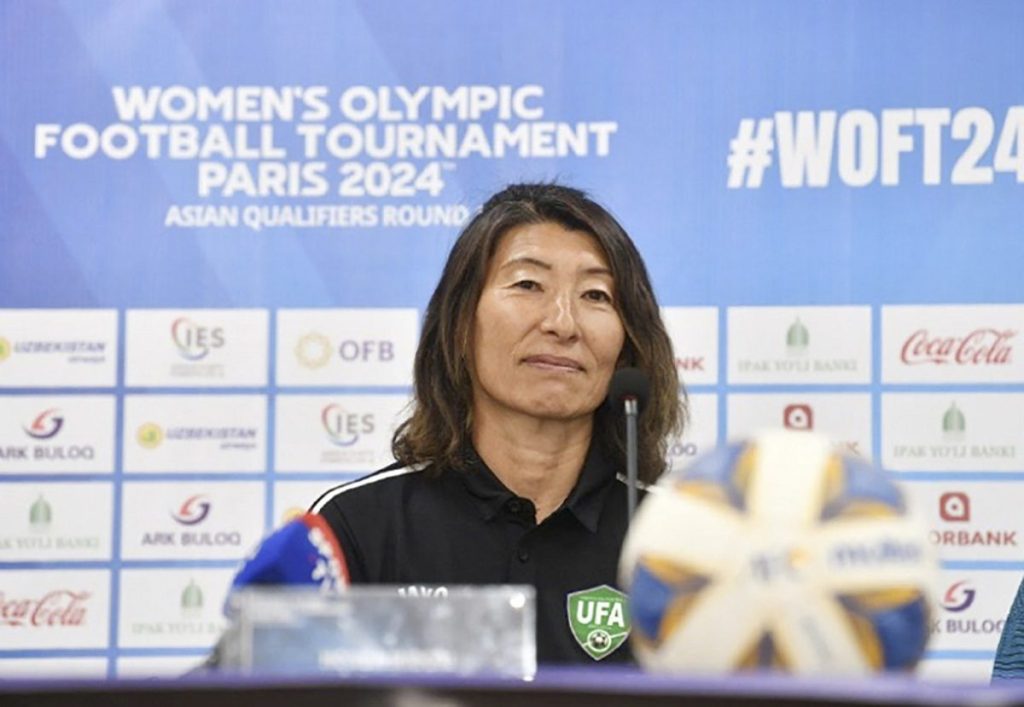
Midori Honda is a tactically astute head coach who has been in charge of Uzbekistan for two years. A defender throughout her playing career, Honda won a total of 43 caps for Japan having made her international debut at the age of 16 against Chinese Taipei in the Asian Cup with her final appearance coming ten years later at the 1991 World Cup. In her 19 games in charge, Uzbekistan has won nine times and finished fourth in the Asian Games.
Playing style
Uzbekistan are a team able to mix their formation depending on whether in possession or not and with talented midfield and attack weapons, Australia will have to be on the front foot to clinch their spot in the Paris Olympics.
Given time and space, Midori Honda’s side are very comfortable on the ball. Uzbekistan thrive when they are able to play a rapid-fire passing game in the centre of midfield and link up with their wide players. They have midfielders and attackers who are comfortable in possession, full of pace, and have the confidence to beat their defender and look for an incisive pass.
The battle of the midfield will be the key area of this tie – particularly in the first leg as Uzbekistan have a bank of attack-minded threats (see Key players, below) who have excellent footwork and can thread passes between defenders to unlock a backline.

This ability was highlighted perfectly with Uzbekistan’s breathtaking third goal in their win over India in the second group stage of qualifying. Three one-touch passes in the centre circle area of the field before the ball was fed out wide were then followed by a further three rapid-fire one-touch passes on the edge of the box leading to Karachik firing home from long range.
Honda’s side are happy to let the opposition have possession in their own half, but when that switches into the front third, the side revert to lines of five and two in front of their last three outfield players. In this situation, Uzbekistan have a tendancy to leave a lot of space between their two centre backs, Nafisa Nabiqulova and Kamila Zaripova, which the Matildas will need to ruthlessly exploit. A combination of perfectly threaded balls between the pair, or balls over the top, can pay dividends.
It is this part of the game that has the potential to bring Australia success. Uzbekistan have conceded 25 goals in their last 10 games – a run that has seen them lose 6-0 and 7-0 to China, plus 8-0 to North Korea since the end of September 2023.
In goal, Maftuna Jonimqulova is an excellent shot-stopper but can find a high ball into the box from crosses, set-pieces challenging on occasion.
Key players
Dilrabo Asadova
The 27-year-old is a tidy defender who is unharried and looks composed on the ball. Asadova started the games against Vietnam and India in which Uzbekistan kept clean sheets to earn their status as the best-placed runner-up in the second round group stage. Asadova is a key link player with Lyudmila Karachik in front of her.
Lyudmila Karachik
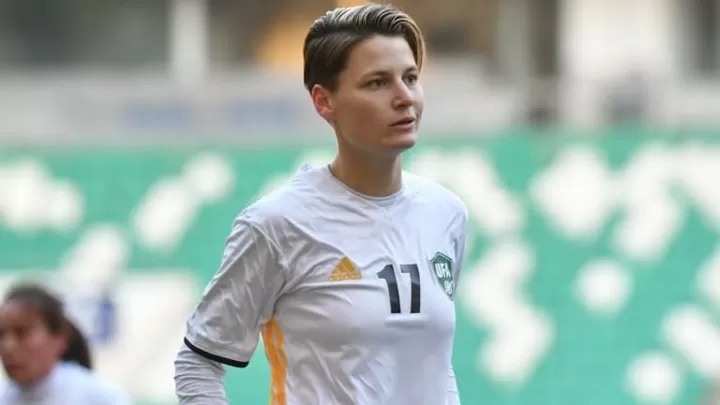
This 29-year-old attacking midfielder, who has captained her national side has pace and guile in abundance with excellent footwork out wide to turn and beat defenders. Karachik is a bag of tricks who can drop deep to start moves and looks to initiate one-touch rapid passing in the midfield. A player who loves to beat a defender and accelerate away, Karachik has good close control and a strong awareness of those around her.
Diyora Khabibullaeva

This 24-year-old striker is sharp and clinical, boasting a superb international record of 27 goals in 25 games, including nine in this Olympic qualification series alone. Khibibullaeva is just three goals away from equalling the Uzbekistan national record of 30 held by Nilufar Kudratova. A creative dynamo who combines an ability to combine both close-range finishing in a poacher’s style with jinking play around the box, Khibibullaeva will be someone that the Matildas defence will have to keep a close eye on.
Follow Impetus ’71 on social media –
Twitter (X): @impetusfootball and @impetus71 TikTok: @Impetus71 Facebook: @Impetus71
Instagram: @Impetus_71 Threads: @Impetus_71
 impetusfootball.org