

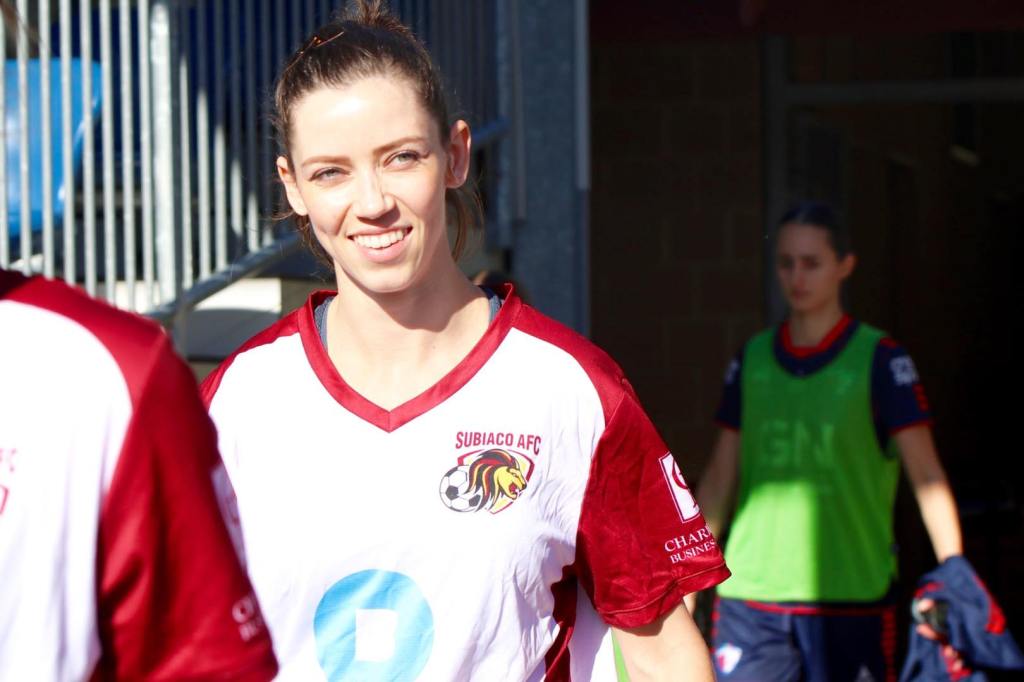
In the latest part of our WA on Wednesday series of player interviews from the NPLW WA, Subiaco‘s Savannah Olsthoorne talks to Ben Gilby about her footballing journey, life at Subiaco, and what more can be done to identify talented players from outside the Perth metro areas (22/5/24)
Above: Savannah Olsthoorne (white shirt) looks to break through against UWA Nedlands. Photo supplied to Impetus by: Denyse McCulloch (visit Denyse RT Photography on Facebook)
Subiaco’s Savannah Olsthoorne is in only her second season as an NPLW WA player at the age of 29, and is catching the eye with her ability to provide regular assists and the potential to chip in with important goals for her side.
Olsthoorne describes herself as: “A team player with a high work rate. I don’t like to let people down so I will always give 110% and I think that is reflected in my game.” That desire to go above and beyond for her side has marked her out as a key member of the Subiaco side who are pushing for their first-ever place in the Top Four Cup at the end of the season. That ability combined with her speed, fitness, and composure in stressful situations has allowed a player that is new to the Perth metro football scene to flourish.
The Subi star has spent almost all of her footballing journey playing about her native Bunbury area, just under 170km south of Perth, and she outlined how her career developed in the state’s South-West.
“When I first started playing at the age of six or seven, there were no girls’ teams, so I always played with the boys. It wasn’t until I was 13-14 that I actually started playing in the women’s team and we had quite a lot of success and won many league titles.
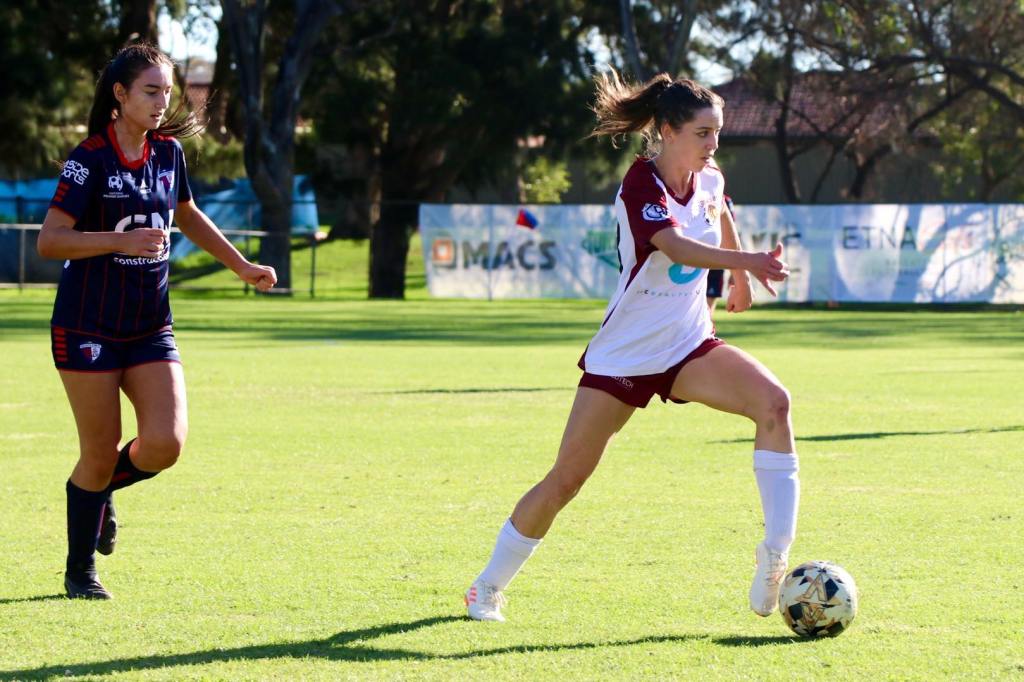
In my second season, I actually won the association Youth Player of the Year which was a surprise to me at the time! I think playing with the boys helped my development as a player. The lack of opportunity was always the biggest problem in the South-West of the state.
“When the South West Phoenix FC started and Stephen Suttie came on board as the women’s coach, this provided a great stepping stone. The Phoenix club provided an opportunity for rural players to play to compete at a high level without the need to relocate. Steve asked me for about two-three years to join the women’s team, however at the time I didn’t want the commitment of travelling to Perth every second weekend to play (a journey of just under two hours.)
“In 2020 I finally agreed, and in that time we won the State League Division One title for three years in a row. Steve was a big contributor to my development as a player. I then moved to Perth and decided I would challenge myself by trying out for an NPL team. This had its own challenges – coming in at 29.
“I really had to prove myself. I ended up joining Subiaco and I’m very grateful for the opportunity Greg (Farrell, head coach) has given me. It has been the biggest challenge I have had – starting with a new team in the NPLW. Having to rebuilding relationships, prove myself, and show what I can offer is a challenge in itself.
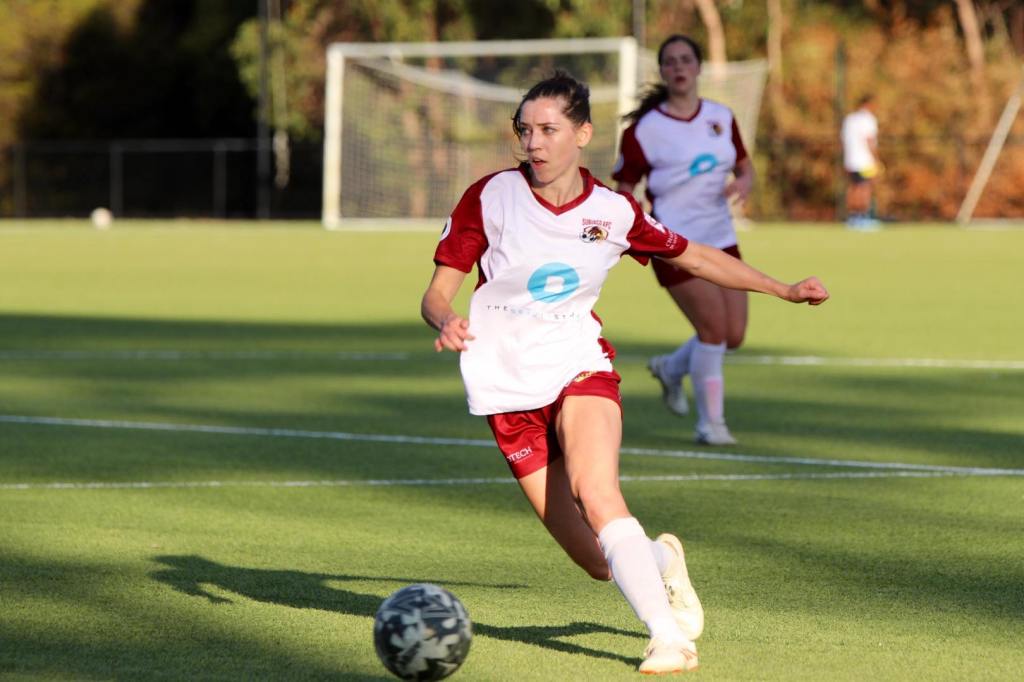
“I’ve always played in a team where the coaches already knew me, so almost starting fresh was rather unfamiliar for me. The coaches didn’t necessarily know my strengths, what I’m good at, or how to utilise my skills to get the best outcomes in a game situation. So it was a period of discovery from both the player and coaching perspective.”
Olsthoorne gradually grew into her new surroundings and the standard of the game, and towards the end of the 2023 season was flourishing, providing important link-up play and assists for the team – something she is continuing to build upon in 2024. The development of her confidence was the key element in her growing importance to Subiaco.
“I look back and I can see there were a lot of positive moments. I think last season, being my first season in the NPLW, was more a focus on building up my confidence in a new league, a new team, and adjusting to a new coaching style and strategy. Last season set some good foundations, and this season I’m really starting to find my stride.
With seven rounds of this season played, Subiaco are within touching distance of the top four, and with the league looking more competitive than ever this year, Olsthoorne is developing her role, playing in a different position for Greg Farrell’s side.
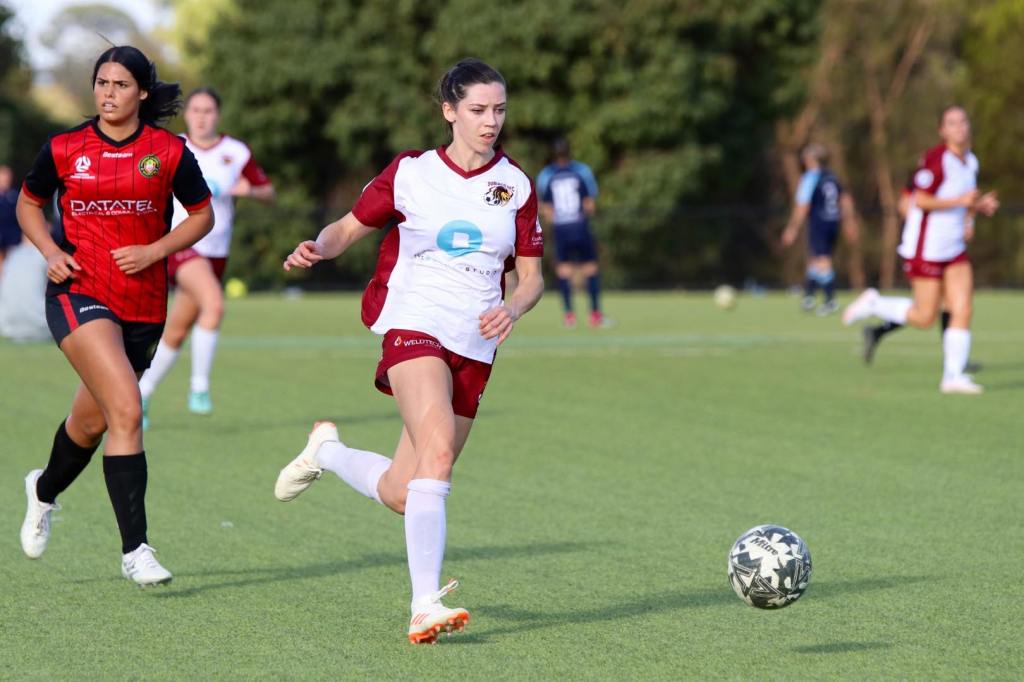
“This season I am playing a slightly different role as a wing-back. Historically, I’ve always played as a winger, so adjusting to the defensive side is something new to me. Reading the ball and defensive positioning is something I’ve been working on with Greg and I’m feeling much more comfortable in the role.
“Overall I think the wing-back position suits my playing style very well and I believe there is still a lot of growth to be made in my playing ability. From a team perspective, I think we’ve made a positive start to the season. There were a lot of new players that signed this season and I think we are still learning to play with each other. We are seeing improvements every week, which I think really showed in our 3-1 win against NTC.
“Finding myself in a new position this year has had its own challenges, which has been exciting but also pushed me to continue to further my skill and knowledge of the game – so excelling in this new position will be a goal. And of course, making the top four is both a personal and team goal.
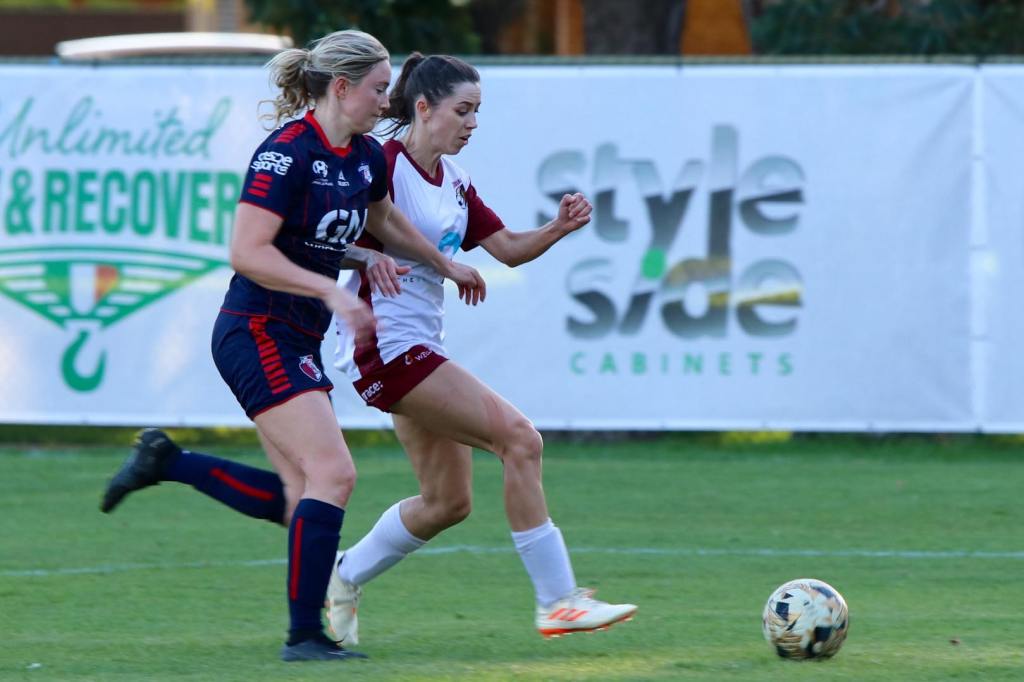
With Subiaco becoming harder and harder to beat each season, the next step is to break into the top four. Olsthoorne believes that off the pitch, the foundations are there to give the players everything they need to make that breakthrough.
I think Greg and Annie Farrell have been big drivers towards the improvements. They both invest so much time and energy into developing players. They have put work into coaching apps, recovery programs and routines, player injury management, and most importantly team culture. They keep the players disciplined and accountable and think this is an important component. Both Adi Juric (technical director) and Branko Jelic (assistant technical director) take time away to do specialised training sessions with the team and individually, and this doesn’t go unnoticed. I’m sure there is a lot more that goes on internally, overall the club is going in a very positive direction.”
Whilst Olsthoorne is now a role model for players from the South-West of the state to continue to aim for the NPLW, it can only happen if player pathways from the area, and to the northern areas of Western Australia continue to evolve and develop.
“As access to better player identification pathways are now more readily available, and as awareness of women’s soccer becomes more prominent, the standards have increased a lot. I noticed this increase, particularly in the South West – player technical ability is a stand out compared to a number of years ago. I think we just need to keep doing what we are doing – creating awareness, development pathways and continue to target rural areas that don’t have prominent pathways because there is a lot of talent out there that we are still likely missing.
Follow Impetus on social media –
Twitter (X): @impetusfootball TikTok: @impetusfootball Facebook: @impetuswomensfootball
Instagram: @impetusfootball
 impetusfootball.org