
by Emmanuel Faith (22/7/24)
Above: The Nigerian national side. Photo: Super Falcons on X.
The Super Falcons are back at the Olympics after being absent for 16 years. This has been an arduous wait.
They had to come through a difficult qualifying round, which saw them knock out other African power-houses like Cameroon, and South Africa to get to this grand stage and despite the internal ruckus going on within the association, every citizen has expectations of the team.
Squad
Goalkeepers: Chiamaka Nnadozie, Tochukwu Oluehi.
Defenders: Michelle Alozie, Oluwatosin Demehin, Osinachi Ohale, Chidinma Okeke, Nicole Payne.
Midfielders: Deborah Abiodun, Onyi Echegini, Toni Payne, Ifeoma Onumonu, Christy Ucheibe.
Forwards: Rasheedat Ajibade, Chinwendu Ihezuo, Uchenna Kanu, Chinonyerem Macleans, Esther Okoronkwo, Asisat Oshoala.
Alternate Players (can only be called up if any players above are injured): Morufa Ademola (GK), Jumoke Alani, Gift Monday, Regina Otu.
Head Coach
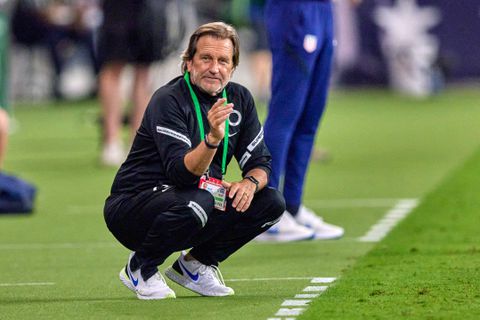
Randy Waldrum, an American coach has been with the Super Falcons since 2020, after declining the appointment three years before.
He guided the Super Falcons to a fourth-place finish in the African Nations Cup, one of the worst finishes in two decades. However, Waldrum ensured a third consecutive World Cup appearance, guiding the team to the second round for the third time.
While he hasn’t won a trophy in a decade, Waldrum is a two-time National Coach of the Year (2009 by Soccer America; 2010 by NSCAA) and guided Notre Dame to trophies during his time there. He’d be hoping to break that 10-year jinx by attempting to pick a medal at the Olympics.
Olympics History
Before their long break from the Olympics, the Super Falcons made three consecutive appearances between 2000 and 2008. In their debut tournament, Nigeria failed to pick up a win, despite their valiant efforts as they lost to China, Norway, and the United States.
They however did a lot better in the next Olympics in 2004, where they secured their first victory at the Olympics and made it to the quarter-finals, becoming the first African country to make it to the quarter-finals Unfortunately, they lost to the European powerhouse, Germany by two goals to one.
Two narrow losses in 2008 against North Korea and Germany, and a first-half hat-trick from Brazilian legend Cristiane, meant the Super Falcons had another tournament with zero points, a narrative they will be hoping not to repeat this time around.
How they qualified
The Super Falcons had to cross major hurdles in a three-round qualifying process on their way to booking the Olympics ticket.
Having scaled through a successful first round, Nigeria set up an interesting match-up with the Eastern African country, Ethiopia.
Ethiopia had beaten their first-round opponent, Chad 10-0, and were ready to cause Waldrum’s team some trouble. They showed they were no pushovers in the first leg as they held the Super Falcons to a 1-1 draw. However the second leg was a different story.
Leveraging on squad depth, versatility, and experience, the six-time African player of the year, Asisat Oshoala marched her team towards an emphatic 4-0 victory, setting up a goal and creating a sumptuous assist during the process.
The next two qualifying rounds were close calls. A drab draw in the first leg against the Lionesses of Cameroon ensured there was all to play for in the second leg and an Esther Okoronkwo first-half finish from a sumptuous goal created by Jennifer Echegini meant that they had set up a final round with the current WAFCON champion, South Africa.
A potentially exciting match-up between two of the continent’s power-houses ended in a tensing 180 minutes that produced a single goal – a penalty across both legs to secure Nigeria’s passage to France.
Strengths
The Super Falcons‘ strength revolves around two key components; discipline and versatility.
The team play with a lot of coordination and discipline. In recent times, their first mantra has been to prevent the opponent from scoring, and defending in units, motions, and as a team. Their three clean sheets in four games including two against the European Champions and Olympic Gold Medalist is a testament of how disciplined they are defensively.
This trait will be useful as they lock horns with very attacking teams like Spain and Brazil. Another major strength is how versatile the squad is. There are more than five players who can play at least two different positions very comfortably in the team.
Players like Toni Payne and Rasheedat Ajibade can play in the midfield as well as on the wing, and almost all the forward players can play as wingers or strikers. How the coach leverages this versatility will determine if they will make it out of this group of death.
Areas for development
A major gap recently has been the attacking cohesion and consequentially, a paucity of goals. Thanks to the array of attacking talents, Waldrum continuously tinkers with the attacking setup, while attempting to find the perfect balance that will give him the desired attacking output.
Different players offer different solutions to the team and picking a perfect blend of players that can deliver the desired results is a huge chasm the coach needs to bridge.
For instance, despite an exceptional performance by Asisat Oshoala and Esther Okoronkwo in the second and third round of qualification, he stuck with starting a player (Ihezuo) that hasn’t featured in the last 10 calendar months for the final qualification round, a choice that led to heavy criticism by Nigerian fans.
Choosing the right blend of attacking talents that will enable a free-flowing attacking football that ultimately results in a lot of goals is a major gap that has to be fixed.
Key Players
Onyi Echegini:

She is indubitably Nigeria’s most in-form player right now. With eight goals in her first eight appearances for Juventus including a brace and a hat-trick, Echegini isn’t scared of running at any defence and sashaying through them if necessary. The build-up to Esther Okoronkwo’s goal against Cameroon in the last round of matches is a glimpse of what the dazzling midfielder can do.
Deborah Abiodun
Nigeria will be facing highly technical midfielders like Bonmati, Patri, Hasegawa, and Yaya, and how they nullify these sporadic threats will be crucial. Abiodun, often referred to as Debby-Kante because of her work rate, has to deliver an impeccable performance. She already showed the world a glimpse of her ability last year against Canada and she is a pivotal piece of the Super Falcons‘ journey to success.
Rasheedat Ajibade
Ajibade is a leader, an epitome of excellence, and one of the most talented players in the squad. Having grown through the ranks from U-17 to U-20, and now making great exploits with the Super Falcons, her array of attacking skills from shooting to picking pivotal passes, and creating sumptuous assists when needed, Ajibade will be key to Nigeria’s success in France.
Chiamaka Nnadozie
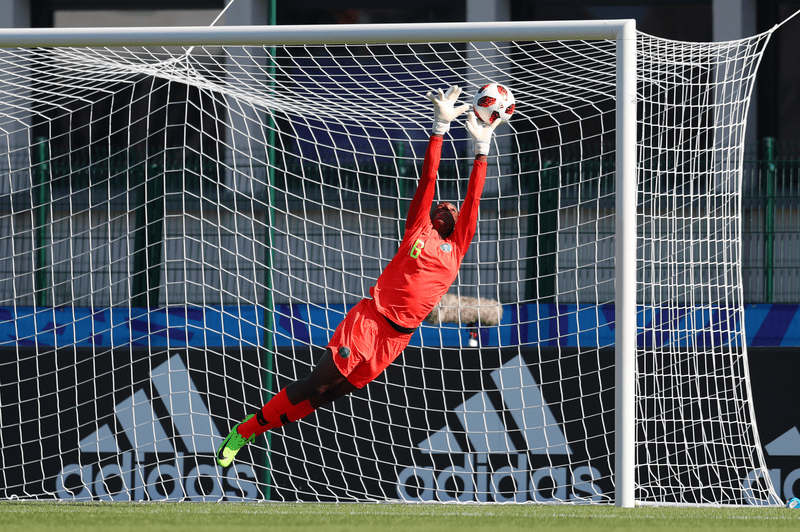
There is a confidence you have when the best goalkeeper on the continent is between the sticks for your country. Nnadozie commands her box with calming confidence, stopping long shots, close-range shots, and also has a strong record saving penalties.
Having made great waves in Europe, the Paris FC goalkeeper will hope that her club’s excellent form will continue at the Olympics and she is able to propel her team to success.
One to watch
Esther Okoronkwo

A relatively new name globally, Okoronkwo is a trump card, a secret weapon Waldrum could use effectively if she makes the final list. Having scored four goals in her last four appearances for the Super Falcons, the UD Tenerife striker is one of the players that can play across different positions in the frontline.
She also plays alongside other attackers Rinsola Babajide and Gift Monday at club level and the club’s chemistry could come handy in making unpredictable attacking moves to open up the opponent’s defense.
Okoronkwo hasn’t made a full debut at an international tournament yet, but who knows, she might court the stage at Paris with her bedazzling skills
Success would be:
For the Super Falcons, success will be making it to the quarter-finals. Being paired with three powerhouses in the group stage is a great challenge.
Prediction:
The Nigerian Federation has been allegedly lackadaisical concerning the Olympics preparation and as a team, the Super Falcons have not played a competitive match since April with none in sight before the Olympics.
Despite this structural challenges, Nigeria have shown that they can pull themselves together and pull off great results. The absence of the versatile left-back Ashleigh Plumptre, and the young but very reliable center back, Blessing Demehin will be felt, but they should make it out of the group if they avoid defeat against Brazil in the opening match.
Fixtures
25 July 2024 Nigeria v Brazil, 7pm, Stade de Bordeaux, Bordeaux.
28 July 2024 Spain v Nigeria, 7pm, Stade de la Beaujoire, Nantes.
31 July 2024 Japan v Nigeria,5pm, Stade de la Beaujoire, Nantes.
All kick-off times are French time.
Missed any of Impetus’ other Olympic nation guides so far? Catch up by clicking below!
CANADA: https://impetusfootball.org/2024/07/13/olympics-preview-canada-2/
FRANCE: https://impetusfootball.org/2024/07/14/olympics-preview-france/
COLOMBIA: https://impetusfootball.org/2024/07/15/olympics-preview-colombia/
NEW ZEALAND: https://impetusfootball.org/2024/07/16/olympics-preview-new-zealand-2/
UNITED STATES: https://impetusfootball.org/2024/07/17/olympic-previews-united-states-of-america/
GERMANY: https://impetusfootball.org/2024/07/18/olympics-preview-germany/
AUSTRALIA: https://impetusfootball.org/2024/07/19/olympics-preview-australia-2/
ZAMBIA: https://impetusfootball.org/2024/07/20/olympics-preview-zambia/
SPAIN: https://impetusfootball.org/2024/07/21/olympics-preview-spain/
Follow Impetus on social media –
Twitter (X): @impetusfootball TikTok: @impetusfootball
Facebook: @impetuswomensfootball Instagram: @impetusfootball
 impetusfootball.org