

Above: Sam Kerr, Hayley Raso, and Tameka Yallop celebrate. Image: Football Australia.
By Genevieve Henry (16/4/25).
With the 2026 Women’s Asian Cup looming and Australia’s most beloved generation yet to win a major trophy, Impetus’ Genevieve Henry discusses the label of “the Golden Generation” and why it slows down the future while stopping us from properly celebrating the past.
Australian women’s football has experienced a tremendous rise in popularity over the past few years, with the Matildas achieving both global and local recognition for their impact on the sport. The 2023 Women’s World Cup transformed the sporting landscape of Australia, the home tournament drawing unbelievably large crowds, endearing the national team to the general public, and inspiring a surge in registrations for both young girls and boys. The Matildas have become one of the most popular teams in the country, competing with sports such as cricket, rugby, and AFL, which have dominated popularity for years. The players have become household names, with the average Australian not only able to name Sam Kerr, the figurehead of the side, but other members of the Matildas with Caitlin Foord, Ellie Carpenter, and Mary Fowler among the most beloved.
But, with this widespread recognition comes immense pressure. For years, the Matildas have been at the precipice of greatness. Since around 2017, the football world has had eyes on this team, waiting for the right place and the right time for Australia to finally achieve something. This ongoing era of promise was led by a freakish goalscorer in Kerr, alongside an especially talented group of players around the same age; Foord, Steph Catley, Kyah Simon, Emily Van Egmond, Katrina Gorry, Hayley Raso, Mackenzie Arnold, Tameka Yallop, and Alanna Kennedy are all among the names. They have been labelled as a “Golden Generation” by many fans and pundits. But, their achievements have been largely off-field, winning hearts but no major trophies.
Australia has been stuck in cycles of excitement and disappointment. When the Matildas fell short in a tight game to Japan in the 2018 Asian Cup final, we looked to the 2019 Women’s World Cup. After the nightmare in Nice, we regrouped and looked to the Tokyo Olympics. The hope and celebration from coming fourth in that tournament gave the Matildas and their fans a massive confidence boost going into the 2022 Asian Cup. It was the perfect tournament to make their mark and hopefully ride the wave into a World Cup on home soil. But, in arguably the hardest game for fans to relive ever, Australia once again fell short. Every tournament, we pretend we can focus on the next.
The 2023 World Cup was the pinnacle. It was the moment to prove that Australia could compete with, even beat, the best in the world. For a while, it looked possible; the success that Australia had dreamed of was almost tangible. But, we all know how it ended; fourth, again. While this was a remarkable achievement in the ever-competitive and improving landscape of women’s football, it simply did not live up to the expectations that the Matildas had set for themselves. The Paris Olympics had similar expectations, yet far worse results and an utter lack of excitement. So, all we have to show for all the hype are some friendly tournament trophies and an all-time high FIFA ranking of 4th in 2017. Will the Matildas break the pattern with this Asian Cup, or will they continue to fluctuate between near-success and total capitulation?
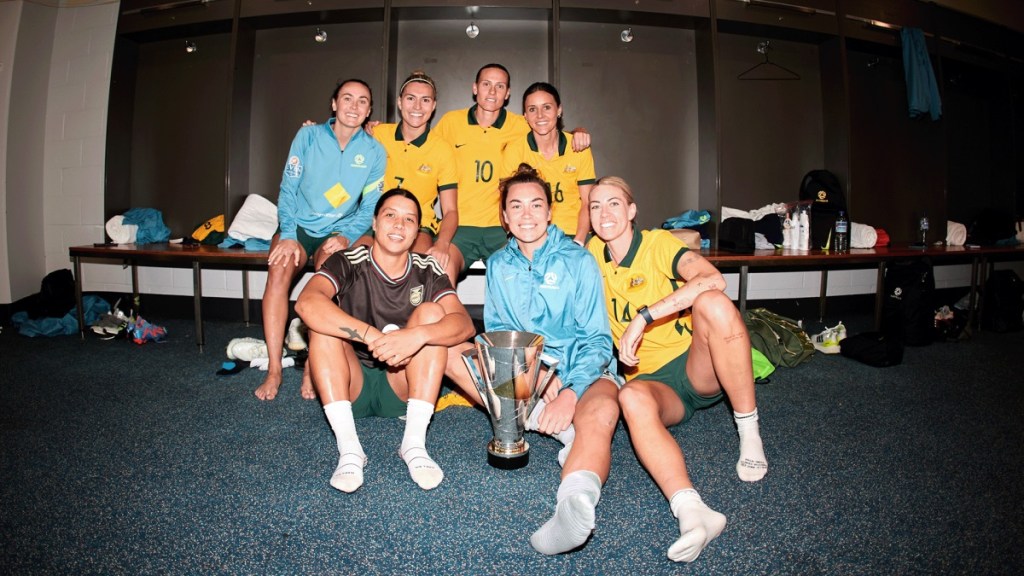
The 2026 Asian Cup on home soil may very well be the last chance these players have to win a major trophy. The 2027 Women’s World Cup isn’t much further, but it’s likely that it could be the “Golden Generation’s” final cycle. Realistically, the Matildas have the talent to win this upcoming continental tournament. They have the home advantage, arguably the biggest name players, and perhaps the most incentive to bring it home. But, with the uncertainty of the coaching situation, it’s hard to see the Matildas beating Japan, the most threatening opponent in Asia. Over the next few years, fans, especially newer ones who have only known this generation, have to come to terms with their imminent retirements.
Labelling a group as a “Golden Generation” is not only misleading but actively harms the achievements of the players of both the past and future. It is crucial to recognize the contributions of those players who helped to lay the groundwork for women’s football in Australia. The term detracts from the talent of the generations that came before and built the Matildas. What about Angela Iannotta, Cheryl Salisbury, and Julie Dolan? The continued focus on the “golden” players of today risks erasing the history of the women who played a pivotal role in bringing the sport to prominence in Australia.
It also minimizes the upcoming talent and gives them a benchmark, a team that they can never beat in terms of public adoration. The “Golden Generation” label implies that the current group of players is a once-in-a-lifetime collection of talent, which can create unrealistic expectations for the future. For the Matildas’ next generation of players, this could create immense pressure to replicate or surpass the successes (as individuals and as a team) of the likes of Kerr, Foord, and others. While it’s vital to celebrate achievements, positioning these players as the pinnacle of Australian women’s football may inadvertently stifle the development of younger talent, who could feel as though they have to match or outdo the “golden” players’ achievements just to be considered successful.
Additionally, even if the Matildas were in a “Golden Generation”, other nations may have their own talented cohort. As male footballer Kevin De Bruyne famously expressed, it’s not fair to compare the successes of one country’s supposed best with others going through a similar era of promise. So, how can we say our “Golden Generation” should have achieved more when they are going up against the “Golden Generation” of England, Spain, and other powerhouses? It’s even more unfair when one considers the seemingly continuous stream of talent produced in countries like the USA and Japan. It reduces the quality of all parties involved instead of recognizing the ebbs and flows of national team football.
Another downside to the “Golden Generation” label is its suggestion that Australian women’s football may have reached its peak. If we focus too heavily on the achievements of this specific cohort of players, there is a risk of complacency in terms of investment, development, and long-term strategy for the sport. In order to find success in the future, Football Australia needs to invest in the continuous evolution of women’s football. By suggesting that the Matildas have already reached a “golden” zenith of sorts, Australia risks failing to keep pace with the growing global competition in women’s football. The Matildas need sustained investment at the grassroots level, as well as in coaching, infrastructure, and support systems, to ensure that future generations continue to thrive.
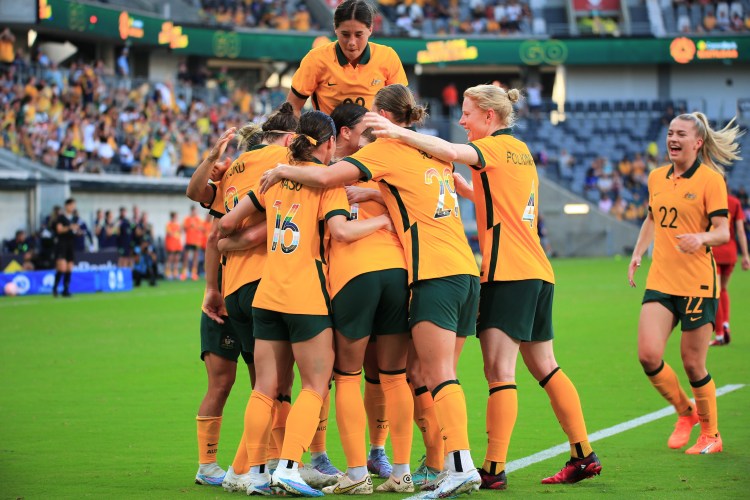
The “Golden Generation” label reinforces the idea that this group of players is a one-off success story, rather than part of an ongoing, evolving program of excellence. Women’s football is still growing, and Australia is a country where the potential for sustained success is high. By presenting the Matildas’ rise as part of a “golden” era, we may inadvertently convey the notion that they are an anomaly, rather than a product of a system that should be improving year by year. It becomes a narrative that doesn’t truly reflect the collective, sustained work behind the scenes necessary to push the sport forward.
Instead of labeling the generation as “golden,” we should embrace the notion that women’s football in Australia is an evolving landscape. Each new generation builds upon the successes and lessons of those who came before. The focus should be on development, recognition of diverse talents, and the long-term commitment to making Australian women’s football a world leader—not just basking in the glory of a singular “golden” era.
Of course, the achievements of this group of Matildas should be celebrated, but not elevated to a level that implies that their success is once-in-a-lifetime. By shifting the focus to the continued growth and investment in the sport, we can ensure that the Matildas’ current success is just the beginning of many future triumphs in Australian women’s football. The ultimate goal should be sustainability and progress, not simply a moment of brilliance that fades over time.
What our “Golden Generation” achieved was bigger than a trophy–they became a figurehead of Australian sport, an inspiration to little kids, and a symbol of female power and achievement; by shedding the “Golden Generation” label, we allow the celebration of the ongoing Australian contributions to women’s football and create a future where success is a continual, evolving story.
Follow Impetus on social media –
Twitter (X): @impetusfootball TikTok: @impetusfootball
Instagram: @impetusfootball
 impetusfootball.org
this is amazing evie.
LikeLike