
By Clare McEwen (05/05/2025)
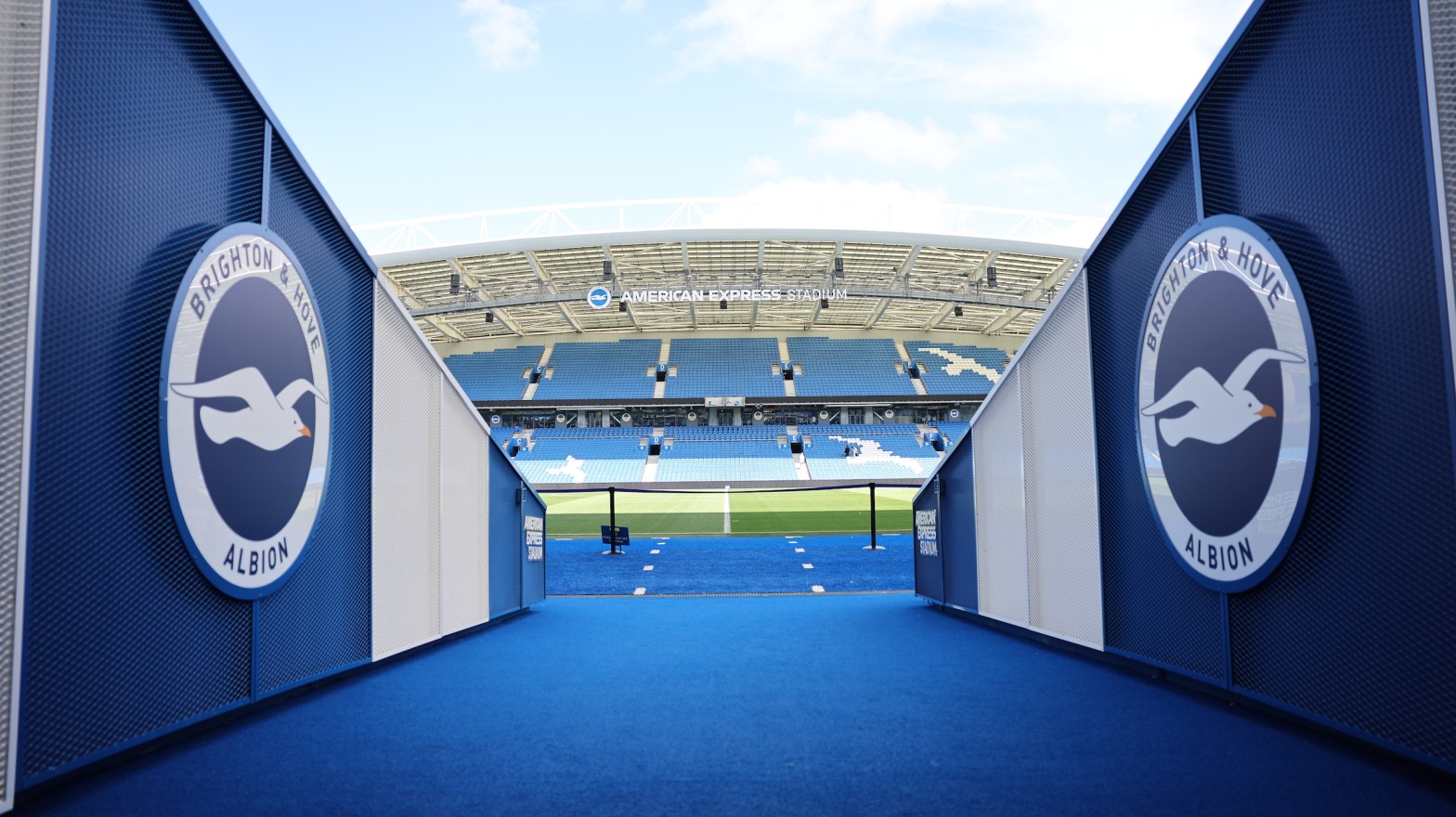
Above: Brighton’s Amex Stadium. Photo: Brighton and Hove Albion FC Website.
In January 2025, Brighton & Hove Albion FC announced plans to design a custom-built stadium for their women’s team by the 2027-28 season. In her debut for Impetus, Clare McEwen asks some key questions: is a new stadium really needed? What could a purpose built stadium for a women’s team look like?
Brighton & Hove Albion are breaking ground in women’s football: metaphorically and soon to be literally. Their purpose-built stadium project, the first of its kind, is bidding to push women’s football further down its own unique path whilst asking a question of other WSL clubs.
Brighton are investing heavily in their women’s team: building the squad this season with marquee signings including England internationals Fran Kirby and Nikita Parris, they are now also planning their new women’s stadium – all signs are pointing to club bosses realising the opportunity women’s football presents and seizing the initiative.
Currently, the team play most of their games at Crawley’s Broadfield Stadium, but deputy club chairman, Paul Barber, hopes they will have their own purpose-built stadium for the 2027/28 season. Although we’ve seen a shift towards women’s teams playing more games at the clubs’ main stadiums, there are many advantages to these teams having their own stadiums.

As much as the sport is the same regardless of who’s playing it, in reality, the needs of players and fans are different. And then there is the attendance at women’s matches. One day the crowds will rival those seen at men’s games but until then, there is a need to be realistic.
There’s no doubt the main club stadiums provide a great experience for everyone. Players get to play at iconic stadiums in front of bigger crowds than can be squeezed into their home grounds. Families get to enjoy the major club stadium vibe but with accessible ticket prices and an inclusive atmosphere (rather than the more hostile and hugely expensive men’s games). But there are downsides. It’s expensive to run a big stadium so ticket sales have to cover expenses. And as much as this won’t be a problem in the future, at this point in time, it is.
That’s not the only concern. Teams (and fans) get a much better atmosphere when stadiums are full. It’s probably not great to play in a massive stadium with a few thousand spectators rattling around in it. The atmosphere at Chelsea games played at Stamford Bridge has sometimes been described as disappointing by fans. It must also be disappointing for the players. You lose some of that home advantage if there is no audible ’12th woman’ in the stands.
These high profile games also only get played when the men’s teams are not using the main stadium; the women’s teams work around the men’s schedule — such as when Arsenal’s Champions League clash with Bayern Munich was moved to Meadow Park instead of the Emirates so that the men’s team could play Crystal Palace in the League Cup. In the future, this balance will surely shift, but for now, even Champions League games mean making the journey out of central London for Arsenal fans.
This is why purpose-built, mid-sized stadiums are the logical next step in the evolution of women’s football. Currently, although Arsenal and Leicester City regularly use the club’s main stadium, most WSL teams have either smaller grounds of their own (Chelsea and Everton) or share their grounds with academy teams, non-league teams, English Football League (EFL) teams or rugby teams.
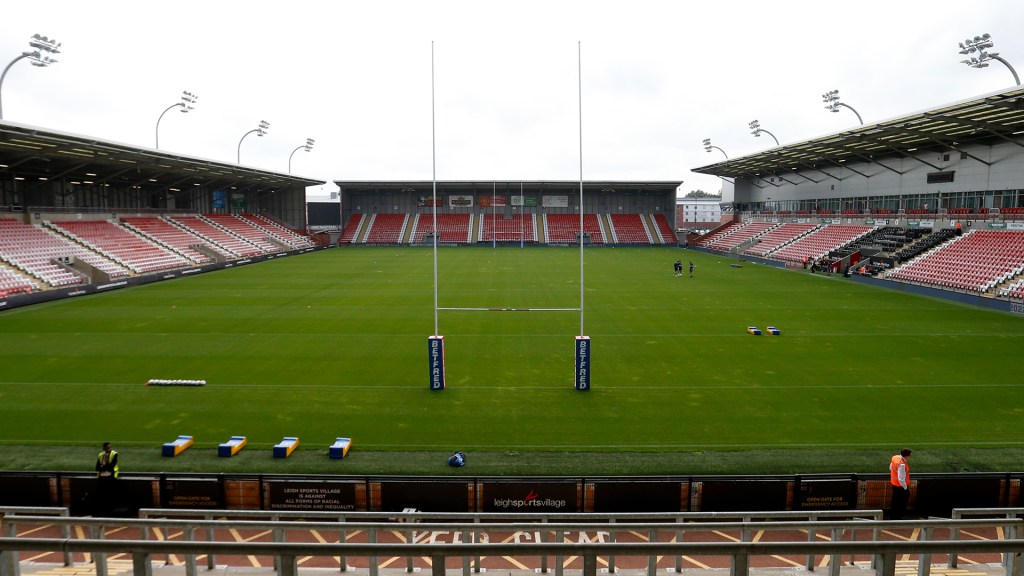
Chelsea’s Kingsmeadow is too small for bigger games – and Everton’s Walton Hall Park will soon be too small for WSL requirements (Goodison Park is currently being looked at as a possibility now that the men’s side will be moving out). Although Manchester United’s Leigh Sports Village is bigger and well-suited to the size of the fanbase, it is shared with Leigh’s rugby team and the United men’s academy team.
It seems Brighton are currently the only club seeking to make purpose-built women’s stadiums a reality. If they get it right, it may become the blueprint for other teams. Brighton and Hove City council gave the go-ahead for the club to look for a site for a purpose-built 10,000 capacity women’s stadium facility. This would become the first football stadium in England to be specifically built around the women’s team. With Brighton leading the way, it’s surely only a matter of time before other clubs follow.
There is a chance for Brighton to build the facility from the ground up: size isn’t the only consideration. Women’s football attracts a different audience to men’s, so it’s important to find out who comes to women’s matches and how to redesign the football match experience around them.
Making it more family-friendly should be a consideration — family rooms, baby change facilities, buggy parks, different food and drink options, family-friendly ticket options, and easy (and plentiful) parking areas, for example. Seat tiers are currently designed for a male height and size. How could this be designed to make viewing easier for women and children? Could they build in areas for people with sensory overload concerns, blind people, and other disabilities that would extend beyond just a couple of wheelchair spaces?
For the players, changing rooms designed for them would look different to those built for men and Brighton are already considering whether the pitch surface itself should be different — do different surfaces alter injury risk? Pitches have always been created for male players and maybe a different surface would reduce the injury risk in females.
Leaving no stone underturned, Brighton are planning their own research into whether pitch preparation could be altered to better suit the female physique. If a club is building a whole new stadium specifically designed for women, it is sensible to look at everything and Brighton seem to agree.
Their project offers an opportunity to revolutionise stadiums for different players and a different audience. Paul Barber, deputy club chairman, has said that a purpose-built stadium would give “respect and focus” to the women’s team and help them build an audience that isn’t yet there, but he believes will be in the future.
The club is thinking of a modular approach to building the stadium so that it can grow with the audience. They’ve already thought about a mid-sized stadium and maybe a purpose built pitch for female athletes.
Brighton could lead the way in many areas of purpose-built stadium design. Fans, players, and other clubs will all be watching, hoping this is the start of a new era in women’s football. Ideally, other clubs will get on board quickly and help build the research pool with Brighton, but for now, Brighton & Hove Albion are pioneers. Maybe they even will revolutionise women’s football.
Follow Impetus on social media –
Twitter (X): @impetusfootball TikTok: @impetusfootball
Instagram: @impetusfootball
 impetusfootball.org