

by Ben Gilby (23/7/25)
Above: Sarina Wiegman leads the Lionesses in the huddle after last night’s win over Italy. Photo: Lionesses on X.
An equalising goal in the sixth minute of second-half stoppage time. A winning goal seconds before the clock turned red at the end of extra time. Could anything better sum up England’s Euro 2025?
It’s been a rollercoaster ride of a tournament for the Lionesses, who have found a way when they have looked vulnerable to overcome the odds and make it to a third consecutive major final.
England rode the wave of almost universal praise three years ago, so whilst it’s only right that they have to accept criticism when performances don’t reach those heights, the criticism over the last month has stepped way over the line of what is acceptable.
In this long-read article, I attempt to address the major areas of contention that have been raised against the Lionesses during the tournament, produce a balanced argument of why things have turned out this way, and consider what the immediate and longer-term future of the Lionesses needs to look like.
England against the world’s best

It’s felt like the Lionesses have not quite hit the heights of previous years since they were crowned European Champions on that baking hot Sunday in July 2022. It has also felt, at times, like they have become wedded to the same old players over that period as well, with a lack of exposure for the hugely talented next generation of English female players. Neither feeling is quite right.
A look at the stats reveals something. Since winning the Euros, England have played nations currently ranked in FIFA’s Top 20 on 33 occasions. Eighteen of those matches have been won, and nine lost. None of those losses were by more than one goal. Matches that went to penalty shoot-outs are classed as draws.
The Lionesses’ international program has got a lot tougher since the Euros, with the introduction of the Nations League, meaning that UEFA members play the majority of their matches against countries with similar rankings to themselves to increase the competitive nature of international games – which previously were becoming marred by huge mismatches due to varying ability of national bodies to sufficiently fund their female football programmes. Memories of those 20-0 and 10-0 wins over Latvia and Luxembourg pinpoint the reasons for the change.
With England now playing the world’s best on an almost constant basis, it means that matches are that much harder; there is the consequence that more games will be lost, and players will find it harder to consistently shine at the top of their form. Throw in the increasingly tough UEFA Champions League at club level, and you then begin to see the looming danger.
With both England’s national side and clubs facing tougher opponents more frequently, the demands on the same small cohort of players to play grow ever stronger.
There are far fewer friendlies, or qualifiers against lower-ranked nations, in which the Lionesses can give the next generation their first caps. If the experiment goes wrong, it could go badly wrong if you’re playing the likes of Sweden and Spain regularly. This is the balance to the argument that Wiegman relies on the same group of players and is reluctant to break outside of them.
Wiegman’s ‘club head coach’ style with the Lionesses

In theory, an international head coach has advantages over any of their colleagues in club football. They are free to pick all of the most in-form players eligible for their national side. No restrictions of transfer fees or transfer windows; they can literally select the best of the best.
Yet Sarina Wiegman has never really subscribed to this method. The social media loud-hailers regularly, and pro-journalists occasionally, lament her sticking with tried and tested players regardless of their club form. It’s fair to say that, defensively, several of the Lionesses’ regulars are not regularly hitting the heights that they have previously.
As England has struggled with being attacked by pace over the last 18 months or so, there have been minimal changes to the backline. Calls for the in-form club duo Maya Le Tissier (memorably referred to last week by The Guardian‘s fantastic Jonathan Liew as being reduced to a mere “training mannequin” by Wiegman in Switzerland) and Esme Morgan to break through to be regular starters remain loud and long – but the reality is, for the short term the usual selection will hold their places.
Wiegman values loyalty; she recognises what these players have offered down the years. They have been there, done it, and have experience of being part of the biggest games that the Lionesses have played in over the past four years. Tried and tested is what you stick with.
There’s also one major example that Wiegman can point to in order to answer critics when they state she doesn’t give the next generation.
Michelle Agyemang has arguably been the most impactful attacker that the Lionesses have had this tournament. Her late appearance against France in the opening spurred a major uptick in England’s performance. Then came her influence from the bench against both Sweden and Italy.
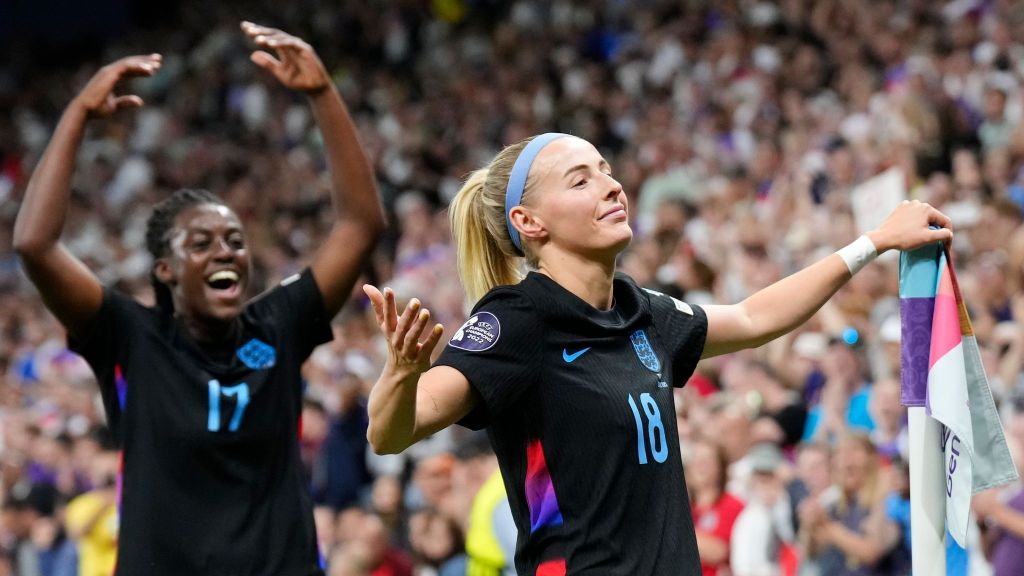
It is on the likes of Le Tissier, Morgan and Agyemang that the Lionesses’ 2027 World Cup squad will rely on, and there’s plenty to be excited about on that front.
Bronze will be almost 36 by the time of the next World Cup, and Millie Bright 33. The Champions League semi-final against Barcelona, and on occasions against France and Sweden this summer, have seen vulnerabilities arise in Bronze’s defending in ways that weren’t previously there. Yet right now, she is the right person for the job. She still has the vision and thrust offensively, on top of the game management know-how and drive to push England towards Sunday’s final.
For the time being, there is a place for the next generation as squad members, gaining experience from those around them who have been there and done it, as well as being part of the media scrum and vibe of major tournament football.
The consequence of how this can help player development can be seen at this tournament with Hannah Hampton. Part of the squad at both Euro 2022 and the World Cup a year later, Hampton is now revelling in her major tournament debut.
Yet despite her phenomenal displays in Switzerland, the keeper continues to receive criticism from the social media trolls, effectively just because she isn’t Mary Earps.
In fairness, I have to admit a touch of bias in Hampton’s direction. On this site in March 2022, I stated that I’d just watched Hampton make the greatest display I’d ever seen from a goalkeeper in person – her incredible display for Aston Villa at Kingsmeadow against Chelsea. From that moment onwards, it was obvious she would be a world-class match-winner and match saver for the Lionesses.

Then we turn to Alessia Russo. A player whom more keyboard warriors claim isn’t worthy of her spot in the side, as she doesn’t score anywhere near enough goals. That’s too simplistic and can be batted away by watching the attacker play in person rather than relying on what you see on TV.
Watching Russo on a number of occasions at The Emirates, I’ve seen exactly what she has to offer – and there are few who can match her. An unrivalled ability to knit the attack together, link the midfield with those around her, and leave the opposition for dead. Next time you are at a match Russo’s playing in, don’t follow the ball, follow her – watch the movement and the link-ups. Then you’ll see exactly why she’s so vital to club and country.
To address the other areas of criticism that have been rife – Wiegman’s use of substitutes during the tournament, waiting too long, and being far from proactive. Albeit something that wasn’t the case last night.
Yet, her actions are nothing new. It seems to have been forgotten by many that it was exactly the same in Euro 2022.
En route to the Lionesses’ biggest triumph yet, not only could you predict when the substitutions would be made (generally 57-63 minutes, with, in some games, another around the 80-minute mark) but who would be brought on when. Russo, Kelly, and Ella Toone, being the regular substitutes brought on, joined by Alex Greenwood and Jill Scott in some of the matches.
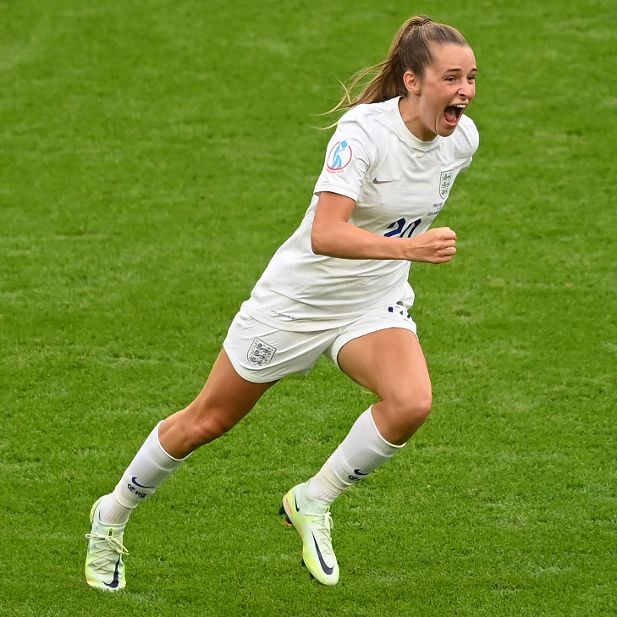
Wiegman is doing what she has habitually done with England – it’s part of who she is as a coach. It does work. You don’t coach national sides to five major finals between 2017 and 2025 by luck.
The Lionesses boss follows the path laid by rugby union coach Eddie Jones, who dismissed journalists’ questions about his use of substitutes, instead pointing out he selected a squad that was divided between ‘starters’ and ‘finishers’ – both of whom were equally vital to the success of his teams. One only looks to the impact that Chloe Kelly and Agyemang have had on the England performances against France, Sweden, and now Italy to see how important these ‘finishers’ are.
Yes, at times it has looked like the Lionesses boss has left it late during the tournament – but here we are with England in their third successive major final. Crucially, the players have bought into the process – they speak of the team environment, the fact everyone is part of the family pulling in the same direction for more silverware.
As Ella Toone, who has spent more than her fair share of time on the bench for England, put it after the game against the Netherlands, the Lionesses’ experience is “togetherness, hard work, resilience, and fun.”
Where now, both for the Final and the longer term?

All of the above is not to say that everything is wonderful in relation to the Lionesses. They need to move on from this tournament with learning points. Without that would be detrimental to the longer-term prospects for the England national side.
Let’s first consider last night’s win over Italy.
England’s first-half showing was below par. Yes, they had a long, drawn-out win over Sweden with 24 hours less recovery than Italy. But that doesn’t excuse the slow pace of attacks in the opening 45 minutes. Italy lined up with five at the back and a line of three in front of that for added protection.
There was a need to use pacy runners and rapid ball movement to play through or above. The lack of urgency played into Italian hands. The fact that Wiegman cut a frustrated figure on the touchline, constantly demanding more urgency from her side, suggests this was not a game plan.
Then came Italy’s goal, which again showed England’s regular Achilles heel – a struggle to deal with pace along the flank and defend against zippy balls into the box.
After that, the response was excellent. The Lionesses’ second-half performance saw them immediately dial up the pace and quick passing movement. It had the Italians on the back foot for most of the remainder of the encounter.
The ‘finishers’ more than did their job. Beth Mead added vim and vigour out wide. Kelly was outstanding, showing a quality of footwork in close combat that had been lacking earlier in the game. Then there was Agyemang, who turned everything on its head. Literally.
Whoever England face in the final, they have to bring the energy and pace from the start. Both Spain and Germany are simply too good for another lethargic opening 45 from the Lionesses. Whilst I believe Agyemang would be a perfect impact sub once more, there is a compelling case for Kelly to start.
The pace, drive, and sheer ability that she has to show that footwork in confined spaces will be absolutely key against either potential opponent. Kelly has that in spades.
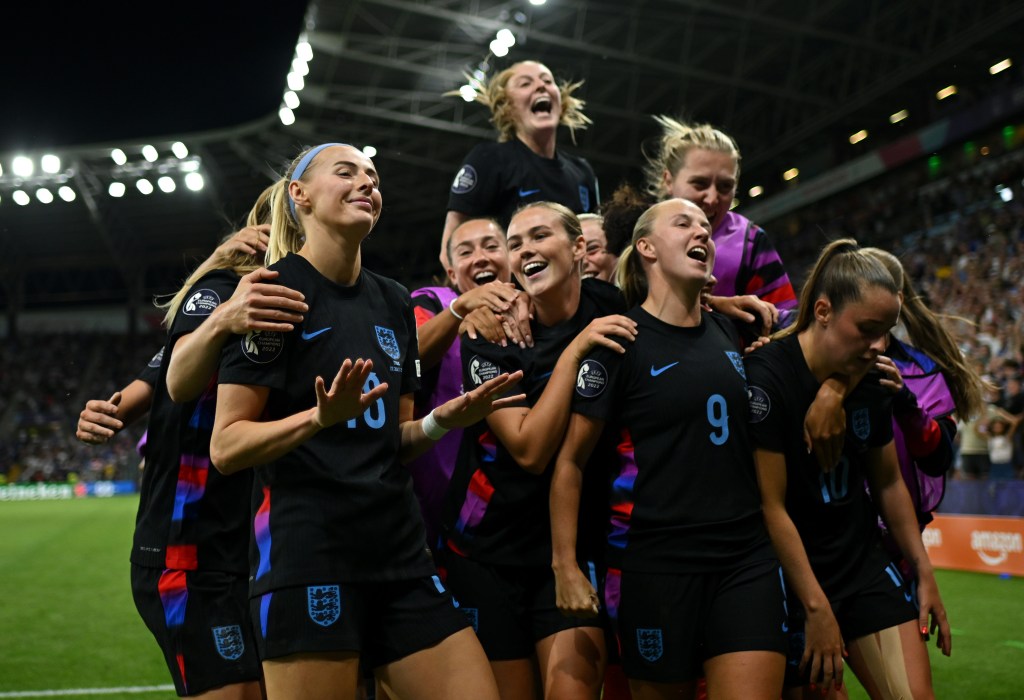
The Lionesses will have to move the ball quickly and dominate the flanks, particularly if it’s Spain they face on Sunday, and the Arsenal star has both the ability and the confidence after being an integral part of the Gunners’ side that dismantled Barcelona in the Champions League Final, to produce the necessary standard.
In terms of the longer term, there is no doubt that the Lionesses have to give the next generation more opportunities, and their immediate post-Euros schedule provides a real opportunity for this.
The next Nations League tournament that serves as qualifying for the World Cup does not start until February, so England have two international windows – potentially four friendlies to try things out defensively, mix up the midfield selection, and look at what Agyemang can offer from the start of a game.
England’s final opponents – either Germany or Spain are the only two European nations ranked higher than them in the FIFA ranking list. Both have incorporated a raft of younger players over the past two years. Players who have all earned more minutes on the field in total than the England cohort of players aged 23 or under during the same timescale.
That’s not because the talent isn’t there in English football – it is – it’s scarily good and hugely exciting.
Yes, England may have been hampered by the Nations League and the risk it entails for giving new players a chance, but Germany and Spain have faced the same potential pitfalls. That didn’t stop Spain from winning the World Cup and Germany claiming Olympic bronze.
The achievements of Sarina Wiegman and her Lionesses must be rightfully celebrated – not just for what they have done on the field, but for what it has done off it and the status of watchable role models for the young people of England.
But the future is bright, and these amazing young talents are ready to take flight in the series of friendlies this Autumn. The immediate games post-Euros are the right time to let them have a chance, whilst the current golden generation can still guide them in their early days in international football.
Legacy is an amazing thing, and the young Lionesses who are part of this Euros squad, or didn’t quite make it, can be part of an even brighter future for English women’s football.
Follow Impetus on social media –
Twitter (X): @impetusfootball TikTok: @impetusfootball
Instagram: @impetusfootball
 impetusfootball.org