
By Catherine MacKenzie (2/1/26)
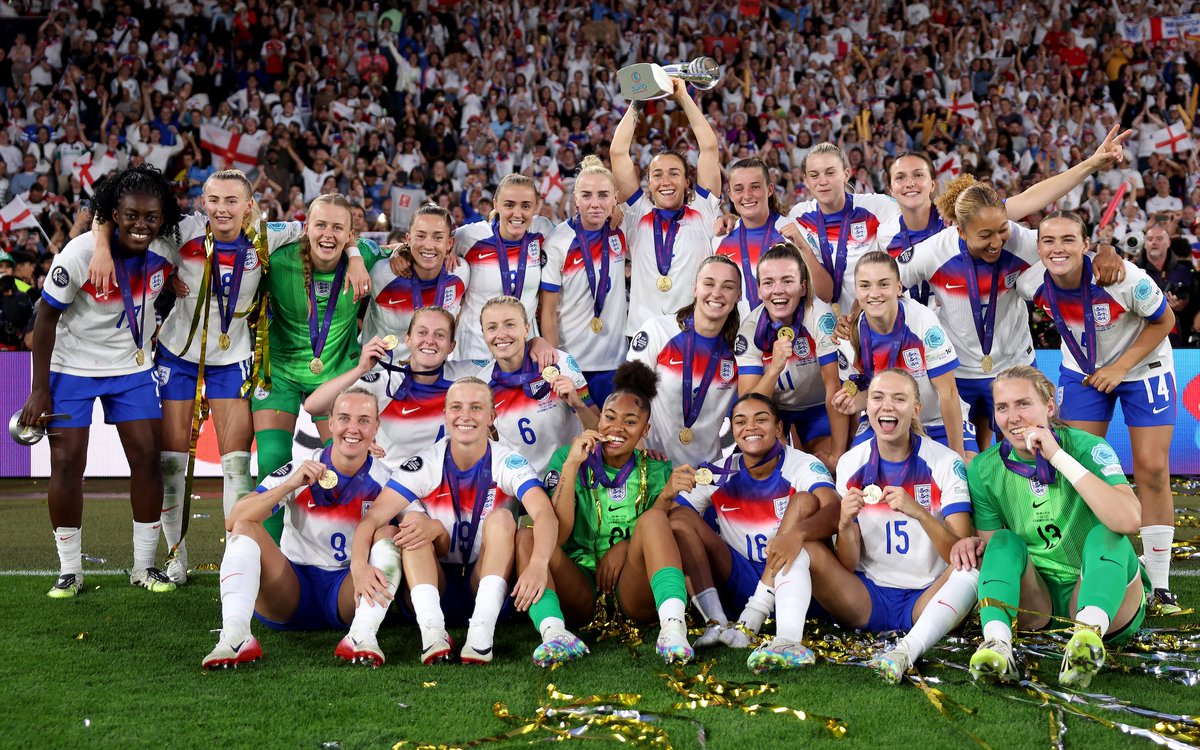
Above: England with their Euro 2025 medals. Photo: Lionesses on X.
2025 was a year of immense success for England’s Lionesses, who defied the odds to retain their European title. Like any football team, they experienced both highs and lows over the course of the year. In this article, Impetus looks back at England’s 2025 campaign – the triumphs, the challenges, and how the Lionesses head into 2026. We begin with the broader picture, before highlighting two key matches from early 2025.
Whilst 2024 was dedicated towards qualifying directly for the 2025 European Championships, the tournament and its preparation dominated 2025. In February – June, there was the Nations League – and the Autumn and Winter international windows were reserved for friendlies.
Even including friendlies, the type of opposition England plays is vastly different than a few years ago. England played 17 games in 2025, nearly three quarters of which were against teams currently in the world’s top 20 – they faced Spain three times, France, Belgium, the Netherlands, Sweden, Brazil, Italy, Australia, and China. Despite playing a slightly higher proportion of games against the top 20 opponents, the Lionesses’ win rate rose from 58% in 2024, to 71% in 2025.

Comparing 2024 and 2025 directly, England scored more goals in 2025, averaging 3.1 goals per game compared to 2.2 in 2024, whilst conceding slightly less.
Goal-scoring progress
One recurring issue throughout 2024 was a lack of goals. England’s front line of Lauren Hemp, Alessia Russo – and one of Beth Mead, Lauren James, or Chloe Kelly – had become increasingly muted. Heading into 2025, it was essential for Wiegman to find a way to get the ball to Russo without leaving too much space exposed on the wings.
While the year did not begin with a flourish in front of goal, England soon found their rhythm by putting five past Belgium in late March. In an early indication of what was to come, right-back Lucy Bronze played a pivotal role, contributing two assists and a goal. There were also debut goals for Aggie Beever-Jones and Keira Walsh as usual scorer Russo was forced off through injury.
It could be argued that learning to play without Russo ultimately benefitted England hugely. Adapting to her absence encouraged a more varied and unpredictable attacking approach, with different names on the scoresheet – which would be a feature of England’s Euros win.
2025 saw seven debuts
2025 was also a year of retirements across the women’s international game. From Sherida Spitse in the Netherlands to Mary Earps’ explosive departure from England, many familiar faces took a step back from international football. In England, we said goodbye to Earps, Fran Kirby, and Millie Bright – three standout performers from the first European triumph.
This left room for new faces, and despite some on social media criticising the England setup for a lack of youth integration, there were a number of debuts – more than in 2024. 19-year-old Michelle Agyemang became a national hero for her heroics at the summer’s Euros, and Lucia Kendall won player of the match on her debut against Australia. Khiara Keating and Anna Moorhouse both debuted in goal, and Taylor Hinds left a positive impression at left-back.
Spotlight: England 1-0 Spain, Nations League, 26/2/25
During their first game of the year, England stumbled to a 1-1 draw in Portugal, in what was to become Mary Earps’ last International game. This followed a period where the Lionesses were criticised extensively for their performances, with critics claiming the attacking line had “gone stale” and that there was a need to inject the team with new blood.
Their second game of 2025 was against world champions Spain at Wembley. Few expected England to win – particularly with injuries to leading players like Georgia Stanway, Alex Greenwood, and Lauren Hemp.
Changing from the typical 4-2-3-1 to match Spain’s 4-3-3, Wiegman’s only change came in goal, with Hannah Hampton replacing Earps. At the time, this was unsurprising: Hampton speaks Spanish fluently and her distribution could help England bypass Spain’s stacked midfield.
The win was significant on multiple fronts: it formed a reminder that despite some performances being below the high expectations we put on the Lionesses, they were still a team that could beat anyone on their day.
It also provided something of a blueprint for subsequent games against Spanish teams – Renée Slegers instructed her Arsenal team to play more directly in their triumphant Champions League final, and England continued to use a more direct approach at times throughout the European Championship.
Whilst the conversation was far from over, the game also placed Hampton in the lead for the no.1 spot – her distribution helped the team bypass the Spanish press, and she also answered a number of critics with some fine saves to prove her shot-stopping ability.
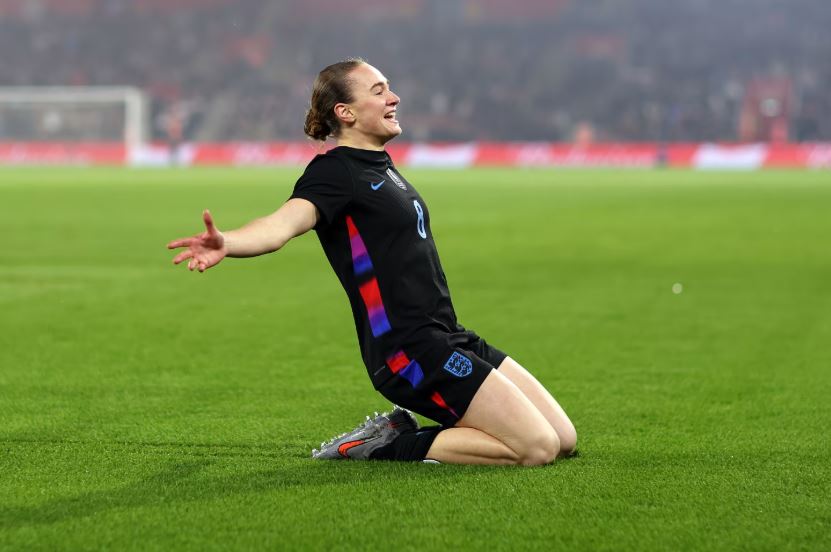
There was also Jess Park’s electric performance, capped off by getting the winner. Park was given a free role for England against Spain, which Wiegman highlighted at full-time:
“In possession, we gave Jess the freedom to come inside, a little bit like a number 10,” she said, adding that one of Park’s strengths is that“she is very agile.”
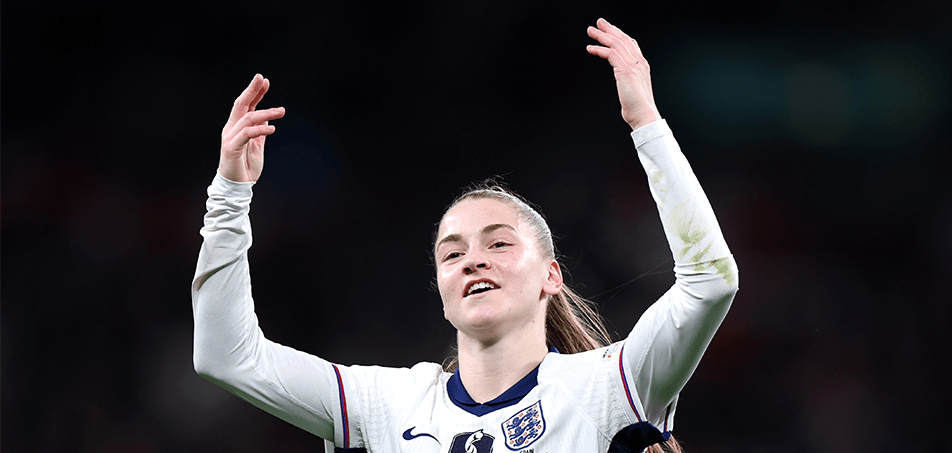
Later on, Park would make a move across Manchester, transferring from City to United. Since joining United, Park has been in excellent form. Linking back to that February performance for country, many pundits attribute this form to her being given more free reign over her position.
Spotlight: Belgium 3-2 England, 8/4/25
If the win against Spain was a huge confidence booster, Belgium provided the opposite. In April, the Lionesses faced a Nations League double header against the Red Flames – who had proved a difficult opponent in the past, beating England 3-2 the last time they met.
The first leg of the double went off without a hitch for England as they ran riot to secure a 5-0 win. That first leg was notable on a few counts – firstly, after 80-odd caps, defensive midfielder Keira Walsh finally netted her first goal for country – and secondly, Belgian top scorer Tessa Wullaert was injured.
For the second leg, which was to take place in Belgium, Wullaert returned whilst England’s injury bench grew as Alessia Russo and Lauren James both withdrew – adding their names to a list still including Greenwood, Hemp, and Stanway.
Buoyed by spirited home fans, Wullaert ran circles around the England defense as Belgium raced to a 3-0 lead within half an hour.
This half hour was defining for both England as a team and players individually. It is rare that one can pinpoint a single game where something fundamental changed within a team, however this was the case in Leuven.
Niamh Charles and Millie Bright both struggled immensely against Wullaert’s pace, and were withdrawn at half-time. Whilst Charles was left in no-mans land receiving no help from a makeshift left wing not tracking back to help her, Bright’s performance was less excusable. It would turn out to be the Chelsea captain’s last match for England, as she withdrew from contention for the 2025 Euros and retired internationally shortly after.
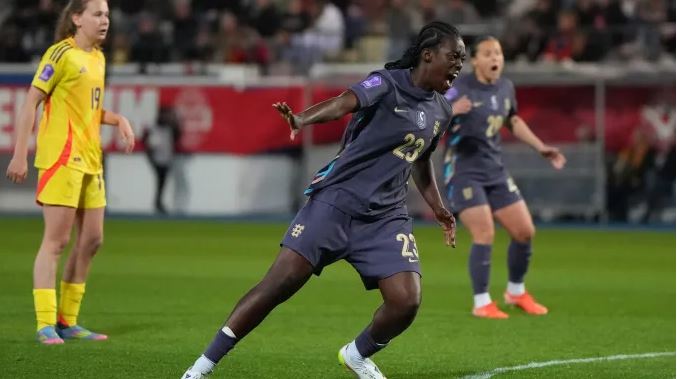
The major positive from the game came in the form of Michelle Agyemang – who made her debut with barely 10 minutes left on the clock, scoring a goal with her second touch, 42 seconds after being introduced.
Wiegman’s decisions pave the way for success
Whilst there have been unprecedented levels of criticism aimed at the Lionesses’ head coach over the last couple of years – the faulty narrative that “England haven’t played well since the World Cup” comes to mind – it reached new heights in 2025.
A number of pundits questioned her tendency to take a slower approach to integrating youth into the setup, and following a turbulent tournament win, some critics claimed she has simply been the recipient of extreme luck.
Whilst any competition win will include an element of luck, there were many decisions Wiegman made in 2025 that ensured the win:
Michelle Agyemang’s prominence
When Russo was injured in April and Agyemang called up as a last-minute replacement, few would have expected her to feature. That she was handed a debut so quickly was one sign that she had made her way into Wiegman’s future plans.
The decision to take to a major tournament a player who had barely ten minutes of international football experience should put to rest any assertion that Wiegman does not trust youth or bring through young players. That is without even considering the gametime Agyemang received at the tournament – trusted to turn a game around.
Wiegman deserves credit for the Arsenal youth’s inclusion – and for showing her that trust.
Hannah Hampton as no.1
When Hampton emerged into starting lineups in mid-2024, there were nerves around England fans. Whilst some knew her well after following the WSL, many more casual fans were unaware of the shot-stopper’s strengths. Mary Earps had become bigger than her role as a goalkeeper; a figurehead between the sticks that many thought could not – or should not – be changed.
Hampton put in a stellar performance against Spain in February to lay some of those concerns to rest, however it was not until the tournament that confidence in her as England’s no.1 emerged. As Lucy Bronze has since stated, Hampton’s distribution gave England another way to play football – one that they needed to win the competition.
The tournament squad jigsaw
It has been well established that England won their second Euros due to a squad that was incredibly ‘together’. From positivity clicks to making sure the starting eleven was prepared for games, every single member of the squad played their role.
As anybody who has played Football Manager knows, building a cohesive team can change the game when it comes to morale – but also the lengths players will go to fight for each other.
Whilst different dynamics are inevitable in any team, putting together a squad of 23 that will fight to the end together is perhaps Wiegman’s greatest strength.
For more about how England triumphed in Switzerland, see our review here: https://impetusfootball.org/2025/07/29/how-england-won-the-euros-belief-togetherness-and-a-cavapoo/.
Follow Impetus on social media:
@ImpetusFootball on X, Instagram and TikTok.
 impetusfootball.org