
By Hope Robinson (17/1/26)
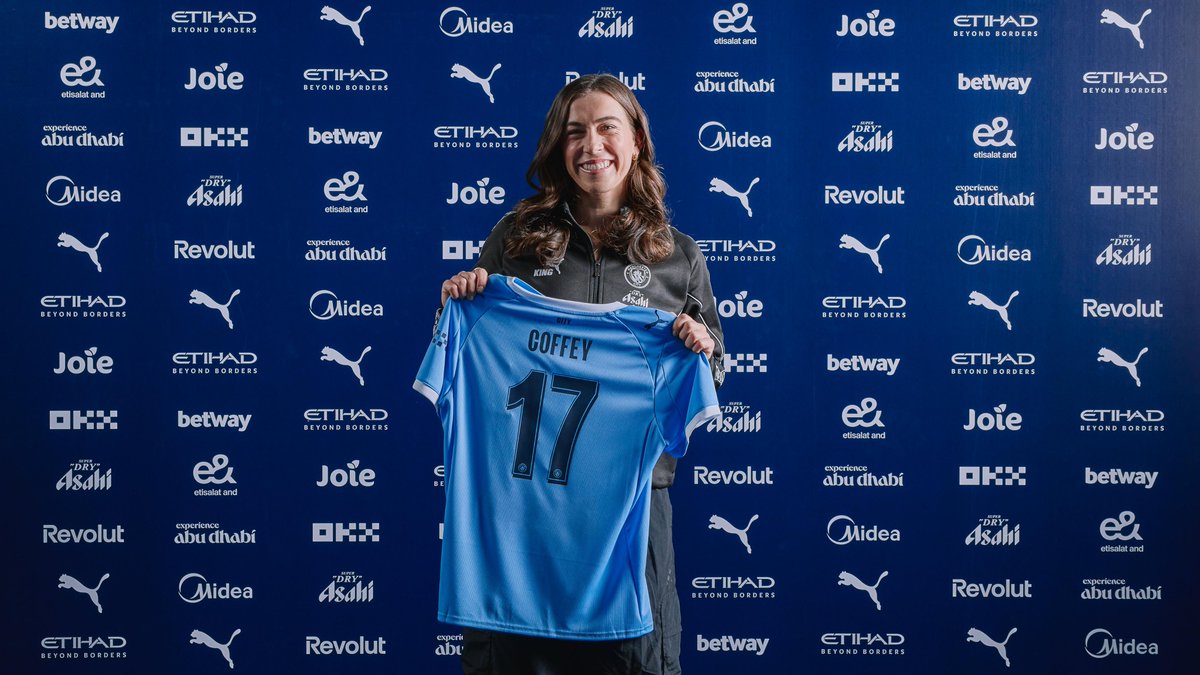
Above: USA midfielder Sam Coffey, who’s just made the move to England Photo: Manchester City FC
More than ever before, the last few months have created ultimate debate surrounding the question of which league is the best in the world- the NWSL, or the WSL? This conversation has been propelled mostly by the past year’s list of NWSL players heading over the pond to England, particularly those ‘star’ players and USA internationals. However, I’m here to tell you that the truth is far messier, more interesting, and a lot less final than narratives suggest. The NWSL-WSL debate isn’t as simple as you think.
Trinity Rodman is the face of the NWSL, and a huge asset to the league- the clearest symbol of the modern women’s football superstar. Rodman is young, globally recognised, commercially valuable, and on top of that, a better baller than most. If you are a fan of women’s football, it would have been impossible to not have come across the overwhelming amount of talk, and surprising distress, surrounding her possible move from Washington Spirit to the WSL upon the expiring of her contract.
Although, my conversation here is not about whether she leaves the NWSL or not, it’s about what her scenario has exposed. Players such as Rodman now have huge leverage, manifesting into great power, when whole leagues will battle to enforce new legislation just to keep you. The landscape of her case and her individual power expands enormously when it’s not just your club trying to keep you, but an entire league. We have never seen this in Europe, let alone England. Not long ago, NWSL players had little to no control over transfers or contract movement, and the fact that stars now openly weigh leagues, negotiate leverage, and choose their own paths shows just how far player freedom in the league has come.
In an attempt to keep Rodman in the States, the new (and controversial) NWSL High Impact Player rule was introduced. The High Impact Player rule lets NWSL clubs pay a designated star far above the usual salary cap, with only a fixed portion counting against it, making seven figure total compensation possible. To qualify, a player has to meet specific sporting criteria, such as being named to an NWSL Best XI in the past two seasons or receiving a major individual honour like a Ballon d’Or nomination, with final approval coming from the league. On paper, that sounds straightforward. In reality, it gets messy. The definition of a ‘star’ is so narrow that some of the game’s most obvious superstars would not qualify. A player like Sam Kerr, whose impact, profile, and legacy are unquestionable, would technically be ineligible, which highlights how the rule often feels more bureaucratic than reflective of real world star power.
The primary issue with the rule is that it creates a clear divide between the chosen few and everyone else, reinforcing a two tier system inside squads. Only a handful of players benefit, and the model does not scale as more players reach elite status. In contrast, WSL clubs can pay stars without exemptions or special mechanisms. The star player rule feels like a temporary patch, not a long term solution to a changing market. As of today, which club Rodman will be attached to at the end of the transfer window remains unclear.
What sparked this discussion was how unsettled fans had become over their top players heading over to England. Names like Naomi Girma, Sam Coffey, Kerolin, Jenna Nighswonger, and Alyssa Thompson have all recently swapped the NWSL for the WSL. All of these players are elite prospects and proven winners, the kind of talent you buy a ticket just to watch on their own.
Furthermore, optics do matter. The fear is not that the NWSL will run out of talent. It is that it could lose part of its identity. For years, the league carried the label of the best in the world (mostly to do with the dominance of the USWNT). Seeing stars openly consider other destinations makes that status feel fragile. The narrative impact far outweighs the numerical reality.
However, at the same time, the story is not one way. Players are also choosing the NWSL again. The USWNT captain, Lindsey Heaps, returning from OL Lyonnes to Denver is a powerful reminder that Europe is not always the final destination. Competitive pay, star treatment, and being central rather than rotational still matter. This proves that the NWSL retains real pull. Cultural familiarity, league visibility at home, and relevance to national team pathways continue to count. The league is being challenged, not abandoned. Albeit, it would have been interesting to see if Heaps’ transfer would’ve still happened without her now being able to be paid a top wage.
As much as we may want to not believe it, as players simply ‘play for the badge’, money is a large part of the equation, but it certainly isn’t everything. At the end of the day, top players get top wages whether it’s from their clubs, or whether it’s from sponsorships. Today, players weigh lifestyle, role, development, medical support, marketing, and personal comfort. A slightly smaller contract can be offset by stability or prominence. The idea that every move is purely financial oversimplifies professional reality.
Now, we cannot talk about the NWSL-WSL debate without discussing what Europe does offer structurally. The Champions League, the competition that brings a level of prestige, legacy, and global exposure that no domestic American league can replicate. No matter what an NWSL team may offer to a player, the experience of playing in and potentially winning, a Champions League trophy is an ultimate dream. The quality of talent in the Champions League simply is not comparable to the NWSL. The competition is a built in advantage, not a moral one, and it really shapes decisions in ways the NWSL cannot easily counter.
Additionally, European football increasingly revolves around super-teams. Chelsea, Arsenal, Barcelona, and Lyon can stack world class players in ways no NWSL club is designed to do. Their spending power and squad depth remain unmatched, and the rewards for dominance are clear. The NWSL has chosen a different path. Parity is prioritised, competition is relentless, and no team is allowed to hoard excellence. Europe rewards concentration. The NWSL rewards balance. Neither model is inherently better. They simply produce different experiences.
The NWSL remains world class because of its physicality, depth, and weekly unpredictability. There are no easy matches. Players develop adaptability, resilience, and versatility simply to survive the season. The league also holds a global scouting advantage. NWSL clubs have consistently looked beyond traditional pipelines, bringing in players from Haiti, Malawi, Nigeria, Zambia, and across the African diaspora. For many, the NWSL is a gateway league that expands the global game rather than narrowing it. The WSL is world class in different ways. Tactical sophistication, concentrated star power, Champions League integration, and global branding give it enormous visibility. Matches feel like events, and success echoes far beyond domestic borders.
Overall, this is not a zero sum battle. Movement between leagues reflects growth, not decline. More options for players mean a healthier ecosystem overall. The NWSL’s challenge is adaptation, not survival. The WSL’s strength is opportunity, not inherent superiority. Women’s football is better when multiple elite destinations exist, and the real win is that players now get to choose.
Follow Impetus on social media:
@ImpetusFootball on Instagram and TikTok.
 impetusfootball.org