
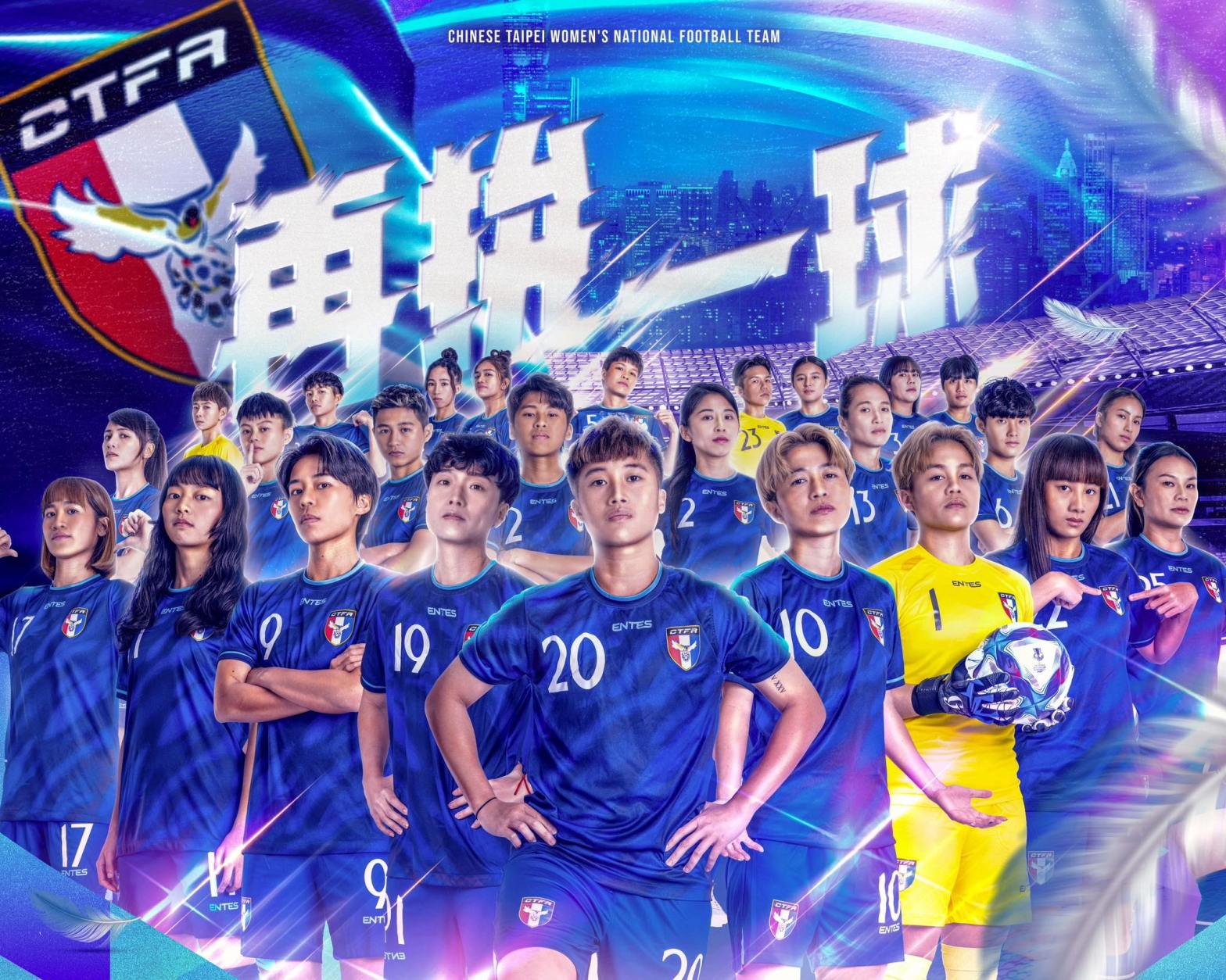
Above: The Chinese Taipei Women’s National Team are ready to compete in a competition which they are very familiar with. Image: Chinese Taipei Football Federation Facebook.
By Genevieve Henry and Emmanuel Faith (26/2/26).
Chinese Taipei is one of the most storied nations competing in the 2026 Women’s Asian Cup. Their history and long-lasting legacy gives them an edge over some of the newer nations in the federation — they were one of three Asian teams to qualify for the inaugural Women’s World Cup in 1991. Even before then, Chinese Taipei won three consecutive Asian Cup titles.
Since then, it’s been more of a struggle to keep up with the evolving world of women’s football. Chinese Taipei have failed to qualify for the World Cup since their debut, and will be looking at this tournament as their opportunity to get back in the conversation. They will compete in Group C with Japan, Vietnam, and India.
Squad:
TBA.
Head Coach:
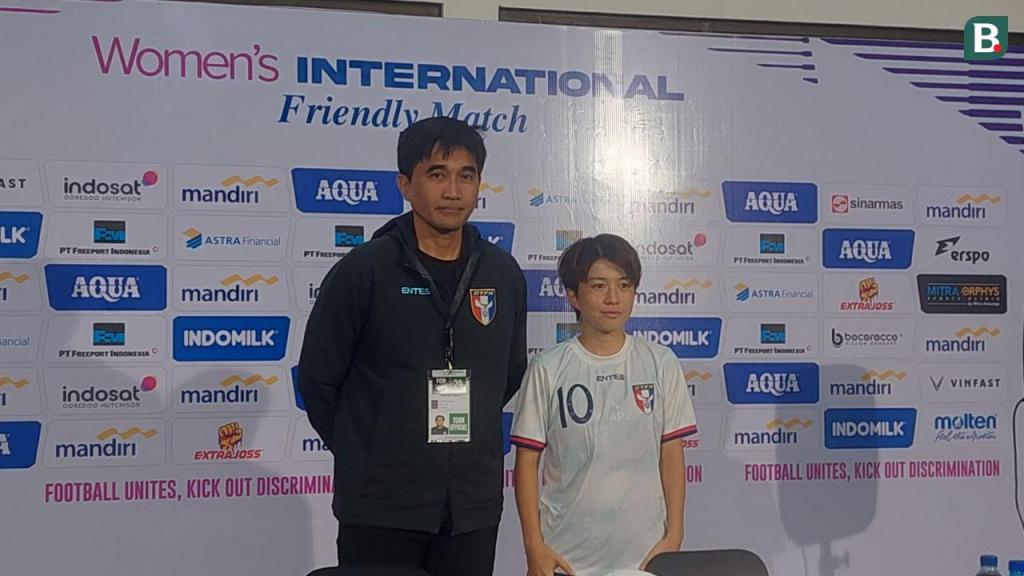
Thai coach Prasobchoke Chokemor has been at the helm for Chinese Taipei since August 2025. While he was serving in an interim capacity, he appears to have taken the step up to full-time manager. He previously coached third division Thai club Customs United FC. He has been involved with both the men’s and women’s national team set ups for Chinese Taipei over the past two years.
Asian Cup History:
One of the tournament’s most illustrious teams, Chinese Taipei will be making their 15th appearance at the Asian Cup. In the early editions of the tournament, Chinese Taipei won three consecutive titles in 1977, 1979, and 1981.
How They Qualified:
Chinese Taipei qualified for the Asian Cup by topping qualification Group D. Interestingly, their biggest win was an 8-0 rout of second-place team Pakistan, while their other matches were more tightly contested. Chinese Taipei ended up beating Kyrgyzstan 3-0 and Indonesia 2-1, allowing them to take all nine possible points and finish with a goal difference of 12.
Strengths:
The Chinese Taipei women’s national football team operate primarily from a compact mid-to-low defensive block, most often in a 4-2-3-1 or 4-4-2 structure.
Out of possession, the emphasis is on vertical and horizontal compactness, with minimal space between the lines and a clear intention to deny central progression. Rather than pressing high, Chinese Taipei are comfortable allowing opponents sustained possession while they protect key zones.
In possession, their attacking threat is concentrated in transition phases. Quick vertical distribution, coordinated forward runs, and early exploitation of space behind advanced fullbacks form the core of their offensive approach.
This controlled, low-risk model allows them to remain competitive against technically superior opposition, even when outmatched in possession and physical metrics.
Development Areas:
As mentioned, Chinese Taipei sets up specifically to counteract their comparative lack of technical proficiency. They struggle to retain the ball and to do much with it against top Asian sides. Passing and build up play are not strong suits.
Key Players:
Chan Pi-han shields the defence. Shuffling between CM and DM, she plays with strong anticipation, consistent defensive positioning and Organisational leadership across the midfield. She occasionally acts as the metronome dictating the pace of her team, or a disruptor altering the attack of their opponents. In a system that prioritises containment, her ability to read danger early is critical to maintaining defensive coordination.
Hsu Yi-yun is the midfield maestro for Chinese Taipei. She pulls the strings from the middle and is responsible for organizing most of the traffic and forward movement. Her passing and vision are among her best talents and she has been described as “the unmovable core” of the Chinese Taipei national team. She previously played overseas in Belgium and now plays for AC Taipei.
Three goals in five matches for Su Yu-hsuan at the Asian Cup in 2022 is a sign of the potential of the striker’s attacking instinct. Four years later, will she be the force propelling this historic team to the next round? Yu-hsuan is known for her ability to sniff goal threats in scarce opportunities, and for a team who plays transitional football, one can trust her score a couple goals that will hopefully get the important points for her team.
One to Watch:
Despite being a defender, Ke-sin Huang often finds herself contributing to the attacking output of her team while delivering excellently on her defensive duties. Being able to pick out a pass that positioned Su Yu-Hsuan to score her first goal against Indonesia, while getting fouled after a daring run to the opponent’s box in the second half is an example of how she enjoys being everywhere all at once.
The 23-year old multi-talented player is one of the cards up the coach sleeves that can be pulled out to work magic at any point during the tournament. The spectators should be aware of this riveting young star.
Success Would Be:
In a group that has Japan and India, the first task for a country looking to reclaim their glory is to make it to the quarter-finals, however making the semi-finals will be a huge success. Chokemor said in a recent interview with the Taipei Times that the ultimate goal is to qualify for the world cup.
Prediction:
Chinese Taipei should make it to the quarter-finals either by finishing second or being one of the best losers. It is very important that they don’t lose heavily to Japan in the opening match as this might affect their morale and momentum. Their second match against Vietnam will be the most determinant match of the group.
Fixtures:
4th March — Japan vs Chinese Taipei, 1pm, Perth Rectangular Stadium
7th March — Chinese Taipei vs Vietnam, 1pm, Perth Rectangular Stadium
10th March — India vs Chinese Taipei, 8pm, Western Sydney Stadium
Follow Impetus on social media:
@ImpetusFootball on Threads, Instagram and TikTok.
 impetusfootball.org