
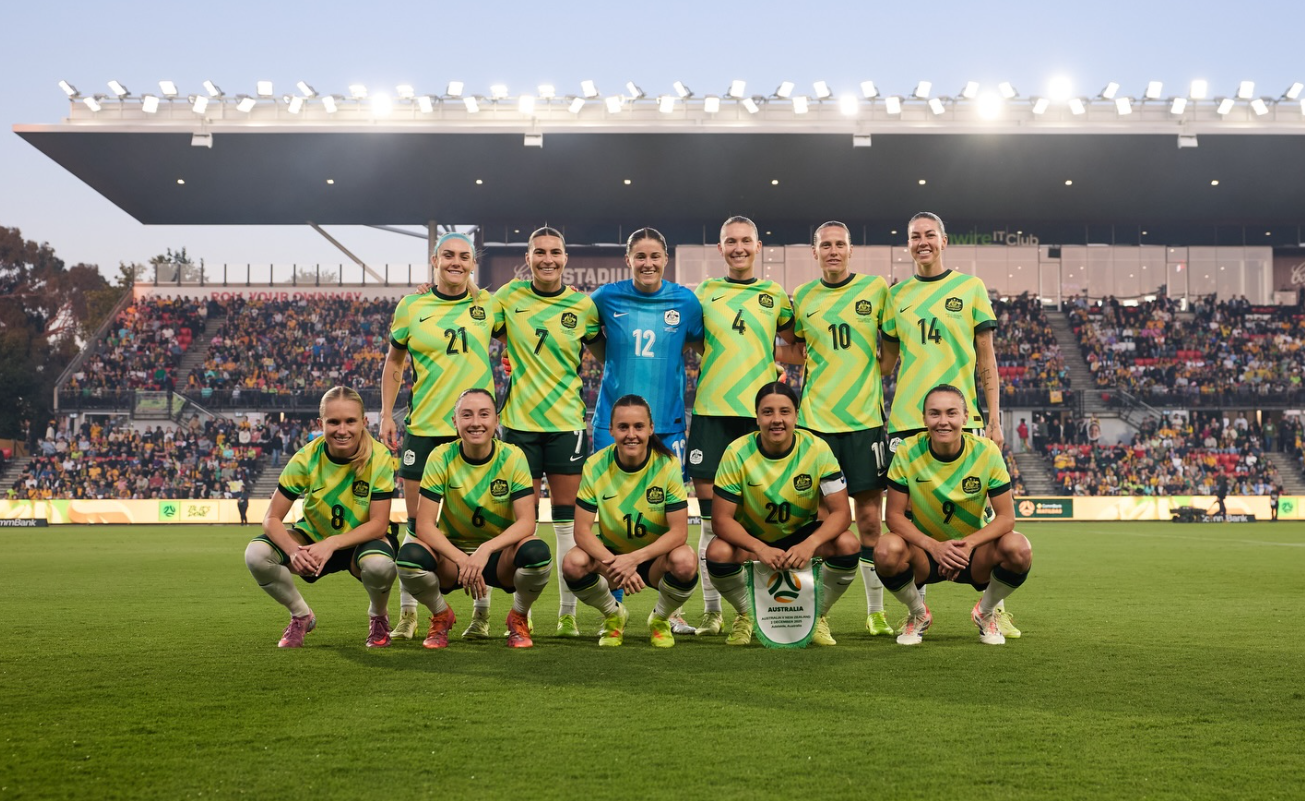
Above: Australia lines up for a team photo. Image: Clare Wheeler’s Instagram.
By Genevieve Henry (28/2/26).
The hosts of the 2026 Asian Cup will be looking to reclaim their Asian crown on home soil in a tournament set to draw on the support of the Australian public. Competing in Group A with South Korea, the Philippines, and Iran, the Matildas have a tough road to the final — but they’ll expect nothing less than a trophy.
The Matildas are inarguably one of the very best teams set to compete, with players all over the world, relative support from their federation, and a massive home crowd advantage. Their success will depend on their ability to quickly turn their luck around under Joe Montemurro. If this squad plays to its potential, they should win.
Squad:
Goalkeepers: Mackenzie Arnold (Portland Thorns), Jada Whyman (AIK), Chloe Lincoln (Brisbane Roar)
Defenders: Ellie Carpenter (Chelsea), Steph Catley (Arsenal), Clare Hunt (Tottenham), Alanna Kennedy (London City Lionesses), Wini Heatley (Roma), Kaitlyn Torpey (Newcastle), Jamilla Rankin (Hoffenheim), Courtney Nevin (Malmo), Charlize Rule (Brighton and Hove Albion)
Midfielders: Clare Wheeler (Everton), Kyra Cooney-Cross (Arsenal), Katrina Gorry (West Ham), Amy Sayer (Malmo), Alex Chidiac (Como), Emily Van Egmond (Leicester City)
Forwards: Sam Kerr (Chelsea), Caitlin Foord (Arsenal), Hayley Raso (Frankfurt), Kahli Johnson (Calgary Wild), Holly McNamara (Melbourne City), Michelle Heyman (Canberra United), Remy Siemsen (Rosengard), Mary Fowler (Manchester City)
Head Coach:

Joe Montemurro was announced as the new head coach of the Matildas in June 2025 after months of rumors and speculation. Football Australia drew criticism for their failure to appoint a coach sooner before the home tournament – but they were waiting for the right one to be available. Montemurro could be that. With experience at the very best clubs in the world on top, the Australian not only has an intimate knowledge of Australian football, but a world class resume. He has been the head coach at Arsenal, Olympique Lyonnais, and Juventus — winning prolifically at each. He also had stints as the head coach of both Melbourne Victory and rivals Melbourne City. At each of these clubs, he has worked with current national team players, giving him a great runway even with the short lead-up time.
Asian Cup History:
In their 8th Asian Cup appearance, Australia will be looking to recreate the glory of their 2010 victory. The Matildas have participated in every edition of the tournament that they were a part of the Asian Football Confederation. They came in third place in the inaugural tournament in 1975 and have since earned second place three times and fourth place once. Losing in the quarterfinals in 2022 was Australia’s worst result ever.
How They Qualified:
The Matildas qualified automatically as hosts.
Strengths:
Under Montemurro, the Matildas have been establishing a more possession-based style. This style relies on consistency through the midfield and when functioning, highlights the many talents within the squad. Building out from the back gives Australia far more variability in their attack, which can be so vital against traditionally low-blocking Asian competition.
Australia also has phenomenal abilities down the wings. With Ellie Carpenter and Hayley Raso down the right and Steph Catley (maybe) and Caitlin Foord down the left, the Matildas are unstoppable when these duos are on fire. With these channels working and a firing Sam Kerr in the center, Australia should win.
Development Areas:
Defensive cohesion has been an issue for the Matildas. On the flip side of their historic problems of not enough fit defenders, Australia now has incredible depth in the backline — it will just depend on how these players are arranged. No matter how it is, there will be an adjustment period due to relative inexperience especially in the centre back partnership. Pairing Clare Hunt with Steph Catley or Winonah Heatley seems most likely.
Due to defensive instability, Australia has struggled with dangerous turnovers and sloppy possession lately. The Matildas are almost always the architects of their own downfall.
Key Players:
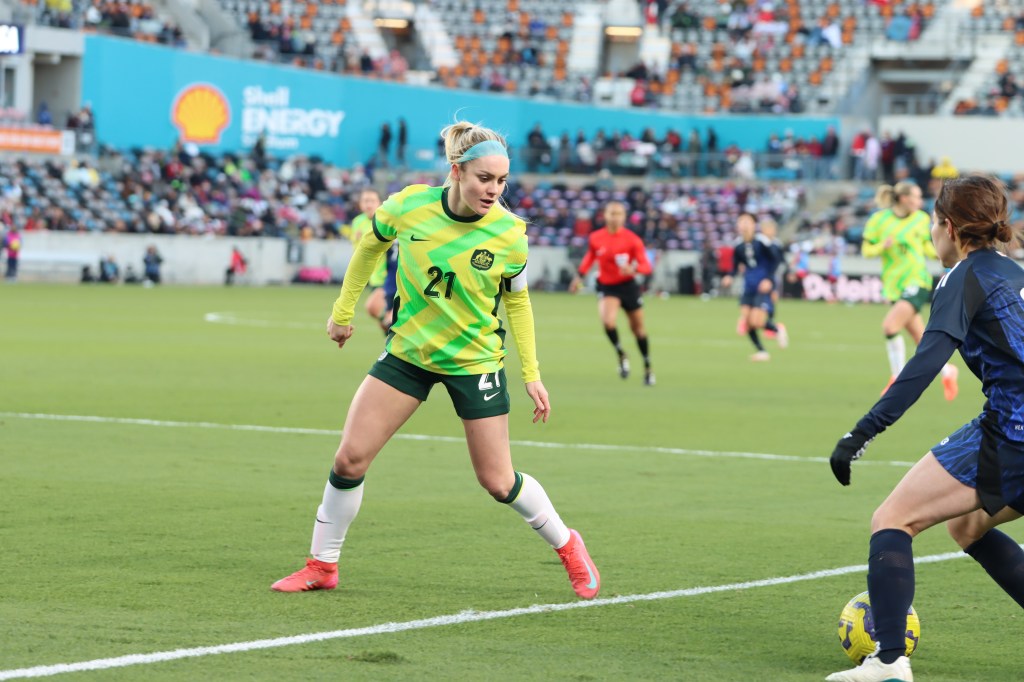
Sam Kerr is the face of the Matildas. Australia’s captain and top scorer has been considered one of the very best players in the world for the better part of the decade. After being sidelined by injury for nearly two years, the 32-year old is back to scoring ways with Chelsea. Her qualities as a striker come down to more than her high scoring ways — 69 goals in her 131 appearances. She is brilliant with her link up play and creativity. Her vision creates chances few in the world could see. Australia’s success may come down to how well she plays — if there’s any player who could handle that responsibility, it’s Sam Kerr.
Ellie Carpenter seems to have been in her prime for nearly ten years now, but the pacy defender is still only 25. In each of her 93 appearances, Carpenter has owned the field, only improving with time. Her move to Chelsea has seemingly upped the stakes and Carpenter has started to score at a much higher rate than ever before in her career. But it’s not just her impressive attacking contributions from sprinting down the wing — her defensive abilities are world class. Carpenter will be key in every area of the pitch at this tournament.
The position Steph Catley takes up for this tournament will be an interesting indicator of attacking focus or defensive stability. While the 32-year old played as a left back for the large majority of her career, she is quickly becoming one of the best centre-backs in the world at Arsenal. On the left. She provides another attacking outlet, overlapping with Caitlin Foord down the flank. The two have a great understanding after playing together not only internationally, but at the club level for so long. If Montemurro opts to play Catley at centreback, it could indicate a safer approach to the formation, eliminating some of Catley’s attacking potential but shoring up the defense.
Kyra Cooney-Cross is the key to a functioning Matildas midfield. The 24-year old has proved herself time and time again at the highest level, impressing with her driving runs and possession retention abilities. Her skills in escaping crowded areas and quick turns, combined with a vision for advancing passes, is critical for this tournament, where teams will try to thwart Australia by overcrowding. When facing a low block, it’s players like Cooney-Cross who have to step up and make things happen.
One to Watch:
Winonah Heatley is the rising star in the Matildas defence. Calm and composed beyond her years, Heatley exerts remarkable control from multiple positions. Her speed and confidence to use skills out of the back adds a much-needed level of variance to Australia’s backline. The 24-year old now has 13 caps for her country and plays for league-leading Italian side AS Roma.
Success Would Be:
Australia will expect to win the tournament or at least make it to the final. The bare minimum would be World Cup qualification. After the home World Cup came and went without a trophy – although it was a massive success — this “golden generation” of Matildas need to win in this tournament to make their mark.
Prediction:
Australia are in a good position to make it to the final, but if they are to face the same strong Japan side they met in 2025 or another firing team, the Matildas may take silver. Australia is likely to face Japan on the way to the final, lessening their chances of cruising to the trophy match. Also potentially in Australia’s way are North Korea, China, and South Korea. With one of the strongest and most diversely experienced squads, the Matildas perhaps should win it — but with the short lead up time for Montemurro, this could be a stretch.
Fixtures:
1st March — Australia vs Philippines, 5pm, Perth Stadium
5th March — Iran vs Australia, 7pm, Gold Coast Stadium
8th March — Australia vs South Korea, 8pm, Stadium Australia
Follow Impetus on social media:
@ImpetusFootball on Threads, Instagram and TikTok.
 impetusfootball.org