Above: Celebration time for Western United earlier today. Photo: A-Leagues.
The A-League Women’s 2024/25 season has opened with a bang after Western United defeated Wellington Phoenix 4-2 at Ironbark Fields.
It was a five-goal flurry in the first half, with the visiting Wellington Phoenix starting off the goal fest. A cross came in low and hard from Alyssa Whinham into the path of what looked like Mebae Tanaka to score on her debut, but the goal was later ruled an own goal for Sasha Grove who’s clearance sent the ball into the top of the net.
Western United took less than two minutes to respond, from the reset in play, Captain Chloe Logarzo was played into the box with a long ball over her head, however, her shot was deflected by Portuguese keeper Carolina Vilao. Thankfully for the Matilda, the deflection fell right back into her path. Her second shot was tucked under a diving Vilao and into the back of the net.
Western found a second goal through Aimee Medwin only two minutes after equalising. Kahli Johnson broke away due to an advantage played and put through an impressive cutback that found Medwin in the box completely unmarked amongst a sea of yellow shirts.
The next goal came from Johnson, who found herself on the end of a well-timed and even better-paced cross from Catherine Zimmerman. Johnson’s first time hit on the ball went up and into the goal off the underside of the bar.
United scored their last goal of the game in the 40th minute after a mix-up in the Wellington Phoenix defence. Logarzo’s initial shot was deflected up into the air and came down on keeper Vilao who fumbled the ball when her own teammate Tiana Jaber got in her way while trying to head the ball away herself.
While the ball fell to the ground and Vilao threw herself after it, Logarzo came crashing in to put it over the line. However, Logarzo didn’t end up coming away with the last touch, as her touch seemed to be again deflected by Vilao, only for a waiting Zimmerman to put the ball over the line and it be awarded as a goal to Western United.
The second half saw Wellington try to play themselves back into the game. They came up with a few opportunities at goal, one particularly good one from Whinham, but her shot went straight into the keeper’s hands.
Some relief came to the visitors late in the game when they were awarded a penalty after substitute Lara Wall was taken down in the box by Grove.
Emma Main took the spot kick and sent United keeper Alyssa Dall’Oste diving to the left while Main’s shot went right down the middle and struck the underside of the bar.
The Phoenix, who had maintained most of the possession in the second half, were unable to find a third goal, despite a string of corner plays, leaving Western United comfortably, the hometown winners.
Western United will look to continue their winning form at home when they host the Central Coast Mariners at Ironbark Fields in round two, while Wellington Phoenix will be after their first points of the season when they host Canberra United at home at Porirua Park.
Don’t miss Adrian Geremia’s photo gallery from the game for Impetus now on our Insta page (@ImpetusFootball).
Teams: WESTERN UNITED (4-4-2): Dall’Oste, Grove, Cerne, Dehakiz, Maher, Hieda, Roach, Logarzo, Zimmerman, Medwin, Johnson Substitutes: Ibarguen, Prakash, M. Taranto, Sardo
Scorers: Logarzo 17’, Medwin 19’, Johnson 39’, Zimmerman 40’.
WELLINGTON PHOENIX (3-5-2): Vilao, Barry, Lake, Jaber, Elliot, McCutcheon, Whinham, Longo, Tanaka, Jale, Main Substitutes: McMeeken, Brazendale, Ingham, Wall.
Above: Michelle Heyman for Canberra United. Photo: Canberra United
Impetus writers Ben Gilby, Jonathon Hagger, Kieran Yap, and Emma Burke look at the season ahead and make some specific predictions.
Next-gen stars from the West take the league by storm
by Ben Gilby
Above: Tanika Lala – one of a large number of local youngsters who could push Perth Glory towards the Finals. Photo supplied to Impetus by: Perth Glory FC.
Perth Glory never quite managed to reach their potential over the last three years of the competition – but a large group of locally produced young stars could be about to change that.
Two years missing out on Finals football on goal difference, then a point, before last season’s dramatic fall from grace which saw them fall from the top of the ladder to third-bottom after a dire run of form post-Christmas.
With Alex Epakis having departed and Stephen Peters replacing him as head coach, there has been a real shake-up of the squad. Whilst the arrival of Naomi Chinnama and Casey Dumont has taken the headlines, it is a large number of hugely talented local young stars coming in who have really enthused the Western Australian women’s football community.
Above: Tijan McKenna – back at home in WA and back to her best. Photo supplied to Impetus by: Rob Lizzi
Last season saw the duo of Georgia Cassidy and Grace Johnston give a hint of their quality. Cassidy has the combination of centimetre perfect passing, superb set-pieces, and thumping challenges. Johnston has a never-ending work rate and an elegant range of delivery. But this season offers the return of that pair and a whole heap more.
Young Matilda Tijan McKenna has been a shining light in the NPLW WA with Perth SC. Back in her preferred centre midfield role, McKenna is showing all the class that has marked her out as a star for a while. Exceptional vision in bringing teammates into the game and a physical presence. She is back at the Glory where she was never previously given the game time she deserved which resulted in her departure to Melbourne City.
Above: Charli Wainwright (azure shirt) – a potential star in the making. Photo supplied to Impetus by: Denyse RM Photography.
Three other names that will be potentially new to those outside Western Australia also have so much to offer. Charli Wainwright, 20, is a player of endless potential. With exceptional passing vision in the midfield and hugely intelligent runs in the channels mark her as a real star of the future.
The remaining pair are two of the hottest attackers that Western Australia has produced in recent times. Tanika Lala has been talked up locally for several years. Last year, despite Glory’s post-Christmas struggles, she wasn’t used until the final week of the campaign. This season though she can become one of the league’s top players. Explosive pace, real physical strength as well as the confidence to score from both long-range and inside the six yard box, the kid from Kalgoorlie has it all.
Above: Ella Lincoln (azure shirt) – in rampaging mood. Photo: Ben Gilby for Impetus.
Then there’s Ella Lincoln. Just 20 and off the back of scoring 26 goals in 21 NPLW WA matches for Perth SC. Comfortable on the left side of the attack as well as the central zone, Lincoln exudes confidence in the final third and is capable of popping all over the place. A true team player who gives her all for the shirt, Lincoln is a player who once she gets on the scoresheet just cannot stop.
Canberra Resurgence
By Jonathon Hagger
The Canberra United team will turn their previous seasons fortunes around in the 2024/2025 season, finishing in the top four, securing a home semifinal. Canberra have refreshed their playing lineup, following some amazing off season signings and transfers, that will sure up their competitiveness.
With incoming players – • Liz Anton from Perth Glory • Beth Gordon from Western Sydney Wanderers, • Emma Robers from Western United • Maja Markovski from Melbourne Victory
Canberra will start the season with a LOT of talent both on the park and on the bench. While Michelle Heyman isn’t getting any younger, her form is phenomenal and when Michelle does well, Canberra does well. Watch out for Emma Robers to guide the midfield, providing the go forward needed for goals to be scored by a stellar attacking frontline.
Nikki Flannery- Senior Matilda
By Kieran Yap
Flannery’s arrival at Melbourne Victory continued the club’s tradition of a statement signing every season. However unlike the previous big name arrivals, she is not a Matilda. That could be set to change.
Flannery was on the cusp of international football before a knee injury at a National Team Talent ID camp cruelly hampered her progress. In the last two seasons, she has been a consistent and selfless forward for Canberra United.
At Victory, Flannery will join an attack featuring Alex Chidiac, Emily Gielnik and Alana Jancevski. In a team that generally plays on the attack, she will have opportunities and time to terrorise already stretched defences.
Flannery can play on either wing, can score goals and is dangerous in any attacking setup.
The Matildas have Hayley Raso as an outstanding pure winger, but outside of the Tottenham star, that spot seems to be up for grabs, and options are being explored.
Flannery’s game seems built for international football, of she plays to her potential at Victory, she could receive a call up by the end of the season.
City to win three trophies
By Emma Burke
My bold prediction for the 2024/25 season is that Melbourne City will complete the Treble.
City winning the A-League Women’s Premiership and Championship, and the Asian Women’s Champions League, is a very possible feat for the club.
With new striking power in the form of Venezuelan international Mariana Speckmaier, and the ability to score goals in a number of ways, City has the power up top to be very successful this season.
It’s well known, however, that Defence’s win Championships, and City’s backline made up of Captain Rebekah Stott, Taylor Otto, Karly Roestbakken, Bryleeh Henry, and new arrival from Western Sydney Wanderers Alexia Apostolakis, is one that can easily be envisioned securing silverware.
The Treble would be a marker of huge success for Melbourne City as a Club, as they haven’t done a double since 2020, and it would be done under a new head coach in Michael Matricciani.
Above: Zambia’s power duo Barbra Banda and Racheal Kundananji pose in front of their compatriots after a match between Bay FC and Orlando Pride. Photo: Fervora on Twitter.
The home fans went crazy when the Malawian striker, Temwa Chawinga scored her 20th goal of the season. It was record-breaking as it meant she had now scored against all the clubs she played against in the regular season, something that has never happened in the history of the NWSL.This isn’t the only record an African has broken this season. There are a lot more.
Africans rejoiced with brimming glee when the Zambian striker Racheal Kundananji joined Bay FC. In a transfer that made her become the most expensive women’s footballer in history, the former Madrid CFF star cost Bay FC $860,000. Her compatriot Barbra Banda followed suit, joining Orlando Pride from Shanghai Shengli for another huge sum – $740,000, the second-largest transfer fee in NWSL history at that moment.
To have the two most expensive players come from the African continent was a remarkable feat. Beyond these mega transfers, there was the influx of other notable names, like the six-times African Player of the year, Asisat Oshoala who moved to Bay FC, South Africa’s midfield maestro, Linda Mothalo came over to Racing Louisville, and her compatriot, Hilda Magaia joined KC Current alongside Temwa Chawinga.
It was a strategic aggregation of talents with immense impact.
Above: Nigeria’s attacker, Uchenna Kanu fires a shot that set a NWSL record against Portland Thorns. Photo: NWSL on Twitter.
Africans didn’t just make up the numbers, their impact was indelible. Nigeria’s winger, Uchenna Kanu scored the fastest and earliest brace in the history of the NWSL against Portland Thorns on 30th March 2024.
Malawian attacker, Temwa Chawinga broke the goal-scoring record after hitting her 20th goal, breaking the record of 18 goals set by Matildas talisman, Sam Kerr in 2019. The African striker has been compared consistently to the Australian superstar who smashed different records including being the top goal-scorer for three consecutive seasons between 2017 and 2019. Chawinga also set a new record of scoring against all the 13 teamsshe played against.
Banda also follows closely on all notable metrics with 13 goals and six assists in 25 matches. She also ties with Chawinga in number of shots attempted (80) and was crucial to Orlando Pride winning their first shield in 12 years.
Above: Malawian striker Temwa Chawinga celebrates one of her record-breaking goals. Photo: KC Current on Twitter.
Beyond goal-scoring and attacking records, there is an aggregation of fans coming together and more connection formed between supporters and players. This was in full display when Orlando Pride played Bay FC this season, as Zambians flocked to take pictures with both Kundananji and Banda after the match.
A similar scenario happened when Bay FC faced Houston Dash, earlier in the season as Nigerians poured out to celebrate their players, Asisat Oshoala and Michelle Alozie.
A couple of Africans have nicked the playoff spot, and a more will be hoping for some last match day miracle, whatever the outcomes of the last matches are, NWSL fans won’t forget the regular season in a long while, thanks to the Africans who lit up the league with the flair, their talent and their bedazzling brilliance.
Above: Bay FC attacking duo- Asisat Oshoala and Racheal Kundananji celebrate a crucial goal that takes them closer to play-offs.Photo: Fervora on Twitter.
Above: Dijon goalkeeper Katriina Talaslahti, Scottish-based charity Africa on the Ball’s latest ambassador, in action. Photo: Jean-Pierre Thiesset.
Katriina Talaslahti, goalkeeper for D1 Arkema club DFCO Dijon Football Côte-d’Or (DFCO) in France, has been announced as the latest ambassador for Scotland-based Africa On The Ball (AOTB), a charity dedicated to using the power of football to drive social change in Africa.
As a professional footballer with a passion for empowering young people, Talaslahti is excited to lend her voice and influence to this important cause, which focuses on improving the lives of individuals and communities through football, health, and education initiatives.
Finnish-born Talaslahti began her football career in Germany, where she won U17 and U19 championships before signing with Olympique Lyonnais. With over a decade of international experience, she speaks four languages and is dedicated to sharing her love for the game with the next generation.
Above: Katriina Talaslahti jumps high to clear for Dijon against Olympique Lyonnais. Photo: Jean-Pierre Thiesset.
“I’m thrilled to be joining Africa On The Ball,” said Talaslahti. “This charity is close to my heart for many reasons, and I know that the work they do both locally and internationally makes a huge difference. I look forward to helping more young people get involved in football, take care of their health, and develop important life skills. Football has been a central part of my life, and I’m excited to use my platform to help others achieve more in theirs.”
In her role as ambassador, Talaslahti will be actively involved in raising awareness of AOTB’s efforts, particularly their initiatives in Zambia, where the charity runs grassroots football and community development programs. She will support campaigns, participate in fundraising events, and engage new audiences to further expand AOTB’s impact. Talaslahti also hopes to collaborate with other footballers and professionals to amplify the charity’s message and reach.
AOTB is a charity that uses football as a vehicle for social change in Zambia and across Africa. Founded in 2013 by Stirling University student Andrew Jenkin and Zambian footballer Kelvin Chasauka, AOTB runs grassroots programs that focus on education, healthcare, inclusivity, and entrepreneurship, empowering communities to create sustainable futures. The charity supports over 15 football teams in the Kalingalinga region and has built vital infrastructure like water kiosks and provided scholarships for education.
For more information on Africa On The Ball or to make a donation, please visit www.africaontheball.org.
Above: Perth Glory head coach Stephen Peters speaking earlier today to the media. Image: Perth Glory.
A new look Perth Glory side face one of the toughest possible opening round tasks – a trip to Melbourne City – but new head coach Stephen Peters and captain Izzy Dalton cannot wait.
Facing the media ahead of his first A-League Women game as a head coach, Peters was full of smiles as he described his feelings ahead of Round One: “Pumped! I’m loving it…there is an air of optimism, City is a formidable opponent, and we’re looking forward to that challenge.
“We’ve had a chance to look at them due to their AFC (Champions League) duties, so that’s a bonus for us, and they are a good side…it’s going to give us a real good indication of where we are at.”
In terms of what he is expecting to see from City, the new Perth head coach reflected: “They seem to have a philosophy in the club that is carried through from manager to manager to a certain degree, so there are a few things that are remaining from Dario’s (Vidosic) reign.”
Glory go into Sunday’s game in Melbourne missing three key players in Susan Phonsongkham, Megan Wynne, and co-captain Onyi Zogg. The news about Phonsongkham, who last season arguably had her best campaign in a purple shirt, is particularly devastating.
“Susan has an ankle injury which she unfortunately carried into pre-season from the NPL Grand Final, so she’ll be out for a period of time – we’re looking at three to four months, so that’s a significant challenge for us as she’s a player of real quality.”
Welsh international Wynne has a wrist injury which is likely to keep her out for around three weeks, with Zogg back “sooner rather than later” after pain in her plantar (the area of the foot that connects the heel bone to the toes).
Whilst Perth goes into the game as underdogs, Peters has an air of confidence that his young squad is ready to step up to the plate and give the club a performance to be proud of this weekend.
Perth Glory co-captain Izzy Dalton believes she has found her happy place at Perth which can only bode well for her performances this season.
The 27-year-old, from Barnsley in the north of England, said: “I love Perth, it’s the first club I’ve been at in my career where I feel like it’s home for me.
As one of relatively few players who have stayed at the club from last season, Dalton feels the responsibility to deliver both a better campaign this year, and also ensure that the newcomers realise what it means to represent Western Australia’s only professional female team.
“It’s been tough having an overhaul of the squad, there are a lot of young players that have come through. For those of us who have stuck around from last year, I think it’s just about taking what we know about the club and what we want the club to look like and address that with the (new) players and create something special at the club. The few players that did come back, I think we’ve been able to do that.
One of the things that excites Dalton most about the team this season is the plethora of exciting young locally produced talent. The Glory co-captain believes the new cohort has the perfect example of teen stars Grace Johnston and Georgia Cassidy to inspire them to do great things this year.
“You got to see the likes of Grace and Georgia playing a lot of minutes last year, and I think the way they have come in this season, they are confident, they have experience in the league under their belt now, and at the end of the day, they are the bright stars of this competition.
“They are going to go on to have incredible careers and will bring in what they have learned in the past year from professional football and they will do some exciting things.”
Focusing specifically on Sunday’s season opener at Melbourne City, Dalton has huge respect for the opposition. “They are able to recruit well and they have a track history of winning things, so obviously that’s attracted the players that they want to be at that club and they can bring in some of the best Australian talent that there is. We have tactics in place to combat what they want to do and hopefully, it all comes to fruition on Sunday.”
Those tactics will also include a new style of play that Peters has introduced. Whilst not giving much away, the Glory midfielder gave some tempters of what fans can expect.
“There are new approaches to the way he wants us to play, so I think naturally we have to take his things on board and adapt to the way he wants us to play. I think you will definitely see a lot of changes across the board in defence and in possession as to how we want to play.”
by Rachel Gore at the Coventry Building Society Arena (29/10/24)
Above:The Lionesses group together for a team photo ahead of the International friendly. Photo: Lionesses on X
How did England secure victory?
England came onto the pitch with a strong attacking drive. In the first half, the Lionesses played excellently down the left side. Maya Le Tissier drove the movement from the back line and made strong, targeted passes which delivered the ball higher up the pitch.
Their set pieces seemed well trained with their first goal being converted from a corner; Williamson knocked the ball into the net making the milestone of her 50th cap even more special. Post match, Wiegman confirmed that the squad had been working on corners in training and that she was “very happy” that this had resulted in a goal.
Whilst the second half highlighted some of England’s weaknesses, elements of it also showed promise. At the beginning of the second 45, the players held the ball firmly. Whilst the ball was often taken off the English forwards by the South African defence, the European champions did not allow it to move beyond the halfway line.
England’s substitutions also reminded spectators of the depth that the current squad has. Hemp played a strong game, retrieving passes and dragging the ball forward. Additionally, Bronze found herself in one-on-one duels with South African forwards where she made crucial saves that stopped her side from conceding.
England’s emerging stars
The match against Germany highlighted the talent of some of the Lionesses’ most recent debutants. Jessica Naz stepped up to the plate on her first senior start and appeared to be comfortable on the pitch. She provided the assist for Williamson’s goal which allowed the English to take an early lead.
At the beginning of the match, Jess Park shone; she proved her technical ability by making strong runs through the middle whilst keeping the ball close by. Le Tissier played the full 90 minutes and acted as a crucial member of the backline.
Following Bronze’s replacement for Esme Morgan at 62 minutes, Le Tissier moved over from the right to the left side of the pitch. This move emphasised the defender’s versatility as she continued to shine in her new position for the remainder of the match.
A particular highlight of the first half was watching the young players work together; many passes were made between Park and Naz, with further movements between Grace Clinton and Park proving to be vital in leading the ball into England’s attacking half. One example of this partnership between the young ballers was Le Tissier’s assist for Clinton’s goal. It was a strong cross over to her Manchester United team-mate who was able to head it into the back of the net.
Above: Grace Clinton, Maya Le Tissier, and Jessica Naz celebrate Clinton’s goal. Photo: Lionesses on X
This goal was the highlight of an impressive evening for Clinton who was later awarded the EE Player of the Match trophy. Speaking about Clinton’s performance post-match, Wiegman said that she did “what [they] wanted from her” and that “she needs to keep doing that and stay consistent”.
Where do England go from here?
Much of England’s mistakes stemmed from complacent moments where the ball slipped into South Africa’s possession. The Lionesses giving away of the ball allowed South Africa to capitalise. In these moments, England’s defence became messy, a prime example of this was when Kgatlana found herself able to make a strong run at goal and take a stunning shot that ended up in the back of the net. This goal was caused by a defensive slip-up from England that left Earps alone.
Up front, England struggled once more with converting shots into goals; at 34 minutes an attempt on goal from Clinton fell short and in the second half a shot from Kelly hit the crossbar. England continue to show potential in their performances, but this match again highlighted elements of their game that must be focused on in the lead-up to the Euros next summer.
How did South Africa transform from the first to the second half?
In the first half, South Africa struggled to gain possession. The away team would have benefitted from pressing England so that they could move further up the pitch and into England’s defensive half.
The second half saw a different South African side; their defence became cleaner with much of the half consisting of tackles on English forwards. Furthermore, the visitors players were seen to take a better advantage of the time they had on the ball in the second half.
The forwards made swift and smart runs into their attacking half resulting in a goal and a second goal which was disallowed for being offside. These fast-paced movements startled England and resulted in a messy and chaotic backline.
The stars of the South African side
South Africa’s captain, Kgatlana, made many rapid, strong runs at goal which threw England off their tracks. Her technical ability on the ball was highlighted during these moments as she was able to wind through English defenders into open space. Following the game, Wiegman described Kgatlana as “fast and technical”.
The substitution of Dlamini for Swart after half time didn’t dilute South Africa’s quality. Indeed, Dlamini proved to be just as impressive as Swart had been. Both goalkeepers made some impressive saves and ensured that they held the ball safe. This allowed the ball to remain protected and contained. Their performances stood out and England would have led by many more goals if it was not for their input.
Teams – ENGLAND: Earps, Le Tissier, Morgan, Stanway, Williamson, Greenwood, Kelly, Clinton, Naz, Park, Mead. Substitutes: Russo (for Naz 62’), Bronze (for Morgan 62’), Kirby (for Park 62’), Toone (for Clinton 62’), Hemp (for Mead 72’), Bright (for Williamson 72’).
Seven Impetus writers who will be covering the league for us this season come together to provide a team-by-team preview(30/10/24).
Above: Sydney FC celebrate during last season’s Grand Final – can they repeat that success again in 2024/25. Photo: A-League Women.
Adelaide United
by Jonathon Hagger
Above: Reunited again at Adelaide – Fiona Worts (left) and Chelsie Dawber. Photo: Adelaide United.
Adelaide United starts the season with a fresh new look, fresh thinking, and a desire to show that they have what it takes to be competitive. While the previous season’s disappointing last place was hard to fathom for many, there is a lot to be excited about for the upcoming season.
Adelaide supporters will have a chance to see a lot of change and difference compared to last season. There are several positive additions to the playing squad and team philosophy. Starting with a big challenge against the Melbourne Victory, the Reds will be wanting to establish themselves early on as a threat to the top sides.
Off season recruiting for United went very well with Lucía León being attracted to play in South Australia. Coming to the A-League from tier three side Watford in England, León will bring flair and finesse to a team in need of both. Locking down the right back defender role will be her number one aim followed by developing the players around her.
Chelsie Dawber and Fiona Worts are two names that are synonymous with the club. Due to Adelaide’s underwhelming previous results in the previous season, these two stars may not have been given the limelight they deserve. Dawber’s reduced match appearances for United in 2022-2023 corresponds with the team’s poor results. Worts returns after a short stint at A-League champions Sydney FC where she scored three goals in her six matches.
Emily Condon is another player whose football career has been through thick and thin with Adelaide. The nuggety midfielder has modified her style of play and achieved exceptional pass completion statistics which sees her playing the role of distributor. With quality attackers in front of her, Condon’s role is going to be crucial.
Erin Healy moves to Adelaide from Portugal where she played topflight football scoring eight goals in 24 matches. Healy will likely sit in the midfield behind Dawber and Worts but can easily slot into the front line when needed.
“Motivation will almost always beat mere talent” – Norman Ralph Augustine.
Adelaide United comes into the 2024/2025 season with a team that is both motivated and talented. With a diversity of player strengths and styles in the squad, this team will flex and flow with the momentum of the match. Expect to see a lot of formation fluidity as versatile players keep the opposition guessing as to what is coming next.
Stringing together results, be those a win or a draw, is very important. It may take a few rounds for the chemistry to click for Adelaide so at minimum securing draws will be vital. Every A-League side will do well not underestimate the threat of Adelaide United or they will be punished. Adelaide United – more than you expect.
Brisbane Roar
by Joe Rosedon
Above: Brisbane Roar’s Sharn Freier (right) comes on for her Australia debut in April. Photo supplied to Impetus by: Football Australia.
Brisbane Roar will be looking to combine stability and improvement heading into the 2024/25 season.
Last year’s campaign was typified by precariousness. Current manager Alex Smith replaced Garrath McPherson only four games into the 23/24 campaign. Following his appointment, Smith did not get a win in his first six league games. The patchy form continued for the rest of the season, with the Queensland side eventually finishing in ninth place.
Smith himself admitted that last season was tough in his first preseason press conference “Coming in last year was a bit difficult in midseason, working with players that didn’t necessarily fit the way I wanted us to play. “I’ve had an opportunity to really focus on recruitment over the last six months.”
One of the key areas of recruitment has been improving the forward line. Brisbane scored 28 goals last season, the third-lowest in the league. They have added Bulgarian international Evdokiya Popadinova from Lazio alongside Danelle Tan from Borussia Dortmund.
Tan looks a real prospect, having had no issues finding the net both domestically and internationally for Singapore. It will be interesting to see if they will be enough to solve Brisbane’s goalscoring woes, especially after the departure of last season’s top goal scorer Mia Corbin to Carolina Ascent FC.
There have also been defensive additions too, in particular, the signing of Momo Hayashi from Gold Coast United is the standout. In total, the club have signed ten new players. It will be crucial for Smith to be able to balance such an influx of new players with those already at the club.
However, the most important deal the club made in the offseason is the extension of Sharn Freier’s contract. Freier had a breakthrough campaign last season, culminating in her debut for the Matildas against Mexico in April followed by representing her country at the Olympics.
The 23-year-old has established herself as the new star at Brisbane and will be looking to take herself and the team up a level. Smith himself said about Freier: “It’s something we’re very proud of as a staff and a club to see players like that go onto bigger and better things.
They have also held onto stalwart and captain Tameka Yallop. Her experience will be vital in guiding the younger players and new additions in the squad.
After back-to-back ninth place finishes, the club really needs to push on towards the upper end of the table. Smith has been given time to both bring in the players he wants alongside developing a playing style that he feels that can be successful. If this does not lead to a positive season, his future at the club may be in question.
Canberra United
by Kieran Yap
Above: Canberra United and Australian football icon Michelle Heyman (2) is back to lead an exciting group of youngsters at the capital city club. Photo: Tilly McDonald for Impetus.
There is a bit of excitement around Canberra United going into 2024/25. Amid plenty of uncertainty and upheaval at the club, Canberra have the potential to respond to last season’s disappointing ladder finish.
In a league that rewards squad consistency and youth, they will have at least one of those things. Darcey Malone, Maja Markovski, Jynaya Dos Santos, and Aideen Keane headline the exciting arrivals. They have also retained fleet-footed New Zealand striker Ruby Nathan, and Mary Stanic-Floody has extended her stay in the capital.
An important, slightly underrated return to the squad is Hayley Taylor-Young. She is one of the league’s most versatile players. Taylor-Young missed almost the entirety of last season with injury and given that depth was Canberra’s biggest issue, her availability alone will give new coach Antoni Jagarinec plenty of options in formation and personnel.
Pre-season hitouts seem to suggest that new striker Markovski will play on the wing or at least wide of star Matilda Michelle Heyman. Markovski is tall, but explosively fast with the ball at her feet, and can hold up the ball or run at defenders just as effectively.
Her 22-goal NPLW season with Bulleen was her best so far in senior football. Opportunities for the forward were limited at Melbourne Victory, but in her return to the A-League Women, Canberra fans should be excited about what she can do.
Sally James returns between the sticks to replace Chloe Lincoln. After two seasons away with Melbourne City and Perth Glory, James will be eager to reclaim her spot as Australia’s best young goalkeeper. Injuries and the rapid rise of Morgan Aquino have limited her game time since she left Canberra, but she was the last goalkeeper to guide them to finals and James is a strong local signing for the club.
The biggest name to join Jagarinec’s squad is undoubtedly Heyman. The A-League’s record scorer will lead the line for Canberra United and although she will have support, her form will largely dictate how their season pans out.
Although they finished above only Adelaide United on the ladder, Canberra United were competitive last season and played some brilliant, fast-paced football. In many ways, they were a victim of their own success. Key players were called away for Young Matildas duty throughout the season and they did not have the depth to replace them.
They were also victims of an unstable club future. Towards the end of the campaign, the players were unsure of whether the club would even exist the following year. Although they managed some brilliant performances in that time, it must have had an effect. For the time being, things look stable, and although this is Jagarinec’s first season in the top job, the former assistant will know how to replicate what worked from 2023/24.
On paper, there is a lot to like about Canberra United. It looks like a balanced and exciting team. Liz Anton will anchor the defence, and Michelle Heyman will lead the line. In between them is a squad of proven players and exciting young footballers.
As with any team that has a large turnover of players, Canberra’s success will depend on how well they link up, but a 6-0 win over the NPL All Stars indicates they could easily hit the ground running.
Central Coast Mariners
by Kieran Yap
Above: Young Matildas captain Jessika Nash’s arrival was an important piece of business by Central Coast Mariners. Photo supplied to Impetus by: Football Australia.
Central Coast set a high bar for themselves last season. In their return to the league, Emily Husband’s team made the semi-finals and provided some of the league’s best highlights.
A penalty shootout win over Melbourne Victory was the biggest, but there was also Ash Irwin going in goal, Peta Trimis dribbling her way from scholarship player to her first full-time contract and an U20 World Cup squad, and the exploits of Wurigumula in attack.
They were instantly competitive and rapidly became a team to watch. However, the second season may be more difficult.
The outs are significant. Faye Bryson was one of the best overseas signings in the league and Kyah Simon has joined the English defender at Sydney FC. Wurigumula has departed and Rola Badawiya has moved to the USL Super League.
There have been some exciting additions though. Jade Pennock and Brooke Nunn bring experience from England and Scotland respectively and it was one of the coups of the off-season when Jessika Nash arrived. The Young Matildas captain can play at centre back or full-back and was one of Melbourne Victory’s best individual players over the past two seasons.
The Mariners midfield looks genuinely exciting. A trio of Bianca Galic, Isabel Gomez, and Taylor Ray should be able to disrupt or dominate any team on their day. These are three players capable of winning the ball, maintaining possession, and driving it forward.
In attack, Shay Evans returns, and will likely join Nunn and Pennock as the striking options. Trimis was exceptional last season. Her ability to cut inside from either wing and dribble past multiple players was capped off by her passing and decision-making in the final third. She was a true prodigy last season and gives the fans reason to be excited for this one.
However, it will mean pinning the attacking hopes of this team on an 18-year-old playmaker and two new arrivals to the league.
The loss of Casey Dumont in goal was an unfortunate one, but Husband seemed happy to rotate between her and Sarah Langman last season. Whether this was due to form, opposition or indecisiveness, Langman looks set to be the regular number one in 2024/25.
An exciting return is captain Taren King. The defender has signed a two-year extension with the club, and after recovering from an ACL injury, she will be a huge inclusion for Husband’s side.
If King can recapture her early season form, Trimis continues to grow and the new signings settle, The Mariners will once again be a threat. However, that is a lot of “If’s.”
Central Coast won’t be a surprise anymore, and it feels unlikely that they can go a step further into the Grand Final this season in what amounts to a mini-rebuild. But no opposition will have an easy game against them, and between their new signings, a balanced squad with every position covered, and Husband’s obvious tactical nous, expect them to make finals again.
Melbourne City
by Ava Elliott
Above: Young Matildas star Alexia Apostolakis – one of the new recruits at Melbourne City. Image: Football Australia.
Melbourne City took last year’s A-League season by storm. The reigning premiers will undoubtedly be looking to do the same this year, but will be wanting to strive for more after narrowly falling short of a win in the Grand Final.
It’s evident that some noticeable switches have been made to both the squad and the management at City. One of the most apparent being the loss of previous Head Coach Dario Vidosic, who stepped away from his role at the end of last season to join Brighton and Hove Albion in the Women’s Super League. Despite the change in the managerial department, City will be raring and ready to go under the new leadership of former footballer Michael Matricciani, who was appointed to the role at the end of August.
Alongside Matricciani, the club has brought forwards several new signings who boost City’s already impressive roster.
Young Matildas defender Alexia Apostolakis is amongst the new recruits, signing from Western Sydney Wanderers on a two-year deal. At just 18 years old, Apostolakis is already a huge rising talent who boasts a range of experience between her appearances for the national team and in the A-Leagues. She brings in a unique, technical style of defence that she can comfortably exhibit in more central roles or out in the wider areas.
Alongside stabilising the defence, City have added strength to their attack in the form of Mariana Speckmaier, who signed from Wellington Phoenix on a two-year deal. After the departure of Hannah Wilkinson, new power in the attack was exactly what was needed in the City squad, and Speckmaier brings exactly that.
A player who brings versatility and pure brilliance to the frontline, scoring ten goals in 21 appearances for Phoenix last season. In addition to Speckmaier, attacking midfielder Lourdes Bosch joins the team as a highly-rated college talent from the USA.
After a two-season spell at Western United, Tyla-Jay Vlajnic is another signing, although she is no stranger to City. The Serbian international was a foundation member of the team during their first entry to the A-Leagues, winning two Premierships and four Championships with the club across a seven-year spell. City’s other signings include goalkeeper Malena Mieres, who steps in to fill the gap left by the departures of Lysianne Proulx and Barbara, plus talented Matilda’s youngster Emilia Murray.
Ahead of the 2024-2025 A-League season, the squad has already been up and running, participating in the first-ever AFC Women’s Champions League. City have stormed through the group stages, reaching the inaugural quarter-finals that are set to take place in March 2025.
Melbourne Victory
by Kieran Yap
Above: Melbourne Victory’s Kayla Morrison (right) in action for the A-League Women All Stars against Arsenal earlier this year. Photo: Kris Goman for Impetus.
Melbourne Victory have had some big changes for the new campaign. After finishing last season in the Elimination Final, Jeff Hopkins has brought back some popular names and added some exciting talent.
Jessika Nash, Tori Hansen, and Jamilla Rakin have all departed, with former Wolverhampton Wanderers (tier three, England) defender Ellie Wilson and returning hero Claudia Bunge come into defence.
In attack, Victory has added Nikki Flannery, Sophia Sakalis, and Alana Jancevski. Combined with Emily Gielnik, Alex Chidiac, and Rachel Lowe, this team has firepower and experienced nearly unmatched on paper.
That is the big question though. Can the impressive looking squad gel quickly? Victory fans will hope so and there is a concern over left back. Beattie Goad has experience in the position at the highest level, but her talents are better-used up-field.
The midfield looks set to be anchored by either Alana Murphy or Sara D’Appolonia. Paige Zois is currently recovering from injury but will also be a good asset in that number six role.
In contrast to last season’s transfer business, only Ellie Wilson is unfamiliar with this league and might need to take some weeks to adapt. All other arrivals have significant experience in the league or even at the club and should be able to settle in quickly.
Crucial to Victory’s success will be how Hopkins uses his enviable arsenal. Jancevski, Sakalis, Flannery, and Gielnik can all play anywhere across a front three, while Flannery has consistently been one of the league’s best wingers, and can also operate on either flank.
If Victory are missing anything in attack it is another out-and-out number nine. Gielnik is the obvious choice, but tends to drift wide in general play, and for all of the great wide players, they lack a forward known for getting on the end of crosses. Kurea Okino struggled to adapt last season and has not been retained by the club but might have been the perfect target to stay central.
Ella O’Grady is the perfect option to step into the centre-forward role. The Young Matildas striker shares many of the same attributes as Gielnik, is strong on the ball, fast and composed in the 18-yard box, and can finish from anywhere.
In midfield, and attack, they have depth and class. In defence, much hope will be stakes on the fitness of Kayla Morrison and Claudia Bunge. The pairing are Grand Final winners at the club, and two of the best individual centre backs in the league.
Rosie Curtis and Laura Pickett are rising stars and will be able to deputize if needed, but Victory may need to recruit against through the season for defensive cover, or a specialist left back.
Anything short of a trophy will be a disappointment for this squad. The midfield is settled and the attack is dangerous. Every player except Lydia Williams is a goal threat and the names on Victory’s team sheet will have every opponent cautious on match day.
This team has been assembled to put the opposition on the back foot from the opening second of a game. If they can keep a short injury list and find some momentum and chemistry quickly, there could be no stopping them.
Newcastle Jets
by Jonathon Hagger
Above: Lauren Allan (left) – a key part of the Newcastle Jets side. Photo: Scott Gardiner via Brisbane Roar.
Newcastle Jets enter the 2024/2025 season looking to fly higher than their 2023/24 achievement in which they narrowly missed out on making the semifinals. Two words describe the core of this coming season’s team – potential and capability.
The Jets begin the season being able to build on the strong foundation of a squad who have stuck together. Keeping the core talent that shone through last season will be a huge advantage. Consistency of players in the squad provides the capability.
Strong new attacking players, quality retention of last season’s core squad and the inclusion of up-and-coming academy players – this Jets team has everything it to be competitive. The stronger attacking focus brings the potential.
Newcastle will be flying in attack formation – albeit without Sarina Bolden – and will be looking to maximise their speed and agility. Striking hard and fast will likely be a hallmark of their play.
Lauren Allan will be excited to be joined by Sheridan Gallagher, who returns from rugby league, and top gun Lara Gooch.
The maturity of the midfield generals – Libby Copus-Brown and Cassidy Davis will chart the Jet’s way forward. Adding speed on the wings through new signings Deven Jackson and India Brier will give impetus to play counterstrike football. Any soft turnovers and loose ball from opposition teams will be punished.
At the back new signing Bel Rolley joins Laurena Baumann, Natasha Prior, and Claudia Cicco who will provide the defensive lockdown. Rolley, who grew up in Newcastle, comes into the A-League after studying at college in the USA.
The Jets goalkeeper group consists of import player Danielle Krzyzaniak and last season’s rising star Tiahna Robertson.
Unfortunately for the Jets, two particularly significant players are not in the squad this season.
Melina Ayres is taking a break from football in the short term. Ayres is a formidable competitor who made a huge contribution to the Jets red hot form last season. We all wait to see if the new players can fill the big boots that she leaves vacant in the foreseeable future.
The Jets also farewelled Sarina Bolden who made a huge impact scoring 12 of the 42 goals last season. Making the shift from a lethal force to a more distributed approach will take some getting used to.
The early rounds of play are especially important for the Jets as they may be able to secure early wins due to the strength and familiarity of their team composition. While other teams will likely take a few weeks to develop on-field chemistry, the Jets will already have this as an advantage.
As the season kicks off, Newcastle Jets’ destiny truly is in their own hands. The blend of an experienced squad, hot new talent, and a clear strategy from the coaching staff makes the Jets a hot prospect.
Perth Glory
by Ben Gilby
Above: (Left to right): Georgia Cassidy, Izzy Dalton, and Tijan McKenna at Perth Glory’s new kit launch. Photo: Perth Glory FC.
A much-changed squad, a new head coach, and a plethora of locally produced young players – this campaignis going to be one hell of a ride for Perth Glory.
Last season was an exceptionally frustrating season for the Western Australian side. A strong start results-wise saw Glory established at the top of the ladder in December. However, a failure to win after the New Year saw the side fall to a final place in the bottom three.
In the end, head coach Alex Epakis departed his role and the club suffered some major losses on the roster – notably Morgan Aquino, Tash Rigby, Liz Anton, Hana Lowry, Claudia Mihocic, and Sofia Sakalis.
Aquino had a sensational campaign for the team making a league record 126 saves with a success percentage of 81.1%. Mihocic made a strong comeback from a debilitating injury at the back, and Sakalis offered dancing feet and an attacking threat. The loss of Rigby and Lowry is huge. Both were so often the face of the club publicly and offered commitment and a huge amount of skill. Anton had been a mainstay for the whole of Epakis’ tenure.
However, on the other side of the ledger, there have been some impressive interstate arrivals under the lead of new head coach Stephen Peters, who has achieved multiple silverware with Macarthur Rams in the NPLW NSW.
Those coming in include Australian international goalkeeper Casey Dumont and Young Matildas star Naomi Chinnama. Whilst Dumont will miss the first month of the campaign due to her AFLW commitments with Hawthorn, the Glory will likely hand the starting spot between the sticks to returning 21-year-old locally produced keeper Miranda Templeman who has experience at both Melbourne Victory and Adelaide United.
Peters can also rely on a large number of exceptionally talented local players. Last season saw the emergence of teenage duo Grace Johnston and Georgia Cassidy on the A-League Women scene. Johnston’s debut campaign was tragically cut short by injury, but she has returned to impress in the NPLW WA with Perth SC and will be a key component in the Glory side again this time round.
Tanika Lala, from the Western Australian Goldfields, has long been thought of as a huge star of the future by regular watchers of the local women’s football scene. Whilst she didn’t get the game time she may have deserved last season, Lala hit the back of the net against Melbourne City and can point to an exceptionally impressive NPLW WA campaign. She has the presence and finishing power to break through this season.
Tijan McKenna’s return home from Melbourne City is a major signing for Glory. A local teen with Junior and Young Matildas experience, McKenna’s physical presence in the centre of midfield combined with outstanding passing vision makes her a key part of this team.
There is also the potential of two more locally produced newcomers – 20-year-old duo Charli Wainwright, and Ella Lincoln. Wainwright is an elegant midfielder with an excellent range of passing skills, with Lincoln a rumbustious attacker.
However, there is the query over how quickly so many new faces can gel and how the local youngsters handle the step up to the league. This Perth team is, I feel, a long-term project. This season is likely to be very challenging at times, but the potential is there for some exciting flashes of brilliance, so the opposition needs to be very wary of this new-look Glory side.
Sydney FC
by Genevieve Henry
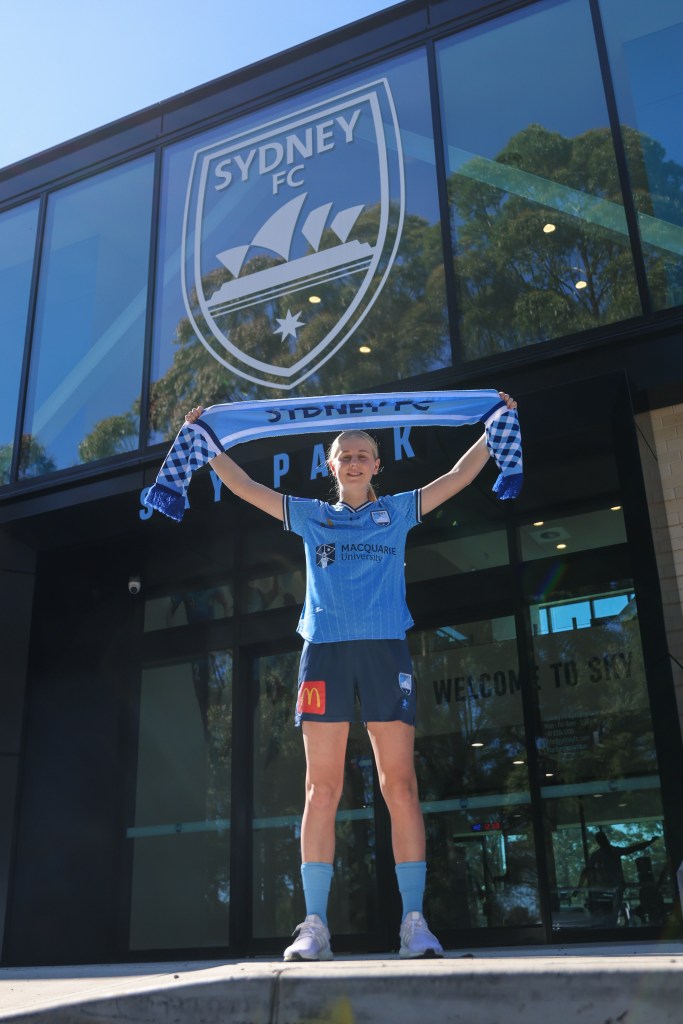
Above: Key new signing Hana Lowry arrives at Sydney FC. Photo supplied to Impetus by: Sydney FC.
Last season’s champions, Sydney FC will once again look to win trophies. Although they have lost valuable stars in Cortnee Vine, Jada Whyman, and Charlotte Mclean, they will be boosted by a plethora of exciting signings.
Led by one of the very best in Australia, the Sky Blues are lucky to have Ante Juric at the helm. The most successful coach in A-League Women history will surely be ready to impress, especially as he is rumoured to be in consideration for the Matildas head coach job. In news that some think could distract Juric further, he will also manage Sydney United 58. If he can juggle his responsibilities, he could prove that he truly is the cream of the crop.
New players include legend Kyah Simon, Young Matildas Hana Lowry, and Amber Luchtmeijer, and experienced English duo Millie Farrow and Faye Bryson among others. They will look to replace the likes of Vine, Whyman, McLean, Taylor Ray, and Aideen Keane. But, with all the ins and outs, the Sky Blues have maintained a strong core and will look to build on what they achieved last season.
At the back, New Zealand keeper Brianna Edwards will aim to fill Whyman’s massive shoes, and she certainly has the ability to. The defence will be anchored by the return of captain Nat Tobin, along with last season’s breakout star Jordan Thomspon, and the ever-solid Tori Tumeth. They will also be joined later in the season by Kirsty Fenton if she can recover from her ACL injury in good time.
The midfield will be led by the commanding Mackenzie Hawkesby, who’s return last season boosted the Sky Blues in unimaginably good ways. She will be joined by Lowry, who has the ability to become one of Australia’s best, as well as Shay Hollman and Maddie Caspers.
Up top, Sydney will not struggle for options. With young phenoms Indiana Dos Santos, Luchtmeijer, and Caley Talon-Henniker alongside experienced players such as Princess Ibini, Shea Connors, and of course, the aforementioned Farrow and Simon, Juric will have his hands full with a welcome selection headache.
As with every club, Sydney FC works in cycles; bringing in new talent, building identity, and ultimately finding success. From an outside perspective, it seems as though Sydney are in the rebuilding phase once again, after the previous cycle of stars have departed, and new young talents Indiana Dos Santos and Caspers really starting to thrive. If they find their groove, this team could very well be excellent and will surely challenge for silverware.
Wellington Phoenix
by Kieran Yap
Above: Annalie Longo will be an integral part of the Wellington Phoenix side this season. Photo: stuff.co.nz
Wellington Phoenix is up against it this season. It is not their fault, but rather a result of everything that they have done right.
Macey Fraser, Michaela Foster, and Kate Taylor all attracted moves abroad, with Fraser rumoured to have earned a reported record transfer fee for the club and league.
Kelli Brown has moved to Perth, Marian Speckmaier has been signed by Melbourne City, and popular goalkeeper Brianna Edwards has joined Sydney FC.
Wellington did their best to move quickly. Carolina Vilao was signed as Rylee Foster and Edwards’ replacement. The former Benfica goalkeeper is an exciting addition and a signal of the club’s continued ambition.
Olivia Ferguson joins the attack after stints at Celtic and Bristol City, and Grace Jale returns to the club after two years away at Canberra United and Perth Glory.
Alongside Emma Main and Alyssa Whinham, the attack begins to look dangerous. Whinham is a rapidly developing playmaker and will be looking to step into the roles vacated by Fraser and Milly Clegg before her.
Whinham can shoot, spot a pass, and has an array of tricks and turns to create space for herself and others. She is a fun player to watch and an effective and dangerous playmaker. All that is missing from her game is consistency, but she has all the tools to become a star this season.
Jale’s return is genuinely exciting. The Football Fern is a powerful, direct winger who can score goals and immediately put defenders on the back foot. She is a player who makes an impact and has the ability to turn matches in a moment.
In midfield, Annalie Longo returns to knit things together, and Mebae Tanaka has signed on after starring for Preston Lions in the NPLW Victoria.
Tanaka is a quick, creative player who can maintain possession or scrap for it. She is nominally a winger, but can move centrally and her dribbling ability opens up space for others. She can draw players and find free teammates under pressure. There is always an adjustment needed for players to step up to the A-League from NPL, but Tanaka has the tools and that most important attribute for players making the step up, pace.
Despite some impressive new additions, Wellington may still struggle this season. It feels like a transition from the old team to the next one, and some of the outgoing players feel irreplaceable. Michalea Foster’s set-piece delivery alone is a threat that cannot easily be replaced.
If Whinham can go to the next level that many expect her to reach, Vilao’s form matches her reputation and the new signings settle in quickly, Wellington can make an impact this season.
In any case, under Paul Temple’s guidance, they will be a match for most sides, and Phoenix fans can be assured that although the departures hurt, the club looks to have signed some exciting replacements.
Western Sydney Wanderers
by Ava Eliott
Above: Sophie Harding – set for another influential season at Western Sydney Wanderers. Photo: A-Leagues.
The Wanderers narrowly missed out on the finals last season at the very last hurdle. Within this approaching season, they’ll be looking to eliminate that fine margin that cost them last year.
So far, the club has seemingly made very few changes to the side for the year ahead. Few new signings have been brought into the squad, with three young talents joining the group for the 2024-2025 season.
After signing a youth development deal with the club at the beginning of the 2023-2024 season, Milly Bennett has signed a scholarship contract. As a talented midfielder rising through the Matildas’ youth groups, Bennett has her A-League debut set in her sights as her next goal.
Alongside Bennett, Talia Kapetanellis has signed her first-ever professional contract with Wanderers. Similar to Bennett, Kapetanellis was previously on a youth development agreement with the club before a one-year spell with NPLW NSW side, Sydney University. The forward is hopeful to make a consistent impact across the season, aiming more specifically to push for a spot in the finals that just fell out of reach last year.
The club has one returner in the form of Sienna Saveska, who made her A-League debut for Western Sydney Wanderers in 2023. Just seven games into the season, she departed the club for Sydney FC, helping the reigning Grand Final winners to score gold over Melbourne City.
This season, Saveska has come back to where her journey started in the hopes she can make an impact. Head Coach, Robbie Hooker, outlined Saveska as a promising figure in the next generation of young Australian footballers, showing a more long-term plan in the team’s recruitment.
Despite new signings to strengthen, one of the most important factors for Wanderers was retaining key players. Sophie Harding, who had one of the most phenomenal breakout seasons last year, is amongst the several names that the club has re-signed, hoping to build on last year’s success. The attacker scored 12 goals across the season, breaking the club record and etching her name into the history books. In the 2024-2025 campaign, it seems inevitable that Harding will excel, making her one to watch.
Western United
by Emma Burke
Above: Western United’s Catherine Zimmerman – one of the key players in Kat Smith’s side this season. Photo: Daniel Pockett/Getty Images for APL. Supplied to Impetus by: Western United.
Kat Smith’s Western United will be looking to build on last season’s success where they finished third on the ladder but lost their elimination final against the Newcastle Jets in extra time.
While United have lost a number of players in the offseason including foundation players such as inaugural Captain Jaclyn Sawicki, Emma Robers, Hannah Keane, and Stacey Papadopoulos, the club has been proactive in signing plenty of exciting young talent to fill the gaps.
New signings have included an exciting young duo from Canberra United of Sasha Grove, and Chloe Lincoln.
Grove is a versatile defender who can play on either side of the back line and even on the wings and her speed and tenacity both on and off the ball have made her a formidable player at only 19 years old.
Also only 19, goalkeeper Chloe Lincoln has long been considered one of Australia’s top prospects in the position. After having spent three years with Canberra United, and racking up 39 ALW appearances in that time, Lincoln will be looking to make a mark on Western United and compete for more time on the pitch.
Attacker Alana Cortellino and defenders Claudia Mihocic and American international Isabel Dehakiz have also joined Western United for the 23/24 season, with all three having played together in this year’s NPLW Victoria for Bulleen Lions.
One of the most exciting prospects for Western United in this 2024/25 season, is the potential for a full season of American attacker Catherine Zimmerman. Zimmerman was signed by United from Melbourne Victory last year but had her season cut short by a terrible run of injury.
In the five appearances she was able to make last season, she scored in two of them. Now, injury-free and with a full pre-season under her belt, there’s no telling just how far Zimmerman will be able to go.
United are also joined by two more international players that will add something new to their play. Sandra Ibarguen, a 22-year-old striker from Colombia, who scored six goals in 12 games during her most recent season with Deportivo Pasto, and Sara Eggesvik, a Filipina midfielder who played for the Philippines during last year’s World Cup.
These new signings will be alongside well-known Western United players in Captain Chloe Logarzo, twins Adriana and Melissa Taranto, Kiewa Hidea, Khali Johnson, Grace Maher, and more in the 2024/25 A-League Women’s season, where they’ll look to contend with the big name clubs of Melbourne City and Sydney FC for silverware and success.
Above: Australia celebrate after Kyra Cooney-Cross’s stunning goal. Photo: Football Australia.
Australia produced a performance of grit, determination, and no little skill to pick themselves up off the floor from a nightmare start to claim a stunning win over Germany in Duisburg.
After falling behind just five minutes into the game to Selina Cerci’s header, Tom Sermanni’s charges responded with a sensational long-range goal from Kyra Cooney-Cross on her 50th cap and a back post header from Clare Hunt to record the win.
It was The Matildas at their glorious best – when their backs are against the wall, they come out fighting. Never say die.
It was a night full of emotion as German legend Alexandra Popp played her final international game at a venue less than an hour’s drive from her birthplace. The hosts’ new head coach, Christian Wück made six changes for his first home game.
On the other side of the ledger, Matildas interim head coach Tom Sermanni made only a single change from the starting line-up that faced Switzerland in Zürich on Friday, with Clare Wheeler coming in for Tameka Yallop.
Germany started like the proverbial steam train and laid siege to the Australian backline for the opening quarter of an hour. They were maximising possession and looking to hug the right hand side with the duo of Giulia Gwinn and Vivien Endemann constantly targeting that side of the field, and the visitors were finding it hard to cope.
Gwinn found a hole to play a long ball forward which could only be helped into the path of Endemann with just two minutes on the clock, but the attacker put her shot wide.
Above: Germany’s starting line-up, featuring local legend Alexandra Popp (back row, far right) on her last appearance. Photo: DFB.
With just five minutes on the clock, Germany hit the front. Endemann again drove along the right flank and she delivered a perfectly weighted ball into the box for Selina Cerci to head home at the back post.
It threatened to get worse immediately for the Matildas. They were being pulled all over the place at the back, with Kennedy and Torpey having a torrid time being bypassed by runners and pin-point-through balls.
From one such move, Felicitas Rauch was found by Popp and hit a curling shot that came back off the right-hand post with Arnold beaten all ends up. Seconds later, Bühl was denied by the Matildas’ keeper who pushed her shot away.
On the quarter-hour mark, Popp left the pitch to a rapturous reception. However, it broke the momentum and dominance that Germany had built up. The Matildas were given an opportunity to get a foothold in the game, and they took it.
The midfield, hitherto completely overrun, began to maintain more possession. Mary Fowler, up to now a peripheral figure was able to win ball and feed lone forward Caitlin Foord. With 22 minutes played, the pair combined for a move that ended with the Arsenal attacker hitting a thunderous effort that was pushed away by Stina Johannes.
Three minutes later Cooney-Cross showed what she could do when able to look up with the ball at her feet as she supplied a beautifully weighted ball through to Foord but Johannes denied her once more.
Germany responded with two more half chances either side of the half-hour mark. First, Gwinn supplied a tempting curling ball for Nüsken who couldn’t get her effort on target. Then, Gräwe played in Endermann, who saw a shot go wide of the left-hand post.
Then, with six minutes until half hour – cometh the moment, cometh Cooney-Cross. In possession over 35 yards from goal, the 22-year-old looked up, noticed Johannes off her line, and lifted a nonchalant lob over the German goalkeeper into the net. It was the Arsenal star’s first international goal on her 50th appearance, and it was pure Cooney-Cross at her best.
Australia were much more organised in the second period. They were patient in possession, not allowing themselves to be rushed and harried in the way they were in the early stages.
Foord was an absolute colossus throughout – not just in her attacking play, but dropping back to muddy her shirt in doing the hard yards to support her defence as well as draw the fouls and yellow cards from her opponents. It was a masterclass.
Australian chances coming forward remained few and far between, but their greater grasp on the hosts meant it was not immediately as problematical as it was in the opening half.
In the final 20 minutes, Germany began to monopolise the possession again, with the Matildas pulling all 11 players behind the ball. During this time, Winonah Heatley came on for her debut and produced a mature display in the heat of battle against some of Europe’s best players. A team who were 3-0 up against England at Wembley Stadium just three days previously.
Above: Kyra Cooney-Cross looks up to hit her stunning goal. Photo: Football Australia.
Then, with 13 minutes to go, The Matildas turned what would have been an excellent draw into a sensational win. Catley stepped up to curl a corner in from the right for an unmarked Hunt to direct her header in at the back post.
It still needed Arnold to pull out another incomprehensible save. Endemann received the ball and shot goalwards. The ball flew through a stack of bodies. The Matildas goalkeeper would only have seen it coming at the last possible millisecond, but she dived to the left to push the ball away.
That was it. Teamwork, belief, skill and hard work ethic allied with the famed Never Say Die character was back with a vengeance and the Matildas achieved a result that both they and their fanbase can be hugely proud of.
Above: The Australia team that started the game in Duisburg tonight. Photo: Football Australia.
Above: Clare Hunt in action in a previous game for the Matildas.Image: Rob Lizzi for Impetus.
By Genevieve Henry (27/10/24).
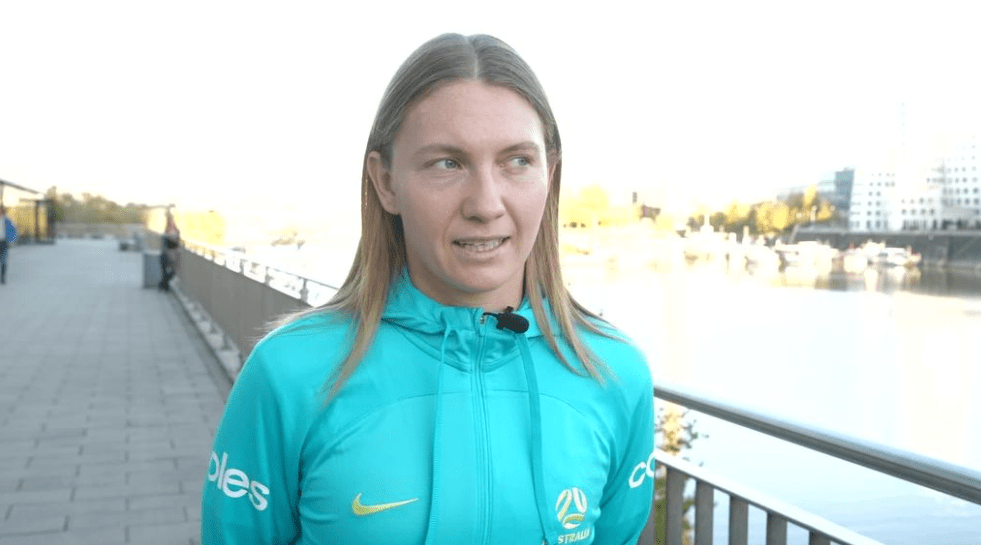
After the Matildas played out a tight draw with Switzerland, Clare Hunt spoke to the press about the result as well as the upcoming game against Germany.
“I think the result was pretty fair for the game we played.” Hunt said, elaborating that the team was obviously happy to have gotten on the scoreboard, but remarking that the result came down to defensive errors and a lack of organisation. Switzerland’s goal came from a mess in the Matildas’ penalty box that no player managed to get a solid boot on. Hunt reiterated the necessity of an organised defence that can clear danger.
Although there were moments of chaos and poor play, this game was a massive positive for Australia after a rough Olympic Games. “We’re in a bit of a transition period, we’ve had a new coaching staff come in, we’ve had a few young players come in as well. So I think for us, its a good start to this friendly series.”
The promising signs included great games by some of Australia’s young stars in Kyra Cooney-Cross and Kaitlyn Torpey, the confidence of Caitlin Foord in burying a penalty when the regular takers were absent, and the introduction of the exciting Daniela Galic. Hunt spoke of the positives from the performance, saying, “we were quite effective moving forward quickly and creating transition moments, and I think that’s where our goal came from.”
“Every game that we have together is great preparation so I think moving forward, we really need to use these games to our advantage.”
Hunt also spoke about the Matildas need to find their identity, saying they need to “find things that work for us, recognise the things that don’t, and just continue to just build our style of play.” Under Tony Gustavsson, they had a very possession-based style that tried to force playing out from the back. Under interim manager Tom Sermanni, the Matildas are getting back to basics in order to get in the groove and find themselves again.
Above: Hunt shares her insights on how the Matildas can prepare for Germany. Image: Football Australia.
Looking ahead to the match-up with a formidable Germany side, Hunt is focused on how to improve in defence. “We need to be a bit more secure at the back and organise defensively better this game.”
“Germany are a great squad and they had a wonderful result against England, so we know the competition will be tough, but I think if we create good transition moments going forward, take our chances in front of goal, and organise defensively then I think we have a shot.”
The two sides faced each other recently in the Olympics, a game where Germany emerged victorious with a 3-0 win. Regardless, the Matildas are not dwelling on the past, only using clips from that match to prepare. “We only played them three months ago, so I don’t think their style of play has changed considerably.”
Further in the future, the Matildas are using these friendlies and a relatively relaxed year to start their preparation for a big Asian Cup on home soil in 2026. These periods without major tournaments are so important for national teams to form their identity, grow their squad, and recharge after a packed schedule.
“It’s been really lovely to see everyone again, train with everyone again, and be a part of the group. It’s nice to build towards a big end of year, but always looking forward to the Asian Cup coming up and the qualifications next year.”
Above: Caitlin Foord (9) in action for Australia against Switzerland on Friday. Photo: Marcio Machado / Football Australia.
Some powerful performances for Arsenal in the WSL this season were transferred onto the international scene for Caitlin Foord on Friday night local time.
The 29-year-old attacker put the Matildas in front against Switzerland in Zürich from the penalty spot before the team was pegged back by Géraldine Reuteler’s equaliser just before the hour mark.
Reflecting on the game, Foord said: “I think we were a little bit disappointed not to come away with the win, and we wanted to keep a clean sheet. There are a few things we can work on but there are positives from our first game back together.”
After bagging a stunning strike against Chelsea in the WSL recently to add to her four-goal haul against Rangers in Champions League qualifying, Foord was thrilled to see another hit the back of the net – with the method being a particular reward for a recent training ground focus, “To do it (score) from the penalty spot, it’s something I’ve been working on, so I’m super happy.”
Above: Australia celebrate after Caitlin Foord’s penalty gave them the lead in Switzerland on Friday. Photo: Marcio Machado / Football Australia.
All eyes now turn towards Germany, in a game played on Monday evening local time in Duisburg. The European side is in rampant form having run up a 3-0 lead at Wembley Stadium against England within the opening 29 minutes (see Ruby Vince’s analysis on the game here: https://impetusfootball.org/2024/10/25/germany-triumph-in-seven-goal-thriller-over-england/) before dealing with the Lionesses’ fightback to win 4-3.
However, Australia know all about Germany’s multiple face-paced attacking weapons, having been on the receiving end of a 3-0 defeat themselves at the Olympic Games back in July. With interim head coach Tom Sermanni looking to be deploying a tighter defensive system than the one used three months ago in the previous fixture, there is belief that this time could be different.
Looking ahead to that fixture, Foord underlined that hope: “We don’t have much time…it’s the same for them as well. We want to come away with a win against them, especially after our game in the Olympics.”