Above:Joe Montemurro and Emily Van Egmond speaking to the media.Credit: Football Australia.
By Ella McShane(28/11/25)
With the Asian Cup fast approaching, the upcoming fixtures against New Zealand represent the Matildas final opportunity to impress, both as a team and as a collective, before the 23-player squad is announced for next March’s home soil tournament.
Speaking to the media ahead of tonight’s opener of the two match series, midfielder and vice captain Emily Van Egmond emphasised the stakes, noting “it is important for the team to put on two good performances, to push into good stead for [the Asian Cup]”.
“Anyone who gets the opportunity to come into camp is always looking to compete for a spot”
Recent camps have introduced a fresh wave of talent, that have given a new identity to the squad’s “junior members.”
Van Egmond said the transition is a natural part of sport, adding that “it’s important that we have pathways here in Australia.” She stressed that selection ultimately comes down to quality: “You pick the best players you can to represent your country and get the best result you can.”
Scepticism around head coach Joe Montemurro’s limited time with the Matildas has also been raised when considering what this international window means heading into the tournament.
Van Egmond highlighted the importance of adaptability as a professional athlete in an ever changing landscape, and backed the man in charge’s style of play; “It’s an enjoyable…I think it’s been a good refresh for us and the girls are really buying-in to what we’re trying to do…it’s an exciting brand of football”
Looking to the opposition, Van Egmond stated that the Matildas will be expecting nothing less than a “tough game. We obviously have that rivalry.”
“We are always looking to get the win, but for us I think it’s more of a complete performance. We’ve done some really good things in training this week to build.”
Anticipating the Asian Cup, Montemurro said New Zealand will provide ideal preparation He expects the opposition to challenge their approach noting that New Zealand “will press high and will put us under pressure. We expect a lot of teams in the Asian Cup to come out and try to get us first.”
Montemurro was candid when asked about his plans for the starting XI stating that “I haven’t even thought about [it] if I am honest with you.” Montemurro contextualised his delay in planning as intentional as a way of managing player loading and travel.
Sam Kerr continues to reacclimatise to the national team on a “premised plan” and is “tracking well,” according to Montemurro. Meanwhile, Mary Fowler’s return has been earmarked for the new year, as she continues her recovery from the ACL injury sustained earlier this year.
Australia v New Zealand kicks off at 7:30pm local time tonight at Polytec Stadium in Gosford and will be available to stream on Paramount +.
Above:Stephen Peters speaking to the media. Credit: Perth Glory.
By Ella McShane (27/11/25)
Perth Glory’s Stephen Peters and Georgia Cassidy preview what will is very likely to be a tough afternoon for the girls in purple against Melbourne Victory in round 5 of the Ninja A-League at the Home of the Matildas this upcoming Sunday.
It is undeniable that Glory’s season has been off to a slower start than what was initially anticipated, having conceded nine goals over the latest three rounds of the season thus far. Peters emphasised that “the manner in which we are conceding [goals], we have to fix that, quickly.”
As for the opposition, Victory head into this match following their first loss at the hands of Wellington Pheonix last weekend. Peters warned that facing a recently defeated Victory is “never going to be a good thing, you have to be ready to go to war. I think Jeff [Hopkins] will have them ‘chewing glass’ so to speak.”
Young gun Cassidy revealed that Peters’ main message to the group was “to win our battles”. She elaborated noting that “every time we verse Victory they’ve been on the front foot…we need to come away and win every duel.”
Above: Georgia Cassidy speaking to the media. Credit: Perth Glory.
To deepen the west side’s difficulties, skipper Isobel Dalton was ruled out of last week’s fixture against Canberra United as a result of a knee injury on MD -1. Peters analysed the loss of Dalton’s presence, stating “I don’t think we adapted to that as well as we possibly could have”. Dalton is predicted to be sidelined for an additional week.
Despite the season being off to less than an ideal start, Peters highlighted that there have been positive moments that have “showed [Glory’s] characteristics and principles that [Glory] want to play with” and remained hopeful for the weekend that if Glory are prepared that they can “really get into the tussle with them.”
Round 5 of the Ninja A-League will take place at 16:00 AEDT and available live and free on Channel 10 and 10Play. In the UK the game will be shown live on TNT Sports, kicking off at 5am.
Above: NWSL Champions, Gotham FC. PC. Photo: Gotham on Twitter.
The 2025 NWSL playoffs don’t often follow a predicted script. Every year, the table flattens, rhythm breaks, and teams discover quickly that November football asks different questions than the regular season. Isn’t that what we all signed-up for?
1.184m fans across the globe tuned in to watch the NWSL finals between Gotham and Washington Spirit, but the journey started before Sunday.
Quarter-finals:
The play off started on a rather brutal note; Kansas City’s control didn’t survive the first hurdle, Portland struggled stretch a game when it mattered, Orlando pushed every match to its emotional edge, and Washington looked like a side reconnecting with its identity but it was Gotham who left the fans with layers of surprise.
Kansas City: The First Proof of Gotham’s Shift
Kansas City had spent the season controlling matches with ease. They had a structure that stretched opponents, a midfield that dictated pace, and enough attacking depth to overwhelm most teams. On paper, Gotham weren’t supposed to disrupt that.
However, knock-out games are unpredictable and this played out in the first quarter-finals. Coming into the match as the underdogs, Gotham focused on organization: with tight lines, covering distance and the defence tracking KC current runs and attacks. They allowed Kansas City the ball, but not in the territory that mattered.
There was a lot of tactical movement, on the ball runs, off the ball runs with Rose Lavelle being the metronome that kept the team ticking rapidly and after a cagey sixty minutes, Gotham’s priced jewel broke the deadlock with a brilliant goal.
We thought Jayden’s Shaw 68th minute strike was going to win it but Ellis Wheeler struck an equalizer at death that moved the match to extra-time.
After 30 minutes of brilliant football from tired legs, and stunning saves from both keepers, the fans were mentally preparing for penalties until Katie Stengel fired home the winner from a Midge Purce’ assist.
A goal that defined their playoff journey.
Semi-finals.
Before Gotham reached the final, Washington put together one of the cleanest performances of the playoffs in their semi-final against Portland.
The first goal; Ivorian striker, Kouassi carrying the ball through pressure, finding Super Gift Monday, and the second goal, Monday slipping the final pass to Croix Bethune was one of the sequences etched in the fans mind. The Nigerian winger really did steal the show.
Orlando: Gotham Stay Composed in a Physical Game
The semi-final against Orlando depicted Gotham’s tactical awareness and resilience more than any other match.
Orlando pressed high. They tried to force Gotham into rushed touches and emotional decisions. But Gotham didn’t stretch themselves. They defended with compact spacing, funneled play into crowded areas, and forced Orlando to work through traffic.
The balance between Jess Carter and Emily Sonnet, the brilliant saves of Ann-Katrin Berger and Bruninha linking up with Midge Purce on the right wing of the field caused Orlando a lot of problems and neither Marta or her team-mates could solve.
While Shaw’s stoppage-time free-kick will always be the headline, what won the game was a team who was focused on getting a victory by all legal and possible means in football terms.
The Final: One Clean Action Decides It
Washington Spirit began the final with sharp rotations and more of the ball but Gotham read the match early and stifled their opponent’s attack and speed.
Their defensive management was disciplined. They kept midfield lines close, handled Kouassi’s drifting movements, and tracked Monday’s inside runs without giving up depth and kept Rodman at bay when she was subbed in.
The breakthrough arrived when Bruninha stepped out of the line with audacious intent as she had often done in previous matches. She carried the ball forward, read the movement, and delivered a brilliant pass across the box. Rose Lavelle met it with the calmness you expect from a midfielder who recognizes decisive space.
One touch. One finish. One shift in the final.
Almost a month ago, Gotham was 8th seed whose was preparing to face Kansas City, a team that had broken every possible record, but today, they are the NWSL champions, their second in three seasons.
We love the NWSL regular season, but play-off is where the shocking surprises are.
With 1.18m people tuning in to watch the finals, it was a perfect way to end an enthralling season.
Above: Caitlin Foord talking to the media. Image: Football Australia.
By Genevieve Henry (27/11/25).
Ahead of their first friendly against New Zealand, Matilda’s forward Caitlin Foord spoke to the press about the importance of this international window and what the team expects from their trans-Tasman rivals.
“I always look forward to coming into camp, putting on the green and gold.” Training in 36 degree weather, it’s an adjustment for some of the team – especially those who have been playing over in Europe for years now. “We’re most definitely not used to it like we used to be,” Foord said. “We’ve all acclimatised to the cold, I think.”
Australia will take on New Zealand on Friday evening on the Central Coast. “We enjoy being here, and love playing at [Central Coast] stadium. I think it’s one of the nicest to look at here in Australia, with the palm trees and the water in the background. It’s a great spot, and we’re looking forward to it.”
In their last two games of Asian Cup preparations, the Matildas are hoping to find identity as a team. “They’re super important for us, ” Foord said. “We want to get as much out of them as possible and that includes two wins.”
Although it doesn’t feel quite near enough yet, the coaching staff will have to be making big decisions before March. Luckily, although these may be the last international windows for a while, there’s still a lot of club football to play.
“Individually, we’ll be prepping as well to be in the best form we can coming into the tournament.”
As an attacking unit, the Matildas have a lot of options, all of whom will be pushing to be in the best form at their respective clubs.
“The more girls scoring and creating goals, the more goals for us. I think it’s nice to not have it just pressure on one player or two players,” Foord said. “Anyone in the team can score and it’s going to be super helpful going into the Asian Cup.”
On her teammate Sam Kerr – who missed a few games for Chelsea – Foord said, “she’s here and she’s been part of training. She looks fine to me. But at the end of the day, it’s Joe’s decision who steps on the field.”
Foord said she is expecting New Zealand to defend tight with man-to-man marking. Australia certainly has the historical edge over the Kiwis, but will need to find solutions in their era of rediscovering their style under a new coach.
“It will be difficult and we have to kind of create our own space,” Foord said. “We’ve seen they can score goals as well, so we have to be tight at the back and hopefully just create a lot more than what they can.”
The Matildas are looking to find the combinations, personnel, and tactics that will work going forward.“After the buzz of the World Cup and us making it to the semifinals and being so close, we do want to go that step further and to have an opportunity to do it again here in Australia.”
“We’ve gotten a bit of a second chance at it with this tournament coming up and we don’t want to leave any stone unturned,” Foord said. “The goal is to be champions at the end of it, but we’ll just be taking it game by game.”
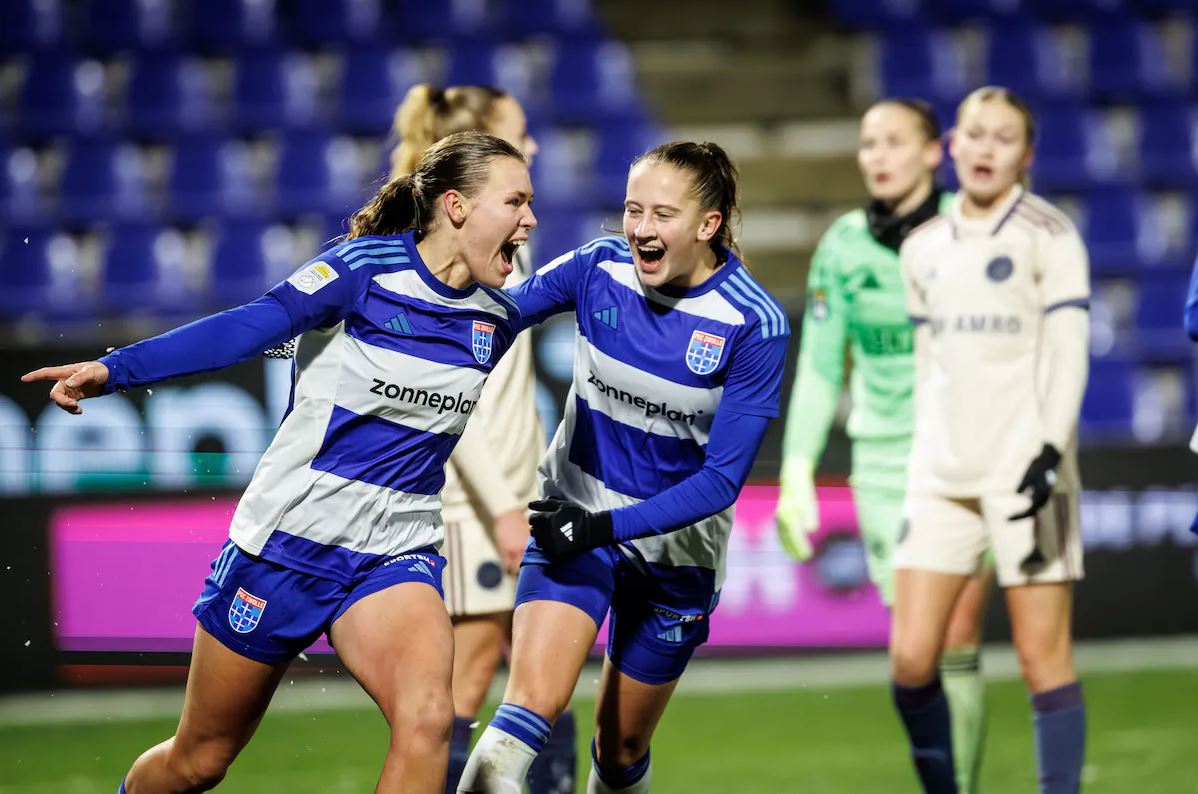
Above: PEC Zwolle celebrate a historic victory. Photo: Martijn Bijzitter.
Last week’s Vrouwen Eredivisie action was perhaps the most shocking in history. Up-and-coming PEC Zwolle beat title contenders Ajax by a whopping seven goals to one, and there were 30 goals scored across five games. Even Netherlands topscorer Vivianne Miedema has discussed the big results.
In her column for the AD newspaper, the Manchester City player said: “Speaking of development: in the Dutch league this weekend, PSV won 6-0 against SC Heerenveen, and AZ beat NAC Breda 8-1…“
She went on to question if these results suggest a reason for the Oranje national team often overlooking talent from the Netherlands’ own league:
“The Dutch national team coaches are sometimes asked why they select few, if any, players from the Eredivisie,” she pondered. “Not that this weekend will necessarily be the answer, but these results do indicate that there’s still room for improvement in the domestic league.”
Miedema was more surprised by the result in Zwolle, suggesting that such a big surprise might actually be good for the league. It prevents everything from becoming too predictable. Although I think the Ajax players feel differently about that.”
PEC Zwolle 7-1 Ajax
Ajax Women suffered a painful defeat in their away match against PEC Zwolle. Just days after their European elimination by Hammarby, Anouk Bruil’s team went down 7–1. It was Ajax’s first loss of the Women’s Eredivisie season and their biggest ever league defeat, and PEC Zwolle’s biggest win, putting them level with PSV and Feyenoord in the standings.
After ten minutes, PEC took the lead. The ball fell to Chihiro Ishida, who struck it cleanly and put the 1-0 on the scoreboard. Not long after, the home side doubled the lead: Judith Roosjen was left unmarked to head in from a corner. Ajax lacked the desire and energy needed to defend properly.
In the 20th minute, Hanna Huizinga had a huge chance to make it 3-0, but thanks to quick reflexes from goalkeeper Regina van Eijk, Ajax stayed in the game — at least temporarily. Van Eijk, wearing the captain’s armband in Spitse’s absence, showed a decent level, but the entire defence and midfield acted like passive cones that Zwolle could easily play through.
Bruil also made a remarkable decision just before halftime, substituting Isa Colin for Daniëlle Noordermeer. That moment marked the beginning of the true collapse, as Noordermeer’s first involvement was a misplaced pass straight into the feet of Sophie van Vugt, who went one-on-one with the keeper and finished for 3–0.
The snowfall intensified, and the cold certainly affected the already tired bodies still recovering from Thursday’s European away match. But the lack of fight and the passive attitude from players like Van Hensbergen, Van Egmond, Noordman, and even the experienced Smits was unacceptable. None of them tracked back or showed any urgency. This would never have happened if Sherida Spitse had been on the pitch — she would’ve roared across the field like a polar bear, putting everyone in their place.
During halftime, coach Anouk Bruil made two substitutions: Ilayah Dostmohamed and Ranneke Derks came on for former Zwolle players Bo van Egmond and Danique Noordman. Shortly after the restart, Van Vugt scored her second of the afternoon, making it 4-0. Van Eijk kept having to pick the ball out of her net, glancing helplessly toward the bench where her coach also seemed powerless. The inexperienced captain, meanwhile, never took the initiative to organise the team or call them together. No one took responsibility.
Ajax managed to pull one back through Danique Tolhoek, who made it 5-1. The striker continued to carry out her task by pressing PEC’s defenders, but when no one else around her followed, it was pointless. PEC Zwolle responded immediately: two minutes later, the ball was in the net again for 6–1. Van Vugt then completed her hat-trick with the 7-1. Joëlle Smits came close to 7–2, but her effort hit the crossbar. The match ended 7-1, marking PEC Zwolle’s first win over Ajax in a long time — and firmly putting them into the title race. Ajax remain on 19 points, while PSV, Feyenoord, and PEC Zwolle now sit on 18.
AZ Alkmaar 8-1 NAC Breda
NAC Breda have come crashing down from their pink cloud after their first Eredivisie win last week. They returned humiliated from their trip to AZ. AZ won with 8 – 1 in their homematch and wrote history with their biggest result ever, with four goals from the international Desiree van Lunteren.
AZ Women started strongly and immediately put NAC Women under pressure. In just the third minute, Nikki de Haan had to make a crucial save to prevent an early deficit. NAC Women responded right away: Emely van der Vliet struck from the edge of the box, but her effort was impressively stopped by goalkeeper Trinette Booms.
Above: NAC Breda v AZ. Photo: NAC.nl.
After fifteen minutes, AZ Women took the lead. Desiree van Lunteren capitalised on sloppy possession and slotted in the 1–0. NAC Women tried to create danger through quick counterattacks, but they produced little threat on AZ’s half.
AZ Women kept pushing, extended their lead, and seemed to grow into a real flow, while NAC Breda lost their grip. Shanique Dessing finished off a beautiful attack to make it 2–0, after which Fieke Kroese headed in the 3–0 from a corner. The striker celebrated almost sheepishly because it had been so easy to score. An unfortunate own goal by Lynn Verhoef made it 4–0, and just before halftime Van Lunteren added the 5–0.
NAC Breda were a shadow of themselves when they weren’t playing at the Rat Verlegh Stadium. The 2,200 spectators had given the inexperienced team wings last week, but the three NAC scarves in the stands at AZ were a stark contrast. One thing was clear: this would never have happened at the NAC Breda Stadium!
In the second half, NAC Women did everything they could to limit the damage. The team came out of the dressing room with energy and tried to keep the score down. AZ Women, however, remained the superior side, and van Lunteren showed she still possessed that international class. After all those years, she simply got into her groove again and smashed in the 6-0 and 7-0!
Goalkeeper Booms must have been disappointed that she couldn’t keep a clean sheet. In the 68th minute, NAC Women finally had a bright moment. Yentl van Goch took a free kick from thirty metres and struck the ball beautifully via the crossbar into the roof of the net. It was, strangely enough, the most impressive goal of the match. AZ Women remained dangerous and sealed the final score with an eighth goal, making it 8-1. A historic win for AZ women, who must benefit from this high since the top half of the table is still in touching distance. NAC Women get another chance to redeem themselves: the home match against sc Heerenveen Women. The crowd will have to stand behind the bruised team!
Feyenoord Rotterdam 3-0 HERA United
Feyenoord concluded the first period of the Eurojackpot Women’s Eredivisie with a 3–0 victory over HERA United. It didn’t come easily. Feyenoord, a team full of international quality, had expected a simple ‘walk in the park’. The goals came from Ella Van Kerkhoven, Mao Itamura, and an own goal by the visitors.
On a cold and rainy afternoon at Varkenoord, Feyenoord struck within the opening fifteen minutes. Belgian international Ella van Kerkhoven delivered the opening goal. It briefly looked like offside, but a classic case of optical illusion later showed that Van Kerkhoven had scored in a perfectly legitimate manner.
Just before and after halftime, Kirsten van de Westeringh seemed to double the lead twice, but the flag went up for offside on both occasions. The narrow 1-0 advantage must have made Feyenoord sweat, as HERA proved far more organised defensively than earlier this season.
Just over an hour into the match, Mao Itamura finally provided the relieving 2-0. A special substitution took place fifteen minutes from time. The goalless Van de Westeringh was taken off, and although she was understandably disappointed, her expression quickly turned into a smile when she saw her teammate waiting on the sideline. Talia DellaPeruta, who signed with Feyenoord in 2024 but had yet to feature due to injury, made her debut for the Rotterdam club!
Above: Feyenoord after the match. Photo: Feyenoord website.
With DellaPeruta on the pitch, Esmee de Graaf delivered the final blow deep into stoppage time. Her effort deflected off a HERA defender and ended up in the net for 3–0.
The positive takeaway for HERA lies in limiting the damage compared to other relegation candidates. Feyenoord, meanwhile, continue to position themselves as one of the strong contenders capable of preventing top clubs Ajax, FC Twente, and PSV from securing European football.
PSV 6-0 SC Heerenveen
PSV Women comfortably defeated sc Heerenveen and proved that European elimination doesn’t have to interfere with their Eredivisie level. Heerenveen offered little resistance, leaving absurd gaps at times for PSV to exploit.
In the seventh minute, a brilliant pass from Riola Xhemaili set up the opening goal. She sent Lore Jacobs through, who cut past her defender beautifully and finished with composure — a very mature goal from the stand-in for the still-injured Fenna Kalma. Less than ten minutes later, Chimera Ripa made it 2-0. She appeared in acres of space and immediately used her creativity to exploit it, leaving experienced player Inessa Kaagman looking at her teammates in disbelief, wondering why Ripa had been left unmarked.
Above: Ripa for PSV against Heerenveen. Photo: KNVB.
The one-way traffic continued, but thanks to excellent goalkeeping from Brenda Badenhop, sc Heerenveen managed to stay in the match. Badenhop, who played for Jong PSV last year, did an excellent job filling in for Heerenveen’s first-choice goalkeeper Jasmijn Reesink.
In the second half, the visitors created a few chances, but Nicky Evrard was alert and never looked likely to be beaten. On the other end, a strong corner from Renate Jansen finally paid off. Substitute Liz Rijsbergen quite literally ran into the ball to make it 3-0. A few minutes later, Liz provided the assist for Nina Nijstad’s 4-0. Nina then sent in the cross for Chimera Ripa’s 5-0, who again was poorly defended in front of goal. In added time, Sisca Folkertsma — back from injury — scored the final goal of the evening.It was a sweet victory for PSV, and with Ajax losing, they are now breathing down the necks of the competition, just one point behind.
Nina Nijstad scored and assisted in this match. Read here why she’s one of the brightest upcoming midfielders for The Netherlands this season.
Excelsior Rotterdam 1-3 FC Twente
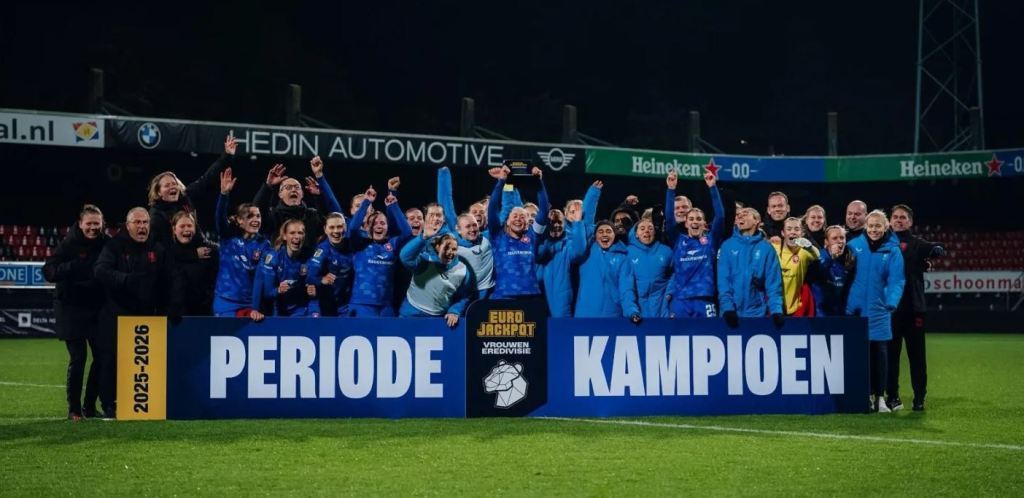
FC Twente Women have been crowned period champions in the Eredivisie! With a 1-3 victory at Stadion Woudestein, they secured an automatic spot in the semi-finals of the Eredivisie Cup. But Corina Dekker’s side did not have an easy sunday since they’ve had a busy schedule this season.
FC Twente Women were without key players Sophie Proost and Jill Roord in the starting lineup due to injuries. The European schedule had taken its toll. Still, Twente took an early lead. Striker Jaimy Ravensbergen headed in a corner to make it 0-1. Excelsior dropped deep with a highly structured defensive setup, waiting to counter through Katelyn Hendriks, which forced FC Twente to keep searching for openings. For a moment, Excelsior’s game plan seemed to work. Shortly after, they equalised. A corner bounced off captain Danique van Ginkel and into her own net (1-1).
The pattern remained the same in the second half. A major chance for Lynn Groenewegen went unused as the midfielder shot straight at the goalkeeper’s legs. Coach Corina Dekker made two substitutions in search of the lead. Precision and first touches were not at their best for Twente. The fresher Eva Oude Elberink, who had lost her starting spot due to the return of Rose Ivens, came on — and it turned out to be a masterstroke. With fifteen minutes remaining, Oude Elberink fired the 1-2 high into the net with a composed finish. Deep in stoppage time, the player from Oldenzaal struck again, this time with a brilliant left-footed shot for 1-3.
With the win, FC Twente Women have secured the period title (for the side first in the league heading into the winter break), granting them a place in the Eredivisie Cup later this season. After eight matches, Corina Dekker’s side sit on 22 points. The gap to second-placed Ajax — who suffered a heavy 7-1 defeat to PEC Zwolle on Sunday evening — is three points.
Above: Twente celebrate their ‘period title’. Photo: FC Twente.
FC Utrecht had to cancel the match against ADO The Hague because of the snow. This might be an advantage to ADO who had to regroup after the headcoach Marten Glotzbach was fired with just one point on the board.
Firing the headcoach might spark some bounce back from ADO under the interim coach, but the real bounce back needs to be done in the boardroom. There just doesn’t seem to be much financial support for ADO, with new players coming to the team through the academy and more experienced players leaving the club. With only one point they’re at the bottom of the table. The club needs to do more to prolong the history of the Eredivisie winning club.
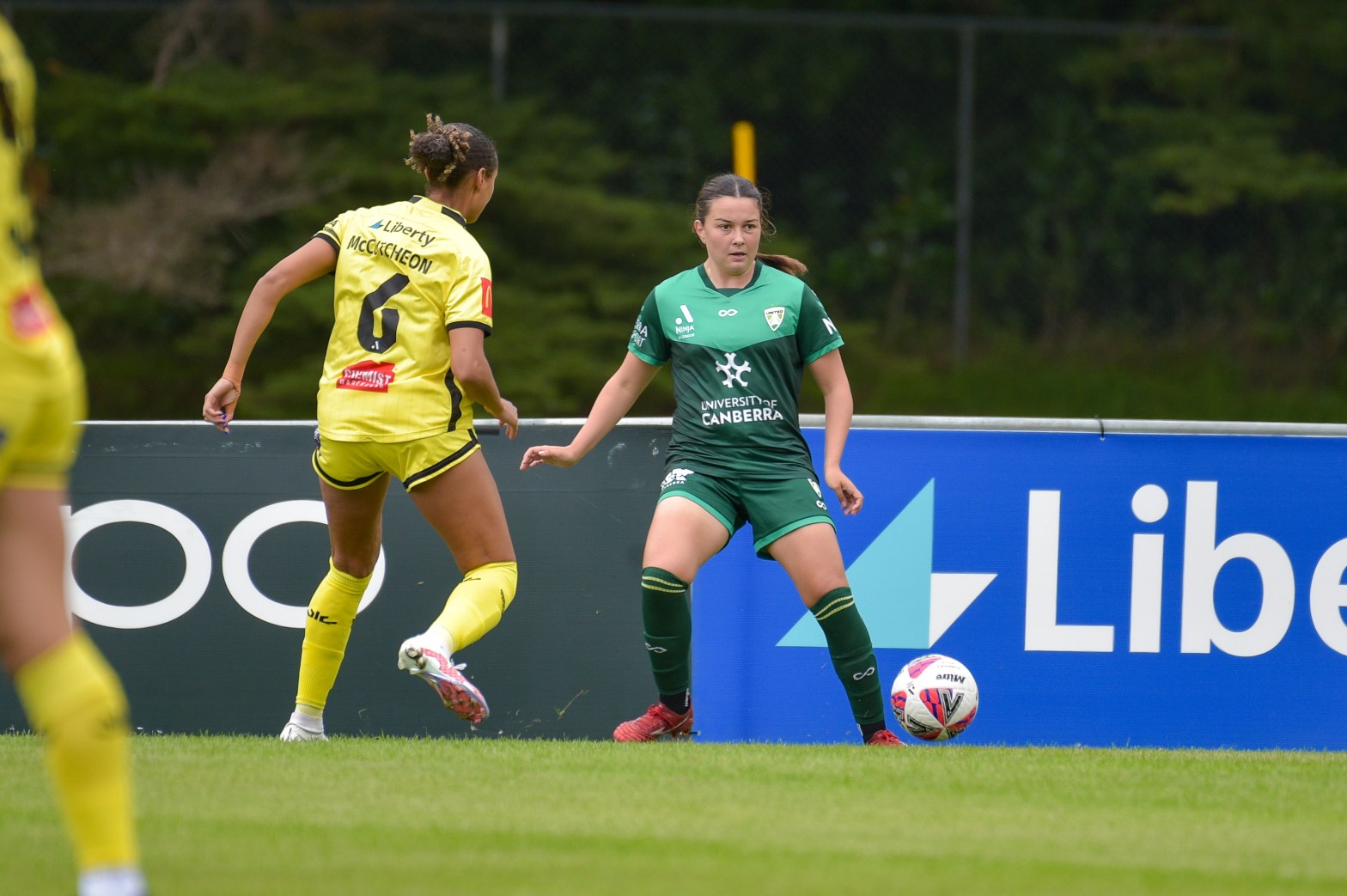
Above: Mary Stanic-Floody (green uniform) in action for Canberra against the Wellington Phoenix.Photo: Ryan Imray
Mary Stanic-Floody may be at the younger end of the A-League Women’s playing cohort, but has certainly experienced a lot already in her short career.
From debuting in the A-League Women’s as a teenager to now being on the cusp of a senior international debut for a country thousands of kilometres from home, Stanic-Floody sure has packed a lot into the last four years.
The young midfielder initially debuted in the national competition as a 15 year old for childhood club Sydney FC, spending a few seasons at the Sky Blues before moving to current club Canberra United at 17 years old.
Stanic-Floody looks back on her time at Sydney FC with fondness, noting how “grateful I was to be there” – especially considering she grew up barracking for the Sky Blues – but ultimately the desire for more consistent minutes is what saw Stanic-Floody move down to Canberra.
“[Now former Canberra United coach Njegosh Popovich] saw potential in me to be a first team starter and the depth of Sydney FC, they’ve got a good reputation for a reason.” Stanic-Floody explained.
“So moving to Canberra and having the opportunity to work with Michelle Heyman of course is a big one, but I think the opportunity of consistent minutes really pushed me to move to Canberra.
“I did my HSC in Canberra, so it was a big move but it was well worth it.”
Making her A-League Women’s debut so young meant that the now 19 year old Stanic-Floody has spent much of her young career to date juggling the demands of both schooling and being an elite footballer.
Although Stanic-Floody said juggling both was “very, very difficult”, she was also “very fortunate that I had the support of my teachers and they made sure I was always up to date. They would do extra lessons if I needed it, so I was very lucky.”
Her involvement with the Australian national team pathway system began even before her A League Women’s career did though, called up to the Junior Matildas in March 2021 before debuting for Sydney in December that year. She was also a member of the Junior Matildas squad that won the AFF U18 Women’s Championship the following year.
Stanic-Floody called her call up to the Junior Matildas as “a big honour, very big honour.”
“As a kid you dream to play international football and to be selected to go to the ASEAN Championship and to win it, you just want to walk away with silverware – it’s a dream of course.
“It definitely highlighted that there’s other talents out there and where you have to be, but it was a huge honour.”
But with the allure of playing in the top flight of European international football, Stanic-Floody made the tough decision to swap her international allegiance from Australia to Serbia – the ancestral homeland of her mother – with official confirmation coming through earlier this year.
“It’s very tough, but in the end, I did what was best for my career” Stanic-Floody explained as the reason for swapping her international allegiance.
Stanic-Floody also noted that “any first team football is what I want to be doing and the environment that Serbia has and just the whole built-in structure is just something I can’t say no to.”
Stanic-Floody may have only been called up to the Serbian national team for the first time last month, but it was the culmination of a journey that had actually started two years prior.
Stanic-Floody explained that she had been contacted by the Serbian Football Association two years ago back when she had first joined Canberra United, but “I was ineligible to go because I had an ankle injury.”
“It was just a huge honour, … but to finally get there, I felt so honoured to be there and represent my heritage” Stanic-Floody said.
Although Stanic-Floody ultimately did not take to the field for Serbia in the October international window, she was still heavily involved in camp, and did have a familiar face amongst her new team mates in former Canberra team mate Vesna Milivojevic.
“Oh she made it very easy for me, a smooth transition” Stanic-Floody confirmed.
“My Serbian is not the greatest. I know bits and pieces, but I can’t roll my Rs like they do in the Serbian language. But she made it so smooth. I can’t thank her enough.”
Stanic-Floody also noted that her Serbian is improving, saying that “I plan to finish learning it by the end of this year. But all my family speak it, so I do know a lot. It’s just I can’t communicate back.”
Although international football is far from ever guaranteed, Stanic-Floody’s approach to the worry about whether she will get any future call ups is one that is both calm and very mature.
Stanic-Floody’s approach has always been “club football comes first, international football is a bonus.”
“I’m very lucky that I got to go to Slovenia, but that came from my performance at Canberra. So I think it’s more individually I have to push myself rather than Serbia guaranteeing something.
“When you play well, you’ll get called up, and that’s what I hope for this season. Just continuing my goals, my assists, and how I perform, and then let the rest come.”
Although she has not been called up for the final international window of 2025, it is a big year for Serbia in 2026 so time will tell how much their newest recruit will get to be a part of what might be a historic year for the White Eagles.
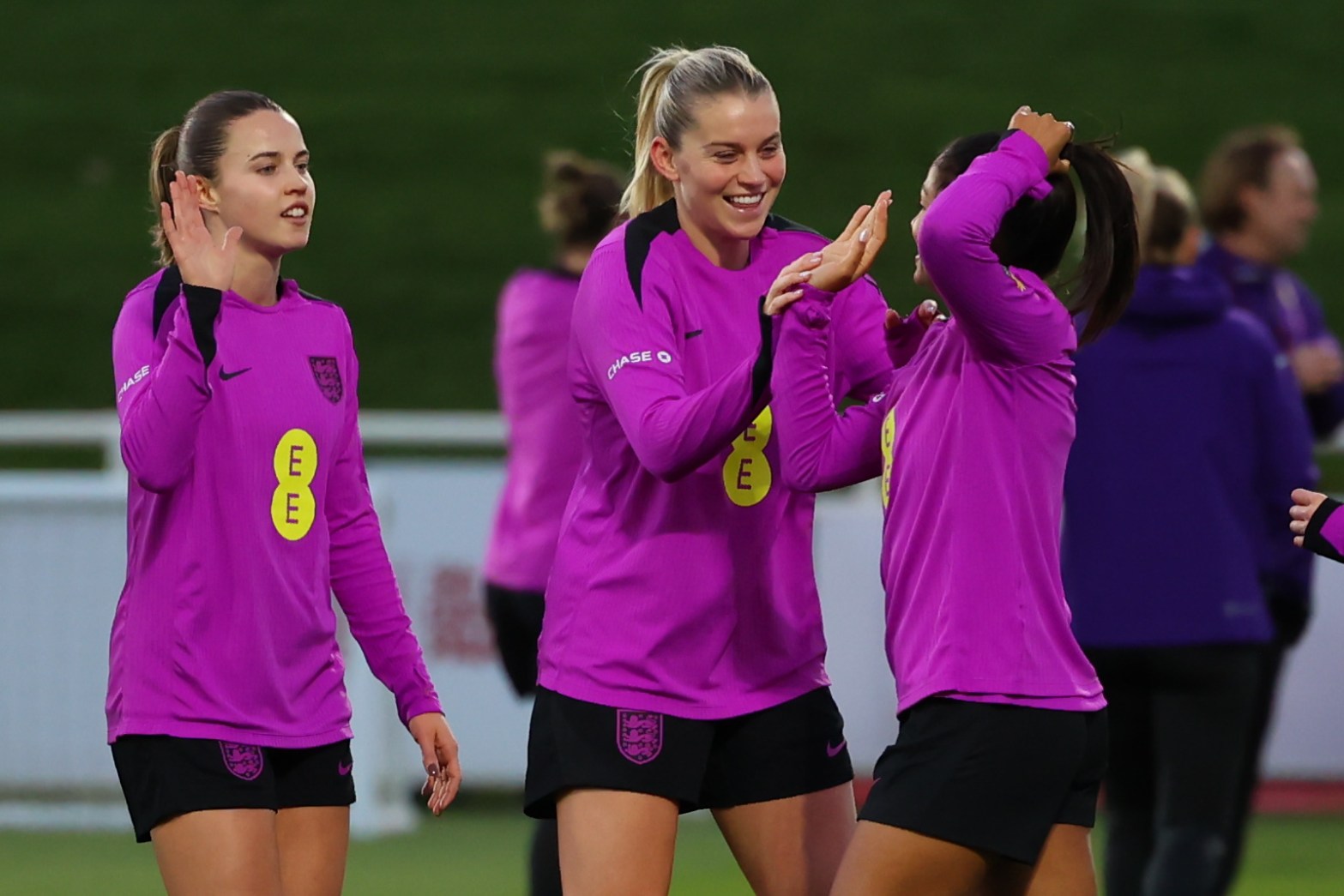
Above: England’s Lionesses training at St. George’s Park. Photo: Lindsay Cook for Impetus.
England’s homecoming series concludes with games against China and Ghana next week. With friendlies a rare chance to experiment, Sarina Wiegman’s latest squad contains new names who are untested on the senior international stage.
“We have a lot of talent”, said Wiegman about new players joining the set up before the next World Cup, adding that “it’s going to be hard to make the squad”.
With Hannah Hampton, Alex Greenwood, Leah Williamson and Michelle Agyemang all out injured, and Jess Carter left out to recover from the NWSL play-off weekend, Wiegman’s latest squad has nine players with two caps or less to their name.
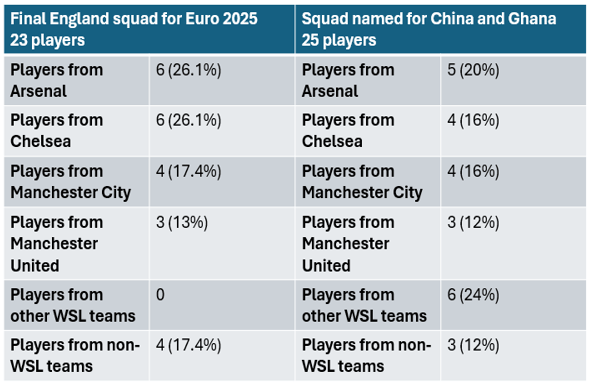
Lauren James has also been left out after only just returning from injury, with Wiegman naming Freya Godfrey in the group for the first time. There are nine different WSL teams represented in the latest squad.
For fans outside of Arsenal, Chelsea, Manchester City and Manchester United, the inclusions of Godfrey, Anouk Denton, Lucia Kendall, Sophie Baggely and Grace Fisk may bring some welcome variety and recognition to their teams.
There were no WSL players from teams outside of the top four in Wiegman’s final squad that went onto lift the Euro 2025 trophy. To see more WSL teams represented this time out is refreshing and exciting – and arguably shows that the league has developed to a point where the big four are not as dominant.
Here is a closer look at the players trying to catch Wiegman’s eye this time out.
Anouk Denton – West Ham
Denton was a late call up to the squad for the first part of the homecoming series to provide cover at fullback. She provides versatility and quality in all areas of the pitch and can play full back or wing back on both sides.
Her performances did not go unnoticed last season, and she was shortlisted for the Young Player of the Year award at the prestigious Women’s Football Awards as well as playing for England Under 23’s.
Above: Denton for the England U23s. Photo: West Ham United website.
This season she has become an even more important figure in the Hammers’ line up, and has flourished in a wide midfield position, having an excellent game off the left-hand side versus Leicester and scoring when playing off the right-hand side versus Everton.
Denton ranks highly for tackles per 90 minutes (3.3) and also for successful take ons compared to other fullbacks across the top nine women’s leagues for the past year, according to FbREF.
Her ability to run at players and stretch opposition defences has really caught the eye in recent weeks.
Freya Godfrey – London City Lionesses
Godfrey perhaps gave hints that this could be a special season in a pre-season friendly against OL Lyonnes. Picking up the ball on the left-hand side, she drove infield with purpose before unleashing a rocket of a shot that flew into the net from 40 yards out.
Since then she has notched two goals and two assists in her past two WSL matches as London City Lionesses climbed to sixth place in the table.
Above: Godfrey for London City Lionesses. Photo: Nina Farooqi.
Godfrey’s ability to cross and shoot with both feet has particularly stood out in recent weeks – with four goal contributions in 296 minutes over five games, she has a strong 1.21 goal contributions per 90 minutes, putting her amongst the best in the league.
Wiegman was full of praise for Godfrey in her press conference, “I think she brings something different, a young player of course, she was very excited. So, I’m excited to see what she can bring in our squad.”
Whether Godfrey get’s her chance on the left or the right, remains to be seen. As she has shown this season, she doesn’t need much time to make an impression in games.
Grace Fisk – Liverpool
Fisk has been a mainstay in the WSL since 2019, when she joined West Ham and later Liverpool in the summer of 2023, making close to 150 appearances across the two teams. She was first called into the England squad in 2020 but has yet to make a senior appearance.
Above: Grace Fisk for Liverpool. Photo: Liverpool women.
Like Denton and Godfrey, she offers Wiegman some strong versatility, with her ability to play right back, as well as her preferred position in central defence. Fisk was made Liverpool captain at the start of the 2025-26 season.
Despite Liverpool’s early season struggles, she has been a consistently strong performer. Her composure and ability on the ball suits Taylor’s possession-based side who, like Denton’s West Ham have showed improvement over the past few weeks.
Fisk also ranks joint second in the league for interceptions (16), compared to other WSL centre backs. With so many injuries in that position for England, she could well start against either China or Ghana.
Lucia Kendall – Aston Villa
Kendall is the only player out of the five who has made an senior appearance for the Lionesses after her impressive performance against Australia last time out, winning player of the match.
Above: Kendall for England. Photo: @Lionesses on X.
Kendall looked confident next to Keira Walsh playing in the double pivot role and barely put a foot wrong. Her stats from the game tell the story of what an all-round performer she can be.
After the game, Kendall also won Wiegman’s plaudits: “She came in our environment and even though we didn’t have that many training sessions, straight away you saw her understanding and reading of the game,” praised the England manager.
She has seen a mesmeric climb to the international stage having only started playing in England’s top league since the summer but has quickly looked at home in the WSL after signing for Aston Villa from Southampton.
Kendall, like her teammate Missy Bo-Kearns, will be hoping for more game time against China and Ghana, as she looks to cement her place in the England squad before the upcoming World Cup qualifiers.
Sophie Baggaley – Brighton
Baggely may be the least likely to get on the pitch out of our featured five but will provide competition for Khiara Keating and Anna Moorhouse for a starting spot in goal, with Hampton injured.
Above: Baggaley in training with England. Photo: Lindsay Cook for Impetus.
Baggely had a decent season for Brighton in 2024-2025 but has lost her starting role to Chiamaka Nnadozie this season. She has, however, featured in all four of Brighton’s league cup games this campaign.
A strong shot stopper, Baggely ranked third for average saves per 90 minutes in the WSL last season with 3.9. She will be an able deputy if called into action for club or country this season.
Above: Tiree Burchill and Hayley Lauder battling for the ball Photo: Hibernian FC
Facing an ever-increasing injury list, Hibs held SWPL leaders Glasgow City to a draw at Petershill Park with a battling performance. The result kept Hibs 8 points off the top of the table, while Rangers, Celtic and Hearts all closed the gap to City with wins.
The Teams
Despite a late Wednesday night finish in Portugal, Leanne Ross surprisingly made only one change, as Erin McLaughlin replaced Linda Motlhalo in the midfield. Clearly, they felt that those players were rested and recovered enough, but it was certainly a departure from the heavy rotation that City have opted for throughout the season so far.
After losing Eilidh Adams and Linzi Taylor last week, Hibernian’s injury crisis only continued, as star striker Kathleen McGovern and Jess Fitzgerald missed out on the matchday squad and Caley Gibb, who went down with an injury last week was on the bench. Without a recognised striker to pick from, Grant Scott gave Tiree Burchill the start in the middle, although her preferred position is on the wing.
Lauren Doran-Barr got her first start of the season at right back in the place of Gibb while Rachel Boyle started in attacking midfield, and while she is a right back normally, this is not unfamiliar for the club captain. This would obviously have a significant effect on how Hibs played, but with a full week to prepare, they would hope to look better than in the Edinburgh derby last weekend once McGovern left the game.
The Action
As was to be expected, City had the bulk of possession early in the match. They occupied their opponent’s half, as Hibs settled back and looked for chances on the counter. Unfortunately for the visitors, Burchill and Boyle struggled to receive and hold up the ball in the way Adams and McGovern can, and this meant they couldn’t sustain possession and pressure upon the Glasgow City defence.
It was a defence however that looked vulnerable and has been known to be sloppy with the ball at their feet at times. The Hibees were clearly aware of this and made sure to be alert to such opportunities. While they did manage to pick up a fair few lose balls, Notley, Boyle and Grant all miscued passes into the box and they weren’t able to test Lee Gibson in goal.
Glasgow City also had difficulty creating chances, with McLaughlin and Kozlova’s wildly high shots their only notable advances into Hibs’ box. Although, on the stroke of half time a cross looked to have fallen for Harrison inside the six-yard box, before it was cleared desperately by the defence.
The first half did not look like a battle between first and third, as both teams were clearly affected and out of their usual sorts. It was a 45 minutes played between the boxes, full of poor touches, overhit passes and lots of contact.
The introductions of Motlhalo and Sofia Maatta at half time steadied City and they started to create some chances. Maatta had two chances shortly after the break. After a cross from Amy Muir on the left, her angle to shoot was so tight that she could only fire into the side-netting. Just moments later, Muir made a great run, cutting inside on her right foot and scything a pass through the Hibs defence into the Polish winger. Being the only thing left in between Maatta and the goal, Noa Schumacher bravely came out and smother the shot wide.
Seeing the ease with which Kozlova and Muir were getting past Doran-Barr, and considering she was on a yellow, Scott brought Caley Gibb on before any more damage could be done. It was the left side of Hibs’ defence that would come under pressure next, as Kozlova moved into the box and shot. She scuffed the shot, but it fell to Natalia Wrobel, who had a seemingly open net in front of her – with Schumacher out of position after the first effort. Luckily for Hibernian, Gibb was there to heroically clear the ball off the line.
As Glasgow City improved, so did the away team. Tegan Bowie started to pick up the ball earlier, and caused havoc with her speed and skill, including on one occasion, where Smit had to cynically hack down the young winger before she could enter the box. Rosie Livingstone also got more involved down the right, combining well with Gibb as they got some good crosses in for really the first time in the match.
Glasgow looked to be in again, but hanging around at the back post was Caley Gibb again, who headed the ball and took a brutal hit from Kozlova, who was late going for the header.
The end-to-end nature of the final 15 minutes suited Hibs, and it was them challenging the City backline. The pace of Gibb on the right allowed Livingstone to take up more central areas, while Burchill’s pace and energy meant she could keep chasing every long ball against a tiring defence. The closest the reigning champions were to scoring was a low cross from Livingstone that Bowie touched wide in injury time.
Player of the Match Noa Schumacher
Above: Schumacher after her clean sheet in the title decider at Ibrox last season Photo: Hibernian FC
Although it was a difficult start to the season for the American goalkeeper and she is by means a complete player yet, she was outstanding today. There were a few tricky balls over the top that she had to judge perfectly and she did. Her main problems this year have been giving away penalties from these situations, so it was significant to see City target this and Schumacher show improvements.
Her shot-stopping is up there with the best and that has never been in question. Schumacher one again showcased this today, as well as that courageous save from Maatta early in the second half. Something else that she did well was kicking; there was a dodgy backpass each from Hunter and Papadopoulos, but she stayed calm and blasted the ball away to safety.
Where this leaves the teams
After a tough week physically and emotionally, drawing with a title rival is absolutely an acceptable result for Leanne Ross and her side. Hibs might be weakened at the moment, but battles between the professional clubs are always close and this proved no different.
If there’s anything to be concerned about for City it is that they struggled to create anything in the first half, and although they played better in the second half, that scoring touch was still missing. They still hold a strong position in the table, with two draws against Hibs their only dropped points the entire season, so the club should be full of excitement and pride as the international break hits.
Hibs have really suffered the last two weeks with injuries and today had the potential to almost eliminate them from the title race altogether. Drawing with comfortably the best side in Scotland this year so far is a good result in that context. The performance was probably the best aspect of the day, as this team proved they can take on anyone even with so many key players injured.
Above:New Subiaco head coach Chris Coppin. Photo supplied by: Chris Coppin.
New Subiaco head coach Chris Coppin has spoken of the “real privilege” of leading the NPLW program at Rosalie Park, “a proud club that champions the women’s game in WA.”
Coppin has replaced Greg Farrell at the helm, a coach who laid the foundations of continuing improvement at the club across the NPLW WA era, with Subi looking to move into the conversation surrounding top-four places.
“I’m excited to be part of a club that’s aiming for a top-four finish and ready to challenge the teams above us.
“Subi have been right on the edge of the top four for a few seasons now. To push through, we need to raise the bar across the entire program – that means matching the professionalism, expectations, and support that clubs on the East Coast are already delivering.”
Coppin has a rich experience in the game, both locally and on the East Coast where she coached in the NPLW Victoria at both South Melbourne and Boorondara-Carey Eagles. She takes up the story of her footballing journey.
“I first kicked a ball back in primary school and kept playing all the way through high school. When I got to uni, I joined Floreat Athena and spent four years playing in the Premier League. I was also lucky enough to be selected for the Australian University team, which was a real highlight.
“As a PE teacher, I’ve worked in a few high schools as a specialist football teacher, including Morley SHS and Halls Head College.
“After my time at Floreat, I moved to Bassendean Caledonians (Callies), where I played across Divisions One to Three. That’s where my club coaching journey really began. I spent around 15 years there as both a player and a coach, and later coached at Ellenbrook United as well.
“In 2024, I was incredibly honoured to receive the Football West Female Coach of the Year award, followed by the Australian Female Football Coach of the Year. Those achievements opened some exciting doors and led me to Melbourne, where I took on an Assistant Coach role with South Melbourne’s NPLW side and also coached with the Boorondara-Carey Eagles in the Victorian NPLW.”
Subi’s new head coach has achieved a lot in the game so far, but she believes the best is yet to come at Rosalie Park.
“As a player, my proudest moments would have to be my first Premier League game and being selected for the Australian University team. From a coaching point of view, being recognised as Female Coach of the Year and stepping into an Assistant Coach role in the Victorian NPLW have been real highlights.
Image provided by: Christine Coppin.
“Now, being given the opportunity to lead Subiaco is the icing on the cake. But honestly, what means the most is the friendships I’ve made along the way and being able to help female players grow and chase their football dreams.”
In terms of what Subiaco’s supporters can expect from their NPLW WA team next season, Coppin outlines what she wants from both herself and her team.
“I think good coaches are adaptable, so really knowing my players is key to the style of football we play. My philosophy centres on being a possession-based team that can identify and exploit the opposition’s weaknesses while making the most of our own strengths.
“Whenever a new coach comes in, there’s always a bit of movement. My approach is to show players what Subiaco has to offer – our program, our support staff, and the professional standards we’re putting in place. I want players to see that this is a club where they can grow and compete at a high level.”
After coming back to the women’s game in Western Australia after a spell in Victoria, Coppin has clear views about the standards and how to continually drive progress.
“The NPLW in WA is definitely improving, but there are still a few hurdles. We need to find better ways to keep our quality players here in WA and attract A-League clubs to scout our talent. Financially, WA still lags behind other states, which makes retention tough.
“Right now, there’s a clear gap between the top and bottom four teams, whereas on the East Coast, the competition is more evenly balanced. A stronger, more competitive league across all eight WA teams would be a huge benefit for everyone involved.
“Increased financial support from governing bodies and the government would make a massive difference. That extra backing could go toward better pay for players, coaches, and support staff, helping attract and retain top talent.
“We also need more visibility. Finally, relaxing some of the loyalty and home-grown player restrictions could help smaller clubs stay competitive, especially given WA’s smaller player pool.”
Whilst it’s around four months until the new NPLW WA season, Coppin is already clear what she wants to see from Subi in 2026.
“A great season for us would mean seeing players develop, hit their goals, and play with confidence and belief. As a team and as a club, success would be finishing in the top four – and doing it in a way that shows we’re building something sustainable for the long term.”
Above: Sydney FC celebrate scoring against the Mariners. Photo: Sydney FC
A physical contest saw Sydney FC edge past the Central Coast Mariners to remain undefeated through the first four games of the season.
Leichhardt Oval hosted an exciting encounter with the visiting reigning champions Central Coast Mariners eager to bounce back after back-to-back defeats against both Melbourne sides. Sydney FC came into the match undefeated after two draws and a win.
Ante Juric made no changes to the home squad, meaning 14-year-old Willa Pearson was given another start. Central Coast opted for a few personnel changes with Annabel Martin, Isabel Gomez, and Annalise Rasmussen joining the starting line-up.
Early in the game, the Mariners opted to take a pressing approach when off the ball, trying to counter Sydney FC’s confident possession play. The press resulted in an early free kick for Tess Quilligan, but the youngster was unable to create a significant opportunity as the first five minutes started slowly.
The crowd was lively throughout, and the first significant chance came in the 12th minute when Sarah Hunter took a shot from about 35 yards out. While audacious, the effort was directed well enough to force a good save out of Sarah Langman.
Sydney were focusing on getting on the ball in midfield and trying to play it in behind to the threatening Mackenzie Hawkesby, resulting in a mix of off-sides and Mariners foul, creating pressure for the hosts who started on the back foot in the first half.
The Mariners’ first solid chance at goal was created by a run forward and cross from Annabel Martin, which found the head of Rasmussen, but it was slightly behind the forward, so she was unable to direct her header on target. This, however, won some solid territory for the Mariners, and they soon won a threatening free kick from about 30 yards out.
In the 28th minute, a venture forward from Coco-Di Sipio led to a driven shot at Robertson’s goal. The shot was just over the bar, but a good creative move from the winger.
It was quite a physical affair through the first half, with a lot of fouls and player bumps. There was one yellow card given to each team. One for Tarran King and one for Kirsty Fenton, but otherwise the referee was fairly conservative.
Both defences were very solid through the first half, stifling many front third entries on both sides. There were only five shots between the two teams at the half, with none majorly testing either goalkeeper.
A free kick from Central Coast was drifted in toward the near post, where Elizabeth Barwick-Grey was lurking. Tiahna Robertson eventually managed to knock the ball out of danger. The defending champions were looking to strike early in the second half with an up-tempo pace.
In the 50th minute, a high press from Sydney got Riley Tanner on the ball, who quickly poked the ball through to the substitute forward Jodi Ulkekul. Ulkekul struck a right-footed effort just wide from outside the box, but it was a good response after the start from the Mariners.
Sydney continued with their high pressing, with Maddie Caspers playing a clever ball through to Ulkekul, who struck a shot straight at Langman. The game really started to open up on the attacking side in the second half, with both teams looking to gain the important three points.
Tanner became a much bigger influence in the second half, consistently pressing high and winning possession. The more creative players on the Mariners side had to track back to try and contain Caspers and Tanner in particular.
The next chance came from the foot of Bianca Galic, who took a shot at goal from outside the box in the 67th minute. The strike itself was somewhat tam,e and Langman was able to deal with the chance competently.
In the 73rd minute, somewhat against the run of play, Tiana Fuller struck a well-directed effort from outside the box, which was well saved and then collected by Robertson, who had an impressive game, filling in for the injured Heather Hinz.
Three minutes later, the home side’s endeavours were eventually rewarded. An attacking move instigated by Caley Tallon-Henniker. The cross from the substitute winger was deflected away, but Hunter showed excellent awareness to tap the ball to Caspers, who struck an excellent curved effort into the top corner from 17 yards out.
A moment later, Gomez tried a long-ranged effort to get Central Coast back on level terms, but the shot was directed well wide. Avani Prakash was introduced to try and assist the title-holders’ comeback effort.
Two minutes into stoppage time, Sydney broke forward and nearly extended their lead after a run and shot from Tallon-Henniker, but the effort was directed slightly too high.
This was a very physical affair, with many fouls committed on both sides. A moment of brilliance from Caspers marked the difference between the two teams as Sydney looked to continue their rise up the table, and keep their undefeated streak alive.











 impetusfootball.org