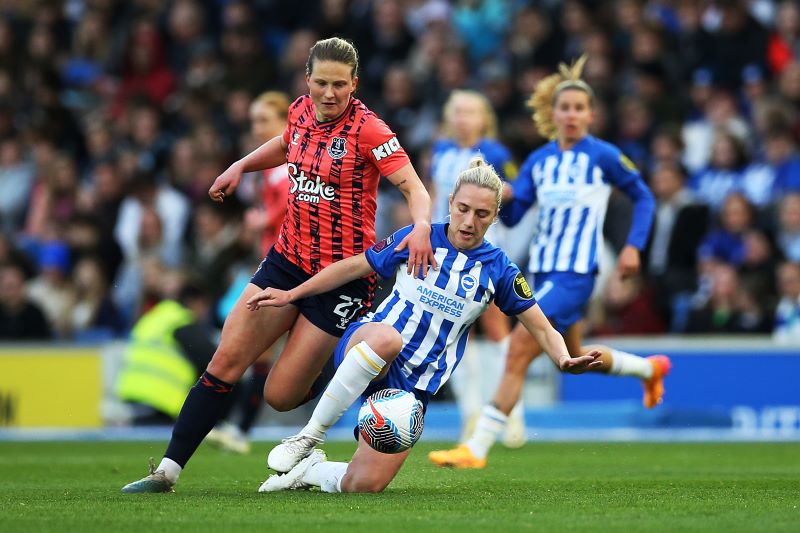
A Potted History of the UEFA Women’s Euros

By Clare McEwen (28/06/2025)

Above: Sweden’s win in 1984. Photo: UEFA website.

Euro 2025 is nearly here, but do you know the history?

UEFA organised their first Women’s Euros in 1984 (the men’s began in 1960). Before that, other tournaments paved the way. Let’s start in 1957.

Women’s football was growing as European countries began playing more international friendlies. In 1956, 18,000 people came out to watch Germany’s first international against the Netherlands – despite the women’s game still being officially banned throughout much of Europe, including both Germany and the Netherlands, England and France.

Players fought the ban with increasing strength. In the summer of 1957, Germany, Austria, Netherlands, and England formed the International Ladies Football Association in Nuremberg, Germany. They quickly organised their own European tournament with the four founding members.

Berlin hosted the event at the Poststadion, a prestigious venue. Naturally there was plenty of opposition, but also some good support. Often at that time, “national” teams were represented by club sides. England, for example, were represented by the Manchester Corinthians. The Corinthians were at the end of a tour of Germany, which they ended by winning the 1957 trophy. Unfortunately, some financial irregularities spoiled the event and it was over a decade before a similar tournament was organised. 

For a period in the late 1960s/early 1970s, women’s football was organised by some Italian businessmen — who had spotted the potential of the sport. In 1969, the newly formed Federazione Italiana Calcio Femminile (FICF) organsied another European competition. The Coppa Europa per Nazioni — now considered a precursor to the UEFA Euros — included Italy, France, Denmark, and England. It was sponsored by the drinks giant Martini & Rossi who bankrolled the event. FIFA tried to stop it going ahead but were unsuccessful.

Although the ban in England was being lifted, England didn’t yet have an official FA team. So, the legendary Harry Batt took a team to represent his country. England were drawn against Denmark (represented by club side Femina BK). Despite a hat trick from Sue Lopez, Denmark won and progressed to the final. Italy beat France but Denmark took the title. England took third, beating France in front of 10,000 spectators. The event was a huge success on and off the pitch.

The Italians organised two World Cup events too (one being the Mexico 1971 World Cup), but in 1971 UEFA couldn’t ignore the growth of women’s football any longer. They decided to take control, making it “official”. They set up a committee for women’s football and then stalled the development of a Women’s Euros tournament for over a decade.

In 1984, UEFA finally caved to pressure and put its name to the Women’s Euros for the first time. Sixteen teams played in the qualifiers with only four making it to the tournament proper: Sweden, Italy, Denmark, and England. Games were 70-minutes long, used a size four ball, and consisted of home and away legs for both semi-finals and the final. England drew the favourites, Denmark, but beat them to reach the final against Sweden.

The first leg in Sweden was covered by the media and brought in a decent crowd. Sweden edged it 1-0. The return leg in England was played at Kenilworth Road, Luton on a pitch described by their captain, Carol Thomas, as “the battle of Kenilworth bog”. The only media at the match was  a very small TV company that disappeared soon after. England squeaked a 1-0 win, making it 1-1 on aggregate. Because the pitch was so bad, the tie went straight to penalties. Sweden edged it 4-3, with current Switzerland head coach Pia Sundhage scoring the winner.

The format remained the same for the 1987 Euros where the four qualifiers were Norway, Sweden, Italy, and England. Norway won their first trophy, beating Sweden in the final; Italy beat England to third place. In a strange contrast, over 8000 people watched the final but only 500 watched the third-place play-off.

At this point, the Women’s Euros was the only major event so enjoyed a two-year cycle. The next edition was 1989 but still only included four teams. However, there was a host country for the first time: West Germany. Norway, Sweden, and Italy joined them and it soon became clear they didn’t need home advantage. West Germany won the first of Germany’s eight Women’s Euros titles by beating the holders, Norway, 4-1 in front of 22,000 people.

The four-team tournament continued into the 1990s. Denmark hosted in 1991 and once again, Germany beat Norway in the final, winning their second title. But the Germans didn’t fare so well in 1993 when they came fourth behind winners Norway (their second title), Italy, and Denmark.

It had been eight years since England last qualified for the Euros but they were back in 1995 joined by Germany, Norway, and Sweden. The qualifying rounds before the main event had expanded to 29 teams, meaning there were now eight qualifying groups; but still only four countries competed for the trophy. England drew Germany in the semi-finals and were soundly beaten over two legs. Germany and Sweden contested the final (played in Germany) and Germany lifted their third trophy in front of 8,500 people.

In 1997, the Women’s Euros format changed to resemble what we recognise now. Norway and Sweden hosted the tournament over two weeks in the summer. The competition expanded to eight final teams in two groups of four. Sweden, Spain (their first appearance), Italy and Germany reached the knockout stages. And yes, Germany won number four, beating Italy in the final.

The next advancement was settling into a four-yearly schedule (the FIFA Women’s World Cup began in 1991 making scheduling harder). In 2001, eight teams competed in the main tournament in Germany. Unsurprisingly, Germany won again, making it their fifth. England only managed a point from a draw with Russia.

Above: Germany celebrate in 2005. Photo: UEFA website.

In 2005, England hosted the Euros and had high hopes for the tournament. It was the first time they’d hosted a major women’s competition and was part of The FA’s strategy to (finally) grow the game. It attracted record crowds. Despite a heart-stopping win against Finland in their opener, England finished bottom of their group. Finland, along with Germany, Sweden, and Norway progressed. The final was again Germany versus Norway; and again Germany finished as champions (their fourth in a row, sixth in total).

Disappointment at home for the Lionesses turned into progress in 2009. Hosted by Finland, the event saw 12 teams take part for the first time. Finland, Netherlands, Germany, France, Norway, Sweden, Italy, and England progressed to the quarter-finals. Germany and Norway continued their rivalry, this time meeting in the semi-final. England needed an extra time winner from Jill Scott to overcome Netherlands in their semi-final, lining up a tasty final against Germany. Disappointingly, England couldn’t keep up with the perennial winners and lost 6-2.

Sweden hosted in 2013, and the familiar pattern continued with Germany beating Norway in the final; their eighth title. However, this is where Germany’s run came to an end. In 2017, Netherlands hosted their first Euros. Sixteen teams took part for the first time. Netherlands, Denmark, Germany, Sweden, Austria, France, England and Spain reached the knockout stages with some familiar names beginning to appear on teamsheets.

Above: The Netherlands celebrate in 2017. Photo: UEFA website.

In the semi-finals, Netherlands played England and Denmark played Austria. You read that right: Germany had been knocked in the quarters (by Denmark). Things were changing in European football. A Sarina Wiegman-led Netherlands made short work of England in a 3-0 win. Meanwhile Denmark needed penalties to beat newcomers Austria. Finishing the fairytale, Netherlands beat Denmark to win their first Euros trophy at their home event. The English Lionesses’ Jodie Taylor was top-scorer (one ahead of Vivianne Miedema).

And the rest, as they say, is history. Wiegman moved to England, repeated the whole thing in 2022 and will now be hoping she can continue her unbeaten Euros streak this summer.

Above: England celebrate in 2022. Photo: Sky News website.

Follow Impetus on social media –

Twitter (X): @impetusfootball TikTok: @impetusfootball

Instagram: @impetusfootball
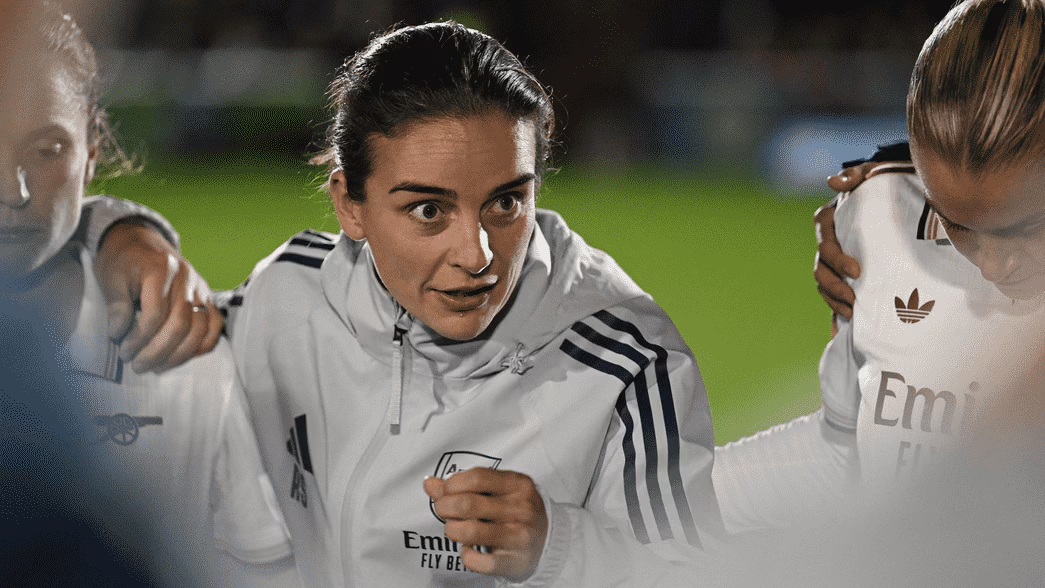
“It’s about doing the small things right” : Joe Montemurro and Amy Sayer Look Ahead to the Next Match

By Isabelle Campbell 28/06/2025

Above: Amy Sayer for Australia. Photo: Rob Lizzi for Impetus

Following their 3-0 win over Slovenia on Thursday night, the Matildas and head coach Joe Montemurro have set their sights on the second game in the series and on continuing to build a cohesive identity under the newly appointed boss.

The match, Montemurro’s first in charge, offered both a positive result and a glimpse into the style he wants to establish with the squad.

“As a whole, right after the game, it gave me a really good feeling and sensation, playing against a team that did what they did, allowed us to sort of really see the realities of the way we want to play and what we need to do to fix that.”

“We learned, it was a perfect game to learn and a perfect game to grow. It painted a lot of really good pictures for us. We can build on that.”

Despite the convincing scoreline, Montemurro was quick to point out the need for consistency and bravery on the ball, whilst also highlighting the various fitness levels within the squad in this window.

“We just now need to be more consistent and more, I suppose, brave with it. But we have to put in context the period of the season, players out of season, players who haven’t played a lot, players who are coming back from injury, and so on, so as a whole, we’re trying to find a good balance.”

As for tactical preparation and focus ahead of Sunday’s match, Montemurro stressed that the team’s focus is on internal development rather than being overly interested in playing based on the opponent at hand.

“It’s no disrespect to any opposition that we play, but you know, it’s really about us. We’ve really focussed on our principles, our base, and that we build a good foundation,”

“When you build a foundation that’s believable, you have those insurance policies so you know that even when not analysing the opposition team, if we do what we do well, we’ll get through the game.”

Midfielder Amy Sayer, who played her first full match for the national team since returning from injury, was encouraged by both the performance and Montemurro’s approach.

“Joe’s emphasised that it’s simple. It’s nothing life-changing, but it’s about doing the small things right and doing it together. It’d be quite easy to tidy up the gaps, and it’s just about getting used to his coaching style and playing together,”

“We gave away a few too many opportunities for Slovenia to have chances on goal, luckily we had Teagan [Micah] between the sticks, no wonder she was player of the match, because she really saved us.”

Sayer shared that post-match conversations between the team confirmed the sense of direction and growth within the squad.

“Looking at the game and talking to the girls, and talking to Joe right after the game, everything started to look good. I think he really established the playing style that he wants to have, and we’re trying to deliver on that.”

Sayer also had praise for teammate Holly McNamara, who scored her debut Matildas goal, one that has been long awaited by fans and players alike.

“I actually thought Holly had already scored, because she’s always in the goalmouth, and she’s so talented at getting in there and having those attacking chances,”

“You could see the relief on her face, especially with the trials and tribulations she’s been through with three ACLs. I can imagine, I mean, I know exactly how she was feeling.”

“When she was celebrating, she was just looking up and just so happy to get it in finally. She had a lot of chances in the game. I can really relate to it.”

As for herself, Sayer said the outing was a strong step in her own return journey.

“I feel great, so I hope I can put away another performance like that.”

With Montemurro’s foundation laid and the squad showing early signs of cohesion, all eyes now turn to game two, and the continued evolution of this new Matildas’ era.

Follow Impetus on social media –

Twitter (X): @impetusfootball TikTok: @impetusfootball

Instagram: @impetusfootball
Euros Preview: France

by Jean-Pierre Thiesset (28/6/25)

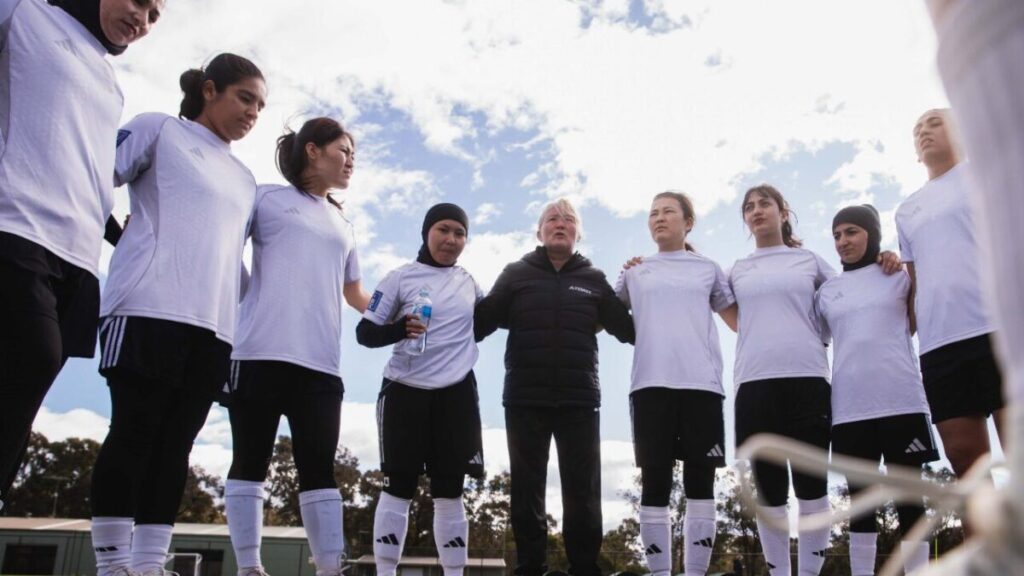
Above: The France national team who will take on Switzerland. Photo: equipedefrancef.

Les Bleues, ranked second in Europe and 11th in the world go into the tournament with high hopes.

Squad

Goalkeepers: Justine Lerond (Montpellier, France), Constance Picaud, (Fleury, France), Pauline Peyraud-Magnin, (Juventus, Italy).

Defenders: Selma Bacha, (OL Lyonnes, France), Lou Bogaert (Paris FC, France), Elisa De Almeida, (Paris Saint-Germain, France), Maëlle Lakrar, (Real Madrid, Spain), Griedge MBock, (Paris Saint-Germain, France), Melween N’Dongala (Paris FC, France), Thiniba Samoura, (Paris Saint-Germain, France), Alice Sombath (OL Lyonnes).

Midfielders: Sandy Baltimore, (Chelsea, England), Grace Geyoro, (Paris Saint-Germain, France), Oriane Jean-François (Chelsea, England), Sakina Karchaoui (Paris Saint-Germain, France), Amel Majri (OL Lyonnes, France), Sandie Toletti, (Real Madrid, Spain).

Forwards: Delphine Cascarino (Wave San Diego, USA), Kadidiatou Diani (OL Lyonnes, France), Kelly Gago (Everton, England), Marie-Antoinette Katoto (Paris Saint-Germain, France), Melvine Malard (Manchester United, England), Clara Matéo (Paris FC, France).

Head Coach:
Above: Laurent Bonadei, France Head Coach. Photo: Courtesy of Pauline Figuet for Impetus.


Laurent Bonadei, was named the head coach of France’s squad in August 2024. He was the assistant to Herve Renard, from March 2023. Following a 15 year playing career, he moved into coaching and led several youth level teams.

Euro History:

Since an eight-team knockout Euros tournament was introduced in 1997, France had gone out in the last eight every time before making the 2022 semis, after beating title holders the Netherlands in extra time.

How they qualified:

France qualified as Group A3 winners with a record of four wins from their six games against England, with the Republic of Ireland, and Sweden. Marie-Antoinette Katoto contributed three goals in the process.

Strengths:

A lot of players have experience in major club and international tournaments. Exciting new young players have been integrated into the squad and brought a new look to the team.

Development Areas:

Since Laurent Bonadei was named as head coach, three major experienced players, Eugénie Le Sommer, Wendie Renard, and Kenza Dali have been left out of the squad for the last two games of group qualification in the Nation’s League tournament and have subsequently been left out of the squad for the tournament in Switzerland.The coach said that he wanted to prepare the squad for the future. We will soon know if this was the correct decision or not.

Key Players:
Above: Delphine Cascarino (White 20). Photo: Jean-Pierre Thiesset for Impetus.


Delphine Cascarino, 27 years old, is at the peak of her abilities. With an exceptional ability to acceleration past defenders, she can be one of the tournament’s top players.

Above: Selma Bacha (white 4), Photo: Jean-Pierre Thiesset for Impetus.


Selma Bacha debuted in France’s premier league) in 2017 at the age of just 16 years old. Now, her versatility and punch in offence can be one of the main strengths of France. People who know this highly skilled player used to say that her brain thinks what to do and her left foot does it.

Above: Clara Matéo. Photo: Jean-Pierre Thiesset, Impetus.


Clara Matéo, 27 years old, was the top scorer in France’s Première League last season with 18 goals; she also contributed seven assists. Matéo can play in midfield just behind the centre forward to organize the play or as central forward herself. Her vivacity and game vision are a true plus.

One to watch:
Above: Melvine Malard. Photo: Jean-Pierre Thiesset for Impetus.


In January 2020, Malard was named by UEFA as one of the ten most promising young players in Europe. She spent three seasons at Olympique Lyonnais between 2020 and 2023 winning UEFA Women’s Champions League in 2020 and 2022.

Success would be:

Making the final. Nothing else will be considered as successful by the fans.

Prediction:

If all the planets are aligned, France may win this Euro 2025. However, in my own point of view, it will still be difficult to do better that the semi-final even if the team does play more rapidly in midfield with new young players and continue to be more efficient in front of goal.

Group Fixtures:

July 5th- England, 8pm, Zurich

July 9th- Wales, 8pm, Saint-Gallen

July 13th- Netherlands, 8pm, Basel

This is the latest part of our Euros nation previews – click on the links below to view the previous articles:

SWITZERLAND: https://impetusfootball.org/2025/06/16/euros-preview-switzerland-2/

NORWAY: https://impetusfootball.org/2025/06/17/euros-preview-norway/

FINLAND: https://impetusfootball.org/2025/06/18/euros-preview-finland-2/

ICELANDhttps://impetusfootball.org/2025/06/19/euros-preview-iceland-2/

SPAIN: https://impetusfootball.org/2025/06/20/euros-preview-spain-2/

PORTUGAL: https://impetusfootball.org/2025/06/21/euros-preview-portugal/

BELGIUM: https://impetusfootball.org/2025/06/22/euros-preview-belgium-2/

ITALY: https://impetusfootball.org/2025/06/23/euros-preview-italy/

SWEDEN: https://impetusfootball.org/2025/06/24/euros-preview-sweden-2/

POLAND: https://impetusfootball.org/2025/06/25/euros-preview-poland/

DENMARK: https://impetusfootball.org/2025/06/26/euros-preview-denmark/

Follow Impetus on social media –

Twitter (X): @impetusfootball TikTok: @impetusfootball

Instagram: @impetusfootball
Euros Preview: Germany

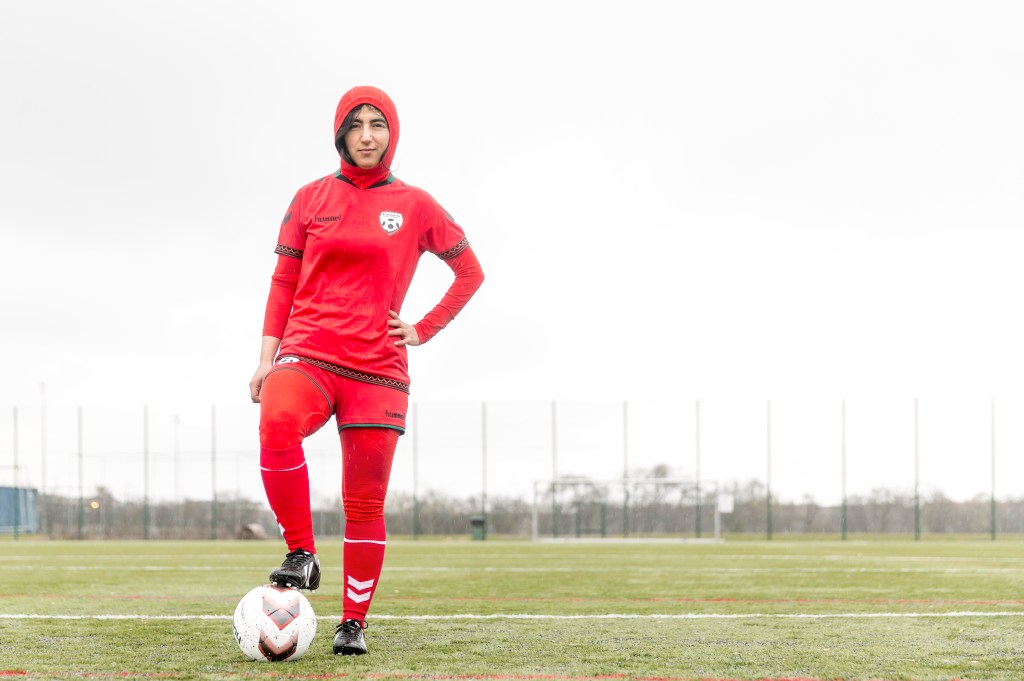
Above: Germany taking on Australia in Alex Popp’s last game before retirement. Photo: DFB/Yuliia Perekopaiko.

By Boh Blythin (27/6/25).

Germany are heading into the 2025 Euros ready to compete for their place at the summit of European football, led by captain Giulia Gwinn. They prepare to clash with rivals Sweden and Denmark in a thrilling Group C, showcasing an eager youthful team led by coach Christian Wück. A bronze medal in the Olympics last year gave fans a glimpse of where the side could reach this summer, but they will have to put up a fight to get there.

Squad List:

GOALKEEPERS: Ann-Katrin Berger (Gotham FC), Stina Johannes (Eintracht Frankfurt), Ena Mahmutovic (Bayern Munich).

DEFENDERS: Giulia Gwinn (Bayern Munich), Kathrin Hendrich (Chicago Stars), Franziska Kett (Bayern Munich), Sophia Kleinherne (Eintracht Frankfurt), Rebecca Knaak (Manchester City), Sarai Linder (Wolfsburg), Janina Minge (Wolfsburg), Carlotta Wamser (Bayer Leverkusen).

MIDFIELDERS: Sara Dabritz (Lyon), Linda Dallmann (Bayern Munich), Sydney Lohmann (Bayern Munich), Sjoeke Nusken (Chelsea), Elisa Senss (Eintracht Frankfurt).

FORWARDS: Jule Brand (Wolfsburg), Klara Buhl (Bayern Munich), Selina Cerci (Hoffenheim), Laura Freigang (Eintracht Frankfurt), Giovanna Hoffmann (RB Leipzig), Lea Schuller (Bayern Munich), Cora Zicai (Wolfsburg).

Head Coach:
Inline image
Above: Christian Wuck. Photo: Getty Images.

The former Wolfsburg forward is in charge of the women’s senior team after starting his journey in August 2024 and is on a two year contract. He previously guided Germany’s U17 male team to Euros and World Cup glory, and there’s no doubt he’s more than ready to start the women’s revolution. 

Euros History:

Germany is the most successful team in UEFA Women’s Euro history, with eight titles. This includes winning six times in a row from 1995 to 2013 and since then Germany’s legacy has remained unmatched. In 2022, the side reached the final where they lost to a strong England side. Now, as a team that other sides will be determined to beat, Germany are back aiming to reclaim what was once theirs with a new generation of youth talent. 

How they qualified:

Germany qualified by topping Group A of the Nations League, facing Austria, Iceland, and Poland. They earned automatic qualification after earning their place in the top two, alongside Switzerland. Some victories included a 3–2 away win to Austria, 3–1 at home win to Iceland, and a 4–1 home win vs Poland.

Strengths:

The side’s history alone proves what the German side is capable of.  In high-stakes matches there is a winning culture and mentality between all players on the pitch, they have experience and belief which other teams are yet to reach. The team includes many versatile players, allowing Wuck to rotate his squad without losing its quality. Many of these players can play in a variety of roles emphasising the squad’s depth, keeping opponents unaware of what style of play, formation and tactics the side may use.

As well as this the German side includes some of the most impressive forwards, including the likes of Lea Schüller and Laura Freigang. These players have the ability to deliver a solid performance each game and create goals consistently. Germany can create danger to opponents from a range of set pieces, which could lead to match winners and success. 

Development Areas:

However, Germany lack defensive players. Despite having strong players upfront, the squad is short of defenders who can consistently thrive from the back. It is worrying that if any injuries happen to take place the side could struggle defensively. Alongside this, the players may not have much chemistry within partnerships due to squad rotation and lack of consistent time on the pitch with one another.

Key Players:
Inline image
Above: Lea Schüller for FC Bayern Munich in the UEFA Women’s Champions League. Photo: Xavi Bonilla/Getty Images. 

Lea Schüller is Germany’s main striker since Alexandra Popp’s retirement. She was the top goal scorer in qualifying for the European tournament with six goals. Her ability to score in high pressure situations, especially in the air is exceptional. Now that she is the focal point of Germany’s attacking play, Schüller holds the pressure to maintain her performances and play a crucial role in the team’s campaign. 

Inline image
Above: Giulia Gwinn during the Women’s DFB Cup Final 2025. Photo: Getty Images.

 Captain Giulia Gwinn will also play a crucial role in Germany’s European journey. She contributed to helping her country earn bronze at the 2024 Olympics after two ACL injuries. Named Germany’s Player of the Year in 2024, she sets the tone and leads her team from the back. 

One to Watch:
Inline image
Above: Jule Brand posing ahead of the official UEFA Women’s EURO 2022. Photo: UEFA via Getty images. 

A rising star and one to watch throughout the tournament this summer is Jule Brand. The 22-year old is a versatile player with the ability to play as a winger or attacking midfielder, meaning she could easily switch roles mid game or be used as a quick rotation. She also scored and assisted in both the 2022 Euros and the 2024 Olympics, proving she can create an impact in important games. 

Success would be:

For supporters, success would be to win the tournament and watch a team of youth lift the international team’s 9th European trophy. This would start a new era for the team with a team full of a new generation of football. 

Prediction:

However, with the loss of legendary players Popp and Svenja Huth, Germany could come to an abrupt end during their Euro’s journey. As a strong team with youth hungry for a trophy and a strong history, they should be able to reach Semi finals. Germany have proven within the qualifying stage they can come back from behind to win games and it’s undoubtable that we will see more of this from the side as the tournament unfolds.

Group C Fixtures:

July 4th– Poland, 9pm, AFG Arena, St. Gallen

July 9th– Denmark, 6pm, St. Jakob-Park, Basel

July 12th – Sweden, 9pm, Letzigrund, Zurich

This is the latest part of our Euros nation previews – click on the links below to view the previous articles:

SWITZERLAND: https://impetusfootball.org/2025/06/16/euros-preview-switzerland-2/

NORWAY: https://impetusfootball.org/2025/06/17/euros-preview-norway/

FINLAND: https://impetusfootball.org/2025/06/18/euros-preview-finland-2/

ICELANDhttps://impetusfootball.org/2025/06/19/euros-preview-iceland-2/

SPAIN: https://impetusfootball.org/2025/06/20/euros-preview-spain-2/

PORTUGAL: https://impetusfootball.org/2025/06/21/euros-preview-portugal/

BELGIUM: https://impetusfootball.org/2025/06/22/euros-preview-belgium-2/

ITALY: https://impetusfootball.org/2025/06/23/euros-preview-italy/

SWEDEN: https://impetusfootball.org/2025/06/24/euros-preview-sweden-2/

POLAND: https://impetusfootball.org/2025/06/25/euros-preview-poland/

DENMARK: https://impetusfootball.org/2025/06/26/euros-preview-denmark/

Follow Impetus on social media –

Twitter (X): @impetusfootball TikTok: @impetusfootball

Instagram: @impetusfootball

Katriina Talaslahti: One of Finland’s best misses out on Euro squad

by Jean-Pierre Thiesset (26/6/25).

Within the Finnish women’s football family is there any outrage at Katriina Talaslahti’s non-selection? There is be lots of talk about the squad selection online and on various forums/social media.

Katriina Talaslahti finished 4th in Arkema Première Ligue standing with Dijon for the first time in Dijon history. Katriina participated largely in this success with 8 clean sheets in 16 games she played as starter and numerous world class saves.

However, Katriina Talaslahti is not selected in Finland squad for Euro 2025. We could imagine that the 3 goalkeepers selected play in major leagues too and have better statistics than Katriina. The teams and statistics of the 3 goalkeepers selected in the Finland’s squad are:

Tinja-Rikka Korpela plays for Servette FC, Switzerland, which is 34th in UEFA ranking. Korepela is 39 years old and played only 1 game with her squad in 2024-2025 season. However, she does have a lot of top-level experience.

Anna Tamminen plays for Hammarby IF, Sweden, which is 51st in UEFA ranking. She is 30 years old and played 6 games with her squad in 2024-2025 season.

Anna Koivunen plays for Djurgardens IF, Sweden, which is 84th in UEFA ranking. She is 23 years old and played 11 games with her squad in 2024-2025 season. She currently holds the number one spot and jersey for Finland.

Above: Katriina Talaslahti (yellow) December 10, 2024. Photo: Jean-Pierre Thiesset, Impetus.

In the Dijon communication about Katriina staying in Dijon squad for next season, Sylvain Carric, Dijon Women’s Manager, declared, “It is a great satisfaction to announce Katriina’s contract extension. Katriina is an excellent goalkeeper, coming off a very good second half of the season where she only conceded two goals, which is anything but a coincidence. She will continue to bring us all her qualities as a goalkeeper, but also her professionalism and her ability to unite in the changing room.”

Talaslahti also said, “signing an additional season with DFCO was the right decision for me. I’m really happy to extend my contract and it’s gratifying to see the club’s trust in me. I’m going to do my best in my field and give my best to help the team progress and achieve its goals. I’m really proud and happy to be staying here. Now, I’m going to start my seventh season in the French league.”

Above: Katriina Talaslahti (black) March 29, 2025. Photo: Jean-Pierre Thiesset, Impetus.

Compare to the other goalkeepers in the Finland squad, whose qualities and skills I do not question, I still do not understand why Talaslahti, playing in one of the best and more challenging championship for a goalkeeper and in which she has outstanding performances, is not one of the 3 goalkeepers selected for Euro 2025.

Follow Impetus on social media –

Twitter (X): @impetusfootball TikTok: @impetusfootball

Instagram: @impetusfootball
Matildas’ Montemurro era starts with perfect result if not perfect performance

Australia 3-0 Slovenia

by Kelechi Osunwa at HBF Park for Impetus (26/6/25)

Above: Emily Gielnik looks to break through from Slovenia’s grip tonight in Perth. Photo: Rob Lizzi for Impetus.

The Joe Montemurro era as the Matildas’ Head Coach started the best way possible with a 3-0 win over Slovenia at HBF Park on Thursday night in Perth.

An early goal from Emily Gielnik set the tone for a frantic end-to-end match. There were chances galore for both teams, with Slovenia coming close to equalising on numerous occasions before the game was settled for the Matildas with two late goals by Holly McNamara and substitute Hayley Raso.

Montemurro will no doubt be happy to start his reign as head coach with a victory, and naturally will know that there will be plenty to work on as he has more time with his side.

The Matildas showcased the vertical fluidity and quick transitions Montemurro’s sides are known for early, when Amy Sayer broke into space. The wide forward’s dangerous cross was narrowly turned away from goal by the outstretched foot of Sara Agrež, and Australia took advantage of the set-piece opportunity and scored from the ensuing corner.

Above: Amy Sayer breaks through and looks for the pass. Photo: Rob Lizzi for Impetus.

Emily van Egmond’s low-driven corner was directed toward goal by Clare Hunt, and the ensuing goalmouth scramble saw Emily Gielnik show great desire to bundle home.

Despite the early goal, the visitors were able to settle and disrupt the passing patterns of the Matildas on numerous occasions.

The most dangerous of which was when Špela Kolbl intercepted an errant pass in midfield and drove into the penalty area. The winger’s cross-come shot bounced off the crossbar and trickled away to safety.

Amy Sayer lifted the home faithful on their feet when she went on a powerful run from her box. The forward combined with Ninja A-League Golden Boot Winner, Holly McNamara, who found Sayer again at the top of the box, but her effort sailed over the bar.

The Matildas had another terrific opportunity to double the lead when McNamara combined with stand-in captain Ellie Carpenter. The two broke swiftly from a Slovenian corner, and after Carpenter danced past a defender and Zala Meršnik in goal, it looked certain that the full back would double the lead. But with the goal at her mercy, Carpenter looked to find Gielnik only for a backtracking Kara Eržen to toe away the danger.

Above: Emily Gielnik (15) puts The Matildas ahead in Perth tonight. Photo: Rob Lizzi for Impetus.

Slovenia continued to look dangerous on the break, and when they caught Australia out of possession and created two chances that were foiled by Hunt.

The first saw her react quickly to deny Sara Agrež, and the second saw her keep her poise to block Zara Kramžar after the forward’s clever turn in the box.

The Matildas settled and would create their best opportunity in the first half when Alana Kennedy’s clever pass found Carpenter with plenty of space.

The flying fullback powered from penalty area to penalty area and held the focus of the Slovenia defence long enough to slip in Gielnick. The angle was narrow, and Meršnik proved equal to the winger’s low effort with a low instinctive save.

Slovenia started the second half as the better of the two sides and created two gilt-edged chances from their high press.

Above: Ellie Carpenter (21) drives forward for Australia against Slovenia. Photo: Rob Lizzi for Impetus.

Clare Hunt was under immense pressure and made an errant pass straight to Zara Kramzar, who had the goal at her mercy with only Teagan Micah to beat. The forward opted for power and fired her effort toward Micah, who did well to say big and parry the chance to safety.

Slovenia continued to assert pressure, and moments later Lara Prašnikar curled wide from a promising position.

Cheeky quick throw caught Slovenia off guard as Sayer drove into the box, but her effort was easily dealt with by Meršnik.

Slovenia had another opportunity from a Matildas error when an errant touch from Alana Kennedy left substitute Nina Kajzba through on goal. The forward had just Miach to beat, but once again the custodian proved equal to the moment with a fine save to her left.

The game took a frantic turn with chances at both ends.

Above: Holly McNamara heads home her first goal for the Matildas. Photo: Rob Lizzi for Impetus.

McNamara created a terrific opportunity when she chased her own flick on and sprinted past her marker, only to see Meršnik brush aside her dinked effort.

Slovenia once again failed to capitalise on winning the ball high in the Australian midfield. Prašnikar glided towards the penalty area and, after creating half a yard of space, curled an effort narrowly past the post.

The Matildas had two great opportunities through McNamara and Meršnik, but Slovenia’s cover defence was able to clear any danger.

Substitute Zala Kuštrin caused a collective gasp for the home faithful when the crafty forward created a half-yard of space and fired just wide of the top corner. But Slovenia would be forced to rue another missed opportunity as the Matildas put the game beyond doubt when they capitalised on a rare Slovenian mistake.

The Matildas found Raso from an errant pass, and the substitute’s pinpoint cross found McNamara at the back post for the striker to head home her maiden international goal.

Above: Hayley Raso (16) receives congratulations after scoring the Matildas’ third goal tonight. Photo: Rob Lizzi for Impetus.

Raso put the result beyond doubt when she capped off a trademark dribble with a composed curler from outside of the box to send the home crowd into raptures.

Slovenia would have one more shot in anger from Korina Lara Janež and Zala Kuštrin, but both efforts were matched by Micah, who saved well to deny Janež and Prior, who slid brilliantly to prevent Kuštrin from having a shot.

In the post-game press conference, Montemurro described it as a perfect game, and he will be looking for more of the same when the two sides face off against each other again on Sunday at the same venue.

Above: The Matildas starting line-up ahead of kick-off tonight. Photo: Rob Lizzi for Impetus.

Check out our Instagram page – @ImpetusFootball for more of Rob Lizzi’s exclusive images from HBF Park.

AUSTRALIA (4-2-3-1): Micah, Heatley, Hunt, van Egmond, Kennedy, Gielnik, Sayer, Carpenter, McNamara, Chidiac, Rankin. Substitutes: Arnold, Nevin, Prior, Torpey, Rason, Whyman, Grant, Cooney-Cross, Murphy, Heyman, Siemsen.

Scorers: Gielnik 3’, McNamara 86’, Raso 87’.

SLOVENIA (3-4-3 ): Meršnik, Golob, Agrež, Korošec, Čonč, Prašnikar, Kolbl, Makovec, Eržen, Kramžar, Sternad. Substitutes: Gradišek, Mihelič, Kajzba, Zver, Kastelec, Testen, Kuštrin, Križaj, Ketiš, Janež, Pasar.

Referee: Torika Delai (FIJ)

Attendance: 8,676.

Euros Preview: Denmark

Above: Denmark poses for a team photo. Image: @dbulandshold on Twitter.

By Alyce Collett (26/6/26).


Denmark are regulars at the Women’s Euros, but after being unable to replicate the highs of 2017 at the 2022 edition, can things go better for the Danes this time around?

Squad:

Goalkeepers: Maja Bay Østergaard (Vaxjo DFF), Kathrine Larsen (Sampdoria), Alberte Vingum (HB Køge).

Defenders: Sanne Troelsgaard (Roma), Katrine Veje (Crystal Palace), Frederikke Thøgersen (Roma), Stine Ballisager (Fiorentina), Sara Thrige (PSV Eindhoven), Sara Holmgaard (Real Madrid), Isabella Obaze (Portland Thorns), Emma Færge (Fiorentina).

Midfielders: Kathrine Kühl (Roma), Janni Thomsen (Utah Royals), Emma Snerle (Fiorentina), Karen Holmgaard (Everton), Rikke Madsen (Everton), Josefine Hasbo (Gotham FC).

Forwards: Pernille Harder (Bayern Munich), Nadia Nadim (Hammarby), Signe Bruun (Real Madrid), Amalie Vangsgaard (Juventus), Sofie Bredgaard (Fiorentina), Cornelia Kramer (Bayer Leverkusen).

Head Coach:
Above: Jeglertz on the sidelines. Image: UEFA.

Andrée Jeglertz is the current head coach of the Danish team, and will be heading to his first and perhaps only Euros with the team after having been appointed to the role in 2023 after that year’s World Cup.

The Swede was a defender in his playing days, and since retirement has built an extensive managerial career spanning over two decades.

He has coached a number of clubs in Sweden, including taking Umea to the 2004 Women’s Cup title with a squad that included Brazilian legend Marta. On the international stage he also coached the Finnish national team.

His contract with the Danish national team runs out at the conclusion of this year’s Euros, with rumours emerging in recent months that his next assignment will be coaching Manchester City in the Women’s Super League.

Euros History:

Denmark’s history at the Euros is certainly not a straightforward one. The Danes have been a very regular presence at the Euros though, competing at every tournament except the 1987 edition where they failed to make it out of the qualifying stages.

In the earlier editions of the tournament they consistently made pretty deep runs in the tournament, but regularly kept coming undone at most regularly the semi final stage.
They have not had such luck recently though. Since the turn of the century, they have made it out of their groups only three times, and one of those because they were one of the best third placed teams, which is not a rule implemented anymore.

Denmark have made the podium three times in their history. In 1991 and 1993 they finished third, wining the third placed matches over Italy and Germany respectively.
Their best finish at a Euros came in 2017 though, when they finished runners up after losing to the Netherlands in the final.

How they qualified:

Denmark’s path to qualification for the 2025 Euros was a pretty straightforward one. During the Euros Qualifiers edition of the Nations League they finished second in their League A Group, with only two losses to their name – both coming at the hands of Spain.
This meant Denmark were automatically qualified for the tournament and did not have to go through any play offs.

Strengths:

One of the biggest strengths of Denmark as a whole is the versatility and adaptability of theplayers in its squad. For example, it is not out of character for defenders like Katrine Veje and Sara Holmgaard to push higher and play more like midfielders or forwards without taking away from the typical defensive aspects of their games. This gives the Denmark coaching team more options to change things around if things are not going well in a match.

Development areas:

One of the things that should be concerning for Denmark in terms of way they are at the moment is their goal scoring volume. It has gone backwards since the Qualifiers, and with the teams they have in their group having well outscored them in the last Nations League season, the question is going to be how will they generate more goals from their usual sources, and get more players on the score sheet?

Key players:
Above: Pernille Harder on the field for the national side. Image: Pernille Harder via Facebook.

Pernille Harder is the most well known face in the Danish side and for good reason, starring through midfield and into attack. However if Denmark want to go far in the competition, they cannot afford to rely on Harder’s brilliance alone.

Janni Thomsen could play a crucial role in bringing up Denmark’s scoring rate and subsequently taking the presser off her captain Harder. An attacking midfielder, she and Harder were the equal highest goal scorers for Denmark during the last Nations League campaign. Thomsen is a dynamic midfielder who can work her way around her opponents in a very agile manner.

One to watch:
Above: Sara Holmgaard with the Danish National Team. Image: Everton Fans via Facebook.

Sara Holmgaard is an intriguing player. She is a defender but is known to push into attack and be very present in attacking manoeuvres. After a strong season with Everton, the question will be if she can continue that kind of momentum into the Euros.

Success would be:

If Denmark can somehow progress out of the group that will be a huge success, even if they
crash out in the very next match. Denmark do not have the easiest of groups, with two of the 2025 UEFA Nations League finalists in the group. But if the Danes can somehow defy expectation and do better than at least one of them, that will be a massive success.

Prediction:

Getting out of this group is not going to be easy for Denmark. Sweden and Germany are
formidable opponents, and Denmark just does not have the high volume scoring power
those two have. The Danes should be able to account for tournament debutants Poland though, so third place in the group is a realistic possibility.

Group C Fixtures:

July 4 – Sweden, 6pm, Stade de Genève, Geneva
July 9 – Germany, 6pm, St. Jakob-Park, Basel
July 12 – Poland, 9pm, Allmend Stadion Luzern, Lucerne

This is the latest part of our Euros nation previews – click on the links below to view the previous articles:

SWITZERLAND: https://impetusfootball.org/2025/06/16/euros-preview-switzerland-2/

NORWAY: https://impetusfootball.org/2025/06/17/euros-preview-norway/

FINLAND: https://impetusfootball.org/2025/06/18/euros-preview-finland-2/

ICELANDhttps://impetusfootball.org/2025/06/19/euros-preview-iceland-2/

SPAIN: https://impetusfootball.org/2025/06/20/euros-preview-spain-2/

PORTUGAL: https://impetusfootball.org/2025/06/21/euros-preview-portugal/

BELGIUM: https://impetusfootball.org/2025/06/22/euros-preview-belgium-2/

ITALY: https://impetusfootball.org/2025/06/23/euros-preview-italy/

SWEDEN: https://impetusfootball.org/2025/06/24/euros-preview-sweden-2/

POLAND: https://impetusfootball.org/2025/06/25/euros-preview-poland/

Follow Impetus on social media –

Twitter (X): @impetusfootball TikTok: @impetusfootball

Instagram: @impetusfootball

“The Official Start of Our Build-Up for the Asian Cup”: The Montemurro Era Begins

By Isabelle Campbell 26/06/25

Above : Joe Montemurro and defender Ellie Carpenter were joined by Slovenia head coach Saša Kolman and midfielder Dominika Conc. Photo: Neil Bennett

The Matildas are set to face Slovenia for the first time tonight at HBF Park, in the opening match of a two-game friendly series that also marks the debut of Joe Montemurro as head coach of the national team.

Montemurro and Vice Captain Ellie Carpenter spoke to the media ahead of the match.

“All the preparations have been good. It’s probably more about integrating and getting to know the mechanisms and the systems and how a national team works for me. But we’ve been great in sort of the first couple of days here, in terms of formulating processes and more importantly meeting all the players, which has been fantastic. The first couple of days have been really positive.”

Carpenter returns to the squad in Perth after missing the last camp due to personal leave, rejoining the team as it adjusts to Montemurro’s leadership.

“It’s really nice to come back into the squad here in Perth, obviously first camp with Joe as well. I think it’s important now, that we have a full-time coach and you can see already by day three, we’ve implemented a new style of play, a new rhythm. I think it’s really important to really nail those down the first couple of days, to really set up the next couple of years with Joe and the team.”

“These next two weeks, it’s going to be really important for the team to try to apply that in these four games and I’m really excited for the future.”

Bringing to Perth an extended squad of 33 players, see’s Montemurro with a mix of veteran players, new players and potential debutants.

“With a new coach coming in it creates a very challenging environment and creates an environment that people are pushing for those Asian Cup spots. This camp is a great test for those, an opportunity for them to showcase why they want to be a Matilda and if they can be to the level that Joe is looking for. I think it’s a great opportunity for those younger ones to show themselves in these four games.”

“I think the depth that we’ve created over three, four years, we have a number of players playing at the highest level and also young talent coming through. So I think this is really important because we need depth at those major tournaments and this is the perfect time to show that.”

Players in the squad are also at mixed points in their club calendars, some are in the thick of their seasons, while others are coming in from the off-season without recent game time.

“It could be that we use it as a training sort of scenario to get them ready at certain points, but we’ll look at a few different ways of approach. And obviously the more we can get on the pitch and the more we can get the messages out there on the pitch, I think will be really important.”

Ahead of his first match at the helm, Montemurro reflected on the emotions surrounding the occasion and the importance of setting the tone for what lies ahead.

“I suppose, anticipation, just seeing where we’re at. It’s a good benchmark, it’s a good gauge for us, but it is the official start of our build-up for the Asian Cup. So yes, I am looking at a lot of players. Yes, I am trying to instill some language. Yes, I am trying to instill some new ideas, but the approach to the game is still the same.

“We’re playing at home. We’re in our country, so the attitude has to be, it’s a big game, it’s a game that we want to win, it’s a game that we want to make sure that we do the right things to get that mentality leading into a big tournament.”

Follow Impetus on social media –

Twitter (X): @impetusfootball TikTok: @impetusfootball

Instagram: @impetusfootball
Euros Preview: Poland

Above: Poland team photo ahead of Euros qualifier. Image: PZPN (Polish Football Association).

By Ella McShane (25/6/25).

Poland is set to make their UEFA Women’s Euro debut this summer. Having defied the odds just to qualify, they’ve already written their name into modern women’s football history and bring prospect and unrivalled belief to Switzerland this summer. 

The Orlice (“The Eaglesses” in English) have strong support from their governing body and have pioneered the now prospectus future of women’s football in Poland as individuals. But they go into this competition as true underdogs, is the Orlice lack of experience at the elite level going to be their downfall? Or will this be the time a prospectus Poland establish themselves in women’s football? 

Squad:

Goalkeepers: Natalia Radkiewicz (Pogoń Szczecin), Kinga Szemik (West Ham United), Kinga Seweryn (GKS Katowice).

Defenders: Kayla Adamek (Ottawa Rapid), Paulina Dudek (Paris Saint-Germain), Sylwia Matysik (FC Köln), Emila Szymczak (Barcelona B), Martyna Wiankowska (FC Köln), Oliwaia Woś (Basel).

Midfielders: Adriana Achcińska (FC Köln), Martyna Brodzik (Pogoń Szczecin), Dominika Grabowska (TSG Hoffenheim), Ewelina Kamczyk (FC Fleury), Milena Kokosz (Åsane), Tanja Pawollek (Eintracht Frankfurt), Klaudia Słowwińzka (GKS Katowice).

Forwards: Klaudia Jedlińska (Dijon), Nadia Krezyman (Dijon), Natalia Padilla-Bidas (Sevilla), Ewa Pajor (Barcelona), Paulina Tomasiak (Górnik Łęczna), Weronika Zawistowska (Bayern Munich).

Head Coach:
Above: Nina Patalon from the bench. Image: UEFA Women’s EURO 2025 via Facebook.


In 2021 Nina Patalon was appointed head coach of the Poland women’s national team, making history as the first female to succeed the role. The Polish manager undertook the role with an abundance of experience in both domestic and international polish football, having been involved with the youth national team program since 2011.  

Since her appointment, Patalon has been an advocate for concrete infrastructure across all roles in women’s football in Poland and has accredited the slow but sure developments in recent years, to the now prospectus future of the national team. In a sit down with Inside FIFA Patalon stated: “We are aware that if we had not taken concrete steps a few years ago, we would not be able to enjoy our current achievements. Popularisation of women’s football in Poland is a process, requiring constant attention and implementation of many projects. The guidelines in our strategy drive our progress and decisions.” (Inside FIFA, 2025)

Euro History:

The 2025 UEFA Women’s Euros will mark Poland’s long-awaited Euros debut. After years of missing out on qualification for any major competition, their historic play-off victory against Austria in December of last year, wrote the first chapters of their Euros history in front of modern women’s football’s eyes. 

How they qualified:

Poland was placed in group A4 of the Women’s European Qualifiers alongside Germany Austria and Iceland. Being placed in group A meant that the Orlice were at the most advanced tier of qualifiers, with the top 16 teams in Europe.

Poland finished last in their group and failed to qualify directly. However, their earlier success in their UEFA Women’s Nations League group, granted them a spot in the play offs. They beat Romania on 6-2 on aggregate and then went onto beat favourites Austria. The 2-0 aggregate victory booked the Orlice ticket to Switzerland. 

Strengths:

Present in both staff and players alike, leadership and experience is undoubtedly this group’s biggest asset. 

Head coach Nina Patalon has been a presence in the Poland Women’s national team since 2011. Her experience in both youth and senior level has allowed Patalon to develop a distinct playing style and build presumably unrivalled relationships with her squad. 

Players like Ewa Pajor, Paulina Dudek, and Weronika Zawistowska bring a wealth of top-flight experience, having earned their stripes and even leading at some of Europe’s most elite clubs.

Development Areas:

Poland’s biggest weaknesses are on the pitch. The side lacks a playmaker in the midfield and squad depth. 

On numerous occasions, Poland have been unable to confidently control the tempo of a match, a group improvement synonymous to the development of the midfield. This has led to a pattern of break downs in play at both the front and back line. 

Although players like Pajor and Dudek play such an admirable role in the national team, the team is reliant on these players for a chance at a good outcome. If one of them was to be injured, Poland’s current squad depth would not provide an equitable second option.  

Key Players:
Above: Ewa Pajor. Image: @BarcaFem via X.


Captain and FC Barcelona forward Ewa Pajor orchestrates individual and group brilliance on the pitch and inspires unity and growth off it. 

At club level, Pajor was crowned Liga F’s top goal scorer in the 2024/25 club season scoring a total of 25 goals across 29 league appearances. At an international level, Pajor noticeably maintains possession and control at the frontline and leads with composure and experience. 

Off the pitch, Pajor’s impact is reshaping the landscape of women’s football in Poland. As the first female player to reach the legendary tier of football, her career path alone is actively establishing a blueprint. 

Paulina Dudek, defender and captain of Paris Saint-Germain has been characterised an indispensable leader who carries herself with humility, professionalism, and respect. 

On the pitch, Dudek analyses a game in a way that intelligently anticipates threat. As a former midfielder, you will often see her hone in on her rich tactical skill set to create unique “long passing” sequences that can maintain possession. 

At both club and international level, Dudek’s leadership has been praised as composed, respectful and an anchor during chaotic match moments. Skills that will undoubtedly be crucial when up against some of the best attacking line-ups in the world. 

Above: Paulina Dudek. Image: Paulina Dudek via Facebook.

One to Watch:

Goalkeeper Kinga Szemik will be the Orlice to watch this Euros. Although the 27-year-old has a wealth of playing experience, her career at the elite level is thus far not very decorated. 

Some might argue that Szemik’s lack of accolades is not reflective of her quality as a keeper. Currently West Ham United’s first choice keeper, Szemik has been instrumental in the club’s strongest campaign in the Women’s Super League to date. Consistently making incredible saves against world class competitors in the Women’s Super League. Many of whom she could face at the Euros this summer. 

Above: Kinga Szemik lines up before a match with the national team. Image: Mateusz Slodkowski via Getty Images.

Success would be:

For Poland, a successful Euros campaign could be characterised by a victory over one of the top nations within their group. Placed in a group with Germany, Denmark and Sweden, the chances of progression outside of the group stages is slim. However, a victory against a top side alone would massively contribute to establishing Poland’s seat at the table in elite international football and open doors for more media attention, commercialisation and thus growth. 

Prediction:

This is a group and federation driven by infrastructure and individuals that genuinely believe in the potential of women’s football. 

Historically the Orlice’s have not been part of the conversation of elite level international football, but it is clear to see that determination and belief has gotten this group of players and staff to Switzerland and asserted themselves at the table. 

Progression to the knockout stages of this competition is statistically not likely for Poland, but sport psychology theory proves how far belief can take a team, time and time again. 

Group C Fixtures

4th July – Germany, 9pm, AFG Arena, St. Gallen

8th July – Sweden, 9pm, Swissporarena, Lucerne

12th July – Denmark, 9pm, Swissporarena, Lucerne

This is the latest part of our Euros nation previews – click on the links below to view the previous articles:

SWITZERLAND: https://impetusfootball.org/2025/06/16/euros-preview-switzerland-2/

NORWAY: https://impetusfootball.org/2025/06/17/euros-preview-norway/

FINLAND: https://impetusfootball.org/2025/06/18/euros-preview-finland-2/

ICELANDhttps://impetusfootball.org/2025/06/19/euros-preview-iceland-2/

SPAIN: https://impetusfootball.org/2025/06/20/euros-preview-spain-2/

PORTUGAL: https://impetusfootball.org/2025/06/21/euros-preview-portugal/

BELGIUM: https://impetusfootball.org/2025/06/22/euros-preview-belgium-2/

ITALY: https://impetusfootball.org/2025/06/23/euros-preview-italy/

SWEDEN: https://impetusfootball.org/2025/06/24/euros-preview-sweden-2/

Follow Impetus on social media –

Twitter (X): @impetusfootball TikTok: @impetusfootball
Instagram: @impetusfootball