Euros Preview: Iceland

By Catherine MacKenzie (19/6/25)

Above: Iceland celebrate qualifying for the 2025 Euros. Photo: KSI website.

With a population of under 370,000, Iceland is the smallest nation taking part in the 2025 European Championships.

This figure represents 4.2% of London’s population of 8.9 million, and with a population of approximately 5.3 million, Sydney is about 14 times larger than the entire population of Iceland.

The Icelandic women’s football league began in 1972, marking the country’s first formal step into the women’s game. By 1976, participation had dwindled to just five teams, prompting a shift away from the group stage format. Instead, the teams competed in a single division, playing home and away fixtures. The following years were marked by continued decline, as structural issues – such as limited training opportunities, little access to grass pitches, and the absence of youth development programs contributed to shrinking numbers.

The low point came in 1980, when only three teams entered the competition. However, the following year signalled a turning point as five new teams joined the league and there was major expansion by 1982. Currently named the Besta deild kvenna (“Women’s Best Division”), ten teams compete in a double round-robin format, with the league winner earning a place in the UEFA Women’s Champions League.

The Iceland women’s national football team played its first game on 20 September 1981, facing Scotland in a 3-2 loss. They are ranked 13th in the FIFA world rankings and first qualified for a major tournament in 2008. The team are nicknamed the Stelpurnar okkar (Our Girls).

Squad

Goalkeepers: Cecilía Rúnarsdóttir (Bayern Munich),Telma Ívarsdóttir (Rangers), Fanney Birkisdóttir (BK Häcken).

Defenders: Glódís Viggósdóttir (Bayern Munich), Ingibjörg Sigurdardóttir (Brøndby), Natasha Anasi (Valur Reykjavík), Gudrún Arnardóttir (Rosengård), Gudny Árnadóttir (Kristianstads DFF), Hafrún Halldórsdóttir (Brøndby).

Midfielders: Berglind Ágústsdóttir (Sporting de Huelva), Dagný Brynjarsdóttir (West Ham United), Alexandra Jóhannsdóttir (Kristianstads DFF), Áslaug Munda Gunnlaugsdóttir (Breiðablik), Karólína Vilhjálmsdóttir (Bayer Leverkusen), Katla Tryggvadóttir (Kristianstads DFF), Sædís Heiðarsdóttir (Vålerenga), Hildur Antonsdóttir (Breidablik).

Forwards: Sandra Jessen (Þór/KA), Dilja Zomers (OH Leuven), Hlín Eiríksdóttir (Leicester City), Amanda Andradóttir (FC Twente), Sveindís Jónsdóttir (Wolfsburg), Agla María Albertsdóttir (BK Häcken).

Head Coach

Appointed in early 2021, Þorsteinn Halldórsson arrived with experience across both the men’s and women’s club game in Iceland. As a former player, he had spells with numerous Icelandic clubs, earning youth call-ups at both U-19 and U-21 levels for the national team.

Above: Þorsteinn Halldórsson. Photo: KSI.

Halldórsson’s coaching journey began in 1993 with Fram’s women’s side, though it was not until 2001 that he started managing women’s football full-time. Over the next two decades, he led several clubs, notably guiding Breiðablik to three league titles between 2014 and 2020.

At the helm of the national team, Halldórsson oversaw Iceland’s UEFA Women’s EURO 2022 campaign, where his side drew all three group matches, most notably against France. Off the pitch, football runs in the family; he is the father of Jón Dagur Thorsteinsson, a regular for Iceland’s men’s national team.

The 57-year-old has overseen 48 matches: 22 wins, 12 draws, and 14 losses.

Euros history

Iceland qualified for their first Euros in 2008 and have qualified for every competition since. Their best finish was in 2013, where they reached the quarterfinals, beating the Netherlands to come third in their group and progress to the knockout rounds. In all other appearances, they failed to make it out of the group stage, although there have been standout performances. For example, in the 2022 competition, they held France to a thrilling 1-1 draw, becoming the first team to draw all three games in a Euros group and the first team to exit at the group stage unbeaten.

How they qualified

Iceland were in a qualification group alongside Poland, Germany, and Austria – winning four (notably including a 3-0 win over Germany), drawing one, and losing one. They finished second in the group behind Germany, qualifying automatically.

Strengths

Iceland are known to be a team that can give ‘stronger’ teams a run for their money. Famously holding France to a draw in the 2022 Euros, in 2024 they also became the first team to beat Germany by three goals in a competitive game since Brazil in the 2008 Olympic semi-finals.

A key part of this ability is their defensive solidity and cohesion. They have the adaptability to switch between a 4-3-3 and a deeper 3-5-1 against high-pressing teams, and look comfortable in either formation. They are also dangerous from set-pieces, possess a long throw-in threat—underestimating Sveindís Jónsdóttir’s throws has been the downfall of many teams in the past.

Development areas

In a scenario that may sound familiar to followers of England’s Lionesses, none of Iceland’s goalkeepers have more than 20 senior caps. Aside from set-pieces and throw-ins, they also have bouts of struggling creatively and can have trouble scoring goals. The balance between their defensive 3-5-1 and more attacking 4-3-3 can be missed sometimes, leaving them vulnerable on the transition and short defensively.

Key players

It feels like a cliché to highlight captain Glódís Perla Viggósdóttir; however, the stability she brings in defence is unparalleled. Playing her club football for Bayern Munich (where she is also captain), the defender is always at the forefront of the action, even recently continuing to play after taking a heavy blow to the face that left her needing a hefty bandage. Viggósdóttir has an instinctive calmness on the ball, is strong in duels, and incredibly consistent.

Above: Glódís Perla Viggósdóttir (left) continued playing with a head injury. Photo: Visir.

Further forward in midfield, Karólína Lea Vilhjálmsdóttir is a rising young star. The twenty-three-year-old has four assists and four goals in her last ten games in all competitions and has become a consistent starter for Bayer Leverkusen as they aim to challenge the German top three. She is versatile, able to play in both the eight and the ten positions, she has excellent control of the ball, and is known for incisive through balls.

One to watch

Sveindis Jane Jonsdottir recently made the switch from VfL Wolfsburg to Angel City in the NWSL and is one of the team’s most important young players. She made an explosive debut on the international stage in September 2020, scoring twice in her first match for Iceland. With her pace as a primary attribute, she poses a constant threat in attack, capable of breaking through defences. Her exceptional long throw-ins are also a big benefit for her team’s attacking power.

Above: Sveindis Jane Jonsdottir for Iceland. Photo: Haflioi Breiofjoro/fotbolti.net.

On 11 December 2024, she made history as the first Icelander to score four goals in a single UEFA Women’s Champions League match. Coming off the bench, she netted all four goals within just 25 minutes, contributing to Wolfsburg’s 6–1 victory over AS Roma.

Success would be:

Making it to a first quarter-final since 2013.

Prediction:

In a relatively even group, it may come down to goal difference. They should be strong enough to progress alongside Norway, if Switzerland do not capitalise on home turf advantage.

Group fixtures:

2nd July – Finland, 6pm Arena Thun.

6th July – Switzerland, 9pm Wankdorf Stadium, Bern.

10th July – Norway, 10th July, 9pm Arena Thun.

This is the latest part of our Euros nation previews – click on the links below to view the previous articles:

SWITZERLAND: https://impetusfootball.org/2025/06/16/euros-preview-switzerland-2/

NORWAY: https://impetusfootball.org/2025/06/17/euros-preview-norway/

FINLAND: https://impetusfootball.org/2025/06/18/euros-preview-finland-2/

Follow Impetus on social media –

Twitter (X): @impetusfootball TikTok: @impetusfootball

Instagram: @impetusfootball
Euros Preview: Finland

by Jean-Pierre Thiesset (18/6/25)

Above: The Finland squad. Photo: Finland Helmarit.

Finland are known or nicknamed as ‘Helmarit’ (the Boreal Howls). They are currently ranked 28th by UEFA, and 25th by FIFA.

Squad

The final selection of 23 squad listed announced is as follows.

Goalkeepers: Anna Koivunen (Djurgårdend IF, Sweden), Anna Tamminen (Hammarby IF, Sweden), Tinja-Rikka Korpela (Servette FC, Switzerland).

Defenders: Eva Nyström (West Ham United, England), Emma Koivisto (AC Milan, Italy), Emmi Siren (Nordsjælland, Denmark), Joanna Tynnilä (SK Brann, Norway), Nora Heroum (Sampdoria, Italy), Natalia Kuikka (Chicago Stars FC, USA), Nea Lehtola (SK Brann, Norway), Maaria Roth (HJK Helsinki, Finland)

Midfielders: Vilma Koivisto (Linköpings FC, Sweden), Ria Öling (Crystal Palace FC, England), Olga Ahtinen (Tottenham Hotspur, England), Katriina Kosola (Malmö, Sweden), Oona Siren (West Ham United, England), Eveliina Summanen (Tottenham Hotspur, England), Adelina Egman (FC Como,Italy).

Forwards: Heidi Kollanen (Vittsjö GIK, Sweden), Sanni Franssi (Real Sociedad, Spain), Linda Sällström (Vittsjö GIK, Sweden), Oona Sevenius (FC Rosengård, Sweden), Jutta Rantala (Leicester City, England).

Head Coach: Marco SALORANTA

Above: Marco Saloranta, Finland Helmarit Head Coach. Photo: Helmaritt web site, Riku Laukkanen.

Marko Saloranta, 53 years old, has had an extensive career in Finnish women’s football, having worked with Finland’s women’s and girls’ national teams for over 15 years. Since the start of 2023, he has led the senior national team, having previously worked as an interim manager for the team in 2017 and 2022.

Euro History:

Their previous best achievements were the Semi-finals in 2005 and the group stage in 2022.

How they qualified:

Group A1 fourth place: lost 0-4 away from home vs Norway, won 2-1 home vs Italy, lost 0-1 away from home vs Netherlands, drew 1-1 home vs Netherlands, drew 1-1 home vs Norway, lost 0-4 away from home vs Italy. Play-offs: win 6-0 aggregate win vs Montenegro (win 1-0 away from home, win 5-0 home), win 2-0 aggregate vs Scotland (draw 0-0 away from home, win 2-0 home). Top scorers: Nea Lehtola, Ema Koivisto, Jutta Rantala, Linda Sällström with two goals.

Strengths:
Finland now has more players than ever participating in the major leagues of Europe, bringing their greatest cohesion and skillset yet. 
Development Areas:

Finland lack players with major international tournament experience. e

Key Players:
Above: Linda Sällström, Helmarit Forward. Photo: Anders Henrikson.

Linda Sällström who was born on July 13, 1988, (36 years old) currently plays for Vittsjö in Sweden. She made her debut for the senior national side on May 31, 2007, playing 17 minutes against Norway.

Sällström missed the entire 2012 season with an anterior cruciate ligament injury – the first of three ACL injuries in as many years. Coming back from injury to finish as the second second-highest goalscorer in the 2017–18 Damallsvenskan (Sweden Women’s Championship) season was an exceptional achievement.

On October 8, 2019, Sällström scored four goals against Albania to become the all-time top scorer for Finland, surpassing Laura Österberg Kalmari. On November 8, 2019, Sällström played her 100th match against Cyprus. Since 2007, she has earned 150 caps for Finland squad, scoring 64 goals.

One to watch:

Above: Oona Sevenius. Photo: HJK Helsinki website.

Oona Sevenius was born on April 28, 2004 (21 years old), and is seen as one of the most promising young Finnish players.

On July 4, 2023, Sevenius was called up to the Finland national team for the first time. In February of the following year, she scored a hat trick in a 4–0 friendly win against the Philippines. Her form caught the attention of AC Milan in 2023. She is now at top Swedish side Rosengård.

Success would be:

Getting out of the group phase for the first time since 2005. It is possible with the group they have been drawn in.

Prediction:

Second place in the group before elimination in the quarter-finals.

Group A Fixtures:

2nd July – Iceland, 6pm, Arena Thun.

6th July – Norway, 6pm, Stade de Tourbillon, Sion.

10th July – Switzerland, 9pm, Stade de Geneve, Lancy.

(Kick-offs local time).

This is the latest part of our Euros nation previews – click on the link below to view the previous articles:

SWITZERLAND – https://impetusfootball.org/2025/06/16/euros-preview-switzerland-2/

NORWAY – https://impetusfootball.org/2025/06/17/euros-preview-norway/

Follow Impetus on social media –

We’re @ImpetusFootball on X, Instagram, and TikTok.

Euros Preview: Norway

By Catherine MacKenzie (17/6/25)

Above: Norway celebrate qualifying for WEURO2025. Photo: nff_info on X.

Whilst in recent years headlines in European women’s football have been dominated by countries further south, the Nordic countries have a rich history in the sport.

Norway were one of the earliest countries in Europe to establish a national football establishment-led league for women; the Toppserien was established in 1984. This led to a period of dominance wherein the national side, nicknamed the Grasshoppers won the World Cup (1995), two European Championship titles (1987, 1993), Olympic gold (2000), and Olympic bronze (1996).

Above: Norway’s World Cup winners, 1995. Photo: FIFA Website.

There has been a decline since the early 2000s with a series of unpopular managerial appointments and the emergence of other nations in Europe.

In October 2017, the Norwegian Football Association ensured parity in salaries for its male and female national teams, a move that increased the remuneration for female players by almost 50%. This was due in large part to the protests of Ada Hegerberg, who refused to represent the national team over their treatment of the women’s team – she only returned in 2022.

Norway are currently ranked 15th in the FIFA world rankings and will be hoping to improve on their recent record in the competition.

Squad

Goalkeepers: Cecilie Fiskerstrand (Fiorentina), Selma Panengstuen (Brann), Aurora Mikalsen (Köln).

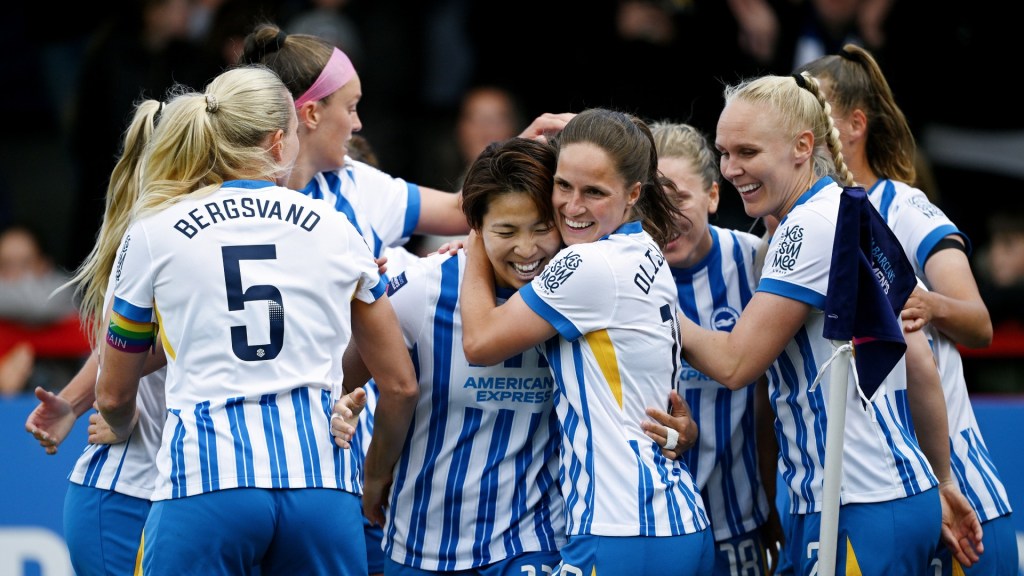
Defenders: Marit Bratberg Lund (Benfica), Tuva Hansen (Bayern Munich), Guro Bergsvand (Brighton and Hove Albion), Maren Mjelde (Everton), Emilie Woldvik (Rosengård), Mathilde Harviken (Juventus), Thea Bjelde (Vålerenga).

Midfielders: Ingrid Engen (Barcelona), Vilde Bøe Risa (Atletico Madrid), Justine Kielland (Wolfsburg), Frida Maanum (Arsenal), Signe Gaupset (Brann), Lisa Naalsund (Manchester United), Guro Reiten (Chelsea).

Forwards: Karina Sævik (Vålerenga), Caroline Graham Hansen (Barcelona), Ada Hegerberg (Olympique Lyonnais), Elisabeth Terland (Manchester United), Synne Jensen (Atletico Madrid), Celin Bizet (Manchester United).

Head Coach

Gemma Grainger has been Norway’s head coach since January 2024, following a stint with the Wales national team. She has experience at club level, leading Leeds United and Middlesbrough before joining the England youth setup, where she led the England U-17 team to the 2019 UEFA Women’s Under-17 Championship.

Above: Gemma Grainger. Photo: Rodrigo Freitas/ NTB/ AFP.

Under her leadership, Wales almost qualified for the 2023 FIFA Women’s World Cup, only missing out after a last-minute defeat to Switzerland in the playoff final. Her tenure also saw a record attendance for a women’s international match in Wales, with over 15,000 fans attending a home World Cup qualifier. Grainger achieved her UEFA Pro licence in 2016 and has managed 18 games for Norway so far, with a 50%-win percentage.

Euros history

Once a European powerhouse, Norway won two Euro titles, in 1987 and 1993. In the 2017 Euros, they were placed in a relatively straightforward group alongside hosts Netherlands, Denmark, and Belgium. Norway were expected to progress to the knockout stages, however lost every game without scoring a single goal in the competition. In the 2022 tournament, they again failed to progress from the group stage; however, they fared slightly better than in 2017, winning one game – against Northern Ireland 4-1.

How they qualified

Norway had a tough qualifying group with the Netherlands, Finland, and Italy. They finished a narrow third behind Italy and the Netherlands, taking the competition for the second automatic qualification spot down to the final game. They led the Netherlands for most of their second game, and if the lead had been sustained, they would have clinched second. However, their efforts were hampered by Vivianne Miedema returning from injury – the Dutch forward scored in the 80th minute to bring the scoreline level and ensure qualification for Oranje.

The Grasshoppers therefore needed to go through the playoffs to achieve qualification. They brushed aside Northern Ireland by an aggregate score of 7-0, and Albania 14-0 to secure their spot in the competition.

Strengths

The biggest strength for Norway is in its attacking power. Between Ada Hegerberg, Caroline Graham Hansen, Guro Reiten, Frida Maanum, Celin Bizet, and Elisabeth Terland, they boast a wealth of attacking talent. They also have a solid mix of experienced and younger talent, with the ‘spine’ of the team including Bayern Munich’s Tuva Hansen and Barcelona’s Ingrid Engen, combined with newer talents like Rosenborg’s 23-year-old defender Mathilde Harviken.

Development areas

Although Norway boasts impressive attacking talent, their defence has been a persistent weakness, particularly in recent major tournaments, conceding soft goals and lacking concentration at times. The back line occasionally seems vulnerable under pressure, particularly against fast, high-pressing opponents (as seen in the 8-0 loss to England during the 2022 Euros), with issues such as poor marking, slow recovery, and communication breakdowns frequently undermining their solid attack.

This has improved under Grainger, however, as the Grasshoppers went through all four Euro qualification playoffs without conceding (winning by an aggregate of 21-0), and only conceding four in their six qualification group games.

Key players

The first name on the team sheet will be captain Ada Hegerberg. Widely regarded as one of the best players in the world, the forward plays for Olympique Lyonnais in the French Premiere Ligue. In the 2024/25 season, she scored five goals in fifteen matches, scoring every 85 minutes on average.

Arsenal’s Frida Maanum is another key player, starting all six Nations League games. The attacking midfielder had 2.7 shots per game in the Nations League, equal to England’s Lauren James and more than Germany’s Klara Buhl.

Above: Frida Maanum. Photo: nff_landslag on X.

No discussion of Norway’s major talents would be complete without mentioning Caroline Graham Hansen – the Barcelona winger who had five goal involvements in nine Champions League games this season. In the league, the winger has 21 goal involvements in 22 games and has frequently been tipped to receive a Ballon d’Or.

One to watch

Manchester United’s Celin Bizet. Although versatile enough to play all over the front line, she has primarily been deployed for United on the right wing. Bizet provided six assists in 22 WSL games in 2024-25, mostly for her compatriot Elisabeth Terland. That the duo developed a creative relationship at United may be a benefit for Norway – both have been in fine form this WSL season.

The 23-year-old Bizet has developed rapidly since her days playing in Norway’s Toppserien, following periods at Paris St-Germain and Tottenham Hotspur. Technically gifted, she is at her best when she is given the space to run down the wing, dribbling past defenders with skill and precision. She is also unafraid to get stuck in defensively, tracking back to help United secure one of the best defensive records in the division.

Above: Celin Bizet. Photo: Paul S. Amundsen.

Bizet has started to become a more consistent member of Norway’s starting lineup, starting the last two games (against Iceland and Switzerland) on the wing behind Ada Hegerberg. This suggests that Bizet might be in Grainger’s plans for this summer’s Euros, and the signs are there for her to be a standout member of the team.

Success would be:

Reaching the knockout rounds for the first time since 2013.

Prediction:

Norway are likely favourites to win their group, and should reach the quarterfinals – how they fare there will depend on who they meet.

Group fixtures:

2nd July – Switzerland, 9pm, St. Jakob‑Park, Basel.

6th July – Finland, 6pm Stade de Tourbillon, Sion.

10th July – Iceland, 9pm, Arena Thun.

This is the second part of our Euros nation previews – click on the link below to view the previous articles:

SWITZERLAND – https://impetusfootball.org/2025/06/16/euros-preview-switzerland-2/

Follow Impetus on social media –

Twitter (X): @impetusfootball TikTok: @impetusfootball

Instagram: @impetusfootball

NPLW VIC R12: Levin lands with a Bergers Brace

By Kieran Yap 17/6/26

Above: new Heidelberg United signing Tamar Levin. Photo: Adrian Geremia for Heidelberg Utd.

Heidelberg United have increased their lead at the summit of the table with a 4-0 win over fellow top four side Boroondara Carey Eagles. Tamar Levin marked her arrival in the league with a brace while Sawa Matsuda scored her 14th of the season so far.

Heidelberg have looked strong this season and began the second half of the league calendar by naming some impressive new signings.

Former Brisbane Roar midfielder Levin starred at The Olympic Village and was joined by Perth Glory stars  and Heidelberg returnees Sarah O’Donoghue and Bella Wallhead.

The new signings arrived at the right time as they hosted a Boroondara side that sat third on the table. The Eagles have been impressive this season, but this would be their firmest test yet.

Heidelberg controlled possession early on and created the more dangerous opportunities, but Boroondara’s defensive organisation and the offside flag snuffed out those chances.

The visitors attempted to play a counter attacking game in response, but struggled to string the passes together or put Heidelberg under any real pressure. Their best chance for the half came when Rachel Stirton won the ball in attack, but Mia Bailey in the Bergers goal was able to make a scrambling save and spare her defence.

Molly Burke opened the scoring for Heidelberg with a good finish following a cutback by Asuka Miyata on the right. The goal encouraged the home side to attack more and Bronte Peel could have made it 2-0 but was stopped by an excellent 1-1 save by Mia Mossman.

Mossman once again kept it at 1-0 with a fingertip save to push Levin’s strike onto the crossbar before half time.

Boroondara’s plans to get back into the game were hampered by a second Heidelberg goal soon after the break. Levin’s turn and strike at the edge of the box squirmed under Mossman to double the lead on 48 minutes.

Heidelberg looked in control for the rest of the match and Levin effectively ended the contest with a third after being played through by O’Donoghue.

The final goal was scored by the in-form Sawa Matsuda who forced one home from close range to increase her lead in the Golden Boot race.

The win keeps Heidelberg at the top of the table six points clear of South Melbourne and Alamein.

Round 13 will see them face a dangerous Bentleigh Greens, while Boroondara-Carey Eagles can respond against Brunswick Juventus.

Bulleen Lions and Box Hill United played out a dramatic 1-1 draw on Friday night. Danella Butrus opened the scoring in the second minute of play to continue her excellent individual season. Bulleen were eventually undone by Sienna Techera’s 53rd minute strike after she was played in by Sofia Sakalis.

Maja Markovski struck late for Spring Hills FC to defeat Preston Lions 2-1. Last season’s Gold Medal and Golden Boot winner attacked a dangerous cross from Eri Narita to secure a remarkable win.

Ellie La Monte-Whyte opened the scoring for Preston in the seventh minute but Narita’s equaliser in the 43th minute started a memorable comeback.

Goals to Fujiwaea Airi and Emma Langley secured full points for Essendon Royals in their 2-0 win over Brunswick Juventus. At Lakeside Stadium South Melbourne returned to winning ways with a 1-0 win against Bentleigh Greens thanks to Grace Taranto’s early strike.

Alamein FC delivered their best attacking game of the season with a 5-1 win over FV Academy at Dorothy Laver reserve.

Zoe Houghton scored twice for Alamein with Paige Clemenson and Prius Archdeacon also adding to the scoresheet. Neve Duston scored the fifth from a deflected free kick, while Alice Francou was on the scoresheet for FV Academy with a first half equaliser.

Alamein were ruthless on the counterattack in a win that sees them equal on points with second placed South Melbourne to begin the second half of the NPLW season.

Follow Impetus on social media –

Twitter (X): @impetusfootball TikTok: @impetusfootball

Instagram: @impetusfootball

NPLW NSW Round 15 Wrap-Up: APIA Fight Back in Thriller, Halmarick Keeps Scoring

By Georgina Lewis 17/6/25

Above Image: Dan Ullman @aptitudephotography

Stormy skies and postponed fixtures couldn’t stop Round 15 of the NPL Women’s NSW competition from delivering serious drama.

The Match of the Round saw Gladesville Ravens and APIA Leichhardt play out a six-goal epic, while NWS Spirit’s Skye Halmarick continues her Golden Boot charge with another standout performance. Here’s your full wrap.

Gladesville Ravens 3–3 APIA Leichhardt

Match of the Round – Christie Park

A storm delay, a missed penalty, six goals and end-to-end chaos — Sunday evening’s clash between Gladesville and APIA had it all.

After a one-hour delay due to lightning, Morgan Roberts opened the scoring in the 26th minute following a clever through ball from Miku Sunaga and smart build-up play from Ng Saad. APIA hit back right on half-time when Ash Crofts’ looping header struck the post and Sophie Hoban pounced to tap in the equaliser.

APIA started the second half strong and won a penalty after Hoban was brought down, but Crofts’ low attempt was well read and saved by Tahlia Coleman. That moment swung momentum in Gladesville’s favour — Galic smashed home a brilliant top-corner strike before Ng Saad calmly added a third just a minute later.

Still, APIA weren’t done. Mona Walker powered in a header from a corner, and Charlotte Lancaster made it 3-3 in the 79th after a low cross from Crofts. Gladesville came closest to a winner in stoppage time, but Sophie Magus stood tall to deny Bella Edwards and Lexie Moreno in the dying moments.

Bulls FC Academy 4–0 UNSW

Northbridge Oval

Bulls FC Academy extended their unbeaten run to eight games with a dominant showing over UNSW.

Arna Hogarth-Scott broke the deadlock in the 30th minute with a clean strike through traffic. In the second half, Avaani Prakash intercepted a wayward pass from Sarah Langman and found Jynaya Dos Santos, who curled in a superb finish to double the lead.

Elizabeth Grey added a third just minutes later with a tidy poacher’s goal, and Daniella Naeimi finished a sharp counterattack with confidence to round out the 4-0 scoreline.

Despite the strong result, Bulls received tough news midweek — talented midfielder Indiana Dos Santos will miss the rest of the season after tearing her ACL in Future Matildas training.

Manly United 3–1 Macarthur Rams

Cromer Park

Manly United continued their climb up the table with a strong performance at home. Tegan Biasi opened the scoring with a stunning strike into the top corner, before Emily Minett converted an improvised acrobatic finish off a corner to make it 2-0 inside 20 minutes.

India Breier pulled one back early in the second half, punishing a loose pass from Manly’s goalkeeper with a composed chip. A lightning delay paused the match in the 75th minute, but Manly came out composed. Right after the restart, Sienna Dale broke away on a counterattack and finished clinically to restore the two-goal cushion.

NWS Spirit 5–0 Newcastle Jets

Lake Macquarie Regional Football Facility

NWS Spirit put on a dominant attacking display, comfortably sweeping aside the Jets in Lake Macquarie.

Skye Halmarick continued her outstanding season, scoring twice — her first a close-range finish after a Kayla Osborn assist, and her second a classy solo effort to wrap things up. The 17-year-old now leads the Golden Boot race with 18 goals in 15 games.

Osborn also helped force an own goal, while Mikaela Gavranic scored directly from a corner, and Sophie Harding added a long-range rocket in one of Spirit’s most complete performances of the season.

Mt Druitt Town Rangers 4–0 Illawarra Stingrays

Macedonia Park

Mt Druitt made a statement at the top of the table with a commanding win over fellow contenders Illawarra Stingrays.

Roukayah Al Fararjeh opened the scoring with a blistering counterattack, and an own goal from a corner made it 2-0 before the break. In the second half, Adelaide Wyrzynski’s volley was redirected into the net by Keiko Tanaka, before Ena Harada capped things off in stoppage time after pressing high and finishing well.

It was a clinical and physical performance from the Rangers, who now reclaim top spot heading into the final third of the season.

Sydney Olympic 3–0 Western Sydney Wanderers

Belmore Sports Ground

Sydney Olympic extended their winning streak to four games with a composed performance against the Wanderers.

Tiana Fuller set the tone early, creating space for herself with a smart cut inside before firing home the opener. Olympic controlled large spells of the match and were eventually rewarded with two second-half goals from Aideen Keane — one a composed finish from open play, the other coming after sharp buildup from Maxine Peak.

Olympic are now one of the form sides in the league and continue to build momentum as the finals approach.

Sydney University vs Northern Tigers – Postponed

This match was postponed due to poor weather and will be rescheduled.

Follow Impetus on social media –

Twitter (X): @impetusfootball TikTok: @impetusfootball

Instagram: @impetusfootball

Euros Preview: Switzerland

By Hannah Chadwick (16/6/25)

Above: Switzerland’s national side. Photo: Swiss Community.

The hosts of a major tournament always have the eyes of the world on them. After failing to make it out of the group stages at Euro 2022 and a disappointing Nations League run, Switzerland are up against it heading into this year’s European Championships.

They are hoping to make their fans proud, and the pressure to make it out of the group will be more intense than in previous years. This will be the third time Switzerland are going to compete in the Euros – having qualified in 2017, 2022, and automatically qualifying as hosts this year.

Squad:

The 35-strong training camp selection has been hampered due to the ACL injury to Romona Bachmann who is unavailable for selection. The list below will shortly be reduced to the final 23.

Goalkeepers: Nadine Bohi (St. Gallen), Elvira Herzog (RB Leipzig), Livia Peng (Werder Bremen).

Defenders: Laia Balleste (Espanyol), Luana Buhler (Tottenham Hotspur), Viola Calligaris (Juventus), Noelle Maritz (Aston Villa), Nadine Riesen (Frankfurt), Julia Stierli (Freiburg).

Midfielders: Riola Xhemaili (VfL Wolfsburg), Lia Wälti (Arsenal), Smilla Vallotto (Hammarby), Seraina Piubel (West Ham United), Alena Bienz (Köln), Sandrine Mauron (Servette), Amira Arfaoui (Werder Bremen), Leela Egli (Freiburg), Naina Inauen (Vålerenga), Naemi Ivelj (Grasshoppers Zürich), Lia Kamber (FC Basel), Noami Layet (BSC YB), Coumba Sow (FC Basel).

Strikers: Ana-Maria Crnogorcevic (Seattle Reign), Alisha Lehmann (Juventus), Sydney Schertenleib (Barcelona), Iman Beney (BSC YB), Alayah Pilgrim (Roma), Meraime Terchoun (Dijon), Svenja Folmli (Freiburg), Geraldine Reuteler (Eintracht Frankfurt), Eseosa Aigbogun (Roma), Lydia Andrade (RB Leipzig), Aurelie Csillag (FC Basel), Leila Wanderler (Olympique Lyonnaise).

Head Coach:
Above: Swiss national coach Pia Sundhage, pictured during her time in charge of Brazil. Photo: Sound at Heart.

In January 2024, legendary ex-player and Swedish coach Pia Sundhage took on one of the most difficult jobs of her career. From winning Olympic Gold with the USWNT twice and a Silver Olympic medal with Sweden, she now takes on the challenge of a side who are struggling with identity.

Since her first game in charge, she has led Switzerland to four wins, three draws, and six defeats. Within those games, they have earned a 1-1 draw with Australia and a 2-1 win over France. These are the games that will fill the Switzerland fans with confidence ahead of the summer. Overall, Sundhage’s tenure has led to some spectacular displays and some jaw-dropping score lines alongside some heavy losses.

Since her appointment, her main mission has been to develop the younger members of the team, giving them valuable minutes ahead of their first senior tournament. A successful example of this would be Naomi Luyet, who broke into the senior team and was slowly solidifying her place when she suffered a cruciate ligament tear. Switzerland and Sundhage will be hoping the young winger will return for the summer tournament, as she may be influential in their success.

Euros History:

In the two previous Euros that Switzerland have qualified for (2017 and 2022), they have failed to make it out of the group stages. They will be hoping that the home crowd will buoy them to a strong group finish and an inaugural knockout appearance.

How they qualified:

As hosts for the tournament, Switzerland qualified automatically.

Strengths:

This is a team that has experience and quality in the midfield. With Arsenal star Lia Wälti controlling this aspect of the play, the team are confident on the ball and are constantly looking to play forwards.

In other positions, Launa Buhler has consistently proven to be solid at the back alongside Noelle Maritz and Ana-Marie Crnogorcevic, who can also play up front. From their talent and their ability to read the game and constantly adapt, they will be vital to Switzerland’s hopes of success.

Switzerland has depth in the front line, although the loss of Bachmann to an ACL injury is huge. The team though so boast teen superstar Sydney Schertenleib, who has an eye for goal.

Development Areas:

The one main issue for Switzerland this summer could be further injuries to the starting 11. If key players such as Wälti or Crnogorcevic join Bachman on the sidelines, the team will be left with significantly less experience in tournament football.

The second development area for Switzerland links to the first area of improvement. The lack of experienced squad depth, for many of their players, this will be the first or second major tournament they will be taking part in. This might prove to be Switzerland’s downfall.

Key Players:
Above: Switzerland captain and Arsenal star Lia Wälti. Photo: Swissnatiwomen.

Lia Wälti – Switzerland’s captain, Arsenal star, and a midfield maestro. Her talent, vision, and abilty is truly something else. Calm and composed in possession and calculated in her defensive movement, she is vital in Switzerland’s build-up play. Wälti can successfully receive the ball under pressure, make quick decisions, and open up play for others.

Ana-Maria Crnogorcevic is another player with the potential to be influential. Adaptable, she can play on the wing or at right back. With impressive pace, she is technically strong and has a tendency to score headers from crosses into the box.

One to watch:

Naomi Luyet will be the one to watch this tournament. She has recently returned following an ACL injury, and the young midfielder has speed on her side. She is young with a lack of experience, however, her vision of the game and ability to play a key role in the transition will make her an important asset.

Success would be:

Reaching the knockout stages for the first time. In a group with Norway, Finland, and Iceland, this is possible. Norway will be their biggest threat. If the Swiss can win their game against Finland and get a result against Iceland, then a first-ever quarter-final is likely.

Predictions:

Switzerland have a once in a lifetime opportunity on their hands with a pretty favourable group draw. As the host nation, they will also have their country on their side, and the last two Euros have been won by the hosts. Whilst a win is likely out of reach for the Swiss, they should be able to make it out of the group, barring major injury to key players.

Group Fixtures:

2nd July – Norway, 9pm, St Jakob-Park, Basel.

6th July – Iceland, 9pm, Wankdorf Stadium, Bern.

10th July – Finland, 9pm Stade De Geneve, Lancy.

Follow Impetus on social media –

Twitter (X): @impetusfootball TikTok: @impetusfootball

Instagram: @impetusfootball

NPLW NSW Round 14 Wrap-Up: Late Drama, Stunning Goals and Shakeups on the Ladder

By Georgina Lewis 10/6/25

Above: NWS Spirit line up for their game against UNSW. Photo: Georgina Lewis

Round 14 of the National Premier Leagues Women’s NSW competition delivered drama, quality finishes, and saw significant movement on the ladder as the race for finals intensifies. With results that swung in stoppage time and standout individual performances, every match had something on the line.

Match of the Round – Macarthur Rams 1–2 APIA Leichhardt
Lynwood Park

APIA Leichhardt continued their resurgence with a crucial 2-1 win over the Macarthur Rams in a rematch of last year’s Grand Final.

Returning to APIA colours, Sophie Hoban opened the scoring in the 9th minute after a slick through ball from Ash Brodigan. Despite Macarthur starting brightly and creating several early chances, they were continually denied by APIA keeper Sally James.

Macarthur equalised in spectacular fashion in the 67th minute, with Tea Mucenski producing a bicycle kick from a pinpoint Breier corner to level the match. But just three minutes later, chaos in the box saw Ash Crofts pounce and fire APIA back in front.

Despite late pressure from the Rams, the visitors managed the final moments expertly to seal all three points.

NWS Spirit 1–0 UNSW
Christie Park

In a tightly-contested clash between two finals hopefuls, NWS Spirit snatched a dramatic win with virtually the last kick of the game.

With both sides creating chances in the second half, it took a 95th-minute moment of brilliance to break the deadlock. Victoria Martin’s low cross found Kayla Osborn in traffic, and although UNSW cleared initially, Skye Halmarick met the bouncing ball with a sublime half-volley that kissed the post and went in.

Spirit’s win keeps them firmly in the top-four conversation, while UNSW will rue their missed opportunities.

Northern Tigers 6–2 Newcastle Jets
North Turramurra Rec Area

The Tigers roared back to form with a commanding 6-2 win over the struggling Jets.

Beth Bernardi and Haley Johnson put the hosts two up before a Josie Allan-led attack forced an own goal to give Newcastle hope. Lily McMahon restored the two-goal cushion before halftime, and Tigers ran away with it in the second half with goals from Mischa Anderson, Josie Wilson, and Charlotte Mortlock.

Aaliyah Kilroy’s tap-in made it 5-2 before Mortlock’s screamer sealed a dominant Tigers performance that pushes them back toward the top four.

Bulls FC Academy 2–0 Mt Druitt Town Rangers
Northbridge Oval

Bulls FC Academy stunned league-leaders Mt Druitt with a well-drilled 2-0 win at home, extending their unbeaten run to six matches.

Elizabeth Grey struck twice from corners—once in the 15th minute and again in the 53rd—to seal a famous win for the Bulls. Their disciplined setup and threat from set pieces proved too much for the visitors, who struggled to find rhythm and offered little in response.

Sydney University 1–2 Illawarra Stingrays
Sydney Uni Football Ground

The Stingrays extended their unbeaten run to six matches with a 2-1 away win over Sydney University, powered by a fast start.

Siobhan Edwards opened the scoring inside eight minutes after being played in by Alexia Karrys-Stahl, before captain Caitlin Cooper added a second with a thumping header from a corner.

Jaime Beaufils gave Uni a lifeline with a converted penalty in the 70th minute, but Illawarra held firm to stay second on the table.

Sydney Olympic 3–0 Gladesville Ravens
Peter Moore Field

Olympic continued their turnaround under George Beltsos, securing a confident 3-0 win over Gladesville Ravens.

Sarah Yatim opened the scoring early before Aideen Keane doubled the advantage with a slick run and finish in the second half. Alyssa Whinham, a revelation since returning from A-League Women duty, capped things off with a long-range strike in stoppage time.

It’s Olympic’s third straight clean sheet and a sign their push away from the bottom of the table is gathering momentum.

Manly United 1–1 Western Sydney Wanderers
Cromer Park

Manly United were denied a win at the death as Western Sydney Wanderers snatched a point in the final minute.

Talia Younis put the Wanderers ahead with a sharp finish in the 60th minute, and they looked on course for all three points until Ellie Kerr blasted home a thunderous half-volley from a corner in the 90th.

Manly drop points in their bid to re-enter the top four, while Wanderers will take confidence from a gritty performance away from home.

Final Thoughts

With just eight rounds to go, Round 14 reminded us just how tight the NPLW NSW season has become. APIA’s resurgence continues, Spirit find late magic, and Bulls FC Academy’s rise adds another twist in the finals race. At the other end, the Jets’ defensive woes deepen, while Olympic’s revival promises more surprises to come.

Stay tuned — the second half of the season is just heating up.

Follow Impetus on social media –

Twitter (X): @impetusfootball TikTok: @impetusfootball

Instagram: @impetusfootball
Ann Odong: A legend and role model of the Australian women’s football family

9/6/25

Above: Ann Odong in match day mode with The Matildas. Photo: ABC.

Whilst the arrival of Joe Montemurro as The Matildas’ new head coach took all the headlines last week, the announcement that Ann Odong is to depart her role as the team’s media manager was just as big for many of those around the women’s game in Australia.

Why is this the case? Simply, Odong is both a legend and a role model. She diligently supports those who support the women’s game, going out of her way to provide people insight, advice, and the benefit of her experience and achievements. Put simply, Ann Odong’s encouragement and accessibility have enabled so much of the phenomenal growth in interest in The Matildas through her superbly crafted media campaigns and support to the people who cover the team.

Impetus has grown into the site it is today, thanks to the support Odong gave us in our early days.

In this special article, four of our site’s writers explain the impact she has had and how she has inspired them to become who they are.

Then, Penny Tanner Hoath, who coached Ann at Gosnells City Soccer Club, south-west of Perth in Western Australia, and then supported her during the embryonic journalist’s earliest days at Radio Fremantle in the early 2000s, shares her memories of those days when Odong was cutting her teeth on The World Football Programme on the station.

A role model and inspiration

by Genevieve Henry

Above: Matildas training captured by Genevieve Henry on her first in-person media event – an experience which was made even more special for her thanks to the presence of Ann Odong. Photo: Genevieve Henry for Impetus.

Ann Odong is an incredible role model and one of the most respected people working in Australian sports media. While that may sound like fangirling (it definitely is), she earns this by being one of the most talented, professional, and kind people I have encountered on my journey.

Long before I ever dreamed of press conferences or accreditation, I would spend hours scrolling through and admiring Ann’s work as a football photographer. Her ability to capture beauty and tell a story is uncommon amongst sports photographers. Something about her work feels more personal, more human.

From her use of unconventional angles and framing to the clarity and quality, her photos are a step above so many others. Ann certainly inspired me to get into football photography, so it’s only fitting that years later, she would play a central role in my own career.

In addition to her aforementioned excellence, Ann fosters an environment so welcoming that a terribly nervous teenage girl could feel welcome in press conferences.

Working for Impetus has given me countless incredible opportunities, including access to Matildas’ press conferences. Up to a certain point, I had only been writing up reports based on the video files, but one lucky window I got to attend a press conference over Zoom. I was panicking, because asking Mackenzie Arnold anything was the biggest thing I had done so far—Ann soothed those fears from the moment I logged online.

I became accustomed to these press opportunities with Ann in charge and began to feel as though I belonged just as much as every other journalist there.

Months later, I had my first in-person press opportunity, and my anxiety felt larger than life. There I was, surrounded by journalists twice my age with equipment that made my eyes water to think about the cost, in my homemade Matildas hoodie and messy airport hair. If I could have curled up into a ball, I would have. But when Ann stepped in to get the ball rolling, my fears were instantly soothed.

If my memory holds up, the first thing she did was sing a snippet of a Beyoncé song to check on the microphone (now that I write it, it sounds like a hallucination!), and just that simple act made me feel much more light-hearted and brave. Her comforting and professional presence cultivates the best journalistic environment – one of truth, openness, and excellence.

I had the pleasure of meeting Ann when I had my first photography credentials for an international match. I ran into her while waiting for team photos, and although she was likely extremely busy, she was kind enough to not brush me off. That moment of recognition fueled me to embrace my position and feel confident in myself. Ann inspired me and so many other women in sports media to feel as though we deserve to be here.

Thank you, Ann. Australian football media, the Matildas, and I (amongst countless others) are forever indebted to you!

The driving force behind irreversible growth

by Kieran Yap

Above: A large number of Matildas fans gather in Perth – Ann Odong played an instrumental role in the team’s accessibility and popularity. Photo: Kris Goman for Impetus.

It’s impossible to quantify what Ann Odong had brought to Football in her time as media manager of The Matildas. But what we do know for sure is that the game has never been more popular, and it has never been more accessible for media and fans.

The Matildas have never been bigger, women’s football has never had more potential, and she has long been a driving force behind what now seems like irreversible growth.

It is exciting to think of what might be next for Australian women’s football’s most influential off-field figure after she finishes up as Media Manager for Australia’s most beloved national team. The sport is a better place with Ann in it. 

She saw the potential and supported it wholeheartedly

by Ben Gilby

Above: Ann Odong. Without her recognition and support in our earliest days, Impetus would not be where it is today. Photo: Australia UNHCR.

For years, as someone who lives 10,000 miles from Australia, my experience of the Matildas was getting up at ungodly hours and powering up the laptop to shout at a screen.

In 2019, as the World Cup in France that year came to an end, I wanted to combine my appreciation of the women’s game with my love of writing – to cut a long story short, Impetus was born as a ‘one man band’ in September of that year.

As The Matildas were the national side that I’d always been so passionate about since the mid-2000s, it was natural that they played an integral part in our earliest coverage along with what was then still known as the W-League. So, one day, armed with a number of articles with a gradually increasing number of views, it was time to bite the bullet – be a bit cheeky and ask if the site, its writers, and photographers could apply for Matildas accreditation.

An email was sent off to Football Australia media, and, if I’m being honest, no reply was expected. But, within a few days, Ann Odong replied. She had clearly had a look through some of the examples of our writing that I’d sent and gave us permission in 2020 to get on the Matildas’ media list.

The access that Ann Odong gave to women’s football media is like no other. Other national sides only offer in-person opportunities. For Ann, it’s all about the accessibility of The Matildas – and that is a major reason why they are, without question, arguably the country’s most beloved sporting team.

Ann gives Zoom access to media events, video files of player features, and sends out special interview packages to all media. It means that if you are located on the other side of Australia, or in my case, the other side of the world, you can still report on The Matildas. You can play a role in lifting their visibility further.

Then there are the little personal touches that make Ann who she is. There was a strange moment on the terrace at Kingsmeadow, where I stood during Sam Kerr’s early days at Chelsea with a large Western Australian flag. During one WSL game, I heard a voice in front of me – “Ah! You must be Ben.” – It was Ann. Clearly, my status as the Matildas nut who lives in South-West London was spreading.

She didn’t have to do that, but she did – a phrase that is synonymous with her.

Fast forward to 2022, and The Matildas themselves were at Kingsmeadow for open training and a media conference before playing South Africa the next day. It was one of those weird ‘pinch me’ moments. As I walked into a small room at the ground, fiddling with a video camera in front of a table was Ann. “Hi Ben! So good to see you!” she said. My nerves went.

The video camera set-up ceased, and she began talking to me about me personally. Naturally, we both have strong connections to Western Australia, and conversation turned to some of the things we miss most about the place – coffee being one of them. Within moments, she gave me a personal recommendation of an Aussie cafe in South London. A place I now frequent regularly. Thanks Ann!

Then, when head coach Tony Gustavsson walked into the room, the first thing Ann said to him was – “Tony, meet Ben, he covers The Matildas in-depth from England.” Once more – she didn’t have to do any of that. Her job was to set up the media room ahead of the presser. But she didn’t. She stopped, recognised me by name, and focused on what she knew about me. She personally introduced me to the Matildas’ head coach. That’s going way above and beyond.

Without her early recognition of the potential of our site and our writers back then, Impetus would never have reached the position it is in now. It was access to and our coverage of The Matildas that opened the door for us to get accreditation for the Lionesses and WSL.

Ann Odong – I would not be where I am today without you. Our site would not be where it is today without you. On behalf of our team of just under 100 contributors, thank you.

Such an important advocate

by Ella McShane

Above: A packed Stadium Australia prior to the Matildas’ World Cup semi-final against England – part of the huge success of the event was Ann Odong’s media campaign. Photo: Ben Gilby.

During the 2023 FIFA Women’s World Cup, the Matildas’ media team executed one of the most successful media campaigns in modern sports history. The campaign elevated every facet of women’s sport on Australian shores and beyond.

The woman behind it? Ann Odong, Ugandan-Australian storyteller, strategist, advocate, and the off-pitch hero who led a team that changed the game forever during that transformative summer. Her official job title, The Matildas Media & PR Manager.

The ‘Til It’s Done’ campaign, brought to life under Odong’s leadership and storytelling, became more than just a unifying slogan; it was a nationwide movement that brought out the best of Australian culture.

The movement advocated for the minorities that had previously not had a seat at the table and marketed the Matildas as a team that represented all Australians.

The campaign partnered with the world-leading corporate sponsorships and the storytelling by Odong and her team, crafted one of the most powerful global identities in sport. For the first time, it was women at the forefront of what it meant to have a national team crest on the heart.

Often not conceptualised by consumers, this elevation of quality and competitiveness in the women’s game has been made possible by people like Ann Odong. The Australian football media community and beyond will always be inspired by her World Cup legacy.

I’m so damn proud of her… she single handedly made the Matildas the brand they are today

by Penny Tanner Hoath

Above: Ann Odong (back row, far left) pictured at Gosnells City Soccer Club. Photo supplied by: Penny Tanner Hoath.

Ann walked into my world as a shy, unassuming teenager, then named Doris, and into my football club in the mid-2000s, Gosnells City Soccer Club, about 25 minutes south-west of Perth, searching for a place to feel welcome and some purpose and connect to a community.

Her family had arrived in Australia some 10 years after escaping from the terror in Uganda. I did not know about her background until we became fast friends, and I had taken her under my wing. That knowledge served to endear me more to Ann as she simply got on with life, looked after her family, and absolutely jumped into new opportunities with the energy we all simply expect of Ann.

Maybe finding someone like me, a female, who played decent football, was in the media, and had total passion for the sport, was akin to finding a new home. I saw in her a spark for living and wanting to give something and to belong somewhere.

Along the way, the then Doris applied for her driving licence and, to my surprise, changed her name to her legal birth name, Ann. We all learnt to call her Ann, which was tricky at first and took me years to get a hold of after knowing her as Doris.

Ann was an avid reader and, being incredibly astute, she didn’t need telling twice with that famous encyclopaedic memory; she would call anyone out if you forgot and impress anyone in a conversation.

Ann joined the World Football Programme in the mid-2000s as a shy young lady and flourished in this space. She didn’t know if getting behind the microphone was going to be her thing, but was willing to try under my tutelage. That encyclopaedic knowledge had to be used for something more than just reading! 

Ann is easy to talk to, but was very quietly spoken at first. We worked on that, I nurtured her in the studio until she didn’t need me there anymore and could host on her own.

I gave her space to expand in all ways, contacts, introductions, and guidance. Ending up behind the microphone, challenging all of our resources, processes, and guest lists, and taking command of all of the technology of the time in our community station and at home and anywhere a microphone or laptop could be, was second nature in a short time for her. No problem at all.

Above: Whether it’s behind a camera, in front of a camera, or speaking face to face, Ann Odong is a class act. Photo: Australia for UNHCR.

She learned fast and explored everything she could in the world of live radio until there was nothing left to consume in that space. A professional in that space when she left us around five years later.

People loved what she did in those early years, as it spotlighted a big need that wasn’t being filled, locally and nationally. She NEVER EVER STOPPED working. Nothing has changed there.

One of Ann’s first notable interviews at World Football Radio was with a very young teenage Sam Kerr, accompanied by her Mum, in the studio at Radio Fremantle 107.9fm in Hamilton Hill. This was before anyone else besides us in Perth knew there was a Sam Kerr to be reckoned with.

That initial contact with Sam (through her Mum), I think, fanned the flames of possibility and thoughts whereby making personal connections was a pathway she could use to step into higher and wider levels of women’s football.

Remember, Ann entered the women’s football arena when few people were connecting the potential with its possible growth, so she was pioneering in media and making a LOT of friends and connections along the way, well before any move to Melbourne, studying law and landing a job at Football Australia. 

Who knew back then that this was all part of laying the groundwork for what was going to become the number one national brand, and she would lead that global brand into a World Cup on home soil? I’m so damn proud of her. I believe she is the person who single-handedly made the Matildas the brand they are today. Don’t try telling me any different.

I was very sad to see Ann leave Western Australia, but by the time she left the World Football Programme, the Women’s Game website she had created was the single most accessed women’s soccer portal in Australia, and she had established herself as the oracle with a hard-working team around her.

What an inspirational person. Total dedication to the cause, total respect for everyone around her, and loyal over and above everything. She just needs to get some more sleep then she could fit more in (My lips to God’s ears.) This is an Ann saying from her Mum.

What makes me smile about Ann (besides the above) is when she says “Lordy”. It comes from a place of ‘OK, let’s take a moment and think about that,’ with a hint of amusement, knowledge, and possible mischief. Pretty much sums up the relaxed Ann that I know and love.

Follow Impetus on social media –

Twitter (X): @impetusfootball TikTok: @impetusfootball

Instagram: @impetusfootball