Above: Elizabeth Eddy leaps on her team mates on a great night for Newcastle Jets. Photo: @NewcastleJetsFC.
Newcastle Jets put Wellington Phoenix to the sword in an impressive display in front of their home fans.
The game kicked off the second round of the Liberty A-League, Newcastle were coming off an honorable loss against Sydney FC and Wellington had a point from their debut game against The Wanderers.
The new kids in the league had impressed many observers in their first fixture. They were brave going forward and aggressive in possession. They took the Wanderers and the league by surprise in that initial outing. The question here would be if they could repeat the performance.
Newcastle is one of the most reliably enjoyable teams to watch. This season they boast some considerable depth. Club stalwart Tara Andrews now has more support. Norwegian striker Marie Dølvik Markussen has arrived to help out the number nine started up front with Sunny Franco and the Newcastle number nine.
There was also the small matter of Emily van Egmond returning to the club. On paper, The Jets have the firepower to beat anybody. The Phoenix youngsters would have their work cut out for them.
Above: Kirsty Fenton celebrates after her first senior strike with Maria Dølvik Markussen. Photo: @NewcastleJetsFC
Despite the star studded attack, the first goal came from an unlikely but welcome source. Markussen had looked menacing from the start but it was youngster Kirsty Fenton who broke the deadlock.
Fenton was almost definitely trying to cross the ball, when it swung over Lily Alfeld and into the net. It was an unfortunate way for The Phoenix to concede but on the balance of play, Newcastle deserved the lead.
The Jets kept the pressure up and in the second half, Markussen had her first for the club.
The Norwegian striker intercepted a soft pass from the back and took a touch before slamming the ball home from the edge of the area. Suddenly, Wellington was 2-0 down.
Despite the scoreline or perhaps even because of it, they did not alter their adventurous play. Vice captain Kate Taylor was exceptional in the first round draw and continued her form here.
She was confident in possession and always trying to build from the back but the physicality and pressure of the Newcastle midfield left little opportunity for Wellington for create any chances.
The scoreline was even more ominous for Wellington as Newcastle’s top scorer from last season had yet to fire up. When she did it took only a few minutes to put the game out of reach for good.
Above: Marie Dølvik Markussen takes the ball past Saskia Vosper. Photo: Ashley Feder/Getty Images via @NewcastleJetsFC
Andrews is a proto typical number nine. Tall, strong with a venomous shot and quick feet, she is a threat from general play and lethal at set pieces.
Her first goal for 2021/2022 came from a corner kick. She lost her marker with ease and flicked a header perfectly into the corner of the net.
Minutes later came Andrews’ second and Newcastle’s fourth. The Jets won possession in the front third again and Markussen delayed to draw defenders before playing it to Andrews who took a touch and fired home from 18 yards.
With the game under control, Andrews, Franco and Markussen were substituted. Lauren Allan and Sophie Harding came on and combined for The Jets’ fifth.
Allan used her electric pace to race onto a lofted pass into the area. She hooked the ball across goal, wrong footing Alfeld and leaving Harding with the easiest of finishes.
Wellington continued playing positive, aggressive football and were rewarded for their endeavor. The first goal of the clubs history as a women’s team was scored in the 81st minute.
A Chloe Knott corner was urged toward goal by Taylor and Ava Pritchard was in the six-yard box to turn it in.
Above: Ava Pritchard, scorer of Wellington Phoenix’s first ever A-League Women goal. Artwork: Wellington Phoenix.
It was a positive end to a difficult day for Wellington. Newcastle would likely be unbothered by the late consolation goal. Their performance was nearly flawless.
The new recruits are in form, Elizabeth Eddy was instrumental in midfield then filling in at fullback and Markussen was dominant up front with Andrews.
The only sour note was an injury to Kirsty Fenton. She damaged her ankle and was carried off the field.
The Jets travel to face Western Sydney Wanderers in the next round. Wellington Phoenix have to regroup and prepare to face the premiers Sydney FC.
Above: Emily van Egmond plays a pass on her return to home town club Newcastle Jets. Photo: Ashley Feder/Getty Images via Newcastle Jets.
Ben Gilby heard Phoenix head coach Gemma Lewis speak to the media after the match. She first addressed her side’s first ever A-League Women goal and it’s scorer Ava Pritchard:
“I know you look at that result and the goal kind of goes missing a little bit but that’s still a little piece of history for us, that’s a little piece of history for her and I’m just proud that they kept pushing for the goal as well.”
Looking back at the performance itself, Lewis observed: “What we were aiming for was trying to use the platform of last week and build and improve off it and I think in moments we did, but not consistently enough.
“We made mistakes and we got punished for them and with the quality of players they have we have to expect that. We probably didn’t keep our foot on the gas as much as we would like and we gave them too much space. If you give those players too much space then it means they can dictate the game a little bit more and I think that’s what we started to see in some of the second-half.”
Lewis also believes Newcastle were much better than what they showed in their opening round defeat to Sydney FC.
“They definitely showed some quality at times. Even their performance from last week to this week they’ve definitely done some work and improved over this week and they showed that today. Some of their players really stepped up today and showed their quality.”
Impetus’ coverage of Australian Women’s Football is supported by The Chicken Salt Co. They are offering every Impetus reader 5% off all orders of Chicken Salt from their website. Go to https://www.chickensalt.co.uk/?mate=impetus and place your order – 5% will automatically be taken off of the cost. The coupon code is impetus.
Ben Gilby brings a round-up of the media events this week from fice A-League Women clubs which includes full coverage of three MASSIVE signings as he hears from Emily van Egmond, Lynn Williams,and Alex Chidiac. There’s also coverage of Rebekah Stott‘s media conference where she spoke about her return to senior football after battling Hodgkin’s Lymphoma.Elsewhere, there are media conferences from Canberra United and Wellington Phoenix ahead of their Round Two games as he heard from Keeley Richards and Gemma Lewis(9/12/21).
Above: Back at home training – Emily van Egmond at Newcastle Jets. Photo: @NewcastleJetsFC
NEWCASTLE JETS: Emily Van Egmond Returns Home on Short-Term Loan
Wednesday saw Newcastle Jets announce the signing of home town Matildas star Emily van Egmond on loan for a short period, which is likely to be three matches.
The 28-year-old midfielder made her debut with the Jets when she was 15 and has since enjoyed multiple stints with the Club while also featuring in the National Women’s Soccer League in USA, the FA Women’s Super League in England, and over 110 games for the Matildas.
Van Egmond last donned the Jets jersey in 2018 when she captained the team to a fantastic season, finishing just one game short of an A-League Women’s Grand Final.
Speaking to the media about her return, the midfielder with 112 Matildas caps said: “The season in the USA ended, and I was here for our games with the USA and the Asia Cup is coming up quickly (January), so it’s really important for the national team that I get games during this period. I missed a lot of games post-Olympics, so I need to play.
“Newcastle is home. I’m only here for a short stint. I’m excited to play with the girls and I’ve played with many of them before. I’ve played with some of them since we were all 12-years-old. Playing for your hometown team is special.
“It’s special here. Players I’ve played with for years – Hannah Brewer, Cass Davis, Tara Andrews. It’s great to see they are so dedicated to one club and being part of the leadership here.
Van Egmond also identified some of the local players that have caught her eye recently: “Young Kirsty Fenton has a lot of potential. She’s got athletic capability, she’s aggressive, and she’s got speed and the way the women’s game is going now, that’s important. Hopefully, she can keep developing, progressing, and get some game time.”
Finally, the midfielder looked ahead to what is likely to be her debut this weekend. “This week is a new week, we’re playing a team in Wellington that no-one is really familiar with. It’s great to have them in the league.
Above: Emily Van Egmond back in Gold. Artwork: Newcastle Jets.
Head Coach Ash Wilson said she was ecstatic to have Van Egmond at the Club once more.
“Emily is a world-class player and Newcastle is her home so to be able to have her put on the Jets jersey again is exciting for the community and the Club,” Wilson said.
“She brings so much to the team in terms of experience, technical and tactical quality, and a winning mentality.”
Wilson made mention of not just what Van Egmond’s skill and experience adds to the team on the field, but the squad, Club, and community off of it as well.
“For us, this signing also demonstrates the commitment from the Club to keep improving and pushing to be more successful,” she said.
“Emily has already been training with us, preparing for her US matches and the lessons being learned from younger, less experienced players around training ethic and attitude have already been invaluable.
“I’m excited to see her back in gold playing a positive, attacking brand of football, and I know she is motivated to contribute to a successful campaign for this community.”
Van Egmond will line up this Friday night for her return game as the side takes on Wellington Phoenix as part of a Double Header at McDonald Jones Stadium.
MELBOURNE VICTORY: Double Delight At Signings Tempered By Morrison Woe
Artwork: Melbourne Victory.
There was both exciting and heartbreaking news for the defending champions this week.
Sunday brought the announcement that they have added another star to their already strong squad as USWNT player Lynn Williams was introduced to the crowd at AAMI Park on their matchday with Adelaide United. This was followed on Thursday by the revelation that Matildas star Alex Chidiac has joined the club on a season-long loan from the Japanese side JEF United Chiba.
The 28-year-old Williams joins the Club from the North Carolina Courage in the NWSL until 7th January on a short-term loan. During her time at the Courage, the American-born winger made 79 appearances for the club, scoring 41 goals.
Williams has also represented her country 45 times, most notably representing the US team in their bronze medal finish at the Tokyo 2020 Olympic Games, and returns to the A-League after a short stint with Western Sydney Wanderers in 2019/20.
Melbourne Victory Liberty A-League Head Coach Jeff Hopkins said Williams will add another level of experience and professionalism to his Championship-winning squad.
“We’re incredibly pleased to have someone of Lynn’s calibre joining the squad for the season,” Hopkins said.
“Her speed and agility in the final third are what sets Lynn apart from many players at her level and to have her join our attacking line is an exciting prospect.
“Lynn’s career in the NWSL speaks for itself, winning a range of team and individual accolades in the competition, and we believe that her winning mentality will help us in our quest for silverware this season.”
Above: Lynn Williams pictured pitchside at Melbourne Victory’s opening A-League Women game with Adelaide United. Photo: @gomvfc
Williams said she’s looking forward to returning to the Liberty A-League and playing with Melbourne Victory.
“I’m thrilled to be back in Australia and joining Melbourne Victory in an exciting time for women’s football in this country,” Williams said.
“Jeff and the girls have been the team to beat and to be joining the squad for the upcoming season is an exciting opportunity.”
Looking ahead to the big derby this weekend against City, Williams said: “I hope to be playing. I have a bit of a calf strain, it’s not bothering me at all. It will depend on the medical team, on how they see it.”
In terms of the maximum four games that Williams could have in a Victory shirt, the USWNT star just wants to add to the team ethos at the club. “I’m going to bring what makes me Lynn to the field. I’m a fast, pacey forward, and if I can help to get the team into a place to help them on their way to a Grand Final, great. But I am here to do whatever I can for the team. If that’s being a cheerleader or coming off the bench that’s fine! But I’d love to do what I can on the pitch for the team.”
With previous experience in the competition with Western Sydney Wanderers, Williams knows the league well. Explaining why she specifically chose to sign for Melbourne Victory, she explained: “Melbourne feels like home for me, my partner is from here. Because of the pandemic, it was important for me to come here so we can spend time together. I feel so at peace when I am here. Every person in the club is so gracious, how could I not want to be here?
“I want to work on things here, sharpen up and take on players. Coming here is an exciting team and after the difficulties in the NWSL this year, with the sexual assault cases, it has been tough. So it’s a good thing.
“Victory has so many great front players. Like the USWNT, they are an attacking team and a good transitional team. The competition is very different since I was last here. The likes of Steph Catley and Ellie Carpenter are not here anymore, but it’s great how the young players are coming through. I can see that since 2018/19 their numbers have really grown.”
Williams’ move to Victory sees her team up with Courtney Nevin and Kyra Cooney-Cross once more – two players who she really rates. “It’s great to be with them again. They have so many great attributes, so much potential and they are national team players. They are super. Nevin was great in the backline in the friendlies with the US. Kyra is so dangerous and can dribble well and always find the right pass. Being young is their best attribute as they are willing to soak up all the information and they want to try everything. They make me laugh too!”
In terms of Williams’ view of the Matildas from the recent friendlies, she said: “They put out a young team, but so did we. They were two great games and both sides learned a lot about themselves. Australia came out and played well.”
Melbourne Victory can also confirm the signing of goalkeeper Sophia Varley and the elevation of Alana Murphy to a senior contract for the upcoming season.
Artwork: Melbourne Victory
Melbourne Victory’s squad got even stronger on Thursday with the announcement that Matildas midfielder Alex Chidiac has joined the club.
The 22-year-old comes to Victory on loan from the Japanese side JEF United Chiba where the Australian spent the 2021 season in the WE League.
The diminutive midfielder has 17 national team caps to her name, making her international debut at 16 years old for the Matildas against New Zealand in 2015.
Chidiac’s club career has seen her represent Melbourne City and Adelaide United – winning a Championship in 2016 – before heading to Spanish giants Atletico Madrid in 2018 where she made 22 appearances over two seasons for Atleti, netting twice.
Melbourne Victory Liberty A-League Head Coach Jeff Hopkins said Chidiac’s addition will add another element of experience and flair to his side.
“We’re incredibly excited to welcome Alex to the squad for the season as we make the final touches to our Championship defence. At 22, Alex has experience beyond her years, making her A-League Women’s debut at 15, representing her country at 16, and becoming an A-League Women’s Champion at 17.
“Alex has the ability to control the midfield but also move forward and find the back of the net in her attacking role and we can’t wait to see how she will complement our squad this season.”
Chidiac echoed Hopkins sentiment, saying she was excited to return to the A-League. “I’m thrilled to be heading back to Victoria with Melbourne Victory and joining a team that is committed to achieving success this season,” Chidiac said.
“Talking to Jeff, the team’s intentions are to take out the Championship for the second successive season and I want to be a part of that journey. The focus for me is to consistently perform, week in and week out for the team and help the Club achieve their goals.”
Chidiac will be available for selection ahead of Sunday’s Melbourne Derby at AAMI Park.
Above: Kayla Morrison ushering the ball back to her goalkeeper Casey Dumont ahead of Adelaide United’s Fiona Worts last Sunday. Photo: Mike Owen/Getty Images.
Less happy news came in the form that scans have confirmed that club captain Kayla Morrison has ruptured her anterior cruciate ligament and will miss the rest of the A-League Women season.
The defender sustained the injury in the first half of the side’s opening round clash against Adelaide United at AAMI Park.
Head Coach Jeff Hopkins said that he was devastated by the news but felt Kayla would return stronger
“Our worst fears were answered today with the news of Kayla’s injury and she’ll be a massive loss to the squad for the remainder of the season,” Hopkins said.”Everyone at the Club – from the Men’s and Women’s teams to the administration staff – has shown their support for Kayla and we will do everything we can to help Kayla return to the pitch.
“Lia Privitelli will take the captain’s armband on the pitch for the rest of the season but Kayla will still be instrumental to our title defence with her leadership off the pitch.”
Kayla will undergo surgery this week as she prepares for her rehabilitation. On behalf of everyone at the Club, we wish Kayla a speedy recovery.
MELBOURNE CITY: Rebekah Stott Speaks After Senior Return
Above: Rebekah Stott speaks to the media on Wednesday ahead of this weekend’s Melbourne derby. Photo via: Melbourne City.
After making her return to top-flight Australian women’s football in Round One after coming back from Hodgkin’s Lymphoma, Rebekah Stott admitted she felt “pretty terrible” after the game given how long it had been since she had played in such a match, however, she feels she is more than ready to play a full role in this weekend’s Melbourne derby against Victory.
“It was incredible, so nice to be back (against Canberra United last week). I was a bit disappointed with how we played in the first half, but I was thrilled to be back on the field, it was so much fun.
“By the time the game with Victory comes round, I’ll be right and ready to go. We were happy with the result in Canberra last week. Rado (Vidisic, head coach) felt our performance in the first half wasn’t good enough. We need to build on that and start strong this time.
“At Canberra, it was really nerves that got us in the first half. We needed to keep the ball and we did it a lot better in the second half. For myself, I had to work on being in a new position on the field. Me playing at six was something Rado and I discussed back in July. He wanted to be more attacking and hopefully set up some goals, so that was in the plan from the very start.
“It’s not totally new, I’ve always driven out from the back from centre-back and I’m quite comfortable driving up the field.”
With New Zealand having a number of potential options at centre-back, Stott emphasizes how her change of role at City will help her future with the Football Ferns too. “Being versatile is a good attribute. The more experience I can get playing at six the better.
“I was really gutted not to go to South Korea (to play with New Zealand in a recent international window), but it was a bit too soon. I’m hoping that by the time the next window comes round in February I’ll be ready.
Above: Ahead of this weekend’s Melbourne derby, City’s Rebekah Stott (left) and Victory’s Lynn Williams faced the media. Photo supplied to Impetus by: Melbourne City.
CANBERRA UNITED: Keeley Richards Looks Ahead To Adelaide Clash
Above: Canberra United goalkeeper Keeley Richards put in a player of the match performance last weekend and she’s all out to repeat in in Round Two against Adelaide United. Photo: Canberra Times
“Ah, it was so good to be back out there last week, pre-season was long!” Canberra United’s goalkeeper said smiling as she faced the media on Tuesday of this week.
“Obviously it was a disappointing result. We can definitely play better as a team, so now we will aim to go one better this week.
“Personally I was happy with my performance, although there are things I can get better with. I know where my bar is set now after that performance getting player of the match, so I need to keep making sure I get above that every week.”
With this being Richards’ second campaign with Canberra, she identified how differently she feels this time around. “I’m much more confident this time in my second season. I know what the crowd is like, what the venue is like, and knowing the girls well.
“Everyone gets along well at the club. Although Grace (Maher) is playing at the back now, she’s Grace Maher, so she’s great at it! It’s great knowing the quality I have in front of me. Having Karly Roestbakken back – she has that air of calm and confidence around her – having her in front of me is just another great thing for us.”
With Canberra’s opposition this weekend, Adelaide United also having lost their Round One game, Richards expects a tough challenge. “Look, I don’t think their result (a 5-1 loss at Melbourne Victory) really reflected how they played. Casey (Dumont) had a great game in goal for Victory. Adelaide created a lot of chances, so we need to be careful in what we do.
WELLINGTON PHOENIX: Lewis Focuses On Her Team’s Attributes
Above: Wellington Phoenix head coach Gemma Lewis. Photo: Matt King – Getty Images
Wellington Phoenix are out to create more history in their second A-League women’s match tomorrow.
Gemma Lewis’ side travels up the New South Wales coast tomorrow night to face the Jets at McDonald Jones Stadium in Newcastle, seven days after they earned a first-ever point in their historic season opener in Wollongong against Western Sydney Wanderers.
That result has raised expectations.
“We always going to approach every game trying to win it…but I think the difference is it’s probably more realistic,” Lewis told media on the eve of the match.
“It’s not like we’re selling them a dream. I think the players are definitely believing they could get a result out of this game.
“Ideally as a team, we’d be really happy if we built on what we did last week. If we can use last week as the standard and then add and build then we’d be happy and we’d hope from that hopefully we’d get a result because of it.”
Lewis says the players are hungry too and she’s hoping “that’ll drive them on to hopefully have another good performance. From the players’ point of view, they’re wanting to prove themselves a little bit as well. I think some of them feel a little bit underestimated.
“That’s helping us push a little bit more and continue that drive and continue that momentum to see if we can prove people a little bit wrong.”
Opponents now know what to expect from the Phoenix, but Lewis believes her side are still going to be underdogs against Newcastle.
“They’ll definitely be targeting us to get three points. A home game, a double-header for them they’re definitely going to be pushing to get a result against us. But we saw moments of some of their defensive transition, of some of their play out that we thought we could exploit in our press and hopefully exploit in a counter-attack.”
Lewis knows that plans for the game will need to be altered after the Jets announcement about signing Matildas midfielder Emily van Egmond on a short-term contract.
“She’s a world-class player so I think it definitely gives them a lot more confidence. But it doesn’t change anything for us going in. Our players knew they were going to be the underdogs. They knew the players they were playing against were going to be more experienced than them and technically seen as better players than them, but it just gives them another challenge.
“They’ve not really got anything to lose. If you’re playing in the midfield against van Egmond and you end up doing really well that makes people stand up and look at you.
“She’s expected to do well, whereas an Izzy Gomez or a Grace Wisnewski against her probably are expected to maybe get run over by her, but if they don’t then they’re the ones that end up looking good.”
Forward Kelli Brown has defied the odds and recovered from the ankle injury which kept her out of the season opener, but on the eve of the match, a decision had yet to be made on whether she would feature against Newcastle.
“We’re still at the moment umming and ahing on whether or not we’re going to use her for this game. If we were to use her for this game, she’d be limited so she’d be used as a substitute. That’s all she would have been cleared for terms of minutes.”
Impetus’ coverage of Australian Women’s Football is supported by The Chicken Salt Co. They are offering every Impetus reader 5% off all orders of Chicken Salt from their website. Go to https://www.chickensalt.co.uk/?mate=impetus and place your order – 5% will automatically be taken off of the cost. The coupon code is impetus.
In the first of this season’s #MidweekDub features, Impetus editor Ben Gilby spoke EXCLUSIVELY to Perth Glory head coach Alex Epakis about the club’s pre-season recruitment and how they are aiming for constant improvements and high standards.
Above: Perth Glory head coach Alex Epakis. Photo: Perth Glory FC.
Perth Glory had just about the toughest season that any club could have during 2020/21.
Not sure if they could even take part in the W-League due to border restrictions until the eleventh hour meant that recruitment was virtually impossible apart from bringing together the best young players in Western Australia to pull on the purple shirt. Add in the fact that their new head coach couldn’t get into the state until weeks before the season eventually started left the club in a position of virtually fighting with both arms tied behind their backs.
Whilst results didn’t go their way, the performances and passion that the exceptionally young group put in were hugely promising. To build on those foundations, head coach Alex Epakis and the key people at the club met as soon as the last campaign finished to put in place their plan for 2021/22, with a strong recruitment campaign key.
Alex outlined what that initial process looked like. “It was about identifying the type of character and person that we wanted in terms of a profile and what that looked like. The women’s game is a very transitional one with the capacity to run at high intensity vital. So, with all those things we came up with a matrix system that ensured that whatever player we looked to sign met enough of those metrics into what we wanted on and off the field.
Above: Kim Carroll in training for Perth Glory. Photo: Estybs, provided to Impetus by: Perth Glory FC
“We have signed a lot of attacking players and players who have the ability to play in different positions. We had to bring in some experience in the spine and we’ve done that with Kim Carroll, Mie Leth Jans, and to an extent Cyera Hitzen who has some experience playing for the US national teams at a youth level. To add to Tash Rigby’s leadership and to Sarah Carroll’s leadership, we’ve done some good recruitment in that space. We’ve already noticed a big shift in training as those players are adding experience and expertise in driving the level up.”
The Western Australian side got their recruitment underway early, retaining a number of key players from the previous campaign and bringing in seven new players by the end of June which is almost unheard of in W-League football. Alex identified the reasons for getting organized quickly after all of the challenges that Glory suffered last time around.
“We worked very hard to get these players signed early. I knew I had to be very clear and efficient in that process because I suspected that if players knew that there was a clear plan and a proactive approach to what Perth Glory was building, there would be that excitement, that rebound excitement after a difficult season, so for me it was really important to get the first few signings and get them announced and generate some momentum. It’s the way we needed to do it for this particular season and also the fact that we were able to get quite a few of the signings on board for a few seasons, so it means we acted quick, but it gives myself and the club stability later.”
However, the club’s final signing just days before the new season started was the one that took all the headlines. The return of Australian football legend Lisa De Vanna to the A-League Women and to her hometown club.
Above: Lisa De Vanna on her Perth Glory comeback on Saturday against Brisbane Roar. Photo: @PerthGloryFC
“We are really privileged to have Lisa (De Vanna) join us. She brings a lot of experience both on and off the field and she is a larrikin and it lightens up the mood. You go through so many emotions in professional sport. She felt this was a great environment for her to get back focused on football. She’s a joker, pulling jokes on players and staff. She has a glint in her eye, she hides and all sorts! She’s in unbelievable shape and ready to go.
“Lisa is a proud West Australian and I know she is valuing the opportunity to represent her hometown club as part of what is shaping up to be a very dynamic and exciting squad to work with,” he said.
“She has a proven track record at every level of the game, is extremely motivated to succeed on a team level, and will provide even further x-factor to our attack.
“Lisa has been involved with the team for over a month now, has fitted in extremely well into our environment and culture, and is focused on working hard to ensure the team has a competitive campaign.
Above: Hana Lowry – one of Perth Glory’s brightest teenage talents. Photo: Estybs, provided to Impetus by: Perth Glory FC.
“I think it’s good that we have that mix of experience to get the best out of our younger players. I’m pretty confident that many of the players here will be well known around the country and pushing for higher honours before the end of the season.”
One of the real positives from last season was the way that a large number of very young locally produced players performed in the competition in exceptionally challenging circumstances. The vast majority of those players have been retained. Alex outlined how he is aiming to balance giving these youngsters game time and easing the pressure on them with the more experienced spine in the team this year.
“The job of a coach is to put a balanced team out on a matchday that can win a match. Experience and leadership play a part in that, but also so does the exuberance of youth and naiveté.
“Each match will have a specific game plan and there will be certain players that within that game plan are more suited than others. The age and experience will be a factor, but it won’t be the determining factor. It will be the player who we believe will be the best fit for that game.”
Above: Isabella Wallhead – another locally produced young star with a big future ahead. Photo: Estybs, provided to Impetus by: Perth Glory FC.
Alex also highlighted the close eye that he and his coaching staff kept on WA’s women’s NPL during the off-season of the W-League/A-League Women.
“I was fortunate as despite being stuck in Sydney for a few months, I was able to watch every WA NPL game. We had one of the coaches here watching games and I had another assistant coach watching games. Quite often we would have three or four sets of eyes watching the competition.
“We developed a database of players that we felt would fit our system. Someone like Sadie Lawrence (who was brought in from WA NPL club Murdoch University Melville) and a couple of others who are training with us at the moment – we identified that they are doing some great things in the NPL here and we want to give them an opportunity.
“Personally, I’ve tried my best to have an open and transparent relationship with the clubs here and that’s really important going forward.”
Above: Gemma Craine – after almost a year out injured, she is back and raring to go. Photo: Estybs, provided to Impetus by: Perth Glory FC.
Looking ahead to the new season, with Western Australia’s borders with a number of states still closed due to the pandemic, Alex outlined the constantly changing situation that the club is working with in terms of locations for matches this season.
“I hear something different every day. We have to manage the unpredictability and manage the chaos. We had it last year. Not one week went according to the schedule, whether it be the playing schedule or the training schedule.
“We had 23 weeks of constant changes last year, so, if anything it has set us up to manage this season better. We’ll take it day by day and see how the APL can assist us.”
In terms of how he views the season from a wider perspective, the Perth Glory head coach said: “There’s a lot of dynamic squads there in a dynamic competition. I think it will be competitive, there will still be a level of unpredictability that, for me, means that any team should be able to beat any team if they get the game plan right, if they have the right luck with injuries. As a result, we will have a strong competition.
“For us, we want to make sure that every game we play sees us put in a proud performance and we give it our best effort. If we get the process right and the players are well supported to improve during the season and execute the game plans, we’ll have a great chance of having a successful season – whatever that means. We want to make sure that we can look back and say that we did our best.”
Above: Alana Jancevski – one of Perth Glory’s key close-season captures. Photo: Estybs, provided to Impetus by: Perth Glory FC.
Impetus’ coverage of Australian Women’s Football is supported by The Chicken Salt Co. They are offering every Impetus reader 5% off all orders of Chicken Salt from their website. Go to https://www.chickensalt.co.uk/?mate=impetus and place your order – 5% will automatically be taken off of the cost. The coupon code is impetus.
For the first time this season throughout the campaign, the Impetus A-League Women reporting team of Kieran Yap, Ben Gilby, and Kris Goman will be giving weekly awards to the best player, coach, and event of the round. To find out who won the first awards, read below.
Before we announce our first winners, it is worth pointing out that each writer submitted their winners separately and there was no general discussion between the three of us. The fact that we generally agreed on the winners this week is literally a coincidence…
PLAYER OF THE WEEK:
Above: Cortnee Vine (right) – the Impetus team’s unanimous choice for the first winner of our Impetus Achiever Player of the Week. Photo: Sydney Morning Herald.
Kieran Yap: Cortnee Vine for me – a great first game back. Honourable mention for Holly McNamara at Melbourne City.
Ben Gilby: I thought Cortnee Vine was fantastic for Sydney FC in their win over Newcastle Jets. Imperious performance and a goal in the first game back from a serious injury – awesome effort. Mention must also go to Gemma Craine who really impressed me in her first game back for Perth Glory after almost a year out with injury – she picked up immediately where she left off for the Western Australians.
Kris Goman: Cortnee Vine. I’m a big fan of hers and for her to come back from an ACL injury and score is massive.
COACH OF THE WEEK:
Above: Wellington Phoenix head coach Gemma Phoenix – the choice of all three writers for our first Impetus Achievers Coach of the Week. Photo: Hagen Hopkins/Getty Images.
Kieran Yap: Gemma Lewis of Wellington Phoenix. She set her team up well to produce a solid performance in their first-ever A-League Women match.
Ben Gilby: It was a pretty simple decision for me this week. No one really knew what to expect from Wellington Phoenix from their first match. However, Gemma Lewis has clearly put together a team that are extremely well organized, gives everything for each other, and has plenty of pace.
Kris Goman: It’s a clean sweep again! Gemma Lewis unquestionably for me for getting her team together and earning a good point against the Wanderers.
EVENT OF THE WEEK:
Above: Perth Glory head coach Alex Epakis and his team salute their fans after earning their first win in over 21 months. Photo: @PerthGloryFC
Whilst the other two awards are self-explanatory, the Event of the Week could cover much ground – serious or non-serious. It could be a matchday event, a bizarre happening on or off the pitch, or a simple piece of heroism.
Kieran Yap: Perth Glory winning. It’s been a while.
Ben Gilby: In any other week, I probably would have gone for Wellington Phoenix’s debut in the competition, but Round One saw something I’ve been waiting for over 21 months to happen. On 22nd February 2020, in a world before global Covid lockdowns, Perth Glory last won a match. They succeeded finally once more on Saturday, albeit thanks to a defensive calamity and own goal, but Gemma Craine also deserves a lot of credit for causing uncertainty in the Brisbane backline in the first place. Perth won, and life was good again.
Kris Goman: Wellington Phoenix’s first match. Having a New Zealand team in the competition is so important for the development of the game, and the fact that their first game ended with them earning a point is worth recognizing.
Impetus’ coverage of the A-League Womenseason is bigger and better than ever. Each weekend we bring you reports of all the games, the beginning of the week sees our Impetus Achievers Awards with the return of our popular #MidweekDub on a Wednesday which sees an interview or feature on a top player or coach. Then Thursday brings a round-up of all the media events previewing the weekend games as we hear from players and coaches from around the league.
Impetus’ coverage of Australian Women’s Football is supported by The Chicken Salt Co. They are offering every Impetus reader 5% off all orders of Chicken Salt from their website. Go to https://www.chickensalt.co.uk/?mate=impetus and place your order – 5% will automatically be taken off of the cost. The coupon code is impetus.
Jean-Pierre Thiesset summarizes the tenth round of D1 Arkema(6/12/21).
Above: Fleury goalkeeper Katariina Talaslahti tried her best but was not able to avoid conceding four goals on her return to Lyon. Photo: Jean-Pierre Thiesset for Impetus.
Paris FC obtained a draw 0-0 at Montpellier. In an equal match, neither of the teams were able score with only three shots on target each. Even with Mary Fowler who entered at the 66th minute and had a few opportunities, Montpellier conceded a draw at home.
Reims won 3-1 at home against Soyaux. Another even game on a statistics point of view but in which Reims were more accurate in their shots with 12 on target from 15 attempts. With this win, Reims returned to winning ways after three games. However, we had to wait the 58th minute to see the first goal from Soyaux. But, once again, it was Rachel Corboz who put her team back on track by equalizing two minutes later. The two young players of Reims closed the game towards the end by scoring twice. Goals for Reims from Rachel Corboz (60), Kessya Busy (87), Naomie Feller (90). Goal for Soyaux from Laura Bourgouin (58).
Saint-Etienne gained a draw 1-1 away from home against Guingamp. Not a good result for either team who are struggling at the bottom of the table. Furthermore, Saint-Etienne had a red card at the 44th minute (Elise Bonnet). Goal for Saint-Etienne from Laury Jésus (78). Goal for Guingamp from Sarah Cambot (29).
Above: Delphine Cascarino flying in mid-air to control the ball for Olympique Lyonnais against Fleury. Photo: Jean-Pierre Thiesset for Impetus.
Dijon away from home came back with a draw 1-1 against Bordeaux. In a game dominated by Bordeaux (65% of possession and 19 shots), Dijon scored just before half time. As in their last game against Montpellier, Bordeaux dominated, had more shots, scored first, but still cannot do enough to win. Goal for Dijon from Desire Oparanozie (44). Goal for Bordeaux from Mélissa Gomes (14).
Paris Saint-Germain won away from home 3-0 against Issy. Paris SG dominated this game. For Paris SG, 75% of possession, 613 passes with 84% successful, 17 shots with 7 on target, 10 corners. However, Paris SG were not able to score more than three times against the last team in the standing. Goals for Paris SG from Léa Khelifi (53, 80), Kadidiatou Diani (90+2).
Olympique Lyonnais won 4-0 at home against Fleury. Lyon dominated largely this game. Statistics of the game for Lyon, 66% of possession, 586 passes with 85% successful, 18 shots with 7 on target. With Damaris Egurrola and Daniëlle Van De Vonk out injured for several months and Catarina Macario out for a week or two, Sonia Bompastor, Lyon coach, put Griedge MBock, usually acentral defender, in midfield alongside Amandine Henry. More positive news was the return of Wendie Renard in defence and Ada Hegerberg back in attack. In a tough and physical game, Lyon secured its first place in the table.
Above: Lia Privitelli, who contributed two of Melbourne Victory’s five goals, in celebratory mood. Photo: @gomvfc
Melbourne Victory were 4-0 up at halftime but head coach Jeff Hopkins had been furiously scribbling in his notebook for much of the game. Despite the scoreline, he had seemed unhappy. It was that kind of game.
It would not have been an unfamiliar sight to those who watched the Matildas play the U.S.A last Saturday. Adelaide were not generally outplayed, but they did not take their chances and were guilty of some costly errors in defence.
With American star striker Lynn Williams looking on and Melina Ayres on the sidelines, Melbourne Victory were without two of their most high-profile attackers.
In their absence, Lia Privitelli started upfront with Catherine Zimmerman and Harriet Withers.
Above: The defending champions Melbourne Victory enter the pitch at AAMI Stadium yesterday Photo: @gomvfc
Privitelli made her mark in the tenth minute, Reds goalkeeper Anna-Lee Grove took her eye off the ball for a moment while receiving a back pass and swung at fresh air when she tried to play it out.
That moment was all it took for Privitelli to race in and tap into an empty net. When you are up against the champions on their home turf, you do not need to give them gifts, this was a cruel start for the visitors.
Adelaide almost drew level. Emily Condon found space in the box and shot well, forcing a save from the returning Casey Dumont in goal.
Victory’s next chance came from a Kyra Cooney-Cross ball. Courtney Nevin released her fellow Matilda down the left wing, Cooney-Cross put on a surge of pace and curled a pass into the path of Zimmerman. Grove was quick off the mark and able to beat the striker to the ball.
Victory’s second goal came from another moment of misfortune, Zimmerman was fouled in the box by Matilda McNamara. It was one of those incidences that was a foul anywhere on the field but felt harsh to be punished by a certain goal.
Above: Melbourne Victory acclaim another goal against Adelaide United. Photo: @gomvfc
Kayla Morrison stepped up to take it. Grove saved the initial shot but the Melbourne captain was able to score from the rebound.
Adelaide’s conceded again, Cooney-Cross sent a long pass to Zimmerman to switch the play and the American won a corner.
Cooney-Cross stepped up to take it with calls from the crowd to shoot and re-create her famous winner from the Grand Final.
She didn’t, but she whipped a low ball in and Claudia Bunge was on hand to fire home at the back post. Adelaide could have defended better but Victory were on a roll now and 3-0 up.
Adelaide tried to return fire and Fiona Worts nearly pulled one back. She had Dumont beaten but her shot crashed off the woodwork.
It was another turning point in the afternoon, Kyra Cooney-Cross raced upfield down the middle and drew two players before passing to Zimmerman.
Above: It was an ominous start for other A-League Women sides as Melbourne Victory raced to a 5-1 win. Photo: @gomvfc
Zimmerman, who had looked dangerous all afternoon sent a dipping half volley from almost 30 yards to put Melbourne 4-0 up at the break.
Victory were ahead, convincingly so in terms of the score, but it was not all good news. In the first half, Kayla Morrison had gone down clutching her knee. This could be a crucial moment in the season for Melbourne.
The second half was much more even. Adelaide finally pulled one back. Fiona Worts had looked the most likely all game and scored in the 64th minute to make it 4-1.
It was a tap into an empty net but Worts had shown determination and pace to get to the loose ball after Chelsie Dawber’s shot was saved.
Privitelli put an end to any comeback hopes when she scored her second and Victory’s fifth. It was another comedy of errors from Adelaide when defending a corner from Amy Jackson.
Above: Maja Markovski (left) joins Lia Privitelli in celebrating Victory’s fifth goal. Photo: @gomvfc
The ball basically fell to the foot of Claudia Bunge at the edge of the six-yard box. It bounced up onto the crossbar and Privitelli reacted first to nod it into the ned.
Melbourne Victory were without their leading scorer from last season, their captain was injured and the star signing had yet to suit up and yet they were 5-1 up.
This was far from the best performance that either team will deliver this season but it is an ominous start by the defending champions.
Adelaide had control of the midfield for large parts of the game and created numerous chances. Two of Victory’s goals game from errors and one was a penalty. It was a much more even contest on the balance of play.
But the top teams take their opportunities and Victory, with some new faces and returning ones, look to be in a ruthless mood already. Withers and Nevin started well, Williams will add even more spark and an impressively confident debut from 15-year-old Alanna Murphy justifies the faith placed in her by the club. In her comeback, Casey Dumont was impressive as she always was and seems to have added extra pace to clear loose balls.
They will be concerned with how easily Adelaide got behind the defenders, but Dumont performed well. Kayla Morrison’s injury could be a massive issue in a league still light on depth for most clubs.
Hopkins may not have been thrilled at half time, but the Victory fans were more than pleased with the scoreline. There is no doubt room for improvement, but that makes Victory an even more frightening prospect.
Impetus’ coverage of Australian Women’s Football is supported by The Chicken Salt Co. They are offering every Impetus reader 5% off all orders of Chicken Salt from their website. Go to https://www.chickensalt.co.uk/?mate=impetus and place your order – 5% will automatically be taken off of the cost. The coupon code is impetus.
Above: Sydney FC celebrate Remy Siemsen’s opening goal. Photo @SydneyFC
Two goals in six second half minutes, plus an immediate reply to a goal from the Jets, sealed a deserved win for a Sydney FC side who are determined to go one better than last season.
In a game played in grey and windy conditions at Kogarah, the Jets were positive in the earliest of stages with Sunny Franco dancing her way down the left hand side and US signing Elizabeth Eddy buzzing in the centre, but it was Sydney who earned the opening goal scoring opportunities.
With just five minutes played, Cortnee Vine showed she will again be one of the top stars of the competition as she turned and shot, with the effort going narrowly wide of the right hand post.
Ten minutes were gone when Vine had another chance. Hannah Brewer mishit her clearance and the former Jet got an effort away which was off target. Remy Siemsen added to the growing tally of shots for the Sky Blues when she forced a point blank save from Claire Coelho, as the momentum continued to build.
Ally Green was getting free down the left to spray some accurate deliveries around to add emphasis to her side’s creativity in the opening 20 minutes. Jets were under serious pressure and were finding it extremely difficult to break through Sydney’s banks of four and three. On the rare occasions that they did, with Tara Andrews’ weak effort on 21 minutes being a case in point, they struggled to bother Jada Whyman.
Above: Elizabeth Eddy lets fly for Newcastle Jets. Photo: @NewcastleJetsFC
Just before the half hour mark, Sydney came close once more when Princess Ibini’s low long range effort came back off the post with Coelho expecting to see it go wide. Siemsen was beginning to profit in finding space and being able to get away too easily from Brewer and her fellow Jets defenders. On the other side of the ledger, the Sydney attacker was being caught offside far too frequently.
Just after the half hour mark, Jets’ Bethany Gordon was heartbreakingly forced from the pitch on her return from long term injury after taking a knock to her knee. It was gut wrenching to see the sheer emotion on her face as she was helped to the sidelines.
The last real chance of the half fell Newcastle’s way as Franco had a ball squared to her by Eddy. The 24-year-old hit a first time shot which was well held by Whyman.
With two minutes of the second half played, Siemsen played through Sarah Hunter, who was combative all game, but the offside flag was raised as the former Wanderers teenager put the ball in the net.
Less than sixty seconds later, Vine popped up on the left to fire in a vicious low effort which Coelho got down to. Ray followed up and won a corner as Sydney dialled up the pressure from the get go.
Above: Sydney FC stepped it up across the second half and had plenty to celebrate as the game developed. Photo: @SydneyFC
The hosts’ pressure was finally rewarded on 52 minutes. A mishit from Jets’ Lucy Johnson saw the ball fly backwards towards Vine who flicked it through to Siemsen. The Matilda held off Brewer brilliantly before firing a low shot past Coelho.
Sydney continued to press. Green’s free-kick was only partly cleared to Hunter who showed great footwork on the edge of the box before Coelho denied her with a smart save. Yet, it was from the resulting throw out by the Jets keeper that Sydney doubled their lead.
The throw went to Brewer, but her attempted pass went straight to Vine who skipped through and played a perfect low ball across the box for Princess Ibini to sidefoot home.
Just past the hour mark, Coelho was forced to pull off a sensational save to palm away a powerful effort from Siemsen who was played in by Green. The shot was heading for the top right hand corner before the Jets shot stopper got a hand to it.
Newcastle grabbed a lifeline when substitute Lauren Allan was played in by Sophie Harding’s flick header. Allan comfortably beat Ray and hit the ball firmly past Whyman.
Above: Hannah Brewer gets an effort away for the Jets. Photo: @NewcastleJetsFC
Yet, Jets hopes of a comeback were snuffed out immediately. Sydney went straight up the other end and forced three corners in quick succession. Mackenzie Hawkesby’s third flag kick, coming in from the left saw Hunter try and get her head to it, but it fell for Vine to touch home despite the ball passing four Newcastle defenders between the corner kick and the eventual goal.
Jets responded instantly as Markussen found Harding who played a cut back across the box for Ash Brodigan to smash an effort against the bar.
However, after that, it all fizzled out for the visitors, not helped by Tiana Jaber’s second yellow card for taking out Ibini near the left hand corner flag and Sydney were able to see out the final quarter of an hour comfortably.
Speaking after the game, Sydney FC boss Ante Juric said: “The only missing in the first half was putting the ball in the net. It was a little worrying because we didn’t capitalise on our chances but I was really happy with the intensity which was phenomenal.
“The players played for each other big time and to get three goals is nice. Cortnee Vine would have been buzzing to play and she killed it last year up until her injury. I think she is fresh now and she was excellent again.”
Above: All smiles at the finish for Sydney FC. Photo: @SydneyFC
His Newcastle Jets counterpart Ash Wilson identified the key learning points that her team need to take onboard: “Any game of football has its ebbs and flows. We need to ride out the storm and be more composed when we have the ball to maximise this.”
Sydney’s Matildas striker Remy Siemsen, who gave her side the lead observed: “We created most of the better chances. We need to keep creating chances. I want to bring what I’ve learned with the Matildas to my season with Sydney.”
Impetus’ coverage of Australian Women’s Football is supported by The Chicken Salt Co. They are offering every Impetus reader 5% off all orders of Chicken Salt from their website. Go to https://www.chickensalt.co.uk/?mate=impetus and place your order – 5% will automatically be taken off of the cost. The coupon code is impetus.
Impetus‘ Kieran Yap was invited to Chelsea’s pre-Cup Final press conference and heard from Emma Hayes, Magda Eriksson, and Fran Kirby on the legacy of those who came before them, the priorities for further growth of the women’s game, and how preparations for the big day have gone(5/12/21).
Above: The Women’s FA Cup. Photo: The FA
A hundred years ago, women’s football was arbitrarily and cruelly outlawed. 50 years ago the first women’s FA Cup was staged, and on Sunday, over 45,000 people will fill Wembley Stadium to watch Arsenal and Chelsea compete for the trophy.
These are the two top teams in England and interest has never been higher in the women’s game. This match features some of the best players in the world, five of the top ten players ranked by the Ballon d’Or judges could take the field and the two clubs are the form teams in the FAWSL.
Chelsea captain Magdalena Eriksson is eager to step onto the biggest stage in domestic football.
“It doesn’t really get better than that,” said the star defender. “When you explain it like that, we’re really extremely excited. I can feel it amongst the girls coming back now today from the international break.”
The majority of Chelsea’s players are returning from national team duties, but the high frequency of matches is not something the Swede is concerned with.
Above: The two captains – Arsenal’s Kim Little (left) and Chelsea’s Magda Eriksson. Artwork: @VitalityWFACup
“We’re used to playing back to back to back, at the moment. I pride myself in preparing for every game like it’s a cup final.”
Eriksson was a member of the last Chelsea squad to win the Cup in 2018 also against Arsenal. Although she recalls the day fondly, she does not think it has any bearing on Sunday’s result.
“I view it as a nice memory. It was a very long time ago and both our teams have gone through a lot of changes since then. Obviously having the experience of playing in finals are big and it’s really important but you have to utilize it and capitalize it on the day.”
It is the dream of millions of children and adults alike to step onto the turf at Wembley, in front of a packed crowd even just for a moment.
The Chelsea players are hoping to enjoy the moment, but there is serious business to attend to first.
“When I’m walking out it’s going to be all about the game,” she said. “All about starting right, getting the tactical things right, just starting the game we want to. Hopefully, after the game, I can enjoy it more and enjoy a win but before the game, it’s all about focusing on the game itself and getting everything right.”
Attacker Fran Kirby is of the same mindset. She was also on the field in 2018. On that day Chelsea ran out 3-1 winners, Kirby sealed the contest in the 76th minute after Vivienne Miedema pulled one back for the Gunners. She will enjoy the day but has a job to do.
Above: Fran Kirby with the FA Cup in 2018 after scoring for Chelsea in their 3-1 win over Arsenal. Photo: She Kicks.
“It’s always business until you win,” she says without hesitation. “The feeling of playing at Wembley, its amazing. The feeling of walking out onto the pitch when there’s a crowd there is incredible and you do kind of have that moment when you do walk out that wow this is massive.
“Then as soon as you get on to the pitch and that whistle blows, it’s down to business and down to trying to win the game. I’m sure after the game hopefully we come away with the trophy and people can take it in and appreciate what we’ve achieved but until that moment you know that you just have to be on it 110% to make sure that you’re focused on the game at hand.”
It’s been a couple of years now. We fell short last year when we got knocked out in the semi-finals so I think we’re in a really good space at the moment. We know that we want to win and we’re excited but also we’re remaining focused on what we need to do to beat a quality Arsenal side.”
That quality she speaks of is almost too numerous to list, Kim Little, Beth Mead, and Katie McCabe are just three of Arsenal’s in-form stars. But one of their biggest weapons is Dutch striker Vivianne Miedema.
“Miedema is an exceptional striker, “ says Eriksson. She’s a great number nine with a lot of qualities to her and she’s really difficult to stop…it’s going to have to be a team effort. “We’re going to have to do it as a team like we do with everything else really.
“They have other players as well that we really have to look after, it’s not just one player.”
“It’s about making more history but it’s about the recognition of everybody that’s come before.“
Chelsea’s manager, Emma Hayes will not be letting the day pass without ceremony. This is a day she wants to make the most out of in every sense.
Above: Chelsea manager Emma Hayes – this weekend is about recognising all those who came before in women’s football. Photo: The Guardian
Hayes was eight months pregnant during her last FA Cup final, her son is now three and has undergone his own preparations for the big day.
“I got him a tracksuit,” says Hayes, “I got him a brand new tracksuit… he’s got a new hat.
“Women’s football has always been a family-friendly environment but to have my son come three years on from the last time I was there is an amazing moment for me as a mother. I hope he remembers some of it when he’s a little bit older, if not I’ll take a load of photographs.”
Hayes has a football match to win but the importance of the occasion is not lost on her. She is a passionate advocate for the growth of women’s football and points out the historical context of the day. Sunday falls on the centenary of women being banned from playing football.
“This is great for people that have been involved in the women’s game from the onset from the start,” said Hayes. “This is the showpiece event. Yes, we’re two fabulous teams both vying to win, but the FA Cup final is about history.
“It’s about making more history but it’s about the recognition of everybody that’s come before. To have the game on a poignant date on the women’s football calendar is critical and one that must serve as a reminder that this game won’t be banned again, never. It’s only going to grow and it’s only going to get better.
“This game is about every single person that has made sure that women’s football is a permanent fixture in everybody’s life.”
Hayes points out that it was not too long ago that top-level women’s football was far from the giant that is it emerging as.
“People think it’s a million years ago that those things happened,” she says, recalling her start in the top flight, she had to work to ensure that the right kits were available to players.
Above: Spending her whole career working in women’s football makes Emma Hayes appreciate those who fought so hard in the past for the game to be recognised and respected. Photo: Getty Images.
“We hadn’t got to this point (yet), there’s been a lot of hard work, sacrifice, investment from the club, but there’s still scores of girls and women’s teams across the county that are still facing challenges to get the basics, to get a quality of access to our sport.
“I hope that the FA Cup is just a reminder that women’s football matters, and that girls and women playing football matters.”
Hayes then puts the onus on the media listening to her. She delivers her words like one imagines she does to drive a team to win the trophies that fill Chelsea’s cabinet.
“I hope that you guys do a good job of reminding everybody of the sacrifices everybody made prior to now to put the women’s game in the place that it is and that’s what we have to be thankful and grateful for. “
As for what needs to improve for the state of the game, the answer is instant.
“More prize money for everyone, not (just for) the winning teams. Why is it we don’t get more prize money? We need more money being invested so it can trickle all the way down, it’s the same with TV money.
“That journey has begun but when it comes to prize money, it’s nowhere near where it should be and it’s nowhere near what the men’s game is.”
Hayes has spent her entire career in women’s football and cautions that applying the same practices to growing the women’s game as the men’s is not ideal.
Above: Recognition that developing women’s football needs to appreciate the different needs of girls and boys is a key part of Hayes’ message. Photo: Getty Images.
She points out that in her experience, young girls do not travel or catch public transport alone to play. The opportunities need to be brought to them. The sport needs different viewpoints and perspectives at all levels
“We need to come up with better ways to create solutions for girls and women, not just all modeled on the boys and the men’s game. I feel like for us to go another step further in our game we have to get it right. We have to have more diversity in our game than we have right now.”
As for the game at hand, the manager is approaching the contest much the same as she always does.
The downside to a squad filled with internationals is that they are almost all returning from overseas and training loads have to be managed. The team may not be finalized until the day before the match.
However, Hayes is confident her players will deliver, in particular Sam Kerr, fresh from a flight from Australia and a third-place finish in the Ballon d’Or.
“Sam is a top professional and we have sleep plans, recovery plans for these players and Sam will follow that. I spoke with her an hour ago and she said she feels much better than she did last time she returned so, she’ll give what her best can be on the weekend because these players are used to doing that even if it’s not what’s best for them.”
As kickoff approaches, there are no nerves from Chelsea, they’re used to must-win matches but Hayes is truly excited.
“It’s a special day in the women’s football calendar and I want to celebrate that for not just my own team but for everybody who’s been involved in this competition in their lives.
“I salute every single one of those women that have provided the opportunities, the pathway, the gateway and they’ve sacrificed so much so that the women’s game can be where it is.
“I just hope for everybody watching it’s a brilliant spectacle and one where everybody can celebrate the leaps and bounds we’ve made in women’s football.”
The Aussie Connection
Above: Some of the world’s greatest players and coaches will be on display at Wembley today. Artwork: Sky Sports.
Sam Kerr is currently one of the world’s best players. According to the Ballon d’Or judges, she is the top centre forward on the planet, and the statistics back that up.
Although she has circumnavigated the globe in the past week and played two games for Australia in between, she is expected to make an impact,
“Where do I start?” says Magda Eriksson when asked about the goal-scoring marvel. I think Sam’s been a great addition to our Chelsea team. I think she fits in our system perfectly, both as a person and as a player.
“I played against her in the Olympics with Sweden and I could really feel how difficult it is to play against her. She’s such a talented player, she has so many qualities to her. She’s both strong aerially, she’s good on the ball, she’s fast. It’s a player that’s really difficult to stop.
“How important she is in how we press, how we defend, how she’s such a team player as well, I have nothing but praise for Sam.”
Above: At the top of her game – Sam Kerr. Photo: Sky Sports.
Part of what has made Kerr so effective is her near-telepathic link with Fran Kirby. The duo were devastating last season and combined for 37 goals and 18 assists in the 22 games WSL season.
Kirby is comfortable playing with anybody up forward but her understanding with Kerr is the most dangerous partnership in English football.
She says being surrounded by the best forwards in the world at Chelsea like Kerr, Pernille Harder or Beth England makes her a better player.
“When you are playing with world-class players, it only increases your ability and you have to get alongside them and perform at the same level.”
While Kerr is the most famous Aussie export at Chelsea, another will take her place alongside Emma Hayes in the dugout.
Former Perth Glory player and Bristol City manager Tanya Oxtoby has joined Chelsea as an assistant. Hayes says she brings something different to the club.
Above: Tanya Oxtoby, someone who Emma Hayes believes is adding more to Chelsea’s coaching. Photo: James Chance/Getty Images.
“Tanya is a remarkable young coach who is journeying through the levels and coming to us at Chelsea with some really really good experiences.”
Oxtoby is a psychologist and a former head coach, Chelsea hope to harness that expertise.
“She’s a good communicator I think she’ll bring some different things in terms of helping building relationships with players to her work that she does around opposition analysis.”
“I want to be able to provide an opportunity to get the best out of Tanya but also to develop Tanya because I think that’s it’s important that she can bring her different experiences and her background will offer us different viewpoints of my staff.”
For Australian football fans, it could be Caitlin Foord, Lydia Williams, and Steph Catley lining up for Arsenal while Oxtoby plots to stop them and Kerr does what she almost always does.
Above: Perth Glory’s influential English centre–forward Gemma Craine drives for goal against Brisbane Roar tonight. Photo @PerthGloryFC
Perth Glory hit an incredible two goals in the final three minutes to earn a dramatic win against a promising Brisbane Roar side at Macedonia Park.
Whilst Alex Epakis’ team looked impressive offensively in the opening forty-five minutes, they were ineffective for much of the second half with Georgie Worth only troubled in the final five minutes.
Perth attacker Gemma Craine, hailing from Derby in England’s East Midlands, popped up along the left-hand side in the opening seconds, looking reassuringly sharp, which brought an instant reminder to Glory fans of what she did in the opening weeks of last season before her devastating injury in the first home game with Adelaide United.
Hana Lowry, looking to step up towards Matildas selection this season offered herself impressively in the early exchanges with her back to goal, linking up with Sarah Carroll outside her despite Brisbane’s attempts to suffocate the teenager with markers.
With nine minutes on the clock, Brisbane captain Ayesha Norrie pushed through the midfield and played an inch-perfect ball into the feet of Margraf in the box, but Sarah Carroll paid close attention to the midfielder ensured that she couldn’t get a shot closer on target. Shortly afterward, a deflected cross found Mariel Hecher, but she couldn’t trouble Morgan Aquino on her return to Perth’s goal.
Above: Home town hero Lisa De Vanna, who had an impressive first half. Photo: @PerthGloryFC
As the half moved towards the 20 minute mark, local hero Lisa De Vanna grew ever more into the game. The Perth native showed some outrageous skill down the left-hand touchline to beat her markers and play in a dangerous ball to the delight of the fans. With 18 minutes on the clock, Craine popped up on the right this time and put on the afterburners to cruise her way through and play a ball in towards Sophia Sakalis who couldn’t quite get on the end of it.
The early signs were that De Vanna and Craine could build a dangerous partnership, if they can continue to develop their pairing then that duo plus the ability of Janczewski, Lowry and Susan Phonsongkham means that Perth could create something special this year.
Despite Western Australian skill creating half-chances, it was the Roar who took the lead. Liz Anton’s fine tackle gave the visitors a throw on the left, around 15 yards from the by-line. The resulting throw saw Shea Connors get away from Anton too easily and play a low ball across the box. Margraf and Sarah Carroll went in together for the ball and it looked to be the Roar star who just got the final touch.
Above: Brisbane celebrate Anna Margraf’s goal, with Hana Lowry looking disconsolate (left). Photo: @brisbaneroar
Perth hit back as De Vanna shot from an acute angle along the left which bounced off the bar, and there was no doubt that the 37-year-old is still in possession of her magic wand.
The home side came close once more ten minutes from the break when Alana Janczewski’s free-kick curled in on the strengthening wind and just went over the bar.
The final chances of the half both went Roar’s way as Norrie played in Connors who hit a low shot across goal from the left-hand side which Aquino had to stretch as wide as possible to hold.
Above: Larissa Crummer (9) and Perth Glory’s Kim Carroll in a battle for possession. Photo: @PerthGloryFC
Shortly afterwards, from a similar position on the left, Connors got away from Rigby and Anton and hit another low shot that Aquino got down to push away for a corner.
The 25-year-old from New Haven was the pick of the Brisbane crop in the opening half along the left showing all the skill required to mark her out as a player to keep an eye on this season.
She started the second stanza impressively once more as she was allowed too much time on the ball and earned her side back-to-back corners. The second of which saw Margraf’s flag-kick curl in on the wind and Aquino did well to push it away.
Above: Perth Glory’s new A-League Women home ground of Macedonia Park. Photo: @PerthGloryFC
The Perth goalkeeper did well to deny Connors once more ten minutes into the second half when she had to stick out a foot to deny the increasingly impressive US-born star.
De Vanna came off in the aftermath with a hamstring injury and was replaced by Poppie Hooks, a player at the other end of her career, as the 16-year-old local product stepped out for her A-League Women debut.
Margraf came close once more as the game approached the hour mark as she took advantage of her side’s increasing ability to get behind the Glory backline. The midfielder’s powerful effort came back off the bar.
The Queenslanders were now well on top. They were dominant in midfield ensuring that Lowry and Sadie Lawrence gained very little in the way of possession.
Above: Perth fans were loud and proud in support of their team tonight. Photo: @PerthGloryFC
With just over 20 minutes left, Roar vice-captain Katrina Gorry entered the pitch, marking her return to senior football.
Susan Phonsongkham’s arrival for the final quarter of an hour brought some increased energy along the right-hand side for Glory.
Then came the sequence of events which turned everything on its head as the Western Australian youngsters showed they have all the character needed to match the ‘Winning Mentality’ banners that surrounded pitchside.
Above: Perth Glory captain Tash Rigby, who was part of the build-up for the equalizing goal. Photo @PerthGloryFC
Sarah Carroll played a ball up the left for sub Deborah-Ann de la Harpe who then spread the ball out to Rigby via Sarah Cain. The midfielder then latched a pass into the path of Craine whose low ball across the box was aimed towards Hooks and Phonsongkham. The former couldn’t quite reach it, but the latter certainly did and Perth were level.
Just a minute later, Macedonia Park exploded with joy as Craine’s pressure told once more. The English star kept breathing down the neck of Jessie Rasschaert who was trying to direct the ball back to her goalkeeper Worth, and in the uncertainty that Craine caused, the ball rolled into the net and the Western Australians clinched a sensational win amidst incredible vocal scenes around the ground.
Above: Perth Glory head coach Alex Epakis and his team salute the home fans after an incredible win. Photo: @PerthGloryFC
Don’t miss Impetus’ EXCLUSIVE post-match chat with Perth Glory head coach Alex Epakis on the site in the coming days.
Teams: PERTH GLORY (4-4-2): Aquino, S.Carroll, K.Carroll, Rigby, Anton, Lowry, De Vanna, Sakalis, Lawrence, Janczewski, Craine. Substitutes: de la Harpe, Phonsongkham, Cain, Hooks, Newbon (GK).
Impetus’ coverage of Australian Women’s Football is supported by The Chicken Salt Co. They are offering every Impetus reader 5% off all orders of Chicken Salt from their website. Go to https://www.chickensalt.co.uk/?mate=impetus and place your order – 5% will automatically be taken off of the cost. The coupon code is impetus.
Above: Wellington Phoenix (yellow and black) take on Western Sydney Wanderers in their first-ever A-League Women match at Wollongong yesterday. Photo: @ALeagueWomen.
Wellington Phoenix produced a promising performance to take a point from their first-ever A-League Women’s match.
The game, which was delayed due to lightning in the Wollongong area was played in difficult breezy conditions and never really caught fire. This was generally to the credit of the competition debutants who controlled the midfield, particularly in the first half.
It was an arm wrestle of an opening period with Phoenix looking particularly keen to play a high press and focusing attacks along the left-hand side with Grace Jale seeing a lot of early action.
Above: The first group of players to take to the field in the A-League Women for Wellington Phoenix. Photo: @ALeagueWomen
The New Zealanders were comfortable on the ball with the pacey Zoe McMeekan a real threat. On the other side of the ledger, Phoenix were prone to playing passes which could at best be described as hit and hope at times.
Wanderers took 13 minutes to fashion the first opportunity of the game, and it was one that they were desperately unlucky not to take. On the left flank, around 40 yards out, Teigen Allen took possession and squared a pass to Bianca Galic. Her ball through to Sheridan Gallagher, who came across the box, danced past two defenders, and crashed a shot off of the top of the bar with Lily Alfeld beaten. It was so close to a memorable debut goal for the striker.
Further first-half chances were thin on the ground and Wanderers’ Olivia Price and Galic were finding it hard to create for their side in the midfield area.
Ava Pritchard also caught the eye for Wellington across the first forty-five. The 18-year-old forward with some pinpoint passes in her link-up play.
The Kiwis fashioned the only other chance of the opening stanza with five minutes remaining. Chloe Knott won a throw down the left. Jale chested the ball down and played in Knott whose turn and strike was comfortably saved by Sarah Willacy.
Phoenix had the first chance in the second half when McMeeken’s cross was met by a thumping header by Knott which went just wide of the right-hand post.
Above: Sheridan Gallagher hits an effort for Western Sydney Wanderers against Wellington Phoenix. Photo: @WSWanderers
Wanderers hit back shortly afterward when Halloway came into the box late and hit a sidefooted effort after Gallagher’s cut back, which Alfeld did well to stop at her near post.
With three minutes to go, Halloway had another chance from outside of the box, but her effort was always rising over the bar and that was that.
A proud Phoenix Head coach Gemma Lewis hailed an “amazing” performance from her team when she spoke to the media after the match. “They did exactly what we wanted them to do…, super proud of them, and couldn’t have asked for anything more.
“They’re on a high. We knew there wasn’t any expectations on us going in but the girls want to show what they’re made of. The girls want to show that they’re here to compete. They want to show that they’ve got the calibre to be in this league.
“They had a little something to prove as well and I think you could see that. We got a draw and we got a point but I think they want to push for even more. They want to show people they can really keep improving.”
Above: Bianca Galic on the ball for Western Sydney Wanderers, looking to escape Wellington Phoenix’s Isabel Gomez. Photo: @WSWanderers
Lewis was reluctant to single out any players for special praise but had to highlight the performance of the youngest member of her squad, right back Zoe McMeeken.
“Zoe’s 17 and…you can’t look at her CV and expect her to come outperform like she did today like it was nothing. She was the constant workhorse for us and her crosses into the box as well were dangerous. And she was constantly getting forward, even though I was asking her to get back as well, and she did it for the whole game.”
The Wellington Phoenix head coach is well aware that her side will no longer be an unknown for opponents now, which will make things tougher next time out at Newcastle Jets. “The surprise has gone now. I think everyone kind of knows what to expect.”
Wanderers’ midfielder Rosie Galea spoke of her team’s disappointment with the result: “Yeah, it’s not the result we wanted. A lot of things didn’t come off the way we wanted them to.
“Our midfield movement and getting out of tight spaces were things we couldn’t produce today.” When asked if the result felt more like a loss than a draw, Galea was certain. “Yes, definitely, but we’ll have to take it in our stride and move forward for our next game (the derby against Sydney FC in Parramatta).”
Impetus’ coverage of Australian Women’s Football is supported by The Chicken Salt Co. They are offering every Impetus reader 5% off all orders of Chicken Salt from their website. Go to https://www.chickensalt.co.uk/?mate=impetus and place your order – 5% will automatically be taken off of the cost. The coupon code is impetus.











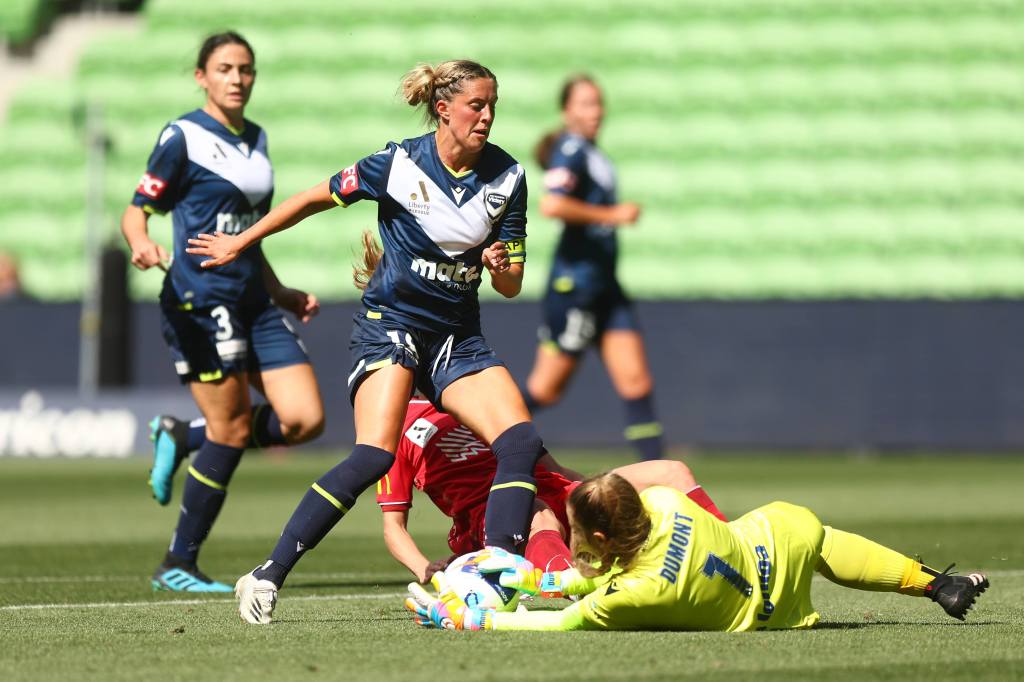


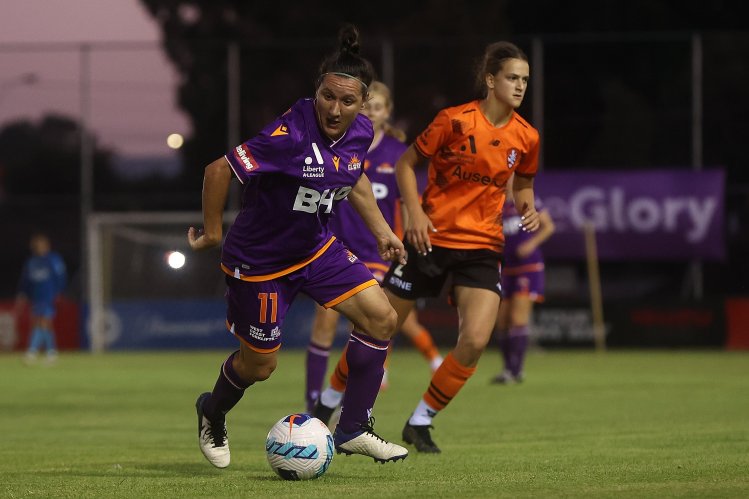
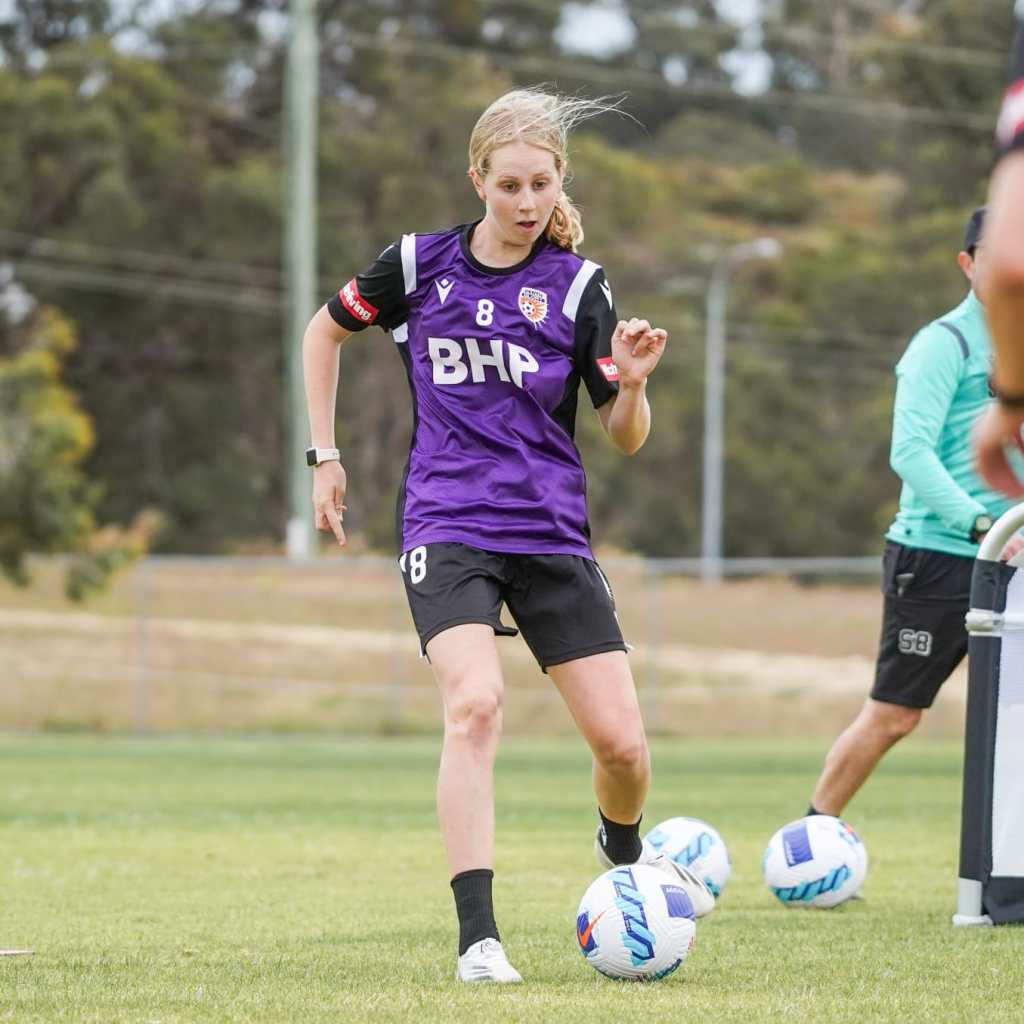
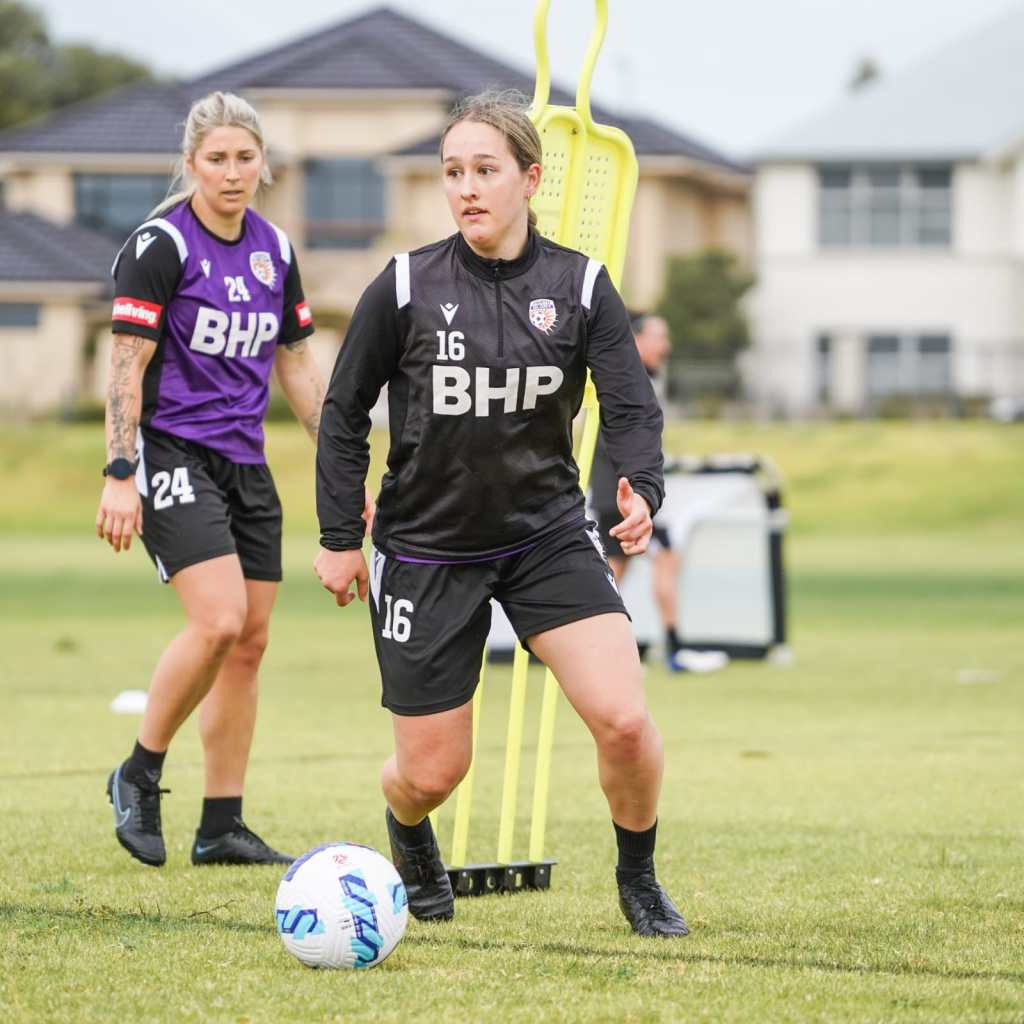

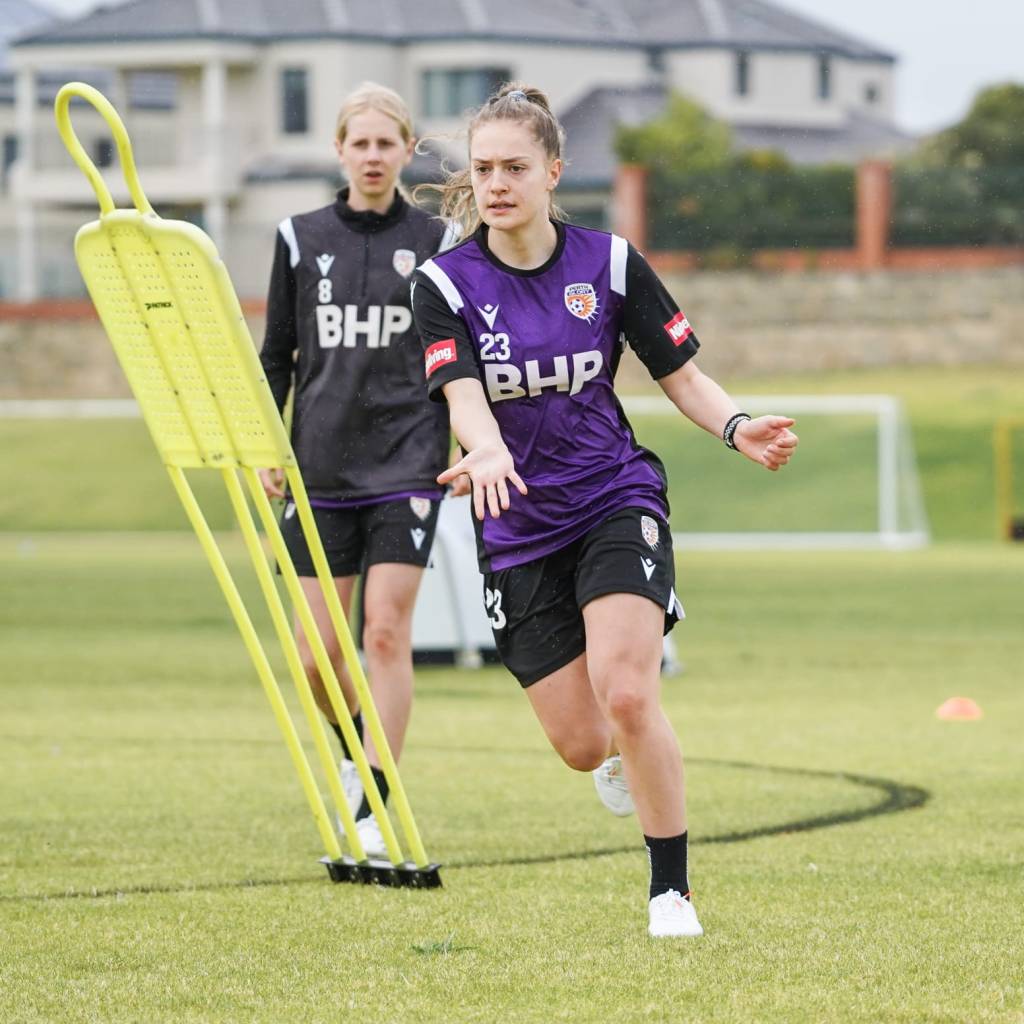


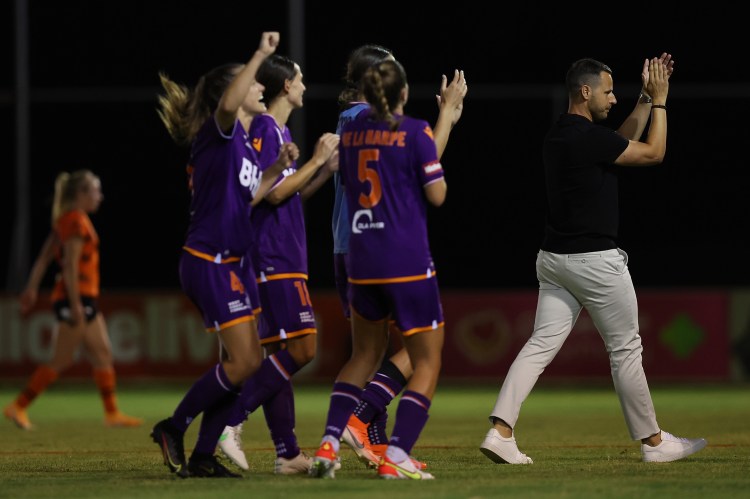


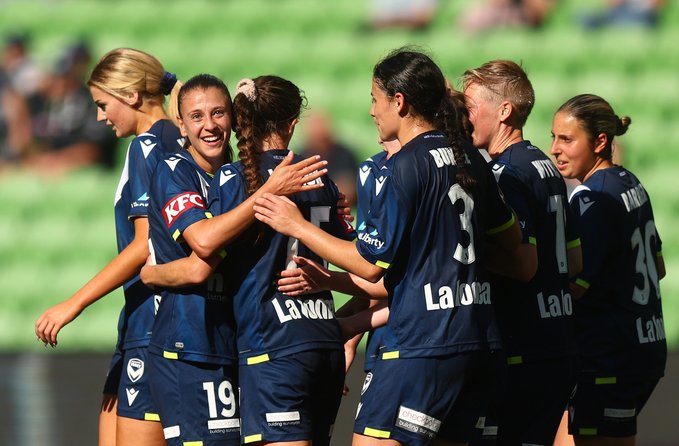






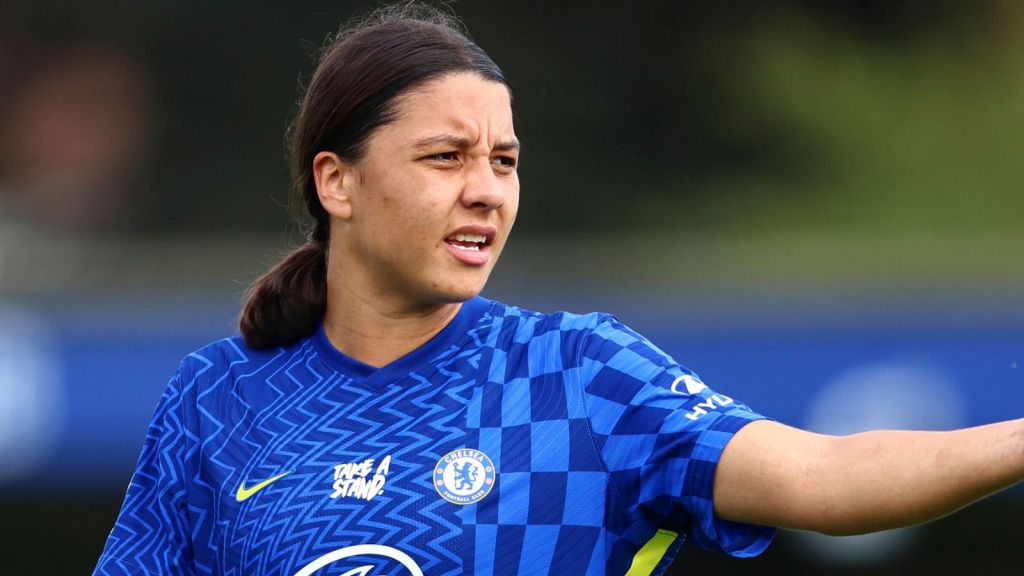

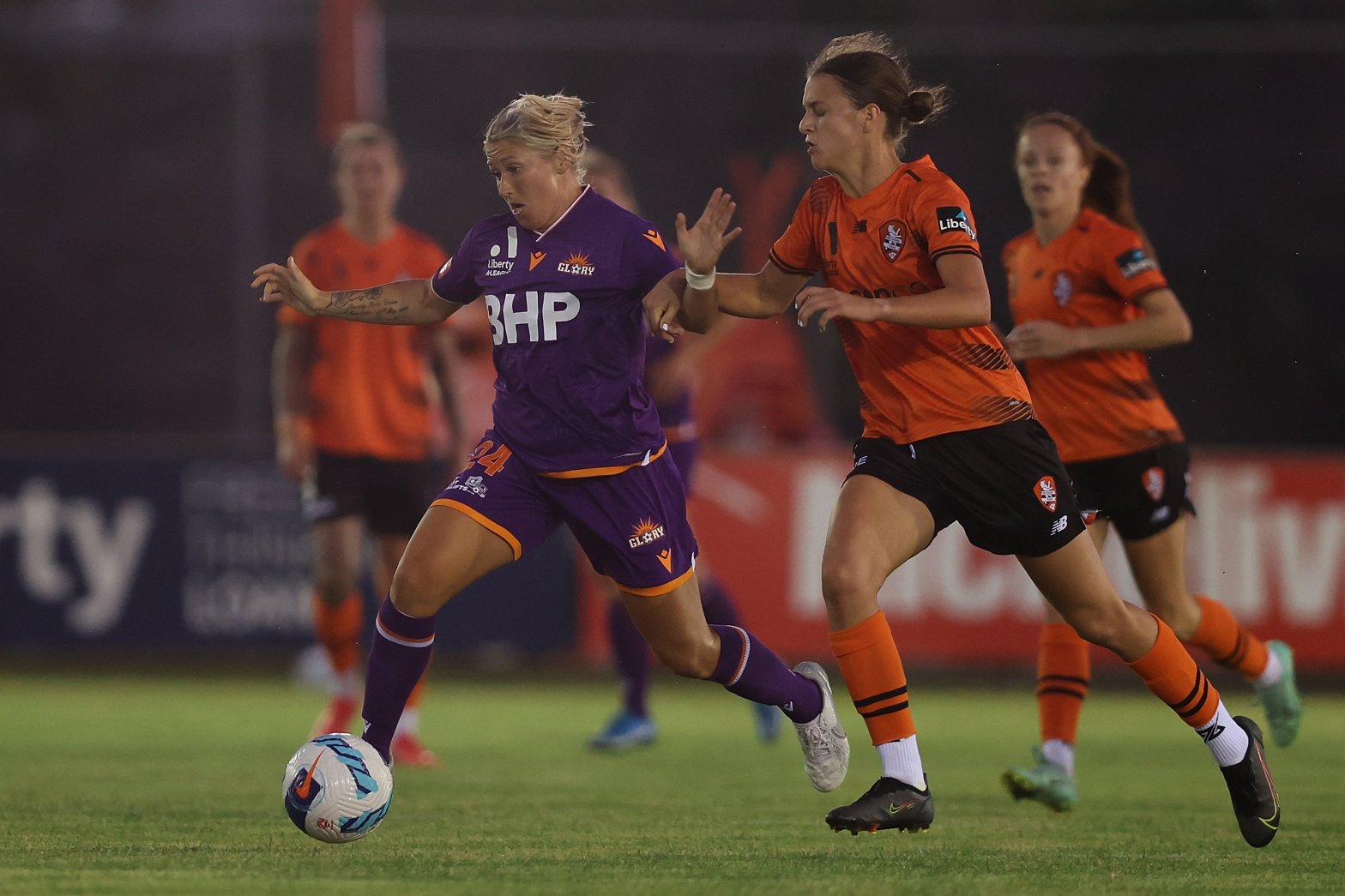








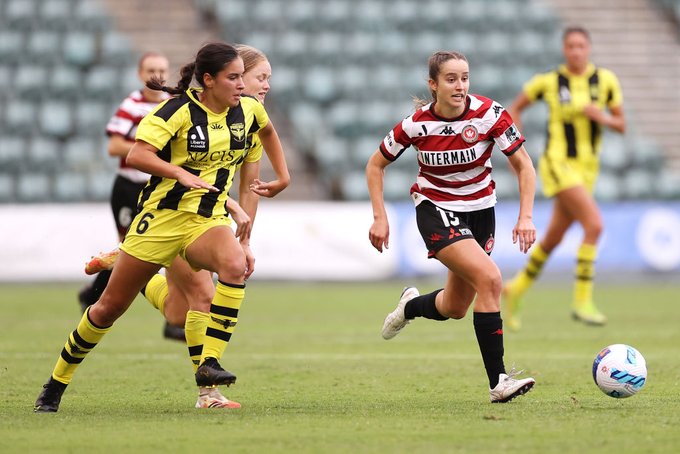
 impetusfootball.org