Above: Aleesha Collins, who put in a stunning performance on her FA Cup debut, drives at the Middlesbrough defence once more. Photo: Munro Sports Photography
From Chorley Women FC
The First Round Proper of the Vitality FA Cup saw fourth-tier Chorley drawn against third-tier Middlesbrough. After last week’s defeat in the League Cup the squad were looking forward to putting things right on the pitch. Due to injury, illness, and unavailability Manager Ben Gooden had to make several changes to his squad.
Boro started the brighter of the two sides but, Chorley had the best of the chances when Collins burst through the Boro defence with only the keeper to beat but, her shot hit the side netting. Minutes later, the visitors deservedly opened the scoring on 17 minutes – Faye Dale with a great strike from 15 yards. Soon after Dale doubled her tally when a speculative low drive went through a body of players and nestled into the bottom corner.
At this point and against higher opposition Chorley could have capitulated but Manager Ben Gooden has instilled a unity and never say die attitude in this special group of players and instead, Chorley rallied and grew into the game. It was 16-year-old Aleesha Collins on her FA Cup debut who started the come back when she drove at the Boro defence beating several players before calmly putting the ball in the net.
It was Collins again who had a wonderful chance to equalize just before halftime but her touch took her wide and the Boro defence managed to recover. Chorley had not been outplayed in the first half and had created the better chances but Boro had dominated possession.
The home side came out the stronger of the two sides after the break but found themselves 1-3 down when Eve Marshall scored another well-driven shot for Boro. It wasn’t long before Chorley replied, Cleary was dragged down in the box, the ensuing penalty was saved by the Boro keeper but Collins was on hand to tap in the rebound 2-3. Chorley pressed for the equaliser and it came on 50 minutes when Collins was in the right place at the right time again to complete an FA Cup hat trick.
On 61 minutes, Dale completed her hat trick for Boro with another clinical finish and the North-Eastern side once again took the initiative in this game. However just five minutes later Collins scored her fourth goal of the game coolly putting the ball in the top corner from close range on the volley 4-4. Boro were shell-shocked. Chorley piled on the pressure but couldn’t get the winning goal and extra time loomed. Full Time 4-4.
Both teams ran themselves into the ground in the extra half-hour, Chorley having the best chance to win the game when the ball landed at Searson’s feet 5 yards out but she could only put the ball right into the keeper’s arms. FT 4-4 Penalties!
Chorley took first and Captain Laura Walker stepped up and fired high into the net 1-0
Boro then missed their first penalty 1-0
Charlotte Evans scored her penalty for Chorley 2-0
Boro scored theirs 2-1
Lisa Topping scored for Chorley 3-1
Boro miss 3-1
Who else but 16 year old Collins took the fourth penalty for Chorley and chaos ensued as her spot kick crashed into the back of the net sending Chorley into the Second Round Proper.
Collins (rightly so) stole the limelight for what was an astonishing performance but it should be noted that every single player in the squad gave everything and the supporters were immense.
On Women’s Football Weekend this was an incredible game and both teams deserve high praise.
Congratulations to Gooden and his team for reaching the Second Round and for their part in what was one of the most remarkable games this reporter has witnessed in 15 years at the Club
The Second Round Draw has seen Chorley drawn at home to fellow FA Women’s National League Division One North side Bradford City which will be played on Sunday 28th Novmber at 1pm.
Chorley are in action again this Sunday at Blainscough Park vs Morecambe Ladies, KO 2pm
Above: Incredible scenes at the final whistle as Chorley celebrate their win on penalties after coming from 3-1 and 4-3 down. Photo: Munro Sports Photography.
CHORLEY: Emma Bradley, Isabel Catlow, Lisa Topping, Megan Searson, Katie Holt, Laura Walker, Charlotte Evans, Carra Jones, Aleesha Collins, Rachel Hindle, Rachel Wood. Subs: Ellie Cleary (46’), Katie Matthews (115’), Ellie Mills, Kerry Nickson, Emma Hickson.
Impetus‘ French editor Jean-Pierre Thiesset was pitchside EXCLUSIVELY for us as Olympique Lyonnais recorded a sensational result against their big rivals Paris St. Germain. He also rounds up all the weekend’s other action in the D1 Arkema15/11/21.
Above: Ada Hegerberg converts Ellie Carpenter’s cross to put Lyon 5-1 up over Paris St. Germain. Photo: Jean-Pierre Thiesset for Impetus.
Olympique Lyonnais recorded a sensational 6-1 win over Paris Saint-Germain, the team who ended their dominant run both in the D1 Arkema and the UEFA Champions League last season.
In a game where Paris SG had only two shots, Lyon set the record straight and never gave any chance to Paris SG to win the game. The statistics show the total domination of Lyon: 59% of possession, 416 passes with 81% successful, 17 shots with 13 on target, 7 corners. For Paris SG, 41% of possession, 309 passes with 72% successful, two shots on target, one corner.
We saw on the field that Lyon’s players wanted to show who was the boss in D1 Arkema this year and that they were back to win everything. All players were fully involved, and it is difficult to identify one player as the standout star of the game.
The return of Selma Bacha on the left-wing of the attack brought more possibilities to the team. Bacha, although she was a little diminished due to her recent quadriceps injury played with heavy strapping and posed a lot of problems to PSG defence during the 58 minutes she was on the field. Bacha delivered two decisive passes in the 18th minute for Daniëlle Van De Donk and the 53rd minute for Melvine Malard.
The performance of Daniëlle Van De Donk who was seen everywhere on the field, also needs to be celebrated. On top of this, she scored in the 18th minute.
This game saw also the return of Ada Hegerberg on the score sheet after almost two years. Entering the pitch at the 74th minute, Hegerberg scored twice, with her left foot at the 79th minute from Ellie Carpenter’s cross from the right side and with a header after 82 minutes from Perle Morroni’s cross from the left side.
Goals for Lyon: Catarina Macario (15′ pen), Daniëlle Van De Donk (18′), Melvine Malard (53′), Damaris Egurrola (59′), Ada Hegerberg (79′, 82′).
Goal for Paris SG: Amanda Ilestedt (75′).
Red card: Ashley Elizabeth Lawrence (26′).
The game in photos from Jean-Pierre Thiesset for Impetus:
Above: Daniëlle Van De Donk converts Selma Bacha’s cross to make it 2-0. Photo: Jean-Pierre Thiesset.
Above: 30th minute, Sonia Bompastor (Lyon head coach) gives instructions to Daniëlle Van De Donk. Photo: Jean-Pierre Thiersset.
Above: 53rd minute, Melvine Malard makes it 3-0 from on Selma Bacha’s cross. Photo: Jean-Pierre Thiesset
Above: 59th minute, Damaris Egurrola makes it 4-0 from Catarina Macario’s cross. Photo: Jean-Pierre Thiesset.
Above: 75th minute, Amanda Ilestedt gets a goal back for Paris St. Germain from Sara Daebritz’s ball in. Photo: Jean-Pierre Thiesset.
Above: 82nd minute, Ada Hegerberg converts Perle Morroni’s cross to make it 6-1. Photo: Jean-Pierre Thiesset
Elsewhere in Round Eight, Bordeaux won 3-1 away from home against Paris FC. While Paris FC had more ball possession than Bordeaux, 57% against 43%, and better statistics Bordeaux had more shots than Paris FC, 23 shots with nine on target against 11 shots with three on target. Being more efficient when they had the ball, Bordeaux logically won this game closing on the 4th place in the standing and stopping a series of 3 wins in a row of Paris FC.
Goals for Bordeaux from Vanessa Gilles (4), Mélissa Gomes (22), Eve Périsset (90+5). Goal for Paris FC from Clara Matéo (75). Red card: Oriane Jean-François after 2 yellow cards (18 and 51).
Fleury won away from home 4-0 against Saint-Etienne. In a game dominated by Saint-Etienne if we just look at the statistics, Fleury was a lot more efficient when they had the ball. Game statistics: For Fleury, 41% of possession, 337 passes with 70% successful, 11 shots with five on target, three corners; For Saint-Etienne, 59% of possession, 475 passes with 77% successful, 12 shots with three on target, two corners. As a matter of fact, Fleury’s defense stopped most of Saint-Etienne attacks well helped by their goalkeeper, Katriina Talaslahti, who put in yet another good performance and gained once more a clean sheet for Fleury. Talaslahti made three stops from shots on target (9th minute at ground level on a free kick from 25 metres, 45th+2 minute at ground level on a shot near her right post, 74th minute in the air on a shot from 25 metres), one catch on a cross (70th), two clearances on Saint-Etienne shots (47th minute with her fists on a corner, 85th minute with her hands on a close shot from her right). Fleury are now fourth in the table only three points behind third placed Paris FC. Saint-Etienne have lost four games in a row are now one off the bottom with only four points like Issy (10th) and Soyaux (12th).
Goals for Fleury: Maria Diaz (39), Marine Dafeur (45), Nikola Karczewska (57, 90+2).
Montpellier beat Issy 3-0 at home. It was a straightforward win for Montpellier who dominated this game as shown by the statistics: For Montpellier, 64% of possession, 525 passes with 82% successful, 16 shots with eight on target, five corners; For Issy, 36% of possession, 301 passes with 64% successful, 14 shots with seven on target, five corners. With this win, Montpellier stays in the middle of the table and Issy in the bottom. To be noted, the great performance of Mary Fowler who crucified Issy by scoring twice at the 61st minute, two minutes after entering in the game for Ashleigh Weerden, and at the 63rd minute. Goals for Montpellier: Maelys Mpomé (12), Mary Fowler (61, 63).
Guingamp were not able to do better than a draw 2-2 at home against Soyaux, who are bottom of the table. In a game edged by Guingamp (58% of possession), both teams scored alternatively without being able to keep the lead when they had it.
Goals for Guingamp: Maïwen Renard (57), Laurie Teinturier (64); Goals for Soyaux: Marie-Charlotte Léger (37 penalty), Laura Bourgouin (84).
Dijon obtained a draw 1-1 away from home against Reims. In a game just edged by Dijon (58% of possession), both teams had problems creating opportunities and scored only a single goal each. Both teams had the same results on their four last games (Loss, Win, Win, Loss) and continue together.
Goal for Reims: Melchie Dumornay (29); Goal for Dijon: Jenna Dear (43).
Above: Leanne Kiernan celebrates after finally breaking the deadlock in the battle of the top two in the Championship. Photo: @LiverpoolFCW
By Ben Gilby
Liverpool gained a hugely important win in their bid to return to the Barclays FA Women’s Super League at the second attempt after winning the battle of the top two at Maiden Castle.
Goals in the final quarter of an hour from Leanne Kiernan and Taylor Hinds saw the Merseysiders leapfrog their North-Eastern opponents to hit the top of the FA Women’s Championship.
A crowd of well over 1,000 was boosted by a large vocal travelling support from Merseyside who were provided with free transport by a sponsor.
The first goalmouth action came after four minutes, when a Durham free kick on the left was comfortably claimed by Rachael Laws in the Reds goal.
Above: Emily Roberts pictured in a game last season for Durham. Photo: She Kicks
With Liverpool employing the high press, the first corner went their way but massed ranks of Durham defenders headed clear.
Emily Roberts was lively for the hosts in the early stages and needed close attention from Niamh Fahey to prevent her from breaking through.
As the match drifted towards the second quarter of the opening half, Liverpool came desperately close on three occasions in quick succession. Taylor Hinds forced Durham keeper Megan Borthwick to make a sensational double save at the left-hand post. The resulting corner came in and a backheel flick was heading in until Kathryn Hill cleared off the line.
Above: Dee Bradley gets up to head an effort goalwards for Durham. Photo: Helen Jobson
With Liverpool building a head of steam, the North-Eastern-based league leaders were being urged to push higher by head coach Lee Sanders, Roberts went on another sensational run and earned a corner on the left. An in-swinging flag kick went narrowly wide of the far post.
As the encounter approached the half-hour mark, Durham appeared to have ridden out the storm with possession being to even out slightly, but tellingly, the hosts were not troubling Laws in the Reds goal in the same way that Borthwick had been called into action previously.
Seven minutes before the break, Liverpool turned up the pressure once more and were denied by last gasp Durham defending as Jasmine Matthews and Melissa Lawley both saw shots blocked in the six-yard box.
With three minutes to go before the break, Durham fashioned an opportunity when Mollie Lambert squared a ball inside to Ellie Christon, but her effort was way over the bar. Having been on the receiving end of most of the shots on target, Durham did well to go in at the break goalless.
Above: Durham looked to regroup at half-time. Photo: Durham WFC
The home side began the second period on the front foot and earned a corner which Laws did well to punch clear in the fact of huge pressure which required her to subsequently receive a long period of medical attention.
Lauren Briggs was at the heart of everything positive that Durham were doing in the opening period second half as they continued to press, although whilst the build-up was impressive, it lacked a killer final ball to trouble Laws.
The Reds began to threaten once more and earned three corners. From the second, the North-Eastern hosts were forced to clear off the line again, but shortly afterwards, they finally took one of their chances.
With just over a quarter of an hour to go, a high ball in from Rhiannon Roberts had to be pushed out by Borthwick, but it fell invitingly to Leanne Kiernan who couldn’t miss and Liverpool were ahead.
Above: Taylor Hinds nods home Liverpool’s second at Durham. Photo: @LiverpoolFCW
Four minutes later it was 2-0 when a great move down the right saw a ball crossed in towards Hinds who was unmarked at the back post to head home.
Liverpool managed the remaining time professionally to record a deserved win which is huge in the context of the season. With London City Lionesses also building a head of steam at the top of the table, the Reds’ victory is far from conclusive, but it marks an important milestone in their bid for a return to the top flight.
Whilst the result will be pleasing for Liverpool boss Matt Beard, he will also be delighted by the fact that this was his team’s seventh clean sheet in their last ten games.
Above: Liverpool celebrate a vital win in the promotion race. Photo: @LiverpoolFCW
Teams: DURHAM: Borthwick, Hill, Briggs, Lambert, Wilson, Hepple, Salicki, Bradley, Christon, Roberts, Holmes. Substitutes: Galloway (for Hill 20’), Crosthwaite (for Roberts 75’), Brown (for Briggs 84’), Ayre, Mckain.
This afternoon sees both of the Scottish Women’s Premier League Cup Semi-Finalstake place at Forthbank Stadium in Stirling. Ben Gilby hears from Glasgow City’s Hayley Lauder, Spartans’ Katherine Smart, Celtic’s Jodie Bartle, and Hibernian’sAmy Muir along with the four head coaches.
Above: The Scottish Women’s Premier League Cup – the trophy that today’s four semi-finalists areall aiming for. Photo: Scottish Women’s Football
GLASGOW CITY v SPARTANS (12:00pm)
Above: New Glasgow City head coach Eileen Gleeson. Photo: Glasgow City.
Glasgow City’s new head coach Eileen Gleeson was excited at the prospect of potentially leading her club to a place in a cup final at the end of her first week in the role.
“It’ll be great to hit the ground running and have a first game as a semi-final. It means a great deal to the club to reach a cup final and win a cup final. We need to compete and win these games.
“I’ve been involved in football for many years. Glasgow City are a league title-winning club and I expect the cup to be a similar target.
“Walking straight into a semi-final makes me thankful. Other people have got us here and I’m very grateful for them doing that. I’m hugely excited for it and my first game. I’ve watched the 9-0 game against Spartans and it has no bearing on Sunday’s game. I saw them against Celtic when they scored two goals and got a great draw. They are high energy with a good press and good in transitional moments. We are hugely respectful and know that a cup mentality can bring something very different.
“It’s huge that I have players here who are very experienced. They can really drive the club’s identity and what we are about. I am all about promoting intensity but I know that it is already here.”
Gleeson concluded by identifying what she wants to achieve in the long term with the club: “Everybody has seen that Glasgow City can play a lovely style of football and be assertive in the press and that is something I want to continue. Understanding the game is a big philosophy for me – reacting to different things in different ways.
“It’s huge having the other semi-final after ours at the same venue as it is a chance to watch other teams. Our main target is winning on Sunday.”
Glasgow City and Scotland offensive star Hayley Lauder spoke of her team’s determination to make the final and earn some silverware.
Above: Glasgow City and Scotland’s Hayley Lauder. Photo: The Herald
“It’s a massive game for us, it’s a competition that we haven’t won for some time (City last won the trophy in 2015) and we want to be competing in these competitions – that is part of being a Glasgow City player.
“We had a big win (9-0) against Spartans in the SWPL1 this season, but anything can happen in Cup games. We need to take this as a one-off and respect the opponent.
“Hibs have had a stranglehold on this competition, but when you are a Glasgow City player, winning is what you want to be doing but this cup has evaded us for quite a few years. It is a massive game on Sunday, and we hope it will put us in a position from winning it. We don’t shy away from that.”
In terms of the specifics about the opposition, Lauder has huge respect for Spartans.
“They’ve had an up and down season, but they are a great club, I love what they are all about. We’ve got massive respect for them, they have given us some tough games over the years. The result earlier this season goes out the window, it’s a cup game, a one-off.
“Potentially being in a cup final is massive. Before the pandemic, we saw the Scottish Cup Final at Tynecastle and it was incredible. We want to be part of it and be there. Hopefully tomorrow we can get there and be a part of it.”
Lauder then spoke about her feelings about playing for new head coach Eileen Gleeson. “It’s massive and brings a bit of freshness and new ideas in. We had Scott (Booth) for six years and this is a start of a new era. The players are all buzzing to get going and what a week to start it off with a semi-final.”
Spartans manager Debbi McCulloch was hugely excited by the prospect of the semi-final. “It’s a great occasion. Cup journeys in the past have always provided fantastic memories and there is no reason why Sunday can’t be the same. We’re looking forward to it and our feet are on the ground, trying to work as hard as we can to prepare as well as we can. It’s different from the league, we have nothing to lose and we can approach it in a professional manner and give it our all.
“We want to give our fans something to sing and shout about. We are hoping to bring our youth teams along and get our men’s team supporters along. During the pandemic, we were the only team from Spartans playing and the men’s supporters came along.”
Despite the club’s last game against Glasgow City ending in a 9-0 reverse, McCulloch was clear that this time will be different. “We won’t dwell on what happened last time. It was not like us. Everyone was bitterly disappointed by the result and performance. We took a step back and pressed re-set. I think that can help us, but we’re under no illusions that it will be tough. The girls will be up for the challenge and we will give it everything. When we do that we can be a very tough team to beat. We may not have scored as many goals as we would have liked recently, but we’ve been working on that. If we can get things right, then we have a chance to pull it off on Sunday.
“We sat down as a team after that Glasgow City defeat. We asked the players to sit back and identify where we needed to improve and step up. It’s important that we look at our strengths though. We know we can perform better than that, but we needed to see how to implement that.
“The Celtic performance (when Spartans drew 2-2) is the benchmark performance for me. I want to see us replicate that every week. It’s difficult to replicate it though. We’ve made some tweaks to our strength and conditioning to give us the extra yard and extra percentage.
“We have a good dressing room full of great people and talented people. When you get a result like we had against Glasgow City you need people to come together and that’s what happened for the Celtic game. Despite the fact that we have been consistently drawing (Spartans’ league record consists of five draws and one win from nine games), our performances have been there. It’s about getting the balance right.
“Plenty of our players have beaten Glasgow City in the past, so we need to take that on. It suits us being underdogs and gives us extra motivation to put in a solid performance. It gives us a bit of extra juice to provide an entertaining game, give everything, and don’t leave anything out there.”
McCulloch also emphasized that whilst she knows that Glasgow City’s players will be eager to impress a new head coach, she is more interested in her own team.
“They will want to impress her. I don’t think they are a team that are ever complacent. They have a great mix of experience and youth. We are not focusing on them too much though, it’s about us for me.”
Spartans midfielder Katherine Smart “Somebody has to win on Sunday, it’s a one-off. We have to make sure we get our balance right between making sure our defence is nice and tight but also taking chances when they come as it will only need one ball in the net to win.
“Glasgow City have been champions for 14 years for a reason. They have multiple players with international experience and younger ones coming in with enthusiasm and energy. The management and how they are run is extremely well organized. We need to look at the weaknesses we can find and exploit them.
“It’s a semi-final, being played at a lovely stadium and you can get all your friends and family there. We have supporters coming week in and week out but the energy round semi-finals is so much more and we need to take that now to help us.”
Smart recognized that her teammates have something to prove after the heavy defeat to City in the league, but she feels that Spartans are a different side now: “As Debbi said, we stripped everything back after that result and analyzed everything and the errors that were made. The next day in training we did everything possible to make sure those errors were not repeated. There has been a big improvement defensively since then.
“We have a 24 hour period rule when we can think about things for 24 hours and then move on from it. We know that we are a good team and we can pass the ball well and hurt teams. We are focusing on our own strengths and knowing our roles in the game. If everyone carries out their role to the best of their abilities we can win.”
With Spartans now moving to semi-pro status, Smart sees this semi-final spot as the beginning of a new era for the club. “With the league continually developing, you have to develop too or you get left behind. We are very lucky at Spartans that everyone around us at the club supports you and they want us to be at the top end and they are doing what they can to make sure we do it.
“It gives the players more responsibility. Expectations are higher as a result. We have to give everything we can in our job now. The club are fantastic in their support and in moving us in the right direction.”
CELTIC v HIBERNIAN (4:30pm Kick-Off)
Above: Celtic head coach Fran Alonso. Photo: Celtic FC Women
Celtic head coach Fran Alonso emphasized how his side was focusing on using the semi-final to re-set after a disappointing defeat in the Old Firm clash with Rangers last weekend at the top of the SWPL1 “We were disappointed about the game with Rangers. This game with Hibernian is a massive game and our full focus is on it – it’s a chance to get into a Cup Final.
“Before last weekend we were 25 games unbeaten domestically, so we’re not being hard on ourselves. We believe in ourselves. Conceding so early was the big difference against Rangers, it undid a bit of our belief. We lost many of the second battles and that is not like us.”
Alonso recognized that Hibernian have a great history in the competition and feels it makes them an exceptionally dangerous opponent: “It’s a one-off game, in the cups Hibernian are a very good team. They are a club who are used to getting to cup finals and winning them. We need to be confident and brave. I have all my faith in the girls that we can do it.
“It showed in the league game that there isn’t always much between the two teams. We dominated against them last time, but it was very close on the scoreboard. They will be up for it. I trust my team though and if we can control our game plan, we have a good chance of getting into the final. It would mean the world for me to lead the team out in a cup final. We have plans to win silverware so it is great to have a chance of doing it in my first season with the club.”
Above: Celtic’s Jodie Bartle. Photo: Celtic FC.
Celtic defender Jodie Bartle can’t wait for the semi-final to come round: “I absolutely love the big games like this. I saw a tweet saying that I’m a big game player and it put a smile on my face! I revel in these games. I love it.
“I’ve got an engine and I’m one of these weird people who just loves running and linking up with players is enjoyable.
“When we played Hibs the last time it was very tight. I only got on for the last few minutes. We controlled the game mostly, but Hibs clearly love a cup. I don’t understand how there is such a difference for some teams in cup games compared to league games but I’m confident, you need to be.”
With both semi-finals being played at the same venue on the same day, Jodie said: “I’m hoping to get there early to see a bit of the other semi-final and what goes on.”
Yet there is no doubt what Jodie’s overriding focus is: “Silverware! We play to win, we play to win trophies. It would mean an awful lot to get into the Final. The last trophy I won was in 2017 and that was a County Cup with Loughborough. I love a cup, I love a big occasion.”
Above: Hibernian head coach Dean Gibson. Photo: The Herald.
Hibernian has an incredible record in this competition, reaching six successive finals from 2014 to 2019 winning four and a total of eleven finals and seven wins. Head coach Dean Gibson is determined to start a new period of success in the cup.
“It’s been a massive achievement. I don’t think it will be seen again. We still have players here who have won it before. It’s the first time that I’ve tried to win it for us, but we want it as a club again.
“We missed this competition last season with Covid, particularly when in the league we fell into a bracket where we’re not quite competing at the very top and in no danger of going down. This just seems to be a competition that we win and it’s our thing.”
Gibson takes heart from his side’s performance the last time they played Celtic in September. “It was a game we felt harshly done by. We deserved to take a point but a lapse in concentration at the end cost us. It’s something Celtic do and we need to be switched on from the first minute to last. They never know when they are beaten and can get a draw when they are losing or get a win when they are drawing.”
He views the clash as a big opportunity. “We approach the game the same way that we always do. Our squad are capable. It’s something to look forward to and relish. We are more than capable to compete and win.
“It will be unusual for Celtic to come into this game on the back of a defeat. It will be the first time since Fran Alonso came in as head coach. I think they will be aggressive and play on the front foot. Last week’s result for them against Rangers won’t impact that.
“We go into every game against the top three with everyone seeing us as underdogs, we don’t see it that way. We see it as 50/50. (Celtic coach) Fran (Alonso) has said that he believes we are underdogs as he talks about the big three (Celtic, Rangers and Glasgow City).”
Above: Hibernian’s Amy Muir. Photo: Hibernian FC.
Hibs and Scotland midfielder Amy Muir revealed that it was this competition and the Edinburgh side’s record in it that persuaded her to join the club. “When it came to cup competitions, it was year on year that Hibs were proving themselves. If you look at Glasgow City, they have the mentality of winning back-to-back league titles and we have that in this cup competition. We just show how important it is to do it year after year.”
In terms of her own preparation for the match, Muir emphasized the need to take it as just another game. “I know it’s a cliché, but you have to. You can’t get hung up on the competition or the occasion and that can take you over. The best thing that can happen to us is having this one. It’s a one-off game and a chance to get into a final. We focus on us and what we need to do – looking at previous fixtures against Celtic to see what we need to do.
“The last game with them was decided with fine margins. Our games against them, Rangers, and Glasgow City have come down to small things. It’s always things we can fix and we’ll be looking to do that.
“This is something you want to do as a player, playing in big games like this. In 2019 I played in that amazing Cup Final against Glasgow City at Tynecastle, it was a great night. I want to be playing in the biggest games and the hardest ones.
“We have a group of girls who have played in a number of these finals and even those who came through the academy, they have been at the finals. Now they have the opportunity to be involved. We’ll be on the same page and have the same motivations.”
Ben Gilby rounds up another busy week of action in Sweden with Champtions League, the final round of the Damallsvenskan, the penultimate weekend of the Elitettan and transfer news13/11/21.
Above: BK Häckencelebrate after Elin Rubensson’s penalty sealed a midweek win in Portugal over Benfica in the UEFA Women’s Champions League. Photo: @_OBOSDamallsv
UEFA WOMEN’S CHAMPIONS LEAGUE NEWS:
BK Häcken reignited their hopes of making the Quarter-Finals with an excellent 1-0 away win against Benfica. Elin Rubensson’s penalty after 76 minutes was the difference. This result, combined with Bayern Munich’s loss in Lyon means that Häcken are now only a single point behind the second-placed German giants. This, plus the fact that they play two of their remaining three matches at home means that there is real positivity for the Swedish side. Speaking after the game, Robert Vilahamn, BK Häcken’s head coach said: “It was a good and tough game, two good teams and I think we succeeded with our pressing game. We deserved to win, but they were good as well. Now it’s alive in the group, we meet Benfica next week again and if we can go from that, we can go after Bayern next. Benfica played like I expected them to do. The level was good, but I knew we had good players, had a good game plan that worked, so it was nice.”
DAMALLSVENSKAN:
Above: Damallsvenskan champions for 2021 – Rosengård. Photo: Rosengård
Champions Rosengård ended a memorable season on a positive note with a 2-0 win at Djurgården. Two goals in the opening half-hour from Olivia Schough and Mimmi Larsson enabled Rosengård to record their 18th win in 22 games in front of 842 fans.
BK Häcken finished second despite another loss, 3-2 at Eskilstuna United. Felicia Rogic put the hosts ahead after 26 minutes, but Stine Larsen and Mille Jensen overturned this. Yet there was late drama as Eskilstuna netted twice in a spell of four minutes at the death with Rogic hitting both to complete a hat-trick to the delight of the 789 supporters.
Kristianstads gained the win they needed to finish third, with a 2-1 win at Piteå who finish one off the bottom. Alice Nilsson’s goal on 19 minutes put the visitors on their way, but their lead only lasted four minutes before Katrina Guillou levelled. The winning goal came with 23 minutes remaining thanks to Amanda Edgren’s strike with 339 spectators watching.
Above: Kristianstads clinched third place with a win over Piteå. Photo: @_OBOSDamallsv
Linköping guaranteed a top-six spot with a 2-0 win at home to AIK. Uchenna Kanu scored both goals in a fifteen-minute spell after the break to the delight of a crowd of 855.
Växjö ended a difficult season which saw them finish bottom with a 2-0 loss at home to Hammarby. Both goals came in the first half, with Madelen Janogy and Emilia Larsson on target in front of 316 fans. The home side won only two games during the campaign.
Vittsjö finished fifth after a stunning 8-2 success over KIF Örebro. The hosts built a 5-0 lead thanks to strikes from Sandra Odolfsson, Clare Polkinghorn, Fernanda da Silva, Tove Almqvist and Clara Markstedt. Elli Pikkujämsä hit back for Örebro with 56 minutes played. Vittsjö re-established their five-goal lead when Michelle de Jongh netted. Jessie Scarpa got another back for the visitors before late goals from De Jongh and Markstedt completed the rout to the joy of 443 fans.
Final Table 2021:
Table From: Svensk Fotboll
ELITETTAN:
Above: IK Uppsala celebrate after Ida Stromblad’s winner over Mallbackens IF Sunne put them in pole position to claim the final promotion spot to the Damallsvenskan. Photo: @Uppsalafotboll
In the penultimate round of matches, Umeå IK moved 13 points clear at the top of the table after a 2-0 win at already relegated Bollstanäs SK. Vilma Koivisto and Patrycja Jerzak were on target whilst 72 people looked on. After confirming their promotion last week, IFK Kalmar slipped to a 2-0 defeat at home to lowly IFK Norrköping. Sabina Ravnell and Lovisa Gustafsson scored in front of 177 spectators. IK Uppsala will go into their last match of the season in the final promotion spot after a 1-0 win at Mallbackens IF Sunne. Ida Stromblad’s strike after 35 minutes was the difference in front of 146 fans. IK Brommapojkarna could still pip Uppsala for a place in the Damallsvenskan on the final day after a 2-1 win at Jitex Mölndal. Frida Boriero put Bromma ahead on 67 minutes, but Tindra Lidstrom levelled eight minutes from time. However, just as the visitors’ promotion hopes looked to be going up in smoke, Klara Andrup netted. Brommapojkarna know they need a better result than Uppsala in the last match to go up. With Uppsala holding the upper hand on goal difference by eight, they will rely on a favour from Jitex Mölndal who travel to Uppsala. Bromma are home to lower mid-table Älvsjö AIK FF. Lidköpings FK’s remaining chance of a Damallsvenskan spot ended after a 2-1 loss at Alingsås FC United. Evelyn Ijeh gave the visitors the lead, but goals from Stine Jensen and Alma Oberg ended Lidköpings’s dreams.
Latest Results: Bollstanäs SK 0-2 Umeå IK, IFK Kalmar 0-2 IFK Norrköping, AlingsåsFC United 2-1 Lidköpings FK, Jitex Mölndal 1-2 IK Brommapojkarna, Mallbackens IF Sunne 0-1 IK Uppsala, Älvsjö AIK FF 0-1 Sundsvalls DFF, Borgeby FK 1-3 Morön BK
Next Fixtures: IK Brommapojkarna v Älvsjö AIK FF, IFK Norrköping v Alingsås FC United, IK Uppsala v Jitex Mölndal, Lidköpings FK v Borgeby FK, Morön BK v Bollstanäs SK, Sundsvalls DFF v IFK Kalmar, Umeå IK v Mallbackens IF Sunne.
Table From: Svensk Fotboll
NEWS ROUND-UP:
Kristianstad will add IFK Kalmar’s hotshot striker Tabby Tindell for their squad for the 2022 season. Tindell was a key player in Kalmar’s promotion to the Damallsvenskan this campaign. Kristianstad has also been strongly linked with Tindell’s Kalmar teammate Klara Rybrink.
Linköping has signed Nelli Karlsson from Växjö and also announced that Ronja Aronsson will leave them, with her new destination unclear.
Announcing their retirement from the game this week are Hammarby‘s Norwegian full-back June Pedersen, Linköping‘s Petra Johansson EskilstunaUnited‘s goalkeeper Emelie Lundberg
Ben Gilby brings you all the events from this week’s A-League Women press conferences. He hears from newly announced signings at Melbourne Victory, Adelaide United, Newcastle Jets, and Wellington Phoenix, plus Canberra United’s latest media day and Adelaide United’s joint training session. There’s also the details on the full season fixture announcement and the setting up of the National Indigenous Advisory Group.
Above: United in name and actions – Adelaide United’s women’s and men’s teams together in today’s joint training and fan’s day. See below for more on this event. Photo supplied to Impetus by: Adelaide United.
A-League Women’s Full Season Fixture List Revealed:
More games at some of the country’s leading football venues and expanded broadcast coverage are among the highlights of the full A-League Women’s season draw that was released on Tuesday.
Featuring 32 doubleheaders among 70 regular-season games, along with an expanded finals series, the new campaign will be contested by 10 teams for the first time after the admission of Wellington Phoenix to the competition.
Originally, border restrictions and quarantine requirements had meant only the first four rounds could be drawn up previously.
The 32 doubleheaders will be played at grounds with the highest level of broadcast capability, while at least a further six standalone games will also be played at Tier One venues.
With this season featuring the inaugural A-Leagues Club Championship, a trophy awarded to the club with the most success across both the men’s and women’s leagues, the doubleheaders will offer fans “six-pointers” in the battle to be crowned Australia’s most successful football club overall.
The season kicks off on 3rd December with the debut of Wellington Phoenix’ women’s team, who take on Western Sydney Wanderers FC at WIN Stadium. Reigning champions, Melbourne Victory will launch their campaign for back-to-back championships on 4th December as they take on Adelaide United at AAMI Park.
The first four rounds of the season will be played under a conference system before the relaxation of state borders and quarantine rules allows for the draw to return to a national basis. Information on these previously announced games can be read here: https://impetus885775742.wordpress.com/2021/09/25/australian-news-round-up/
Above: Greg O’Rourke, A-Leagues Commissioner. Photo: The Australian.
Speaking about the final fixture release, A-Leagues Commissioner Greg O’Rourke said: ”An absolute priority for us has been to ensure the highest levels of broadcast quality for the A-Leagues Women games this season, and the draw as it has been laid out allows us to do precisely that.”
“The doubleheaders we have scheduled allow our clubs to stage both their men’s and women’s teams in top-quality stadiums for their fans.
“We’re also delighted to welcome Wellington Phoenix Women into the competition, giving us more games than ever before.”
Wellington Phoenix are now slated to play a minimum of two home games in Wellington the opening two and a half months of the campaign based in Wollongong, New South Wales.
Phoenix General Manager, David Dome, says that the inclusion of at least two A-League Women’s matches to be played in New Zealand – scheduled for February and March next year – will be exciting for fans on this side of the Tasman. “We know fans in New Zealand are very keen to see our inaugural A-League Women’s side in person during this coming season, so we’re delighted to be able to bring the squad home. We hope Phoenix fans and the wider sporting fanbase mark these dates in their calendars as matches to look out for.”
Perth Glory may be able to host some home games in Western Australia, with their home venue to be announced amidst speculation that they will be moving away from their long-time home of Dorrien Gardens.
The A-League Women finals series will be expanded to include a preliminary final, before culminating in the grand final on 27 March 2022. The additional round offers the season’s first and second-placed teams two options to make the grand final, with third and fourth places facing a sudden-death playoff.
Melbourne Victory announced the re-signing of Maja Markovski and Emma Robers on Wednesday ahead of the 2021/22 A-League Women’s season.
Markovski returns for her second campaign with the Club after making five appearances during the 2020/21 Championship-winning season. The 19-year-old forward will be joined by Robers who returns to the Club after her first stint at Victory in 2019/20.
After an ACL injury derailed her 2020/21 campaign, Robers returns to the Melbourne Victory where she took part in the AFC Women’s Club Championship in 2019.
With the A-League Women’s season fast approaching, Head Coach Jeff Hopkins said the re-signings will help continue his side’s push towards defending their title.
“We’re confident our squad has what it takes to go back-to-back this season as we lay the foundations to create something special,” Hopkins said. “Maja will continue to add another element to our final third as she masters her craft as a young forward in the A-League.
“Emma has been an incredible professional during her ACL recovery and we’ve rewarded her with a contract this season. We’re hoping she can get back to the form that saw her impress in the WNPL in 2019.”
Melbourne Victory begin their 2021/22 A-League Women’s campaign on Sunday 5 December against Adelaide United at AAMI Park, kick-off 4.05pm.
Adelaide United Add A Further Two Players And Host Joint Training Day:
On Wednesday, Adelaide United announced the signing of midfielders Emma Stanbury and Nanako Sasaki for the A-League Women 2021/22 season.
Artwork: Adelaide United
Stanbury has previous A-League Women’s experience, playing two seasons in the competition with Newcastle Jets in 2016/17 and later Canberra United in the 2019/20 iteration.
The 30-year-old has also spent time in the NPL NSW Women’s league with the likes of Sydney University, North West Sydney Women’s Koalas, and Bankstown City.
Stanbury returned to the nation’s capital last year from Bankstown City where she had a brief stint with Tuggeranong United, before spending this campaign at West Canberra Wanderers, scoring two goals in nine games in the CF Women’s top flight.
Speaking on joining the Club, Stanbury said: “Signing with Adelaide is a really exciting opportunity for me.
“I’ve spoken to Adrian (Stenta) and I’m really impressed by the project they’re continuing to build and becoming a part of that plan.
“We have a relatively young, but talented, squad so I’m looking forward to bringing my experience and gelling with the group as soon as possible.”
Adelaide United’s A-League Women’s Head Coach, Adrian Stenta, said: “Emma is a smart footballer with lots of experience and I think she’ll be a big inclusion to our team.
“I believe we’ve built a really promising and competitive squad that will give us a great chance for success and Emma will definitely compliment us well. “We’re just a couple more signings away from completing the squad, so stay tuned for further announcements over the coming days.”
Artwork: Adeliade United
Nanako Sasaki has been one of the best players in the South Australian Women’s National Premier League since her arrival in 2017.
The impressive midfielder spent four seasons with Adelaide City winning several team and individual honours before switching to Adelaide Comets at the start of this year.
With Comets this campaign, Sasaki scored four goals in 24 games and was recently named in the WNPL SA Team of the Year for the third consecutive season.
Speaking after putting pen-to-paper with the Club, Sasaki said: “This is really exciting for me to progress as a footballer and I really appreciate this opportunity.
“Ever since arriving in Australia one of my goals has been to play in the A-League Women competition and I’m really happy that dream is closer to coming true.
“I can’t wait for the season to begin and I’m looking forward to working with Adrian (Stenta), his coaching staff, and a great group of girls.”
Adelaide United’s A-League Women Head Coach, Adrian Stenta, said: “Nanako is a player we have monitored for a while and is one of the best players currently in the WNPL SA.
“She is a technically gifted player who will provide a lot of composure and balance to our midfield.
“Although she has never played at the A-League Women level before, I’m confident she will make a seamless adjustment given her quality.”
Above: Emily Condon, speaking at today’s Adelaide United joint training and fans day. Photo supplied to Impetus by: Adelaide United.
Earlier today, Adelaide United ran a joint training event and fans day involving both their A-League Women and Men’s teams.
Speaking at the event, United star Emily Condon said: “It’s really good to join both of the teams together, and also to have the fans out here too. It really unites the club and that’s what we’re all about.”
Condon then highlighted how pre-season has been going so far. “It’s been great, we’ve been back for a few weeks now, we still have some of the players to come in, but it’s all about getting together for as much practice before the season starts.
“Last season was our best season yet, but it was so heartbreaking to miss out (on Finals) by just one goal. We’re looking to build on that and obviously, it’s a massive motivating factor.”
The midfielder, who is approaching her ninth season at the club spoke about the growth in the game over her career and how the next few years are the biggest yet. “I’ve been around the game for quite a few years now and to see it finally unite as one – not just our men’s and women’s, but the league too. Women’s football is just growing and growing. It’s a very exciting time to be in the game.”
Above: Action from today’s joint training session and fans day at Adelaide United with A-League men’s player Isaías Sánchez on the ball. Photo supplied to Impetus by: Adelaide United
Condon outlined her hopes to be part of a home World Cup in a Matildas shirt: “It’s always been a goal of mine. I’ve been on the extended squad list for quite some time, so any minute now I might get my first call up, but it’s all about me doing the best I can.
“Athletes want to represent their national team and it’s something I want to push for, but for now I want to be playing my best football here for Adelaide United week in week out.”
With Dylan Holmes and Charlotte Grant departing the club during the last W-League season, the Port Pirie-born player was asked about how she thinks they’ve been getting on “It’s been great to see what they’ve done overseas and they deserve to be winning things. They are two amazing players and there are plenty more to come out of Adelaide for the national team. I support them 100% and hope Dylan can make it back into the national squad, she really deserves it and it’s great to see Charlotte Grant out there.”
Finally, Condon touched on last season’s final home game which was played at Coopers Stadium against Western Sydney Wanderers in front of a record crowd for a stand-alone W-League game. “All of the girls loved it. It would be good to have more games here and make it one of our home grounds for the seasons to come.”
Adelaide United A-League men’s star Isaías Sánchez also spoke of his pride in being part of a club that integrates their women’s and men’s teams together so closely: “This is a family club, the club tries to do everything to bring people together, the fans, the players and those who work hard in the offices here. We are one community and I am very proud to be involved.”
Canberra United Media Conference:
Above: Canberra United’s Lauren Keir – shared with the media her thoughts of training so far. Photo: The Canberra Times.
Lauren Keir and Chloe Middleton were part of Canberra United’s media event this Tuesday.
Keir began by discussing the pre-season training routine so far. “It’s been great, I’m really enjoying it so far. It’s quite similar to last season as we have the core group back with some additional players who have come in and fitted in well. It’s going to be difficult for everyone to get into the team as we’ve got a strong squad this season. I’m really looking forward to it.
“The girls that Vicki (Linton, head coach) have brought in are great. We have a goal in place and we want to achieve it together. They are unique and we all just want to work for each other. We all have a work ethic in us, so I feel it will really go well for us this season. As someone who has been here for quite a while (since 2017). They are really stepping up and quite competitive at training – everyone’s really working hard.”
With the full A-League Women fixture list for all teams now revealed (see above), the 25-year-old defender is hugely positive about the way the games have fallen for the capital city side: “We’ve had a look and feel it’s a really good draw for us, but our main focus is Round one against Melbourne City.
“It will be really exciting being back at Viking Park. The whole team want to be back in front of our fans.”
Above: Chloe Middleton, settling in at Canberra United despite there being no beach! Photo: Western Sydney Wanderers.
New signing Chloe Middleton, who joined Canberra United from Western Sydney Wanderers spoke of her initial experiences at her new club.
“It’s been really good, the girls have been so welcoming. Training has been hard, but good. Canberra’s nice too. Originally I thought ‘Ah! No beach!’ but there’s lots of things to do and there’s good cafes too!
“Everyone is looking really fit in training and our new American signings Ally Haran and Chelsee Washington arrived yesterday and had their first training session with us and they fitted in really well.
“For me, although I’ve come in from outside, I feel like I’ve known the girls for a long time
Looking ahead to the new season with the full fixture list now out, Middleton felt happy with the schedule. “We’ve had a look and, yeah, it’s a good draw. Having been in the competition for two and a years now, I’d really like to see a full home and away season because it’s unfair for teams who can play a harder team twice or an easier team twice. It would just make more sense for a full home and away season.”
Jets Unveil Bethany Gordon:
Artwork: Newcastle Jets.
Yesterday, Newcastle Jets announced the signing of former Young Matilda Bethany Gordon who made her professional debut with Canberra United at the age of 19. She has most recently spent time playing in Denmark.
Head Coach Ash Wilson said the youngster will bring versatility and competition to the squad.
“Bethany has a great work-rate and clear technical quality,” said the Jets head coach.
“She had consistent and impressive performances when playing for Macarthur in the NSW NPL Women’s, and she has also played in the W-League, in Denmark, and toured with the Young Matildas. She brings a level of experience and composure into the squad and a strong competitive drive that will add value to our environment.”
Gordon said she couldn’t wait to get underway in her new colours.
“The playing group and staff are fantastic and the facilities are really awesome. It is a tremendous opportunity to play at the top level in the country again. I hope to have a really positive experience and to contribute to the team and the overall goals for the season.”
Phoenix AnnounceArrival of Martin:
Artwork: Wellington Phoenix.
Wellington Phoenix unveiled the signing of Australian defender Annabel Martin on Tuesday.
The 23-year-old defender joins the Phoenix squad as its most experienced A-League Women’s player, having played in 40 matches combined for Newcastle Jets and Melbourne Victory over the last five seasons – including 39 starts and only two substitutions off in her career.
Martin was tagged as a player to watch at just 17 years old when she first made her debut with Melbourne Victory in what was then the W-League. Despite being the youngest member of Victory’s back-four, Martin was a standout defender during this campaign – credited on a regular basis with making key defensive plays to prevent her side from conceding a goal.
She would go on to win the 2016 Victory Medal in her third season, playing one more season with Melbourne before moving to New South Wales for her University studies and joining the Jets.
Martin has also played with NPL NSW side Sydney University Soccer Football Club during the W-League offseason, as well as two seasons with Geelong Galaxy in NPL VIC.
Wellington Phoenix Head Coach, Gemma Lewis, says that Martin brings a measure of toughness and experience to an otherwise young squad.
“Every team needs a player like Annabel on and off the pitch; someone who’s been in the trenches and is an experienced player in the A-League competition,” says Lewis.
“We expect Annabel to not only contribute on the field for the Phoenix this season but to be someone who can help show our younger players what it takes to succeed in the professional space.”
Martin, who will wear the number 18 shirt for the Phoenix, will join up with the squad in Wollongong shortly. The Phoenix has now signed 19 players to its women’s squad.
National Indigenous Advisory Group Set-Up:
Above: (Left to Right): Kyah Simon, Tanya Oxtoby, Jade North, Narelda Jacobs, and Frank Farina. Photo: Football Australia
Football Australia this week announced the formation of its National Indigenous Advisory Group who will bring a breadth and depth of knowledge and insight into the current and emerging goals of the Indigenous community across Australia.
A key advisory body for Football Australia, the National Indigenous Advisory Group comprises of nine First Nations community members from diverse cultures, experiences, and intersectionality, who are driving change in a variety of areas; professional and grassroots football, media, academia, and government.
As part of the launch, Football Australia announced the members will include Kenny Bedford, Frank Farina OAM, Selina Holtze, Narelda Jacobs, Professor John Maynard, Doctor Karen Menzies, Jade North, Tanya Oxtoby, and Kyah Simon.
A Biripi man and former Socceroos defender, Jade North believes the Advisory Group is an important continuation of football’s connection and strengthening relationships with Indigenous Australia.
“Football is all about unity, diversity and equity and I believe it is important that First Nations people voices are part of the football conversation,” said North.
“I have seen an increasing connection with First Nations people and football over the past few years. In some of the tournaments I have been to I see a lot of passion, I see a lot of skill, I see a lot of desire, and everyone is proud of their mob and where they are from.
“What I would love to see over the next couple of decades for our First Nations people is having a big representation of Indigenous people, in various roles, at all levels of the national teams and domestically. I would also love to see Indigenous culture deeply intertwined with Australian football, driving the respect and celebration of one of the oldest and continuing culture in the world.”
Above: Matildas and Tottenham Hotspur star Kyah Simon, part of the National Indigenous Advisory Group. Photo: Athletes Voice
Football Australia CEO, James Johnson, said that the establishment of the National Indigenous Advisory Group is another step in Football Australia’s journey to connect authentically with football’s Indigenous heritage and future.
“This is a momentous day for football in Australia. The National Indigenous Advisory Group will bring to the forefront the voices, lived experience, and rich knowledge that can only come from First Nations people,” said Johnson.
“Our Indigenous heritage is a critical component of Australian football’s identity and story. First Nations participation and elite representation within football dates to the 1930s with pioneering names such as Charlie Perkins, Harry Williams, Karen Menzies, and John Moriarty. To provide the opportunity for the next generation to continue in this tradition and to strengthen Indigenous participation at all levels of the game, we need to create stronger pathways and ensure we foster an environment that welcomes and embraces.
“The collective leadership of the group will play an integral role in guiding Football Australian as we take important steps towards becoming a leader in our work with Aboriginal and Torres Strait Islander communities.”
Anaiwan and Biripi woman and Matildas forward, Kyah Simon said that the embrace of First Nations people in football will be beneficial for all.
“I think it is important to have First Nations voices in football as Indigenous peoples have a lot to offer the game,” said Simon.
“The future for football for our First Nations people is bright, exciting and I can’t wait to see down the track what investment, time, and opportunity in our people will give us.
“I would love to see the opportunities I have had in football provided to others across the game. I am proud to be part of a collective group that can assist in the elevation of their voices and helps build strategies and processes to engage more First Nations people in our game.”
Above: Tanya Oxtoby, former Perth Glory player and Bristol City Women head coach, now Emma Hayes’ assistant at Chelsea. She was named this week as a member of the National Indigenous Advisory Group. Photo: The Telegraph.
Football Australia’s National Indigenous Advisory Group will focus on:
· Supporting the ongoing cultural safety for football’s Indigenous participants to assist in retaining First Nations players, coaches, support staff, administrators, and in governance.
· Evaluation and advice on football pathways and programs designed to drive social outcomes.
· Guidance on future strategic partnerships and employment strategies.
· Promotion of reconciliation through the ongoing engagement and shared development of Football Australia’s Reconciliation Action Plan.
Jade North will co-chair the Advisory Group alongside Football Australia’s Head of Women’s Football, Women’s World Cup Legacy & Inclusion, Sarah Walsh.
Australian Professional Leagues Launches KEEPUP App:
Artwork: A-League Women
Australian Professional Leagues (APL) unveiled KEEPUP, its unique football content platform on Wednesday.
The KEEPUP digital platform and data infrastructure is currently available as a website or app on both IOS and Android.
The platform was delivered to broaden and enhance the fan experience, connecting A-Leagues fans and international competition fans in one place. In its current form, the platform will focus on creating and curating content to bring fans close to the game however they choose, with significant expansion planned into the future.
KEEPUP will feature content from the best of the A-Leagues, European and world football, the Socceroos and Matildas, NPL, and FFA Cup. A-League clubs’ content hubs will also be integrated onto the platform to ensure fans are offered the most comprehensive football resource available in Australia.
“KEEPUP is a football platform, built by football people for football fans and which delivers a unique experience and provides a central source of news and features to unite the currently fragmented football market. Our digital-first strategy creates the opportunity for our fans to experience what’s happening in the world of football, both on and off the pitch,” said Ant Hearne, Chief Commercial Officer, of the APL.
KEEPUP will continue to evolve through the season as it adds layers of dedicated coverage, augmented by significant tie-ups with domestic and international content providers.
KEEPUP will provide insights, in-depth features and analysis on games, transfer news, as well as stories on culture and football identities from a team of football journalists on staff led by Richard Bayliss, Director of Content.
APL will also feature commentary from some of Australia’s football elite including Premier League great Mark Bosnich, Matildas legend Melissa Barbieri and Socceroos captain Matt Leckie.
Jean-Pierre Thiesset was pitchside in the stadium EXCLUSIVELY for Impetus at Olympique Lyonnais’ UEFA Women’s Champions League Group D tie with Bayern Munich.
Above: Lyon’s players celebrate with the fans at the end of the game. Photo: Jean-Pierre Thiesset for Impetus.
There were 7 754 spectators in the Groupama Stadium for this UEFA Women Champions League game between Olympique Lyonnais and Bayern München (Germany).
Again, the central defense of Lyon was taken by Kadeisha Buchanan and Amandine Henry. Furthermore, Sonia Bompastor, Lyon head coach, had to do without Selma Bacha, who was slightly injured, and it was Janice Cayman who took the left side of the attack. Janice being right-handed, it was a little bit more difficult for her to bring crosses for her strikers. However, she delivered a good performance.
Above: Janice Cayman in action during Lyon-Bayern game. Photo: Jean-Pierre Thiesset for Impetus
Overall, the game was very even, even if the play took place more in Bayern’s part of the field, with just a few more shots for Lyon but none really putting Laura Benkarth, Bayern München goalkeeper, in difficulty. The lack of crosses in the first half impacted Lyon’s goalscoring opportunities. On a Bayern counterattack at the 25th minute, Kadeisha Buchanan put the ball in her net allowing Bayern to lead 1-0. Ironically, apart from this goal, Bayern did not have a lot of opportunities to score during the first half.
Lyon started the second half with a little bit more desire. After a shot from Delphine Cascarino was blocked by the Bayern defence, Janice Cayman, who had followed the action, shot into the goal in front of Bayern goalkeeper at the 50th minute for the equalizer which put her team back in the game.
Then we had to wait the end of the game to see Amandine Henry send a header into the net from Catarina Macario’s cross after 86 minutes, to the relief of Lyon’s team and the fans.
This game saw the return of Carolin Simon and Saki Kumagai in Lyon. Saki had a great welcome from Lyon fans during the warm-up when OL ANG’ELLES fans chanted her name.
Above: Saki Kumagai during warm-up. Photo: Jean-Pierre Thiesset for Impetus.
Statistics of the match:
Lyon: 48% of possession, 388 passes (72% successful), 17 shots (6 on target), 4 corners.
Bayern München: 52% of possession, 423 passes (69% successful), 9 shots (1 on target), 3 corners.
Goals for Lyon from Janice Cayman (50), Amandine Henry (86); Goal for Bayern from Kadeisha Buchanan (25 Over Goal).
Impetus are proud to sponsor Paige Walder, midfielder for tier five London & South-East Regional Premier side Saltdean United and also the designer of all our site graphics. Almost three months into the new season, she touched base with Ben Gilby to update us on how things are going.
Above: Paige Walder in action for Saltdean United (left) against Ashford Town (Middx). Photo: @SaltdeanWomenFC
Last time we spoke to Paige she had just announced her return to football with Saltdean United. It’s been an experience that she has enjoyed hugely.
“Well, time flies when you’re having fun and I’ve had such an enjoyable experience so far with Saltdean. The girls are such a good bunch and we’ve become so close! I’ve settled in well on the pitch and linked up well with a few players that I’ve played alongside in the past.
“Pre-season was great, I’d been off the pitch for a while so I needed a good pre-season to get back into the swing of things. I’ve found my rhythm now and I’m really enjoying myself.”
In terms of the aims that the club set themselves for the campaign, Paige outlined how those are going. “We’ve fallen short of our team goals as we’d aimed to be around the top of the table. However, I do think on the return fixtures we can pick up a lot of points that we’ve been unlucky not to have gained the first time round. Personally, I wanted to get as many assists as possible and I’ve managed to get a few from being on-set pieces.
Artwork: Saltdean United FC
“Results-wise it’s been a difficult start for us, we’ve lost a few key players that has really knocked us, but luckily I’m injury-free, so I’m trying to carry the team through to Christmas when we hopefully get some depth back and can climb up the league table. The results don’t reflect the performances we’ve had, with a lot of close games against the top of the league teams where silly mistakes have let us down. But with the group being so solid, everybody is coming together to grow and learn. The positives have to be that although we’ve been hit hard with injuries and tough losses, the morale in the group is still so high and hopefully that will carry us in close contests in the future.
“The quality of the division (London & South-East Premier) has actually really surprised me. There are a lot of players I recognise from playing against previously at a higher level and they stand out in this league.
“I haven’t been too surprised with the standout teams. We’d played a few in our mini spring season so I knew what to expect from the likes of Dartford and Ashford Town (Middx) and both teams have turned up and played as expected.”
For Paige, the biggest challenge that she and the club have faced this season is the injuries to players who would otherwise be starters.
Above: Paige (left) pictured in training. Photo: @SaltdeanWomenFC
“We’re missing seven of our starting 11 players which has been difficult. At the beginning of the season with the quality we had, we were hoping to compete for the title and the teams around us agree that we were in our right to aim for that. I think now we have to try and compete to make the top four.
“I’m pleased with my own form to a certain extent. I’m my own worst critic so although I have had good performances, I know I have more to give and I’m always pushing to do better. I’d like to have some stand out performances that people on the side-lines would be talking about, I’ll try save it for the game you come along to watch.”
Off the pitch, Paige is extremely busy with her graphic design work with Graphics by PW and also an exciting new venture.
“I’ve recently created graphics for Caroline Weir and Alex Greenwood which has been very exciting. I’ve also just joined forces with EFG Management as their Media Executive. Together, we want to grow the Women’s game and I’ll definitely be looking to get Impetus involved in some way or another!”
Impetus’ Kris Goman was at Stadium Australia in Sydney this morning for the media launch ahead of the Matildas forthcoming two-game series with the USWNT at the end of this month. She spoke exclusively to Emily Van Egmond, Jada Whyman, and Bryleeh Henry. Kris additionally heard from NSW PremierDominic Perrottet, The Hon Natalie Ward,and Acting USA Consul General Elizabeth Power
Above: Matildas Jada Whyman and Bryleeh Henry meet some younger footballers at the media launch this morning. Photo: Kris Goman.
There was quite the roll-up of politicians and football elite at Stadium Australia this morning to discuss the upcoming match between Australia’s Matildas and the reigning World Cup titleholders, the US Women’s National Team (USWNT).
New South Wales (NSW) Premier, Dominic Perrottet, was joined by the NSW Sports Minister, The Hon Natalie Ward, and the NSW Tourism Minister, The Hon Stuart Ayres, along with the Football Australia CEO, James Johnson, Football NSW Director, Stephanie Brantz and Acting US Consul General, Elizabeth Power. Representing the Matildas we had Emily van Egmond, Remy Siemsen, Brylee Henry, and Jada Whyman.
The Hon Natalie Ward opened proceedings by announcing that Sydney was open for sports and was excited to announce $5 tickets for registered players under the age of 12. She particularly wanted to welcome back families to 100% capacity to see their heroes live in the flesh.
Above: NSW State Premier Dominic Perrottet and NSW Sports Minister Natalie Ward in Matildas scarves this morning. Photo: Kris Goman.
Dominic Perrottet was keen to inspire the next generation of sporting stars. He said, “We’re not just bringing sports back, we’re bringing crowds back.” He was confident that we’d break the record for a Matildas game in NSW.
Above: US Acting Consul General Elizabeth Power at Stadium Australia. Photo: Kris Goman.
The US Acting Consul General, Elizabeth Power, said that the USWNT were thrilled to be coming here for the first time in over 20 years and were looking forward to reinforcing the bonds of two great sporting nations with a great rivalry. She didn’t want to make a prediction on the final outcome but was looking forward to cheering from the stands.
The USWNT haven’t visited our sunny shores since the Sydney Olympics in 2000. As Remy Siemsen said, “Before I was born.” Although a quick Google confirms she was actually born but was under a year of age, so clearly doesn’t remember it. The key thing here though is that there’s no one on either team that was on those Olympic teams 21 years ago. While quite a few of the USWNT, like Megan Rapinoe, Emily Sonnet, Abby Dahlkemper, and Lynn Williams have played in the W-League over the years, this current version of the star-studded USWNT have not been here before. It’s actually quite rare for the USWNT to play outside the USA for friendlies so NSW has quite the coup.
Above: Matildas stars Remy Siemsen, Bryleeh Henry, and Jada Whyman at Stadium Australia today. Photo: Kris Goman.
Coming off a nil all draw and 4-3 loss for the Bronze medal at the Tokyo Olympics, the Matildas have something to prove. There’s the added intrigue of club teammates playing against each other. Caitlin Food, Steph Catley, and Lydia Williams all play with Tobin Heath at Arsenal, Emily Van Egmond plays with Alex Morgan at Orlando Pride, Ellie Carpenter plays with Catarina Macario at Olympique Lyonnais. Additionally, Sam Kerr will be playing against her girlfriend, Kristie Mewis.
One of the key drivers for this press conference was to sell tickets. Football Australia has made $5 tickets available to all registered players under the age of 12 for the Sydney Stadium Australia match and $10 tickets for the Newcastle match at McDonald Jones Stadium. Non-playing adults will be paying a bit more but this is a once-in-a-lifetime opportunity to watch these two top women’s teams play live.
Stadium Australia is the Olympic Stadium and currently has a capacity of 83,500. The seating has recently been rearranged to make it more of a rectangle stadium so the seating is more suitable for football crowds.
The sale of tickets is paramount to setting a new record for watching the Matildas. In 2017, 15,089 fans watched the Matildas beat Brazil 2-1 in Penrith. Newcastle beat that crowd a couple of days later with an attendance of 16,829. In 2019, that record fell when Australia played Chile in front of 20,029 people. But the biggest attendance for a Matildas match was actually back at the Olympics against Sweden when 33,600 turned up to watch the two teams draw in their group stage match. But that number pales into insignificance compared to the biggest crowd for a women’s match in Australia which was between Sweden and Brazil at the MCG in Melbourne, also part of the Sydney Olympics, before 58,432 people.
With cheap tickets, a huge venue, and a family-friendly kickoff time of 3pm, the stage is set to blow those figures out of the water. Could we dream of beating the 77,768 people that turned up to watch the England v Germany friendly at Wembley in 2019? Or the record for an Olympic women’s match which was set at the London Olympics in 2012 with a crowd of 80,203 for the final between Japan and the USA which saw Japan get the Gold. The stadium is big enough but it would have to sell out. Unfortunately, it won’t be possible to beat the all-time record of both Women’s Football and Women’s Sport which was the World Cup Final between the USA and China at the Rose Bowl in the USA which was 90,185 as that number is beyond the capacity of the stadium in its current configuration.
Whatever happens, the atmosphere is going to be electric and everyone should make every effort to witness these matches live. COVID restrictions are largely lifted although only the double vaccinated will be able to attend but travel from the regions is now possible. Tickets are on pre-sale now and general sale tomorrow 9/11/21
Above: (Left to Right) Stephanie Brantz, Emily van Egmond, Bryleeh Henry and James Johnson. Photo: Kris Goman.
Former West Ham United star Emily van Egmond spoke about the excitement of two matches against the World champions as well as her extensive travels in recent weeks:
“We obviously played them quite recently in Tokyo and bringing the world’s number one team over here is a big thing for the Australian public to come out and watch. It’s always a competitive match. The girls will be buzzing.
“The USWNT are full of threats. They are all such good players. I wouldn’t be surprised though if some young players come in. We’ll see what they bring. It’s good preparation for the Asian Cup.”
“I’ve been back and forth to Orlando twice in three weeks, but I’m happy to be back now and get some preparation for the games.”
Asked about her immediate club football plans, van Egmond highlighted that she is keeping her options open at the present time.
“I’m here training for the game against the USA and then we’ll see what happens, but we have the Asian Cup in January. Depending on what happens there, we’ll see.”
Above: Emily van Egmond (left) and Bryleeh Henry at Stadium Australia. Photo: Kris Goman
Western Sydney Wanderers youngster Bryleeh Henry, who made her Australia debut in the recent games against Brazil in Parramatta was blown away by the prospect of playing in Sydney’s Olympic Stadium. “I think it will be amazing! Just looking at it now it’s humongous! With a crowd in, the atmosphere will be incredible.”
Sydney FC’s Jada Whyman has treasured memories of playing in the venue.”I’ve played here a couple of times and it’s just been amazing,” she told us. “I made my debut here, and so it has a very special place in my heart.”
“Growing up I saw a lot of the USWNT players as role models so to be playing at the same level as them is a big thing for me. I can’t wait!”
Above: Spurs celebrate Ria Percival’s late leveller against Manchester United. Photo: The Times.
After what feels like a long international break followed by FA Cup matches, we’re finally back to a full weekend of WSL games.
Tottenham and Manchester United are in fourth and fifth places respectively on the table and a win by either would move them into third. That result is not to be however and instead they share the points in a one-all draw that sees Tottenham jump Brighton and Hove Albion to take third place anyway and for the first time, take a history-making point off United.
The match was quite even and the result felt fitting with both spectacular goals scored in stoppage time at the end of each half. You know what they say about the last five minutes being the most dangerous.
Spurs apply early pressure and a good early curling strike by Jessica Naz is punched away by Mary Earps.
Things are dull until around 30 minutes when a Kyah Simon cross goes directly to Earps. A clever pass from Maéva Clemaron to Ria Percival goes to Earps and sees Percival leap over Earps in front of goal to avoid a collision.
Above: Midfield tussle at The Hive between Manchester United and Tottenham Hotspur. Photo: The Guardian.
From a throw-in, Alessia Russo turns and shoots. The ball is batted away by Tinja-Riikka Korpela directly to Leah Galton but her shot is deflected by Percival’s outstretched boot, safely over the crossbar. This has been United’s best attack so far in the match.
The resulting corner goes to the far post and ends with a wrestle between Maria Thorisdottir and Rachel Williams that looks like it possibly should have been a penalty but nothing is called.
A cross by Simon eventually gets to Naz who has a crack but is a bit high and a bit wide and goes clear and out to the left.
Katie Zelem takes a free-kick which goes straight into the wall and Ash Neville’s arm. She’s awarded another free-kick at the top of the box.
The wall is established again with Percival laying along the bottom to cover the space left by the jump. It’s a bit of a lacklustre shot though and hits Aoife Manion standing next to the wall and is cleared away.
Two minutes into stoppage time at the end of the first half,, Russo takes a run into the box, beating Neville and Molly Bartrip and getting a brilliant shot away into the top near corner that’s just over the outstretched arms of Korpela and United take the lead.
Above: Alessia Russo (right) celebrates her stunning goal for Manchester United. Photo: The Guardian
Spurs retaliate immediately but the United defence stands strong. It was a fairly even first half with a moment of brilliance from Russo being the differentiator.
Early in the second half, Ella Toone sets up Kirsty Hanson with a smart pass through the centre but the shot is blocked by Korpela.
Out of the blue, Kit Graham sends a rocket to the goal but Earps is all over it and a precision leap sends the ball over the crossbar in an excellent piece of goalkeeping.
Hannah Blundell gets a yellow card for complaining about who got a throw in and then just before full time Martha Thomas gets a clear shot on goal but it’s just a smidge too high and clears the top post.
Right on 90 minutes Neville takes a left-footed shot on goal but that goes wide too. There’s five minutes of extra time.
A bit of playing around the top of the box by Spurs gives Chioma Ubogagu an opportunity but it’s also wide. Straight back the other end and Russo has a shot on target that’s gathered safely by the keeper.
Four minutes into stoppage time, Kiwi international, Percival takes a free-kick from near the sideline and about 40 meters out not far from the halfway line. As everyone rushes the box, the ball bounces between all the players and Earps, who’s on her line. It bounces over her head and outstretched arms and into the net for one of the goals of the season and the equaliser with less than a minute to go, leaving Earps shaking her head in disbelief.
Above: Wild celebrations from Spurs after Ria Percival’s leveller four minutes into stoppage time. Photo: The Guardian.
United come straight back and a downwards header by Russo is so close but batted up and away by Korpela.
Try as they may, there’s not enough time left to come back and we end with a draw as the whistle blows. The Spurs fans are celebrating like it’s a win.



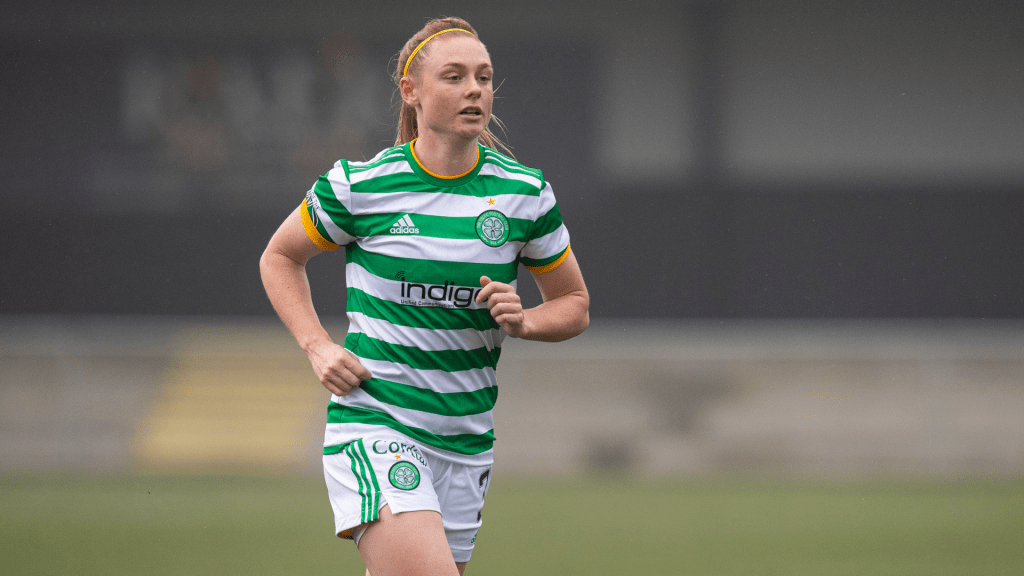

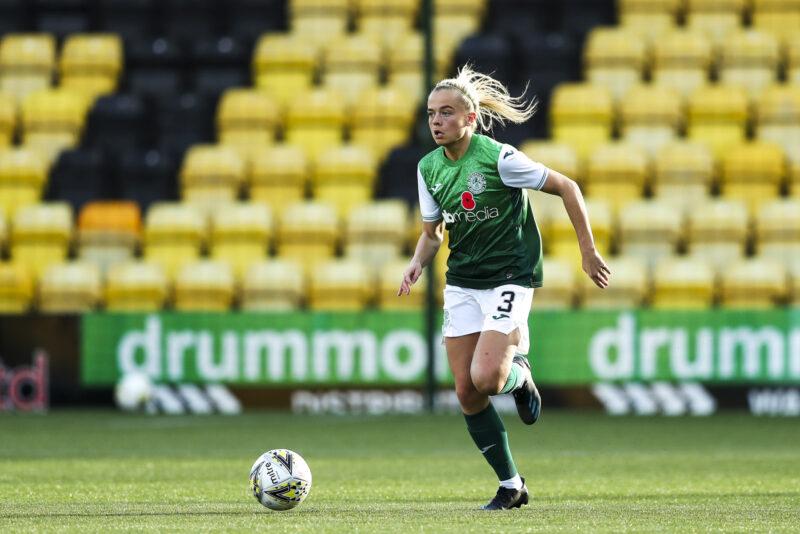


 impetusfootball.org