Johnson debut goal drives Matildas to Argentina win

Australia 2-0 Argentina

by Isabelle Campbell at Marvel Stadium for Impetus (30/5/25).

Above: Kahli Johnson celebrates her debut goal for Australia. Photo: Football Australia.

The Matildas put on an outstanding display of attacking mindset in a 2-0 win over Argentina at Marvel Stadium in Melbourne. With several senior players unavailable, the fixture allowed fringe players to make their names known to the nation.

The match marked a significant milestone for interim head coach Tom Sermanni, who led the national team for the 150th time. Having previously coached the Matildas from 1994 to 1997 and again from 2005 to 2012, Sermanni has returned to guide the squad through a period of transition and development.

With a mix of emerging talent and experienced players, the fixture provided a valuable opportunity to test new ideas and build team cohesion ahead of more competitive challenges.

Newest call-up to the national team, Kahli Johnson earned herself a spot in the starting XI, making her cap number 237 for the Matildas.

From the starting whistle, Australia kept the ball at their feet, getting themselves well into the final third and looking to open the scoring early on.

In just the sixth minute, Holly McNamara delivered a ball into the box, which managed to find the foot of debutant Johnson, but her effort was sent high over the crossbar.

The Australians continued to press with Jamilla Rankin also sending the ball into the area, though there were no teammates there to meet it, and Argentina’s goalkeeper, Abigail Chaves, pulled off a great stop.

McNamara was the next to step up, but she too was unable to bring the ball down low enough to affect the scoreline.

The Matildas dominated early proceedings, pinning Argentina inside their own half, but just failing to convert their chances into something tangible.

Argentina had their first chance on goal in the 15th minute when Florencia Bonsegundo managed to perfectly bring the ball down to her feet and get a shot off, although the attempt was not quite low enough to trouble Teagan Micah in goal.

Above: The Matildas side who started tonight’s win over Argentina in Melbourne. Photo: Football Australia.

Johnson continued to look confident on the ball and desperate to make a difference to the scoreline.

The breakthrough came in the 38th minute, and it was the debutant Johnson who made all the difference. Assisted by Charli Grant with a perfectly weighted cross, she found the back of the net with a powerful strike. First game, first goal, and a player to watch.

The two sides went in at half time with the Matildas looking to maintain the level of pressure and Argentina hoping to turn their luck around.

The whistle blew on the second half, and within minutes, Johnson again looked to exploit the gaps in Argentina’s defensive line, just missing the mark from the edge of the area.

Argentina found their rhythm throughout the second half and looked more comfortable on the ball, though they still failed to create any threat to the home side’s backline.

Still hungry for her own debut international goal, McNamara continued to look dangerous in the box, peppering the keeper with shot after shot.

A free kick outside the area was unable to further the Matildas’ lead, being sent just over the top by Alanna Kennedy.

Adding to the list of milestone moments, after nearly a year on the sidelines with an ACL injury, Amy Sayer made her long-awaited return to the national side and immediately looked to prove that time away hadn’t slowed her down.

Moments later, Kaitlyn Torpey made the net ripple for a second time, both in the game and in her own international career, making a run down the right-hand side and turning what appeared to be an attempt at a cross into a goal.

Above: Kaitlyn Torpey (right) celebrates her goal with Charli Grant, who had an outstanding night for The Matildas. Photo: Football Australia.

Fueled with confidence, the Australians pushed further forward, and it was Clare Wheeler who struck a goalbound effort next, but the Argentinian keeper managed to just get a hand in and knock it off course.

It wasn’t until the 80th minute that the South Americans registered their first shot on target, giving goalkeeper Micah her first action of the night.

Despite four minutes of added time, neither side was able to change the scoreline, and the Matildas walked away with a win that shows promise as we edge closer to another home soil competition.

With another friendly against Argentina still to come in Canberra on Monday night, Sermanni and his staff should be encouraged by the signs of growth and cohesion on display in Melbourne.

To view an EXCLUSIVE gallery of images from the game by Impetus’ Tilly McDonald, visit our Instagram page @ImpetusFootball.

Teams: AUSTRALIA (4-4-2) : Micah, Heatley, Hunt, Wheeler, Torpey, Van Egmond, Kennedy, McNamara, Grant, Johnson, Rankin. Substitutes: Nevin, Foord, Cooney-Cross, Aquino, Prior, Sayer, Davidson, Henry, Catley, Whyman, Gomez, Heyman.

Scorers: Johnson 38’, Torpey 69’.

ARGENTINA (4-4-2): Chaves, Stabile, Roggerone, Preininger, Cometti, Pereyra, Rodriguez, Braun, Bonsegundo, Dominguez, Giminez. Substitutes: M. Vargas, R. Nūnez, A. Vargas, K. Nūnez, Martin, Altgelt, Gramaglia, Gomez.

Referee: Pansa Chaisanit (THA).

Attendance: 43,020.

Follow Impetus on social media –

Twitter (X): @impetusfootball TikTok: @impetusfootball

Instagram: @impetusfootball

Ireland Nations League Preview

Above: The Irish Women’s National Team in a training session. Photo: Ireland Football Twitter.

By Alyce Collett (5/29/25).

Like just about every international window these days, the upcoming international window is incredibly important for the Republic of Ireland. 

Set to face Turkiye and Slovenia in the UEFA Women’s Nations League; the reverse fixtures from the February window, the Girls in Green are arguably the side in their League B group with the most on the line this window. 

With where the side is at currently, the goal will be to top the group and get promoted straight back up to League A, the bare minimum being finishing second and qualifying for a promotion playoff. With the potential to have to face sides like Austria, Iceland, Portugal or Denmark in that play off, the Irish will be wanting to avoid that extra step. 

However, to finish top of the group will not be easy. Mainly because of how badly things went against Slovenia last time, The Irish need to make up a goal difference of seven, so two wins this window will not be enough by itself. These wins need to be big, and big wins have not been a theme with the Irish team for a while. 

Last time against the Turkish, the Irish really struggled to get past the low block the Turkish deployed. Although Kyra Carusa did eventually pop up and score what turned out to be the winner, it was far from convincing from the Irish. 

Speed in attack is going to be crucial, and without Heather Payne bringing the pace out of defence, others are going to have to step up. 

The key may be shaking up the forward line. Carusa has been the first choice striker for a while, but has only played five matches this National Women’s Soccer League (NWSL) season, and has not played more than 29 minutes in any of those matches. Republic of Ireland manager Carla Ward needs to reward those in form and that have been playing more regularly, which is players like Saoirse Noonan, Amber Barrett, Abbie Larkin, Lucy Quinn, and Erin Healy.

Meanwhile in the last Slovenia game, the Irish were simply outclassed. That particular match left many Irish fans scratching their heads in concern, as there was just about nothing positive to take out of that game. Part of the blame can be partially laid at the fact that the team was still getting used to Ward and her system, but regardless if history repeats in any way at Páirc Uí Chaoimh on Tuesday, the Irish can kiss their hopes of a top spot finish goodbye. 

WILL KATIE MCCABE PLAY?
Above: McCabe arrives at camp after winning the Champions League. Photo: Ireland Football Twitter.

One of the big questions surrounding the Irish squad this window is the availability of captain Katie McCabe. 

McCabe is coming off a long season with Arsenal and in particular a big weekend last weekend, winning the UEFA Women’s Champions League. 

There is a noticeably negative difference in the Irish side when McCabe is not in it, so if she is not able to play for any section of the matches, others are really going to need to stand up. 

THE NEWEST GIRL IN GREEN 

The other big question surrounding the group is around the newest member of the group, Erin Healy. 

Healy is an American born forward, who qualifies for the Republic of Ireland through her Monaghan born grand father. She is currently playing in Australia’s A-League Women’s for Adelaide United. 

She plays a more central role, but is quick and is not afraid to take on defenders so is exactly the kind of player the Irish side needs, but the question will be is Ward willing to play someone who is so new to international football? Only time will tell. 

The Republic of Ireland will take on Turkiye in Istanbul tomorrow night before returning to the Emerald Isle to take on Slovenia in Cork on Tuesday night. Both matches will be shown on RTE2, but fans outside the Republic may need a strong VPN to be able to tune into RTE’s coverage.

IRELAND WNT SQUAD – MAY/JUNE WINDOW VS TURKIYE AND SLOVENIA 

Goalkeepers: Courtney Brosnan, Grace Moloney and Sophie Whitehouse.

Defenders: Jessie Stapleton, Aoife Mannion, Anna Patten, Caitlin Hayes, Louise Quinn, Chloe Mustaki, Megan Campbell and Katie McCabe.

Midfielders: Denise O’Sullivan, Ruesha Littlejohn, Megan Connolly, Tyler Toland, Marissa Sheva and Aoibheann Clancy. 

Forwards: Kyra Carusa, Amber Barrett, Abbie Larkin, Lucy Quinn, Emily Murphy, Saoirse Noonan and Erin Healy. 

Follow Impetus on social media –

Twitter (X): @impetusfootball TikTok: @impetusfootball

Instagram: @impetusfootball
Sermanni demands better conditions for A-League Women’s players & coaches

by Isabelle Campbell (29/5/25) 

Above: Tom Sermanni. Photo: Football Australia.

Just 24 hours after the A-League Women was named the ‘Best League in Asia’, Matildas interim head coach Tom Sermanni has launched a scathing critique of the competition, calling for urgent structural changes and greater investment in professionalism. 

“We started the A-League Women, or the W-League, as it was in those days, in 2008. One of the two or three things that was important was to give more players opportunities to play against national team players and to get opportunities in the national team.” 

“And at that time, our league was the forefront of women’s leagues, to be perfectly honest. It’s still very important, and coaches, staff and players are doing exceptionally well. But the league itself is in need of significant improvement in its professionalism.” 

Sermanni singled out just three clubs, Melbourne City, Melbourne Victory, and Wellington Phoenix, as being frontrunners in the league, saying, “The rest of the clubs are completely inadequately staffed. That’s a starting point.” 

He also drew stark contrasts with brand new Canadian league, the Northern Super League, in just its maiden season, suggesting Australia is being outpaced in terms of salaries and infrastructure. 

“Players get 35-week contracts now (in the A-League Women). A league has just started in Canada, football-wise, we’re well in advance of Canada, where the base salary is twice what our basic salary is, where there’s full-time staff, full-time players.

“And we are still trying to produce players when we have a space of three months where the club has got no contact, no control, no reference point for the players, to actually keep them and know what’s happening.

Above: Tom Sermanni at today’s media conference. Image: Football Australia.

“We really need to have, at A-League level, a real rethink.”

Tom Sermanni, Matildas interim head coach. 

Sermanni said that despite the league existing for 17 years, progress has stalled. 

“When we started the league, and the coaches came from our institute programs, we had full-time coaches and more full-time staff than we have now, 17 years in.” 

“The A-League separated five years ago, and what we have done since then is we’ve got home and away, which is an improvement, but we are still grossly under-invested in the women’s game here.

“I don’t know if there’s a thought process going forward about where they want to take the league or what they want to do. But there’s a huge amount of work that actually needs to be done.” 

“It’s even more irritating when you think how we had the most successful World Cup ever two years ago, and A-League Women are in the situation that they’re in now, it’s just not good enough.” 

Matildas defender Charli Grant, who now plays for Tottenham Hotspur after starting her career in the A-League with Adelaide United, echoed Sermanni’s concerns. 

“I think seeing the resources there (at Tottenham) compared to Australia was very mind-blowing, to be honest. Seeing things like that does give that drive where you want Australia to be better and push for those facilities, those resources, because having them there every day at Tottenham, it helps you become a better player.

Above: Charli Grant speaking at the Matildas’ media conference in Melbourne today. Image: Football Australia.

“Having so many different people that you can go to for different areas of the game, and you can only imagine what that’d do for Australia if they were given the same resources.” 

The financial gap is striking. While the NSL boasts a minimum salary of $56,000 AUD and a $1.8 million AUD salary cap, the A-League Women has a salary cap of just $600,000 AUD. In a recent survey, 59% of players cited low wages as the most likely reason they would leave the sport early. Over 60% of players work outside of football to support themselves financially. 

Beau Busch, Chief Executive of Professional Footballers Australia, spoke on the issues Sermanni raised:

“The players are crystal clear: the ALW must relaunch as a fully professional competition by the 2026/27 season. We must capitalise on the momentum of the AFC Women’s Asian Cup, elevate the match day experience, both in-stadium and on broadcast, and invest in stronger club environments.” 

Beau Busch, Chief Executive, Professional Footballers Australia.

“Setting that as our target and achieving it will prevent us falling further behind as global standards continue to rise at pace.” 

The future of the A-League Women rests on addressing these pressing concerns. With calls for greater investment and professionalism growing louder, the league now faces a critical moment to shape its next chapter. 

Follow Impetus on social media –

Twitter (X): @impetusfootball TikTok: @impetusfootball

Instagram: @impetusfootball

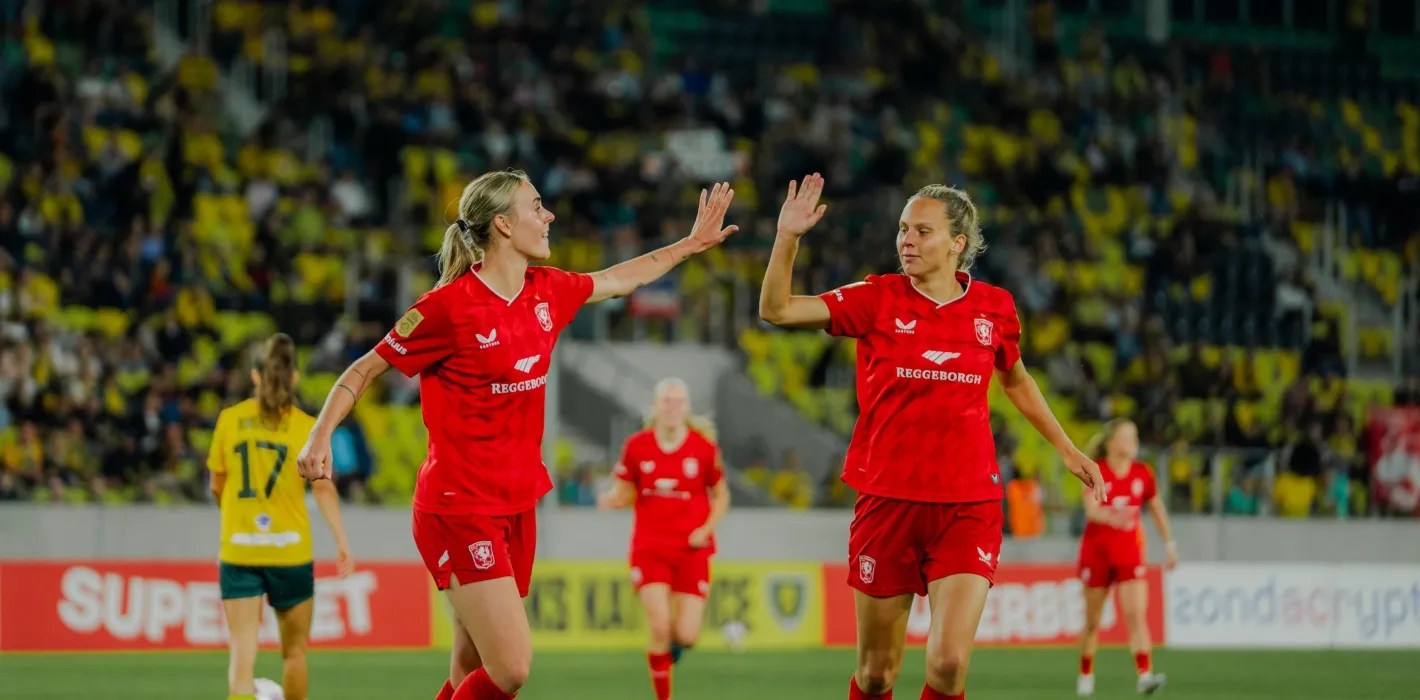
Low wages and a player exodus: what next for the Vrouwen Eredivisie?

By Catherine MacKenzie (28/05/2025)

Above: FC Twente celebrate lifting their 10th championship. Photo: VrEredivisie on X.

Mention European women’s football leagues and most people think of England’s WSL or Germany’s Frauen-Bundesliga. These are arguably the most competitive; although Chelsea have won the WSL for the last six years, they have been challenged by other clubs, and VfL Wolfsburg, Bayern Munich and Eintracht Frankfurt vie for the top spots in Germany.

Less discussed is the Vrouwen Eredivisie in the Netherlands. The Dutch league is often referred to as a ‘training league’; there is an established informal pathway from ‘lower club’ to ‘top club’ to ‘club abroad’. Nevertheless, the league has created some of the world’s biggest football talents: Vivianne Miedema, Jill Roord, Wieke Kaptein, Daphne van Domselaar, Danielle van de Donk, and Victoria Pelova all have roots in the Dutch league.

Above: Vivianne Miedema for SC Heerenveen. Photo: FEAN Online.

The league itself has had a tumultuous journey since its origins in 2007. For a couple of years, the Netherlands joined forces with Belgium for the ‘BeNe league’ (2012-2015), and since then, the format has shifted from a NWSL-style round robin followed by championship round, to league-phase only like the WSL.

Founding members of the Eredivisie include: ADO Den Haag (then led by current England head coach Sarina Wiegman), AZ, SC Heerenveen, FC Twente, FC Utrecht, and Willem II. From the outset, the clubs have poured vastly different levels of resources into their women’s teams; FC Twente have become a powerhouse in the league, winning 10 titles – Ajax and AZ have won three each, and ADO one (2011-12, under Wiegman).

Numerous clubs in the Vrouwen Eredivisie struggle financially, largely due to restricted income from ticket sales, sponsorship deals, varying support from the clubs themselves, and broadcast rights. Even though the matches are broadcast live on ESPN, significant overhead costs mean little revenue for clubs. Moreover, despite the Netherlands’ winning the 2017 European Championship, average match attendance remains below 1,000, with many clubs seeing regular attendances of less than 500 – and the lowest in the 2024-25 season was only 50.

Despite low attendances, some clubs have continued to invest in their women’s teams more significantly. Clubs with more successful men’s sides – such as FC Twente and Ajax – are able to bring in the top talent from around the country and are provided with more resources on a sporting level (such as nutritionists to work with players).

Following a club in the Vrouwen Eredivisie

ADO Den Haag, based in The Hague, is not one of these clubs. Their men’s team play in the second tier of Dutch football and have had recurring issues around hooliganism and disorder – even burning down part of their own stadium in 1982. Winning the league at the end of the Second World War, the club have had less success in the decades since. New owners have consistently promised to make the club a powerhouse in Dutch football, however thus far, there has been limited success.

The women’s side was founded in 2007, as soon as there was a professional league for women – the Vrouwen Eredivisie. Sarina Wiegman left her role coaching the ‘amateur’ (although non-professional, the club have had extensive success) Ter Leede and joined ADO – although she was only asked to do this on a semi-professional basis at first:

“If you want me to take the job, I want to do it full-time. That’s the only way.”

The club were bouncing between the Eredivisie and the Eerste Divisie (first division, tier two of Dutch football) at the time – they would not have the same level of resources as clubs who had been consistently playing in the top tier, such as FC Twente and Ajax.

Twenty years later, the Dutch National Team (the OranjeLeeuwinnen, or “orange Lionesses”) have a major trophy under their belt. Following their unexpected 2017 Euros win, the canals of Utrecht turned orange with celebrations, and it looked like the entire population of the Netherlands was celebrating.

Above: The Netherlands celebrate winning Euro 2017 in Utrecht. Photo: Gerrit van Keulen VI / PA Images.

In hindsight, it is tempting to assume the win would be transformative. However, this hindsight is tinged with the knowledge of what happened in England five years later. When the English Lionesses won their Euros, the transformation was unparalleled:

The WSL’s average attendance nearly tripled, rising from 1,923 in the 2021-22 season to 5,616 in 2022-23, a 200% increase. Whilst decreasing slightly, the increase is still there, with clubs like Arsenal regularly seeing crowds of over 30,000 when they play at the Emirates stadium. The FA reported a 150% increase in football participation for girls under the age of sixteen, following the tournament.

For the Netherlands, the impact from the 2017 win was there but nowhere near as big. Following the victory, the Royal Dutch Football Association (KNVB) reported a 6.8% increase in female football memberships during August and September 2017 compared to the previous year. There was a small boost again when the Leeuwinnen reached the quarter-finals of the 2022 euros, as clubs like Fortuna Sittard established professional women’s teams. However, this boost did not last – and Sittard, who only opened their doors to the women’s team in 2022, closed them again this year.

Fortuna Sittard’s primary sponsor, Principion, committed to funding the club for three years; the club hierarchy hoped the funds would provide a solid base for them to build on, attracting new investors for the long-term. However, new investors were difficult to find and consequently, the club reduced its budget, leading to the departure of key players like league top scorer Tessa Wullaert; these players either moved to clubs in the top half of the Eredivisie or to clubs abroad.

Club ownerships play a vital role in how they approach their women’s teams (and whether they have them at all). ADO have had a range of majority shareholders in recent years, and it is likely the support has ranged significantly. Whilst the men’s side seem to continously come close to promotion but ultimately fall short, the women are at the top of the pyramid.

This disparity will always cause friction: do the club (and new shareholders) focus on making their men’s side more successful – by pumping resources into ensuring they are promoted – or do they spend resource on feeding their women’s team, who are already in the top flight? There is a sense that a promoted men’s side would provide more sustainable funds to aid the women, but promotion struggles have hit the club continuously – this year, their final playoff game was abandoned after fans threw toilet paper and fireworks onto the pitch.

What sets ADO apart is a known sense of community and pride (as one fan described it to me, the women’s side in particular is “a big family”), and passionate support. There is a loyal and dedicated fanbase who have largely extended their support to the club’s women – traveling the country with huge flags of green and yellow dedicated to the team representing their club.

Above: ADO Den Haag vrouwen flag team. Photo: @ADODHVrouwen on X.

Like many in the Dutch league, ADO players often seem to aim for playing abroad, normally via a ‘top six’ club like Ajax or FC Twente – the club has had arrangements in the past to send its most promising young talent to such clubs. However, this is a difficult path to tread; the players have to commit to their development in professional football whilst also either studying or working second jobs to supplement their income.

For example, veteran goalkeeper Barbara Lorsheyd (who has been capped for the OranjeLeeuwinnen) has also worked as a swimming teacher. Chosen in the preliminary squad for the delayed 2021 Olympic Games in Tokyo, special dispensation had to be given to Lorsheyd by the KNVB – as she was not a full-time professional footballer, and could not afford to commit fully to preparations without financial help.

A number of players in the league retire early, choosing the financial stability of a career outside of football. Whilst male footballers in the Netherlands earn an average of just over 417,000 Euros a year, the average salary in the Vrouwen Eredivisie is thought to be more of an ‘expense allowance‘ rather than a living wage.

Current ADO head coach Marten Glotzbach said recently: “Unfortunately, the situation is still that we can’t even pay all the selection players the minimum wage, while I would like to grant them that.”

This year, there have been several early retirements, both from ADO and other Eredivisie clubs: former Twente and Feyenoord midfielder Cheyenne van den Goorbergh recently retired at the age of 27 after joining ADO last summer, and some have retired even younger – NAC Breda captain Fleur Mol retired at 22, and ADO midfielder Lauren Glotzbach at only 21. Mol recently commented:

If I’m honest, you don’t earn a lot of money as a football player. That’s why we all have a job on the side. I’ve reached an age where I had to make that choice.”

Mol’s coach at NAC, Richard Mank, has called for action: “If you are 22 and you have to stop playing football, then we are doing something wrong in the Netherlands.” He continued, “But girls have to stop eventually, because they can no longer afford it financially. I find that deeply sad.”

Above: Fleur Mol. Photo: Ron Magielse/Pix4Profs.

Earlier this year, ADO lost another player as their league top-scorer Lobke Loonen transferred to FC Utrecht in the January transfer window. The transfer saw ADO’s women profit from a player sale for the very first time. The move caused a short-term decline in the team’s performances – with no natural striker left in the senior team, then 17-year-old Floortje Bol was promoted from the reserves. Despite an impressive run including goals in three league games (and one cup game) alongside assists in two, having that responsibility at such a young age is never going to be healthy long-term.

The results dipped for a while and it looked like the club would be relegated from the top flight for the first time in its history, finding themselves one from bottom three points ahead of the team in twelfth. However, the team did recover and start scoring goals as young OranjeLeeuwinnen Iris Remmers and Louise van Oosten returned from injury. This resurgence occurred under the guidance of new head coach Marten Glotzbach – from facing relegation in March, the team ended up in seventh place, only one below where they finished last season.

Glotzbach has been a different presence on the touchline to most Eredivisie coaches – loud and extremely vocal, he also has the typical Dutch directness. In a recent interview, he was asked about the difficult season his team has endured, commenting that “we had a period with a very small selection – then players were forced to make their debut, which you would not have made in other circumstances.”

It is easy to assume that the funds generated by the sale of Loonen to Utrecht would be used to increase standards for the women’s team – increasing salaries, additional resources, or bringing in reinforcements. However, Glotzbach has asserted that this is not the case; the funds from Loonen’s transfer would not be used by his team..

The transfer only went through late in the January window, when there was no time to consider reinforcements. The problem has only been exemplified this summer, however, as three more of the team’s most experienced players decided not to renew their contracts. Mid-season, the club relied on its youth setup – once viewed as one of the best in the country – however the gap from the youth setup to the Eredivisie is big.

The youth groups will not be easy to rely on in the future; the club has recently decided to disband one of its youth teams – the under 16 group where many of their current players started. If the funds from transfers will not make their way to the women’s team and the youth setup is limited, it is difficult to see where new players will come from.

Actions like this mean clubs like ADO will find it increasingly difficult to compete in a world that is growing, especially when some clubs are prepared to invest. When FC Twente can bring experienced international Jill Roord back into the fold and Ajax are playing lucrative tournaments like the World Sevens, some clubs are in increasing danger of being left behind.

Above: Jill Roord signs for FC Twente. Photo: FCTwenteVrouwen on X.

This is already being felt in the league, with pundits often commenting on the difference between the ‘top six’ and ‘bottom six’ – the division between the two clear to see, and the gap difficult to breach. ADO have often been perceived as “the best of the rest” – but that is in danger of disintegrating.

As the women’s game grows, there should be an increased focus on making sure the clubs that have women’s teams are willing to invest in them. If they do not, there is a danger we will see more clubs like Fortuna Sittard, and ADO – who despite a dedicated fanbase, cannot escape that bottom six. To bridge that gap, these clubs need to disrupt the pathway to playing abroad and stop selling their best players, especially if the funds from those sales are not being reinvested.

There is also an opportunity now – with the Euros this summer, and the OranjeLeeuwinnen considered strong contenders. The focus should be on ensuring any resulting boost is sustainable – and that clubs benefitting from increased attendance revenue next season do so with the intention of reinvestment in infrastructure for their teams.

Follow Impetus on social media –

Twitter (X): @impetusfootball TikTok: @impetusfootball

Instagram: @impetusfootball
NPLW Vic Round 10: Heidelberg hold on against Bulleen

By Kieran Yap 28/5/25

Above: Cameron Barriero leads celebrations after scoring against Bulleen.

Heidelberg United took their chances to record a 2-1 win away to Bulleen Lions and extend their lead at the top of the table. A free kick from Cameron Barriero and an opportunist finish from Sawa Matsuda were enough to survive a second half attacking surge from the home side.

Heidelberg arrived at the Veneto club already in top spot of the NPLW VIC, but with South Melbourne succumbing to their first loss of the season, the had an opportunity to consolidate their title  credentials as the half way point of the league approaches.

This was the game of the round going into the weekend. The Grand Final winners were travelling to face the reigning premiers, and while Heidelberg have hit their stride early in the season, Bulleen are still looking to convert strong performances into consistent results.

The home side began strongest, dominating possession, passing comfortably and making a nuisance of themselves on both wings.

Against the run of play, Heidelberg took an early lead. Barriero converted a close range free-kick with a low curling effort that took Erin Hudson by surprise.

Bulleen responded with another extended spell of possession, but Heidelberg’s organised defence restricted them to long range shots that did not trouble Mia Bailey in goal.

At 1-0, it still felt likely that Bulleen would be able to find a win. They were at home, playing well and the mobile attack was creating chances, but Heidelberg have been ruthless this season and doubled their lead in the 45th minute.

An effort from outside of the box deflected off a Bulleen defender and fell into the path of Matsuda who flicked the ball beyond the onrushing Hudson with one delicate touch. In the kind of form she has been in, a half chance is deadly.

Bulleen came out hungry in the second half as the game increased in speed and physicality. Butrus was the obvious talisman, but Hollie Massie was trying to impose herself on the game. The battle on the flank between Butrus and Heidelberg fullback Heidi Draai was an absorbing and exciting contest.

Bulleen looked to use the speed of Butrus, and she positioned herself wide but not on the shoulder of the defence, happy to get possession and trick her way past backpedaling opponents.

In the 53rd minute it paid off as she drew a foul after cutting inside. Massie dispatched the spot kick to give Bulleen reward.

Things got harder for Heidelberg in the second half with Steph Galea being forced from the pitch with an injury.

They pushed high up the field, attempting to hurry and press Bulleen’s midfield, while opting for a mostly safety-first approach in defence.

Bulleen continued to push, and Butrus made good contact on two shots, including one of the half volley, but the score remained at 2-1.

The home side remained calm, but decision making in the final third may have cost them a point in this game as the match entered its final moments.

Heidelberg almost scored a third with a dangerous looking corner, but in the end their two goals were enough. A gritty and determined effort at a ground few teams win at saw them leave with three points.

Preston Lions had five separate goal scorers in their win against Brunswick Juventus. A forced own goal in the 9th minute opened the scoring before Mizuho Yamada and Valentine Pursey made it 3-0 before the break.

The lead was further extended by Ellie La Monte Whyte after half time before Samira Rexhepi pulled one back for the visitors.

The scoring was rounded off by Georgia Henderson with Preston’s fifth of the game of her third of the season.

An Emily Keppens  strike was enough to secure Bentleigh Greens a surprise win over Alamein FC. Bentleigh have been steadily improving since promotion to the NPLW and defeating one of the leagues stronger sides will give them even more confidence.

A second half comeback saw Spring Hills FC win 3-2 over Box Hill United.

Josephine Aulicino and Georgia Karaparidis  both scored in the first half to give Box Hill a solid lead, but Alek’s Sinclair had other ideas. Her second half brace levelled the scores and Julia Budiongo delivered a winning strike in the 85th minute.

Rachel Stirton’s strike was enough for Boroondara-Carey Eagles to defeat FV Academy 1-0 and maintain their top four position on the ladder.

Despite losing Ellen Turner to a straight red card, The Eagles held on for the three points and hold on to second place.

In the most interesting result of the round, Essendon Royals defeated South Melbourne 3-0 on the 30th Anniversary of their women’s football program.

It was a performance fitting of the occasion and the Royals lifted to end South’s unbeaten run in 2025.

Cobi Wilbert, Sasha Coorey and Fujiwara Airi scored the goals that gave Essendon their third win in a row. In that run, they have scored 11 goals and have emerged as one of the most dangerous attacking sides in the league. Sending South Melbourne to third on the table despite their record was an impressive result for the in-form  Royals.

Essendon will face Heidelberg United in another string test that will tell us a lot about both teams. In any case it will be an unmissable game in an increasingly intriguing and unpredictable season.

Follow Impetus on social media –

Twitter (X): @impetusfootball TikTok: @impetusfootball

Instagram: @impetusfootball

Manchester City Season Wrap Up

By Emily Wyatt (22/05/25)

Above: Manchester City squad, 2024-25 season. Photo: @ManCityWomen on X.

In the second of a series of round-ups following the close of the 2024-25 WSL season, Impetus Football’s Emily Wyatt reviews Manchester City’s season. 

After it went down to the wire at the end of the 2023-24 season, fans expected that Man City would be a huge threat going into the new campaign. The Cityzens missed out narrowly on claiming the Women’s Super League title when it came down to goal difference on the final day against eight-time champions, Chelsea. Despite still claiming their spot in the champions league and securing second place, the next season would not be the huge success that was expected of City. 

A Fresh Start

Going into the season, Manchester City fans had high hopes for the success of their team this year. The strong signings made in the summer, as well as the quality players that were already in the squad, placed a positive light on the upcoming season. Their biggest signing of the summer was most definitely the free transfer of ex-Arsenal player, Vivianne Miedema. The Dutch striker, who holds the title as record-breaking goal scorer in the WSL, created major excitement for fans as they anticipated what she would bring to this momentous Man City side. 

Other signings included Japan internationals such as right-back Risa Shimizu, forward Aoba Fujino, goalkeeper Ayaka Yamashita. They also signed young talent, Naomi Layzell from Bristol City. The tremendous talent that was seeping into the squad assured the Cityzens that they would be powering into the season with the right fuel for success. 

A steadily strong start to the season

The Blues had a decently strong start to the season. Despite diving headfirst into a vital first game of the season against Arsenal, both teams left level at the Emirates, giving them astrong and steady start to the season. The following fixtures presented Man City as being on a relentless run, inevitably eager to give themselves the opportunity to get their hands on every possible trophy in sight this year. A few of their results included a 2-1 win over Liverpool, a 4-0 win over Tottenham and a 3-0 win over newly promoted Crystal Palace, all while dominating their Champions’ League group stage. 

Still, despite the injury of City’s superstar, Lauren Hemp, the team were still proving that they were capable of powering ahead even without their fantastic forward. The domination maintained their determination and presented itself positively through the support of the fans as they ran away with the wins. 

The Magic of the Champions League

After claiming automatic qualification into the Champions League for the 24/25 season, Man City found themselves in a group with European giants, Barcelona. The anticipation of this fixture had the nerves of Man City fans spiraling due to the known intensity that Barcelona can provide. Although the nerves and doubts lingered, the first leg would hold a special treat for the City fans.

As it reached the half-time mark, they were already up by one goal through young summer signing, Naomi Layzell, creating a spectacular vibrance around the Joie Stadium. As this memorable game for the City fans was coming to a close, Bunny Shaw managed to claim a second for the blues on the night, finishing the game with a flawless 2-0 win against the current holders. That was a special one. 

Despite the unbelievable win over Barcelona in the group stages, it wasn’t meant to be as they approached the second leg of the quarter-finals against Chelsea, in their final meeting of the month. Although Vivianne Miedema drove her team to a win in the first leg of the quarterfinals through two incredible goals, it wasn’t enough to stop the resilience of Chelsea. Unfortunately for City, the second leg finished at 3-2 on aggregate, ending their Champions League journey. 

New Beginnings for Chloe Kelly

The January transfer window provided many unexpected turns of events for City fans, but Chloe Kelly’s departure for rivals Arsenal was definitely up there. The Lioness Legend made only twelve appearances for City since the season began in all competitions, and with the European Championships fast approaching in the summer, she was determined to give herself every chance at securing her spot on the plane. 

After making over 100 appearances in blue, scoring many goals and being a big impact player for the club, it mustn’t have been an easy decision. However, when the North London club came swooping in to take her on loan, she jumped onto the opportunity to give her the chance of finishing her season on a high. 

The sudden departure of Gareth Taylor

In March of 2025, Gareth Taylor the team’s head coach, parted ways with the club after five years of service. 

During Taylor’s departure, the club stated, “Manchester City prides itself on competing at the top of the WSL and on its outstanding record of qualifying for the European competitions” and “Unfortunately results this season have so far not reached this high standard.” 

Despite the team claiming a two-nil win over Aston Villa in the FA Cup quarter-final the day before his departure, the club believed that it was not enough and a change in direction was needed to secure Champions League qualification ready for next season. 

In replace of Gareth Taylor, Nick Cushing came back for his second spell in the WSL as an interim coach for Manchester City. Before his time abroad, Cushing served seven years as Manchester City’s head coach from 2013 to 2020. During his time on the blue side of Manchester, he secured six major trophies with the Cityzens, including three league cups, two FA Cups and one Barclays Women’s Super League title. It was clear that City fans were happy to have him back. 

Above: interim boss Nick Cushing. Photo: ManCityWomen on X.

The injury impact

It is fair to say that Man City have been unlucky with injuries this season. Some of the biggest names, arguably in the game, were included amongst those who acquired injuries. Players included; Alex Greenwood, Lauren Hemp and Mary Fowlersuffering knee injuries, Vivianne Miedema and Khadija Shaw claiming thigh injuries along with another two players throughout the season. This had major impacts for City. 

The anticipated success and high expectations of fans were placed on the team as early as going into the season, due to how close to greatness they were last year. However, the injury and managerial disruptions throughout the course of the season understandably had a knock-on effect and the dream of competing till the end in the Champions League, FA Cup and the WSL was unfortunately crushed for the players and fans. 

The last dance

The last game of the season was much more than coming to the end of a campaign which had come with many highs and lows for Man City. The sun radiated over Old Trafford, ready for the Manchester Derby, full of huge opportunities for both teams.But this wasn’t just a chance to paint the city blue for Nick Cushing’s side, it was also the last chance of claiming a place in next season’s Champions League campaign. 

The teams came out looking motivated and ready for the big day, on the closing weekend of a huge season, knowing what was at stake. The Cityzens put up a strong fight and their chances of getting the win escalated after Aoife Manion received a red card, leaving the Red Devils with only 10 players. However, despite putting up a strong fight to claim the draw, it would have had to be a win on the day for City which resulted in United claiming third place, Champions League qualification.

Looking forward

It was clear that this season had thrown many hurdles for Manchester City. The continuous battle which included injured players, the exit of Gareth Taylor, and the departure of key players such as Chloe Kelly was never going to be easy. 

However, the search for a new coach remains ongoing if the position of Nick Cushing remains as an interim, which provides many opportunities for City next season. Although they have fallen short at the very last hurdle for Champions League qualification next season, there will still be many successful opportunities up for grabs. The anticipation of who will lead the Blues to possible greatness in the near future is immense and fans are beyond excited to see what’s in store after an exciting summer.

If you missed the previous season wrap ups:

Follow Impetus on social media –

Twitter (X): @impetusfootball TikTok: @impetusfootball

Instagram: @impetusfootball
Sayer & Johnson: Its all about taking the opportunity

by Isabelle Campbell (27/5/25)

Above: Amy Sayer (facing camera) celebrates a Matildas goal. The Kristianstads player is a welcome returnee to the Australia squad after completing her rehab from an ACL injury. Photo: Tilly McDonald for Impetus.

After nearly a year on the sidelines, Amy Sayer is back in green and gold and ready to make up for lost time. Speaking to the media today, the midfielder said she’s feeling good physically and looks forward to playing for her country again.

“It’s really good, I’ve been back playing with my team in Sweden. Everything’s intact, so that’s the best I can hope for.”

The road back wasn’t easy. Sayer described the grind of ACL rehab as a serious test of resilience.

“It was definitely the hardest thing I’ve ever done in my life. Lots of ups and downs. But I think it really showed how much I can just hunker down and be single-mindedly focused on one task.

“I was in the gym, four plus hours a day, twice a day, and I think that’s what has helped me come back so quickly. I came back 11 months after my surgery, so it was a lot of mental focus and a lot of physical endurance as well.”

Despite the grueling task of rehabbing such an intense injury, Sayer believes she’s returned better than ever, both physically and mentally.

“I think I’ve come back as a stronger player than ever before and more well-rounded, I would say. The knee is never going to be the same, especially being cut open in six or more places, but I think I’ve done the best that I can, and it feels really great.”

Her call-up to the national team came sooner than expected, but it was a welcome surprise.

Above: Amy Sayer gets up highest to direct a header at goal against Iran in Perth. Photo: Kris Goman for Impetus.

“I’ve only been playing back for about a month. I’ve only just hit my limit of 90 minutes on the weekend, so it was a surprise I wasn’t really expecting. I was more aiming and hoping for the June window, but any call-up to the national team is incredible, and I’m so grateful to be here.”

Sayer had been building real momentum before the injury, scoring her first international goal and growing into her role. Just a month into her return to play, she’s already making an impact.

“I’ve scored two goals so far since being back, which I think is a better record than last season in less games. So I think, like I said, I’ve come back even stronger and more motivated than ever before.”

The two goals include a confidence-boosting strike in her last match for Kristianstads before joining the camp.

“It was against Hammerby, who were top of the table, so it’s very confidence-building coming into this camp. You know, I don’t score many goals as a midfielder, but it’s a goal to score more, ironically.”

With some senior midfielders out this window, Sayer may get a real opportunity to contribute, and she’s up for it.

“Ideally, I’d like to be in the attacking midfield position because that’s my specialty, but I’m confident to play anywhere. Anywhere that Tom and the rest of the staff are willing to put me on, I just want to be on the field, get another cap and try and, you know, impress the Australian fans.”

She also welcomed the challenge of a matchup with Argentina, a side she believes will give the team a real test.

“I think it’ll be a really good challenge for us. I think it’ll test some of the limits and the areas of our game that we need to work on, or at least it’ll showcase some things that need to be tightened up as the next coach comes in.”

Kahli Johnson: I want to show what I’ve learned
Above: Kahli Johnson (centre) celebrates during her superb A-League Women campaign with Western United. Photo: A-Leagues

The newest addition to the Matildas camp has arrived with quiet confidence and a clear hunger to grow. After a strong stint with Western United and a recent move to Canada, 21-year-old Kahli Johnson is seizing her first senior national team opportunity with both hands.

“I think I just want to learn and grow as much as I can. Obviously, there’s so much experience in this team, a lot of great players, and I’m really excited just to train with them and get as much as I can out of it.”

She’s also clear on what she hopes to bring to the group.

“I’m just gonna try and play like I normally do, just try and work really hard, go out there and play my game, and kind of show what I’ve learned. But equally, just be really receptive to those around me and try and learn as much as I can.”

Her move to Canada has already started to shape her development in a positive way.

“I went over there to kind of take that next step. It’s a new country, a different culture. I was just really excited to learn from new players and new coaches, and hopefully I’m taking that next step as a player.”

Now, she’s focused on the task ahead, a possible debut against Argentina in this upcoming international series that represents a major step in her career.

“Argentina’s an amazing football nation. They’re very technical, very good on the ball. But I think we have a great style of play and we’ll be able to match it.”

For fans unfamiliar with Johnson’s style, she offered a simple description of her attacking mindset.

“I like to go at people. I like the ball at my feet, but if I get a chance to go in behind, I like to run onto it and see what I can do. I love to play with my teammates and create something, and obviously scoring goals isn’t too bad either.”

Above all, she’s focused on the basics: perform, learn, and do her bit to help the team.

“Any time you get an opportunity like this, it’s kind of a test of whether you can step up and really take it with two hands. I’m just worried about playing my own game and trying to do the best I can for the team. If I can do that, I’ll be happy.”

Follow Impetus on social media –

Twitter (X): @impetusfootball TikTok: @impetusfootball

Instagram: @impetusfootball

”We want to dominate games”- Van Egmond bullish about Matildas momentum

By Alyce Collett 27/5/25

Above: Emily Van Egmond. Photo: Football Australia

It is another huge week for the Matildas as they get set to take on Argentina in a pair of matches over the next seven days.  Speaking to the media in Melbourne this morning, veteran midfielder Emily van Egmond alluded to some of the differences greeting her and her team mates this window. 

The Matildas’ midfield is set to look very different this window, with no Katrina Gorry and likely limited time for Kyra Cooney-Cross.  

“I think whoever gets the opportunity to play in there, it’s about dictating the ball and being a presence in there. We want to dominate games,” van Egmond explained. 

“If you look at how we went against the opposition at She Believes Cup, we didn’t have our best performances. And then coming back here to perform against South Korea and have some dominant displays there, I think it shows that we’re kind of on the right track.

“We’ve still got a bit of time before the preparation, which will be good. But however the coach wants us to play, we’ll obviously try to do that to the best of our ability always.” 

The midfield will not be the only section of the park that will look a bit different this window, with Mary Fowler having gone down with an ACL injury since the last window.  

“It’s obviously sad for Mary with the injury that she sustained. We’re all behind her hoping that she has a good and a speedy recovery and gets back as soon as she can. But the most important thing is obviously her health and making sure that she takes care of that knee,” van Egmond reiterated.  

“It’s part of football being a professional athlete and as one door maybe closes for a little bit, it’s a good opportunity for someone else to come in and experience the Matildas.” 

Although it has been a while since the Matildas have faced La Albiceleste, but van Egmond has a clear idea what to expect from the Argentinians this window.  

 ”I think if you look at their last round of international friendlies against Canada, they obviously, um, they beat them one nil, so they’re going to be a tough opponent for us, a good challenge and one that are very excited to play,” van Egmond said.  

Van Egmond is also expecting the matches against the Argentinians to “be a physical game again, probably not too dissimilar to Brazil. They’re quite street savvy, so yeah it’s a good opportunity for us. Two other friendlies to get under our belt before the Asian Cup and to play against an opposition is always nice.” 

It has already been a big week for Australian women’s football, with a trio of Aussies – Cooney-Cross, Steph Catley and Caitlin Foord – winning the UEFA Women’s Champions League with Arsenal over the weekend.  

“They’ve worked so hard and I’m just really happy for the girls to be able to experience that,” van Egmond said.  

“Not a lot of people in their careers would even get to play Champions League, so to be able to come out and say that you’re a winner is amazing. I think I read a stat that there’s only been seven winners in Australian football history, so to be a part of that is awesome, and obviously Ellie’s won it before as well, so to have four girls flying the flag there is unbelievable.” 


It is also a big week for interim Matildas coach Tom Sermanni, who notches up his 150th match in charge of the side this window.  

“I think Tommy’s obviously been around it feels like almost forever. They obviously won in 2010, the Asian Cup, which was a massive achievement. He’s blooded through a lot of the girls now that are in the squad, including myself,” van Egmond acknowledged.  

Follow Impetus on social media –

Twitter (X): @impetusfootball TikTok: @impetusfootball

Instagram: @impetusfootball
Technical defending: the key to England and Arsenal’s triumphs over Spanish giants

By Catherine MacKenzie and Alyce Collett (26/05/2025)

Above: Leah Williamson battles for Arsenal against Barcelona. Photo: Arsenal website.

England and Spain, two favourites for this year’s European Championships, have a chequered recent history. The two nations faced off in Australia’s World Cup final in 2023, resulting in a narrow win for Spain. The previous year, England had come from behind to claim a 2-1 win in the quarter-final of the 2022 Euros, and earlier this year, the Lionesses claimed a similarly narrow victory over the World Champions, beating them 1-0 in the nations league.

The closeness of the games between nations has been echoed in matches between clubs – Barcelona’s squad includes a huge raft of Spanish national team players, including first-choice Spain goalkeeper Cata Coll; Batlle, Paredes, and Leon in defense; Bonmati, Putellas, and Guijarro forming the basis of both midfields; and Pina and Paraluello in the forward line.

Spain and Barcelona also play a very similar style of football: heavily possession-based and technical, focusing on skill and athleticism.

Although Lyon have been the dominant force in the Champions League, Barcelona have won three titles, with only one English club – Arsenal – winning the tournament throughout its history. The Spanish giants have swept aside Chelsea, who are the eight-time English champions, repeatedly in Europe.

Combined with Spain’s victories at the World Cup and in the 2024 Nations League, Barcelona’s UWCL success has prompted a narrative that Spain are the most unbeatable force in women’s football.

However, Arsenal’s win in this year’s UWCL final and England’s win earlier in the year pose an interesting question: are we learning how to play Barcelona, and to what extent do club and national football learn from each other?

Maintaining composure in transitions

The battle between Arsenal and Barcelona was, in many ways, reminiscent of England’s game against Spain a few months earlier. In both cases, the underdogs – undeniably England and Arsenal – toed a careful line balancing sitting back and defending with their entire eleven and running at their Spanish opposition to rattle them.

Spain and Barcelona have both been masters of catching teams out on the transition, using their athleticism and physicality to hold on to the ball. Where England and Arsenal succeeded was by letting the Spanish teams do this and accepting that they would not have much time on the ball. In the final, Arsenal got their win with only 32% possession – England had 41%.

Above: Leah Williamson for England against Spain. Photo: Tom Jenkins / The Guardian.

Although the recent trend is for fans to want their teams to play ‘attractive’ football – high possession, technical – the reality is that this is not always the best way to win the game. Arsenal and England both succeeded by admitting that their opponents would play more attractive football than them and letting them create chances while trusting their own defensive line.

Leah Williamson and the art of technical defending

A defensive performance is often seen as ‘playing for the draw’, unattractive and boring. However, when done well, it can be entertaining to watch – if viewers are not expecting a high-scoring game. There is a technical side to defending, and an intelligence: things like understanding positioning, anticipation, and controlling the ball under immense pressure. These are all facets of defending Arsenal and England displayed during their wins.

Barcelona had 20 shots in the UWCL final, five of which were on target. When they played against England, Spain also had 20 shots overall and five on target. There were few yellow cards in both games (one for each side in the England game, and one for Arsenal in the final), because the defenders focused on technicality rather than physicality.

A stellar example of this is the performance of Leah Williamson in the UWCL final.

Williamson played the UWCL final as the right-sided centre back, with her usual partner Steph Catley playing on her left. One of the big strengths of Williamson’s game is her positioning on the pitch, keeping her distance and ensuring the pack does not get overcrowded – whilst also getting herself into effective positions to stop the shot without impeding the goalkeeper.

Above: Leah Williamson in the UWCL final. Photo: Arsenal WFC website.

Against Barcelona, Williamson also exemplified the importance of maintaining a mindset of concentration over 90 minutes. As a player with over 200 appearances for the Gunners and plenty more at international level, Williamson was exactly the type of player whose calming influence and experience is needed in a side like Arsenal – who had exactly one player with previous experience in a Champions League Final – especially against a side playing in their sixth final in a row.

That experience proved its usefulness in the second half, when Barcelona stepped up a gear and really started to attack the Arsenal goal. On a number of occasions Williamson was able to clear the ball out of danger and give herself and the rest of the defenders some breathing space. Although these clearances were not always the most accurate in terms of passing the ball to a teammate, the clearing kicks were powerful enough that it gave her team time to either run onto it and take possession or create the pressure on the Barcelona player who did get the ball.

Arguably the biggest skill on display was her ability to time her tackles perfectly – gaining possession through interceptions and careful tackles that would not run the risk of summoning the referee’s whistle.

What next?

Spain do not have to wait for long to have a chance to get some revenge: they face England in the Nations League next week. Whilst England and clubs like Arsenal have had recent success against Spain in recent months, it remains to be seen if this will last for the third consecutive meeting.

There is something at stake as well: the winner of the game is most likely going to top the Nations League group and progress to the quarterfinals of the competition – whilst the team that loses will have to settle for second place and give up the chance for another trophy.

England v Spain is on Tuesday the 3rd of June at 18:00 BST.

Follow Impetus on social media –

Twitter (X): @impetusfootball TikTok: @impetusfootball

Instagram: @impetusfootball

Cup dominance and league struggles: dissecting Rangers’ duality

By Gethin Thurlow (26/05/2025)

Above: Rangers celebrate the cup double. Photo: RangersWFC on X.

On Sunday, Rangers won their second cup of the season – and their fourth in two years. They are dominant in the cups, however consistently falter in the league. In this Impetus Football piece, Gethin Thurlow ponders why.

A week on from another final day heartbreak at Ibrox, the trophy, confetti and screens in the stadium were finally embroidered in blue. Rangers had won the Scottish Cup. They had in fact, won the cup double for the second year in a row.

Still, there was an inevitable sombreness to the celebrations. They had once again let the league slip away. After what was considered a disappointing season last year; all Rangers achieved in 2024/25 was the same except for a lack of Champions League qualifying.

Having destroyed eventual SWPL champions Hibernian 5-0 at the League Cup final in March, Rangers asserted themselves as a team who could beat anyone when they were on it. And yet, presented with a perfect opportunity to win the league: one point clear at the top with six games to play, they lost twice to Hibs – two confusing results given the outcome of the League Cup.

During that run, Rangers also lost to Glasgow City. This was the game that ultimately decided second place (and a place in Champions League qualifying), as Glasgow claimed the position by just three points. Something that defined each of those losses is a lack of a single goal. For such an unforgiving attack – that averaged over four goals per game, and that proved they could punish even the top teams, it didn’t make sense that they could falter so consistently in crucial moments.

Conversely, at Hampden Park – the home of Scottish football – this reticent Rangers was nowhere to be seen. After a frantic opening to the game, with chances for both teams it was the composure of Mia McAulay who set the tone for the rest of the game, slotting the ball into the bottom left-hand corner from the edge of the box. From then on, it only looked like the game was going one way – with a Kirsty Howat double sealing the Cup victory for Rangers.

Above: Mia McAulay celebrates opening the scoring. Photo: Rangers WFC website.

While these two seasons haven’t been exactly the same for Rangers, they do mirror each other a lot. Fighting at the top of the league all year, winning both cups but falling short of a ‘successful’ season due to league failure. What will be particularly frustrating to the fans is that the main issue of last year was addressed. They dominated goal difference in the league yet were six points further from the title despite the influx of goals.

While it feels wrong to say, questions are being asked of Jo Potter. Four trophies in two years aside, it’s the league title that is so desperately wanted at Ibrox and for whatever reason, she can’t seem to consistently draw the best performance from her team. Whether it is a mindset issue; where they can only be motivated by a one-off game, or a tactical flaw that other teams are able to expose, the English manager will have to work hard next year to avoid being perennially labelled as a ‘cup merchant’.

To be successful next season, Rangers need to use this victory to push them on. They showed a level of performance that has the potential to blow away the league. All they have to do is be able to replicate this consistently. Perhaps a deeper squad, especially in midfield will help bring this out and the club will focus on retaining key assets from this year such as Katie Wilkinson and Lizzie Arnot.

If they can achieve this, there’s nothing that to stop them from taking the league by storm in 2025/26. Nothing that is, except themselves. This current generation of Rangers is right on the brink between being a golden era of club, and from being the bottlers who always came close but could never get it done. Ultimately, this season will be remembered based on those before and after. Their history is still to be made.

Follow Impetus on social media –

Twitter (X): @impetusfootball TikTok: @impetusfootball

Instagram: @impetusfootball