Sizzling Sam Scorches Chile

Impetus editor Ben Gilby reports on The Matildas’ win over La Roja.

Australia 2-1 Chile

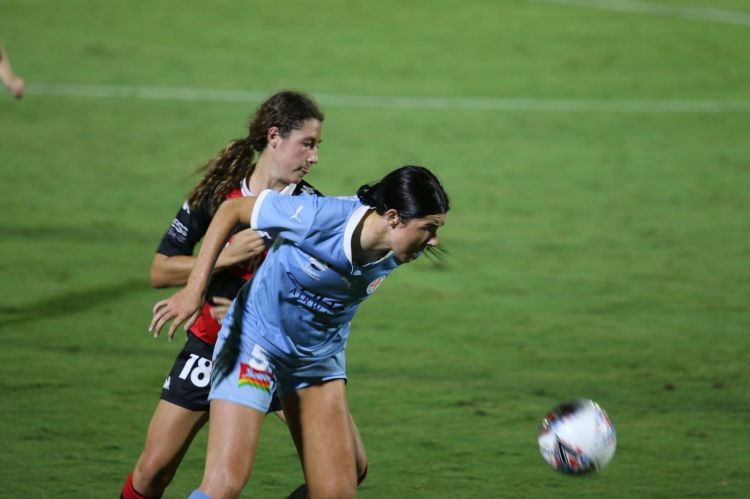
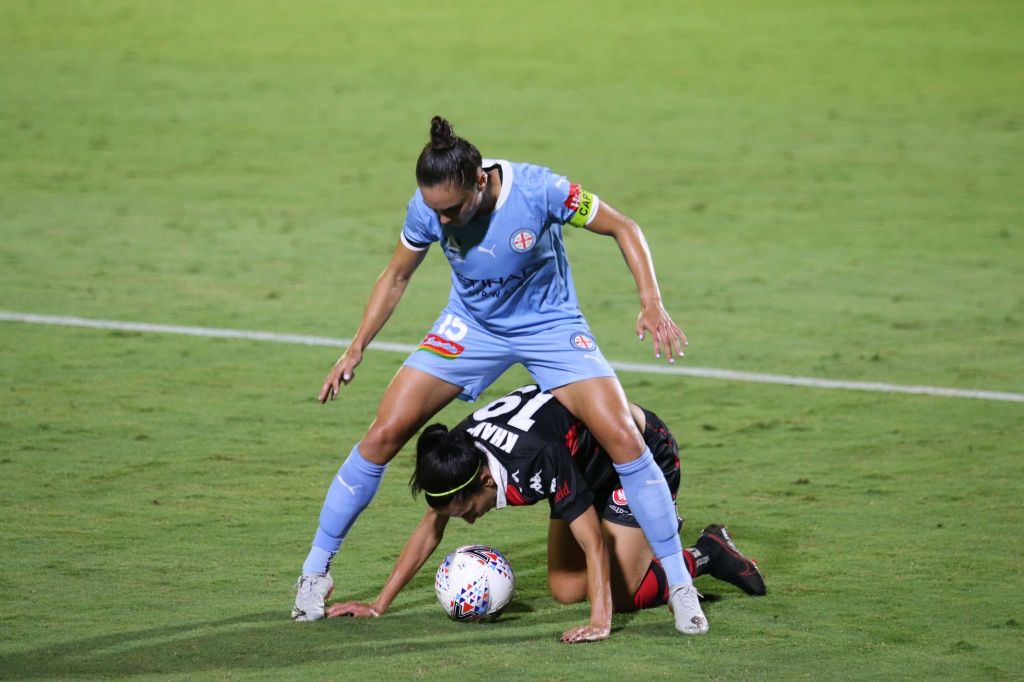
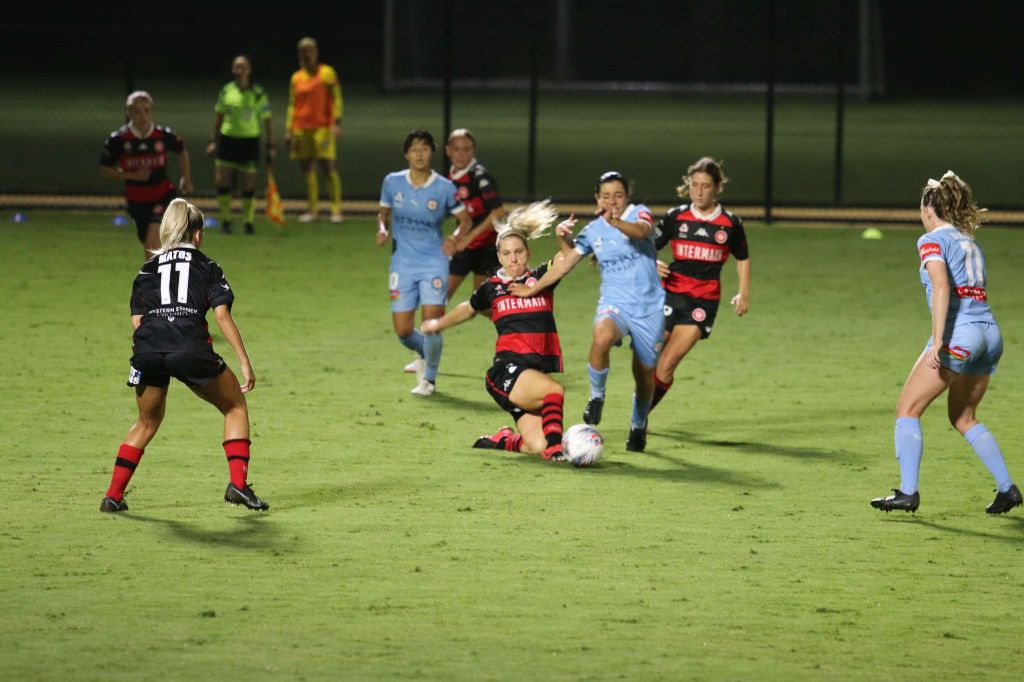
Australian superstar Sam Kerr grabbed a brace as The Matildas beat Chile in front of a record crowd for a stand alone women’s match Down Under.

Despite the East Fremantle born striker’s two goals, a fantastic debut from 25 year-old former Adelaide Crows Australian Rules star Jenna McCormick and another outstanding show from 19 year-old Ellie Carpenter, Australia will be far from satisfied with their victory. The Matildas were dominant for the vast majority of the game, but a combination of deep defending from La Roja and inconsistent passing accuracy led to a far from comfortable look to the scoreboard.

The first ever women’s soccer international to take place at Parramatta’s stunning new Bankwest Stadium saw an all time high of 20,029 spectators clad in green and gold in the Western Sydney city – a figure which comfortably beat the previous highest crowd for a Matildas home game of 16,829 at Newcastle’s McDonald Jones Stadium against Brazil in 2017. The home support were on their feet within two minutes as the Matildas took an early lead.

A free-kick, some twenty yards outside of the area, centrally located saw Emily van Egmond’s lofted ball chested down by Sam Kerr who turned and half volleyed past the Chilean keeper Christianne Endler. It was Kerr’s 29th goal in her last 31 games for her country.

Australia had all the ball and territory at this stage, indeed it took Chile twelve minutes to mount anything close to an attack. Daniela Zamora played the ball in and Camila Saez hooked the ball over Lydia Williams and into the net, but it was ruled out for offside.

The Matildas hit back once more and a superb ball from Caitlin Foord found Ellie Carpenter who scampered past several attempted challenges from the South Americans and earned a corner which was cleared.

Sam Kerr had Australia’s next chance when the green and golds earned a corner after Steph Catley’s attempted cross was charged down for a corner. The flag kick was met by McCormick’s header into Kerr. The Western Australian striker chested it down and turned but her shot was blocked.

Shortly afterwards, Kerr’s chipped pass found Catley on the left. The Melbournian played in Carpenter who, in turn saw Hayley Raso in space. Her ball resulted in Foord volleying over.

Australia almost paid the price for failing to add the second goal that their dominance deserved. Just after the half-hour mark, Maria Jose Urrutia’s outstanding cross was laid back to Daniela Pardo who fired her volley over the bar.

Before the break, the Matildas had three further opportunities. First, Carpenter fired in a low cross towards Kerr who was unable to get a shot away. Then, McCormick’s ball was met by Catley who headed wide. The ball was in the net in the closing stages when Raso’s ball was fired home by Kerr but she was offside.

Chile began the second half on the front foot. They earned three corners on the trot which Australia struggled to clear, but their lead remained intact, largely thanks to Francisca Lara’s shot being blocked and Carla Guerro’s header scrambled away.

Sparked by their narrow escape, Ellie Carpenter dribbled down the right and then came across the by-line but there was no end product. Australian frustration grew when both Hayley Raso and Sam Kerr were taken out off the ball, but no free kick was awarded for either challenge. Frustration grew further as an alarming lack in accuracy developed in the Matildas’s build-up play.

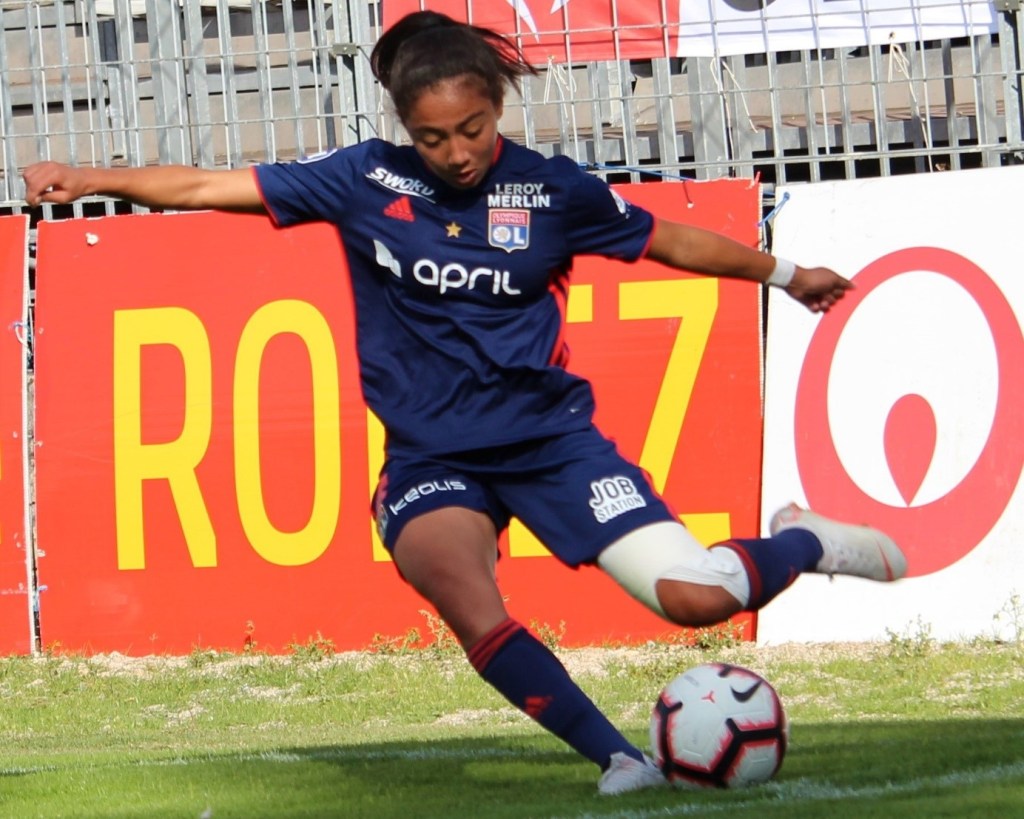
Above: Sam Kerr’s incredible goal-scoring record in 2019 continues. Photo: Ben Gilby

As the game entered the final quarter, it was Sam Kerr who produced the goods once more. Caitlin Foord played a delightful lofted pass inside her own half which landed at the feet of Kerr who advanced to a one on one with Endler in the Chilean goal and fired home. It was Kerr’s 40th goal in 40 matches for club and country in the calendar year 2019. She is now just ten goals away from becoming Australia’s all time leading goalscorer.

The second goal saw The Matildas’ quality improve briefly. Steph Catley laid back a pass to substitute Amy Harrison on the edge of the box, but her shot was over. Ellie Carpenter went on a trademark dance down the right, and laid the ball back to Emily Gielnik who miskicked in front of goal only for the ball to find Chloe Logarzo who missed with the goal gaping in front of her.

Buyoed by Australia’s inability to kill the game off with a third, La Roja had the better of the final exchanges. Carla Guerro hit a shot narrowly wide. With three minutes left, Daniela Zamora was played through beautifully by Camila Saez. Her effort was pushed away for a corner by Lydia Williams at full stretch. From the resulting flag kick, Saez was not picked up by either Carpenter or Logarzo and run in to power a free header past Williams.

Chile’s late goal served as a reminder to The Matildas that they need to kill teams off when they get the opportunity. For all the quality in the Australian side, they concede too many goals.

The two nations will square off again on Tuesday at Adelaide’s 16,000 capacity Coopers Stadium. Australia will need to up the urgency and increase the accuracy. If they can do that, there will only be one winner.

Teams:

AUSTRALIA: 1) Lydia Williams, 21) Ellie Carpenter, 4) Clare Polkinghorne, 2) Jenna McCormick, 7) Steph Catley, 10) Emily van Egmond, 3) Aivi Luik, 6) Chloe Logarzo, 9) Caitlin Foord, 20) Sam Kerr, 16) Hayley Raso. Subs: 12) Sarah Williams (GK), 18) Mackenzie Arnold (GK), 15) Emily Gielnik, 22) Amy Harrison, 23) Emma Checker.

Goals: Kerr 2, 71.

CHILE: 1) Christiane Endler, 2) Rocio Sato, 3) Carla Guerro, 18) Camila Saez, 4) Francisca Lara, 16) M-F. Mardones, 14) Daniela Pardo, 11) Yessenia Lopez, 20) Daniela Zamora, 9) Maria Jose Urrutia, 10) Yanara Aedo. Subs: 12) N. Campos (GK), 23) A. Canales, 5) J. Rey, 6) N. Lopez, 7) Y. Torrealba, 8) K. Arraga, 13) F. Piatilla, 15) S. Galaz, 17) J. Toro, 21) R. Balmaceda.

Goal: Saez 88.

Attendance: 20,029, BankWest Stadium, Parramatta.

Rovers Rollercoaster Ride Takes Upward Curve

In this first of a two part interview, Impetus editor Ben Gilby talks to Blackburn Rovers’ Head of Women’s and Girl’s Football/First Team Manager Gemma Donnelly about how the club have progressed in recent years and the relationship between the men’s and women’s sides at Ewood Park.

Blackburn Rovers are an example that hard work, effort and determination pays off. After rubbing shoulders with the top women’s clubs in the sport, the club experienced a challenging period, as the club’s Head of Women’s and Girls Football and Ladies manager Gemma Donnelly explains: It’s been a rocky road, it’s had highs and lows, probably not dissimilar to any football journey really. There are so many stories to tell, from being promoted from the old Northern Premier League into the National League. That was a momentous occasion which enabled us to compete with the likes of Arsenal and Chelsea to then the introduction of Super League of which, up until the last day, Blackburn were involved in all of the consultations and considerations into integration into the Super League, and at the time the club were just being sold from the Jack Walker Trust, so it didn’t happen for us as it was a little bit of an uncertain time. Consequently, the season after we were relegated from the division that sat just below the Super League because the majority of our players left to go to the Super League. Then we got promoted back again quite quickly having rebuilt. There was then talk of introducing Super League Two of which we were a consideration. Again, the club decided it was not the right time to do it, and so we got relegated again because all of our players went into Super League Two.”

Above: Blackburn Rovers Head of Women’s and Girls’ Football, Gemma Donnelly.
Photographer/Copyright Rachel Holborn – reproduced with permission by Blackburn Rovers Ladies.

It was at this difficult period that Donnelly took over the reigns of the first team: “It’s been five years of absolute highs and lows with winning the league and so many trophies to fall at the final hurdle in the Championship play-off. Then, with the changes at the FA and the requirements to get into what is now the Championship, it meant that if you won, your application had to be deemed suitable. We did the hard work of winning it for the third year in a row against all odds. It was then down to the club to make a decision as to whether we would move forward with a licence application having failed the year before. It’s just been a number of years of ups and downs. Now we’re in a position where we are in the Championship, it’s our first season. Yes, we’re finding it tough, but we need to learn a trait of fighting for every single point. It is a little bit stressful, but I’m enjoying it, as are the team, and we look to build towards becoming a greater force moving forward.”

When I asked Donnelly about what she considers have been the key to the club’s success over the past few seasons, she was clear: “Consistency of both team and staff. I don’t mean keeping everybody all of the time – you need to ensure you find a strong nucleus and continue to build. Never be afraid of change. There needs to be a “slowly, slowly” approach. We’ve had some really good managers at the club that have moved the club forward and combined with youth and experience with huge passion to drive the game. Of course the support from the football club which has been monumental in pushing us forward as well. All those factors are huge contributors to our success.”

Blackburn Rovers’ head of women’s and girl’s football is also clear about the importance of always pushing for more: “I firmly believe that you really need to have someone who is passionate at the front constantly nagging at people to drive it forward. Certainly for the past five years, that has been me, and I do not let up. I just keep going. We’re had some really tough times, but in that, we’ve enjoyed some amazing moments as well. Everyone that I have on board has aspirations to do as well as they can, and that aligns with my own aspirations.”

The team have had some great results in recent time, none more so than last season when a league and cup double was secured, and there were some memorable moments in the process: “It was nice to win the League Cup. It was away at Burton in a nice stadium. Crawley Wasps had had a really good season and we anticipated that they were going to be a really good challenge for us. For the first thirty minutes or so they were, but we kicked on to another gear and we outplayed them. They were a tough task, but it’s always good to win the League Cup and regain it as well as that’s extra pressure. In the league, bar the game against Sunderland, who finished second behind us, it was almost an unbeaten season again. Sunderland definitely gave us a kick up the bum (by beating Rovers 3-0). From the game after that, when I think we played Guiseley on the Tuesday afterwards, we were looking for a response from the girls. I remember standing in the changing room saying: ‘This can go either way, you know. If I were to change the team based on your performance last time, I would have to change every single one of you, as you were all dreadful against Sunderland.’ But I stuck with the same team and we won 5-0. It was a bit of a brutal performance really because we took no prisoners. That stands out for me. It was the comeback from a battering on the Sunday.”
I then turned to the relationship between the men’s and women’s sides of the club at Blackburn. Donnelly said: “My relationship with them (the parent, professional men’s club) is good, but as I alluded to earlier, I am constantly wanting more, because that is the nature of being a female – whatever you have got is not good enough. I look forward to the day when we are full time and training at the senior men’s training centre and we’re having lunch before or after them men and that all the staff are full time and we get to be in a position where we’re not scrapping around for resources and begging, stealing and borrowing from different departments. I think it will evolve as the exposure of women’s football increases. The club are hugely supportive, but they do not have a bottomless pit, so we’re very shrewd and resourceful with what we do have. I do dream about the players being full-time, and the staff being full-time and having our own training venue. Teams that are in that position are very fortunate and I would love to be there some day. I don’t know when that day will be, or if it will be at Blackburn, but that’s the dream.”

With Blackburn back in the second tier of the women’s game, I asked Donnelly about her aims for the season, “Our aim is not to get relegated. I hadn’t anticipated the success of the Women’s World Cup or the injection of some money from parent clubs, and how it would have an effect on domestic club football. If you’d asked me the same question at the back end of last season, I would have suggested we would have been a mid-table or top half of the season team. Yet it’s been a complete change over the summer. It’s  been a huge push-on from everyone else, so our target is not to be relegated and then to build on that. It’s going to be a scrappy season but I have every faith that that’s what we are going to do.”

Looking at the Championship more widely, Donnelly observed: “With the money that has been injected, there is now a wide hybrid range of clubs in the division. You’ve got some clubs offering full-time contracts with part-time players as well, so their players train all week at their parent club and use their facilities. The part-time players come in during the evening for training two or three times a week. To the other extreme, there are clubs in the division with no players on contracts and just some expenses paid, some not paid at all, so there’s a huge difference between the top end and the bottom end. Money can attract the right type of player in terms of playing quality, but it can also attract the wrong type of person too – the type of person who is only in it for the money. That’s football, isn’t it!”

Don’t miss the second part of the interview next week, where Gemma Donnelly gives her views on the advantages and disadvantages of the post World Cup growth of the women’s game and what her priorities are for the future of Blackburn Rovers Women and the sport in general.

Follow us on Twitter – @impetus49255112 and on Instagram at https://instagram.com/impetuswomensfootball.

Ben Gilby is the editor of Impetus and has over fifteen years experience in voluntary media officer roles within the sports of Football and Rugby Union, has appeared on BBC Radio Cornwall and BBC Radio Norfolk sports shows several times and published the book ‘The Game: Tales From A Season Travelling Around The Rugby Union Grounds of South-East England’.

Famous Night For Glorious Glasgow City

Glasgow City 0-2 Brondby IF

Aggregate: 2-2. After Extra Time, Glasgow City win 3-1 on penalties.

by Ben Gilby

Glasgow City gained a famous victory over a side who reached the semi-finals of the Women’s Champions League as recently as 2014/15, but they had to do it the hard way.

Goalkeeper Lee Alexander was in inspired form, saving four penalties in the shoot-out and making a number of stunning stops throughout the night as the thirteen in a row Scottish champions made it through to the last eight for the second time in their history.

City came into the tie after a sensational 2-0 first leg success in Denmark thanks to a Sam Kerr strike and an own goal from Brondby keeper Katrine Abel. However, the Danes showed determination from the off to gain revenge.

Brondby started strongly, and after just four minutes, they forced a great save from Lee Alexander from Nicoline Sorensen. Only a minute later, the visitors were back in the tie thanks to Nanna Christiansen who directed a magnificent header across Alexander and into the far corner.

Glasgow City showed immediate signs of a reply through Megan Foley’s run down the left which took her past several would-be tackles before she was finally halted.

The Danes gradually took control in the second quarter of the half, and almost levelled the tie on aggregate when Frederikke Lindhardt’s teasing cross was narrowly missed by Josefine Hasbo. A further chance followed after twenty-three minutes when Christiansen’s cross was headed back towards her by Lindardt and the resulting thumping volley was saved magnificently by Alexander. The Glasgow City keeper was called into action just three minutes later when she snaffled Julie Tavlo Petersen’s header.

Glasgow City were struggling to get out of their own half and only offered sporadic threats. Clare Shine hooked an effort over the bar, but as the half entered its final ten minutes the Danes finally got the second goal that their dominance deserved. Lindhardt combined with Louise Winter Kristiansen and Nanna Christiansen in a magnificent build up before firing into the far corner. Brondby had one further opportunity before the break when Caroline Pleidrup’s cross was saved by Alexander.

Glasgow City boss Scott Booth took the opportunity at half-time to tighten up his defence and a fired up side came out to enjoy a greater percentage of possession in the second half. Within four minutes of the restart, Kirsty Howat created a great opportunity and found Hayley Lauder whose shot was fired just over the bar. Clare Shine fashioned another opportunity shortly afterwards but her effort found the side netting.

The game was now tight with far fewer opportunities, but both sides had golden opportunities to seal a place in the quarter-final in the final five minutes. Nicoline Sorensen was clean through, but Lee Alexander dived to save the day once more despite it appearing at that it would be far easier to score than miss. Then, Megan Foley’s strike looked to cannon off of Emilie Henriksen’s arm as she jumped. The referee didn’t see anything untoward, and the final opportunity of normal time passed.

With the tie level at 2-2 on aggregate, the drama moved into extra-time. Chances were now fewer and further between as both teams looked to stay solid. A Glasgow City free kick just before the halfway mark of the extra half hour saw Jenna Clark’s header come off of the underside of the bar. Sam Kerr’s attempted follow up was smuggled away by the Danes. Then, in the final minute of extra-time, Glasgow City were awarded a free kick, but Leanne Ross’ effort went wide.

So, to penalties, and once more it was the Scottish international keeper Lee Alexander who produced a succession of sensational saves to earn her club a stunning win.

Leanne Ross stepped up for the first penalty for City, which she fired home. Nanna Christiansen, who was excellent throughout levelled matters at 1-1. Kirsty Howat’s effort was saved, but in a matter of minutes her sorrow turned to joy as Alexander saved Julie Tavlo-Petersen’s effort brilliantly to the right. Substitute Eilish McSorley stepped up to put City 2-1 up. Freja Abilda’s effort was next to be saved by the outstanding Alexander as she stretched to the right to keep the shot out. A slight bout of nervousness returned to the Petershill Park faithful when Megan Foley’s penalty effort was saved to the right by Katrine Abel. But cometh the hour, cometh the hero once more as Lee Alexander threw herself to the left to push away Louise Winter Kristiansen’s penalty. Up stepped Jo Love to gleefully hit the winning penalty home.

It is an incredible achievement for a part-time team to make the Quarter-Finals of the UEFA Women’s Champions League. Glasgow City have a history of punching above their weight and achieving great things. Last night was arguably one of their greatest achievements. However, with Arsenal, Atletico Madrid, Barcelona, Bayern Munich, Lyon, Paris St. Germain and VfL Wolfsburg the other sides in the last eight, there could be an even more famous night in the offing for Glasgow City when the Quarter-Finals come round in March.

Teams: GLASGOW CITY: 29) Lee Alexander, 2) Rachel McLauchlan, 4) Hayley Lauder, 6) Jo Love, 9) Kirsty Howat, 10) Clare Shine, 11) Nicola Docherty, 12) Jenna Clark, 16) Leanne Ross, 18) Sam Kerr, 23) Megan Foley. Substitutes: 25) Erin Clachers (GK), 14) Hayley Sinclair, 15) Nicola Reid, 19) Joanne Paton, 20) Carly Girasoli, 21) Jordan McLintock, 24) Eilish McSorley.

BRONDBY IF: 1) Katrine Abel, 4) Linnea Svensson, 6) Josefine Hasbo, 8) Emilie Henriksen, 9) Nanna Christiansen, 10) Louise Winter Kristiansen, 13) Kamila Karlsen, 15) Frederikke Lindhardt, 16) Nicoline Sorensen, 17) Julie Tavlo-Petersen, 24) Caroline Pleidrup.

Goals: Christiansen 5, Lindhardt 36.

Penalty Shoot-Out:

GLASGOW CITY:

Leanne Ross (scored), Kirsty Howat (saved), Eilish McSorley (scored), Megan Foley (saved), Jo Love (scored).

BRONDBY IF:

Nanna Christiansen (scored), Julie Tavlo-Petersen (saved), Freja Abilda (saved), Louise Winter Kristiansen (saved).

Glasgow City: Inspiring Girls & Women

Laura Montgomery co-founded Glasgow City in 1998 and they have become arguably the most successful women’s football in Britain. With the team just sealing a thirteenth consecutive Scottish title and tonight hosting Danish side Brondby for a place in the Quarter-Finals of the UEFA Women’s Champions League, we are delighted that she agreed to talk exclusively to Impetus editor Ben Gilby in the middle of such an historic week for the club.

Glasgow City are a phenomenon in the world of women’s football and the fact that they continue to be so in this day of increased funding in their women’s sides from Scotland’s biggest men’s teams merely emphasises how outstanding their achievements are. Tonight, they host Brondby, three times semi-finalists in UEFA’s women’s club competitions (most recently in 2014/15), and hold a 2-0 lead from the first leg in Denmark. They stand on the brink of equalling their record of making the Quarter-Finals of European women’s football’s premier competition (a stage they previously reached in 2014/15 when Paris St. Germain defeated them in the last eight). How can a standalone women’s team remain at the top of the tree?

For Montgomery, it’s because Glasgow City place huge emphasis on their passion for “advancing girls and women and their role in society. That runs through everything we do. Players coming to us know that they won’t be coming to a club that suddenly lose funding simply because the men’s side are not doing well, or can’t train or play because a boys’ under twelve team need a pitch.” She points to a TEDx talk she gave in 2014 where she stated: “Quite simply, you can’t be what you can’t see without visible role models. How do girls grow up thinking they can be anything other than sexualised objects, which is how the media currently portray women?” The ‘you can’t be what you can’t see’ message was famously displayed on the back of Glasgow City’s away shirt in 2017 – a reference to the lack of coverage of women’s football within the Scottish media.

Whilst improvements in coverage during this summer’s Women’s World Cup, Montgomery is greatly frustrated by the fact that “the Scottish media has reverted to type since the World Cup. It’s all gone back to what it was before. I was interviewed on the radio recently and was asked what I thought about the attendance figures for the Women’s Scottish Cup semi-finals. My response was that I was not surprised at all – there was absolutely no publicity for the games in the media at all. We have a huge challenge of getting TV and newspaper interest.”

Glasgow City were formed in 1998 by Laura Montgomery and Carol Anne Stewart. “Carol played senior league women’s football having played at university. I wasn’t able to play football at primary school because I was a girl. I started a girls’ team when I was at high school, but we had very few other teams to play against. We only had about six games in all my time at high school. I played at university and was asked to come to Maryhill and play for them, as was Carol Anne. I tore my ACL, and so the two of us spent time talking about how we could do things better for women’s football. Better facilities, sponsors. We were fortunate at that time that the structure in women’s football in Scotland was changing – it was an opportune moment; now or never. At that time, there was a first division and a regional second division with only one team getting promoted. The structure then changed with more regional divisions at the second level. You could go straight into the second level. So, we formed Glasgow City, entered into the league and won that division in our very first year. The next year, our first in the Premier saw us finish fifth. We’ve never been lower than second since.”

Above: Glasgow City badge. Photo: Ben Gilby

The story is one that should inspire all girls that they can achieve anything they want with determination. “It comes down to everyone involved at the club having high standards. Carol Anne and I are successful businesswomen and that mentality goes into Glasgow City. We pioneered so many things that are now common place in women’s football. We had the first full-time head coach, the first club to insist on our head coach holding a UEFA pro licence, the first to transfer a player for money. We were the first women’s club to use sports science. We want to train as often as a professional club – up to five times a week. We also played a major part in getting some television coverage for women’s football in Scotland. BBC Alba (the BBC’s Scots Gaelic language TV channel) followed us for a year in 2011 for a documentary, and on the back of its popularity, they got involved with covering women’s football.”

Glasgow City’s continued success comes despite the fact that Scotland’s biggest men’s sides Celtic, Rangers, Hibernian and Heart of Midlothian are investing more money than ever in their women’s teams. “Celtic pay their women players. They have done for a number of years. They are able to offer excellent facilities which they don’t have to pay for as it all comes from the main club. They can offer sports science and administrative support. The men’s club provide staff for marketing and sponsorship. Yet, we’re still achieving with just a fraction of the potential financial and human input that those sides have. We can offer a girls and women centred club, which they can’t.”

Related to this, Montgomery sees this season as possibly the finest in the club’s history. Every league match has been won, ninety four goals scored, with just seven conceded. On top of this is the European run. “It’s our best ever run. Reaching the last sixteen is punching above our weight. Winning 2-0 away from home in the last sixteen to Brondby, who have made the semi-finals before is magnificent. We have won away from home before, at Valur Reykjavik in the last thirty-two – but they don’t have the history that Brondby have and it’s a whole round further on.”

All this comes on the back of a positive showing internationally for the Scottish women’s squad. “We had a difficult group at the World Cup, with Japan and England”, Montgomery observes, “but we competed extraordinarily well. The Argentina game was one we hoped to win. We all know what happened in the end, but the experience will help the team to come of age. We fell just short, it’s a great learning curve for the team though. That squad will be together for the European Championships next year and also for the next World Cup, so it can only produce positives.”

As our discussion moved towards its end, I asked Montgomery for her opinions on the overall state of the women’s club game in Scotland at the present time: “Our biggest weakness is that we are geographically next to England. The strongest, most competitive league in women’s football is in England. It’s the league that players want to play in – the money is there. When we were in Denmark, I spoke with the Brondby staff and they were saying how their players want to play in England. Long term, I think it could bite England on the bum – the more overseas players that come in will impact the national team. In Scotland, we, and Glasgow City of course are included in that, shift players to England, but we don’t get any money for them. We still have to produce players to replace them, but don’t get the recompense. The main strength is our resilience!”

Glasgow City have, in the past made representations to the FA in England to join the league set up south of the border. Montgomery is clear that “We’d love to do that, but in order to do it, we’ve been told we would have to become a member of an England County FA. That would be very challenging. There’s also the fact that in Scotland we have two very powerful men’s teams – Celtic and Rangers. If there was the precedent of a women’s team joining the English league system then it would make it very difficult for the FA to refuse Celtic and Rangers, so I think the powers that be would refuse.”

The founding beliefs, status and achievements of Glasgow City are inspirational – primarily for girls and women, but also more widely for all who hold dear the possibilities and status that sport offers individuals and groups in society. Glasgow City are a club worthy of respect and of their success. 

Glasgow City’s UEFA Women’s Champions League Last 16 Second Leg tie v Brondby can be seen live on BBC Alba tonight. Catch it from 7:30pm via BBCiPlayer, Channel 161 Virgin Media, Sky Channel 141 in Scotland or 169 rest of UK, Freesat Channel 9, Freeview Channel 7 Scotland.

Impetus will have a report on the game tomorrow.

Super League Sunday

Impetus editor Ben Gilby gives his views on two of this afternoon’s clashes in the Barclays FA Women’s Super League as Arsenal clinched a huge win over Manchester City and Everton defeated Brighton & Hove Albion:

Arsenal 1–0 Manchester City

Arsenal condemned Manchester City to their first Super League defeat after a deserved victory at Meadow Park.

The home side came into the game desperate to avoid a second straight league defeat against a fellow title challenger after going down to Chelsea last time out. A buoyant City arrived at Meadow Park with Georgia Stanway back in the starting line-up, and a welcome return for Lionesses World Cup hero Ellen White on the bench, although Keira Walsh was missing after receiving a three match ban for her highly controversial sending off in the Continental Cup defeat at rivals Manchester United last weekend.

The Gunners had the vast majority of the opening quarter; dominating the midfield in particular. Vivianne Miedema had the first real chance firing a shot over the bar. Five minutes later, Jordan Nobbs found Lisa Evans on the right of the box after some delightful build-up play from van der Donk. The Scot’s powerful effort was just over Roebuck’s crossbar.

City crucially weathered the early storm and, with twenty-eight minutes gone offered their first effort on the home goal. Canadian World Cup star Janine Beckie broke through, but with support lacking was forced to go on her own and her shot was fired over. However, buoyed by this the league leaders’ Jill Scott won a firm tackle as a statement of intent before Arsenal cleared the danger.

The visitors’ defensive shape also matured as the half went on with Arsenal being forced to play across them rather than through the City defence. The only opportunity for Arsenal in this spell was presented to them by the visitors when Gemma Bonner’s attempted pass back to Roebuck on the right hand side of the box was alarmingly short, but the Lionesses keeper recovered well under pressure from Beth Mead.  

Beckie had another effort for City when her cross was parried. Arsenal failed to clear properly and Demi Stokes followed up by heading wide. This failure to score was punished just seconds later as Vivienne Miedema fired home having been played through by a delightful Kim Little ball. Bonner and Houghton were slightly out of position and the Dutchwoman took advantage to score with two minutes of the half remaining. It was the only goal of the half.

Arsenal controlled the vast majority of the second half in terms of possession and territory, but City’s well organised defence held the Gunners at bay. The visitors had little to offer coming forward – largely due to a combination of Keira Walsh’s absence and Arsenal’s dominance on the ball. Georgia Stanway was largely anonymous.

Ellen White came on to make her Manchester City debut for Janine Beckie with twenty-four minutes left for her first appearance since her glorious World Cup in the summer, but she was never provided with a pass to make her mark on the occasion.

Jordan Nobbs fired an effort over as Arsenal continued to have the better of the exchanges. The final five minutes saw City offer their only sustained period of pressure. Stanway put in a number of outstanding crosses, but to no avail.

Jordan Nobbs could have put the game to bed in stoppage time when Miedema squared the ball in the middle of the area, but her shot went wide.

Arsenal’s victory saw them leapfrog Manchester City to hit the summit of the Barclays FA Women’s Super League on goals scored as the Sky Blues fell to a second defeat in a row.

ARSENAL: Manuela Zinsberger, Lisa Evans, Leah Williamson, Jen Beattie, Kate McCabe, Jordan Nobbs, Lia Walti, Kim Little, Danielle van der Donk, Vivianne Miedema, Beth Mead. Subs: Katrine Veje, Emma Mitchell, Jill Roord, Louise Quinn, Leonie Maier, Pauline Peyraud-Magnin (GK).

Scorer: Miedema 43.

MANCHESTER CITY: Ellie Roebuck, Matilde Veiga Santiago Fidalgo, Steph Houghton, Gemma Bonner, Demi Stokes, Tessa Wullaert, Jill Scott, Caroline Weir, Lauren Hemp, Georgia Stanway, Janine Beckie. Subs: Megan Campbell, Pauline Bremer, Tyler Toland, Jess Park, Lee Guem-Min, Ellen White, Karima Benameur.

Referee: Rebecca Welch.

Attendance: 2,424.

******************************************************************************************

Everton 2–0 Brighton & Hove Albion

Sunny Southport’s Haig Avenue was the venue for Everton to finally end a run of three consecutive defeats.

Early chance three minutes, Chloe Kelly plays Hannah Cain through, but Brighton clear. Four minutes later, the pair repeated their combination play, this time it was Kelly whose effort was saved.

Brighton’s first chance arrived on the ten minute mark when Aileen Whelan danced through the Everton midfield, and played the ball across to Maya le Tissier whose shot was wide.

Everton had the best of the opening quarter which was generally a poor period of play. Both sides being let down by the final ball. Chloe Kelly stood out head and shoulders from the rest of the players on the park.

Brighton had a great chance when Whelan’s surge was halted cynically by Maeva Clemaron. Brighton claimed the Everton player was the last defender, but only a yellow card was awarded. Danielle Bowman’s free kick was tipped over by Tinja-Riika Korpela. The resulting corner came to nothing. The longer the half went on, the more Brighton came into the game, with Hope Powell’s charges noticeably pressing higher up the pitch to try and nullify Everton’s plan of playing out from the back. However, any hope of producing any sustained pressure on the hosts was let down by ponderous build up play which allowed Everton to formulate their defensive and snuff out the danger.

The final chance of the half fell on the counter attack to Brighton with Kayleigh Green’s shot blocked by Korpela before the home side scrambled the ball away as a thoroughly scrappy first half ended 0-0.

First chance of the second half came after fifty-one minutes when Megan Walsh in the Brighton goal did well to rush out to narrow the angle for Simone Magill who was clean through, and won the battle as the shot went wide.

Chloe Kelly’s huge talent was finally rewarded with her fourth goal of the season after fifty-seven minutes. A jinking move which saw her link up with Cain and Magill before curling a shot into the bottom right hand corner. Much more of this and it is surely only a matter of time before the 21 year-old earns a second England cap.

Everton could have doubled their lead when a pacey counterattack saw Inessa Kaagman’s effort turned away for a corner. From the flag kick, Esme Morgan thundered a header in for 2-0 after sixty-seven minutes.

Ini-Abasi Umotong had two great chances in the final ten minutes to get the Seagulls back into the game. The first was headed high and wide from in front of goal, and the second, from her bursting run through saw a disappointing shot go wide. Kayleigh Green was a threat throughout for Brighton, but her team’s laboured build-up play ensured her presence could not deliver the goals that, with more pace and positivity could have materialised. This was a game that the visitors could have got something out of, but in the end it was a fourth straight defeat for the Sussex side – a run which will only come to an end when they become more potent in front of goal and Everton will be delighted with the win.

EVERTON: Tinja-Riika Korpela, Esme Morgan, Kika van Es, Gabrielle George, Danielle Turner, Maeva Clemaron, Lucy Graham, Hannah Cain, Inessa Kaagman, Chloe Kelly, Simone Magill. Subs: Kirstie Levell (GK), Taylor Hinds, Chantelle Boye-Hlorkah, Elise Hughes, Abbey-Leigh Stringer, Molly Pike, Megan Finnigan.

Scorers: Kelly 57, Morgan 67.

BRIGHTON & HOVE ALBION: Megan Walsh, Matilde Lundorf Skovsen, Danique Kerkdijk, Victoria Williams, Felicity Gibbons, Danielle Bowman, Maya le Tissier, Ellie Brazil, Lea Le Garrec, Aileen Whelan, Kayleigh Green. Subs: Bethan Roe, Kirsty Barton, Ini-Abasi Umotong, Kate Natkiel, Amanda Nilden, Sophie Harris (GK), Emily Simpkins.

Referee: Jane Simms.

Wilson Sees Bright Future For Shropshire’s Saints

Impetus editor Ben Gilby spoke exclusively to TNS Women’s manager Lawrence Wilson about his side who are linked to the perennial Welsh champions, but who are based in Oswestry and play in the English women’s football pyramid.

The New Saints (TNS) Ladies play in the FA Women’s National League Division One Midlands. The club, based in Oswestry, Shropshire are partner club to TNS FC, who have won the Cymru Premier for the last eight seasons, and enjoyed regular European football.

TNS’ Ladies manager Lawrence Wilson takes up the story of how the women’s side was formed. “It all began in 2002 when the club was formed by John Parry and John Lloyd. John Parry remained involved with the club until 2011 taking the Saints to the Midlands Combination League before leaving the club. Both had their daughters playing and there were no women’s clubs in North Shropshire at the time, so created a partnership with TNS to use the name. A couple of seasons later the club merged with Shrewsbury Town Ladies, both were competing for the best players in the county and created one leading club, with this being re-named TNS Shrewsbury. This then had girls feeding directly out of the Shrewsbury Town Girls Centre of Excellence. The club then changed its name to TNS Shropshire, with Shrewsbury Town having little involvement, so the name change meant that the club was more independent. In 2014/15 there was a restructure changing the branding to The New Saints Ladies (TNS). The marketing and media side would take the forefront in the promotion of the club and developing links with other clubs and schools in the area. This would prompt the introduction to more age groups at the club adding to the youth section.”

 With the Men’s side of the club being hugely successful in the Welsh league’s top flight, it was never a consideration for TNS Ladies to play in anywhere else than the English women’s pyramid system, as Wilson emphasises: “The club is based in Shropshire the club felt it was easier to play in England.”

Above: The New Saints Ladies manager Lawrence Wilson. Photo: Stewart Bloor.

Playing in the fourth tier of the women’s game has many challenges, but at the present time, the TNS coach identified training opportunities as one of his biggest difficulties: “We only train once a week at present time due to our pitch is constantly in use with all TNS teams, which is great to see for the whole club.” Despite pitch access issues, there are major benefits of the links with the men’s club as Wilson explains: “At the start of 2018/19 season, TNS Ladies became a part of the TNS Foundation to create a stronger relationship between the men’s and ladies section, this will hopefully develop even more over the coming years.”

With the TNS starting the new season in National League Division One Midlands positively, Wilson has high hopes for 2019/20: “We have started this season very well only losing two games so far, our aim is to finish in the top four which I believe that is where we should be finishing each season. We are also aiming to get to the second round of the FA Cup. We reached the fourth round in the 2017/18 season breaking records twice as we hadn’t gone past the second round before, so it would be marvellous to go a long way in the competition again.”

The TNS manager identifies two ways in which his club have been boosted in achieving these aims: “Since the Women’s World Cup, we have had new players come and join the club from all ages from under 12s up to the first team. I hope this keeps developing as my plan is to keep generating more girls teams for TNS Girls and Ladies section. Additionally, being on the border of Wales we do attract Welsh players to come across the border. Within our first team and our development team, we have eight Welsh players, with a couple of them having played for Wales at younger age groups.”

Above: TNS Players emerging from the changing rooms. Photo: Permission for use from Stewart Bloor.

Wilson is firmly of the opinion that any success that the club gets has to be sustainable, and he is clear as to the best way of achieving that:

“I believe creating the right atmosphere and ethos at the club which I have tried to in bed since I took over as manager, from having all of the girls’ teams playing the same system as the first team from under 15s upwards. This way, when players and teams move up they already know what is expected and it goes hand in hand. Having this an important factor in having the girls keep producing the talent. One day these players will come through the ranks and get into the first team. But, like in any team sport having a great team spirit and morale is key as this will pull you through matches as everyone knows that there’s is a togetherness amongst everyone.”

On the whole, Wilson is positive about future of both the wider women’s game and that of The New Saints. “Women’s football is on the rise big time it’s only going to keep growing, we will start to see some very good young players coming through to the England squad of the next couple of years. The plan for TNS is to keep growing by having more youth teams at all age groups. That is very important, but the main aim for me in that period is to gain promotion to the third tier of the women’s game (FA Women’s Northern Premier). If we can achieve this, it would be massive for us, particularly in relation to growing our player pool compared to other teams.”

Follow us on Twitter – @impetus49255112 and on Instagram at https://instagram.com/impetuswomensfootball.

Ben Gilby is the editor of Impetus and has over fifteen years experience in voluntary media officer roles within the sports of Football and Rugby Union, has appeared on BBC Radio Cornwall and BBC Radio Norfolk sports shows several times and published the book ‘The Game: Tales From A Season Travelling Around The Rugby Union Grounds of South-East England’.

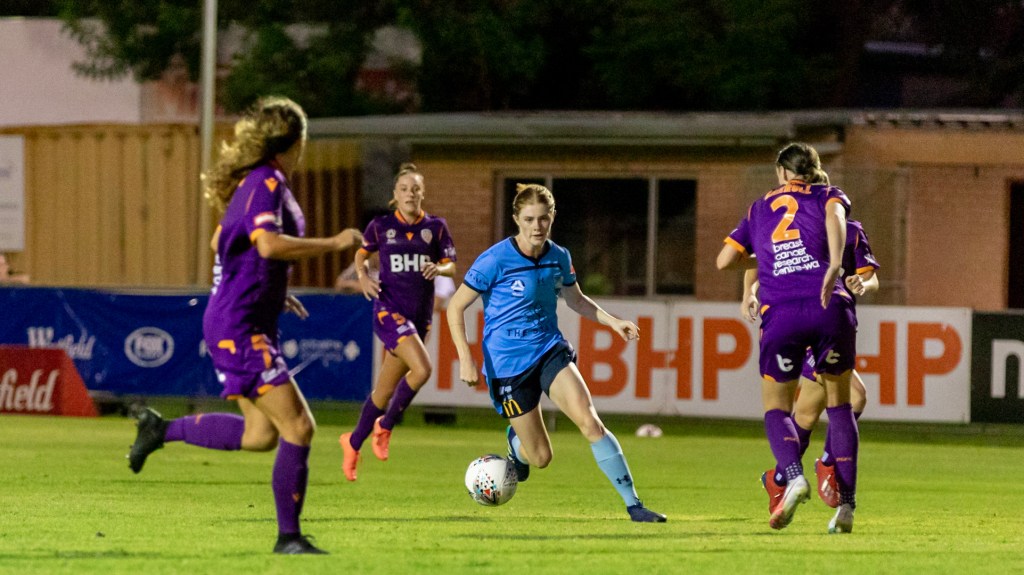
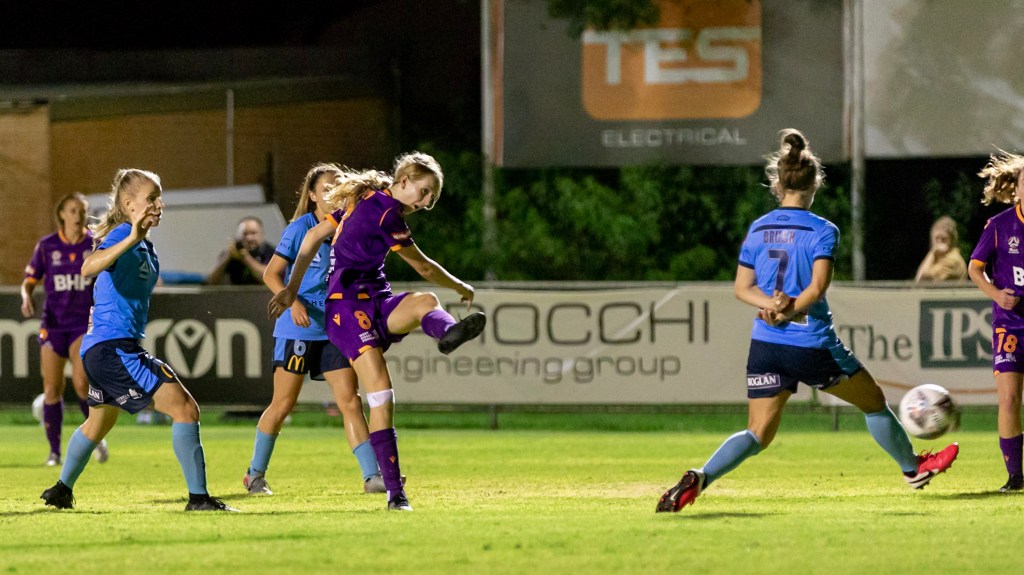
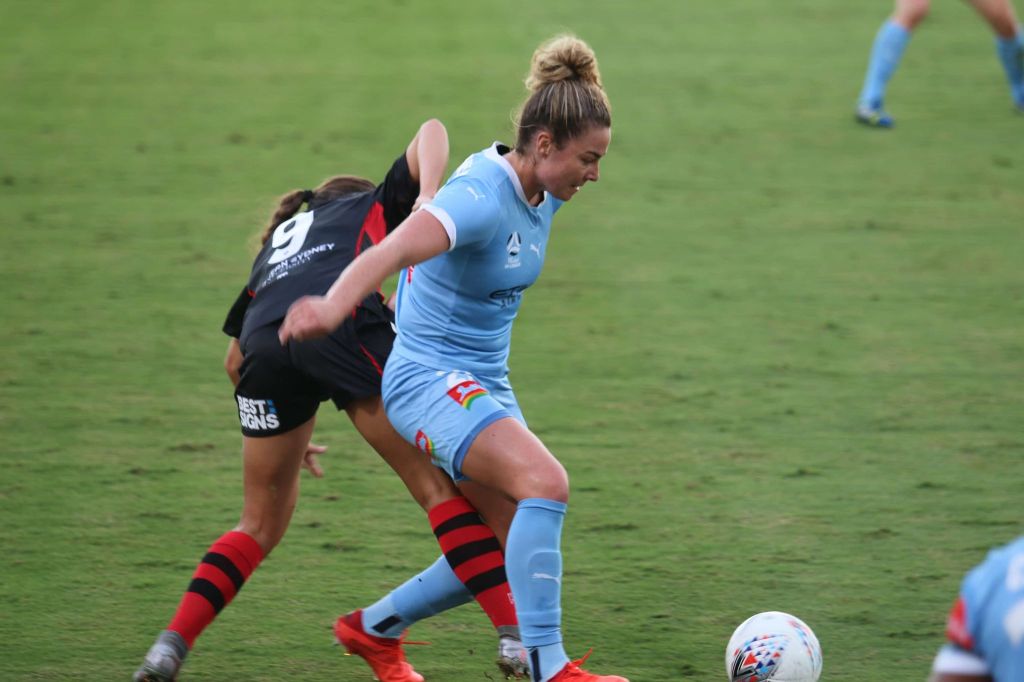
W League Announces 2019/20 Schedule

by Ben Gilby

The Westfield W League has released its fixtures ahead of the 2019/20 season which kicks off between 14-17th November. With reigning champions Sydney FC, minor premiers Melbourne Victory and star-studded Perth Glory recruiting well plus renewed hope around the nation’s other sides, excitement is building as a what looks like a thrilling season gets closer.

Defending champions Sydney FC open with a blockbuster at home to minor premiers Melbourne Victory at Netstrata Jubilee Stadium (Kogarah Oval). Last season’s grand final runners-up Perth Glory open their campaign away to Canberra United. The capital city based side will be looking to produce a better run of results in 2019/20 after winning just three matches last time round. The other two matches in the opening round see Western Sydney Wanderers host Adelaide United on opening night (14th November) with Newcastle Jets hosting Melbourne City. Brisbane Roar receive a bye before playing their opening game at home to Melbourne Victory on 21st November.

Above: Perth Glory will be hoping to go one better than last season when they lost in the Westfield W League Grand Final to Sydney. Photo: Ben Gilby

The competition will see ten matches staged as double header (men’s) A League and W League (women’s) matches between the same sides with the first of these being Western Sydney Wanderers’ home game with Newcastle Jets at the brand new 30,000 seater Bankwest Stadium.

Other key dates for the season see a repeat of last year’s Grand Final in Week Three when Perth Glory host Sydney FC at Dorrien Gardens. The Melbourne derby dates are 12th December at Melbourne City’s home ABD Stadium and on 13th February at Lakeside Stadium with Victory at home. Western Sydney Wanderers host Sydney at Parramatta’s Bankwest Stadium on 20th December, with the Sky Blues hosting their cross city rivals at Cromer Park on the Northern Beaches on 13th February.

The final round of regular season matches take place between 27th February and 1st March with Adelaide United hosting Newcastle Jets, Melbourne Victory taking on Sydney at the 53,000 capacity Marvel Stadium, Perth Glory will be at home to Western Sydney Wanderers and Melbourne City welcome Brisbane Roar at the 30,000 seater AAMI Stadium. Canberra United play their final game the previous week away to Brisbane Roar, having being allotted a bye in the final week.

The Semi-Finals take place on 14th and 15th March 2020 with the Grand Final the following weekend.

Impetus will offer a full team-by-team preview of the new campaign ahead of the W League’s big kick-off and offer regular reports and updates once the season gets underway.

Follow us on Twitter – @impetus49255112 and on Instagram at https://instagram.com/impetuswomensfootball.

Ben Gilby is the editor of Impetus and has over fifteen years experience in voluntary media officer roles within the sports of Football and Rugby Union, has appeared on BBC Radio Cornwall and BBC Radio Norfolk sports shows several times and published the book ‘The Game: Tales From A Season Travelling Around The Rugby Union Grounds of South-East England’.

In My View

From the Tweets of Daisy Wildsmith. This week, Daisy reviews the Manchester derby clash in the Continental Cup.

The glorious irony of chants at football matches. United fans began chanting how Mary Earps was “England’s Number one” just seconds before an outstanding save from Ellie Roebuck. They also pressed for Katie Zelem to take Demi Stokes’ England place just before she completely fluffed a corner.

For me, City were the stronger team throughout. It appeared that United chased City players around the pitch. Too much power on a couple of crosses and a silly decision from Janine Beckie that scuppered the Sky Blues’ chances.

United’s tactics of playing deep worked in their favour, and City continued to spurn opportunities.

Keira Walsh’s sending off for me was really harsh – not a straight red. United’s opening goal came from another harsh decision from the referee. I didn’t think Keira Walsh committed a foul at all, and as a direct result, Zelem’s free kick flew into the top corner. The second United goal was down to a lack of communication in the City defence which allowed Hanson’s cross to find Sigsworth who couldn’t miss.

Despite Jill Scott and Lauren Hemp giving it everything, City simply could not get back in it. For United, I’ve always had a lot of time for Jane Ross – she has a great professional attitude.

A win for Manchester United is good for women’s football. Having a Manchester United side beat a Manchester City side is always going to draw attention. It makes for a more interesting and competitive league as well. Two more Manchester derbies are on the horizon too. Plenty of fun and games ahead!

Follow us on Twitter – @impetus49255112 and on Instagram at https://instagram.com/impetuswomensfootball.

Daisy Wildsmith is a regular contributor to Impetus and is a women’s football supporter from the West Midlands.

AIK Women – Breeding Ground For Success

by Ben Gilby

AIK (pronounced “Orr-Ear-Kor”) are based in Solna, a city around seven miles outside of Stockholm. Their men’s side were formed back in 1891 and play home matches at the National Stadium (firstly the Rasunda, now Friends Arena). The women’s side, AIK Fotboll Dam presently play in the Elitettan, the second tier of the women’s game in Sweden. The top of the division this season has been exceptionally strong with up to six teams chasing promotion to the top tier of the Swedish women’s game, Damallsvenskan.

Impetus editor Ben Gilby spoke exclusively to AIK Fotboll Dam’s head coach, Robert Svanström about his club and players, plus the historic and contemporary state of the women’s game in Sweden, one of the world’s strongest nations in the sport.

Svanström firstly outlined the status of the wider club: “AIK is one of the biggest clubs in Sweden if you measure it by supporters and also in success in different sports. The men’s team get regular crowds of almost 20,000, which, in Swedish club football, only two other sides come anywhere close. The club is probably most known for football but has also has success in Ice Hockey, Floorball, Bandy, Wresting and some more sports. That’s not unusual in Sweden that clubs has several sports under the same name. The club was founded in 1891 and has been successful in football over the years winning the Swedish men championship twelve times (first time 1900 and the latest in 2018). The AIK Women team played their first game in 1970 and having fourth position in the top tier Damallsvenskan in 2008 as their best result.”

Above: AIK Fotboll badge on their distinctive black shirts with yellow trim. Photo: Ben Gilby

In terms of their overall relationship with the men’s AIK side, Svanström explained: “We are two teams in the same club and of course we are getting support from the men’s club. It’s important for the club to represent on the women side and we are having enough financial support to play in the division we are right now, but of course we could need more to play in the highest division. In terms of playing matches at the men’s stadium, we had a game at the Friends Arena (54,329 capacity) in May against Uppsala, but that was only possible because the men’s team played the same day. I guess it’s too expensive and there are too many events at the arena to have our games more often then maybe once a year. It was fun to be there for one day but at the same time we don’t have any needs to have it as our home ground. (AIK Dam play at the 4,000 capacity Skytteholms Idrottsplats) The last couple of years has seen AIK having problems to establish in themselves in the Damallsvenskan. We have been relegated three times since 2010. AIK has an identity and history of developing young players and when we are promoted to Damallsvenskan it’s has maybe been a little bit too early for them. The young players have been good enough to promote from Elitettan but maybe not ready for Damallsvenskan. When AIK were relegated in 2012 and 2015, the players moved on to other clubs and AIK needed to start over again with new players.”

The promotion race at the top of the Elitettan has been incredibly tight this season, with Umeå IK, IK Uppsala, IFK Kalmar and AIK’s local rivals Hammarby IF all battling it out with Robert Svanström’s charges for the two places in the Damallsvenskan. Whilst the top sides are doing exceptionally well, Svanström admits there is a divide in the division: “It’s a big difference between the teams at the top and the bottom. Elitettan is a semi pro-league where the players are paid but having other income at the same time. The league is perfect for young ambitious players to prepare them for Damallsvenskan.”

AIK’s heartbreaking 2-1 loss at Hammarby on Saturday in front of an impressive second tier crowd of over 2,400 has all but ended the Solna based side’s hopes of promotion this season – but Svanström has seen plenty this season to make him pleased with the progress of his team: “I would say it’s two things we are most pleased with. First, we are pleased to manage to develop the team’s style of playing. It’s the first year for our coaching team and the players have been really fast to learn to play football in the way we want to play. If you look at our games I think you would see a well organised team that plays an offensive and skilful football. The second thing I’d like to mention is the individual development in a lot of our players. A lot of our players didn’t have any experience from elite senior football before this year and they have really learned fast how to play on this level. Also a lot of our older players have performed better this year than they did earlier. Going forward, Svanström believes that if his side are”able to perform on our top level more often”, they can go one better and achieve promotion in 2020.

The future looks incredibly promising for AIK, as part of their very strong player pathway development plan from girls to senior football: “It’s a part of our vision to have a majority of the roster from our own academy. For the moment ten of twenty players are from our own academy. Having them representing the national youth team is some kind of a recognition that we are doing things right. Players in national teams this year are Emma Engström in the Sweden U23 side, Wilma Ljung Klingwall, Elsa Törnblom, Clara Härdling, Johanna Lindell, (Sophia Redentrand har also been called up but not playing games) in the national U19s and Rosa Kafaji, Serina Backmark in the Swedish U17s side,” Svanström proudly reveals.

These players and more coming through the system make AIK’s head coach confident his team can make themselves an established Damallsvenskan side once promotion is achieved: “I am absolutely sure that it’s possible. If we can have time to develop the players we already have in the club we can make them to players in Damallsvenskan. It’s important that we make it attractive for the players to choose to stay at our club. For that we need money but also a good organisation where the players feel that they can develop.”

Whilst Sweden was historically one of the strongest countries and leagues in the world of Women’s football, the nation now finds itself behind nations such as England in the status of its domestic league. Svanström identifies that Sweden’s early strength in the women’s game was due to the fact that, “for decades it has been non-controversial for young girls in Sweden to play football and other sports as young kids. I guess that has to do with the society in Sweden and that we have been pretty early compared to other countries in equality between genders. It has also been very important with pioneers in the Swedish women football in the 70’s to 00’s, from Öxabäck IF to Umeå IK and also players like Pia Sundhage, Malin Moström and Hanna Ljungberg. They were breaking new ground and were great role models for younger players. Nowadays we see Swedish women football losing its position as one of the leading nations in the world. Damallsvenskan is no longer the best league in the world with the development of the women football in England and Spain for example. Even if it’s still natural for girls to start playing football as kids, it’s not that given that women players should have the same opportunity as the men in the highest level.” Despite the change in status of the Damallsvenskan, Sweden’s third place finish in the recent Women’s World Cup, plus clubs like AIK bringing through large numbers of talented players, the potential is still there for a bright future both at AIK and Sweden internationally.

Follow us on Twitter – @impetus49255112 and on Instagram at https://instagram.com/impetuswomensfootball.

Ben Gilby is the editor of Impetus and has over fifteen years experience in voluntary media officer roles within the sports of Football and Rugby Union, has appeared on BBC Radio Cornwall and BBC Radio Norfolk sports shows several times and published the book ‘The Game: Tales From A Season Travelling Around The Rugby Union Grounds of South-East England’.


Thorisdottir Thunderbolt Settles Classic

Impetus editor Ben Gilby was at Kingsmeadow for a quite outstanding Barclays FA Women’s Super League game, which was settled by a goal of sheer class.

Chelsea 2-1 Arsenal

Chelsea firmly banished the nightmare of their home humiliation by the eventual Super League champions by putting in a second half performance of extreme skill to send the Gunners to their first defeat of the season.

In doing so, Chelsea moved into second place in the table, firmly banishing memories of a start to the season which critics voiced fears over Emma Hayes’ side’s ability to mix it with the likes of Manchester City and the Gunners.

In front of a crowd of over 4,100, Arsenal started confidently and took a deserved lead after nine minutes when Dutch star Vivianne Miedema floated past too many blue shirts for the home support’s liking, and found her fellow countrywomen Danielle van der Donk who carefully placed her shot into the left hand corner of the net, well out of the reach of Ann-Katrin Berger in the Chelsea goal.

Chelsea’s Sophie Ingle turns away from Jill Roord. Photo: Ben Gilby

Van der Donk had a quite outstanding first half, popping up both on the right hand side and through the middle. She was giving the Chelsea defence major headaches. Despite Arsenal more comfortable on the ball, and seemingly having too much time to construct their silky passing build up, they only had the one goal to show for their efforts. The Chelsea defence, marshalled by Millie Bright, who returned to action after missing Lionesses duty, did their jobs well to the extent that Berger didn’t have too much to do in terms of shots to save.

Chelsea came into the game gradually as the half wore on, but never seemed to have quite the same guile and technical skill in their approach work. Fran Kirby got herself into good positions, but did not receive enough ball to weave her magic in the opening stanza, and Beth England was worryingly quiet, as Arsenal lead 1-0 at the break.

Chelsea pile on the pressure with a second half corner. Photo: Ben Gilby

The key to the game was always going to be the next goal. Chelsea came out determined to show their worth. Ji found England, whose first real effort was fired over the bar. Kirby became actively involved, and Chelsea reaped the rewards as Arsenal were continually on the back foot. Kirby buzzed around and dispossessed Jen Beattie. The England ace rampaged through and squared to England who, spun round, flicked it up and hit a low shot into the net.

It was now all Chelsea, with Erin Cuthbert adding her idiosyncratic bite to the action. Ji went close. As the game entered the final five minutes, Chelsea earned a second goal which their approach work richly deserved, and when it came, it was an absolute peach. Picking up the ball in the midfield, Norweigan international Maria Thorisdottir curled a magnificent shot into the net from over twenty yards. It was a glorious goal to settle a glorious game.

Arsenal, with Jordan Nobbs on, raised their game in the closing stages, but were not able to unlock the home defence again. Chelsea deserved the victory for their second half performance, and will take great heart from staying with it during Arsenal’s long spell of creative pressure in the opening period.

This was women’s football at its best and the near capacity Kingsmeadow crowd loved every minute of it.

Teams: CHELSEA: Berger, Mjelde, Eriksson, Bright, Andersson, Reiten, Ingle, Ji, Cuthbert, Kirby, England. Subs: Thorisdottir (for Reiten 74), Spence (for Ji 81), Bachmann (for Kirby 74), Asante (not used), Carter (not used), Cooper (not used), Telford (not used).

Scorers: England 57, Thorissdottir 85.

ARSENAL: Zinsberger, Evans, Williamson, Beattie, McCabe, Walti, Little, Roord, Van der Donk, Miedema, Mead. Subs: Veje (not used), Mitchell (not used), Peyraud-Magnin (not used), Grant (not used), Filis (not used), Nobbs (for Walti 64).

Scorer: Van der Donk 9.

Referee: Rebecca Welch.

Attendance: 4,149.