Poles Apart: Forty Years of the Matildas

by Ben Gilby

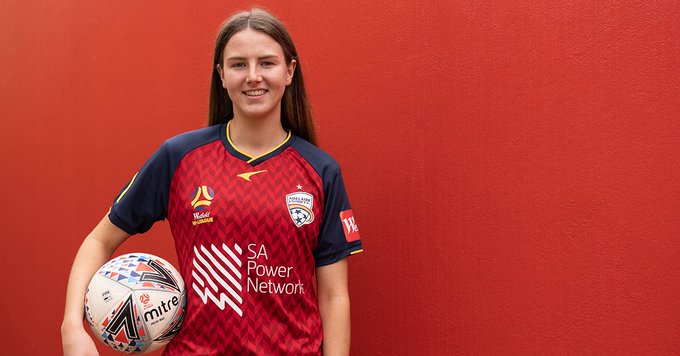
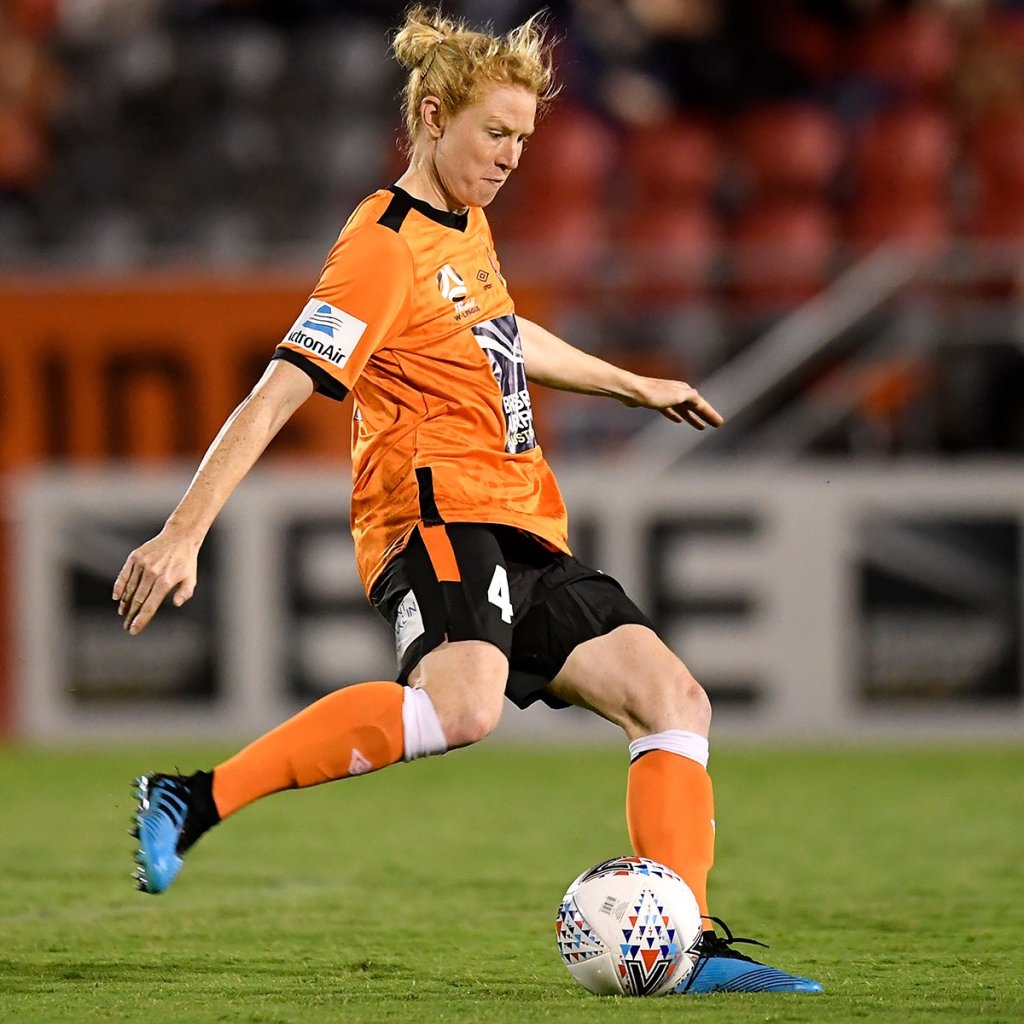
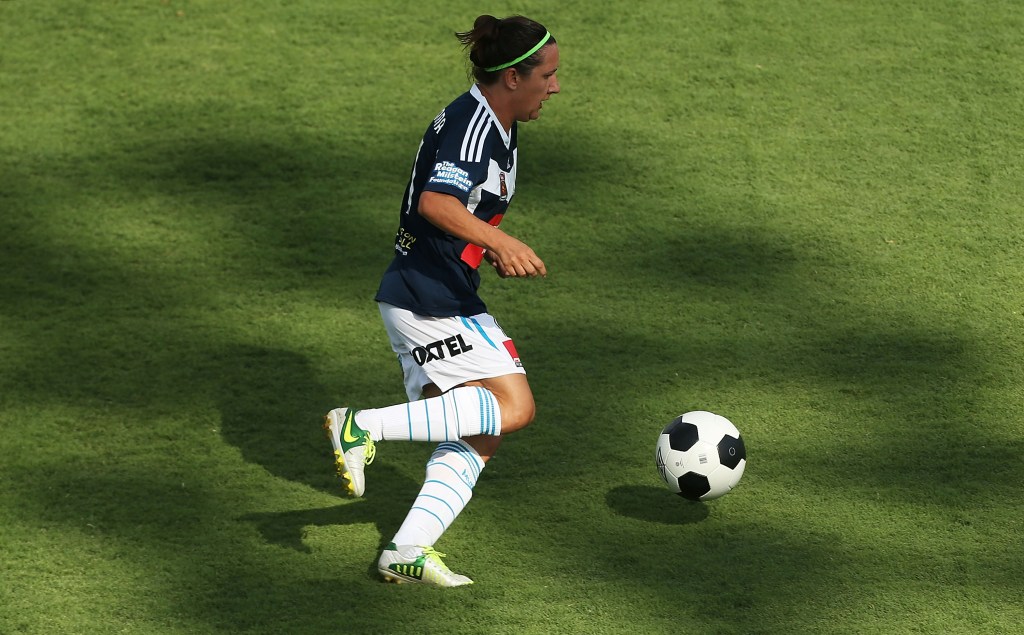
Yesterday marked the fortieth anniversary of the first recognised international for the Australian women’s national team when they took on New Zealand on 6th October 1979. The circumstances faced by these pioneer members of the Matildas are poles apart from their present day counterparts.

It is important to emphasise that Australia is a country where sport has often been one of the ultimate expressions of male strength and identity. The Matildas journey has been an inspirational one from to widespread indifference to national adulation. To make ‘The Matildas’ task even more impressive, one needs to remember that football is, at best the fifth most popular spectator sport in Australia, meaning that they did not even have a high profile men’s version of the sport to support them.

Despite an Australian National women’s football team being sent to the 1974 Asian Women’s Championship, it is fair to say that squad was far from being representative of the whole nation – the vast majority were the single state of New South Wales. In 1978 another representative side, with players drawn from New South Wales and Western Australia gathered for training on poor quality pitches in full public view, with what could be described at best as “banter” and at worse as “verbal abuse” being fired towards the players as they trained. Their crime? Simply playing football. This squad were dispatched to the World Women’s Invitational Tournament in Taipei against a number of top club sides and international representative sides. No caps were awarded to those participating in this event.

That first fully recognised Australian women’s international took place at Seymour Show Park in Miranda in a small southern suburb of Sydney. The historic line-up was Sue Monteith (Queensland), Shona Bass (Victoria), Kim Coates (Victoria), Dianna Hall (South Australia), Carla Grims (South Australia), Fiana McKenzie (South Australia), Sandra Brentnall (Western Australia), Judith Pettit (Western Australia), Sharon Mateljan (Western Australia), Julie Clayton (Western Australia), Cindy Heydon (New South Wales), Julie Dolan (New South Wales), Toni McMahon (New South Wales), Jamie Rosman (New South Wales), Rosie van Bruinessen (New South Wales) and Leigh Wardell (New South Wales). Coach Jim Shelby was assisted by Noelene Stanley and Elaine Watson. The game finished a 2-2 draw with fifteen year-old Sandra Brentnall, born in Nottingham, England scoring the historic first ever Matildas goal. Sharon Mateljan added the second in a 2-2 draw. The two sides met again two days later, with the Kiwis taking the honours 1-0. Unlike today, of course there was no nationwide publicity to advertise the game. Instead, one of the players, Julie Dolan recalled how the players were dispatched to the area around the ground to post flyers through letterboxes.

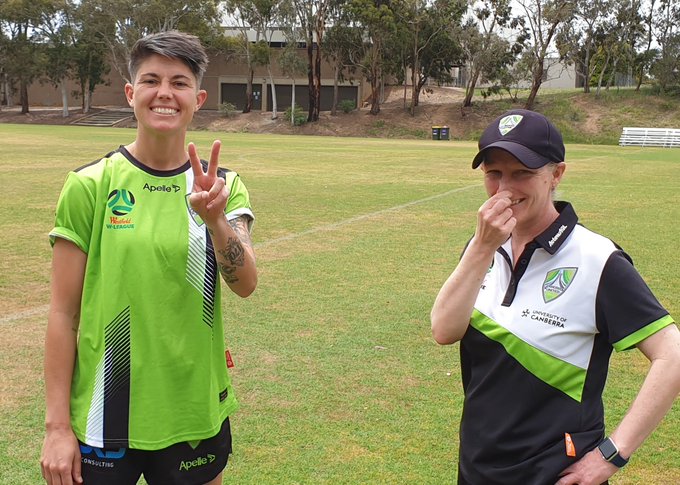
Above: Australian Women’s National Team – Forty Years Photo: Ben Gilby

After the first encounters, the Sydney Morning Herald did report on the match but their piece was more akin to the freakshow variety of such an occurrence than a fully-fledged international sport event.

It wasn’t until 1983 that the Matildas played a nation other than New Zealand. Indeed, they went over two years without a fixture between 1981 and 1983 when they played three matches in five days away from home against New Caledonia, Fiji and perennial opponents New Zealand. It took until 1987 for Australia to face a nation from outside of the Oceania region (Canada).

These early Australian female footballers did not just have to face the verbal volley of scorn from the general public. Some had to put up with the derision of their own husbands and families. ABC (Australia) News reported last year how Stephanie Quinn, tour manager of the Australian side in the 1980s recalled the husband of one player deliberately destroying his wife’s football boots in a bid to stop her playing any more. In the same decade, players were having to run straight from work to play for their country with absolutely no preparation whatsoever.

The Australian National women’s team are now firmly established as one of the most prominent and popular teams in the country in any sport. They have global superstar Sam Kerr up front, who is respected and revered as an athlete just as much as her older brother Daniel, who was an outstanding Australian Rules Footballer with West Coast Eagles. Kerr is a winner of the Julie Dolan Medal (named after one of those first Matildas), and her nationwide profile was recognised in 2018 as she was voted The Young Australian of the Year.

It is not just Kerr who is leading the present day Matildas. She is surrounded by an array of outstanding players. The anniversary of their predecessors first ever full international is going some way to give the original Matildas their deserved moment in the spotlight. If it wasn’t for those pioneers in the late 1970s, Australian women’s football would not be what it is today.

Ben Gilby is the editor of Impetus and has over fifteen years experience in voluntary media officer roles within the sports of Football and Rugby Union, has appeared on BBC Radio Cornwall and BBC Radio Norfolk sports shows several times and published the book ‘The Game: Tales From A Season Travelling Around The Rugby Union Grounds of South-East England’.

In My View

From the tweets of ImpetusDaisy Wildsmith. This week, Daisy turns her attention to the Lionesses’ game against Brazil at Middlesbrough yesterday.

This was an afternoon which started with so much to be proud of – Lucy Bronze being given her World Cup award in front of a packed Riverside Stadium by Baroness Sue Campbell, the inspirational Jill Scott overtaking Alex Scott in the appearances board after earning her 144th cap and Jordan Nobbs back in an England shirt.

The game itself began with the Lionesses playing patient football offensively and smothering Brazil to prevent them gaining any accuracy in their shots. The early stages saw some beautiful play from Alex Greenwood and the England defence working seamlessly with keeper Mary Earps. Defensively there was such an improvement on recent games.

Also showing great composure was Jodie Taylor who took time to see who was open whilst approaching the moving ball to see who would be available. The positivity in the squad was also great to see – even on the sidelines – the grin on Lucy Staniforth’s face whilst warming up was infectious. Plenty to be happy about in that first half performance.

This energy, drive and improved defensive shape was great to see, the players’ hearts and minds were fully in the game, and this is precisely what made it so frustrating that Brazil took the lead after the interval. England stayed strong, Keira Walsh was involved in some nice play. I was absolutely convinced that a goal was coming for the Lionesses. In the end a goal did come. But it was for Brazil. Despite the second for the visitors, the crowd still clearly believed in the Lionesses, and so did I.

That belief was rewarded by Bethany England’s superb skilful header – her first international goal, and the Lionesses were on their way with ten minutes left. But sadly, it was not to be,

The skill on display from Lucy Bronze was incredible. Beth Mead, Alex Greenwood and Jodie Taylor were hugely influential. Its a cliché, but there were so many positives from the Lionesses performance. The defence in the first half was really strong and much improved. You could feel the passion and the motivation from the squad throughout. The World Cup hangover is over. They just couldn’t find a way through a heavily defended Brazil goal in the first half, and appeared to switch off at the start of the second half which allowed the first goal in.

The crowd sounded amazing, cheering until the end. The sound of 29,000 people enjoying what they were seeing was fantastic. I was gutted that the Lionesses didn’t get the win, but I think its definitely coming on Tuesday (away to Portugal). Another cliché, but there is lots to take away from the match in terms of lessons that will be learnt in time for Tokyo 2020. On to the next one!

Daisy Wildsmith is a regular contributor to Impetus. She is a women’s football fan based in the West Midlands.

Magpies Rising Like A Phoenix From The Flames

Impetus editor Ben Gilby talks to Notts County Women manager Adam Dunleavy about the team’s incredible progress since they entered the league system for the 2018/19 after the heart-breaking loss of the original club.

The original Notts County Ladies side were created in 2014 after the Lincoln Ladies team formed some nineteen years previously were relocated across to Nottingham. That Lincoln side had achieved top flight status and had become the first women’s football team to play an entire season in a professional stadium, having been based at Sincil Bank. In 2017, Notts County were forced to pull out of the Women’s Super League Spring Series which bridged the sport’s transference from a summer season to one taking place from September to late spring. It was devastating, but out of the ashes a Magpie shaped phoenix has arisen.

 In this period, Adam Dunleavy was working for the Notts County Football in the Community scheme and through mutual connections at the club, was asked to attend a meeting with the then owner Alan Hardy. He takes up the story. “I put my vision across to Alan to reform the women’s team and start again from the bottom of the English football pyramid. It was a couple of years early in the clubs plans but I was given the green light to go ahead in the May of 2018. I then set about bringing in a backroom team before we put the word out in the public domain with an open day at Meadow Lane. We then went through the process of affiliating to the league and FA as well as the trials for players which ran the span of the summer to the back end of July. The club already had a junior girls section from under tens up to under thirteens and so the framework was in place to have a sustainable academy for the future.”

Ahead to their return to the league system for the 2018/19 season, the club realised that stability was the watchword: “Being a completely new set up and knowing that our league had some established teams, our main aim was to make sure we were competitive. From there it was about laying a foundation on which to build and not rush the process. We had a rocky start with a couple of heavy defeats to the eventual league winners Northampton Town, which really welcomed us to the party. As we began to find our feet, we started to build consistency before setting a club record of unbeaten games, winning away at Northampton and beating Oadby at Meadow Lane in front of over 700 people. We went above and beyond any expectation set out to us at the beginning and I will be forever proud of the team of players and staff that made it possible,” Dunleavy reveals.

In putting Notts County’s female side back on the pitch, the coaching staff identified that the key to any hope of success was the environment provided for the players: “My assistant Adam Woolley and I believe steadfastly in creating an environment where players want to play. Where they feel part of something bigger and build a team mentality. Over the course of the season the team bonded and became a family. We know that every time they cross the white line, they are prepared to fight for each other and for us as a staff. As a club and a staff, you are only as good as the players at your disposal, and we got our recruitment right. With all of that falling into place, and the girls feeling like they had something to prove on our return to the women’s game, we fostered a perfect environment together that saw us exceed expectations across the board.”

A huge part of the success of the new Magpies side has come with the positive and multifaceted links between the women’s side and the men’s outfit as Dunleavy reveals: “We have seen brilliant support from the men’s side of the club over the last year, and we hope to continue to forge a relationship with the clubs’ new owners and explore ways in which we can work together. We use some of the facilities at Meadow Lane to train and have our own page in the Men’s matchday programme which helps us to keep fans in the loop about our season. Allied to this is a fantastic relationship with Notts County Football in the Community, who provide us with gym facilities and a classroom for sessions in the week. Linked closely to this, we will certainly be looking to play a couple of games at Meadow Lane again this season. The last fixture we played there was a fantastic success. We were incredibly proud of being able to give tickets to schools through our partnership with Football in the Community and get hundreds of school kids to the game to help showcase young women, playing at a professional sports stadium. Our biggest aim with playing at Meadow Lane is to help grow the profile of the women’s game locally and hopefully inspire more young girls into the game”

Dunleavy is more than aware that the he can’t rest on the laurels of last season’s successes: “Our main aim has to be to go one better than last season. We finished as runners up which is an incredible achievement for a team in its first year. Now we have set the foundations, we believe this group can achieve big things, be it this year or next. The key is to keep improving and to not stand still. As for the club, we want to continue to develop young payers to break into our senior section and provide the best possible environment for girls to grow with the club. We are lucky to have a wonderful team of coaches and volunteers who run the junior section, many of which are the unsung heroes of the club.”

He is also mindful that the club has benefitted by the significantly improved profile of the women’s game: “We have seen a massive increase in both interest and participation in the women’s game since the World Cup but it is probably traceable to the Olympics in 2012 when Team GB caught the nation’s attention and it has snowballed since then. The FA are committed to doubling participation which they are on course to achieve and fans are starting to come to more games across the country as the game grows.  We currently have over 100 girls in our junior section. They play from our under nines team all the way up to the under sixteens which means that our pathway is now complete, and it won’t be long until we see the fruits of the homegrown players, breaking into the senior teams at the club.”

However, Dunleavy is clear that for County to enjoy sustainable success, it needs more than just an established player pathway and more supporters. “The key to success is to have a dedicated group of volunteers and staff that passionately believe in the women’s game. There is not yet, anywhere near the kind of money that the men’s game commands, so we must be more resourceful. We are incredibly lucky to have a lot of local businesses that support us through player sponsorship, as well as an anchor sponsor in Ramsay Healthcare that back us financially. It is also imperative that we continue to develop, grow and retain our players in the academy and make sure that we can provide elite players, capable of competing in the women’s leagues. With that in place, we can create a sustainable model that is futureproof and ambitious at the same time.”

Looking to the future, the Notts County manager is hugely positive, not just for women’s football as a whole, but also for his own club: “I believe that we will continue to see the rapid expansion and growth of the women’s game to heights we have not yet experienced. It is the fastest growing game in the world and with the increases in exposure to the general public that will only continue. We have the honour of seeing a major international women’s tournament hosted in England in the summer of 2021 and if the Lionesses can be in the mix at the end of the tournament and even win it, it will spur the media, corporations and ultimately fans to support the game. As for Notts County Women, I hope that we are able to see our team competing in the third tier of the Women’s game and feel that the National League is a realistic target in that time frame. From that point it will all come down to investment and support and if the appetite is there, my team and I have a structured and sensible plan on how to achieve promotion to the top two divisions. With the FA rules around payment of players and minimum hours, there would then need to further investment to see us reach that goal.”

Whilst Notts County women’s relationship with their men’s side is hugely positive at the present time, Dunleavy is aware that the there needs to be a degree of self-sufficiency for all women’s teams: “I think the fact that the infrastructure is in place with men’s teams and the commercial and publicity that comes with that affiliation makes it easier for Women’s teams to attract support. The end goal has to be for every EFL team to be supporting and inclusive of their women’s team. That being said, we all know how volatile and unpredictable football can be, with what has happened to Bury and Bolton Wanderers. I think that it is important for Women’s sections to welcome the support but also look to be financially self-sufficient to a point where they do not have to rely solely on the men’s side of the club. We have taken the approach this season to do exactly that and it puts us in a position where we know that we can provide the players with everything they need and make sure that we are on a stable financial footing for the years ahead. If all teams adopt that model, then hopefully the women’s game can continue to grow sustainably without the casualties that we see in the men’s equivalent.”

We thank Adam Dunleavy for his time and participation in this feature article. Notts County Women are presently top of the East Midlands Division One South with three wins from three. They play their home games at Ilkeston’s New Manor Ground, with aims of staging at least one game at Meadow Lane. Impetus will return to Notts County Women and will update readers on their progress as the season develops.

Super League Sunday

Impetus editor Ben Gilby reviews two of yesterday’s top Barclays FA Women’s Super League games.

Arsenal 4-0 Brighton and Hove Albion

Arsenal maintained their 100% start to their Barclays FA Women’s Super League defence with a comfortable win over Brighton & Hove Albion.

Brighton with all behind the ball in opening period, with a very tight midfield line forcing Arsenal to play across them, but making it very difficult to make much of any time on the ball the Seagulls got. The first chance fell the home side’s way – Evans crossed the ball, but Miedema couldn’t make contact. A minute later, a delightful run by Jen Beattie found Vivianne Miedema. Her pinpoint perfect through ball found Kim Little who waited for Brighton keeper Megan Walsh to commit herself before firing the Gunners ahead after nine minutes. It was all Arsenal as Brighton struggled to keep hold of any possession that they did have. The reigning champions came close on the half hour mark when Little’s corner was met by a thumping Leah Williamson header, which went narrowly wide. Matilde Lundorf offered Brighton’s best threat from right-back with her glorious cross field ball to Kayleigh Green was adjudged to be offside. Shortly afterwards Green had Brighton’s first shot on target, which was comfortably held by Pauline Peyraud-Magnin. Arsenal doubled their advantage from a beautiful lay off from Jordan Nobbs, which found Vivianne Miedema who hit a powerful shot home after thirty-nine minutes from an acute angle. It remained 2-0 at the break.

Brighton had more to offer in the opening ten minutes of the second half, and thanks to two Arsenal errors, earned two rare appearances in the hosts penalty area, but indecisiveness allowed the Gunners to clear the danger. The Sussex side were made to pay for this profligacy on fifty-six minutes when the Dutch destroyer Miedema put through her international team-mate Danielle van de Donk to end the game as a contest. It became with twenty minutes left when Jordan Nobbs celebrated her return to the England squad by hitting a shot from the edge of the area which squirmed under Walsh. The Seagulls crafted another opportunity when Ellie Brazil’s cross found the excellent Lundorf Skovsen, but her shot trickled wide. There was one final chance for Arsenal to add to their tally when substitute Jordan Nobbs squared the ball to Beth Mead whose rasping shot from the edge of the area cannoned back off the bar.

Brighton & Hove Albion are due huge plaudits for their effort and work-rate, but it was the superior quality in depth and ability to make opportunities count that ensured that Arsenal gained the result.

TEAMS: ARSENAL: Peyraud-Magnin, Maier, Schnaderbeck, Beattie, McCabe, Williamson, Little, Nobbs, Evans, Miedema, van der Donk. Substitutes: Zinsberger (GK), Mitchell, Walti, Roord, Mead.

Scorers: Little 9, Miedema 39, van der Donk 56, Nobbs 70.

BRIGHTON & HOVE ALBION: Walsh, Simpkins, Whelan, Bowman, Gibbons, Williams, Lundorf Skovsen, Connolly, Brazil, Green, Whelan. Substitutes: Barton, Umotong, Nilden, Harris (GK), Kerkdijk, Le Tissier, Le Garrec

Attendance: 1,607.

West Ham United 0–2 Tottenham Hotspur

In front of the 24,790, the second highest crowd to watch a women’s club game in England, West Ham fell victim to an impressive backs-to-the-wall performance from newly promoted Tottenham Hotspur at the London Stadium.

Spurs started confidently and crucially controlled the midfield area. This momentum led to their first chance on the Hammers goal, when Rosanna Ayane was played in and her thumping drive from the edge of the area went narrowly over the bar. West Ham’s opening shot on goal didn’t come until the seventeenth minute when Kate Longhurst’s effort went straight into Spurs keeper Rebecca Spencer’s midriff. Longhurst had another opportunity shortly afterwards but, rather than attempting a shot from just outside the six yard box, her attempted ball back to Martha Thomas was easily dealt with by the Spurs defence. Into the second quarter of the encounter there was a notable shift in momentum, but any hope of West Ham making their possession count was impeded by the increased use of the referees whistle as the free kick tally for both sides mounted. Spurs who almost took the lead just after the half-hour mark when Rianna Dean narrowly failed to connect with Ayane’s fierce cross-shot. Shortly afterwards, the two combined again with a different outcome. Another superb cross from Rosanna Ayane saw Dean rise between two home defenders to send a magnificent header flying past Courtney Brosnan in the West Ham goal for Spurs to take the lead. Despite West Ham looking lively in the final stages of the half, it was Tottenham who went in 1-0 up at the break.

West Ham started the second half on the front foot and earned back to back corners. Martha Thomas had a shot which Spencer parried. A follow up shot went wide. Still the Hammers pressed and Alisha Lehmann’s pacy cross was met by Adriana Leon’s header which failed to hit the target. Spurs were penned back to the extent that it took twenty-seven minutes to get their first chance of the half, Hannah Godfrey’s header went wide. The East Londoners hit back when young Australian starlet Jacynta Galabadaarachchi played in Kenza Dali whose mazy run ended with a shot which failed to hit the target. Martha Thomas missed a guilt edged opportunity when, with a goal gaping, she managed to side foot Cecile Redisch Kvamme’s cross wide of the target when it appeared easier to score. Tottenham punished West Ham’s inability to turn dominance into goals when, with seven minutes left, they clinched victory with a second goal. A free-kick far out on the left was simply not dealt with by the home defence, and the ball found its way to Lucy Quinn who gleefully fired home. Thomas has one further chance for West Ham, when her header was held by Spencer

This was a huge result for Tottenham who will take so much from this victory. They were outplayed for the vast majority of the second half, but held their discipline, rode their luck and took the chances that came their way. For West Ham, this was agony and undoubtedly the one that got away.

TEAMS: WEST HAM UNITED: Brosnan, Redisch Kvamme, Flaherty, Vetterlein, Baunach, Middag, Cho, Longhurst, Leon, Thomas, Lehmann. Substitutes: Moorhouse (GK), Simon, Hendrix, Kiernan, Galabadaarachchi, Dali.

TOTTENHAM HOTSPUR: Spencer, Percival, Godfrey, Filbey, Worm, Peplow, Green, Furness, Ayane, Dean, Graham. Substitutes: Morgan (GK), Mclean, Haines, Wynne, Addison, Quinn, Neville.

Scorers: Dean 36, Quinn 83.

Attendance: 24,790.

Ben Gilby is the editor of Impetus. He has over fifteen years experience in voluntary media officer roles within the sports of Football and Rugby Union, has appeared on BBC Radio Cornwall and BBC Radio Norfolk sports shows several times and published the book ‘The Game: Tales From A Season Travelling Around The Rugby Union Grounds of South-East England’.

In My View

by Ben Gilby based on the tweets of Daisy Wildsmith

This week, we review at the action of the Barclays FA Women’s Super League pair of Liverpool v Manchester clashes.

Manchester United v Liverpool

Why is Rinsola Babajide always on her own at the front? It was the same last season. I’d hoped she’d have been picked up by one of the top three in the transfer window, because with the right team, she will soar! All Babajide’s hard work just wasted by other players time & time again. Half of them can’t keep up with her, those who do don’t gel with her to make the most of the opportunities she creates.

During the first half yesterday, there simply seemed to be not enough co-ordination between the Liverpool players in front of goal, and no power on their shots. Consequently, it was only a matter of time before United scored.

The opening period of the second half saw Liverpool produce a really strong defensively performance allied with a couple of fantastic saves from Anke Preuss. Eventually though, United’s superior threat told. For United’s opening goal I think Lauren James was aided by the pitch. I suggest that Sophie Bradley-Auckland would have gotten to that if she weren’t playing on ice! The clincher came for the home side towards the end when Katie Zelem succeeded against Anke Preuss from the spot.

The result was inevitable really. Liverpool were strong in defence, but never posed a real threat on the attack. Rinsola Babajide the supernova sniper unsupported by her team mates which wasted the chances she created in the first half.

The allegations after the game of chants by Manchester United supporters directed to Liverpool about the Hillsborough disaster is a disgrace. If people know who was responsible, then rat them out. Don’t be complacent. They’ll bring the reputation of the squad and its fan base down. In my opinion, Casey Stoney as manager, should release a statement distancing herself and the club from this kind of behaviour. Even if the allegations are unfounded. Something about how they would never condone that behaviour and will co-operate  fully with the investigation and hope that they find such serious allegations to not be true. Otherwise, those responsible will get the message that crossing the line is accepted and condoned by the club and its management.

Everton v Manchester City

Another wet day at Haig Avenue, which caused the players having to be mindful of the small quagmire on the edge of the box at Everton’s end. Somebody really should have put some cones out! Everton had an early opportunity with a beautiful warning shot which, if lower would’ve gone in. The Merseysiders’ start confirmed my feeling that they look much stronger and organised than they did last season. Despite this, it was City who took the lead, with a typical Steph Houghton free kick from the edge of the box. The England stalwart didn’t have a monopoly on efforts from this range as Everton’s Chloe Kelly fired several long range rockets. If only there was better accuracy or team mates in the box to pass to it could be more promising still for Everton. City were definitely the stronger side in this first half though.

Another goal from City felt inevitable, but try as they might it just didn’t come. Everton had a further chance when, after Jill Scott felled Kelly. She picked herself up and aimed her free kick uncharacteristically straight at the feet of City’s defensive wall. Other entertainment came from the feed via the FA Player which, at times lurched from being all faded which make me feel like I was watching it in the 1970’s. This later shifted to a nice orange tinge – progressing the footage a decade further forward to the 1980’s.

Daisy Wildsmith is a regular contributor to Impetus and is a women’s football fan based in the West Midlands.

Exceptional Älvsjö: The Background to the Unlikliest of Champions

by Ben Gilby

In this two part feature, Impetus editor Ben Gilby tells the story of women’s football club from one of the tiniest towns imaginable, and how they became Swedish and European heavyweights. The opening piece sets the scene on the town and what the team achieved.

When it comes to women’s football teams punching above their apparent weight, arguably none have done it more successfully than Älvsjö AIK FF Dam.

Based in a small suburban town with a population of just 1,530 people, Älvsjö (pronounced Elves-Her) is situated 8.5 miles south-west of Stockholm and, other than its incredible women’s football team, it is famous for being the location of Stockholmsmässan (The Stockholm International Fair), northern Europe’s biggest trade fair facility, which hosted the 1975 Eurovision Song Contest, the first to be held in Sweden due to ABBA’s famous win the previous year thanks to their song ‘Waterloo’.

Above: The main square in Älvsjö. Photo: Ben Gilby

Despite these heady achievements, and the presence of a large railway station on the main commuter line network which links central Stockholm with the historic university city of Uppsala almost fifty miles away, Älvsjö remains a very quiet, peaceful and unassuming little town. The modern central square is surrounded by small, local shops, a fountain and a café which serves as a venue to promote the Swedish lifestyle choice of fika. Fika is a state of mind which encapsulates the Swedish way of living whereby work/life balance is at the centre of everything the country’s inhabitants do. Even the busiest office stops and makes time for fika – the part of day where plenty of time is devoted to coffee and a bite to eat (usually cake or kanelbullar – Swedish style Cinnamon Buns) and a chat with friends or colleagues.  Except in Älvsjö it’s not just coffee and kanelbullar that the tiny local population made sure they fit in, it’s getting out, playing football and honing their skill with such dedication that they became the nation’s top team.

For five seasons in a row – from 1995-1999 (football in Sweden is played generally between March and October in one calendar year to avoid playing during the harsh winters), Älvsjö AIK FF Dam, based at the Älvsjö Idrottsparken (Älvsjö athletics ground) took the Swedish Damallvenskan top flight by storm and won the title each year in this period. That a side based in a tiny location with barely 1,500 inhabitants were dominating big city teams in a nation who have always been one of the strongest in the world of women’s football was just incredible.

Above: Älvsjö Idrottsparken the club’s home ground. Photo: Älvsjö AIK FF

As the twenty-first century began, those at Älvsjö AIK FF Dam began to realise, as many small clubs with less than perfect facilities do, the situation was not going to be sustainable. Across in Stockholm, the women’s side of one of Sweden’s top men’s teams, Djurgården IF (DIF) wanted to further the progress of their own female team. The 1980s had seen Djurgården promoted to the Damallsvenskan for the first time only to be relegated in 1992. It took them four years to regain their place in the top division. With DIF still not quite established as a long term member of the highest league, and UEFA about to launch its first pan European club competition for the top women’s club sides, it was decided that Stockholm needed a strong presence in the women’s game. In a move that was seen to be in the best long term interests of both teams, Älvsjö AIK FF and Djurgården IF merged, with the two clubs owning 49% and 51% of the joined entity respectively.

The merger was a huge success on the pitch with Djurgården/Älvsjö, consisting from players taken from the squads of both the original standalone clubs, winning the Damallsvenskan in 2003 and 2004, the Swedish Cup in 2004 and 2005 and finishing as Damallsvenskan runners-up in both 2006 and 2007. Success in UEFA’s Women’s Cup (the forerunner of the UEFA Women’s Champions League) was also achieved in 2005. After coming through a group stage Djurgården/Älvsjö saw off fellow Swedish side Umeå in the quarter-Finals before a famous aggregate win over Arsenal Ladies in the semis. The final, played over two legs against the German outfit Turbine Potsdam ended in disappointment, but the achievement of a team who had such humble beginnings reaching a major European final was phenomenal.

However, the footballing story of the tiny town of Älvsjö has not ended since merging with Djurgården. In the second part of this feature, we will examine the re-establishment of a single senior women’s football team at the Älvsjö Idrottsparken, and how, once more they are beating teams from far bigger settlements and enjoying success as a consequence.

Ben Gilby is the editor of Impetus. He has over fifteen years experience in voluntary media officer roles within the sports of Football and Rugby Union, has appeared on BBC local radio several times and published the book ‘The Game: Tales From A Season Travelling Around The Rugby Union Grounds of South-East England’.

Canaries Soar To Vital Win

Norwich City Women 6-2 Kent Football United

FA Women’s National League Division One South-East

by Connor Wroe

Norwich City started off very quick early on getting a series of corners back to back. Despite gaining free headers each time, they failed to convert these chances.

Newly promoted Kent showed promise early on finding space in behind the back line, but failed to do anything with that room. Around the eight minute mark a Norwich corner finally produced joy – a real swinger of a ball was crossed in and went straight in at far post – Aimee Durant scoring direct from the corner.

Kent managed to equalise after 27 minutes despite a long period of Norwich pressure. It was a debate to whether to goal scorer was offside, but you don’t take that away from the finish – a lovely chip over home keeper Hope Armstrong. The goal seemingly woke Norwich up as they started to play more consistently successful attacking football – however they failed initially to take advantage due to struggling to keep their shots down. However, sharp shooter Chelsea Garret found the net 38 minutes into play with a lovely bit of foot work to find space to shoot, although the keeper should have done better as the shot was straight at her.

It became 3-1 two minutes later with an old school hoofed ball which succeded in getting Aimee Durrant in behind the defence, the first shot was saved but Durrant followed up her parried shot and headed it into an empty net. On the stroke of halftime the Canaries made it 4-1 from a free kick just inside their own half which caused confusion in the Kent defence as the ball just rolled through on goal and the striking instinct of Chelsea Garrett saw her slide it into the far corner.

It became 5-1 straight from the resulting kick-off after Norwich were awarded a free-kick. Megan Todd struck home with the half-time whistle following shortly afterwards.

The excitement level dropped in the second period – but Kent gave themselves a glimmer of hope with a goal on 56 minutes on the counter. Despite Norwich’s defence still not quite functioning at 100%, the visitors could not improve on their tally. Instead, it was Norwich who got their sixth goal on the 82 minute. An attack down the right resulted with the ball being crossed into Megan Todd who headed it down, with the Kent defender getting a foot to it which unfortunately took it past the keeper. The game finished 6-2.

Norwich, despite their dominant performance and having a larger amount of possession looked slightly in defence at times. Newly promoted Kent Football United are still trying to catch up with the intensity of this league. They look promising and are just missing two or three experienced players. If they can get someone in with experience they might be able to be saved from the drop.

Teams: NORWICH CITY WOMEN: Hope Armstrong, Tigi Robson, Kate Parsons, Aimee Durrant, Millie Daviss, Chelsea Garrett, Megan Todd, Lauren Cullum, Rosie George, Reeanna Cook, Izzy Collins. Substitutes: Tash Snelling, Angelina Nixon, Josie Jarvis, Lily Bueggeln, Keunna Dil.

Scorers: Durrant 2, Garrett 2, Todd, Snelling.

KENT FOOTBALL UNITED WOMEN: Abigail Adewunmi, Shannon Burden, Ami Burnham, Megan Burrows, Chloe Francis, Charley Macneil , Poppy Payne, Amy Russ Emma Squirrell, Grace Taylor, Lydia Wills. Substitutes:  Lucy Dante and Maisie Joyce

Scorers: Macneil (2)

Attendance: 100.

Connor Wroe is a regular contributor to Impetus and “follows all things sport – both men and women”.

Welcome to Impetus

Impetus is a new website dedicated to the world of Women’s Football. Our team of contributors will be bringing you a full range of news, reports and features on the sport. From the quirky to the factual, Impetus will deliver the inspirational stories of the coaches, players, volunteers and supporters of Women’s Football in the UK, Europe and further afield.

Want to contribute?

Interested in joining our team of contributors to produce either a one-off piece, or something more regular? That would be fantastic! There is no minimum or maximum word count and absolutely no expectation of a regular commitment. We want to hear from you – tell us about your club or experiences in the game whether you are a player, coach, volunteer or supporter. Get in touch by replying to this post below and we’ll be in contact. Together we can continue the Impetus that Women’s Football is enjoying.