It’s good to share: rethinking the creation and distribution of revenue in the women’s game

Above: Arsenal take on Lyon in their home leg on the UWCL final. Photo: @cozphotos.

By Christine Oughton (19/0525)

In the first of a week’s coverage of articles from eleven Impetus Football writers in the build up to this year’s UWCL final, Christine Oughton reviews the financial specifics of the competition. 

The UEFA Women’s Champions League (UWCL) final between Arsenal and Barcelona in Lisbon on 24 May 2025 will not only determine which team are crowned champions of Europe, but also the financial spoils. Running in parallel with the allocation of sporting honours in the UWCL, UEFA’s financial allocation model determines how much participating and non-participating clubs receive. This financial allocation will shape the ability of clubs to compete in the forthcoming 2025-26 season.

The winners of the final will walk away with €350,000 and the runners-up €250,000, plus well over a further €1 million each from the fixed payments, group stage and knockout stages. To put that in context, the prize money from the final alone would likely cover a good part of the transfer fee of Jill Roord, Gabi Nunes, Kiera Walsh, Laia Aleixandri, Mariona Caldenty or Emily Fox.  In addition, the finalists have gate money from some well attended pre-final matches with crowds of over 30,000 and 40,000. All told, sporting success in the UWCL brings in income that contributes to further success for the top clubs.

In an attempt to promote solidarity and to prevent the UWCL undermining the competitive balance of national leagues, UEFA’s financial model requires “solidarity” payments to be made to non-participating clubs. The question is, are these solidarity payments enough?

Of the total €24 million UWCL revenue to be distributed in the 2024-25 season, €5.6 million has been earmarked for non-participating clubs. This money is distributed to the 50 national associations that have at least one participating club in the competition. Solidarity payments to national leagues are intended to be divided equally across clubs in the top league, and are earmarked for the development of the game. National associations may also choose to distribute the money more widely to lower leagues.

Above: Cata Coll (left) makes a save in the second-leg of the UWCL semi-final, where Chelsea were defeated 4-1 at Stamford Bridge. Photo: @cozphotos.

With 50 participating national leagues and, say, 10 non-participating clubs in a league (the number of clubs varies across national leagues), non-participating clubs will receive around €11,200 each on average if the payments are confined to the top tier. In practice it’s a bit more complicated, as solidarity payments are meritocratically linked to the performance of a league’s participating clubs. Still, on average, non-participating clubs will receive less than 1% of the revenue going to the finalists, which is barely enough to hire one trainer one to two days per week. Progressive distribution to the second tier or beyond will spread the money more thinly with more clubs benefiting, but by a smaller amount – less for training and development in the top league, but more for the second league, though the amounts are low for both leagues.

Women’s football has grown substantially in the last few years. It is an undoubted success story: gates, viewing figures, commercial income and interest are all on the rise and most expect this to continue, but there are signs that the elite UWCL clubs are pulling away from the rest of the clubs in their leagues.  The Union of European Clubs has called for greater solidarity payments. There is a need to enhance competitive balance within and across leagues to maximise interest in the game. Closely fought relegation battles and league title races maintain interest in matches throughout the season and generate more revenue. Maintaining and enhancing competitive balance will require more redistribution as the game develops. This can be done against growing revenue streams so all benefit.

Due to the ban from 1921-1971 women’s football was not able to develop, as the men’s game did, in an era of equal division of TV income within and across leagues and gate sharing that helped lower-placed clubs and lower leagues. Those redistribution mechanisms enabled the men’s game to expand across the pyramid. National and regional associations, like The FA and UEFA, are the guardians of the pyramid and they can and should do more to promote the development of the women’s game within and across leagues right down to the grassroots. The prospect of rising revenues offers a golden opportunity for all to benefit. More redistribution earmarked for development, promotes competitive balance, generates fan interest and brings more revenue. It’s a win-win.

Above: The attendance at the Emirates for the semi-final first-leg, where Arsenal saw defeat to Lyon. Photo: @cozphotos on Instagram.

UWCL revenues are set to grow by 57% in 2025-26 from €24 million to €37.7 million but solidarity payments will only increase from €5.6 million to €6.2 million representing a fall in percentage terms from 23% to 16%. This effect will be tempered by the fact that the inaugural UEFA Women’s Europa Cup means there will be more participating clubs, but non-participating clubs will see financial gaps widen.

It’s time for UEFA, The FA and national leagues to rethink the distribution rules to further promote the development of women’s football.  This can be used alongside other measures e.g. the spreading of best practice via support and improved licensing to help smaller clubs develop their revenue streams,and greater access to larger stadia. Arsenal has led the way in showing how access to a club’s main stadium can significantly enhance revenue and the fan base. Other clubs can and should follow suit, including via developing new stadia as in the case of Brighton Hove Albion. Such measures will help grow revenue and attract more investment in women’s football.

Follow Impetus on social media –

Twitter (X): @impetusfootball TikTok: @impetusfootball

Instagram: @impetusfootball

“A Lot More to Give”- Izzy Gomez’s Journey to Silverware

Isabelle Campbell  19/05/2025

Above: Izzy Gomez. Photo: Beck Hartley for Impetus

In November, Izzy Gomez received the biggest call of her career, a maiden Matildas selection. But just days before she was due to join the national team, an untimely injury forced her out. That injury happened in a clash with Melbourne Victory, a detail that would later give her a cinema worthy comeback arc. 

Fast forward, Gomez made her return to the pitch in February, once again against Melbourne Victory, and now in May she’s helped the Central Coast Mariners to their first-ever A-League Women’s championship, defeating that very same opponent in a dramatic Grand Final. 

“I didn’t really think I’d get to this point,” Gomez said post-match. “Being injured so early and to be able to get back on the right track, to score was a great feeling.” 

Her return wasn’t just symbolic. Gomez immediately became pivotal to the Mariners’ title push: scoring the winner in the semi-final, putting her side ahead in the Grand Final, and converting from the spot in the shootout to seal the title. Her performance earned her the title of ‘best-on-ground’. 

“That penalty was quite shocking,” she admitted. “But it went in, so a goal’s a goal.” 

The championship win capped a season that tested and ultimately showcased Gomez’s resilience both physically and mentally. 

“This past week has been amazing,” she said. “To be selected in the Matildas as well, it’s such an honour. So yes, I’m super grateful.” 

Her coach, Emily Husband, has witnessed Gomez’s journey up close. 

“She’s an incredibly special player. She’s still got a lot more to give. I don’t think she’s even quite 100% yet. I look at our season and wonder what we could have achieved if we’d had her all season.” 

“She’s not only just an incredible player with great athletic ability and great technical ability, great decision making, she’s a phenomenal person as well. She’s been an absolute dream to coach. I couldn’t ask for a better player.” 

Her progression this season hasn’t gone unnoticed among teammates. 


“She’s someone that has definitely flourished this season,” said midfielder Bianca Galic. “She’s battled injuries, she’s come back, she’s made her mark on the league and I think everyone at the club backs her to go on and do great things.” 

Jessika Nash added: “She’s such an incredible human off the field. I’ve never really seen anyone like her, to be fair. The way she gets on the ball, you know she’s going to create something. I think for me it’s something special, when a coach tells me to just give someone the ball, I don’t think Em [Husband] says that much.” 

Even opposition players took a moment to acknowledge how big the moment was. 

“It was kind of special,” said Melbourne Victory’s Emily Gielnik. “I saw Izzy Gomez crying and I gave her a hug and I said, ‘Enjoy that first cap when you wear that green and gold jersey. You deserve it. Embrace it and enjoy every minute because you’ve had a hell of a season.’” 

For Gomez, much of her success comes down to the environment she’s found herself in. 

“This past season has just been amazing,” she said. “I really felt confident in this type of culture and that’s thanks to Em [Husband] and how she’s brought this team together.” 

And while her future remains open, whether another season in the yellow and navy awaits, or a move overseas, she’s taking her time. 

“There’s a lot of options,” Gomez said. “Still unsure of where I’m headed.” 

From missing a national team debut to lifting a championship trophy just months later, Izzy Gomez has not just returned, she’s made her mark.  

Follow Impetus on social media –

Twitter (X): @impetusfootballTikTok: @impetusfootball

Instagram: @impetusfootball
The Women’s FA Cup Final: Chelsea win the treble

Chelsea 3 – 0 Manchester United

By Catherine MacKenzie (18/05/2025)

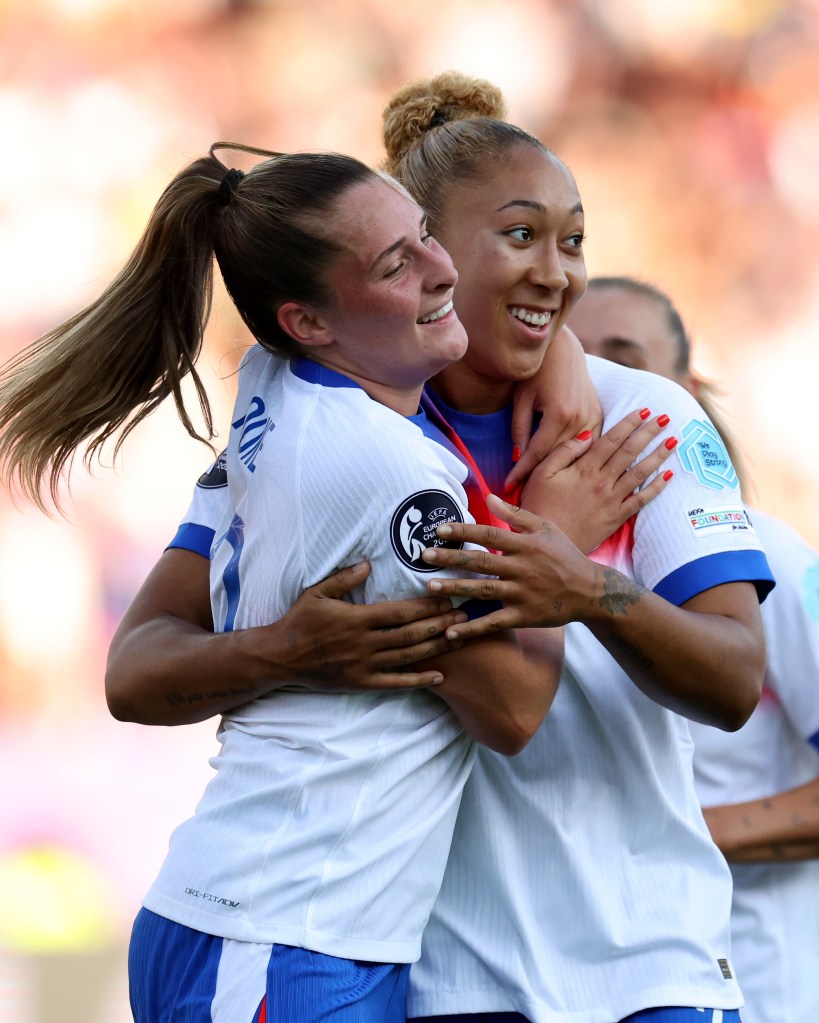
Above: Chelsea players celebrate. Photo: Mia Betts for Impetus.

It was yet another battle of Manchester v London on Sunday afternoon as Manchester United faced Chelsea in the final of the women’s FA Cup. The dominant blues came out 3-0 winners, allowing them to celebrate a domestic treble.

On Sunday afternoon, it was red against blue as Manchester United and Chelsea faced off in the final of the women’s FA Cup in London. Chelsea made the short trip off the back of a historic moment, being the first team to go undefeated in a 22-game WSL season. The only blemish for Chelsea this season is their campaign in the Champions League; beaten by European giants Barcelona 8-2 on aggregate, they exited in the semi-finals.

United had a much longer trip to the capital – leaving Manchester with a positive third-place league finish and a third consecutive FA Cup final in hand.

Above: Manchester United traveling fans. Photo: Mia Betts for Impetus.

United were defeated by Arsenal last time out 4-3; an uncharacteristically sloppy defensive showing not helped by injury to Jade Rivere, who has been a revelation this season. The reds trialled a formation change of three-at-the-back, which left wide spaces open for Arsenal to exploit.

Chelsea ended the season with a narrow 1-0 win over Liverpool, getting the win via a last-minute goal from Aggie Beever-Jones. It was hardly a classic game but it saw them claim an unbeaten season ahead of Sunday’s final.

Team news

United fielded a similar team to the one that started against Arsenal – Gabby George came in for Anna Sandberg, and most controversially, electric midfielder Ella Toone was left on the bench. Toone is known as a ‘big game player’ – scoring first in last year’s FA Cup final, as well as in the final of England’s title-winning European Championship in 2022.

The Red Devils did not continue with the back three they had trialled against Arsenal; instead, Gabby George came into the back line, with Dominique Janssen moving into central midfield.

Following the match, United boss Marc Skinner was taken to task on his decision to leave Toone on the bench. He spoke of matching Chelsea’s physicality – especially in the early stages – suggesting that Toone would be used as a game-changer later. He explained:

 “She’s a great player, but they try to physically dominate you and I felt that we wouldn’t have a foothold in the game without physically matching them.

“It was about the right opportunity to change the game.”

Chelsea made a couple of major changes to their midfield: German International Sjoke Nusken and Netherlands youngster Wieke Kaptein dropped to the bench in favour of more physicality. Beever-Jones moved back to the wing, as Mayra Ramirez was preferred up front.

The action – the importance of physicality and concentration

United had the better of Chelsea during the opening ten minutes, forcing them into a couple of early corners and successfully pinning them into their own half. From around the twentieth minute onwards, however, United struggled. Before the game, both head coaches had talked about the importance of physicality.

Recognising physicality as a strength of United’s, Chelsea exploited this by forcing the Manchester team into duels – effectively playing them at their own game. This paid off in the final minutes of the first half as Chelsea were awarded a penalty due to a high footed challenge from Bizet on Cuthbert, and Sandy Baltimore sent Phallon Tullis-Joyce the wrong way to get the opener.

This ability to adapt and neutralise an opponent’s strengths has been a key feature of the Bompastor era so far, adjusting to not only a different formation but also being forced to play in a way that the team have not always been comfortable with.

Above: Niamh Charles and Celin Bizet face off. Photo: Mia Betts for Impetus.

At the break, United boss Marc Skinner was forced into an early change by an injury to centre-back Millie Turner, who took a knock mid-way through the first half. Her replacement led to a change in shape for the reds; Janssen dropped back into defence, with Grace Clinton in the engine room and Ella Toone bolstering the attacking midfield.

Although the introduction of Toone did spark some more creativity for United going forward, Chelsea had the better chances. Tullis-Joyce was forced into a couple of saves, and for a long time, it looked like Chelsea would escape with yet another 1-0 win. However, late into the second half, the deadlock was broken as Sandy Baltimore superbly set up Catarina Macario for Chelsea’s second.

At this stage, United fell apart. They seemed to lose every challenge and made risky decisions – passing back to Tullis-Joyce under pressure, passing the ball straight to Chelsea. Following the loss against Arsenal, the discussion amongst fans was about mentality – and why the team seemed to fall apart momentarily after conceding.

If Chelsea’s second goal had come earlier in the second half, it might have been more positive for United – as they would have had longer to get this lapse of concentration out of their system and time to get back into the game.

As it happened, there were barely ten minutes left on the clock, and Chelsea did not ease their press. Baltimore got her second of the afternoon a minute into stoppage time, taking advantage of a United that were at sixes and sevens. The final whistle blew, and Chelsea took the stage as winners of this year’s FA Cup.

Player of the match – Sandy Baltimore

For Chelsea, choosing a player of the match is difficult because not one of the players on the pitch had a bad game. One could argue that Keira Walsh was quiet – under the watchful eye of England manager Sarina Wiegman, Walsh seemed to find herself in the right spaces but looked a bit lost on what to do next. But this would be ignoring her characteristic slinky passes; her connections with her teammates will likely improve with time.

The standout Chelsea player was Sandy Baltimore, who has arguably been one of Chelsea’s players of the season. Arriving last summer from PSG, the 25-year-old Frenchwoman has seven goal involvements in 15 WSL matches this season, alongside three goal involvements in eight Champions League matches.

She was an integral part of all three of Chelsea’s goals on the day, and caused United’s back line a struggle every time she was on the ball.

The bigger picture: contrasting ownerships

Chelsea’s new investor Alexis Ohanian was in the stands alongside wife Serena Williams, and ahead of the game the duo spoke to the BBC about their plans for the club:

“The sky is the limit. You heard our president say this club is unapologetically ambitious – I want to get that tattooed on me.

“That is what we’re trying to build here – the best team in the world and at the forefront of women’s sport.

“This will be a billion-dollar franchise one day. I hope my dollars, my pounds, can go towards that and especially back home in America. This is going to be America’s team.”

That Ohanian and Williams were in attendance at Wembley highlighted the contrast to United’s ownership – Sir Jim Ratcliffe made headlines in 2024 for choosing to attend a men’s premier league match in Manchester over the women’s FA Cup final – and failed to make an appearance for the second year in a row.

United’s hierarchy were instead represented by Chief Executive Omar Berrada among others, but the absence of the majority shareholder was striking, particularly since he was in London for United men’s game against Chelsea the previous day.

Post-match, United boss Skinner was asked extensively about this – and what it means for both him and his players:

“I don’t know why Jim wasn’t here so I can’t give you that answer. We were really well represented. Omar [Berrada] was there, then Glazer family and Jason [Wilcox] was as well. Those are the people that I deal with every day.”

Continuing, Skinner used the opportunity to argue that investment in the women’s team would speak louder than visibility at games:

“I’ve just lost a final but our club were well represented and I deal with them every day. They need to see that to look at what we need to do bridge that growing gap in finance.”

Sonia Bompastor was conversely asked about the impact that having Chelsea’s new investor in attendance had on her team:

“For sure it’s a big lift. I think that’s the most important – for people to show that support coming into games. It’s really enjoyable for us to see like all the people coming from the ownership here today. But even more important to feel they were behind the team supporting the team. We had a lot of support coming from them before the game during the week and also on game day.”

“This is my cape of secrets”: Post-match quotes

It can never be easy for a manager to face questions from the media after such a loss. Skinner was asked extensively about team selection, tactics, and the absence of majority shareholder Sir Jim Ratcliffe.

On the game, Skinner said: “I thought we started well. I felt we matched them physically. We just needed to be a little bit braver and jump.”

He added that it was a “big game, won on set pieces…it was concentration and individual errors – we’ve got work to do. We’ve just got to in the moment, take responsibility. In big moments, we need to make better decisions.”

He was also asked about plans for the summer transfer window. Although typically coy, Skinner did admit that although he “loves my team”, he feels United need more “variance in the forward line.”

A slightly more jubilant Sonia Bompastor entered her post-match press conference wearing a Chelsea flag as a cape. The Chelsea boss joked with the press – “this is my cape of secrets” – as she faced questions about Chelsea’s season.

Above: Sonia Bompastor with her “cape of secrets”. Photo: Catherine MacKenzie for Impetus.

Suggesting she was not fully satisfied, the Chelsea boss commented: “Some of the people there on the pitch were already mentioning ‘we are missing the Champions League’, so that’s who we are, that’s our goal.”

Chelsea forward and scorer of the Blues’ second goal Catarina Macario spoke to BBC Sport: “It’s a very emotional day. It’s a trophy we always wanted to win. We wanted to win a treble. It’s been a hard season for me personally, so it’s a special day to be at Wembley and to win means a lot.”

Speaking about her goal, she said: “I think it’s a once in a lifetime opportunity to play at Wembley and to score in a final, in such an important game, it brings a lot of emotion. It was the cherry on the cake for the end of the season.”

Finally, she was asked about winning the treble: “Playing for Chelsea, we want to win everything, every title. It is a lot of pressure any time that you play in a massive game like this but we have this winning mentality. We’ve been here before and we know what we have to do to win and that’s what we did today.”

For Chelsea, it is the end of the season; however United will be whisked off to Portugal in a few days, taking part in the inaugural World 7s competition.

TEAMS: CHELSEA (4-2-3-1): Hampton, Bright, Ramirez, Cuthbert, Bjorn, Girma, Baltimore, Charles, Bronze, Walsh, Beever-Jones. Substitutes: Spencer, Nusken (for Cuthbert 90+4′), Macario (for Ramirez 62′), Reiten (for Baltimore 90+4′), Lawrence, Kaptein (for Beever-Jones 75′), Kaneryd (for Bronze 90+4′), Hamano, Jean-Francois.

Scorers: Baltimore 45’, Macario 85’, Baltimore 90+1’

MANCHESTER UNITED (4-2-3-1): Tullis-Joyce, George, Le Tissier, Mannion, Clinton, Galton, Bizet, Janssen, Terland, Miyazawa, Turner. Substitutes: Rendell, Middleton-Patel, Sandberg (for George 76′), Toone (for Turner 46′), Malard (for Mannion 70′), Awujo, Naalsund (for Miyazawa 81′), Williams (for Bizet 81′), Griffiths.

Referee: Stacey Fullicks

Attendance: 74,412

Follow Impetus on social media –

Twitter (X): @impetusfootballTikTok: @impetusfootball

Instagram: @impetusfootball

”Heart & Desire”- Husband Reflects on Historic Win 

by Isabelle Campbell at AAMI Park for Impetus (18/05/25)

Above: The Mariners following the winning penalty kick. Photo: Tilly McDonald for Impetus

From scratch to silverware, Emily Husband has guided the Central Coast Mariners to a historic championship, just two years after the club’s women’s program was reintroduced. The Mariners’ grand final victory marks not only a huge milestone for the team but a personal and professional triumph for the coach who built the project from the ground up. 

“I was definitely overcome with emotion. I’m not a crier, but I cried like a little baby,” Husband said in a post-match press conference.

“I think it’s just emotion. I guess it’s meant so much to this entire group, to the staff, to the club. And so to see the girls get it over the line, it’s just an incredible achievement.” 

Reflecting on what made the moment so meaningful, she added, “Nothing beats the feeling of watching other people around you being the happiest that they ever have been. Watching everybody who you care so deeply about, seeing how happy they are, it fills you with more joy than anything else.” 

Husband praised her side’s composure and adaptability in a grueling, high-stakes final. 

“I think we had the better of them in the first half and I think the momentum then swung their way,” she said.

“We had to change a couple of things, we’ve come off the back of not even a week ago playing 120 minutes, so there’s obviously tired legs out there.” 

What makes the Mariners’ championship all the more extraordinary is the timeline: two years ago, there was no senior women’s team. 

“Speechless, to be honest with you,” Husband said. “Coming into this job two years ago, I really wasn’t too sure. You know, I’d either sink or swim. I took the help when I needed it and lent on really, really valuable people, my staff especially.” 

It was just last year, their first back in the league, that Husband’s team made it to the semi finals before being knocked out by Sydney FC, who would go on to lift the trophy. 


“It was never that we settled for what we did last year. It was always that we wanted to be better. And yes, we did that. And it’s the players, it really is. They’ve just been an incredible group.” 

Their path to the championship was anything but easy, knocking out league-leaders and unbeaten Melbourne City before going head-to-head with a near perfect Victory side. 

“Momentum’s a funny thing. Everyone talked about how well Melbourne Victory and Melbourne City had come into the final series. And it’s great to have momentum in the league, but unfortunately, the final series is a completely different kettle of fish.” 

“I truly believe that our girls had more heart and more desire and more, I guess, collective energy between them. They could overcome anyone when they really wanted to. There were quite a few times this season where we went down and there was never ever any lack of belief in the changing room.” 

When asked if she thinks the group will stay together, she responded confidently: “I think they’ll bring themselves together. I really do. I think, how close they are as a group and how much they back each other, that’s enough of a selling point than anything else.” 

After a season that saw the Mariners rise from a team few expected to dominate to national champions, one thing is clear: Emily Husband hasn’t just built a team. She’s built a belief system, and it’s winning. 

With the title now secured, attention naturally turns to what’s next for this fast-rising club. When asked how she plans to top a championship season, Husband didn’t hesitate. 

“Winning the league.” 

“Doing the double?” came the next question. 

“Yep.” 

“And then? The treble the year after?” 

“Yep.”  

Now go to our Instagram page – @ImpetusFootball for EXCLUSIVE photography from the Grand Final from Impetus’ duo of photographers at the game – Beck Hartley and Tilly McDonald

Follow Impetus on social media –

Twitter (X): @impetusfootballTikTok: @impetusfootball

Instagram: @impetusfootball
Mariners hold firm to take out Victory

Melbourne Victory 1-1 Central Coast Mariners

Central Coast Mariners win 5-4 on penalties after extra-time.

by Alice de Koster-Kitto (18/5/25)

Above: Central Coast Mariners lift the A-League Women Grand Final trophy in only their second year back in the competition. Photo: A-Leagues

Central Coast Mariners have been crowned the 2024/25 A-League Women Champions after defeating Melbourne Victory after the first-ever penalty shootout in the league’s history.

It had been a showstopping 120-minute battle at AAMI Park. The Grand Final ended in a penalty shootout for the first time in the league’s history, leading the Mariners to their first ever Championship title, concluding what is just their second season since being reinstated to the league. 

Both teams’ defences have been regarded as some of the strongest in the competition this season, leaving crowds prepared for an intense end-to-end battle. The match lived up to its expectations, with immediate physicality on the pitch. A foul on Bianca Galic by Sara D’Appolina just under 30 seconds into play set the scene for what would be an exhilarating conclusion to the 2024/25 campaign. 

A link-up between Jade Penncok and Brooke Nunn gave Mariners an early chance when Nunn’s strike was collected by Courtney Newbon, as the underdogs, unnerved a confident Victory side. 

The attacking power of Emily Geilnik proved once again to be an invaluable aspect of this Victory side, as the scoring was thought to be opened by the hosts in the eighth minute, before being called offside, following a scuffle inside the box.  Though the goal was not awarded, it asserted Victory’s dominance over what has been considered an impenetrable Mariners defence at times.  

Taylor Ray’s return to a comfortable defensive midfield position caused quite a disruption to what was expected to be a dangerous battle between Izzy Gomez and Alex Chidiac. Despite this change unsettling the home side’s game-plan for a time, all eyes were still on this midfield showdown when Gomez was unable to intercept Chidiac’s through ball, which gave Nicki Flannery an excellent opportunity, but the ball was ultimately sent too wide. 

It was Central Coast who dominated the ball in the first half, holding 61% of possession, while Victory had the better of the chances. Neither side was able to capitalise on their respective advantage, as Jess Nash worked hard to deny Victory’s attack.

As the first half came to a close, the Mariners managed to capitalise on their chances, evening out the opportunities, creating a slew of end-to-end action. While at the top of the match it seemed that Victory – albeit not without a fight – would be the ones to open the scoring, the game became quite unpredictable, with Emily Husband’s side garnering the momentum to create their own opportunity to break the deadlock.

The final chance of the first half was a long range strike from Alana Murphy, who had an impeccable first half, got dangerously close to opening the scoring, fell just above the post.

The Mariners wasted no time in the second half, as Isabel Gomez opened the scoring just a minute in, taking advantage of a missed interception to put her side into the lead.

Gomez’s goal marks yet another addition to what has been a brilliant campaign for the 22-year-old, receiving a Matildas call-up, for the first time since suffering a knee injury in Central Coast’s previous meeting with Melbourne Victory in November. It was Gomez, of course, who scored the last-minute goal against Melbourne City in the semi-final that landed the Mariners at AAMI Park this evening. 

Melbourne Victory looked for an instant reply, with a strike from Rachel Lowe, meeting the hands of Sarah Langman. 

Lowe continued to dominate in Victory’s attack, challenging Central Coast’s defence as she desperately looked for the equaliser, with back-to-back chances, none of which were able to be turned into a goal. 

The next opportunity for the hosts came via an excellent strike from Alex Chidiac, but yet another impeccable save by Langman denied the Matilda.

Melbourne Victory gained a sense of false hope for the second time this match when Claudia Bunge managed to put the ball in the back of the net, before being called rightfully offside. The shot was not dissimilar to Gielnik’s previous effort that was ruled out for offside after a tough fight inside the box, putting it over the line. 

The first change for Victory came at the 65th minute as Rachel Lowe made way for Holly Furphy, in hopes that fresh legs would contribute to their much-needed impact on the game. Furphy managed to involve herself in two big chances just minutes after touching the pitch, and although these first few touches weren’t to be transformed into goals, the momentum of the game was changed for the home side, as stoppage time approached. 

With just 20 minutes left of regulation, Sarah Rowe made way for 17-year-old Blake Hughes, who made an instant impact on the pitch, shooting high on her first touch, keeping Victory off the ball.

Just as hope was dwindling for Melbourne Victory, the scoring was equalised in the 80th minute, when a ball from Alana Murphy was tapped over the line by Claudia Bunge inside the box, leaving a level Grand Final in the last 10 minutes. 

Once again, the safe hands of Sarah Langwan came to the rescue of the Mariners as a shot on target from Alana Jancevski threatened a late goal for Victory in the 88th minute. 

Despite the efforts at either end, the match was left even at full time, sending the Grand Final to extra time for the first time in 17 years. 

A change in the formation at the start of extra time, set to shake a confident Victory side, looked to create opportunity for the Mariners, as Taylor Ray dropped back into defence, after Taren King concluded her first 90 minutes since returning from an anterior cruciate ligament injury. 

Gielnik continued to be a dominant threat to the Mariners with a series of dangerous strikes, none of which were a match for the gloves of Sarah Langman, who added to her arsenal of outstanding saves. 

Melbourne Victory were the dominant side in the first minutes of extra time, though Mariners’ defence still remained stable as ever, remaining unshaken by Victory’s determination. The pressure from the home side did not shake the Mariners, as their collected style of play and ability to absorb such pressure continued to give them an advantage in such an intense environment. 

The ever-confident Mariners took quite a hit at a crucial point in play when Jess Nash came off with an injury. With no direct replacement available, the Mariners risked playing with 10, in hopes that Nash would recover before the second half of extra time. 

Victory took immediate advantage, with a dangerous strike from Flannery in the 106th minute that was saved..

Despite several opportunities at both ends, the match was left 1-1 after 120 minutes of tireless and heart-racing play, sending the Grand Final to a penalty shootout for the first time in A-League Women history. 

The first penalty was taken by Alana Jancevski. Sarah Langman’s ability was not needed, as the ball bounced off the crossbar, leaving the Mariners at an immediate advantage. 

16-year-old Tiana Fuller took the Mariners’ first penalty, striking the ball to the bottom right corner, putting Central Coast Mariners into the lead. 

The remainder of the penalties remained even, leaving Victory and Mariners fans alike on the edge of their seats, holding their breaths, waiting for the tiebreaker. 

It was Bianca Galic who took the last penalty for the Mariners, a choice that was sure to unnerve Melbourne Victory, as they were taken back to their last shootout against Central Coast in the 2024/25 season, in which Galic’s penalty had them eliminated. 

It was history repeating itself, as Galic’s strike soared past Newbon, hitting the back of the net, and awarding the Central Coast Mariners the title of A-League Women Champions for the first time in history. 

Concluding just their second season since rejoining the league, simply making the final was an extraordinary achievement for the Mariners, and a testament to head coach Husbands’ clear vision and unwavering commitment to bettering her team week after week throughout this campaign. 

When the Central Coast Mariners exited the league 14 years ago, lifting the trophy would have been unimaginable. Yet the sheer determination of Husband and her squad has not only revived this team but exceeded all expectations and cemented themselves in Australian football history. 

Now go to our Instagram page – @ImpetusFootball for EXCLUSIVE photography from the Grand Final from Impetus’ duo of photographers at the game – Beck Hartley and Tilly McDonald

Teams: MELBOURNE VICTORY (4-3-3): Newbon, Wilson, Bunge, Murphy, Chidiac, Flannery, D’Appolonia, Gielnik, Morrison, Lowe, Jancevski. Substitutes: O’Grady, Furphy, Pickett, Curtis, Young, Candy.

Scorer: Bunge 80’

CENTRAL COAST MARINERS (3-4-1-2): Langman, Nash, Martin, Gomez, Pennock, Gaelic, Ray, Rasmussen, Rowe, King, Nunn. Substitutes: Morrissey, Fuller, Kraszula, Trimis, Hughes. 

Scorers: Gomez 46’. 

Referee: Izzy Cooper. 

Attendance: 6,568.

Follow Impetus on social media –

Twitter (X): @impetusfootballTikTok: @impetusfootball

Instagram: @impetusfootball

The Women’s FA Cup: A History

By Catherine MacKenzie (17/05/2025)

Above: Southampton Women lifting the inaugural Mitre Challenge Trophy. Photo: The National Football Museum.

On Sunday, Manchester United and Chelsea face off in the final of one of England’s most prestigous tournaments. Ahead of the game, Impetus‘ Catherine MacKenzie looks back at the competition’s long history.

If you ask fans of men’s football in England, they will likely say the FA Cup is magical. The Football Association Challenge Cup is the world’s oldest football competition, dating back to the 1870s. Open to all football clubs across the football pyramid, it has become famous for upsets – spirited underdogs beating a team three or four leagues above them. The 2025 men’s trophy is emblematic of this: won by underdogs Crystal Palace by beating giants Manchester City 1-0 in the Wembley final.

Throughout the 1970s and 80s, the frequency of these upsets led pundits to coin the phrase “the magic of the FA Cup” – capturing the sense that anything can happen in the competition.

Some of these games include Southampton beating Manchester United in 1976; Wimbledon beating Liverpool in 1988; Millwall beating Arsenal in 1995; Wigan winning against Manchester City in 2013, and bottom-tier Shrewsbury Town beating premier-league side Everton in 2003.

The women’s competition may be comparatively recent, but it has proved to be just as magical. After the FA wrote a letter to the Women’s Football Association (WFA) in December 1969 confirming that the longstanding ban on women playing football would be lifted, the Mitre Challenge Trophy was established.

Independent of the formal FA, the WFA worked across the whole of the UK and allowed teams from Scotland and Wales to compete in its competitions – including early Mitre Challenge competitions. In 1972, the Scottish Women’s Football Association (SWFA) was founded, and Scottish teams reverted to playing in competitions organised by them – no teams from outside of England have competed since the early years.

The first final: Southampton 4 – 1 Stewarton Thistle

Early years were dominated by current National League South club Southampton Women FC (not to be confused with the WSL2 club of the same name) and current National League North side Doncaster; Southampton’s Sirens won the first final on the 9th of May 1971 by a scoreline of 4-1, beating Scotland’s Stewarton Thistle.

Above: Southampton’s Sirens with the Mitre Challenge Cup. Photo: The Guardian.

From the 1970s to the early 1990s, most games were played at small non-league grounds around the country. As the ban on women’s football was only on the verge of being officially lifted when the competition was established, no club from the men’s Football League offered their ground for its first final.

As a result, the WFA arranged for the final to be played at the Crystal Palace National Sports Centre – a venue steeped in history as the host of 20 men’s FA Cup finals, the last of which took place in 1914.

Footage from the final – although grainy – reveals a pitch with long grass and a surface that would be considered substandard by today’s expectations. The crowd is thinly spread along the perimeter behind the barriers near the running track, but the main stand is nearly full; although no official attendance records exist, it is thought that at least hundreds of spectators were in attendance (the following year, 1,500 attended the final).

Speaking of that first final, then-Southampton captain Lesley Lloyd told The Women’s FA Cup website: “Cup final day was fantastic. For me, it felt like being at Wembley. The feeling of lifting that cup is something I will never forget, thinking that we had actually won it, and the feeling that after all that time the FA had finally recognised that women could play football.”

Above: Lesley Lloyd in 2021. Photo: FA/Slog/Handout Photo/PA.

In 1979, the FA dedicated a new trophy to the competition as a celebration of its 10th anniversary. The original trophy has since disappeared.

Early years: 1971-1993, Southampton’s Sirens and the Doncaster Belles

Throughout the 1960s, the rise of feminism meant women started campaigning more vigorously for the right to play football. On November 1, 1969, delegates from 44 clubs gathered in London for the inaugural meeting of the WFA. Arthur Hobbs, a carpenter and amateur player, became the WFA’s first Honorary Secretary, and Pat Dunn was appointed as its first Chairperson.

An early ally of women’s football, in 1967 Hobbs had spearheaded the organisation of a women’s football tournament in Deal, Kent, with backing from the local mining community at Betteshanger Colliery. As the ban was still in place and no FA fields could be used, the game was played on the colliery’s fields. The Deal Tournament aimed to celebrate women’s football; it became a precursor to the Mitre trophy, proving a women’s tournament could be successful.

After beating Stewarton Thistle 4-1 in the first Mitre Trophy final, Southampton continued to dominate. The team from the South made it to the first three finals of the competition, beating Scottish teams to the trophy on all three occasions. The Sirens’ squad boasted some of the country’s top talents, including Sue Lopez, prolific forward Pat Davies and goalkeeper Sue Buckett. The team would go on to win seven of the first ten finals; the last of which came in 1982.

Following Southampton’s dominance, women’s football was growing more competitive throughout the 1980s. Founded in 1969, the Doncaster Belles eventually found their share of the dominance too. The Belle Vue Belles were established in 1969 by a group of women who sold raffle tickets at Doncaster Rovers’ Belle Vue stadium. Initially named after the stadium, they changed their name to Doncaster Belles in 1971.

Above: The Doncaster Belles in the 1980s. Photo: The Football History Boys.

During the 1980s and early 1990s, the Belles established themselves as a powerhouse in English women’s football. Between 1983 and 1994, they appeared in the FA Women’s Cup final 11 times over a 12-year span, claiming the title on six occasions during that remarkable run.

Mitre stopped sponsoring the competition in 1976; it was then known as the WFA Cup until the FA takeover in 1993.

Recent history: FA takeover and dominant London clubs

The FA took over running the competition in 1993. This meant it became official and more closely aligned with the men’s FA Cup – including being rebranded as the ‘FA Women’s Cup’.  While the WFA is credited for establishing and nurturing women’s football through difficult early decades following the ban, the FA’s takeover in 1993 provided the institutional backing needed for the sport to grow nationally and eventually reach more professional standards. This coincided with men’s top-tier clubs beginning to further finance their women’s sides.

Chelsea, for example, have been backed extensively over the last two decades, and Arsenal have long been integrated into the club’s structure. Being early starters gave both clubs a head start in scouting the nation’s best talent, building infrastructure, and establishing the dominance that enabled them to continue that investment. Arsenal have been pioneers – founded in 1987, they dominated the game for years and have a rich trophy history, including a UEFA Women’s Cup (now the Champions League) win in 2007.

Arsenal won their first final in the 1992-93 season and have won 13 since, including a run of four successive wins between 2005 and 2009.

More recently, women’s football in England has been dominated by another London club: Chelsea. The blues have won five FA Cups, most recently in 2023. That year’s runners up were Manchester United, who celebrated their first major trophy in 2024 by lifting the FA Cup at Wembley in front of over 76,000 spectators.

Above: Manchester United win the FA Cup in 2024. Photo: The Guardian.

This Sunday, United face Chelsea in the FA Cup final at Wembley once again, and they will be hoping to avenge that 2023 defeat. The game has officially sold out, exemplifying the progression of women’s football. In 2015, the stadium hosted its first women’s FA Cup final, seeing Chelsea beat Notts County 1-0 in front of 30,000 spectators.

That ten years later the final would be played in front of a sold-out crowd would have been unthinkable then, and even more unthinkable back at the Crystal Palace National Sports Centre in 1972.

Chelsea v Manchester United kicks off at 13:30 BST at Wembley Stadium. The game will be broadcast live on BBC One in the UK and on Optus Sport in Australia.

Follow Impetus on social media –

Twitter (X): @impetusfootballTikTok: @impetusfootball

Instagram: @impetusfootball

Sermanni hails City duo Henry & Davidson

By Emma Burke 16/5/25

Above: Bryleeh Henry (right) after scoring against Chinese Taipei. Photo: Football Australia

Matildas coach Tom Sermanni was full of praise for the in-form Leah Davidson and Bryleeh Henry at the Matildas squad announcement

“The call up was definitely bittersweet,” said midfielder Leah Davidson when asked about her weekend. 

The Matilda alongside her also Melbourne City club teammate Bryleeh Henry had both received the email calling them into the upcoming National Team camp after their 1-0 loss in the A-League Women semi-final against Central Coast Mariners.

“We’re really proud of what we did on the weekend as a club, we kept them out for 100 minutes with ten men,” she said.

Both Davidson and Henry have now been called up to the Matildas for the third time.

“Each time you go in you get used to what the environment is like, the first time you’re a bit starstruck,” said Henry before explaining that with each call up, “you can focus more on playing and training and doing what you can best.”

Matildas Interim Head Coach Tom Sermanni only had praise for the two young players when prompted on their selection. 

“Leah’s been in the last few camps and has performed very well in those camps so she deserves to keep her spot… [she’s] really held her own in amongst our midfield players,” Sermanni said of Davidson.

When speaking on Henry, Sermanni lauded her ability to play all across the pitch, as she’s able to play as a striker, a defender, and out wide on the wing.

She’s a versatile player and got the international characteristics that she’s athletically very good, she’s quick, and has the ability to play in numerous positions,” he said.

Now the pair are looking ahead to not just their next appearances as Matildas, but their Asian Women’s Champions League semi-final game. 

Melbourne City will travel to Wuhan and enter a centralised hub for the finals of the competition. They face South Korean side Incheon Red Angels in the semi-final on Wednesday May 21 at 10pm AEST, and should they progress, will meet either Wuhan Jiangda or Ho Chi Minh City I in the final. 

Follow Impetus on social media –

Twitter (X): @impetusfootballTikTok: @impetusfootball

Instagram: @impetusfootball

”I’d do anything for the team and anything for us to win”- Jancevski hungry for a trophy with Victory

By Kieran Yap/ interview conducted by Isabelle Campbell. 17/5/25

Above: Alana Jancevski. Photo: A-Leagues

Alana Jancevski is preparing for her second Grand Final in less than 12 months.

The Victory Star and goal of the year nominee lifted an NPLW Championship trophy with Victorian club Heidelberg United in the off-season. Now she is back at her other childhood club ready to repeat that success.

“I think being a part of a Grand Final experience is really important,” she told Impetus at Victory’s open training session.

“I think you can understand (the) excitement, the nerves.

“Obviously going down in that Grand Final and having that real feeling to need to have a big last seven to ten minutes to try and get the result.”

In that game, Heidelberg were down 2-1 until the dying stages, when a late Jancevski corner helped deliver a dramatic win.

“I think being in that position was really helpful and I hope that on the day on Sunday it can help me in tough moments.”

Jancevski’s arrival back at Victory was one of the most heralded signings by the club. A former star of the youth setup, she developed her game at Perth Glory and Adelaide United before returning home and delivering one of her best individual seasons.

Her ability was no surprise to Victory fans, but her role was somewhat unexpected. Following the retirement of Beattie Goad, Jancevski dropped into fullback and has been part of the leagues most uncompromising defence.

“Jeff (Hopkins) came up to me when Beattie retired with such big shoes to fill and he asked if I’d be open to try it out.

“Of course I’d want to do anything for the team and anything for us to win. 

“It was definitely a challenging experience and throughout the season there’s been ups and downs where I’ve had such good role models and such good people to help me in that position.”

Jancevski, the prodigal star has more than delivered on her return to the club, and has the chance to cap off the season with her first A-League title on Sunday.

It will mean the world to the 22 year old who once dreamed of representing the club as a child.

 “It warms my heart and I know little Alana would be screaming in her boots right now so I think that’s just got to fuel me throughout the game and really enjoy it and put everything out there for her.”

Follow Impetus on social media –

Twitter (X): @impetusfootballTikTok: @impetusfootball

Instagram: @impetusfootball

West Ham United Season Wrap Up

Above: West Ham’s team photo from their 2-0 win at home over Tottenham Hotspur. Photo: West Ham on Instagram.

By Ella McShane (16/05/24)

In the first of a series reviewing how the team’s of the WSL fared in the 2024 to 2025 season, Impetus Football’s Ella McShane evaluates how West Ham United’s campaign went. 

The 2024/25 season was one of transformation for West Ham United. A campaign defined by fresh faces, international tours, new leadership, tactical growth and solid foundations for a promising 2025/26 campaign. The Hammers’ journey was true testament to the club’s growing ambition for the women’s game.

Standout signings

The 2024-25 season commenced with a host of new additions to the claret and blue. The most notable among them being Shelina Zadorsky, Kinga Szemik and Shekeria Martinez.

Joining the club as a loanee from Tottenham Hotspur in the 2023-24 season, Zardorsky then made things permanent in the summer, and was later appointed vice captain.

Polish international Kinga Szemik was brought in as East London’s new number one, the Pole playing in every Women’s Super League fixture.

Shekiera Martinez has emerged as West Ham’s star signing of the season. Returning from loan in January, the German international has accumulated 10 goals in 12 matches, and won the Barclays Women’s Super League rising star award.

Above: Martinez (right) goes toe to toe with Manchester United’s Dominique Janssen. Photo: Lindsay Cook for Impetus.

Preseason in Perth; a club committed to the women’s game

West Ham’s campaign officially kicked off down under at the inaugural Perth International Football cup. As this was the first tour the women’s side had embarked on, it represented a new chapter in the club’s commitment in elevating the women’s game.

The preseason tournament hosted the Hammers’ alongside the likes of French giants Paris Saint-Germain, and fellow WSL side’s Leicester City and Manchester City. This provided much needed time for the refreshed squad to build cohesion on and off the pitch.

Above: Katrina Gorry, who was named the club’s new captain at the start of the season. Photo: Lindsay Cook for Impetus.

A new era of leadership; Gorry takes the armband

Upon the Hammers’ return from Australia it was announced that Australian international Katrina Gorry was appointed captain of the east London side. She succeeded her fellow Matildas’ teammate, Mackenzie Arnold.

“It was a special moment…I was really emotional as it is something that I don’t take lightly.”

The Aussie’s example of leadership on the pitch and advocacy for eating disorder awareness and IVF accessibility earned her the Barclays Women’s Super League Champion of Change award.

A team capable of competing – yet struggling to convert

The league commenced, and early struggles were evident within the revitalised squad. A lack of cohesion saw the side unsure of their tactical identity and conceding frustrating goals they were capable of defending.

Following a discouraging defeat to Manchester City in October, Manager Rehanne Skinner acknowledged the teams’ growing pains:

“I think we’re still trying to work on everyone understanding everybody and how they play, as there are still a lot of new players on the pitch.”

Above: The team huddle together after a loss at Manchester City. Photo: West Ham on Instagram.

West Ham eventually secured their first win of the season in a 1-0 triumph against Leicester City at home. A far cry from the 5-2 defeat the Hammers’ faced at the feet of the foxes in Perth just months earlier.

As the season progressed it was evident that the hammer’s attacking identity was still ineffective. Initially adopting a direct style of attack, they then switched to a more effective possession-based approach for the latter half of the season, breathing a renewed sense of confidence into the team.

Shekiera Martinez’ return from loan in January, also played a significant role in the sides converting ability. The German international accounted for 12 of the total 34 goals scored by West Ham this season, all in an impressive trademark fashion.

Season Highlights

The Hammers’ made it to the semi-final of the Subway™ league cup, giving Sonia Bompastor’s Chelsea a hard fought game. Although ultimately falling short, the side gave a commendable performance through the entirety of their league cup campaign.

Crystal Palace away was the team’s most successful fixture across all competitions this season. Martinez netted a whopping four goals in world class fashion, Viviane Asseyi’s worldie earning herself WSL goal of the month and youngster Emma Harries’ score sheet debut in the form of a brace.

Above: Viviane Asseyi with the ‘goal of the month’ award for April. Photo: West Ham Women on Instagram.

Interpreting ultimate league standings

When reflecting on the Irons’ performance during this campaign, their goal difference is particularly illustrative. Although finishing ninth on the league table, the Hammers’ maintained a goal difference of -5.

The most positive figure among all teams outside the top four. Highlighting the sides’ ability to maintain respectable score lines and keep matches competitive.

In conjunction with West Ham’s narrow score lines, you simultaneously must question their ability to maintain a productive winning mentality. The Hammers’ drew with WSL powerhouses like Chelsea, Manchester City and Manchester United, but then suffered repetitive defeats to compatible WSL sides. An assumingly frustrating position for players, staff, and supporters alike.

Looking forward

Despite the season making a less than ideal start, West Ham have laid solid foundations for a promising 2025/26 campaign. The second half of the season saw the emergence of a clear tactical identity, in particular improvements in their attacking play.

While results may have varied, the Hammers consistently demonstrated their ability to go toe-to-toe with a wide range of opponents, showcasing resilience and an ability to provide consistent competitive match ups.

Follow Impetus on social media –

Twitter (X): @impetusfootball TikTok: @impetusfootball

Instagram: @impetusfootball