Above: Emily Gielnik against Panama Photo: Rob Lizzi for Impetus
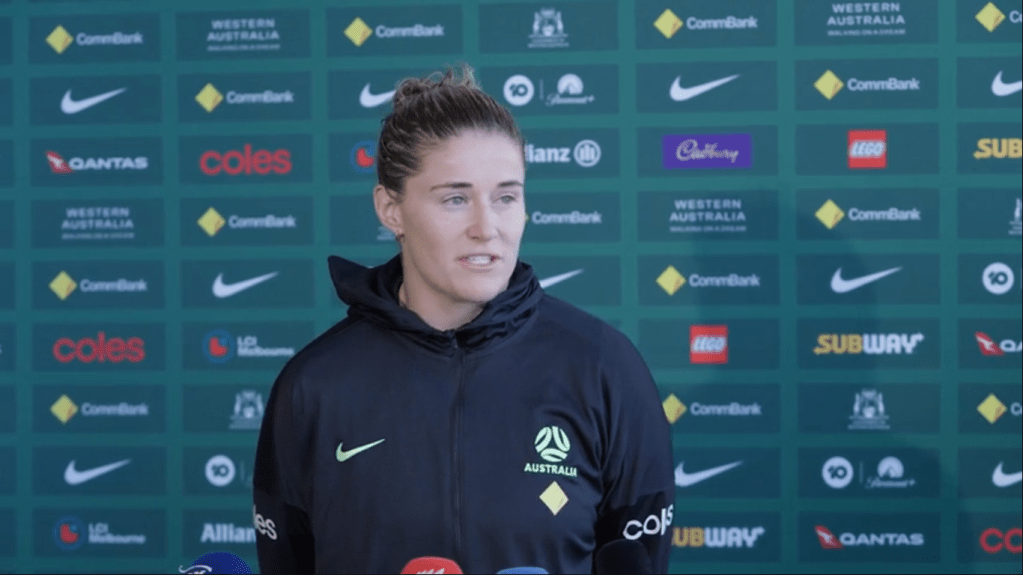
Despite a 1-0 defeat to Panama in Bunbury, Matilda’s head coach Joe Montemurro remains composed and confident as his side prepares for the second match of the series at HBF Park in Perth.
With four debutantes introduced off the bench in the first game and a clear focus on experimentation, Montemurro says the results are secondary to the process at this stage of the team’s evolution.
“Rotating the squad was always prescribed at the start of this little adventure of these four games, and done on purpose, just to see a broad range of combinations and opportunities and it’s been great to be able to do it at this level because we can gauge exactly where we’re at,”
While the scoreline may have the general public questioning, Montemurro is adamant that the outcome served a broader purpose, to gather valuable data and build depth in the squad.
“To be honest I haven’t really looked at it as a loss. I’ve looked at it as more information for us to really go forward, I’ve said all along, we’re trying to obviously lift the way and lift the style and lift the football, and we want to do it without negative results, but it’s probably one that, we say, okay you know, some opportunities were given.”
With so many new faces on the pitch, he acknowledged that cohesion was always going to be a challenge.
“Obviously, when you make a lot of changes like that, there is going to be a little bit of instability, but I still have belief in the process and still have a belief in the way going forward and as I said, we’ve got a bank of information that will help us going forward.”
Montemurro was also quick to shut down the idea of judging players too quickly, especially those new to the international stage.
“You give a player one opportunity and you judge them on that, it’s the wrong thing to do. You have to look at the positives, the negatives, and where they can learn,”
Rather than dwell on the result, Montemurro emphasised the value of a game played under these conditions, a low-stakes opportunity to assess players and test combinations.
“You don’t lose, you learn from these situations. It’s the perfect opportunity to learn, because it’s not a do or die game, it’s not a game that we are going to lose points on or lose our status in a competition situation.”
“We’ve focussed on the takeouts of the game because there were some good passages, it just wasn’t continuous enough, and it wasn’t it probably wasn’t at times, football intelligent enough, if that’s the right word to use.”
Heading into the final match of this international window, Montemurro is hoping to see a more polished performance, with improvements in execution and decision-making under pressure.
“I think we go back to the improvement from game one and two, just making sure that we stick to our style, stick to what we believe in. That’s the most important thing, that always has to be the base.”
The squad will be without a few experienced players for the second match, with the departures of Alex Chidiac, Emily Gielnik and Kaitlyn Torpey reducing the group.
Beyond this match, Montemurro and his staff are already keeping an eye on the ongoing AFC Women’s Asian Cup qualifiers, as they prepare for future competitive campaigns.
“Hard to say, but there’s definitely some teams that are showing a lot of promise. I think it’s going to be a very difficult Asian Cup generally and a great tournament. So, we have been keeping an eye on it, and we’ll wait and see who we get drawn and who we’re going to face.”
Above: Spain celebrate their win. Photo: SEFutbolFem on X.
Spain 6 – 2 Belgium
Above: Belgium’s Red Flames celebrate scoring against Spain. Photo: Belgium FA Website.
Team news and context:
As Group B’s second matchday started, Spain were in a significantly better position than Belgium. They were sat at the top of the group after a convincing win over Italy, whereas Belgium needed to avoid defeat against the world champions to maintain some control over their fate in Group B.
Belgium and Spain have met twice already this year in the Nations League, where Spain won both games. They beat Belgium 3-2 at home, and then 5-1 away. They also met in the Euros qualifiers twice, with Spain winning on both occasions.
Cata Coll started on the bench again after being ill with tonsilitis, according to Spanish media. Aitana Bonmatí also started the game on the bench, after she was substituted on late in the Portugal game. Irene Paredes returned to the squad after being suspended for the first game, replacing Maria Mendez.
Belgium head coach Elisabet Gunnarsdóttir kept the same starting 11 as their first gameday defeat to Italy.
Putellas opened the scoring for Spain in the first half, however Vicky López demonstrated why she is being discussed as one of the tournament’s players to watch, creating the space for Putellas’ superb strike. There were many of Spain’s star players putting in top class displays, with Mariona Caldentey, Clàudia Pina and Irene Paredes standing out.
Whilst the scoreline reflects Spain’s dominance, there were lots of important positive takeaways for Belgium. Vanhaevermaet’s goal in the 50th minute was initially ruled out for offside but VAR overturned the decision, and in the first half, Belgium responded very quickly to Spain. Belgium’s performance also highlights that despite the quality that Spain have, they can still show vulnerabilities, particularly defensively.
Belgium were able to be clinical when Spain presented the opportunities, especially when it comes to set pieces. Even if this did not pay off for Gunnarsdóttir’s side today, other teams in the competition could use that to their advantage.
Player of the match: Clàudia Pina
Her goal was arguably one of the best that we have seen in the tournament so far, and she also consistently looked to be one of the players causing the Belgian defence trouble.
What next for the teams:
The result means that if Portugal fail to beat Italy later today, then Spain will progress to the knockout stages, before they even play their final group stage game. The result leaves Belgium in a very difficult position, as their future in the tournament is now out of their own control. Italy avoiding a defeat against Portugal would see Belgium eliminated.
Portugal 1-1 Italy
Above: Portugal anthem. Photo: selecaoportugal on X.
Team news and context:
As the second game of Group B kicked off, Portugal knew that they needed to avoid defeat to ensure they weren’t eliminated from the competition. Francisco Neto made five changes to the team who lost 5-0 to Spain, including replacing their goalkeeper Ines Pereira with Patricia Morias. Ana Borges, Kika Nazareth, Joana Marchao and Ana Capeta also started. Italy started with the same team who beat Belgium in their opening game.
The first half of the game saw Italy dominate, however neither side had many clear chances. Tensions started to grow towards the end of the first half with Portugal believing that they deserved a free kick. Emma Severini did put the goal in the back of the net for Italy in the 36th minute, however VAR overruled it because of an offside. Throughout the half, Italy looked the more threatening of the two sides but didn’t have a goal to show for it.
In the second half, Italy continued to dominate possession and look to be the team more likely to get the first goal. Their moment of magic came when Cristiana Girelli throughout the second half especially
Portugal later had their own moment of magic, when Diana Gomes sent the ball into the roof of the net, getting her country back into the game. Diana Silva had previously had a goal disallowed as she was offside, which was an emotional moment within the game, as she paid tribute to Diogo Jota in her celebrations.
The end of the game was frantic as both sides had moments where they tried to score the winner, especially with Portugal’s Ana Borges being sent off within just over a minute left to play in added time, after shoving Barbara Bonansea.
Player of the match: Christiana Girelli
Girelli was my player of the match, scoring a brilliant goal to put Italy ahead. She demonstrated how clinical she was, as well as being one of Italy’s standout players throughout the game.
What next for the teams:
A draw between the two sides means that neither team have secured their place in the knockout stages. Italy sit in second place on the table, with a win under their belt and the better goal difference. However, Italy’s disadvantage is that they have still got to face their strongest test, when they play Spain on Friday. Portugal will face Belgium, who have already been eliminated because of the result, and could still go through to the knockout stages if they beat Belgium.
Moment/player of the day
Matchday 6 involved two very different types of games for the viewer: Spain vs. Belgium was an exciting game with plenty of goals, and Spain displayed their brilliance but my moment of the day was Gomez scoring Portugal’s equaliser in the 89th minute. Portugal vs. Italy had been an exciting game and the tension had been building, with neither side having many clear chances until the 70th minute. Gomez’s goal was special after Portugal had already had a goal overruled because of offside, and hearing the roars and cheers from the Portuguese fans and the celebrations from Neto and the Portugal bench will be an unforgettable tournament moment.
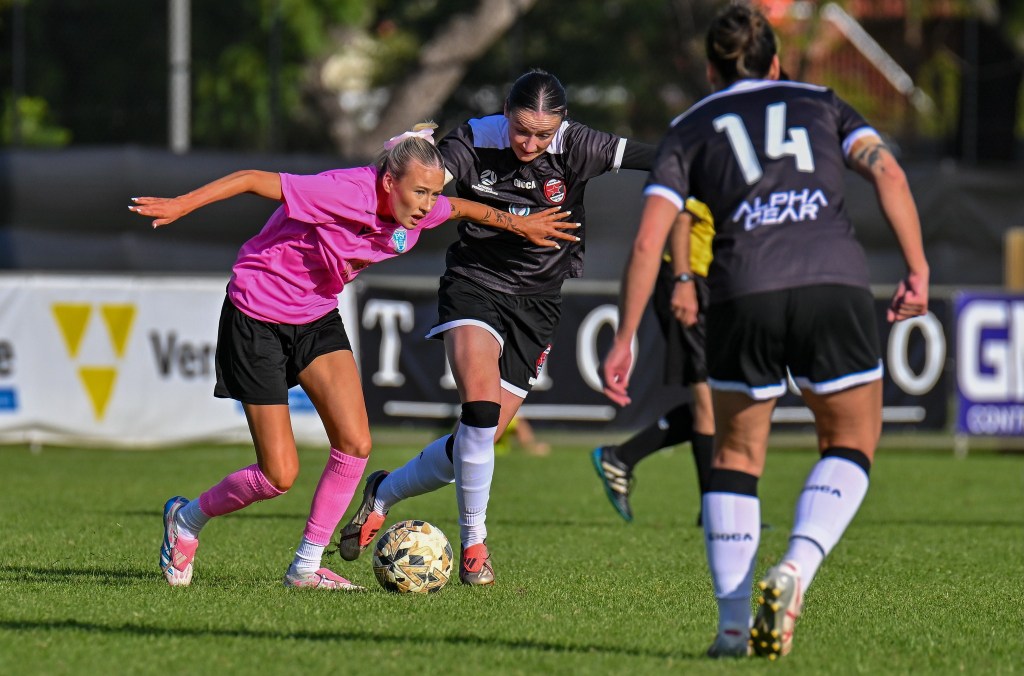
Above:Perth SC’s Ella Lincoln (pink shirt) battles away in the NPLW WA game with Perth RedStar, which was watched by Kieran Yap. Perth SC were wearing pink in the match to support Breast Cancer Care WA. Photo: Rob Lizzi.
Impetus’ Ben Gilbyand Kieran Yap have covered the NPLW for a number of years now. Whilst Ben brings weekly in-depth coverage from the Western Australian competition, Kieran does the same for the league in Victoria. One of the age-old questions is – how do different state NPLW competitions compare?
In order to have a go at answering this question, the pair swapped leagues for one weekend each. On 21st June, Ben Gilby watched Heidelberg United against Bentleigh Greens and Bulleen Lions take on Spring Hills in the NPLW Victoria, whilst on 28th June, Kieran Yap viewed Perth SC v Perth RedStar in the NPLW WA.
Whilst it’s virtually impossible to arrive at any concrete ideas from just viewing such a tiny number of games, there were some themes that were immediately apparent.
Before we look at Ben and Kieran’s observations in more detail, there are some important caveats to consider. Whilst this is the 10th season of Victoria’s NPLW, 2025 sees only the sixth year of the competition in Western Australia. The relative population sizes – Melbourne at 5,200,000 and Perth at 2,300,000 are a factor as well.
Victoria boasts three A-League Women clubs, and just across the state borders, a further three more in Canberra United, Sydney FC, and Western Sydney Wanderers. Western Australia has just one A-League Women club and huge travelling distances to the nation’s other states.
Victoria’s NPLW currently has 12 clubs with annual promotion and relegation. Western Australia has eight clubs, and in its six seasons, only one club has departed from the league – Curtin University, who were replaced in 2024 by UWA-Nedlands. Whilst the Victoria league has seen four different champions in its nine seasons prior to this one, Western Australia has seen two champions in its five years.
NPLW Victoria
by Ben Gilby
For my first ever look at the competition, I viewed two games on matchweek 13: Heidelberg United against Bentleigh Greens, and Bulleen Lions v Spring Hills.
Going into this round of action, Heidelberg, the league’s defending champions, were six points clear at the top of the ladder from South Melbourne and Alamein, having won nine games and suffered just one defeat (5-1 to South Melbourne). Bentleigh were third bottom with two wins and eight losses.
In my years covering the NPLW WA, games between two teams with such different league records can be one-sided. There is still a gap between the top four or five sides in the league and the rest. However, this game was anything but one-sided from the very start.
This was a battle between two sides who had excellent technical skill – the passing was at speed, with consistent accuracy and rapid movement in short passing movements between midfield and the flanks. Players had very little free time on the ball – control had to be instant, and rapid footwork was a necessity in order to turn markers and make the quick pass to advance play. It was evident that both sides had these abilities despite their very different positions on the ladder.
Above: The impressive attacker Sawa Matsuda, who scored one and set up another of Heidelberg United’s three goals against Bentleigh Greens. Photo: Heidelberg United.
It was a similar situation in the other game, where Bulleen came into the match fourth with six wins from 12 games, and Spring Hills were fourth bottom with three wins and five losses.
Spring Hills were able to cause problems all game long to their higher-placed opponents. Indeed, they would take the lead thanks to Emily Tanaka midway through the first half.
Nia Salleh levelled matters for the hosts with a snap volley at the near post before Dani Butrus hit a powerful low shot with 23 minutes remaining to put Bulleen ahead. Young star Ava Breidis hit a long-range rocket seven minutes from the end to seal the home side’s win.
In this encounter, the pace on show from both teams was standout, both in terms of athleticism and crisp use of the ball. There were regular searing breaks through the tightest of gaps between defenders, and the speed applied to the pass in order to ensure it was too quick for the opposition to cut out. Across both matches, the game was much less transitional than it tends to be in the NPLW WA, with the ball being held onto by the attacking team for significantly longer before moves broke down.
A key reason for this is the observation that, as often as possible, the player in possession always had more than one option for the pass, generally an on-the-floor pass in order to maintain possession, with teammates in close proximity both inside and out on the flanks.
The above is not meant as a slight on the competition in Western Australia – it just underlines the historic issue that the state’s NPLW has had to face. A number of its best players leave WA to play their football on the east coast. Indeed, two of our best young talents – Bella Wallhead and Tanika Lala were playing in the game between Heidelberg United and Bentleigh Greens on opposite sides. If you can’t find a way to keep young players long-term in your own competition, then it’s very difficult to consistently grow it.
Additionally, unlike some of the NPLW leagues elsewhere in Australia, no A-League Women players go interstate to play in the Western Australian comp. WA does not benefit in the way that Victoria does. So, not only does the NPLW Victoria have more pro clubs to attract players from, but it can also bring them in from other parts of the country.
Linked intrinsically with the above point is the sheer number of A-League Women players taking part in the two games. In the clash between Heidelberg and Bentleigh, Wallhead and Lala were joined by their Perth Glory teammate Sarah O’Donoghue on the pitch at Olympic Park. All together, there were at least seven players on the teamsheets who either played A-League Women in 2024/25 or had done so in recent seasons.
The other game at the David Barro Stadium, where Bulleen Lions hosted Spring Hills, involved a similar number of prominent A-League Women players, including two of the brightest young stars in Paige Zois and Ava Briedis.
Above: Young star Paige Zois. Image: Bulleen Lions.
Zois, who is still in the early days returning from long-term injury, was simply outstanding in this game. This wasn’t just the performance of a good A-League Women player; this is someone who has it in her locker to be a big-name Matilda. Vision, runs, set-piece accuracy, it was a joy to see her directing traffic for Bulleen.
Western Australia isn’t able to match that. Whilst some clubs can highlight current or former A-League Women players – the most prominent of which are Ella Lincoln, Georgia Cassidy, Tijan McKenna, Izzy Foletta, Jess Skinner, Sarah Carroll, Caitlin Doeglas, Gabby Dal Busco, and Marianna Tabain, that is a comparatively small number compared to the total number across the NPLW in Victoria. So it is no wonder that the overall standard is more technical and intricate in the eastern states.
The argument has always been from those tempting Western Australia’s best young talent to the East Coast that they will become better players by taking part in a higher standard league. But, conversely, how can WA’s female players ever get a consistently higher quality NPLW when so many of its stars go east? It’s frustrating beyond words.
It was fantastic to see the duo of Wallhead and Lala mix it in the game between Heidelberg and Bentleigh. Wallhead, in particular, was superb in her link-up play with the outstanding Cam Barriero and Sawa Matsuda. The Western Australian played no-look passes at a rapid pace, she knew the channels to find her teammates, and had quick thinking in changing the point of attack as well as covering her defensive duties.
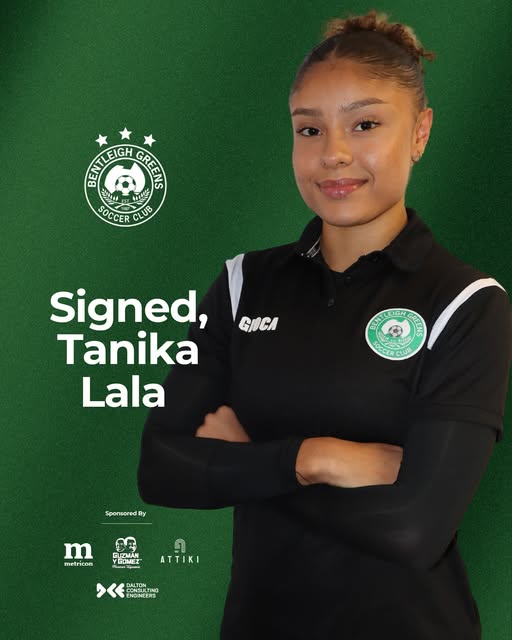
Above: Western Australian attacker Tanika Lala – now at Bentleigh Greens in the NPLW Victoria. Image: Bentleigh Greens.
The goals in that game encapsulated all I described above in terms of quality. Heidelberg had to soak up a lot of pressure in the opening stages, but they hit back on the counter with an exquisite move after seven minutes. A ball from the left was dispatched into the net first time with some aplomb by Sawa Matsuda.
Six minutes before the break, the hosts doubled their lead when Asuka Miyata turned her marker instantly and curled the ball home. With 20 minutes remaining, Bentleigh got back in the game when Lala turned her defender and calmly slotted the ball in. Three minutes from time, Heidelberg made sure of the three points when Matsuda squared a pass for O’Donoghue to sweep in for 3-1 at the final whistle.
Conclusions – A sense of what might be
Above: Bella Wallhead – another of the youngsters who has moved from Western Australia to play NPLW football on the east coast. Photo: Heidelberg United.
I’m passionate about the NPLW WA. The six months or so each year I cover it are the highlight of my football writing year. The characters, the stories, and the gradual growth of the competition are a joy to follow. Yet viewing the two games from the NPLW Victoria this weekend left me with a real sense of frustration. A sense of what might be in Western Australia.
We have great coaches and superb clubs who do outstanding work in supporting young girls and women develop as footballers. Yet we need more of them to stay in our league to enable it to gradually reach the level that I saw in those two games in Victoria’s comp during one weekend.
Can we achieve it? How can we achieve it? Without significant funding and a change of mindset from agents, as well as a tightly joined-up set of thinking between Perth Glory and the NPLW clubs to work in partnership to grow the women’s game in WA by encouraging our best players to stay in the state and not go east, it’s hard to see things changing. We need to throw a u-ey on decades of thinking.
NPLW WA
by Kieran Yap
My main knowledge of the NPLW WA comes from the players who have left it. The legends of the state that became icons of the game, such as Lisa De Vanna and Ella Mastrantonio. Or the ones who stayed and represented their home state while wearing the national team colours, like Kim Carroll. So it was interesting to watch a full league match for the first time between Perth SoccerClub and Perth RedStar.
I was familiar with players from either side, although because my coverage of Victoria’s NPLW I was probably most happy to see Tijan McKenna play again and after watching Georgia Cassidy make an impact for The Young Matildas at the last Asian Cup, I was keen to see how she played outside of Perth Glory and the Australian team.
A glance at both lineups also told me what the table confirmed. These were two of the state’s top teams. It feels common across all NPLW leagues that there are a handful of powerhouses with other teams trying to either catch them or fight for whatever is left, and with WA having a slightly smaller league, it felt particularly pronounced here.
Often, when two strong sides meet, it can be a defensive arm wrestle. Not this game– within 10 seconds, the first meaningful attack had occurred and RedStar had hit the woodwork. A few minutes later, they had the lead. Sarah Carroll hit a perfect half volley from a half-cleared corner, and it was 1-0 to Perth RedStar.
As a first-time viewer, these opening moments felt like I was seeing where the power lay in WA. RedStar looked aggressive, confident, and dangerous with the ball. I was not prepared for what happened next.
Perth SC had been surprised by the early blitz, but soon found their way back into the game. Tijan McKenna got a shot away from long range, and Jess Flannery was there to follow up and equalise.
From this point on, Perth SC seemed to take full control of the game. Daisy McAllister scored twice and Flannery added another to make it 4-1 by halftime. It could have been more.
While RedStar was able to use its pace in the early stages, the growing scoreline made it easier for Perth SC to sit deeper, take fewer risks, and use the mobility and passing of Georgia Cassidy to keep things ticking over.
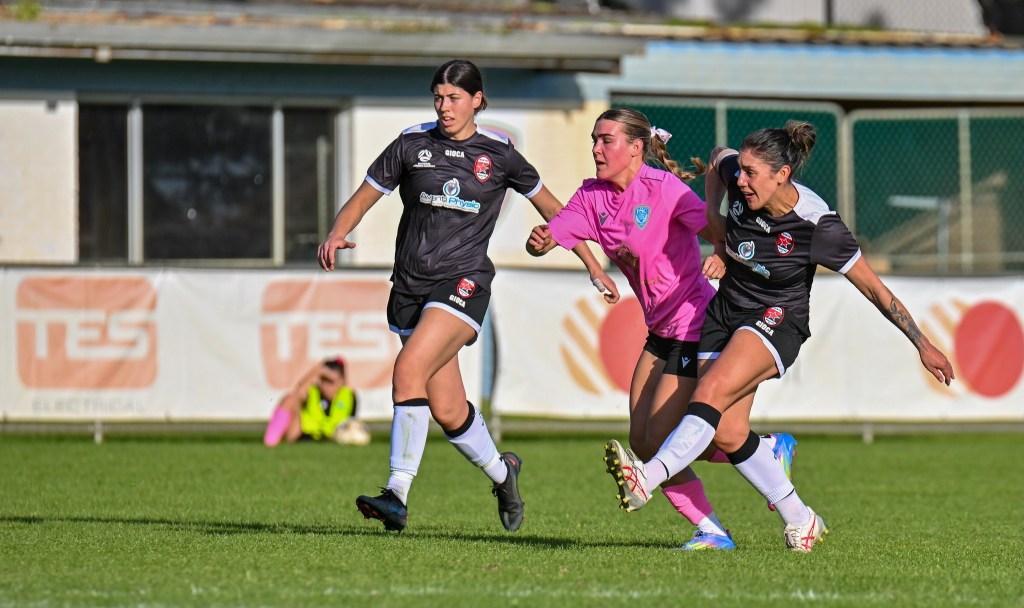
Above: Georgia Cassidy (pink shirt) tussles with Sarah Carroll in Perth SC’s win over Perth RedStar. Photo: Rob Lizzi.
She may not have the highlights reel that Hana Lowry, Leticia McKenna, or Sam Kerr had at the same age, but Cassidy could be one of WA’s brightest prospects. She combines pace and composure in midfield. Cassidy is still a developing talent at the elite level, but this game provided a great insight as to what she looks like in an environment she can dominate rather than learn from.
Keeping hold of the best talent is a challenge for Western Australia’s NPLW. Tanika Lala has recently moved across to Victoria’s league, but the return of Tijan McKenna, her excellent form in the A-League Women, and international call-up have shown that it is still a league that can attract or retain talent.
Cassidy may still need to move states to test her limits as a player. Truth be told, her versatility and ability to cover the entire midfield make her a good candidate for the European League, but right now, it appears WA is the best league for her. Football fans should try and watch her while they can.
The second half saw McKenna leave the pitch after what looked like a knock to the face. RedStar began to work their way back into the game.
A goal from Caitlin Doeglas brought things back to 4-2, and they were then denied a goal from the offside flag, but the momentum had shifted, and the game was opening up.
Sam Mathers’ 68th-minute goal for Perth SC re-established the buffer and effectively ended the game as a contest, but not as a spectacle.
The match ended with Cassidy clearing a RedStar attack off the line with a desperate piece of defending, but the visitors earned a penalty from the scramble. Sarah Carroll stepped up to take it and end the game 5-3.
It spoke of the adrenaline that RedStar approached the entire match with.
Conclusion
Above: Tijan McKenna (pink shirt) battles away for Perth SC against Perth RedStar. Photo: Rob Lizzi.
I don’t know if every game is like this, but if it is, sign me up! This was an exciting, relentless game with quality on display from both sides. Defending at this level is often the hardest part, and the scoreline reflected that.
The attacking quality on display was top-class and ruthless. Mistakes were punished, and any lapse in concentration at the back was potentially damaging. Comparisons to Victoria feel hard, especially this season, where anybody can win on any day. It felt obvious that these were two of the top sides in WA, but based on this game and this game alone, they would both concede similar amounts on a weekly basis in the NPLW Vic.
What this game underlined more than anything is that outside of the most famous names in WA Football history, there is a lot of talent, and not just at the younger end. Like everywhere else, investment can help nurture these players into elite footballers. Where WA appears to have the bigger hurdle is that it is a smaller league, has limited room to grow, and that will always affect things like investment. The geographical distance makes it hard to sign A-League players or even top NPLW stars from other states.
The introduction of relegation in the Victorian NPLW and the expansion of the league from 10 to 12 sides have led to increased investment. Clubs are luring A-League Women talent like Rhianna Pollicina or Maja Markovski, even outside of the obvious title contenders. More importantly, even ‘smaller clubs’ like Alamein FC have heavily investment in academies to develop talent and compete with the big dogs.
Whether WA has the capacity to expand, or to grow and attract sponsors and investors, is something that remains to be seen, but for now, the state league is a great way to watch the best locally produced talent. They did not disappoint, and it looks obvious that this league will continue to produce Matildas.
By Gethin Thurlow and Catherine MacKenzie (06/07/2025)
Above: Reuteler celebrates scoring for Switzerland. Photo: Nick Potts / PA.
Finland 1 – 2 Norway
Team news and context:
A matchup between the two winners of the first gameday, both sides came in knowing a win would guarantee knockout stage qualification. Finland could be extremely satisfied with their deserved underdog victory over Iceland and as such only made one change, with Oona Sevenius coming in for Sanni Franssi as a more direct striker partner to Linda Sällström. Norway however will know they got away with what was an under-par performance against Switzerland but a win nonetheless. Harviken for Mjelde at centre back was their only change as they looked to keep Kosola and Sallstrom in particular quiet.
Scorers: Nystrom own goal 0-1, Sevenius 1-1, Graham Hansen 1-2
Highlights:
After Norway took the lead through an early own goal, it was Finland who took the game by the scruff of the neck and put the pressure on. A good 20 minutes of this culminated in a fantastic jumping save by Anna Koivunen to deny Norway ace Ad Hegerberg. This provided the impetus Finland needed; they went down the other end of the pitch and Oona Siren expertly picked out Sevenius who fired the ball into the top corner from the edge of box.
Above: Oona Sevenius. Photo: WEURO2025 on X.
The half time introductions of Lisa Naalsund and Signe Gaupset initially gained Norway some control, but Finland were the ones pushing for a goal after this and Fiskerstrand had to be in top form to keep the score at 1-1. Norway’s quality eventually came through, as Chelsea’s Guro Reiten had an overhead kick brilliantly saved and Graham Hansen finally got the job done, launching the ball onto the inside post almost like she was crossing it to secure qualification for Norway.
Above: Caroline Graham Hansen seals a quarterfinal for Norway. Photo: nff_landslaget on X.
Player of the match: Cecilie Fiskerstrand
It was another win for Norway where they were outplayed by the opposition, making an outfield choice for player of the match impossible. During the second half, it was only goalkeeper Fiskerstrand that stopped the scoreline from being 3 or 4-1 to Finland, which would have been a fairer representation of this Norway performance.
What next for the teams:
Knowing the maximum points anyone else in the group can get is six, Norway will be well aware that a point in the final game will win them the group, although after what we have seen so far this will not be an easy task. Finland can take heart from a spirited performance, but they will know that better finishing could have won or at least drawn this game. They are still well within control of their destiny as they face hosts Switzerland in the final game looking to secure a knockout berth.
Switzerland 2-0 Iceland
Above: Hosts Switzerland thank the fans. Photo: Florencia Tan Jun / UEFA.
Team news and context:
The biggest news was that Iceland captain Glódís Perla Viggósdóttir was fit enough to start after being withdrawn at half-time in their opening day defeat to Finland due to illness. Switzerland made two changes from their unlucky loss to Norway, with Sydney Schertenleib and Svenja Folmli in for Riola Xhemaili and Noemi Ivelj.
Iceland also made two changes to their line-up. Hildur Antonsdottir was seeing out a suspension after seeing red, replaced by Agla Albertsdottir and Hlin Eiriksdottir was replaced by Dagny Brynjarsdottir for an unknown reason.
Norway’s win earlier in the day meant that no matter the result between Switzerland and Iceland, they would top the group. The battle was therefore for the second place and the group’s last quarter-final spot.
Scorers: Reuteler 76′ 1-0, Pilgrim 90′ 2-0.
Highlights:
The first half was fairly even, the primary highlight coming from a ruled-out Iceland own goal. Whilst Switzerland looked more dangerous, neither made significant chances, and Iceland had the half’s only shot on target. Neither side showed much clinicality in front of goal.
Towards the end of the half, the match ebbed and flowed in a relatively staccato tempo due to the frequent intervention of the referee – at times it felt like an Icelandic player was permanently down needing treatment. The crowd reacted with increasing intensity; boos rang out across the stadium time and time again, particularly towards Jonsdottir, who took her time with every throw-in.
The second half began much in the same vein, with multiple free kicks on either side. One such free kick extracted a sublime save from Icelandic goalkeeper Rúnarsdóttir – who was recently Serie A goalkeeper of the season and may have just caught the eye of a number of major clubs across Europe.
Iceland took control of the game in its latter stages, having the lions share of the possession and spending most of their time in the Swiss box. A goal did come – however against the run of play, it was for the hosts. They pressed high following some point-perfect distribution from goalkeeper Livia Peng, and courtesy of some clinical passing from Lia Wälti, Géraldine Reuteler shot through Rúnarsdóttir’s legs for the 1-0.
The goal gave Switzerland the momentum and the remaining minutes were spent chasing a second goal. It finally came in the 90th minute, a stunning strike from outside the box from Alayah Pilgrim.
Player of the match: Géraldine Reuteler
Aside from scoring the goal that gave tournament hosts Switzerland a lifeline in the competition, Reuteler also made two key passes, won all of her duels and made a number of interceptions and tackles.
What next for the teams:
For Iceland, it is game over. Their last game of the tournament will be their last group game – against group leaders Norway, however even a win would not be enough. A disappointing outing for the Icelanders – in the end, they did not manage to overcome the hostile Swiss crowd.
For Switzerland, it is all to play for as they face Finland in their final group match – a win would see them qualify for a first quarter-finals in their history; a draw would bring goal difference into play, and a loss would see them join Iceland in a group-stage exit.
Moment/player of the day
For England fans who were at Wembley to experience the magic of an extra-time winner against Germany in a tournament final, little will ever compare to the noise that erupted when Chloe Kelly scored the winning goal. Although not a tournament final, one gets the feeling that Reuteler’s goal may have a similar impact: if Switzerland do escape the group, it would be seen as the turning point and the goal that made history.
Above:Perth SC’s Ella Lincoln (right) seen here in a previous game, hit a hat-trick for her side in their 4-0 win at then league leaders Football West Academy today. Photo: Rob Lizzi.
Football West Academy 0-4 Perth SC
by Ben Gilby
The Azzurri ran out comfortable winners in the battle of the NPLW WA top two to leap frog the Football West Academy and hit the ladder summit.
The win came in difficult conditions with the usual strong breeze at the Sam Kerr Football Centre accompanied by driving heavy rain in the second half.
Whilst the opening 45 was largely transitional in nature, Perth were crucially able to have time to play their passes which assisted them in retaining more of the ball than their teenage opponents. Both Ella Lincoln and Sam Mathers put in arguably their most eye-catching displays of the league season to date enabled Perth to have the better of the exchanges.
The Azzurri hit the front just after the quarter of an hour mark when Jess Flannery escaped along the left to pull over a high cross, aided by the wind that Mathers was able to nod home from close range.
The league leaders had just the one major opportunity, which came with four minutes of the half remaining as Sakura Leong crossed in from the right and Klaudia Houlis volleyed the ball into the net, but the assistant referee’s flag was up instantly, judging that the ball had gone over the by-line before Sakura could deliver it.
Right on half time, the Azzurri doubled their lead after referee Jasmine Bremner awarded an in-direct free-kick in the penalty area to the left of centre following a scramble of epic proportions where the ball got caught up amidst a forest of legs. Mathers laid the set-piece off for Lincoln to fire home.
The home side looked to ring the changes at the break with three substitutions made, but it had little impact as within seven minutes of the re-start, Perth went three up.
Lincoln and McAllister combined to the left of centre and McAllister turned the ball across for Lincoln to sweep into the net.
Just after the hour mark there was a chance for both sides in quick succession. First, Flannery and McAllister worked an entry into the box, but Daisy McGreadie Cole made the save. Then, Leong’s pace beat Violet Longmore along the right, however, the eventual shot went wide of the left-hand post for the Academy.
With just over 20 minutes remaining, Lincoln completed her hat-trick after Flannery skipped past Sam Brady on the left hand edge of the box to supply the perfect low ball in for her partner in crime to sweep into the net.
Perth have now produced two statement making results in a row, scoring nine goals against teams who went into those games top of the ladder. With two of the Azzurri‘s final eight games against a red-hot Balcatta Etna side, and further encounters with Perth RedStar and the Football West Academy, it’s going to be a thrilling final third of the season.
Above: Abbey Meakins, seen here in action in a previous game, extended her incredible goal scoring run today to 13 in her last eight games. Photo: Denyse McCulloch.
Balcatta extended their winning run to eight league games as they entered the top two following a sensational five-goal victory at defending champions Perth RedStar today.
Ironically, it was RedStar who were the last side to defeat Balcatta on 4th May by five goals to nil. However, Pete Rakic’s side are a very different beast now.
A jam-packed ten minutes opened this encounter when mere metres separated Emily Dunn from the penalty area when she committed the foul against in form Balcatta midfielder Abbey Meakins.
A free kick was awarded and Meakins’ shot was pushed away by Gabby Dal Busco, with the resuting corner repelled again moments later.
Faye Phillips opened the scoring for the visitors after 11 minutes when taking possession on the left-hand side of the final third gave her enough space to strike a clean volley from just outside the box.
For the 20 minutes that followed, and recurring throughout the game, neither side managed to maintain enough possession to build sustained attacking momentum. The game heavily contested on the wings, marked by frequent interceptions, and set pieces from both teams.
Balcatta found a response through Ella Marwick, whose sharp strike from inside the box caught everyone off guard to double her side’s lead four minutes before the break. Despite close marking by the RedStar defence, her shot beat a well-positioned Dal Busco.
The opening ten minutes of the second half were characterised by a familiar stagnancy from both respective sides. Until that is, Jamie-Lee Gale reignited Balcatta’s momentum by tapping in from a crowded box after a well-delivered corner kick just after the hour mark.
The visitors made it 4-0 when a penalty was awarded as a result of a handball committed by RedStar’s Abbey Woolley following a charge into the box. Meakins stepped up and calmly converted from the spot for her 13th goal in the last eight games.
Gale capped off her dominant performance with a second goal when a charge starting from the halfway line, surpassing the RedStar defence and slotting the ball into an open net with ease.
RedStar showed infrequent signs of an obvious struggle, successfully intercepting passes and maintaining a tightly marking defence. Ultimately, it was the home sides inability to generate attacking momentum that cost them. It’s now a very un-RedStar like 10 goals conceded in their last two matches – both of which were against top four rivals.
Scorers: Phillips 11’, E. Marwick 41’, Gale 61’, 77’. Meakins (pen) 65’.
Around the grounds
by Ben Gilby
Murdoch University Melville 0-0 UWA-Nedlands
Above: Ellis Glanfield (centre), seen here in action in a previous match, was a key performer for Murdoch University Melville this afternoon. Photo: Denyse McCulloch.
Bottom side Murdoch University Melville (MUM FC) overcame the sending off of Monique Baiamonte to secure their first point of the season against fellow strugglers UWA-Nedlands.
However, it will be the visitors who leave Besteam Stadium as the happier of the two sides, as the draw ensures they continue to hold a six point cushion over MUM FC at the bottom of the table.
Baiamonte saw red with nine minutes of the first half remaining after an altacation in the lead up to a corner. However, the home side rallied strongly and continued to pose a threat into the final stages of this vital clash.
The final 10 minutes saw chances galore at either end. First, for UWA-Nedlands, Rhiannon Short let fly with a long range effort that was held by home keeper Jemma Skinner. Then, Taylor Reid, playing against her former MUM FC team mates embarked on a mazy run which ended with a shot that wasn’t quite powerful enough to trouble Skinner.
With two minutes remaining, Ellis Glanfield broke through for the home side and was only denied by an excellent diving save from Madison Large in the UWA-Nedlands goal.
The visitors responded instantly as Melina Franklin ran free up the right and into the area where Skinner pushed away her shot with a dramatic dive.
Murdoch University Melville had the two last chances. With a minute of regular time remaining, Glanfield was through one-on-one with Large, but put her shot wide. Then, in the dying embers, Sophie Patience saw her shot cannon back off the cross bar.
So near but yet so far for MUM FC. However, their endeavours and character to battle so strongly with 10 players will buoy hopes of picking up the necessary points over the final seven weeks of the season to make up the gap to UWA-Nedlands.
Fremantle City’s winning run now extends to four league and cup games after four goals in 24 second half minutes clinched this victory at Rosalie Park.
The port city side’s striker Leyna Wood claimed a hat-trick, with her first arriving just after the hour mark when she was played in by a beautifully weighted diagonal slide rule pass that found her unmarked in the box to turn the ball home.
A spell of three goals in eight minutes killed off Subi’s resistance, with Annabelle Leek making it 2-0 when she headed in Abbey Green’s corner kick that came in from the left.
Freo scored again when Erin Siah drew home goalkeeper Monique Todd in a one-on-one and squared to Wood to slot in.
Four minutes later, Subi lost possession allowing Wood to complete her hat-trick by turning her marker and roll a low shot that dribbled over the line almost in slow motion.
The home side had the final word deep into second half stoppage time with the goal of the game as Stella Zampogna lifted a glorious shot into the top right hand corner from outside the box on the right.
Ladder
Perth SC P 13 Pts 32 GD +31
Balcatta Etna P 13 Pts 31 GD +27
Football West Academy P 14 Pts 30 GD +23
Perth RedStar P 14 Pts 28 GD +29
Fremantle City P 14 Pts 21 GD +17
Subiaco P 14 Pts 10 GD -19
UWA-Nedlands P 14 Pts 7 GD -50
Murdoch University Melville P 14 Pts 1 GD -59
Fixtures
SATURDAY: Football West Academy v Balcatta Etna, UWA-Nedlands v Perth RedStar. SUNDAY: Fremantle City v Perth SC, Murdoch University Melville v Subiaco.
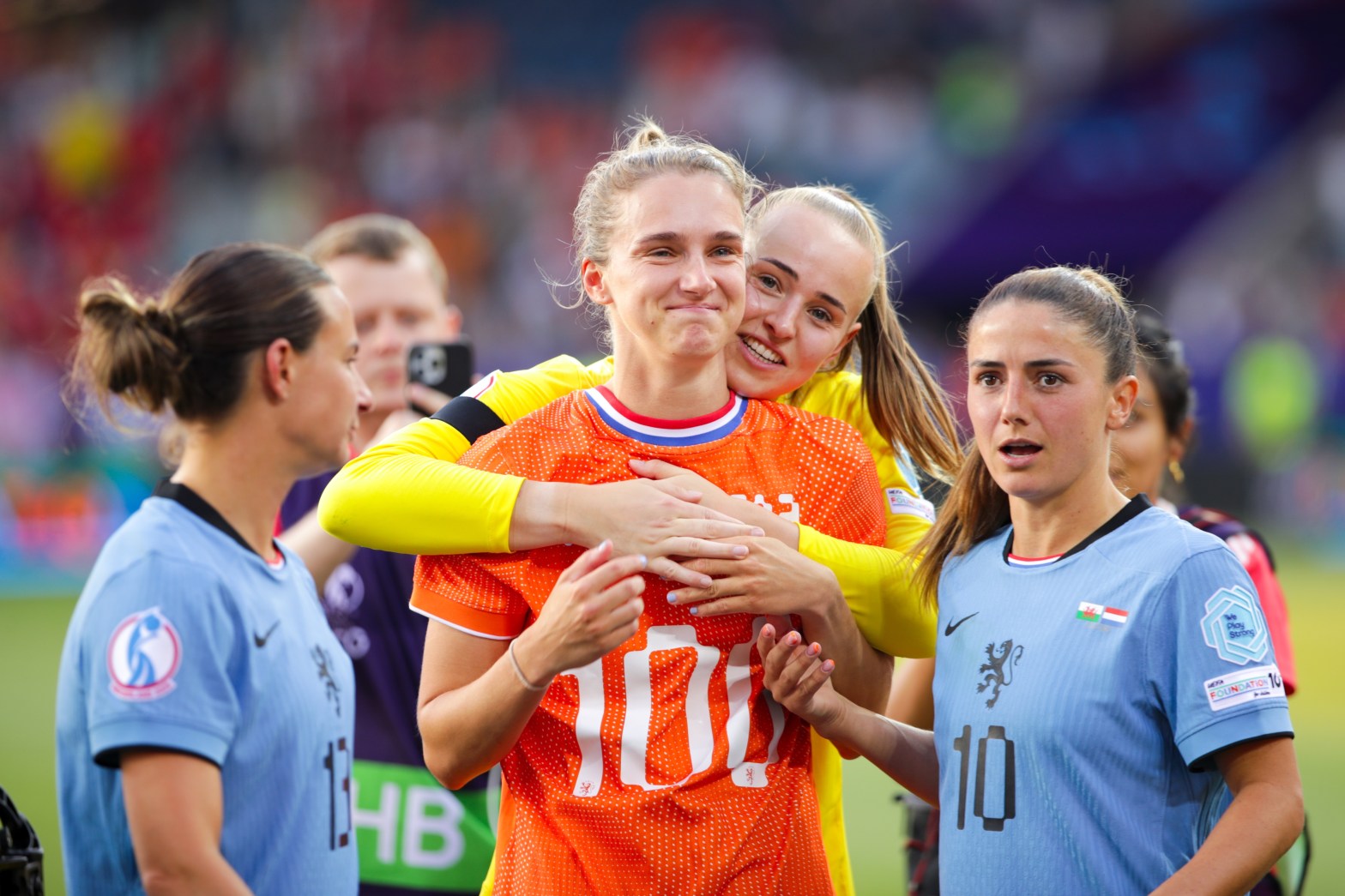
Above: Vivianne Miedema celebrates reaching 100 goals. Photo: Just Women’s Sports on X.
Wales 0 – 3 Netherlands
Team news and context:
Cymru are making their major tournament debut while the Netherlands are looking to add more silverware to their collection after winning the competition in 2017. Since the first meeting between the two sides, the Dutch have never conceded a goal to Cymru.
Chelsea superstar Sophie Ingle started on the bench following a return from the ACL injury left her sidelined for over a year; she is yet to have any game time. Oranje’ captain and record goalscorer Vivianne Miedema started, having been on a reduced amount of minutes since her hamstring injury and missing the final games of the WSL season for Man City.
Scorer: Miedema 45+3′, Pelova 48′, Brugts 57′
Highlights:
A well established Dutch side saw them press Cymru right from the whistle. The Welsh dealt with this press well for much of the first half, making a few chances of their own. However, Wales lacked the quality in the final pass, and a number of strong crosses were met with Oranje heads instead.
It was a struggle to spend time in the opposition box for both teams: the Dutch had most of the possession but struggled to connect in the attack while Cymru struggled to make good turnovers in the midfield. A moment of spark from Miedema saw the Oranje leading just before halftime, as her strong effort beat Olivia Clark. She is now the 10th female player and 13th overall to score 100 goals for the Netherlands. They then came out firing just after half with Van De Donk linking up with Pelova to score the second goal of the game.
After conceding the second, the Welsh defence that had held so strong began to crumble. There was a sublime goalline clearance from Woodham and the Dutch ended the game strongly.
There was also heartbreak for Cymru as Ceri Holland was withdrawn from the field after what looked like a hamstring injury. This was the result that the oranje needed after receiving heavy criticism from the Dutch media following the announced departure of head coach Andries Jonker and subsequent rocky performances.
Player of the match: Josie Green
Although on the losing side, Welsh midfielder Josie Green established herself as one to watch as Wales continue to navigate a difficult group.
Danielle van de Donk also needs highlighting; the new London City Lionesses recruit notched two assists and was invaluable for Oranje all over the pitch.
What next for the teams:
Cymru will continue to build – their main focus on being able to constantly hold a defensive line as the games only become more challenging. They also need to see more of the ball after only having 33% possession. The Netherlands have played their “easiest” game in the group as they face an England side with plenty to prove on Wednesday.
France 2-1 England
Team news and context:
Les Bleues were without new captian Mbock following an injury picked up in training. England started with Jess Carter at left back having had an impressive game. Lauren James returned to the squad after injury and Beth Mead comes in on the right wing. Overall the two teams have meet 21 times in different competitions and friendlies with France winning a 11 of these games.
Scorers: Katoto 36′, Baltimore 39′, Walsh 86′
Highlights:
The aim for England would have been to maintain a solid attacking performance which they did with Lauren James having a shot in target in the first few minutes and then Russo finiding the back of net in the first 15 minutes. The game shifted once this goal was controversially ruled out for Beth Mead being ruled offside in the build-up.
France picked up the momentum following the disallowed goal and made it 1-0 as Katoto pouncing on Cascarino’s cross. A shaken England side quickly conceded another as Baltimore intercepted a loose pass from Bronze – again with controversy as there looked to have been a foul on England’s Alessia Russo in the build-up.
Following substitutions, England began to get back into the game in its later stages. A lapse of concentrating from the France defense meant that Walsh recieved the ball just outside the box and struck it home for her second international goal.
Player of the match: Selma Bacha
The were mutliple player who fit this category: Williamson, Baltimore, Russo. However, France’s Selma Bacha was all over the pitch, defending and attacking. She was doing what was needed for France to win the game and bring success to the side. She was showing why she deserved to be in the squad and what she is capable of.
What next for the teams:
England need to explore more midfield options, every time they receive the ball they are being shutdown. This was their downfall in this match, they were unable to constantly play the ball through the midfield. Both Stanway and Walsh had quiet games.They also need to look at their defensive options as Carter and Bronze were constantly being out paced and struggled to match their opponents. France will be on a high going into their game against the Cymru having just beaten the current champions. England need to win against the Netherlands to have any of retaining their title.
Moment/player of the day
Vivianne Miedema’s 100th goal for country was a classic, featuring a strong shot from outside the box.
Above: Some stars of the competition posing at the WAFCON unveiling. Image: CAF Online.
By Emmanuel Faith (7/5/25).
One could rename this month of July “Women’s Football Summer” thanks to the array of ongoing captivating competitions. The Euros kicked off days ago, and the matches so far have given us a glimpse of what to expect; with powerhouses, underdogs, and great football surely to come.
Outside Europe, there are a couple other eye-catching competitions, and the one that’s grabbing attention at the moment is the Women Africa Cup of Nations, known as WAFCON.
History:
Founded in 1991 and re-christened in 1998, beyond the continental glory, the competition had also been the vehicle of World Cup qualification for the teams on the continent.
The Super Falcons of Nigeria has been the dominant force, having won it nine times out of thirteen. In fact, only two countries have won it outside of the West African queens.
Despite the dominance, there has been a slight shift in the 20th century, with countries like South Africa ending their near-success jinx while new forces are rising in North Africa (Morocco) and South Africa (Zambia).
These four countries represented the continent at the FIFA world cup in 2023, and two of them made it to the Olympics in 2024, signaling a new era for the continent.
Image: Super Falcons have dominated WAFCON since the early nineties. Image: Fervora on Twitter.
The Women African Cup of Nations has always been filled with fanfare and thrill laced with glitz and glamour, and if you are online, you probably have seen a lot of players grace your screen in their eye-catching attire, depicting their culture, heritage and tradition.
But Africa is beyond the glitz, they are the quality, the resilience, the tenacity, the creativity and below are the reasons why you should follow WAFCON.
Global Spotlight:
While there is a lot of spotlight on Europeans, Africans have continued to make history and create new milestones. Until January, the most expensive women footballer in the world , Rachael Kundananji, was Zambian, as well as the second most expensive footballer, Barbra Banda .
The continent has continued to contribute to the wealth of the football world, directly and indirectly.
Above: Until January, these Zambian attackers were the first and second most expensive players in the world of women’s football. Image: NWSL.
Records:
The scorer of the fastest hat-trick in NWSL? A Zambian. Serie A top scorer in 2023? A Malawian. Fastest brace scored in the NWSL? A Nigerian. If you follow the UEFA Women Champions League, the National Women Soccer League and other leagues, then you will be familiar with the great exploits African superstars perform week-in, week-out.
Wouldn’t it be even more exciting to watch them in their country’s colors making their nations proud?
Early exposure to future youngsters:
The Junior FIFA competitions often give platforms to upcoming talent the world needs to embrace, and we have seen it in players like Deborah Abiodun who bloomed in 2023, and Christabel Okuchukwu who burgeoned in 2024 (and scored with her first NWSL goal in 2025). WAFCON gives you the opportunity to witness unearthed gems from the continent, while giving you the front-row seat to their potential journey.
Image: The Moroccans celebrating after a crucial goal scored at the WAFCON 2022. Image: CAF Online.
I could keep talking about the fandom, the excitement, the football culture, the array of colours, the music, the melody and a galore of other exciting spice, but I’d end with a simple advice;
Do not miss WAFCON for any reason. The opening match between the host, Morocco and powerhouse Zambia is already setting the tone for a great tournament. You should have your alarm set already.
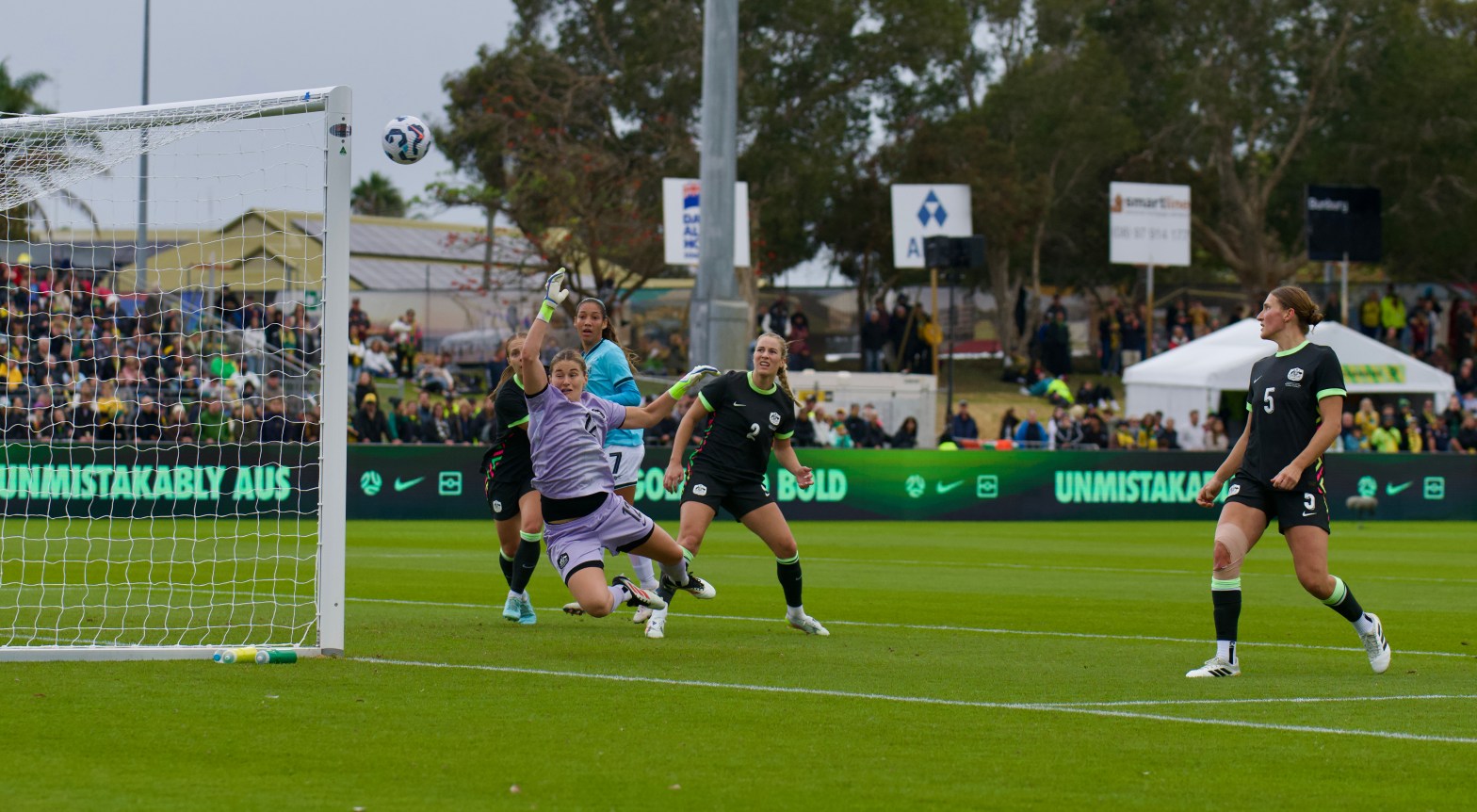
Above: Australia goalkeeper Teagan Micah makes a dramatic save in today’s game with Panama in Bunbury. Photo: Rob Lizzi for Impetus.
World number 56 Panama earned the greatest result in their history with this victory over a much-changed Australia side, who included four debutants, on a chilly, wet winter’s afternoon in Bunbury.
Matildas head coach Joe Montemurro made 10 changes to his starting line-up from Sunday’s 1-1 draw with Slovenia in Perth, with only Kaitlyn Torpey retaining her place. This was due to a combination of some players heading back to club football or managing their minutes.
There was an action-packed opening to this encounter as Holly McNamara escaped down the left to play a dangerous ball into the box. Yenith Bailey in goal for Panama, collided with her own defender Hilary Jaén, and looked to hyper-extend her knee as she fell to the ground under friendly fire. She had to be stretchered off in what was a sickening start. Farissa Cordoba came on in her place.
Whilst Australia had the vast majority of possession in the first half, it was Panama who largely dictated what took place. The Central American side employed an extremely physical ultra-high press and closed down space, not just for any Matildas on the ball, but also managed to largely cut off options for potential passes.
Australia has, historically, had major challenges in overcoming this sort of tactic being employed against them, and it would be the case once more in Bunbury. Panama were making this a highly transitional game, and that was far from the sort of encounter the Matildas wanted.
Key Australia midfield creators Hayley Raso and Alex Chidiac were therefore having minimal time with the ball to drive passes between defenders to set up offensive opportunities.
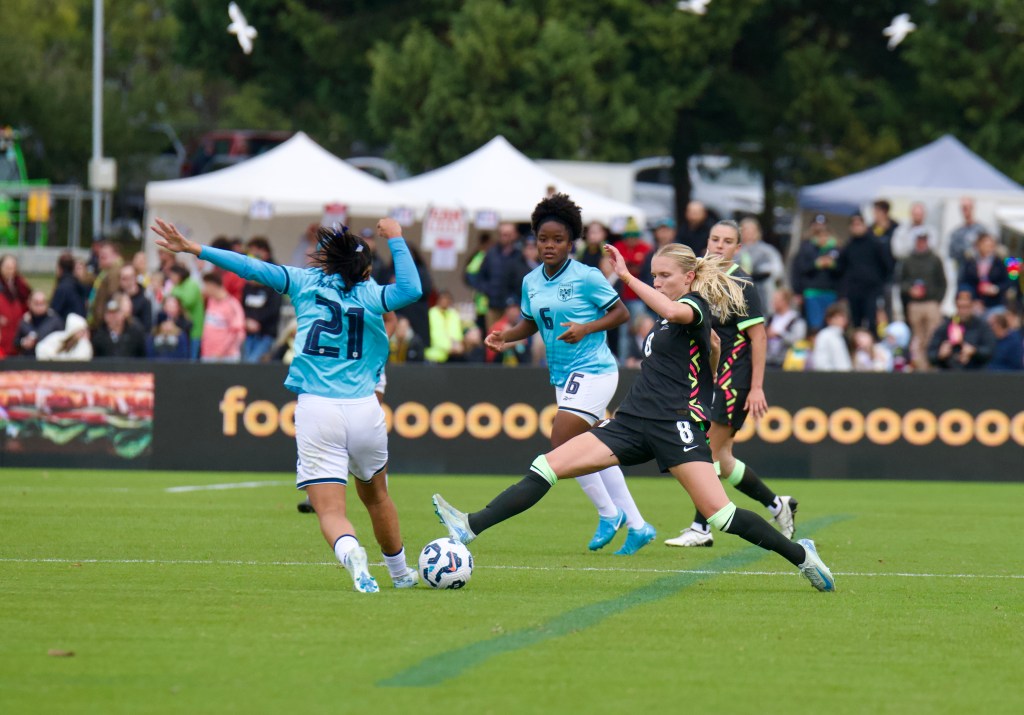
Above: Holly McNamara (8) reaches for the ball as Panama’s Ana Ggabriela Quintero (21) challenges. Photo: Rob Lizzi for Impetus.
Arguably the most impressive player of the half was Panama’s 25-year-old attacker, Riley Tanner, who plies her trade in the USL Super League with Spokanne Zephyr. She was involved with all the Central American side’s best opportunities and linked up excellently with Marta Cox and Deysire Salazar.
With 21 minutes played, she was denied in the box by an excellent sliding block from Tash Prior after Cox played her in. Before the interval, Tanner beat Torpey along the right and advanced to the edge of the six-yard box to fire in a powerful shot that came off the angle of post and bar. She would also supply the cross that found Ericka Arauz to hit a cracking volley on the turn.
The Matildas did have their chances, and just after the half-hour mark, McNamara beat Carina Baltrip-Reyes along the right to supply another dangerous ball for Gielnik, but the striker couldn’t quite sort her feet out, and the opportunity went.
Australia had two further sights of goal on either side of stoppage time in the half. First, Jamilla Rankin pulled a high ball in from the left. Chloe Berryhill got in ahead of Baltrip-Reyes and saw her effort deflect narrowly wide at the near post.
In a bid to beat the Panama press, the Matildas looked to mix it up and go long, and four minutes into stoppage time, Gielnik was played in and saw a shot go wide of the right-hand post.
There was another injury-related blow for the visitors shortly into the second half, as they lost key offensive weapon Salazar. Australia would also feel the consequences of the physical battle as Micah collided with Panama attacker Ana Ggabriela Quintero.
Just two minutes after the latter incident, the Central Americans took the lead when Cox saw her shot repelled by Micah, only for it to fall for Sherline King to turn home on the half-volley with the Matildas’ defence slow to react.
Above: Panama goalkeeper Farissa Cordoba claims the ball under pressure from Australia’s Tash Prior (5) at the back post. Photo: Rob Lizzi for Impetus.
Australia looked to respond instantly and put together their best passing move of the match as Raso found Berryhill in the box, who played a lovely instant pass for Chidiac to hit a shot from close range that Jaén cleared off the line. Shortly after this, Micah left the field to be replaced by Chloe Lincoln.
This was just one of a raft of changes from Montemurro as he emptied the bench in a bid to both get back into the game and run his eye over potential Asia Cup squad members. It led to debuts for Adriana Taranto, Jacynta Galabadaarachi, Alexia Apostolakis, and Grace Kuilamu.
Whilst the tactics employed by Panama were not ideal for the new quartet to shine, they each produced moments of promise.
With 11 minutes of regulation remaining, Galabadaarachi threaded a lovely ball through for Taranto to hit a shot that Cordoba saved. Then, deep into stoppage time, Kuilamu crossed in from the right for Apostolakis to hit an effort that Cordoba repelled brilliantly. The rebound fell perfectly for Heyman, but due to a combination of the rapid ball movement and slightly leaning back, the Canberra United icon put the ball over the top from close range.
They say that a head coach learns far more in defeat than in victory. That will certainly be the case for Montemurro after this frustrating afternoon in Bunbury.
Panama won the tactical battle and posed a puzzle that the Matildas just couldn’t solve with the physicality and extreme high-press that they kept going throughout. Games against opponents such as the Central Americans are the ones where players need to look for something that little bit different, something out of the box. Montemurro will have discovered just which of this group of players could offer that.
Australia’s potential Asian Cup opponents will watch this game back carefully as, particularly in the group stages, they will look to adopt similar tactics to those deployed by Panama. The Matildas now have eight months to overcome such game plans.
Check out our Instagram page @ImpetusFootball for more of Rob Lizzi’s exclusive images from the game.
Above: Lea Schüller celebrating her goal. Photo: DFB_Frauen1 on X.
Sweden 1 – 0 Denmark
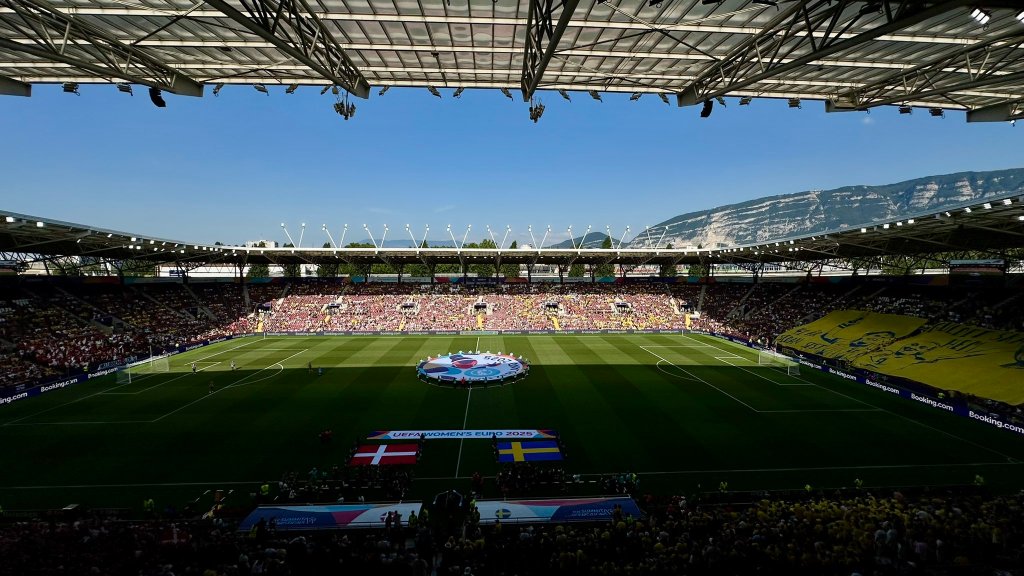
Above: Geneva’s Avspark, setting for Denmark v Sweden. Photo: svenskfotboll.
Team news and context:
There are few ties with as much history and intrigue as Sweden taking on Denmark. The narratives are numerous: there is the fact that their most recent meeting consisted of Sweden inflicting a brutal 6-1 drubbing on Denmark, that Sweden were the tournament’s first winners (in 1984) whilst Denmark reached the 2017 final. Both early trailblazers, they have struggled to make a strong mark in more recent tournaments.
Perhaps most striking is the human element: Denmark captain Pernille Harder and her Swedish counterpart Magdalena Erikssen are life partners who are engaged to be married. However, a meeting in the group stage of the 2025 Euros was not meant to be, as Erikssen was missing due to “overload” following a long season with Bayern Munich and Sweden’s Nations League campaign. There are also Denmark’s twins: Sara and Karen Holmgaard, who both played for Everton last season – Sara recently acquired a move to Real Madrid.
Apart from Erikssen’s absence, the teams lined up largely as expected. Karen Holmgaard started in midfield for Denmark, with twin Sara on the bench.
Scorer: Angeldahl 55′
Highlights:
Barely ten minutes in, there was a stoppage for five minutes as VAR ruminated on a potential penalty for Denmark. Whilst the decision (handball) could have gone either way, that it took five minutes to decide was a source of frustration for everyone involved, and it certainly heightened the atmosphere around the stadium.
The most dangerous moment of the first half was a powerful free kick from Sweden’s Fillipa Angeldahl that produced a brilliant save from Denmark keeper Maja Bay. The second brought more chances for Sweden, and they were finally rewarded via Angeldahl. The equaliser almost came from a Harder header hitting the crossbar, but the game ebbed away with little fanfare towards the end.
Above: Filippa Angeldahl celebrates her goal. Photo: @svenskfotboll on X.
Player of the match: Filippa Angeldahl
Whilst it often feels trite to hand the player of the match label to the winning goalscorer, Filippa Angeldahl is a deserved recipient this time. She created a number of chances – particularly in the first half – and deserved a goal. Sweden’s brightest player on the day.
What next for the teams:
Given that Denmark’s last game against Sweden ended in a 6-1 rout, they can take confidence from this – they were even a Harder header away from a draw. It does leave them lagging behind in group C, but assuming Germany get the win against Poland, the hill is not too tall to climb. Sweden face Poland, which they will expect to win.
Germany 2-0 Poland
Team news and context:
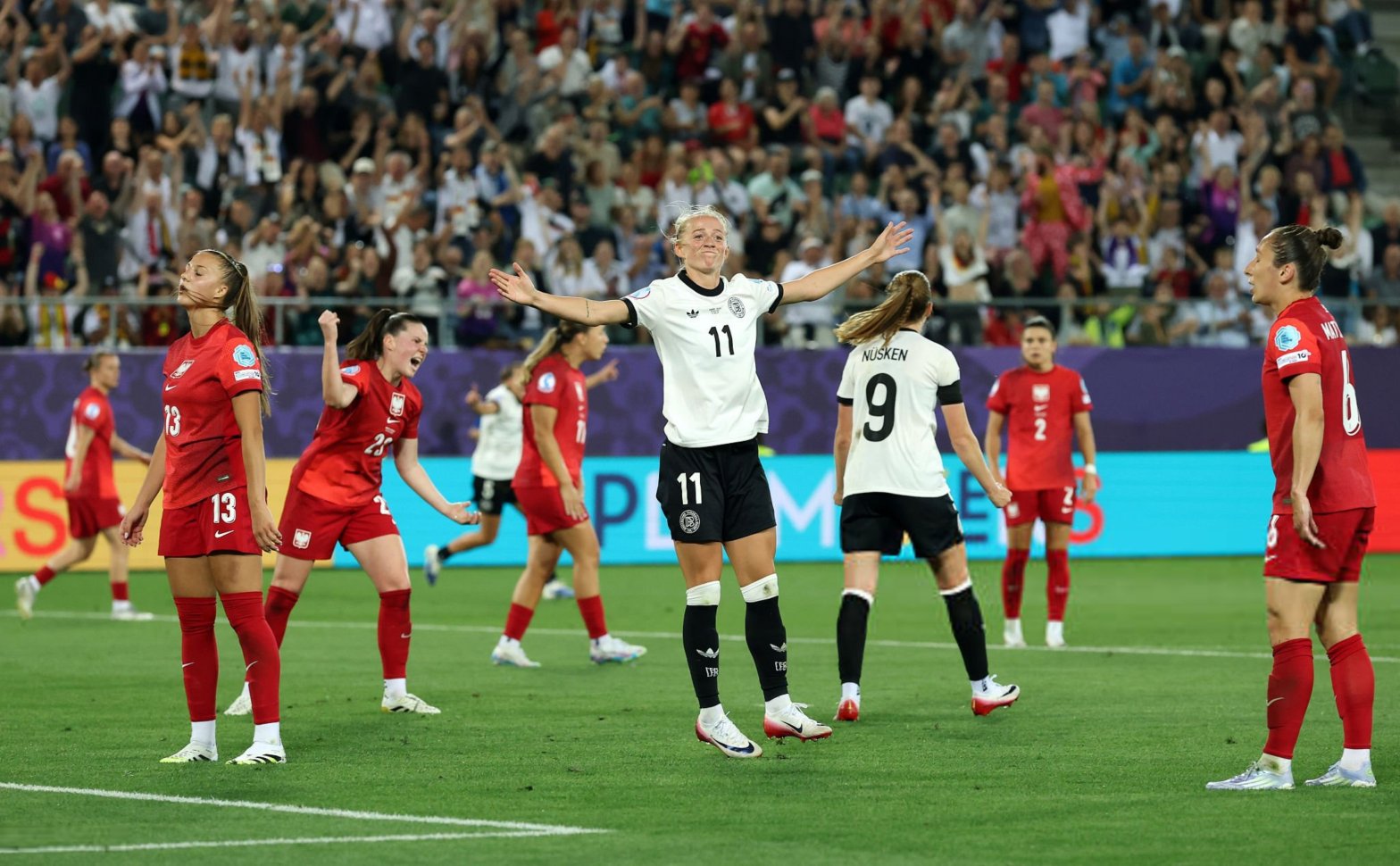
It was almost inevitable that Poland’s first foray into a major tournament would start with a game against the team who have been a dominant powerhouse in Europe, winning the competition eight times. Looking at Germany’s team on the night, this power was obvious, including a front line that would cause even the most hardened defense a palpitation or two; Lea Schüller, Linda Dallman, Jule Brand and Klara Bühl were only some of the German attacking threat in the starting 11.
The star of this Poland team is undoubtedly Ewa Pajor; the electric forward was aided by Natalia Padilla and Paulina Tomasiak on the wings, both with the pace to hit on any uncharacteristically sloppy German passes. West Ham’s goalkeeper Kinga Szemik was tasked with keeping the German attack at bay.
Szemik made news by commenting on the fact that Poland will be the only nation at the tournament without a bespoke kit – telling the Guardian: “We were hoping for a tournament-specific kit, that’s standard for a major tournament. It’s part of the prestige of having qualified. All the others have a special jersey made so why are we treated differently?”
Scorers: Brand 52′, Schüller 66′
Highlights:
It will have been an aim for Poland not to concede early, but few would have expected that the first chance of the game would be for Poland. They would also force stalwart German keeper Ann Katrin-Berger into an important save mid-way through the first half.
The tournament’s most poignant moment so far came when German captain Giulia Gwinn went down and needed medical attention for several long minutes. The player who missed out on almost two years of her career with two ACL injuries looked to have suffered another major setback as she was withdrawn before half-time in tears, and it will be a major blow to Germany if the injury does turn out to be a long one.
With Guinn withdrawn, the Germans reappeared after half-time with renewed impetus. Apart from some nervy moments at the back towards the end of the game, Germany controlled it well, finally breaking through the Polish defence with a wonder-strike from Jule Brand. This was followed up 15 minutes later with a strike from Schüller as Germany sealed the three points.
Above: Germany v Poland. Photo: Bayer Leverkusen on X.
Player of the match: Klara Bühl
From putting in six key passes and creating chances to putting work in defensively and making a few important tackles, Bühl was the standout player in an otherwise quiet Germany side.
What next for the teams:
Tournament newcomers Poland can take some huge positives from the game – they stood strong in front of one of the world’s best teams on good form. They did not give away many chances or make sloppy passes; the first goal was a moment of pure brilliance from Jule Brand. Poland had their own chances, and they will take courage from that moving forward. The biggest test now behind them, they face Sweden next.
For Germany, there were a few cracks exposed. One of the tournament favourites, they have been on sparkling form of late – putting six past Scotland and scoring a lot from all areas of the pitch. However, they looked like they were missing the connections for much of the game, and they often failed to manage Poland’s physicality. Gwinn’s injury is a huge concern, and it is possible that recent results against lower-ranked teams like Austria and Scotland have hidden a bit of fragility.
Moment/player of the day
Jule Brand’s strike was a wonderful goal that will be a contender for goal of the tournament.
Above: Matildas boss Joe Montemurro speaking to the media earlier today. Image: Football Australia.
Having had just under a year since their last major tournament at the Olympics, the introduction of new tactics and players has highlighted the depth of the current Matildas squad.
With the Asian Cup now on the horizon, Montemurro expressed his intention to provide everyone invited into camp with a chance to prove themselves. “There (are) no fringe players, everyone is up for an opportunity…the more players we can have a look at, the better it has been.”
Goalkeeper Teagan Micah offered a player’s insight into the evolving squad dynamic, stating that: “It’s been really exciting, we are all really trusting the process… inviting new faces in the camp, and everyone is really trying to buy into that plan that Joe is selling us.”
As the Matildas turned their attentions from the positives of the two games against Slovenia to the forthcoming pair of matches with Panama, Montemurro described the training sessions as “positive” and “intense…with a few sore bodies”. Off the pitch, the Australia boss is focused on the cohesive development of positively nuanced “attitudes” and “principles” with the ultimate goal of building “a top team”.
Above: Teagan Micah shares her views ahead of tomorrow’s game with Panama in Bunbury. Image: Football Australia.
On his debut series as Matildas head coach, Montemurro adopted a high possession approach against Slovenia. Reviewing the approach he said: “There is always going to be some teething problems, and we saw the change from game one to game two in terms of the timing and the understanding of when and where…its all part of us wanting to be a top team…we need to be comfortable with the ball.”
When looking at adapting this to a Panama side, Montemurro expressed the intention to develop and build on what the squad achieved tactically in the Slovenia series, but then also emphasised that Panama is “a different team…they will not be pressing us all over the pitch like Slovenia. There will probably be a bit of a hiccup in continuity…I don’t think it’s going to be as continuous from game one to game two,” in comparison to the Slovenia series.
Panama’s width and tempo were highlighted as the threats that will need to be overcome by both Micah and Montemurro. Australia’s boss identified the fact that “If we allow them to play through and expose us out wide, they could be a threat,” with Micah highlighting that the team needs to “control the tempo and play our standards.”
Montemurro made his intention to rotate the squad clear, stating, “There will be a lot of changes, but I hope to see the same sort of patterns. There is a real purpose in this camp to make sure we give many opportunities and we look at different combinations”.
With tomorrow’s game taking place at Hands Oval in Bunbury, 169km south of Perth, Montemurro highlighted the importance of his side playing in a non-state capital, stating: “It is great that the game is being spread to some regional areas.”




















 impetusfootball.org