
Whilst the vast majority of the experience in stadiums and around the cities hosting the World Cup has been overwhelmingly enjoyable, Ben Carey highlights two examples of behaviour from overseas fans that has spoilt the enjoyment of other supporters during the group stage (4/8/23).
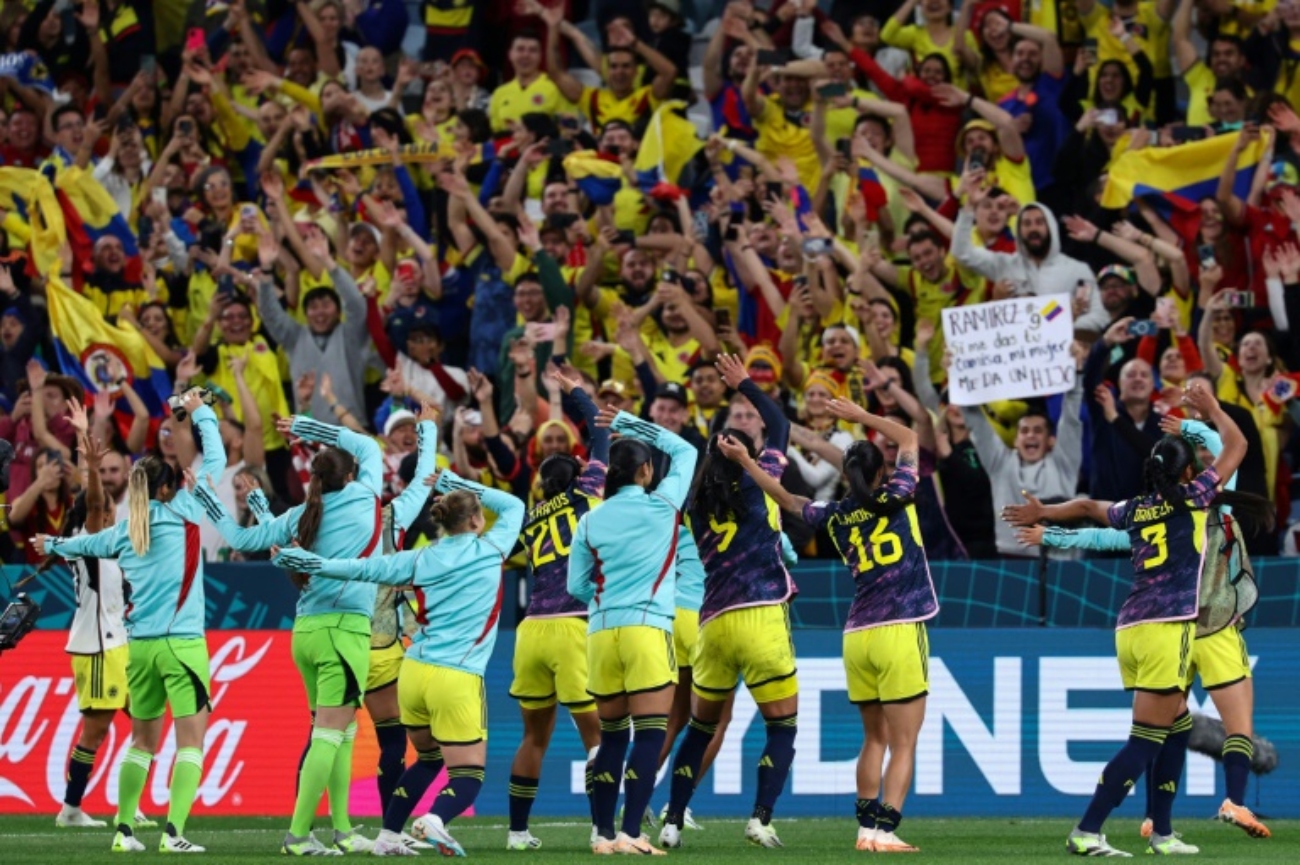
Above: Colombia celebrate with their fans during the World Cup. Photo: FIFA Women’s World Cup.
World Cups are renowned for having huge crowds and a great atmosphere. For the most part, the 2023 Women’s World Cup has lived up to these expectations. But in my mind, there have been a few exceptions to the latter.
France v Brazil was one of my most anticipated matches of the group stages. I knew it would be fiercely competitive and I was looking forward to the incredible atmosphere. The drums, the singing, the chanting. The noise.
I went to the match excited by the Brazilian team and the form they had displayed in their emphatic win over Panama. I was cheering for them to win. I was even seated in one of the blocks with a heavy Brazilian contingent and I was excited about that. For the most part, the atmosphere was incredible.
The Brazilians really supported their team well. They made a lot of noise. There were drums, tambourines, air horns, singing, chanting, cries of love and support. The Brazilian contingent was so dominant in Suncorp Stadium that it actually felt like a Brazil home crowd.
This was a stark contrast to the other matches I’d been to that were dominated by Australian crowds who get loud and excited in the build-up but then as soon as the match starts they all go quiet until there’s a shot or a save. I was impressed by the Brazilian supporters.
Until I saw their true colours.
It became apparent that the Brazilians were big fans of booing. I’m not big into booing, myself, but I certainly understand booing bad calls or dangerous challenges. But the Brazilian fans were booing France for just existing.
Every time they were in possession, every challenge, every injury, every attempt at goals, every throw-in. And they booed extra hard for French corners. One guy a few seats down from me was even yelling at the French players and calling them whores in Spanish.
I was disgusted by what I witnessed and halfway through the match I switched my allegiance from Brazil to France. I simply could not align myself with that kind of bullying and hatred.
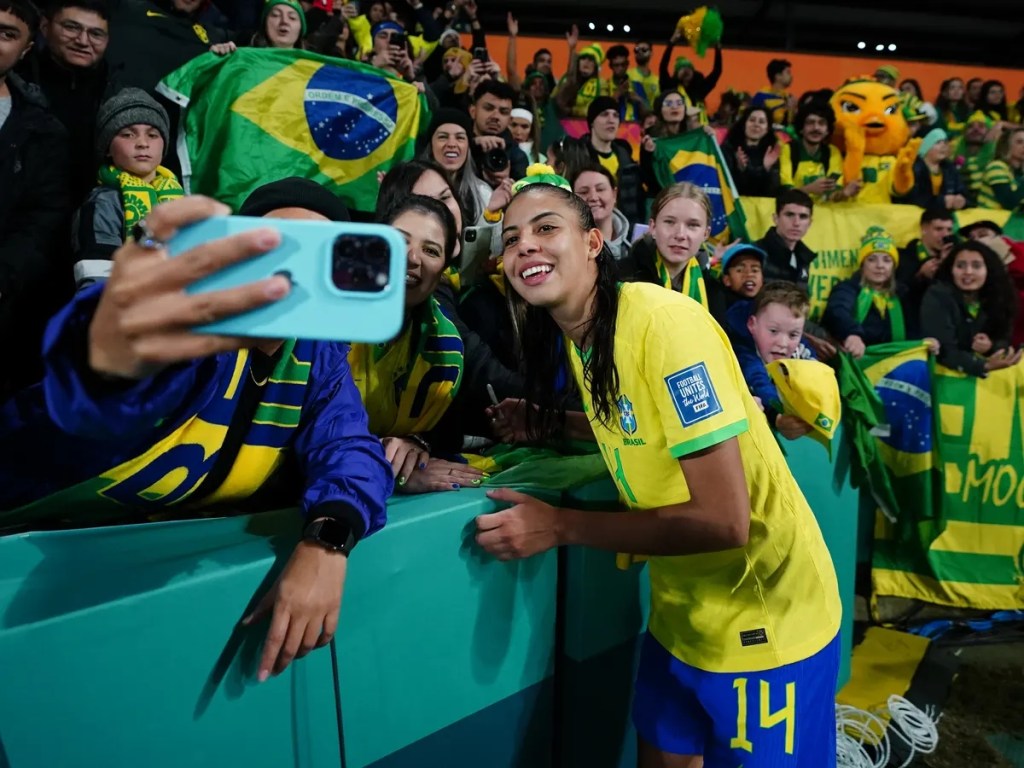
There was one particular moment, late in the match. It was 1-1. There was a loud and raucous chorus of boos aimed at the 22-year-old World Cup debutant, Selma Bacha. Her crime? France had won a corner and she was stepping up to take it. The Brazilians booed. But I cheered Bacha on.
She whipped in a great ball and found the head of Wendie Renard who scored the match-winning goal. Immediately after the goal, the French came over to our corner to celebrate. They rubbed the goal in the crowd’s face: roaring at them, clapping sarcastically, pulling at the French badge on their jerseys. And you know what? Fair enough.
Of course, you can’t generalise and say that every Brazilian fan was awful. Some were fantastic, only offering positive support for their team. A majority of those booing and name-calling were clearly men’s football fans. How do I know this? Because they were mostly men and they were almost all wearing Neymar jerseys, and often chanting about men’s players like Thiago Silva.
It was the same story at Germany v Colombia. The stadium was almost completely filled with Colombians booing the German team at every possible opportunity. There were reports from this match of a little girl (around 10 years old) who was crying because the Colombians were booing her favourite player and she couldn’t understand why. She now wants to watch the rest of the World Cup on TV because she doesn’t want to go to live matches anymore.
This is the exact opposite of what we want from the Women’s World Cup. We want to encourage young girls to cheer on their favourite teams and favourite players. We want to inspire them to play football and to dream to be like their heroes and maybe play in stadiums like these one day.
When I took to the internet to vent my frustrations I was met with some surprising responses. One Twitter user said, “That’s how football culture is, that’s how we live in South America, it doesn’t matter if it’s men’s football or women’s football.” In other words, we don’t discriminate who we hurl verbal abuse at. Another Twitter user said, “I think someone has never been to a football game outside Australia. Go watch some real football with real fans.”
Although their assertion is incorrect, it is true that football culture in Australia is wildly different to elsewhere in the world. It also raises an interesting point for discussion, what on earth is “real football”? I think the answer is actually very simple: according to men, “real football” is men’s football.
Men’s football has way more global fans and vastly more funding. However, despite that, women’s football nurtures an incredible set of values that men’s football lost a long time ago: safety, inclusion, and positivity to name a few. We all want the women’s game to grow and to receive the respect and funding it deserves, but at what cost? How do we make sure that the values of women’s football are always upheld and never forgotten while the game continues to grow?
Personally, I’d prefer a smaller, less successful tournament if it meant that the majority of the people there were aligned with the values of the women’s game. FIFA doesn’t care of course; they just want big crowds and successful tournaments. But as the women’s game increases in popularity, so too will the ticket prices, which might actually be a blessing in disguise. Because any men’s football fan can pay $10-20 to go and support their women’s team and boo the opposition, but would they pay $100? $200? I doubt it. I think higher ticket prices could separate the wheat from the chaff.
Follow Impetus on social media – we’re @ImpetusFootball on Threads, Instagram, Twitter, and Facebook. DON’T MISS our brand new TikTok platform @ImpetusFootball too!
 impetusfootball.org