

by Joe Rosedon (6/6/24)
Above: Liverpool come together – their superb season is the latest in a series of positive years the club has had after a period in the doldrums. Photo: Liverpool FC Women.
It is an exciting time to be a fan of Liverpool. After years in the mire, the club is on an upward trajectory and is pushing to break into the elusive top-three group at the summit of the Women’s Super League. After years of ups and downs, the club has gained stability and, most crucially, investment and interest from those at the top.
Liverpool were founded in 1989 as Newton LFC, but it took until 1994 for that club to be associated with Liverpool FC, adopting the name Liverpool Ladies FC. The 90s were a successful period for the club, maintaining its position in the Premier League National Division, the top tier of women’s football between 1991 and 2010. For its final three years of existence between 2010 and 2013, the league became the second tier.

Liverpool reached the FA Cup final twice in 1995 and 1996, but they failed to win either. As with many women’s football teams, funding issues reared their ugly head, and Liverpool fell foul. They were relegated to the Northern Division in 2003, returned to the National Premier League the year after, and were subsequently relegated again. Between 2004 and 2011, the club fluctuated between promotion and relegation but were able to stabilise and became a founding member of the Women’s Super League in 2011.
The year after, current manager Matt Beard joined for his first spell at the club, leading Liverpool into their most successful period in their history, winning back-to-back Women’s Super League titles in 2013 and 2014 and making their Champions League debut. At the time, the club boasted players such as Lucy Bronze and Fara Williams, ending Arsenal’s nine-year grip on the league title. During the period, Liverpool became the first club in England to offer professional contracts for their women’s team, revolutionising women’s football in the country and opening the pathway for a future all-professional league.

In September 2015, Beard announced that he was leaving the club to take over at Boston Breakers in the USA, and things began to fall apart, finishing seventh in the league. When his departure was announced, Beard said,” I feel like I need a new challenge and I feel I have taken the club as far as I can.” From his perspective, a fresh approach seemed the best way for Liverpool to progress to a new level but evidentially this could not have been further from the truth.
The women’s side lost key players such as Bronze alongside emerging talents such as Caroline Weir, Alex Greenwood, Shanice van de Sanden, and Asisat Oshoala. Considering what these players went on to achieve, it would be fair to suggest that Liverpool’s long-term fans have had regular thoughts of ‘what might have been…’
Bronze left the club to join Manchester City in 2016, where she won the league and cup double in her first season. She then went on to Olympique Lyonnais to win four Champions League titles. Weir would also join Manchester City in 2018, winning two Conti Cups, and two FA Cups. Greenwood, alongside Bronze, won the Champions League at Lyon. When Oshoala moved to Barcelona, she was a key player in establishing them as the premier dynasty in women’s football, winning everything with the Catalan club. The key thread here is that all these world-class players felt they could not achieve the biggest honours in football whilst playing for Liverpool any more.

For a club that is so highly revered and respected around the world, this was a serious stain on its reputation and should have been a warning sign that the situation needed drastic attention and improvement. They failed to heed the warnings. In the 2018/19 season, Liverpool spent £733,257 on wages. This contrasts with Manchester City’s wage budget of above £1.9 million for the same season.
Although Manchester City are a financial juggernaut bankrolled by a nation-state, Liverpool is by no means an impoverished club and could have matched or even overtook City in terms of investment. During that season, the men’s team spent just over £160,000,000 on transfer fees alone, not including the vast wages on top of that. In comparison, £1,900,000 seems like a drop in the ocean. Although it would be somewhat reductive to suggest that all of Liverpool’s issues at this time were based around investment, the teams that are at the top are often accompanied by the highest budgets, and Liverpool was failing to keep up. That season Manchester City finished second in the table compared with Liverpool’s eighth-place finish. Occam’s Razor rings true here.
The 2019/20 season was the culmination of years of disinterest and disregard. This season was riddled with issues from top to bottom that signified the disconnect between the team and the club that had developed. In a cruel twist of irony, whilst the Liverpool men’s side won their first Premier League title, the women’s side games were getting postponed due to the waterlogged pitches at Tranmere Rovers’ Prenton Park, Liverpool’s home ground. After Liverpool’s 1-1 draw against Chelsea that season, Emma Hayes said: “I think the quality of that pitch – the worst in the league – is a stain on their football club.”
The team eventually relocated their remaining games to Chester FC’s Deva Stadium, a near one-and-a-half-hour journey by public transport. Although the club were put into a difficult position regarding external factors such as excessive rainfall, a club of Liverpool’s size and financial might should have been proactive, whether scheduling postponed games at Anfield or at the very least finding a ground that was actually in the Merseyside area so that fans in the local area could attend games with relative ease.

At the time, the women’s side based at Tranmere Rovers’ facility, The Campus. At the same time, the men’s side had moved into a brand-new training ground alongside its academy team, yet there was no consideration for the women’s team.
Regarding the new facilities, Liverpool Director Andy Hughes said, “Everything we set out to achieve – everyone on one side and in world-class facilities”. But this statement was a clear contradiction. How could the club director claim to have “everyone on one side” but have no space for the women’s team to join their colleagues from the men’s and academy sides?
The departures, both players and coach, were not isolated incidents, rather they were emblematic of the poisonous cocktail of decay and apathy that had taken over at the club. It seemed inevitable that the club would drop out of the Women’s Super League, and they did, finishing last in the COVID-shortened 2019/20 season.
Subsequently, another batch of players left the club, their reasons being the most telling of the situation the club faced. Forward Courtney Sweetman-Kirk said upon her departure, “It’s time for a change and a new environment that challenges me as a player and as a person.” Goalkeeper Fran Kitching said, “I can’t wait to be enjoying the game I love again and being truly happy.”
It is often darkest before the dawn. Susan Black was given the role of Executive Director of Liverpool Women in September 2020. In retrospect, this appointment was the catalyst for Liverpool’s steady rise back to the top table of women’s football in England. Her first season in the role can be summarised by two major decisions made by the club.
The first was an increase in funding. The Athletic reported a 21% increase in spending for the women’s team, a reduction in losses, and an increase in the number of permanent staff dedicated to the women’s team. Black must be credited with renewing the interest from those in senior positions at Liverpool, in having ambitions for the women’s side to reach the heights of yesteryear.

The other critical decision centred around on-field matters. When Liverpool began the 2020/21 season in the Women’s Championship, they were led by Vicky Jepson who joined the club in 2018 and oversaw the team amid extensive chaos and uncertainty. Despite this, she remained in her job with the aim to return Liverpool to the WSL as soon as possible.
The season began in frustrating fashion, conceding a late equaliser against eventual title rivals Durham in a 1-1 draw. Durham, a solely women’s outfit proving to a football dignitary like Liverpool that name recognition is far from enough on its own to generate success in women’s football. They followed this draw with three consecutive victories against London Bees, Charlton Athletic, and Coventry United before falling to a 2-1 defeat against eventual promotion winners Leicester City.
The first half of the season followed a similar pattern. Liverpool would seem as if they had figured out how to be successful in the Championship only to come unstuck by a disappointing result, often conceding a late goal. This pattern of form came to a head with back-to-back defeats against Durham and Leicester City.
This was enough to see Jepson resign from her role as manager, replaced by her assistant Amber Whiteley in an interim role for the rest of the season. Although form improved for the rest of the season, it was not enough to secure a return to the WSL, finishing in third position.
The season did have positive aspects to it, however. Young players such as Missy Bo Kernes and Taylor Hinds were given plenty of game time to establish themselves as key parts of the future of the club. Now both players are regular starters in the WSL, Kernes even receiving her first call-up to the Lionesses squad against France as a standby player.
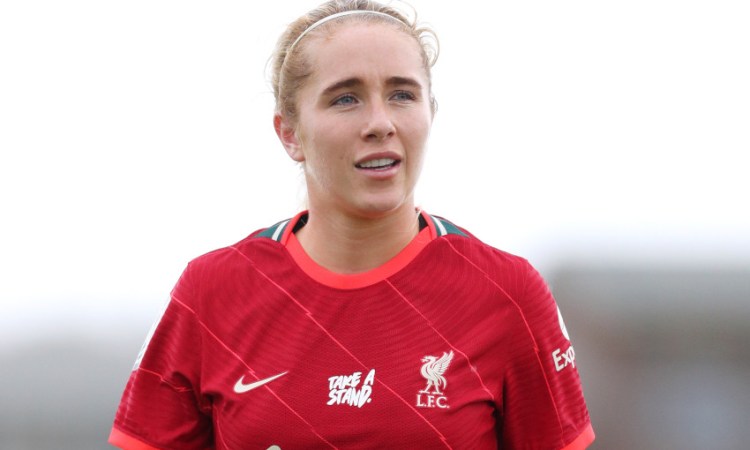
After finding their feet at a lower level, Liverpool needed to hit their stride going into the 2021/22 season, with a return to the WSL paramount. Both on and off the pitch Liverpool delivered. They finished the season in first, eleven points clear of second-placed London City Lionesses, and went a staggering nineteen games unbeaten. Key additions over the both the summer and January transfer windows took the club to the next level.
The signing of Leanne Kiernan transpired to be one of the most important. Kiernan joined the club from West Ham United and despite making regular appearances for the East London side, it had not quite clicked for the Ireland international in terms of goal-scoring returns. However, at Liverpool she thrived, scoring thirteen goals in twenty-two league appearances.
She was joined in January by American Katie Stengel. Stengel, who had previously played in her home country, Australia, Germany, and for Norwegian side Vålerenga provided a wealth of experience. She went onto score an impressive eight goals in 12, giving Liverpool a timely boost in their journey to promotion. Their return to the WSL was sealed with a 4-2 away victory against Bristol City, with two games to spare.
While the side went from strength to strength on the pitch, off the pitch mirrored it. Russ Fraser was appointed Liverpool’s first Managing Director of the women’s team in October 2021. Susan Black said: “His appointment builds on the solid foundation changes already put in place at LFC Women, giving us a structure led by an experienced women’s football leader who can take us forward and continue our rebuilding journey step by step.”
Statements along these lines suggested that a significant shift in focus had taken place and that Liverpool were being much more assertive in terms of women’s football.
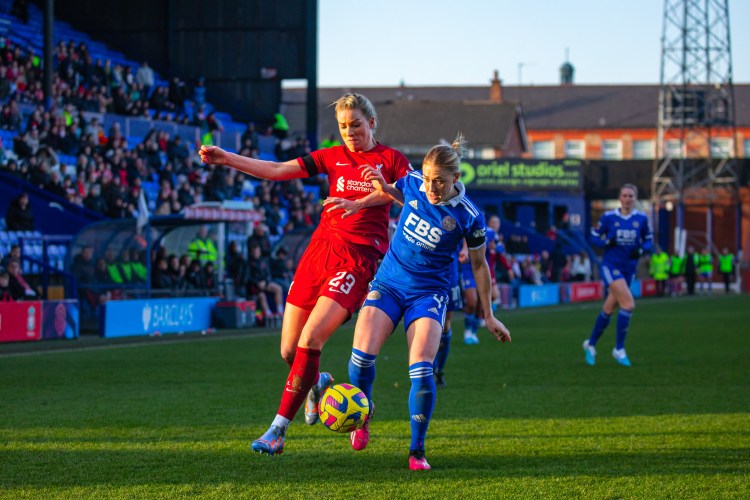
Their first season back in the Women’s Super League resulted in a respectable seventh-place finish. They opened their campaign with a stunning 2-1 victory against reigning WSL champions Chelsea. Stengel slotted away two second-half penalties to ensure all three points. However, the season would be typified by inconsistency. Following this sensational victory, The Reds fell back down to earth, losing 3-0 to local rivals Everton in front of over 27,000 fans at Anfield.
This kickstarted a seven-game winless streak which was finally ended with a 2-0 win over West Ham United. Towards the end of the season, they were able to get crucial wins against Tottenham Hotspur, Brighton and Hove Albion, and Champions League-chasing Manchester City to make sure their WSL status was retained.
Stengel’s goalscoring form continued with the American scoring nine goals in twenty-one league games. These goals were especially crucial as Liverpool only scored twenty-four goal league goals.
However, the most important achievement of that season was the club repurchasing their previous training ground, Melwood, and dedicating it as a permanent home for the women’s team for the 2023/24 season. After years at unsuitable facilities for top-level professional athletes, the players finally had somewhere to call home.
With a committed board, a vastly experienced manager, and a dedicated training facility, Liverpool had all the ingredients for a successful 2023/24. Their opening-day victory against Arsenal at the Emirates Stadium was a thrilling start. Beard’s tactical nous shone through, producing a brilliant defensive masterclass from his team. They limited the home side to three shots on target, forcing them into aimless crosses which experienced defenders like Gemma Bonner could easily combat.
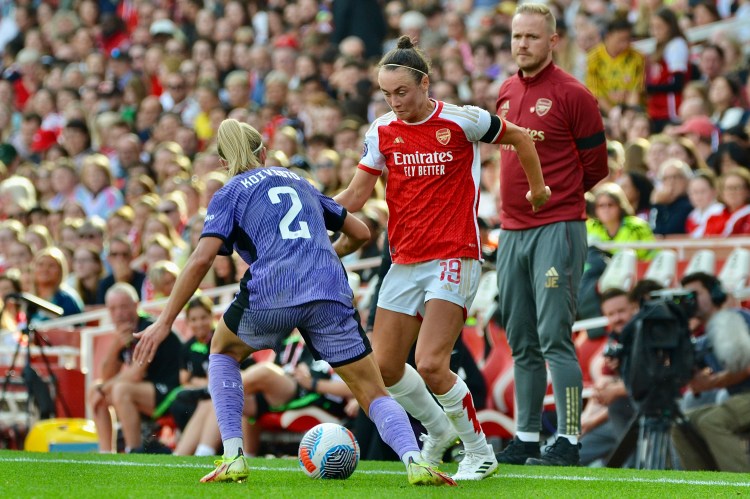
Considering the attacking talent Arsenal possess, this was an incredibly impressive achievement and put them in good stead for the rest of the season. They followed this up with a 2-0 home win over Aston Villa. Unlike last season where they failed to follow up on an outstanding opening-day victory, Liverpool showed that the consistency issues that had plagued them seemed to evaporate.
Beard’s experience paid off in another home win against Chelsea but in a different context. After Chelsea’s physically and mentally tiring defeat to Barcelona in the Champions League, Beard knew they would be vulnerable.
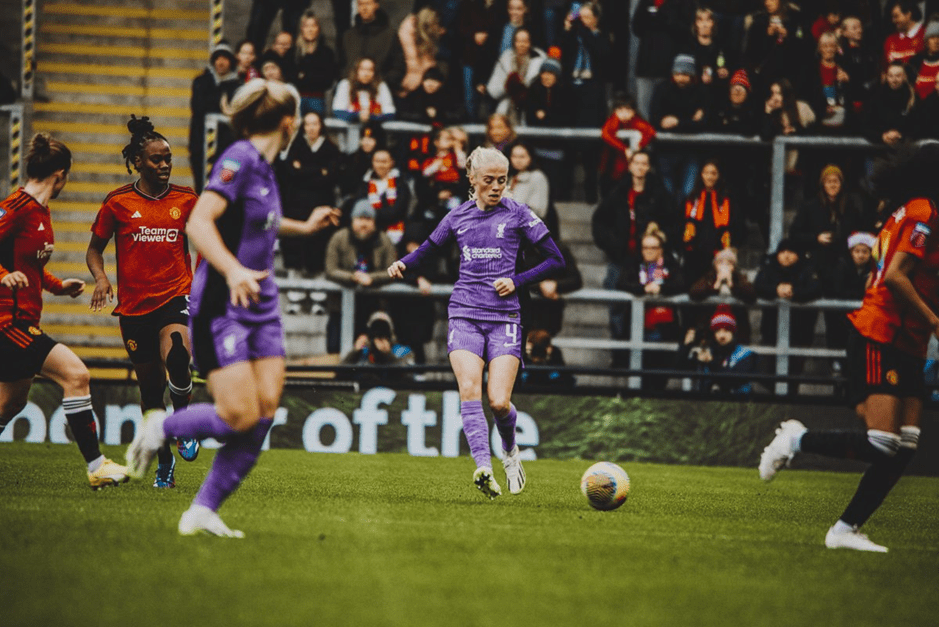
A chaotic game ended in a 4-3 Liverpool win, their attrition proving the key factor in this victory. However, the highlight of the season must be winning both home and away against fierce rivals Manchester United, their first success against the Red Devils in the WSL. These victories propelled Liverpool to a fourth-place finish, their highest place since last winning the league title in 2014.
However, there have been disappointments this season, particularly the FA Cup quarter-final defeat to Leicester City, which, looking at how the competitions have panned out, could have been a real opportunity for silverware this season. But the current makeup and construction of the squad will lead to continued chances of trophies soon.
Beard’s ability to blend experienced players with high-potential prospects has been critical to Liverpool’s success. Their current squad features WSL stalwarts such as Bonnar, Rachel Laws, Niamh Fahey, and Melissa Lawley. They have been paired with younger players such as Mia Enderby, Jenna Clark, and Kernes.
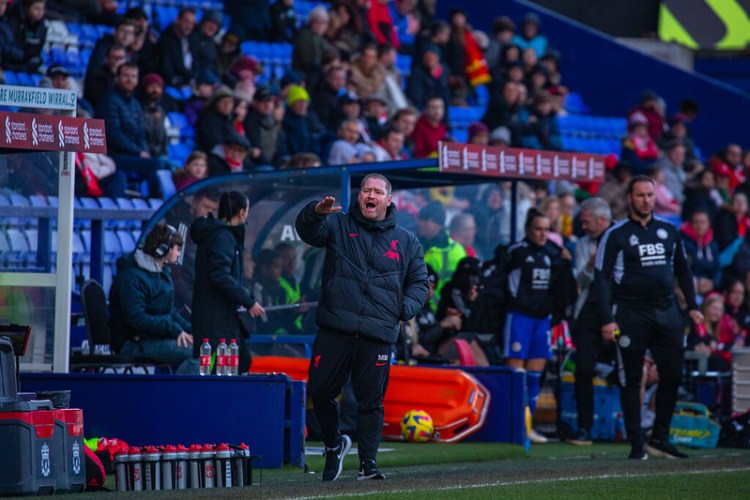
This blend has allowed the experienced players to solidify Liverpool’s status in the league so that when they eventually move on from the club, the younger players will be able to take their places and benefit from the foundations that have been set. Alongside this, recruitment has been excellent. The January transfer window saw the arrival of Marie Höbinger, Sophie Román Haug, Teagan Micah, and Grace Fisk, who all have improved the squad.
Höbinger has had an outstanding season in the Red’s midfield, scoring important goals against Bristol City and Aston Villa, but it is in the creative aspect of her game that she ranks amongst the best midfielders in the league this season. She ranks joint fourth in the league for assists, providing three in the stunning 4-3 victory over Chelsea and another in a 1-0 win against fierce rivals Manchester United in the same week.
Höbinger has also taken the creative burden from the shoulders of Emma Koivisto who was provided four assists last season, the most of any Liverpool player. This allowed Koivisto, who mainly plays in a right wing-back role, to focus more on defensive duties.
One of her favoured attacking options has been fellow new addition Haug. The forward joined from Roma and finished the season with seven goals in the WSL, Liverpool’s current top scorer. Her aerial presence has been a real threat, winning 105 aerial duals this season, double the number of second-placed Millie Turner.
This need became even more crucial when Stengel departed the club last summer, so it is commendable that Haug has been able to take over the goal-scoring mantel. Liverpool’s goals increased to a total of thirty-six. Although clearly the goal-scoring department is heading in the right direction, it’s an area that needs to be focused on. Haug was often paired with Enderby in a front two, so the Norwegian would be more than comfortable playing alongside another forward if Liverpool decide to add more bodies in that area of the pitch.
Fisk as well has also proved to be a crucial signing. The defender joined from Beard’s former club, West Ham United, and has started every game in the league this season. Her performances this season should have her on the cusp of a Lionesses call-up. She has slotted well into a back three alongside Clark and Bonner.
Liverpool’s robust defence has been their defining feature, conceding the fourth least number of goals this season with twenty-eight. Fisk has played an important role in aiding this defensive stability. Not only has she flourished defensively, but her on-the-ball ability is just as important to her game, completing the most progressive passes so far in her career at 94. In comparison, the most she completed at her previous club West Ham was 32.
When called upon this season, Micah has done a solid job deputising for Laws. The Matilda, who had already won two league titles in Sweden with FC Rosengård, produced solid performances when called upon this season. Her standout moment would be the spectacular save she produced to deny Aggie Beaver Jones in the 4-3 win over Chelsea. There will certainly be more opportunities for the Australian in the pipeline
Looking towards the 2024/25 season, Liverpool made another major announcement. The club has moved from Prenton Park to the Totally Wicked Stadium in St. Helens, agreeing a ten-year leasing agreement with the world-renowned rugby league club. It was additionally announced that more home games will be played at Anfield.
While The Totally Wicked Stadium is a much more contemporary facility to Prenton Park, it is further away from Liverpool, clocking in at just under 40 minutes on the train from Lime Street Station. The club clearly feels it is the right step in the right direction, but it potentially will take longer for fans to be on board with the move. Announcing more games at Anfield however is an across-the-board positive move, signifying the importance status the club has in the wider Liverpool family.

The adage states that three times is the charm. After two periods when Liverpool’s future was bright, these have turned out to be false dawns. On this, the third time around, fans, players, and those at the top of the club hope this rings true.
Follow Impetus on social media –
Twitter (X): @impetusfootball TikTok: @impetusfootball
Facebook: @impetuswomensfootball Instagram: @impetusfootball

