By Catherine MacKenzie (29/9/25)
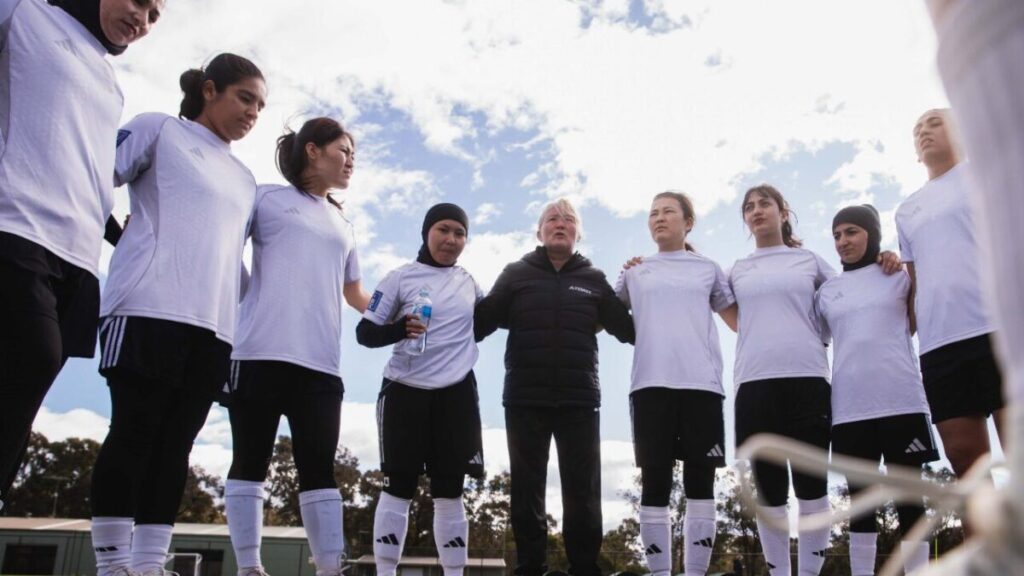
Above: The Afghan women’s refugee team led by Pauline Hamill. Photo: FIFA.
In May of this year, FIFA formally approved the Afghan women’s refugee team. Following the Taliban takeover in 2021, women’s sport in Afghanistan – already subject to violent oppression – was increasingly restricted. The progress made by Khalida Popal – from organising intra-school tournaments for girls to working with the government to form the women’s national team – was suddenly under immense threat.
The Afghan women’s team have not taken part in a competitive match since 2018, and in 2021 many of its players fled the country through fear of persecution. Popal, residing in Denmark as a refugee, helped 500 players and their families evacuate the country, using the power of football to unite players with their new communities: “When you lose your home, the pitch becomes your home”
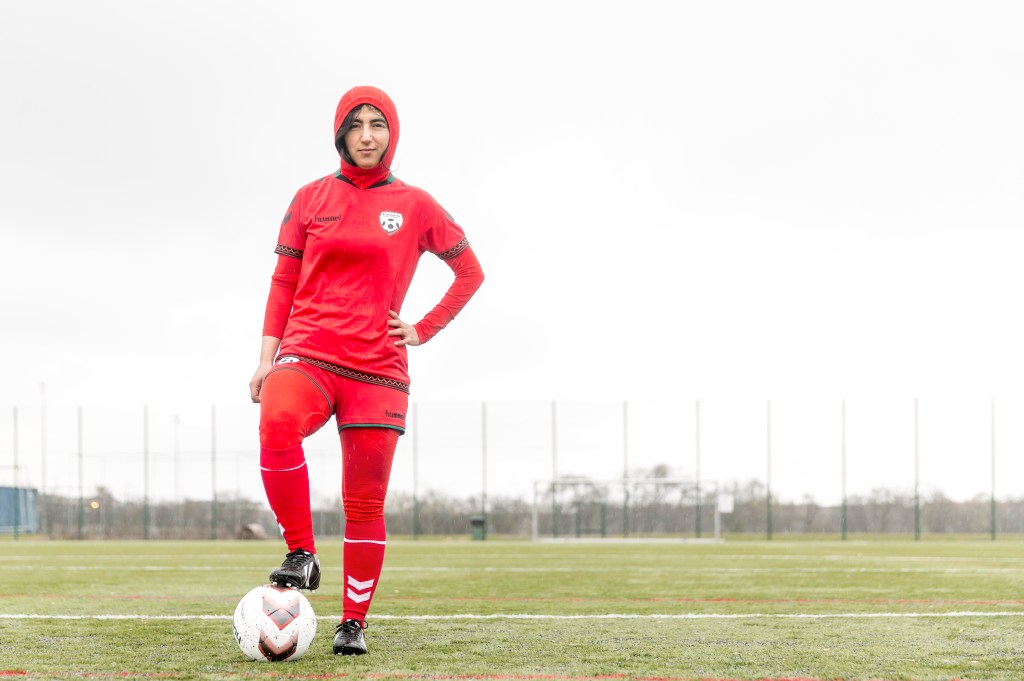
Encouraging the refugees she helped to continue with their football journey and use it as a way of integrating was paramount for Popal. With a government-sanctioned women’s national team off the table, she worked closely with FIFA to ensure these players – now living across the world – had the chance to continue their national legacy by representing Afghanistan with a national team.
This was the basis for the Afghan women’s refugee team. More than 70 players attended camps in Sydney and London to aim for a spot on the 23-player squad that would be coached by former Scotland international Pauline Hamill. The former winger earned 141 caps for Scotland, and became the first female football coach at Rangers football club when she was appointed to a youth development role in 2003. Accepting the role, Hamill said:
“Every player involved has a story to tell about their personal journey in football, and it’s incredible to be part of something that shows them that their dream and ambitions in football still exist. They’ve had to leave their country, they’ve been displaced as refugees, and now all of a sudden there’s this amazing opportunity to come together in this project. It feels bigger and deeper than anything I’ve done before, and that really excites me.”

That Hamill understands the potential emotional impact of displacement is highlighted in her assertion that the role feels deeper than anything I’ve done before; this compassionate approach will be paramount in achieving success.
What success looks like will likely become clear later. Visibility, connection, and growth are all words that are commonly used to describe the team’s aims, athough for now the team are focusing on enjoying being able to play football. Player Najma Arefi recently spoke about what the opportunity to continue playing football means:
“Everyone loves football, the feeling of being free, the feeling of sisterhood, the feeling of joy – forgetting everything behind and you’re just enjoying it and being in the present. That’s why I kept playing.”
Support for players will not end with the 23 players selected to form the squad: FIFA will provide long-term support to play football in ‘safe and inclusive environments’ for all Afghan players living in exile. This will include access to educational pathways, coaching, and counselling.
FIFA Unites: Women’s Series
The squad recently completed a talent ID camp at St. George’s Park in England, where the England women’s national team train, and have their first tournament on the horizon – FIFA Unites: Women’s Series.
The event will take place in the United Arab Emirates – near enough to Afghanistan that the heat will be familiar but far enough to ensure security. Alongside the Afghanistan women’s refugee team, the UAE, Chad and Libya will take part in a round-robin competition with each team playing three matches.
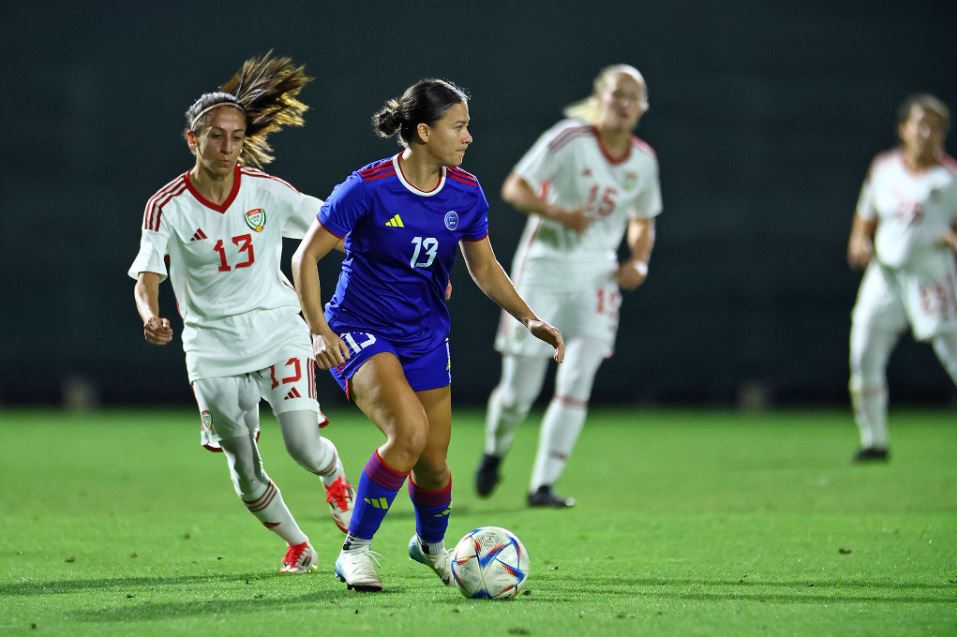
That the competition will be held in Dubai is unsurprising: whilst the UAE is also an authoritarian country, it is regularly considered the most liberal in the Middle East, and Dubai the most liberal of its seven Emirates.
As the host nation, the UAE – coached by veteran Dutch coach Vera Pauw – will be looking to build on recent progresses, such as the 2023 launch of the Women’s Football League. For Chad and Libya, the tournament will provide an opportunity to further grow and develop their international talent, and provide visibility to promote growth.
For the Afghan contingent, the tournament is an opportunity but by no means a solution. The ongoing discrimination by the Afghanistan Football Association still means the games will not count towards the team’s official global rankings. As player Mursal Sadat says:
“We have already lost the chance to compete in two World Cups, and this will not change that. We urge FIFA and all its Member Associations to take all measures necessary to stop enabling the ongoing gender discrimination against the Afghanistan Women’s National Team, and to use their power to ensure the women and girls still living in Afghanistan are not forgotten.”
The FIFA Unites: Women’s Series tournament is scheduled to kick off on the 23rd October, lasting until the 29th.
Follow Impetus on social media –
Twitter (X): @impetusfootball TikTok: @impetusfootball
Instagram: @impetusfootball
 impetusfootball.org
Massive respect to the Afghan women who have so bravely fought through the trauma, hardships and journey you have all been on. Your strength and determination are truly inspirational. Best of luck in the tournament and stay strong 💪 with love from your Football family @ kitaidaustralia ❤️ thanks @impetusfootball for sharing
LikeLike