New Zealand go down to disappointing loss to Venezuela

New Zealand 1-3 Venezuela

by Jonathon Hagger (1/6/25)

Above: Football Ferns star Annalie Longo (10) battles away against Venezuela yesterday. Photo: RNZ.

New Zealand began their two-match series against Venezuela in Marbella with a performance that new boss Michael Mayne described as “nowhere near” where they need to be.

Backdrop

The New Zealand Football Ferns secured another international series against South American opposition with two matches against a lower-ranked Venezuela. The Ferns squad assembled players located all across the globe to test their mettle against a team that is preparing to play in the Copa América Femenina against teams like Brazil.

For the Ferns, this was the first match under their newly appointed coach, who had been promoted from an interim role. The appointment of Michael Mayne ushers in a new period of football for the Ferns following a lengthy recruitment process.

While Mayne has held the interim head coach role for some months, there is a marked difference between being a caretaker and being the manager in terms of responsibility and accountability for results.

The Ferns squad was an interesting mixture of veterans and players in development. The two bookend players in the squad, being new mum Betsy Hassett and Vic Esson, both 34 years of age, bring an impressive amount of experience. At the other end of the scale, the Ferns have a strong group of young players who are performing well for their respective clubs. Players such as Milly Clegg and Kate Taylor, while young in age, have played a lot of top-level football.

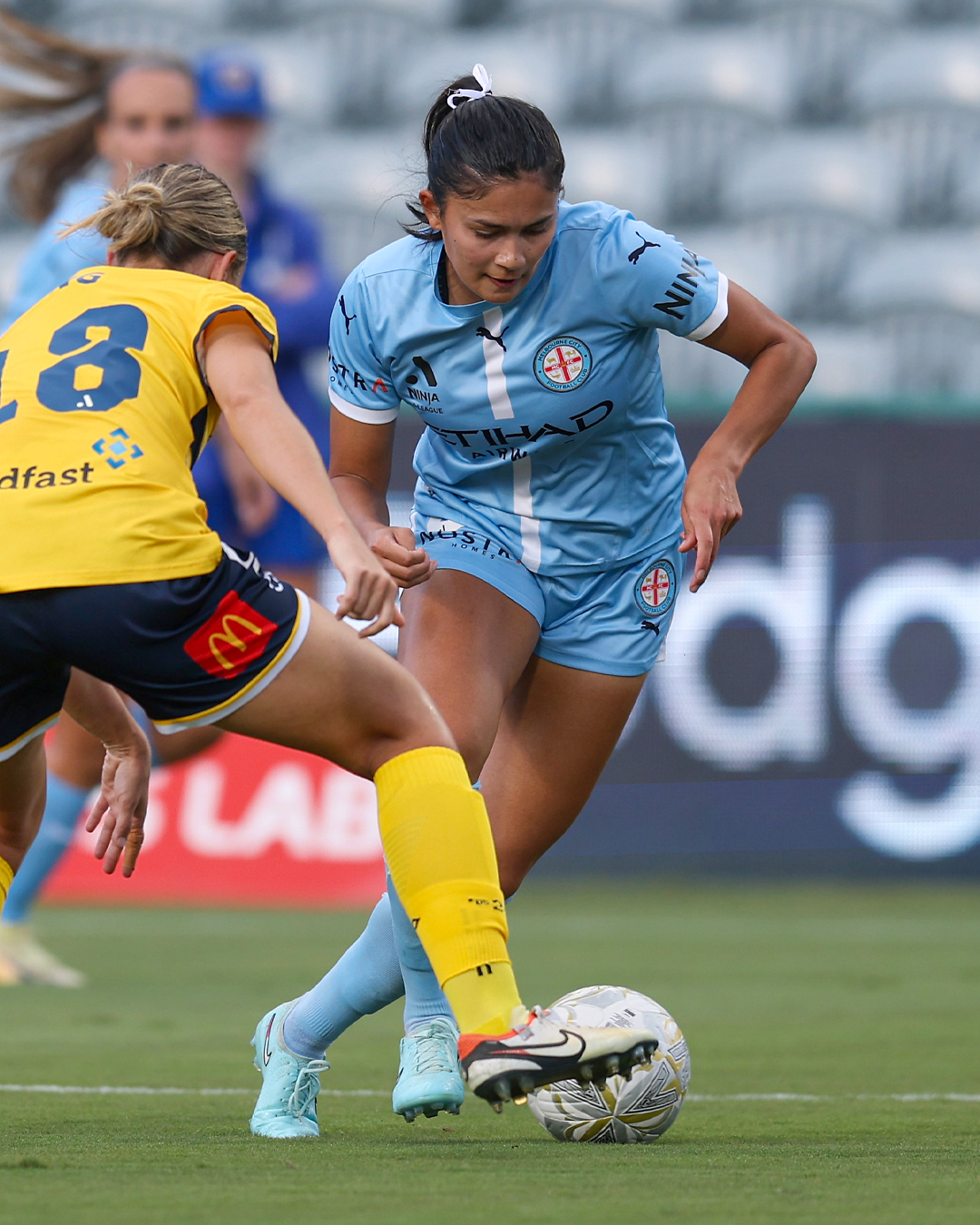
The Venezuelan team, for whom there is not too much written about formally, included players from very well known teams and competitions. Including – the NWSL, Spain, Brazil and US College teams. Of particular interest to Ferns supporters, was the inclusion of Mariana Speckmaier. Formerly of  Wellington Phoenix and now playing for Melbourne City in the A-Leagues competition, Speckmaier is a goal scoring ace. 

Formations

In the previous friendly matches between the Football Ferns and Costa Rica, coach Mayne switched the more traditional playing formation being 4-4-2 to a more attacking 3-4-3. The Ferns started the match with this same formation.

Venezuela started the match with a 4-2-3-1 formation. Coach Ricardo Belli played a balanced approach with a very strong midfield.

The first half

Venezuela started the match and applied pressure all over the pitch. The speed and physicality of the players opened up space across the entire width of the pitch, giving them lots of room to work with.

The pace of the match was dictated entirely by the South Americans. The pressure applied constantly on the Ferns, smothered their game plan, resulting in the New Zealanders attempting to play passes over the top to break through.

The first goal scoring opportunity came in the fifteenth minute to Ferns attacker, Milly Clegg, resulting from a turnover of possession just outside the Venezuelan goal area. The ball fell kindly at the feet of Clegg, who unleashed a shot on goal that was palmed away by the goalkeeper Caceras.

It would be the Venezuelan team that drew first blood with a goal in the 24th minute. A defensive lapse by the New Zealand back four gifted Castellanos a shot on goal that bent beautifully to the left, just past the outstretched hand of the goalkeeper.

The vision of Ferns defender Kate Taylor created an opening for attack in the 29th minute, as she launched a long ball deep into the opposition’s half. Grace Neville’s accurate cross to Milly Clegg was directed at the goal however, the reflexes of Caceras once again saved the day.

The Ferns levelled in the 37th minute, as a result of Venezuelan defenders not clearing the ball from deep in their half. A turnover of possession due to sloppy passing, provided Katie Kitching with two shots on target. The first was saved but not held by Caceras, and the rebound was knocked into the back of the net.

Not to be outdone, the Venezuelan immediately struck back in the 40th minute. Quality passing amongst the midfielders sliced through the Ferns’ defensive setup, leaving a number stranded in space. Defender Romero took a shot from wide outside the goal area on the right-hand side,  steered the ball past three New Zealand defenders standing static, and found the left-hand side of the goal.

The second half

The majority of the second half was a tough battle with neither team making many mistakes or turnovers. It was an arm wrestle through and through.

Ferns midfielder and veteran player, Annalie Longo, was given the ball in positions to shoot on a few occasions, but the speculative shots ultimately came to nothing.

In the 77th minute, Ferns defender Moore, gifted a free shot on goal after an errant pass that was seized upon by young talent, Herrera, but neither of the two attempts on goal went in.

The third goal for Venezuela was scored in the 85th minute as a pinpoint accurate shot taken by teenager Chirinos flew narrowly above the glove of Ferns goalkeeper Victoria Esson, and squeezed underneath the crossbar and into the net. A superb individual effort.

The remaining minutes of the match were played in a conservative manner by both teams as the final result appeared to be done and dusted.

Analysis

Venezuela came into the match with a clear strategy – place fast, apply pressure, be physical. Their team bonded well and played with good chemistry. With 60% of possession, the score line was a very fair reflection of the match.

The Football Ferns didn’t appear to have a clear-cut strategy, and that was evidenced by the score line. The early pressure that was applied on the New Zealanders rattled them, and it took quite a while for the team to work their way into the match. Uncharacteristic defensive lapses cost goals and lost the Ferns the match.

The coaches of each team will be having very different conversations with their players ahead of game two. Venezuela will be looking to do more of the same, whereas the Ferns really need to find their chemistry, particularly in the midfield and on the wings, if they want to be competitive.

Teams: NEW ZEALAND (3-4-3): Esson, Moore, Taylor, Bunge, Jale, Foster, Hahn, Neville, Longo, Clegg, Kitching. Substitutes: Elliot, Stott, Hand, Hassett, Brown, Pijnenburg.

Scorer: Kitching 38’.

VENEZUELA (4-2-3-1): Caceres, Romero, Herrera, Gimenez, Carrasco, Rodriguez, Garcia, Viso, Castellanos, Speckmaier, Grarecuco. Substitutes: Apostol, Chirinos, Herrera, Altuve, Olivieri, Rodriguez.

Scorers: Castellanos 25’, Romero 40’, Chirinos 80’.

Follow Impetus on social media –

Twitter (X): @impetusfootball TikTok: @impetusfootball

Instagram: @impetusfootball

Suffolk Cup Final: Bungay defeated, but positive

AFC Sudbury 5 – 1 Bungay Town

By Darrell Allen (31/05/2025)

Above: Bungay Town in a team huddle ahead of kick-off at Portman Road. Photo: Ben Cunningham.

A cup final against a team three leagues above them was never going to be easy, but there were positives to take from Bungay Town’s performance in a 5-1 loss to AFC Sudbury.

Overcoming adversity, the season saw Bungay retain the Norfolk Women and Girls League Division One title as well as winning the Norfolk Women and Girls League Cup. The Suffolk Cup final ended in defeat for Bungay, however there were positives to be found, especially considering their opponents, AFC Sudbury, play at a level three leagues above them.

Bungay set up with five at the back with the intention of keeping AFC Sudbury out for as long as possible. Unfortunately, that plan went quickly out of the window as Sudbury were in front inside 120 seconds through Maisie Goodwin.

Above: Bungay goalkeeper Chloe Pearce had a very busy evening at Portman Road. Photo: Ben Cunningham.

A second was added within 20 minutes through Pheoebe Guiver, a third on the half hour mark from Megan Edwards and fourth from Emily Newcomb. Bungay were understandably disappointed to be in this position – with three of the four goals being deflections.

Plan A out of the window, the cup had gone but that wasn’t going to stop Bungay Town enjoying their evening and on the stroke of half time, Hazel Saddington brought the crowd alive by playing in Beth Turner. The Sudbury keeper did well to stop Beth finding the net.

This chance gave Bungay renewed confidence and belief that further opportunities could come and the team came out second half and played full of belief. The attitude was nothing to lose and everything to gain as Bungay began to get joy passing the ball around well and creating opportunities.

The seventh-tier side finally got their reward for a remarkable second half performance when Selina Rowland played a wonderful ball down the left to Hazel Saddington to run on to and slot the ball into the net on 76 minutes.

It was an iconic moment for Saddington, a Norwich City fan to score at Portman Road, the home of Ipswich Town. The celebrations that followed were the best of the night as Bungay got the moment they so desperately wanted and deserved in the game. AFC Sudbury manager Luke Mallett was disappointed to concede:

He said: “I think in the first half we showed up and we played good football and we moved it around. They were resilient and kept a low block and had lots of numbers back, but we kept the ball moving and although we could have been a little more clinical, I was really happy with the first-half.”

The remaining 14 minutes and stoppage time saw little action of note as Bungay did well to restrict Sudbury to any further goals and can take a huge positive drawing the second half 1-1.

A special mention has to go Bungay Town goalkeeper Chloe Pearce and the defence who were outstanding all evening, in particular Fran Heaney who received the Player of the Match award for Bungay Town.

At the conclusion of the game Bungay went over to Cobbold Stand where their supporters were housed and appreciation was shared between players and supporters for what was a magnificent occasion for the club and superb performance from the team.

Bungay finished the night with huge plaudits on an evening where they done themselves proud against opposition from three levels higher and scored at Portman Road.

In a season of huge success and so many reasons to be proud, this was a fitting conclusion and memories for life for all the players and staff who were involved on Tuesday night.

TEAMS: AFC SUDBURY: Amelia Carter, Sophie Jeffrey, Leonnie Beazant, Eleanor Rossiter, Aliyat Lambe, Alex Penny, Maisie Goodwin, Jessica Allen, Megan Edwards, Phoebe Guiver, Lina Nagib. Substitutes: Maddison Carpenter, Lily-Jo Hinton, Kaste Edwards, Emily Newcomb, Jade Barrett.

BUNGAY TOWN: Chloe Pearce, Grace Storey, Charnelle Riggall, Ruby Roos, Abi Bell, Lauren Purling, Beth Turner, Mia Rose, Hazel Saddington, Fran Heaney, Selina Rowland. Substitutes: Maddie Flatman, Lila Eden, Sofia Serghiou, Molly Webb, Brooke Osborne.

Follow Impetus on social media –

Twitter (X): @impetusfootball TikTok: @impetusfootball

Instagram: @impetusfootball

“I’ve Got the Taste of Trophies”-Steph Catley Eyes More Silverware After Historic Win

Isabelle Campbell  31/05/25 

Above: Steph Catley (right) celebrates the Champions League. Photo: Arsenal Football Club

Returning home after Arsenal’s UEFA Women’s Champions League triumph, Steph Catley is still processing the scale of what she and her teammates achieved. The moment that saw three Matildas achieve European glory.

“It’s been a big few days, biggest of my life, my career, I would say,” said Catley in a media conference. “Something I’ve dreamed of my entire career, it’s the pinnacle of football and being able to do it alongside my two Aussies and just being part of Arsenal and being that club in England to do it again, it’s very, very special. 

“And then, to come back here and celebrate with the Tillies and all the girls has been really lovely.” 

Back in camp with the national team, the shift from celebrating to preparing for matches has come quickly. Catley, finding out from the media that interim coach Tom Sermanni shared his plans to start the Arsenal trio in Canberra on Monday night. 

“Did he just? Okay, he hasn’t told me that,” she said with a laugh. “I mean, I feel good. Obviously, we have had a big couple of days it’s obviously a long way to travel and we only travelled a few days ago.” 

“But I’ll be ready and the girls will be ready. It’s the end of the season, so it’s not like we’re unfit or not ready to play. We’re definitely ready to play.” 

“It’d be nice to get back on the field again. I’m not a very good sub. I don’t like sitting on the bench. I get a bit antsy. So I’m happy to play.” 

The emotions of the win haven’t faded, and for Catley, they may not for quite some time. 

“It’s a massive high. I don’t know that we’ve necessarily come down. I think it’ll stay with us for a long time.” 

“The recovery’s been interesting because, straight on a plane to Australia isn’t the easiest way to go about it. But it’s something that I don’t think I’ll come down from for a very long time.” 

Now, with an Asian Cup on home soil fast approaching, Catley said the experience of winning the Champions League has only heightened her ambition to bring silverware home in the green and gold. 


“I think it just gives you a little taste of what’s possible, being at a club like Arsenal, I always believed we were capable of doing it, but actually doing it is a whole other thing.” 

“And especially when you’re coming up against a team like Barcelona, sometimes it feels quite far away. But to actually do it, it just makes me sort of think of my career and think about the things that I really want to achieve.” 

“And winning silverware with the Matildas has always been top of my list.” 

She’s determined to bring that success into the national team setup following what she admits to have been a tough few years. 

“I’ve got the taste of trophies and that would mean a lot to me if we were able to do that. I think it’s good for at least the three of us to have the taste of that and to be able to lead that success and that hunt for success for our team.” 

Catley’s leadership and recent success have already had an impact on the national camp. Debutant and goalscorer Kahli Johnson spoke on how much of a boost it was to have the Arsenal girls return fresh from victory. 

“You see a player like Kahli [Johnson] come in tonight and she looks like she’s been in our team for a few years. We’re still finding gems like that and I think coming into a major tournament, that’s the most important thing you can do, try to have a bit of depth there and some competition.” 

“If we can inspire any girls at any level in this country to go out and want to be a Matilda, then that is our main job and that’s what we want to be doing.” 

Exactly a year before Arsenal’s historic win in Lisbon, the team had been in Melbourne playing a relaxed postseason friendly. Catley looked back on the stark contrast between those two moments. 

“It’s pretty amazing. It’s two very different scenarios. We were looking at photos from that tour before playing the game and how different the situations were, that we were in our postseason, just having a great time in Melbourne compared to being in Lisbon, about to play the Champions League.” 

From a relaxed postseason friendly in Melbourne to lifting the Champions League trophy in Lisbon, Steph Catley has experienced a remarkable journey over the past year. 


This victory has only strengthened her desire to achieve more, both with Arsenal and the Matildas. For Catley, the Champions League win is a milestone, but not the final destination. 

Beever-Jones bags hat-trick as Lionesses put six past Portugal

England 6–0 Portugal

by Ava-Marianne Elliott (30/5/25)

Above: England celebrate last night. Photo: Christine Oughton for Impetus.

Under the lights at Wembley, England were ruthless. The Lionesses comfortably saw off visitors Portugal in a win that saw them retain second-place in their Nations League group, setting them up nicely for their away trip to group leaders, Spain, on Tuesday. 

This coming summer is a busy one for the Lionesses. The time left on the clock until kick-off in Zurich is quickly passing. Just 36 days remain until England play their opening game of the tournament, facing France at Stadion Letzigrund. The Lionesses will hope to come out roaring and set the tone for their campaign in the early stages as the reigning European Champions. 

There was a huge pressure on Wiegman’s side to deliver a result, as this fixture came just three days after Mary Earps’ shock departure. The loss of the keeper sent shock waves through the fan base, the decision to retire from the international stage with immediate effect coming a month before Switzerland, but this win was more the convincing. 

The impact of Aggie Beever-Jones

With Alessia Russo out with a calf-injury, England needed to opt for another option in the nine role, and Aggie Beever-Jones more than stepped up. The 21-year-old ran riot at Wembley, consistently outsmarting the Portugal defence and achieving a hat-trick in just 33 minutes. The forward continues to shine brighter with every passing game, 

Aggie Beever-Jones etched her name into the history books with that performance. The 21-year-old forward was a relentless burden for Portugal, constantly creating the right space at the right moment to achieve a hat-trick in just 33 minutes. Whilst the rest of the squad were flawless, Beever-Jones was on a completely different level.

With usual starter Alessia Russo out of commission with a calf injury, Sarina Wiegman opted for a front three of Beth Mead, Beever-Jones and Lauren Hemp. The trio worked impeccably, with Hemp and Mead’s work down the channels proving to be a huge problem that Portugal just weren’t able to match. With Beever-Jones leading the line, the excess of 48,000 fans were certainly in for a masterclass. 

There was a huge uproar from the stands when she opened the scoring in just the third minute, outsmarting the opposition backline and finding herself the perfect pocket of space to send a shot past Inês Pereira and into the bottom left-corner.

Her second goal was the third of the half. The Portugal defence were trailing, and a brilliant cross from Lucy Bronze allowed Beever-Jones to send a well-executed header into the back of the net. 

Beever-Jones’ third came in the 33rd minute, where she successfully bagged a hat-trick on her Wembley debut, making her just the second England women’s player to do so. Captain Leah Williamson’s incredible vision for a long pass found the Chelsea starlet, who took a couple of touches to bypass the defence before rocketing a third into the net. 

After that performance, it feels as if she’s cemented her place at EURO 2025. 

Impact substitutions 

This time six months ago, Chloe Kelly’s space in Switzerland was hugely in doubt. The winger was struggling to gain any game time at Manchester City under Gareth Taylor, and seriously considered taking a break from the football scene. Flash forward to the present, Kelly is back at Wembley, scoring just five minutes after coming off the bench. 

The ball started with Alex Greenwood, who had only just made a return to the squad after injury and came off the bench in a triple change alongside Kelly and Maya Le Tissier. The City centre-back made a clever pass that found Mead out on the wing, who had been left to work with too much space. Re-energised and raring to go, Kelly was able to get on the end of Mead’s cross for a great header, making it six for England. 

Another positive change for England was made in the 75th minute, when Keira Walsh made way for a Georgia Stanway return. Stanway has been sidelined since late January with an injury to her lateral collateral ligament in her knee, under-going surgery and leaving a question mark over her head for this summer. Her return bolsters the midfield selection, giving England another strong option for the Euros. 

Above: Beth Mead strikes at goal. Photo: Christine Oughton for Impetus. 

The rest of the action 

Jess Carter was another figure in that England lineup that performed particularly well tonight. Featuring at left-back, Carter was crucial going forwards and in build-up sequences, pushing the team forwards. She also linked up well with Hemp on that left-hand side, overall instrumental, but especially in those first half goals. 

England’s two other goals came from Bronze and Mead. The pair both had a faultless run, with Bronze pouncing on a blocked hit from Carter to secure the Lionesses second goal of the evening.

Mead was a creative and incredibly sharp figure amongst the squad, driving the attack. Her performance was capped with a well-taken goal, her movement to find the right position and pinpoint strike securing England’s fourth. She was the driving force behind the attacking momentum, pushing Portugal’s defence into error and working to ensure they couldn’t recover from the quick deficit. 

Teams: ENGLAND (4-3-3): Hampton, Bronze, Carter, Walsh, Williamson, Morgan, Mead, Clinton, Beever-Jones, Park, Hemp. Substitutes: Charles, Keating, Le Tissier (57’), Greenwood (57’), Stanway (75’), Kelly (57’), Kearns, Parris, Kirby (67’), Moorhouse, Wubben-Moy, Agyemang.

PORTUGAL (3-5-2): Pereira, Amado, Jacinto, Norton, Borges, T. Pinto, F. Pinto, Dolores Silva (c), Costa, Diana Silva, Capeta Substitutes: Morais, Cota-Yarde, Fonseca, Lopes, Ribeiro, J. Silva (46’), Faria (69’), Mendes (86’), Correira (69’) Dias, Encarnacao, De Freitas Martins Lino.

REFEREE: Frida Klarlund 

Attendance: 48,531.

Follow Impetus on social media –

Twitter (X): @impetusfootball TikTok: @impetusfootball

Instagram: @impetusfootball

Republic of Ireland keep hopes alive with comeback victory

Türkiye 1-2 Republic of Ireland

By Alyce Collett (5/30/25)

Above: Kyra Carusa on the ball in the UEFA Nations League game tonight. Image: Ireland Football Twitter.

The Republic of Ireland are breathing a massive sigh of relief right now after coming from behind to defeat Türkiye 2-1 and keep their albeit faint hopes of topping their UEFA Nations League group alive. 

The Irish were off their game for much of the match and looking like a shell of the side that went to the World Cup a mere two years ago, and were for much of the second half staring down the barrel of a defeat thanks to a Kader Hancar goal early in the half. 

However, a Busem Seker own goal and a wonderful strike from Emily Murphy turned the tide of the match and gave Ireland the full three points late in the game. 

There was plenty of end to end action early in proceedings. The Irish again dominated possession, but it was a far more open game than the reverse fixture had been in February, with Türkiye not deploying the low block they had at Tallaght. Both sides certainly had their opportunities to score, but could only record a small number of actually realistic chances on goal. 

The Irish spent enough time in attack, but their problem was that the last pass into the box was struggling to find its target inside the box.

Momentum continued to swing between the two sides as the half progressed and the defending from both sides was not pretty at times, but it was impressively solid and neither side managed to score a goal in the first half. 

The half time stats told a frustrating story for the away side and its fans. The Irish dominated possession, and had three more shots on target than Türkiye had, but just could not finish in front of goal. 

Türkiye did not take long to put Ireland on the back foot in the second half, only taking three minutes to score the first goal of the game. Some strong passing from Türkiye and disorganisation behind the ball saw Hancar able to score into the bottom corner and passed an outstretched Courtney Brosnan.

This just rattled an already rattled Irish side even further, with the passing from the visitors poor and far below their usual standard. 

A telling move came at the hour mark when Republic of Ireland manager Carla Ward made a triple substitution, really trying to rejig her attack and see if the trajectory of the match could be changed. 

Above: Murphy celebrates her winning goal. Image: Ireland Football Twitter.

However not even fresh faces or even playing some players in different roles could change the script for the Republic of Ireland, as Selda Akgöz and her defensive cohort stepped up their defensive pressure and really did not give the Irish any look ins. The defence was well supported by the likes of Meryem Cennet Çal, who had impressed all game in midfield. 

Just as serious questions were starting to be raised in the Irish camp, the visitors finally managed to get a goal after Seker accidentally headed a Megan Campbell long throw back over Akgöz and into her own goal. 

The Republic of Ireland kept attacking as the half progressed, but as the minutes ticked down it was not clear if a match winner would be found. 

Fortunately for the Irish they found themselves a winner in the 89th minute, when Murphy pounced on a wayward Sejde Abrahamsson header to smash a shot right into the back of the net. 

Türkiye kept pushing late and had a couple of close chances, but ultimately could not equalise.

Teams: TÜRKIYE (4-2-3-1): Akgoz, Seker, Hiz, Abrahamsson, Civelek, Topcu, Cal, Pekel, Tukoglu, Cin, Hancar. Substitutes: Kucukbirinci, Karagenc, Karatas, Karabulut, Caglar, Ozturk, Houssein, Tag, Icinozbebek, Keskin, Sakar, Sahin. 

Scorer: Hancar 49’

REPUBLIC OF IRELAND (4-3-3): Brosnan, McCabe, Patten, Stapeleton, Mannion, O’Sullivan, Sheva, Connolly, Lucy Quinn, Barrett, Larkin. Substitutes: Campbell, Louise Quinn, Toland, Littlejohn, Healy, Moloney, Hayes, Carusa, Noonan, Murphy, Mustaki, Whitehouse. 

Scorers: Seker (OG) 79’, Murphy 89’.

Referee: Kristina Georgieva (BUL).

Attendance: 760.

Follow Impetus on social media –

Twitter (X): @impetusfootball TikTok: @impetusfootball

Instagram: @impetusfootball

Johnson debut goal drives Matildas to Argentina win

Australia 2-0 Argentina

by Isabelle Campbell at Marvel Stadium for Impetus (30/5/25).

Above: Kahli Johnson celebrates her debut goal for Australia. Photo: Football Australia.

The Matildas put on an outstanding display of attacking mindset in a 2-0 win over Argentina at Marvel Stadium in Melbourne. With several senior players unavailable, the fixture allowed fringe players to make their names known to the nation.

The match marked a significant milestone for interim head coach Tom Sermanni, who led the national team for the 150th time. Having previously coached the Matildas from 1994 to 1997 and again from 2005 to 2012, Sermanni has returned to guide the squad through a period of transition and development.

With a mix of emerging talent and experienced players, the fixture provided a valuable opportunity to test new ideas and build team cohesion ahead of more competitive challenges.

Newest call-up to the national team, Kahli Johnson earned herself a spot in the starting XI, making her cap number 237 for the Matildas.

From the starting whistle, Australia kept the ball at their feet, getting themselves well into the final third and looking to open the scoring early on.

In just the sixth minute, Holly McNamara delivered a ball into the box, which managed to find the foot of debutant Johnson, but her effort was sent high over the crossbar.

The Australians continued to press with Jamilla Rankin also sending the ball into the area, though there were no teammates there to meet it, and Argentina’s goalkeeper, Abigail Chaves, pulled off a great stop.

McNamara was the next to step up, but she too was unable to bring the ball down low enough to affect the scoreline.

The Matildas dominated early proceedings, pinning Argentina inside their own half, but just failing to convert their chances into something tangible.

Argentina had their first chance on goal in the 15th minute when Florencia Bonsegundo managed to perfectly bring the ball down to her feet and get a shot off, although the attempt was not quite low enough to trouble Teagan Micah in goal.

Above: The Matildas side who started tonight’s win over Argentina in Melbourne. Photo: Football Australia.

Johnson continued to look confident on the ball and desperate to make a difference to the scoreline.

The breakthrough came in the 38th minute, and it was the debutant Johnson who made all the difference. Assisted by Charli Grant with a perfectly weighted cross, she found the back of the net with a powerful strike. First game, first goal, and a player to watch.

The two sides went in at half time with the Matildas looking to maintain the level of pressure and Argentina hoping to turn their luck around.

The whistle blew on the second half, and within minutes, Johnson again looked to exploit the gaps in Argentina’s defensive line, just missing the mark from the edge of the area.

Argentina found their rhythm throughout the second half and looked more comfortable on the ball, though they still failed to create any threat to the home side’s backline.

Still hungry for her own debut international goal, McNamara continued to look dangerous in the box, peppering the keeper with shot after shot.

A free kick outside the area was unable to further the Matildas’ lead, being sent just over the top by Alanna Kennedy.

Adding to the list of milestone moments, after nearly a year on the sidelines with an ACL injury, Amy Sayer made her long-awaited return to the national side and immediately looked to prove that time away hadn’t slowed her down.

Moments later, Kaitlyn Torpey made the net ripple for a second time, both in the game and in her own international career, making a run down the right-hand side and turning what appeared to be an attempt at a cross into a goal.

Above: Kaitlyn Torpey (right) celebrates her goal with Charli Grant, who had an outstanding night for The Matildas. Photo: Football Australia.

Fueled with confidence, the Australians pushed further forward, and it was Clare Wheeler who struck a goalbound effort next, but the Argentinian keeper managed to just get a hand in and knock it off course.

It wasn’t until the 80th minute that the South Americans registered their first shot on target, giving goalkeeper Micah her first action of the night.

Despite four minutes of added time, neither side was able to change the scoreline, and the Matildas walked away with a win that shows promise as we edge closer to another home soil competition.

With another friendly against Argentina still to come in Canberra on Monday night, Sermanni and his staff should be encouraged by the signs of growth and cohesion on display in Melbourne.

To view an EXCLUSIVE gallery of images from the game by Impetus’ Tilly McDonald, visit our Instagram page @ImpetusFootball.

Teams: AUSTRALIA (4-4-2) : Micah, Heatley, Hunt, Wheeler, Torpey, Van Egmond, Kennedy, McNamara, Grant, Johnson, Rankin. Substitutes: Nevin, Foord, Cooney-Cross, Aquino, Prior, Sayer, Davidson, Henry, Catley, Whyman, Gomez, Heyman.

Scorers: Johnson 38’, Torpey 69’.

ARGENTINA (4-4-2): Chaves, Stabile, Roggerone, Preininger, Cometti, Pereyra, Rodriguez, Braun, Bonsegundo, Dominguez, Giminez. Substitutes: M. Vargas, R. Nūnez, A. Vargas, K. Nūnez, Martin, Altgelt, Gramaglia, Gomez.

Referee: Pansa Chaisanit (THA).

Attendance: 43,020.

Follow Impetus on social media –

Twitter (X): @impetusfootball TikTok: @impetusfootball

Instagram: @impetusfootball

Ireland Nations League Preview

Above: The Irish Women’s National Team in a training session. Photo: Ireland Football Twitter.

By Alyce Collett (5/29/25).

Like just about every international window these days, the upcoming international window is incredibly important for the Republic of Ireland. 

Set to face Turkiye and Slovenia in the UEFA Women’s Nations League; the reverse fixtures from the February window, the Girls in Green are arguably the side in their League B group with the most on the line this window. 

With where the side is at currently, the goal will be to top the group and get promoted straight back up to League A, the bare minimum being finishing second and qualifying for a promotion playoff. With the potential to have to face sides like Austria, Iceland, Portugal or Denmark in that play off, the Irish will be wanting to avoid that extra step. 

However, to finish top of the group will not be easy. Mainly because of how badly things went against Slovenia last time, The Irish need to make up a goal difference of seven, so two wins this window will not be enough by itself. These wins need to be big, and big wins have not been a theme with the Irish team for a while. 

Last time against the Turkish, the Irish really struggled to get past the low block the Turkish deployed. Although Kyra Carusa did eventually pop up and score what turned out to be the winner, it was far from convincing from the Irish. 

Speed in attack is going to be crucial, and without Heather Payne bringing the pace out of defence, others are going to have to step up. 

The key may be shaking up the forward line. Carusa has been the first choice striker for a while, but has only played five matches this National Women’s Soccer League (NWSL) season, and has not played more than 29 minutes in any of those matches. Republic of Ireland manager Carla Ward needs to reward those in form and that have been playing more regularly, which is players like Saoirse Noonan, Amber Barrett, Abbie Larkin, Lucy Quinn, and Erin Healy.

Meanwhile in the last Slovenia game, the Irish were simply outclassed. That particular match left many Irish fans scratching their heads in concern, as there was just about nothing positive to take out of that game. Part of the blame can be partially laid at the fact that the team was still getting used to Ward and her system, but regardless if history repeats in any way at Páirc Uí Chaoimh on Tuesday, the Irish can kiss their hopes of a top spot finish goodbye. 

WILL KATIE MCCABE PLAY?
Above: McCabe arrives at camp after winning the Champions League. Photo: Ireland Football Twitter.

One of the big questions surrounding the Irish squad this window is the availability of captain Katie McCabe. 

McCabe is coming off a long season with Arsenal and in particular a big weekend last weekend, winning the UEFA Women’s Champions League. 

There is a noticeably negative difference in the Irish side when McCabe is not in it, so if she is not able to play for any section of the matches, others are really going to need to stand up. 

THE NEWEST GIRL IN GREEN 

The other big question surrounding the group is around the newest member of the group, Erin Healy. 

Healy is an American born forward, who qualifies for the Republic of Ireland through her Monaghan born grand father. She is currently playing in Australia’s A-League Women’s for Adelaide United. 

She plays a more central role, but is quick and is not afraid to take on defenders so is exactly the kind of player the Irish side needs, but the question will be is Ward willing to play someone who is so new to international football? Only time will tell. 

The Republic of Ireland will take on Turkiye in Istanbul tomorrow night before returning to the Emerald Isle to take on Slovenia in Cork on Tuesday night. Both matches will be shown on RTE2, but fans outside the Republic may need a strong VPN to be able to tune into RTE’s coverage.

IRELAND WNT SQUAD – MAY/JUNE WINDOW VS TURKIYE AND SLOVENIA 

Goalkeepers: Courtney Brosnan, Grace Moloney and Sophie Whitehouse.

Defenders: Jessie Stapleton, Aoife Mannion, Anna Patten, Caitlin Hayes, Louise Quinn, Chloe Mustaki, Megan Campbell and Katie McCabe.

Midfielders: Denise O’Sullivan, Ruesha Littlejohn, Megan Connolly, Tyler Toland, Marissa Sheva and Aoibheann Clancy. 

Forwards: Kyra Carusa, Amber Barrett, Abbie Larkin, Lucy Quinn, Emily Murphy, Saoirse Noonan and Erin Healy. 

Follow Impetus on social media –

Twitter (X): @impetusfootball TikTok: @impetusfootball

Instagram: @impetusfootball

Sermanni demands better conditions for A-League Women’s players & coaches

by Isabelle Campbell (29/5/25) 

Above: Tom Sermanni. Photo: Football Australia.

Just 24 hours after the A-League Women was named the ‘Best League in Asia’, Matildas interim head coach Tom Sermanni has launched a scathing critique of the competition, calling for urgent structural changes and greater investment in professionalism. 

“We started the A-League Women, or the W-League, as it was in those days, in 2008. One of the two or three things that was important was to give more players opportunities to play against national team players and to get opportunities in the national team.” 

“And at that time, our league was the forefront of women’s leagues, to be perfectly honest. It’s still very important, and coaches, staff and players are doing exceptionally well. But the league itself is in need of significant improvement in its professionalism.” 

Sermanni singled out just three clubs, Melbourne City, Melbourne Victory, and Wellington Phoenix, as being frontrunners in the league, saying, “The rest of the clubs are completely inadequately staffed. That’s a starting point.” 

He also drew stark contrasts with brand new Canadian league, the Northern Super League, in just its maiden season, suggesting Australia is being outpaced in terms of salaries and infrastructure. 

“Players get 35-week contracts now (in the A-League Women). A league has just started in Canada, football-wise, we’re well in advance of Canada, where the base salary is twice what our basic salary is, where there’s full-time staff, full-time players.

“And we are still trying to produce players when we have a space of three months where the club has got no contact, no control, no reference point for the players, to actually keep them and know what’s happening.

Above: Tom Sermanni at today’s media conference. Image: Football Australia.

“We really need to have, at A-League level, a real rethink.”

Tom Sermanni, Matildas interim head coach. 

Sermanni said that despite the league existing for 17 years, progress has stalled. 

“When we started the league, and the coaches came from our institute programs, we had full-time coaches and more full-time staff than we have now, 17 years in.” 

“The A-League separated five years ago, and what we have done since then is we’ve got home and away, which is an improvement, but we are still grossly under-invested in the women’s game here.

“I don’t know if there’s a thought process going forward about where they want to take the league or what they want to do. But there’s a huge amount of work that actually needs to be done.” 

“It’s even more irritating when you think how we had the most successful World Cup ever two years ago, and A-League Women are in the situation that they’re in now, it’s just not good enough.” 

Matildas defender Charli Grant, who now plays for Tottenham Hotspur after starting her career in the A-League with Adelaide United, echoed Sermanni’s concerns. 

“I think seeing the resources there (at Tottenham) compared to Australia was very mind-blowing, to be honest. Seeing things like that does give that drive where you want Australia to be better and push for those facilities, those resources, because having them there every day at Tottenham, it helps you become a better player.

Above: Charli Grant speaking at the Matildas’ media conference in Melbourne today. Image: Football Australia.

“Having so many different people that you can go to for different areas of the game, and you can only imagine what that’d do for Australia if they were given the same resources.” 

The financial gap is striking. While the NSL boasts a minimum salary of $56,000 AUD and a $1.8 million AUD salary cap, the A-League Women has a salary cap of just $600,000 AUD. In a recent survey, 59% of players cited low wages as the most likely reason they would leave the sport early. Over 60% of players work outside of football to support themselves financially. 

Beau Busch, Chief Executive of Professional Footballers Australia, spoke on the issues Sermanni raised:

“The players are crystal clear: the ALW must relaunch as a fully professional competition by the 2026/27 season. We must capitalise on the momentum of the AFC Women’s Asian Cup, elevate the match day experience, both in-stadium and on broadcast, and invest in stronger club environments.” 

Beau Busch, Chief Executive, Professional Footballers Australia.

“Setting that as our target and achieving it will prevent us falling further behind as global standards continue to rise at pace.” 

The future of the A-League Women rests on addressing these pressing concerns. With calls for greater investment and professionalism growing louder, the league now faces a critical moment to shape its next chapter. 

Follow Impetus on social media –

Twitter (X): @impetusfootball TikTok: @impetusfootball

Instagram: @impetusfootball

Low wages and a player exodus: what next for the Vrouwen Eredivisie?

By Catherine MacKenzie (28/05/2025)

Above: FC Twente celebrate lifting their 10th championship. Photo: VrEredivisie on X.

Mention European women’s football leagues and most people think of England’s WSL or Germany’s Frauen-Bundesliga. These are arguably the most competitive; although Chelsea have won the WSL for the last six years, they have been challenged by other clubs, and VfL Wolfsburg, Bayern Munich and Eintracht Frankfurt vie for the top spots in Germany.

Less discussed is the Vrouwen Eredivisie in the Netherlands. The Dutch league is often referred to as a ‘training league’; there is an established informal pathway from ‘lower club’ to ‘top club’ to ‘club abroad’. Nevertheless, the league has created some of the world’s biggest football talents: Vivianne Miedema, Jill Roord, Wieke Kaptein, Daphne van Domselaar, Danielle van de Donk, and Victoria Pelova all have roots in the Dutch league.

Above: Vivianne Miedema for SC Heerenveen. Photo: FEAN Online.

The league itself has had a tumultuous journey since its origins in 2007. For a couple of years, the Netherlands joined forces with Belgium for the ‘BeNe league’ (2012-2015), and since then, the format has shifted from a NWSL-style round robin followed by championship round, to league-phase only like the WSL.

Founding members of the Eredivisie include: ADO Den Haag (then led by current England head coach Sarina Wiegman), AZ, SC Heerenveen, FC Twente, FC Utrecht, and Willem II. From the outset, the clubs have poured vastly different levels of resources into their women’s teams; FC Twente have become a powerhouse in the league, winning 10 titles – Ajax and AZ have won three each, and ADO one (2011-12, under Wiegman).

Numerous clubs in the Vrouwen Eredivisie struggle financially, largely due to restricted income from ticket sales, sponsorship deals, varying support from the clubs themselves, and broadcast rights. Even though the matches are broadcast live on ESPN, significant overhead costs mean little revenue for clubs. Moreover, despite the Netherlands’ winning the 2017 European Championship, average match attendance remains below 1,000, with many clubs seeing regular attendances of less than 500 – and the lowest in the 2024-25 season was only 50.

Despite low attendances, some clubs have continued to invest in their women’s teams more significantly. Clubs with more successful men’s sides – such as FC Twente and Ajax – are able to bring in the top talent from around the country and are provided with more resources on a sporting level (such as nutritionists to work with players).

Following a club in the Vrouwen Eredivisie

ADO Den Haag, based in The Hague, is not one of these clubs. Their men’s team play in the second tier of Dutch football and have had recurring issues around hooliganism and disorder – even burning down part of their own stadium in 1982. Winning the league at the end of the Second World War, the club have had less success in the decades since. New owners have consistently promised to make the club a powerhouse in Dutch football, however thus far, there has been limited success.

The women’s side was founded in 2007, as soon as there was a professional league for women – the Vrouwen Eredivisie. Sarina Wiegman left her role coaching the ‘amateur’ (although non-professional, the club have had extensive success) Ter Leede and joined ADO – although she was only asked to do this on a semi-professional basis at first:

“If you want me to take the job, I want to do it full-time. That’s the only way.”

The club were bouncing between the Eredivisie and the Eerste Divisie (first division, tier two of Dutch football) at the time – they would not have the same level of resources as clubs who had been consistently playing in the top tier, such as FC Twente and Ajax.

Twenty years later, the Dutch National Team (the OranjeLeeuwinnen, or “orange Lionesses”) have a major trophy under their belt. Following their unexpected 2017 Euros win, the canals of Utrecht turned orange with celebrations, and it looked like the entire population of the Netherlands was celebrating.

Above: The Netherlands celebrate winning Euro 2017 in Utrecht. Photo: Gerrit van Keulen VI / PA Images.

In hindsight, it is tempting to assume the win would be transformative. However, this hindsight is tinged with the knowledge of what happened in England five years later. When the English Lionesses won their Euros, the transformation was unparalleled:

The WSL’s average attendance nearly tripled, rising from 1,923 in the 2021-22 season to 5,616 in 2022-23, a 200% increase. Whilst decreasing slightly, the increase is still there, with clubs like Arsenal regularly seeing crowds of over 30,000 when they play at the Emirates stadium. The FA reported a 150% increase in football participation for girls under the age of sixteen, following the tournament.

For the Netherlands, the impact from the 2017 win was there but nowhere near as big. Following the victory, the Royal Dutch Football Association (KNVB) reported a 6.8% increase in female football memberships during August and September 2017 compared to the previous year. There was a small boost again when the Leeuwinnen reached the quarter-finals of the 2022 euros, as clubs like Fortuna Sittard established professional women’s teams. However, this boost did not last – and Sittard, who only opened their doors to the women’s team in 2022, closed them again this year.

Fortuna Sittard’s primary sponsor, Principion, committed to funding the club for three years; the club hierarchy hoped the funds would provide a solid base for them to build on, attracting new investors for the long-term. However, new investors were difficult to find and consequently, the club reduced its budget, leading to the departure of key players like league top scorer Tessa Wullaert; these players either moved to clubs in the top half of the Eredivisie or to clubs abroad.

Club ownerships play a vital role in how they approach their women’s teams (and whether they have them at all). ADO have had a range of majority shareholders in recent years, and it is likely the support has ranged significantly. Whilst the men’s side seem to continously come close to promotion but ultimately fall short, the women are at the top of the pyramid.

This disparity will always cause friction: do the club (and new shareholders) focus on making their men’s side more successful – by pumping resources into ensuring they are promoted – or do they spend resource on feeding their women’s team, who are already in the top flight? There is a sense that a promoted men’s side would provide more sustainable funds to aid the women, but promotion struggles have hit the club continuously – this year, their final playoff game was abandoned after fans threw toilet paper and fireworks onto the pitch.

What sets ADO apart is a known sense of community and pride (as one fan described it to me, the women’s side in particular is “a big family”), and passionate support. There is a loyal and dedicated fanbase who have largely extended their support to the club’s women – traveling the country with huge flags of green and yellow dedicated to the team representing their club.

Above: ADO Den Haag vrouwen flag team. Photo: @ADODHVrouwen on X.

Like many in the Dutch league, ADO players often seem to aim for playing abroad, normally via a ‘top six’ club like Ajax or FC Twente – the club has had arrangements in the past to send its most promising young talent to such clubs. However, this is a difficult path to tread; the players have to commit to their development in professional football whilst also either studying or working second jobs to supplement their income.

For example, veteran goalkeeper Barbara Lorsheyd (who has been capped for the OranjeLeeuwinnen) has also worked as a swimming teacher. Chosen in the preliminary squad for the delayed 2021 Olympic Games in Tokyo, special dispensation had to be given to Lorsheyd by the KNVB – as she was not a full-time professional footballer, and could not afford to commit fully to preparations without financial help.

A number of players in the league retire early, choosing the financial stability of a career outside of football. Whilst male footballers in the Netherlands earn an average of just over 417,000 Euros a year, the average salary in the Vrouwen Eredivisie is thought to be more of an ‘expense allowance‘ rather than a living wage.

Current ADO head coach Marten Glotzbach said recently: “Unfortunately, the situation is still that we can’t even pay all the selection players the minimum wage, while I would like to grant them that.”

This year, there have been several early retirements, both from ADO and other Eredivisie clubs: former Twente and Feyenoord midfielder Cheyenne van den Goorbergh recently retired at the age of 27 after joining ADO last summer, and some have retired even younger – NAC Breda captain Fleur Mol retired at 22, and ADO midfielder Lauren Glotzbach at only 21. Mol recently commented:

If I’m honest, you don’t earn a lot of money as a football player. That’s why we all have a job on the side. I’ve reached an age where I had to make that choice.”

Mol’s coach at NAC, Richard Mank, has called for action: “If you are 22 and you have to stop playing football, then we are doing something wrong in the Netherlands.” He continued, “But girls have to stop eventually, because they can no longer afford it financially. I find that deeply sad.”

Above: Fleur Mol. Photo: Ron Magielse/Pix4Profs.

Earlier this year, ADO lost another player as their league top-scorer Lobke Loonen transferred to FC Utrecht in the January transfer window. The transfer saw ADO’s women profit from a player sale for the very first time. The move caused a short-term decline in the team’s performances – with no natural striker left in the senior team, then 17-year-old Floortje Bol was promoted from the reserves. Despite an impressive run including goals in three league games (and one cup game) alongside assists in two, having that responsibility at such a young age is never going to be healthy long-term.

The results dipped for a while and it looked like the club would be relegated from the top flight for the first time in its history, finding themselves one from bottom three points ahead of the team in twelfth. However, the team did recover and start scoring goals as young OranjeLeeuwinnen Iris Remmers and Louise van Oosten returned from injury. This resurgence occurred under the guidance of new head coach Marten Glotzbach – from facing relegation in March, the team ended up in seventh place, only one below where they finished last season.

Glotzbach has been a different presence on the touchline to most Eredivisie coaches – loud and extremely vocal, he also has the typical Dutch directness. In a recent interview, he was asked about the difficult season his team has endured, commenting that “we had a period with a very small selection – then players were forced to make their debut, which you would not have made in other circumstances.”

It is easy to assume that the funds generated by the sale of Loonen to Utrecht would be used to increase standards for the women’s team – increasing salaries, additional resources, or bringing in reinforcements. However, Glotzbach has asserted that this is not the case; the funds from Loonen’s transfer would not be used by his team..

The transfer only went through late in the January window, when there was no time to consider reinforcements. The problem has only been exemplified this summer, however, as three more of the team’s most experienced players decided not to renew their contracts. Mid-season, the club relied on its youth setup – once viewed as one of the best in the country – however the gap from the youth setup to the Eredivisie is big.

The youth groups will not be easy to rely on in the future; the club has recently decided to disband one of its youth teams – the under 16 group where many of their current players started. If the funds from transfers will not make their way to the women’s team and the youth setup is limited, it is difficult to see where new players will come from.

Actions like this mean clubs like ADO will find it increasingly difficult to compete in a world that is growing, especially when some clubs are prepared to invest. When FC Twente can bring experienced international Jill Roord back into the fold and Ajax are playing lucrative tournaments like the World Sevens, some clubs are in increasing danger of being left behind.

Above: Jill Roord signs for FC Twente. Photo: FCTwenteVrouwen on X.

This is already being felt in the league, with pundits often commenting on the difference between the ‘top six’ and ‘bottom six’ – the division between the two clear to see, and the gap difficult to breach. ADO have often been perceived as “the best of the rest” – but that is in danger of disintegrating.

As the women’s game grows, there should be an increased focus on making sure the clubs that have women’s teams are willing to invest in them. If they do not, there is a danger we will see more clubs like Fortuna Sittard, and ADO – who despite a dedicated fanbase, cannot escape that bottom six. To bridge that gap, these clubs need to disrupt the pathway to playing abroad and stop selling their best players, especially if the funds from those sales are not being reinvested.

There is also an opportunity now – with the Euros this summer, and the OranjeLeeuwinnen considered strong contenders. The focus should be on ensuring any resulting boost is sustainable – and that clubs benefitting from increased attendance revenue next season do so with the intention of reinvestment in infrastructure for their teams.

Follow Impetus on social media –

Twitter (X): @impetusfootball TikTok: @impetusfootball

Instagram: @impetusfootball