Above: The Mariners and their fans after winning the Elimination Final against Canberra. Photo: Central Coast Mariners
After yesterday’s match at Industree Group Stadium was called off due to a waterlogged pitch, Central Coast Mariners and Canberra United have gone head to head in a heated elimination final, determining which of these sides will earn their place in the Ninja A-League 2024/35 season semi-final.
The Mariners defence made themselves known early on, catching Michelle Heyman offside in what would’ve been a great first chance for Canberra in the third minute.
The gravity of the match aided itself to the physicality on the pitch, which made for an exhilarating and unpredictable meeting. The match established itself as a memorable and aggressive one, with unwavering determination at both ends, when a poorly timed side tackle on Izzy Gomez earned Darcey Malone an early yellow card, the first of many risky moves made throughout the evening.
A tight shot from Brooke Nunn marked the first real chance of the match, although the strike ended just off target.
Canberra United dominated the ball in the first half, holding 66% of possession, although they could not seem to turn it into a goal, or even a strong opportunity for quite some time. Their first real chance came from a shot from Michelle Heyman in the 27th minute. While on target, the strike was not strong enough to break the shield of Sarah Langman.
The Mariners quickly responded to this Canberra chance, with an attempt from Izzy Gomez, that while an impressive strike, ended just wide.
Just as it was looking to be a half-time stalemate, the 43rd minute saw Canberra United finally actualise their dominance, as Michelle Heyman opened the scoring, assisted by Sofia Christopherson. The goal marks Heymans eighth of the season, as well as Christopherson’s first Ninja A-League assist.
The visitors’ confidence was restored by their less as they desperately looked to double their lead before the break, with two consecutive strikes from Sofia Christopherson and Mary Stanic-Floody, were cleverly saved by Mariners keeper Sarah Langman , during additional time.
Though there were quite a few last minute chances at both ends during additional time, another goal was not to be found, leaving Canberra United in the lead at the break.
Central Coast wasted no time in response to Canberra’s lead, with Jade Penncok equalising just one minute into the second half, with a shot from inside the penalty area, off an Annabel Martin header.
The hosts maintained their dominance throughout the remainder of the match, holding 70% of the possession, a monumental turn-around from their first half performance.
Although there was no lack of action at any point, there was a noticeable decline in the amount of shots as opposed to the first half. While this shift was a testament to the strong defensive lines of both these teams, it did pose the question, would this critical match manage to find a winning goal?
Canberra United almost reclaimed their lead in the 70th minute, when a foul on Aideen Keene, by Annalise Rassmussen, awarded the visitors a free kick in a dangerous area. Bethany Gordons strike, however, ended too wide.
It was Central Coast Mariners who found the leading goal, finding the back of the net for the second time, when Jade Pennocks shot from distance, earnt the English striker a brace.
After seven minutes of added time, a shift in tactics from Canberra United, and multiple last minute attempts at both ends, a final goal was not to be found, leaving Central Coast Mariners victorious, as they earned their way to a home semi-final.
The result marks the end of Canberra United’s season, as they close out what has been a wonderful campaign.
Next weekend will see Central Coast Mariners host Melbourne City in the Ninja A-League 2024/25 semi-final at Industree Group Stadium, in what is set to be an exhilarating afternoon of football, and the most important meeting of the Mariners campaign thus far.
Above: Lauren Hemp proved to be the difference between the sides. Photo: Manchester City.
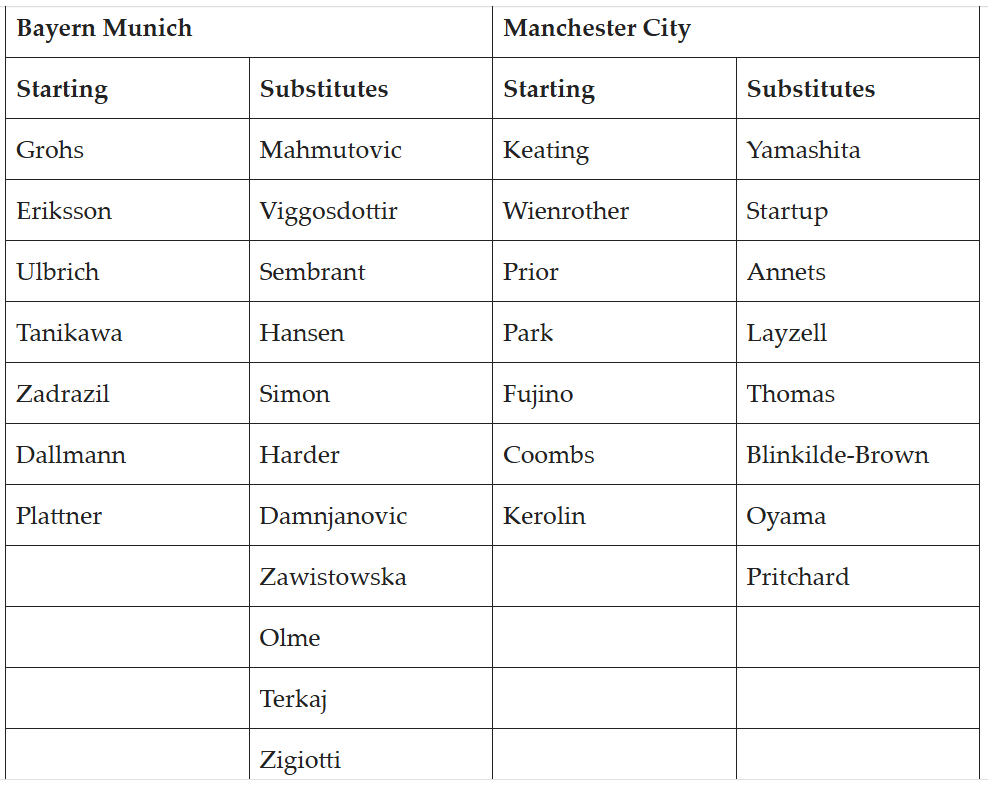
Lauren Hemp returned from injury ruthlessly, producing the crucial assist as Manchester City beat Leicester to keep their Champions League qualification hopes alive.
It was a momentous occasion for Manchester City, as Club Captain Alex Greenwood also returned from a long-term knee injury, with both being out of action since the turn of the year.
However, City’s injury crisis in attack was still visible. With Internationals Khadija Shaw, Mary Fowler, Aoba Fujino and Viviane Miedema all still sidelined the responsibility of playing striker fell to Brazilian winger Kerolin, who continued to struggle to adapt to this – preferring to drop deep and pick up the ball rather than occupy space in the box and provide an outlet for crosses as a striker usually would.
This lack of presence in the Leicester City box forced Man City’s forward players to try something different, with Lily Murphy, Laura Coombs and Jess Park all trying several long-range efforts on Janina Leitzig’s goal.
The Introduction of Hemp and Greenwood on the hour mark brought about a shift instantly, with Hemp showcasing her skill and ball control to love past defenders and lay multiple crosses right across the face of the goal.
It only took ten minutes of this pressure until eventually one ball fell to Jess Park on the back post, who subsequently took a touch then whacked it into the net.
Above: Manchester City celebrate Park’s goal. Photo: @ManCityWomen on X
The final 20 minutes were focused on getting the result through for City and thanks to a number of strong saves and claims from goalkeeper Khiara Keating they were able to. While it was not a vintage performance, there is finally some light at the end of the tunnel for City in a season dominated by so many injuries to crucial players.
For Leicester, it was a very respectable showing after their 5-1 humbling by Arsenal last time out. The gameplan was based on quick counter attacks and utilising the space in behind City’s fullbacks Leila Ouhabi and Kerstin Caspirij who like to push up in attack.
This plan came to fruition nicely, with Leicester’s direct passing as soon as they won the ball catching the City backline out. Particularly, Hannah Cain was a constant threat down the right and would surely have scored had in not been for Keating in the City net.
Looking ahead to the future, Man City will be eagerly watching on Wednesday night as a Chelsea win will keep them four points behind Manchester United. This would allow them to reduce the gap to one if they can win the Manchester derby next Sunday at 12pm.
Leicester, who’s safety in the WSL was confirmed by a Crystal Palace defeat earlier on Sunday travel to Palace as they look to build some momentum towards the end of what has been a difficult first season for Amandine Miquel.
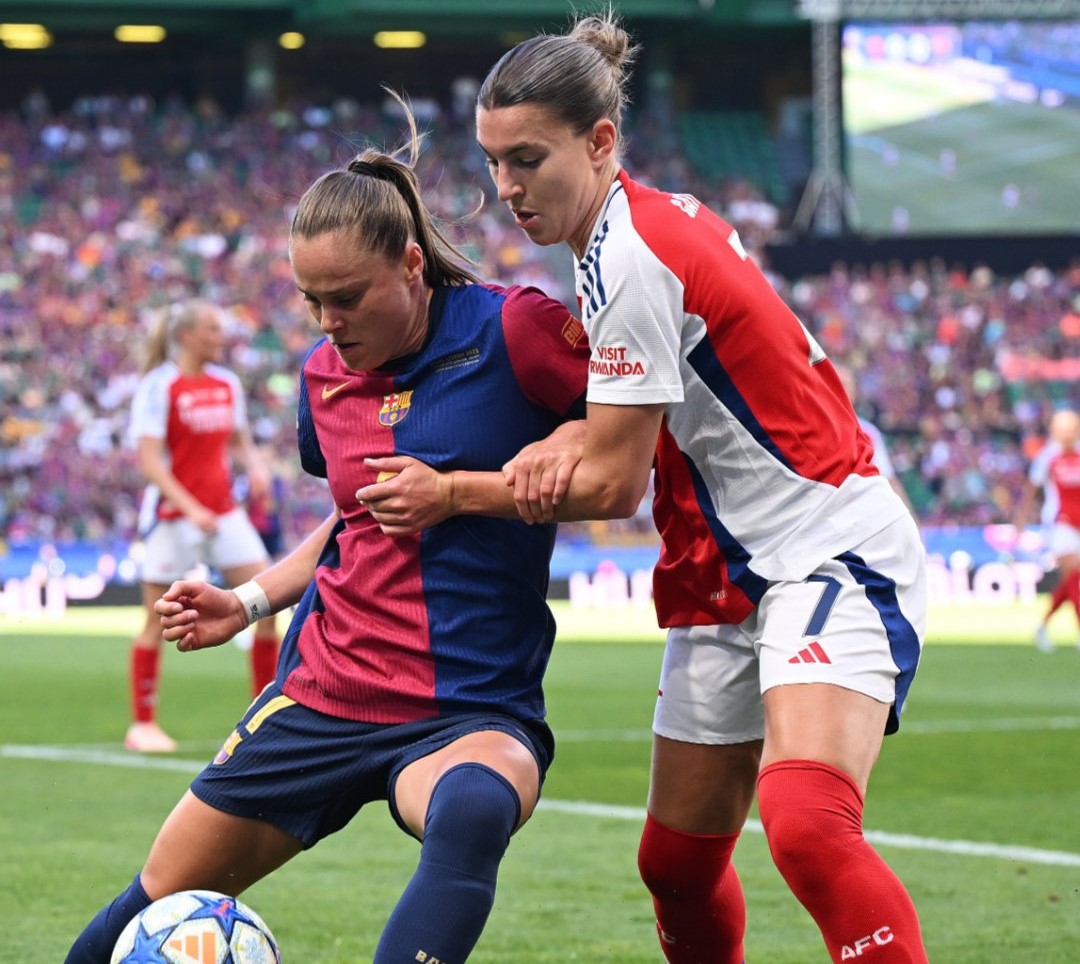
Above: Arsenal celebrate Mariona Caldentey’s goal, the former Barcelona player was phenomenal for the Gunners. Photo: Arsenal WFC
Arsenal ruthlessly overturned a first-leg deficit at the Groupama Stadium, putting four past Lyon to reach their first European final in 18 years. Impetus Football’s Ava-Marianne Elliott explores how Renee Slegers’ side sank the French giants to take one step closer to winning the UWCL trophy.
Heading into the fixture, it was known that achieving a win would be no easy feat for Arsenal. The Gunners hadn’t reached a Champions League final since they last won the title in 2007, and eight-time champion’s Lyon have had a dominant run across the competition across the years.
Arsenal are no strangers to turning around the scoreline, as proved against Madrid in the quarter-final stage, but it was going to take a strong, decisive side to sink Lyon.
Slegers’ made two changes to the side that lost 2-1 at the Emirates. Despite an ankle injury sustained during the international break, a quick recovery meant Daphne Van Domselaar made a return between the sticks, and Chloe Kelly replaced Beth Mead on the wing.
Joe Montemurro also decided to alter his side, with Wendie Renard returning to the starting lineup to make her 500th club appearance after being deemed fully fit. There was a reshuffle in midfield, and Melchie Dumornay dropped in for Danielle Van de Donk, allowing captain Ada Hegerberg to start.
The visitors did not have to wait long for the breakthrough they desperately needed, seeing them go level on aggregate just five minutes in. In a defensive struggle for the hosts, the ball hit Frida Maanum, before a rebound struck Christiane Endler and unluckily crept into her own net.
The leveller lit a fuse for Arsenal, and proved they were far from out of the competition.
Above: Caldentey celebrates her strike. Photo: @boodlepim on Instagram/ Twitter.
In first half stoppage time, Mariona Caldentey put Arsenal ahead in dramatic fashion. Alessia Russo set her teammate up for a spectacular strike that Caldentey sent soaring into the top right of Endler’s net.
Arsenal distinctly had the advantage, maintaining 64% of possession in the first half and leaving Lyon trailing at the break, but there were undoubtedly moments of uncertainty for the visitors. The Arsenal defence worked relentlessly to ensure they kept the advantage, with centre-back pairing of Leah Williamson and Australian international, Steph Catley, working near seamlessly.
Van Domselaar was also a hugely crucial figure. After only returning to training off the back of an injury not long prior to the team’s departure to France, she dealt with the pressure and performed well on the biggest stage.
Coming back out for the second half, it felt as if Arsenal still had unfinished business. Surely enough, Russo found herself next on the scoresheet. It just had to be the Gunners’ number 23, who capitalised on poor defending and slotted in a third goal with help from Maanum in under a minute after the restart.
Above: Australian international Caitlin Foord, who netted Arsenal’s fourth goal. Photo: Arsenal WFC
Over 20,000 fans watched on from the stands in disbelief as Caitlin Foord jumped on another defensive error. Endler passed the ball across the box to Vanessa Gilles, who slipped and handed possession to Foord for an easy fourth goal.
Whilst the fourth goal seemed to wrap up the action, Lyon mustered a consolation goal just after the 80 minute mark. Whilst she was excellent, Dumornay’s shot wasn’t enough to get her side back into the game, and Arsenal claimed a win that sealed their trip to Lisbon.
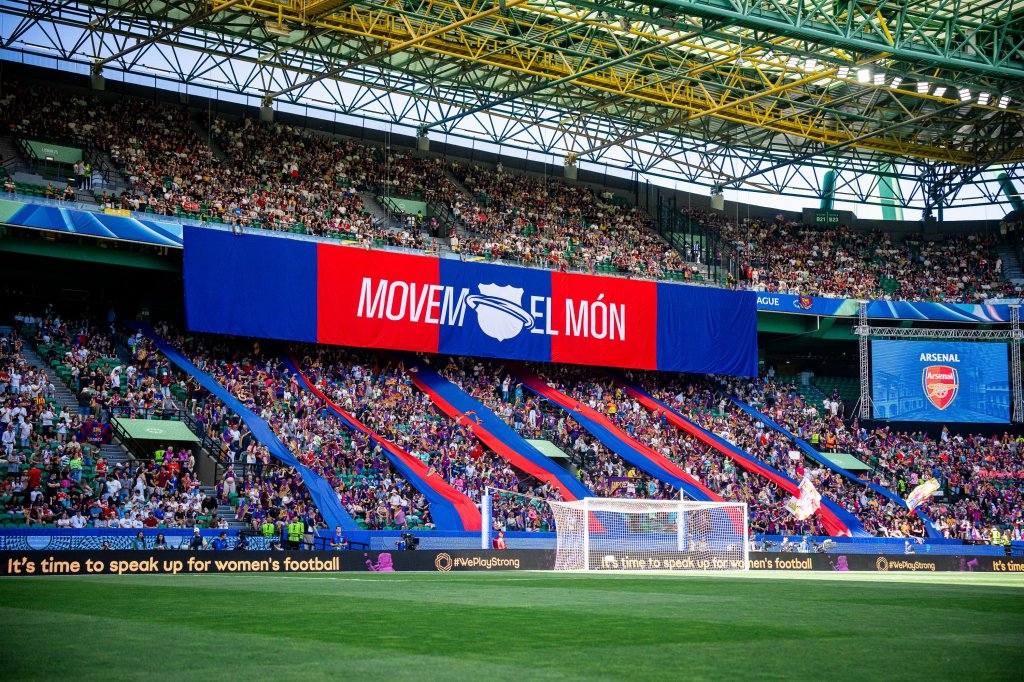
Arsenal now turn to the challenge of Barcelona, who they will face at Estádio José Alvalade in Lisbon on Saturday the 24th May. Whilst a win will be no easy feat for the Gunners, the North London side have shown their resilience, and now European victory is in reach for the first time in 18 years.
Above:Adelaide United celebrate Matilda McNamara’s winning goal. Photo: A-Leagues.
Adelaide United have created history, defeating Western United 1-0 in the Elimination Final to win their first ever A-League Women’s final.
After dominating early, Adelaide withstood relentless attacking from their visitors in the second half, and a first-half goal to Matilda McNamara was enough to get the job done for the home side.
The result sees Adelaide move on to face a two-legged semi-final against Melbourne Victory.
Adelaide did not take too long to get on the attacking front foot, with Emily Condon, Dylan Holmes, and Fiona Worts keeping the Western United defence on their toes from very early on.
Things did not get any easier for the visitors when Claudia Mihocic was forced from the field inside the opening 10 minutes because of an injury, and because of the makeup of the visitors’ bench, they were forced to shuffle a few players on field.
Kat Smith decided to bring on Kiewa Hieda instead of an actual defender in Aimee Medwin – perhaps to save her for later – and so was forced to push Isabella Dehakiz back into a defence role after she had started the game in a midfield one.
As the half progressed towards its own halfway point, Western United started to warm up and get into the game, and started to build up its minutes in its attacking third.
However, it would be the home side who hit the front with a goal in the 24th minute when McNamara headed home a Condon corner to give Adelaide the lead.
Despite the goal finally coming, it did not really skew the momentum in the home side’s favour, with both sides continuing to rack up attacking opportunities.
One thing that the first half had plenty of was injury interruptions. As well as Mihocic being forced from the field, Holmes copped a bloody nose after getting a ball straight to the face from close range, and Chloe Berryhill needed treatment on her knee after a heavy collision with Adelaide keeper Claudia Jenkins.
As such, the first half stoppage time was a whopping seven minutes, which was perfect for Western as it was the side with the attacking momentum as stoppage time approached.
The second half began much like the first half had ended, with Western United doing much of the attacking. However, no matter how hard they tried, they just could not find a way past the Adelaide defence and pick up a goal.
A big part of that momentum Western had was thanks to Berryhill, who continued to create plenty of chances for her side and was trying to keep her side’s belief high despite the frustrations of not being able to put the ball in the back of the net.
But the Adelaide defence – McNamara, Jenkins and Tiarna Karambasis most notably – continued to play tight defence and be well positioned on set pieces, and as such continued to deny their visitors again and again and again.
Western United will be coming away from particularly the second half left ruing what might have been. They had 15 shots in the second half compared to Adelaide’s three, yet only four of them were on target.
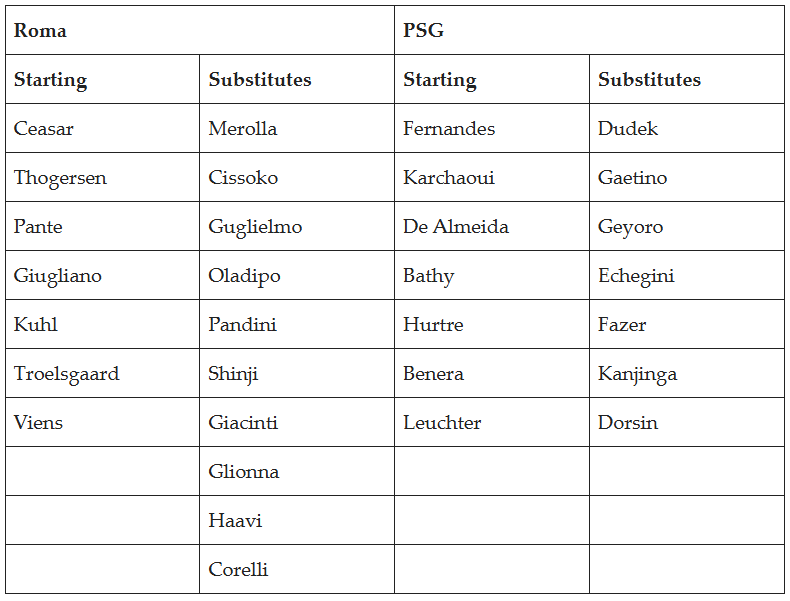
WESTERN UNITED (4-1-4-1): Dall’oste, Sardo, Grove, Mihocic, Maher, Dehakiz, M Taranto, Eggesvik, A Taranto, Zimmerman, Berryhill. Substitutes: Lincoln, Medwin, De Domizio, Hieda, Ibargüen, Prakash.
With Balcatta Etna’s eagerly awaited clash with Perth SC called off on Friday, there were three games remaining this weekend, which produced 21 goals.
Fremantle City 4-2 UWA-Nedlands
by Ben Gilby
Fremantle City overcame a dogged UWA-Nedlands side to gain their first win of the season at Hilton Park today.
The home side were rampant in the first half, commanding the vast majority of territory, possession, and chances.
Leyna Wood was in the thick of the action. With 24 minutes played, she curled an inviting shot narrowly over the top before breaking through shortly afterwards, but her shot slid just wide of the post.
The chances continued to rack up. Abbey Green sped along the left to feed Sophie Meaden, who put a cross in, which was headed over. Almost immediately following was Catherine Adams, who sent a powerful shot that UWA-Nedlands goalkeeper Janina Sauer tipped over with a superb flying save.
Finally, the dam broke two minutes from the interval when Isabelle Dadswell’s back pass from the left flank rolled perfectly into the path of Wood, who slotted home from close range.
Freo mustered 18 shots to three from UWA-Nedlands in the first half, with nine on target. They would be looking to convert a far greater proportion in the second 45.
The home side extended their lead 20 minutes into the second half when Wood’s cross into the box found Erin Siah, who sent a shot in that came off the arm of Emma Gibson, and a penalty was awarded.
Up stepped Annabelle Leek, but her effort was saved by Sauer’s foot, which sent the ball spinning up high. When it returned to the ground, Leek was able to pounce to turn it home.
Above: Annabelle Leek – scorer of Fremantle City’s second goal today – seen here in action last season. Photo: Cat Bryant.
Fremantle looked to have the game wrapped up with 15 minutes remaining as Leek’s ball down the right-hand flank for Olivia Trueman led to possession being transferred to Poad, who fed Abbey Green for the former Perth Glory player to dispatch the ball into the net.
Yet, UWA-Nedlands are always gritty opponents who work hard to get up off the floor. Nine minutes from time, Freo keeper Megan Phillips was put under pressure by Chloe Rodrigo from a back pass, and her clearance fell to Ella Vulin on the edge of the box to hit a superb first-time lofted shot into the net.
Then, just as the clock hit 90, the visitors pulled another back. After a free-kick led to a bout of penalty box pinball, Rodrigo turned on the edge of the area and hit a low shot home.
However, any thoughts of a nervy spell of stoppage time for Freo were laid to rest as shortly afterwards they re-established a two-goal lead as a low ball into the box from the left was turned in by Trueman at the near post.
Above: Sarah Carroll (red shirt), seen here last season, gave Perth RedStar an early lead at Murdoch University Melville today. Photo: Rob Lizzi.
Perth RedStar returned to winning ways with Renee Leota hitting a superb five goals in this huge win at Besteam Stadium this afternoon.
An early handball saw RedStar awarded an free-kickand Sarah Carroll’s shot calmly found the net despite a promising dive from goalkeeper Kaitlyn Mohan.
Leota’s introduction for a successful afternoon came 12 minutes in, when a successful stride down the left wing earned her a prime position for a shot at goal, which saw her. calmly slotting into the back of the net, and she repeated the pattern at 21 minutes in a similar fashion.
In timely succession, Quyen Doan then expertly exploited an opening in the box to make it 4-0.
Despite the scoreline, there were some positive defensive reactions from the home side, which prevented numerous close calls in rapid succession of each other.
A break came for Murdoch University Melville when Taylor Reid’s exorbitant speed from the halfway line, and effortlessly broke through RedStar’s backline to get the home side on the board 31 minutes in.
After the break, Leota’s hunger for goals was repetitively satiated at the 57, 72, and 83-minute mark. The forward made rampaging runs that the home side simply couldn’t deal with as RedStar caught Mohan off her line on multiple occasions.
Following her second-half substitution, Caitlin Doeglas secured a dominating RedStar an even bigger lead as the Perth Glory attacker clinically slotted the ball in from a tight left angle.
Above: Xuri Dalton, who had an impressive second half for the Football West Academy after coming on as substitute. Photo: Football West.
Football West Academy (FWA – formerly Hyundai NTC) worked extremely hard to defeat a strong Subiaco side, thanks to two goals in the final 15 minutes at Rosalie Park today.
Both sides were missing key attacking weapons – Marianna Tabain for Subi, and Theodora Mouithys for the FWA. It was the teenage side that had the better of the chances in the opening 45 minutes, using the flanks to create and threaten Subiaco.
Greg Farrell’s side were well organised, disciplined, and ready to battle throughout, which ensured that the visitors were unable to create the number of clear-cut chances that their share of the possession potentially warranted.
There was just a single goal in the first half, which came in the 25th minute from an excellent team move, which showed the ball-playing ability of this FWA outfit.
Sakura Leong dispatched a pass for Sam Brady to advance along the right-hand flank before laying the ball back for Lacey Heys to take a touch and provide a low pass for Cate McAuliffe to sweep home from the left of centre near the six-yard box. Yet another assist for Heys in an impressive start to the campaign for her.
Subi levelled the score just two minutes into the second half when Greta Bailey was tripped in the box by Nelli Johnson. Stella Zampogna hit the resulting spot kick high into the centre of the net.
The home side were now in the midst of their best spell of the game, and Isla Edwards powered a shot just wide of the post after the ball deflected to her on the edge of the box.
The game was largely transitional in the middle part of the half. Klaudia Houlis was looking to create for the visitors with her searching, incisive passes in the final third. Yet, Subiaco were working hard to deny the teenagers the space and time to create.
The league leaders hit the front with 14 minutes remaining when Rutendo Kuzamba won possession in the centre of the park and fed McAuliffe on the right channel to play a ball into the box that was turned in by substitute Xuri Dalton.
Subi looked to respond and, with 84 played, Bailey curled in a shot that was superbly pushed away by a diving Daisy McGreadie Cole.
Monique Todd denied the visitors twice shortly afterwards when she turned away Dalton’s dangerous shot superbly for a corner, and did the same from Kuzamba’s powerful run.
However, Todd would have no chance from that second corner from Dalton, which was initially headed out, but only as far as McAuliffe on the edge of the box, who fired an absolute rocket into the bottom left-hand corner to seal the win.
This is an excellent Football West Academy side who can produce some quite magnificent pieces of individual skill to link up play. There is still the thought that they can step up further, and that will make next weekend’s first against second clash with Perth SC extremely mouthwatering.
Whilst Subi went down to defeat, the final scoreline could be considered a bit harsh on them. They had lots to offer both offensively and defensively. If they can remain cohesive and disciplined, they will pick up points regularly through the season to give them a chance of remaining in the top-four conversation.
SATURDAY: UWA-Nedlands v Murdoch University Melville. SUNDAY: Perth RedStar v Balcatta Etna, Fremantle City v Subiaco, Perth SC v Football West Academy.
Above: the Lionesses celebrate a win over Belgium. Photo: The FA.
The most important Lionesses squad since the summer of 2023 is going to be for this year’s European Championships in Switzerland. Whilst the domestic season is wrapping up, players are trying to get into form to prove to head coach Sarina Wiegman that they deserve a spot in the squad.
Squad sizes are normally restricted to twenty-three spots, including three goalkeepers. So, two months out from the tournament – who already has a space on the plane, and who is still fighting?
Goalkeepers
We know that barring injury or a catastrophic downturn in form, two goalkeepers are already set. Mary Earps and Hannah Hampton are vying for the no.1 spot, leaving the third goalkeeping position open.
In recent squads, Manchester City’s Khiara Keating and Orlando Pride’s Anna Moorhouse have both been selected; however, there is only room for one in Switzerland. Whilst Keating is arguably more visible due to playing in the WSL, Moorhouse is more experienced and had a very strong 2024 in the NWSL, winning both the championship and shield.
Above: Hannah Hampton and Khiara Keating. Photo: The FA
Defenders
Defence is arguably going to be the most contentious part of the squad selection. With the reintroduction of Alex Greenwood (if fit), and potentially needing to fit in Lauren Hemp, Georgia Stanway and Lauren James, it is likely that the biggest cuts to the recent squads will come in defence.
Three defenders are never going to be left out from the squad; whether they are starters is more controversial. Leah Williamson is Lionesses’ captain; Millie Bright captained England to a World Cup final and is still playing almost every game for Chelsea, and Lucy Bronze has been on an incredible run of form. Beyond them, it is also likely that Jess Carter will be included, alongside Alex Greenwood (if fit).
Esme Morgan is known for her versatility across the back line and has been playing regularly for Washington Spirit. She also plays in the NWSL, and the fact that she plays in a league with a more transitional style of football may be something Wiegman looks for.
That leaves question marks over Niamh Charles, Maya Le Tissier, Millie Turner, and Lotte Wubben-Moy.
Charles has been a starter for England at left-back, however has been struggling for minutes this season at Chelsea. Her last outing for England was an uncharacteristically sloppy one, but she has since been back to her best for Chelsea.
The strongest calls from fans have been for Le Tissier and Turner to play more; they are part of the strongest defence in the WSL (Manchester United have only conceded nine goals this season). It may come down to only one being included – likely Le Tissier due to the lack of back-up at right-back for Lucy Bronze.
Wubben-Moy has missed a significant portion of the season to injury; however, she brings slightly different qualities to the back line. If she makes a return for the last games of Arsenal’s season, she could be in contention – particularly as a potential partner in central defence with Williamson.
Above: Millie Bright and Leah Williamson. Photo: The FA
Midfielders
Midfield has been the area with the least amount of depth for England in recent years; the double act of Walsh and Stanway has worked well and there has been little need to deviate from it until Stanway’s injury earlier this year. Ella Toone is another stalwart of the England midfield and has been in strong form for Manchester United in 2025. Her link-up play with best-friend Alessia Russo in particular has been a strong feature for England, and is something unlikely to be interrupted.
Above: Ella Toone for England.
However, in the last year Grace Clinton has also made a strong case to start – even starting when there were not as many injuries (for example, against Sweden at Wembley) – and Jess Park has been used as both a starter and an impact player in recent windows.
Wiegman has been unlucky with injuries to potential squad midfielders, with both Ruby Mace and Laura Blinkilde-Brown sustaining major injuries in 2025. Blinkilde-Brown is further ahead in recovery; making her a potential squad member. The Lionesses’ head coach may decide to go with more experience, however, as several more senior members of the squad can play in midfield – such as Leah Williamson – particularly if Blinkilde-Brown is not match-fit in time.
Forwards
Lauren Hemp has been one of the biggest misses for England recently; her pace on the left and ability to create major chances for Manchester City make her one of the first names on the team-sheet. She is due to return from injury for the remaining games of City’s season, which should give her plenty of time to recover ahead of the Euros.
Above: Lauren Hemp runs. Photo: Arwen Moses.
Beyond Hemp, there are three other players that are arguably in the strongest contention: Alessia Russo, Beth Mead, and Aggie-Beever Jones have all impressed recently for both club and country. If Chloe Kelly can continue her good run of form at Arsenal, she would also be a strong addition.
Lastly, if Lauren James is fit then she is a known gamechanger and has been the best player on the pitch for numerous important games for both Chelsea and England. If she returns from injury in time, she would be an obvious choice for Wiegman to include.
This leaves no room for Jess Naz: a possible wildcard, against the USA Naz proved her credentials in pace and tracking back to help her defence – something England miss if Hemp or James are not on the pitch.
So – how is a 24-woman squad looking?
Due to injuries, it is unlikely that all players below will be fit enough to make the squad. For that reason, we have included 24 players – one more than would be officially named.
Above: Renee Slegers, who will hope her side can find a win tomorrow in France. Photo: Arsenal FC
Ahead of tomorrow’s Champions League semi-final, Arsenal’s Katie McCabe and manager Renée Slegers spoke on the fitness of her players, the squad’s “strength” and their comeback experiences.
Slegers was able to confirm that both Lotte Wubben-Moy and Daphne Van Domselaar will be available for tomorrow’s fixture. Both players missed the first leg due to injury, with Wubben-Moy having been out for several games.
It was announced this week that Wubben-Moy has signed a new contract with Arsenal which is her childhood club. Speaking on this new contract, McCabe said that “everyone was ecstatic” about Wubben-Moy’s new deal as “Lotte epitomises what Arsenal football club is in so many ways”. She also described the announcement video, which Wubben-Moy was the creative director of, as “incredible.”
Slegers also praised Wubben-Moy, stating that “she has the capacity to go away from herself and see the club, the team, and what is needed for the greater good”. Following this new contract, Wubben-Moy’s return to the squad tomorrow, post injury, is set to be even more special.
Tomorrow’s match is vital for Arsenal, as they fell behind during the first leg of the Champions League semi-finals. The first leg was played at the Emirates and Lyon came away with a 2-1 win. Arsenal is, therefore, a goal behind as they head into the second leg in France.
McCabe described the first leg as frustrating due to “the fine margins” and Arsenal’s failure to get the ball over the line. Now, “it’s all over to Sunday.”
Slegers’ team has shown “so much strength” in moments like this one where they “have to overcome setbacks.”
The most recent of these was during the Champions League quarter final where Arsenal came back from a 2-0 loss in the first leg to secure victory and knock out Real Madrid. According to Slegers, her team keeps going whatever happens, she said: “we have a mindset of winning, we persist.”
Arsenal used the beginning of the week to reflect and recover and have since been training in a “positive and constructive environment” to prepare for this second leg. They aim to start the game better.
They know the “threat” that Lyon pose and Slegers said that the way her “players grew into the game” has given them “belief for the second leg.”
During the first leg, Lyon let Arsenal hold the ball and Slegers said that her staff have analysed the game, and seen what their visitors did to hold them at bay at the Emirates.
Above: Katie McCabe before kick off in the first leg, despite the loss, she was crucial for Arsenal. Photo: Arsenal FC
Tomorrow she wants Arsenal to be “good on the ball” because then Lyon will not “get to do what they want to do.” When Lyon were in possession, they stayed high up the pitch. McCabe played a key role in moving the ball backwards. She said that one of her strengths is “forward runs” and that she “definitely [does] not want to lose that part of [her] game going forward.”
For McCabe, tomorrow’s match will be about “reading the moment” and knowing where the ball is and where her teammates are.
McCabe also praised Slegers and the Arsenal staff for the tactical teaching that they have given her over recent years. She believes that the squad’s recent growth is “down to Renée and the coaching staff [who have been] working [them] so hard out on the training pitch.”
Slegers and her staff also “learn from the players” as they see the game from “a totally different view, literally.”
McCabe is one of the footballers that teaches Slegers a lot, as she provides a “different perspective of the game.”
As a manager, Slegers prioritises her relationship with the players. She said that it’s key for staff and players to stay connected as ultimately, they “want to grow together.” Every morning, Sleger spends a 45-minute window with the players before the team meeting starts. When the players are available [the staff] want to connect with them.
As a collective, Arsenal is “super humble” for Sunday’s task, but they balance this humility with “big belief.” They be believe that Lyon has “a next level within them”, however they know that they too have a further level that they did not reach during the first leg. Now, “there’s nothing to hold back for so [they] look forward to the opportunity.”
The last time that Arsenal had the opportunity to play in the Champions League semi-final was two years ago and they faced Wolfsburg. Speaking on this, McCabe said: “I remember leading the girls out against Wolfsburg. The number of girls who were out due to injury, it was crazy. We had a depleted squad.” This previous injury struggle only makes the Arsenal players grateful for the depth provided by their current available players.
They have found “the positives” from these previous challenges and “grown through those difficult moments”.
Two years ago, their semi-final second leg ended in heartbreak as they were knocked out of the Champions League by Wolfsburg.
Ahead of tomorrow’s game McCabe will do her one superstition with the hope that it’ll bring better luck than that of two years ago. This superstition is the act of tucking in her shirt: “people say I look weird when it’s not tucked in.”
Slegers “wasn’t superstitious at all as a player” but has “more tendencies to get dragged into those sorts of behaviours as a coach”. She is, however, “very rational” as she knows that superstitions will not change the outcome of a match.
What will ultimately lead to a win for Slegers’ team is “the quality and class” that she believes they have. According to McCabe, there is “good energy flowing” in and around the squad and this “unifies” them. They absolutely “have to be unified going into Sunday.”
Arsenal’s fans, who McCabe described as “the best in Europe” will be backing the team tomorrow. McCabe said that the players “want to do the fans proud.” They “know [they’ve] got travelling fans” coming to tomorrow’s match but for those who will not be attending in person, the game can be viewed on TNT Sports. It kicks off at 17:00 pm.
Above: Chelsea’s Catarina Macario shoots. Photo: Chelsea WFC
Chelsea continued their successful Women’s Super League run as they defeated Crystal Palace 4-0 at Kingsmeadow Stadium.
Another victory in their unbeaten run means they eagerly tread closer to securing another WSL title; their first under new manager Sonia Bompastor.
Following their 4-1 defeat against Barcelona in the first leg of the UEFA Women’s Champions League semi-final, Chelsea began the game looking to correct their previous mistakes, bringing the fight and hunger to every challenge on the pitch.
Immediately, they held on to the ball, which allowed them to have control of the game. This is something they are used to doing, passing and interlinking play between the field looking for an outlook to the wingers or to be played through on goal.
Although dominant in posession (70%), there were questions to be considered about their ruthlessness in front of goal.
They were disappointing in the final third of the pitch, with a lack of execution in that final pass, missing 26 out of 30 shots. It is perhaps something to focus on before playing Barcelona again, against whom Chelsea will need to score every chance they get to have any hope of progressing.
A player that could definitely help Chelsea reach another European final is Catarina Macario. After her performance against Palace, it would be a shock to see Bompastor not select her against the Catalan giants.
She was the Blues’ main playmaker: repeatedly positioning herself free on the edge of the area, ready to participate in a cutback. This was first utilised against Palace in the 22nd minute, just under two minutes after the 1-0 lead from Guro Reiten’s penalty kick.
The ball was worked progressively up from the defensive unit to Baltimore, who drove into the bundle of space created due to the oppositions defence’s positional mistake. She crossed low into the clear pathway of Macario’s feet – from then on it was inevitable that the ball would end up in the bottom left hand corner of the net.
Macario was also very influential for the Blues via her energetic work rate off the ball, enabling her to get into great positions. She continuously dropped deeper to collect the ball, acting as a centre defensive midfield at times.
She interlinked between players, creating rhythm through passing patterns and maintaining possession. She helped the defence recycle the ball whilst also allowing Chelsea to break out to drive the team up field.
Macario’s set pieces were a also dangerous threat throughout. She executed one towards the 50th minute mark where Macario scored a freekick. Later, she delivers a cross directed to Lucy Bronze, who headers it down to Mia Fishel, who scored her first goal back after going through her ACL recovery.
Above: Mia Fishel celebrates her goal. Photo: Ben Whitley/PA
Meanwhile from a Crystal Palace point of view, it was a struggle for the Eagles. It’s looking increasingly more likely that they’ll see themselves back in the Championship next season.
Chelsea found themselves with a lot of space, something Palace didn’t prevent. There was a lack of pressure as they failed to close down players, leading to their downfall as they conceded four.
For Chelsea, all eyes turn to Sunday. Barcelona will be a very different game compared to Palace, and it will be interesting to see if Macario can make the difference against the Spanish team.
Above: The Matildas in 2023. Photo: Kris Goman for Impetus.
Who the next Matildas coach should be has been much discussed, but just as important is what they will need to do once appointed.
The incoming coach of Australia’s most high profile team will have their work cut out for them. With a home Asian Cup fast approaching and a World Cup on the horizon, they will have minimal time to imprint their style and make any changes. The possible to-do list is as difficult as it is long.
Satisfying a fan base hungry for success will have to be balanced with appeasing an historically impatient media while winning football matches. No matter who is in the hot seat, this will be a great challenge.
Regenerate the squad
The Matildas of 2023 went deeper into a World Cup than any other Australian side and changed women’s football forever in this country. The players that reached the semi final will forever be sporting immortals, but time is undefeated and by the time the 2027 World Cup arrives, some players will be three years past what was widely considered this generation’s “last chance to win something.”
The new coach should not be under any pressure to instantly retire players, but younger players should be given the same opportunity that the senior players current generation were when they were the same age.
That is not to say that only young players should be considered. The emergence of Tash Prior or Leah Davidson show that players in their mid 20’s are potentially able to step up for those in their early to mid 30’s.
This work has begun with Tom Sermanni and must continue.
It is a delicate balancing act.
Players need to be brought through under circumstances where they can flourish or at least improve, while older players like Katrina Gorry cannot be simply jettisoned.
Their experience and talent are valuable, but the side must eventually skew younger to avoid it being too old to physically compete at the 2027 World Cup in a sport that is constantly increasing in pace and athleticism.
Team selection should be done not just on who is currently performing, but also with an eye on who will be approaching their peak in or after 2027, and who will be sadly too far beyond their best years.
Sam Kerr replaced Kate Gill and Fowler stepped up in a post Lisa De Vanna world. It is the way football works and although it cannot be achieved as instantly as Emma Hayes has done in the U.S, there’s increasing urgency to start the process soon.
A clearer selection criteria
That brings us to the second point. The new manager should be clear on what they need players to produce for The Matildas. Fans would like this to be as public as possible, which is unlikely. Secrets must be kept to maintain a competitive edge. But confusion with the media and public should be minimal.
Tony Gustavsson went through extensive explanations about why players were selected in the squads, but mystery remained about actual game time. From the outside it looks like some can be given infinite chances while other are starved of opportunity.
More recent squad announcements have highlighted the importance of playing in a top league or playing regular football, only to select some who have seen few minutes or had even yet to begin pre-season training over ones who met the public criteria.
There are those that will always be exceptional, or provide something that others cannot.
Charli Grant for example, can play to an international level at left or right back and almost nobody would sensibly call for Teagan Micah to be dropped or to exclude Cooney-Cross because of limited game time.
Often the coach will not be able to explain every reason publicly, but they should avoid making blanket statements that confuse or irritate fans (and fringe players.)
This can also give rise to conspiracy theories and angry posts on social media aimed at players who have done nothing other than be selected for the national team.
Realistically, football teams for club or country are chosen based on who fits the tactics or opposition best.
But it has been at times confusing to see the likes of Kahli Johnson miss selection as a player who has recently featured in two Under-20 World Cups, had four years of Young Matildas experience, and was leading the Golden Boot charge in the A-League Women.
Two goals in THREE minutes 🤯 Kahli Johnson is 𝐢𝐧𝐞𝐯𝐢𝐭𝐚𝐛𝐥𝐞 🔥🙌
The @wufcofficial forward bags a brace to put her side firmly ahead in Gosford!
There seems to have been a temptation over the last four years to try and fit in as many of the big guns into the XI as possible. This has been coupled with a reluctance to change the lineup even if the opposition might require it.
It’s is more art than science. Nobody knows for certain what the right answers are. But while the double pivot of Kyra Cooney-Cross and Katrina Gorry has driven Australia to unprecedented success, it is no longer a combination or formation suited to all occasions.
Likewise, the Mary Fowler conundrum is an issue of selection as much as tactics. She is a uniquely talented player (who will hopefully be available again sooner rather than later), and plays her best on the wing. However, the wings are one area where Australia is spoiled for choice.
The problem is, only two wingers can fit into any XI. One of them is Fowler, and the reality is that the team is more dangerous with another gun players sitting on the bench than it is trying to squeeze them into an unwieldy formation.
The most common solution has been to move Fowler to a 10 role, but one of the main reasons it has rarely worked is that Australia is not really set up to play with a 10. The Matildas strengths are out wide, and that’s where the midfielders and centre backs aim to get it.
When she is fit again, there will have to be hard decisions made. Some very talented wingers might have to miss out on a starting role.
But it is a good problem to have, as long as it is solved to maximize the team and not to squeeze in every gun player possible.
It is an issue that can also be applied to defence.
Sorting out the defence
Almost every fan and analyst has a slightly different view of what the Matildas backline should look like, but The Olympics and proceeding friendly matches showed us that it needs work.
Currently, neither of our two regular central defenders are in a good position.
Clare Hunt is not starting regularly for Tottenham and Alanna Kennedy is playing in midfield for Angel City. It is not ideal for Australia.
The Matildas look at their best defensively when Steph Catley is at centre back, but also look at their most dangerous as an attacking side when she is at left back. Australia has potential solutions to this with the likes of Matilda McNamara and Jess Nash’s individual seasons and potential surely warranting more call-ups.
If they use Catley at left back, Jamilla Rankin, Courtney Nevin or Charlotte Grant are all excellent options. If all three can maintain or increase club minutes it could give the incoming manager a welcome selection headache and make using Catley in her common Arsenal position easier.
But defence is not a four-player job. It starts up the pitch and while Australia had success with a spread out 4-4-2 formation during the World Cup, it appears that may have run its course.
Other formations or personnel will need to be tried. Could Clare Wheeler or Leah Davidson be an option to screen the defence in midfield?
Perhaps a back five or three needs to be trialed. Wini Heatley’s recent emergence unlocks possible solutions in midfield or defence.
Will Sam Kerr still possess her otherworldly and clairvoyant pressing abilities post-injury?
The defence struggled at the Olympics to an almost unprecedented level and was not much better at the She Believes Cup. The incoming coach needs to stop Australia conceding early, and find a way to dam the breach when games are going against them.
Develop a better emergency plan
We are getting to the shorter and simpler ones now. It is not plan B or even Plan C, but when the Matildas have gotten desperate in recent times, they have thrown Alanna Kennedy up front.
It has not really worked, and the new coach should find a better last resort.
No more picking injured players for major tournaments
This has been litigated and discussed for years now, and when the Asian Cup rolls around it is likely to come up again. But Australia simply cannot afford to select injured footballers for a major tournament. It should not even be considered (no, not even just to take a penalty.)
It stretches the rest of the team, and limits the coach’s options.
Keep calm, and look at other players.
Unify and utlise the youth systems
Australia has an Under 17 team and an Under 20 team, the future of the Under 23 side remains unclear with coach Mel Andreatta accepting a role as Scotland’s senior coach.
Ideally, the youth teams should be preparing players to step into the senior side. That is how the likes of Karly Roestbakken and Kyra Cooney-Cross adjusted relatively quickly to the top level, and the Matildas lineup that defeated Taiwan drew heavily on the last Under 23 side to meet up.
This does not necessarily mean playing with the same tactics, but at least with the same philosophy. This has been the practice for most of the last five years, and should continue.
Give the fans more credit that they will support anybody wearing the shirt
Some Matildas fans are there to see their favourite player, but most understand that it is a sporting team and not a touring band. The lineup will change, but fans will still show up.
After the win against Chinese Taipei in Geelong, supporters flocked to the fences to get signatures and photos with the largely A-League based Matildas. Just as they would the overseas and World Cup stars.
Fans love the sport, they love the shirt, and they love the team no matter who is wearing it.
The problem is that if too many players are picked that aren’t at their best it will eventually lead to a drop off in fandom anyway. Results will fall, performances will frustrate and the broad interest that sells 50,000 tickets and fuels broadcast deals can wilt away.
The commercial aspect is not something to brush aside too quickly. The growth of the sport is important, and this is an unprecedented opportunity to do that thanks to a team of household names. But it cannot override long term sporting goals.
The best chance for maintaining commercial interest in this team is to pick the most competitive, fit, rested and entertaining side, no matter who that consists of.
Asian Cup success
All of this will mean nothing without immediate success at the Asian Cup. But what does that look like?
Winning it will be a hard task, there’s been too much preparation time lost already. Japan are seemingly ready to steamroll everybody and North Korea are always a strong side in this tournament.
But a top four finish is a must, not only for pride and to make the most of attendances at a home tournament, but for World Cup qualification.
Is it too much to ask of a coach to push for a first trophy in 15 years, regenerate the squad, re-structure the selection process, find new tactics, sort out the defence, find the best attack and keep stadiums full?
It probably is.
But everyone from the head of Football Australia to sponsors, the players themselves and to the kids holding signs want the team to win, So while the incoming coach will have a lot to accomplish, the rest of us might have to be a little patient while they get us in a realistic position to do so.
The biggest issue now is there is not much time. We are almost two years into a traditional four-year cycle and so much of it has been spent waiting for a coach to begin this important work.
Above: Aston Villa celebrate their win. Photo: Aston Villa Women on X.
Kirsty Hanson scored a sensational last minute winner at Brisbane Road on Sunday to seal a 3-2 victory for Aston Villa, twenty minutes after coming off the bench.
The action
In the opening five minutes of the game, Aston Villa were arguably the stronger side. However, Tottenham Hotspur were not immediate underdogs in this fixture, and continued to have a few successful spells of play in the opening period.
On multiple occasions in the first half, Aston Villa seemed to press high, and capitalize on Tottenham Hotspur’s mistakes, picking up loose balls. However, they did give away a few free kicks, corners and opportunities that Spurs failed to capitalise on.
Both sides seemed to be confident on the wing, and created many threatening spells of play in the first half. One particularly threatening spell for Tottenham was when Lioness Jess Naz and Ashleigh Neville worked together to outpace the Villa defence. Neville sent a long ball in the direction of Martha Thomas, which was easily collected by Villa keeper Sabrina D’Angelo.
The first goal of the game came for Villa, in the 30th minute via a free kick for a late tackle on Ebony Salmon by Neville. Mayuemi (Maz) Pacheco and Lucy Staniforth stood over this free kick. However, it was Lucy Staniforth who crossed the ball into the box, which was headed by Daly against the post. Birthday girl Anna Patten, on the rebound, was able to slot the ball past Kop with her head.
Above: Villa celebrate their opening goal. Photo: Aston Villa Women on X.
Tottenham pressed high in the early stages of the second half, eager to get an equaliser. However Villa’s backline seemed to manage the high pressure from the Lilywhites and kept the ball out of the back of the net.
Villa got their second goal in the 56th minute. The successful spell of play started at the back with Lucy Parker who sent a long ball in the direction of Daly, who was quick to head the ball forwards in the direction of Salmon. Salmon raced for the ball, using her pace to outrun the Spurs defence.
Tottenham Hotspur was the first side to make changes, introducing Bethany England and Matilda Vinberg onto the field for Martha Thomas and Maite Oroz. The substitutes made an instant impact, helping to build Tottenham Hotspur’s momentum and assisting Naz in getting Tottenham Hotspur a goal back.
After getting a goal back, Spurs had the momentum, and only five minutes later they were able to get an equaliser. The successful spell of play started at the back with Dutch keeper Lize Kop, who sent the ball to Josefine Rybrink ahead.
In the seventy first minute, Natalie Arroyo substituted Kirsty Hanson into the field to replace Miri Taylor, and Hanson made an immediate impact.
Only 30 seconds into additional time, Aston Villa came goalwards with a promising counterattack. Chasity Grant played a loose ball into Hanson, who slotted the ball into the net to secure a fourth WSL victory (and important points on the board) for Villa.
Above: Kirsty Hanson celebrates her goal. Photo: Aston Villa Women on X.
Villa’s team spirit
All individuals who feature in this Aston Villa side played their part in this victory, however if it was not for the composure of Kirsty Hanson in the latter stages of the game, Aston Villa would not have sealed the win. With only three more games left this season, surely Aston Villa has drawn a close to their existing relegation battle with newly promoted Crystal Palace.
Credit must be given to Ebony Salmon, who despite being withdrawn in the 80th minute, was a huge asset to Aston Villa this weekend, not only scoring their second goal of the game to shift the momentum, but also picking up loose balls and creating several opportunities for the midlands side.
This was a crucial win for Aston Villa to reduce the risk of their side slipping into the relegation spot. With Aston Villa facing Arsenal, West Ham and Brighton & Hove Albion over the next three weeks, this victory was crucial to provide Arroyo’s side some relief as they head into the next three weeks with a positive mindset and strong confidence in themselves, their team and their abilities.